
 Vos Iz Neias
Israeli Middle East Expert Says Trump’s Deal Is ‘Anomaly’, Inconsistent With His Character:
JERUSALEM (VINnews) — Lt. Col. (res.) Amit Yagur, a Middle East expert and former senior intelligence officer in the Israeli Navy, commented on the emerging U.S.-Iran agreement during the Channel 14 program Israel This Morning with Tal Meir.
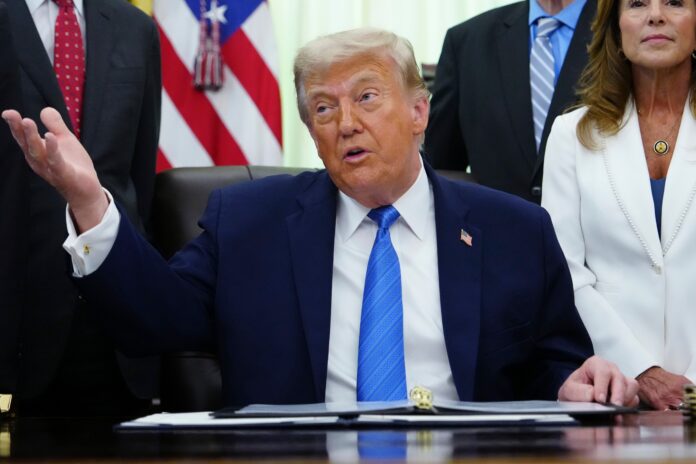
Yagur focused on what he described as a troubling anomaly in the conduct of the American administration, arguing that the concessions reportedly being considered toward Iran appear completely inconsistent with the character and political instincts of President Donald Trump.
Yagur urged journalists and policymakers to refer to the arrangement as a “framework agreement” rather than a final deal, warning that in the Middle East, circumstances can change rapidly. According to him, the current diplomatic process raises significant questions because it appears to contradict everything previously known about Trump’s personality and decision-making style.
During the interview, Yagur questioned whether Trump is conducting a sophisticated strategy behind the scenes or whether the West is witnessing a broader strategic failure. He noted that Trump has repeatedly portrayed himself as someone who does not tolerate personal humiliation and pointed to what he described as years of hostility from Iran, including alleged assassination plots against Trump and members of his family.
“When you look at all the personal humiliations Trump has suffered from the Iranians, including assassination attempts, what we’re seeing right now is completely contrary to his character,” Yagur said. “He cannot tolerate that kind of personal insult. Something very strange is happening here.”
He explained that he has been examining the behavior of the Trump administration, the MAGA movement, and senior American officials who have traditionally taken a hard line against Iran. Yagur cited statements by Secretary of State Marco Rubio, who recently told a Senate hearing that Iran was responsible for plots against Trump. In Yagur’s view, Trump’s willingness to pursue an agreement despite such tensions appears inconsistent with both his personal style and the expectations of many of his supporters.
When asked whether he believed the administration was engaged in a deliberate deception operation, Yagur declined to speculate. Instead, he emphasized what he called an intelligence “anomaly”: the relative silence of many pro-Israel figures in Washington and Jerusalem. He argued that in previous cases, such as opposition to the 2015 Iran nuclear agreement, Israel actively lobbied Congress and openly challenged American policy. This time, he said, that level of public resistance is largely absent.
Yagur expressed surprise that influential figures within Trump’s administration and political coalition,including Rubio, Defense Secretary Pete Hegseth, Senator Lindsey Graham, evangelical leaders, and many supporters of the MAGA movement, have not been more vocal in opposing the emerging arrangement. “Their voices are barely being heard in this process,” he said. “They’re remarkably quiet.”
Turning to the substance of the agreement, Yagur argued that it could strengthen what he described as the “old order” in the Middle East rather than advancing a new regional balance more favorable to Israel. He warned that unresolved issues within the framework could become major sources of conflict in the future.
One such issue is the future status of the Strait of Hormuz. According to Yagur, conflicting statements from Washington and Tehran have left uncertainty regarding whether the waterway would be fully reopened or remain subject to Iranian oversight and coordination with Oman.
A second area of concern is Lebanon. Yagur noted that Iranian officials have spoken about reducing or halting activity there, while Israel has indicated that it intends to preserve its freedom of action. He argued that the lack of clear American statements on the matter could lead to future disputes between the parties.
Yagur also suggested that comparisons between Trump’s policy and that of former President Barack Obama could become a significant political factor. He observed that Trump has long sought to distinguish himself from Obama and reacts strongly to suggestions that he is following a similar path. According to Yagur, this sensitivity could become an important source of pressure on the administration as negotiations continue.
Concluding the interview, Yagur argued that Israel should not wait for American decisions before acting. He said that throughout the conflict he had consistently maintained that Israel needed to accelerate its military operations because circumstances could change quickly. In his view, Israel should move more aggressively to conclude its campaign in Gaza, continue its efforts against what he described as the “Axis of Resistance,” and maintain pressure in Lebanon regardless of diplomatic developments.
“If this strange situation eventually becomes clear and we understand what’s really happening,” Yagur said, “Israel may need to accelerate the pace, bring the campaign in Gaza to a complete conclusion, and continue operating in Lebanon as if no agreement exists. That is where we will ultimately be tested.”