
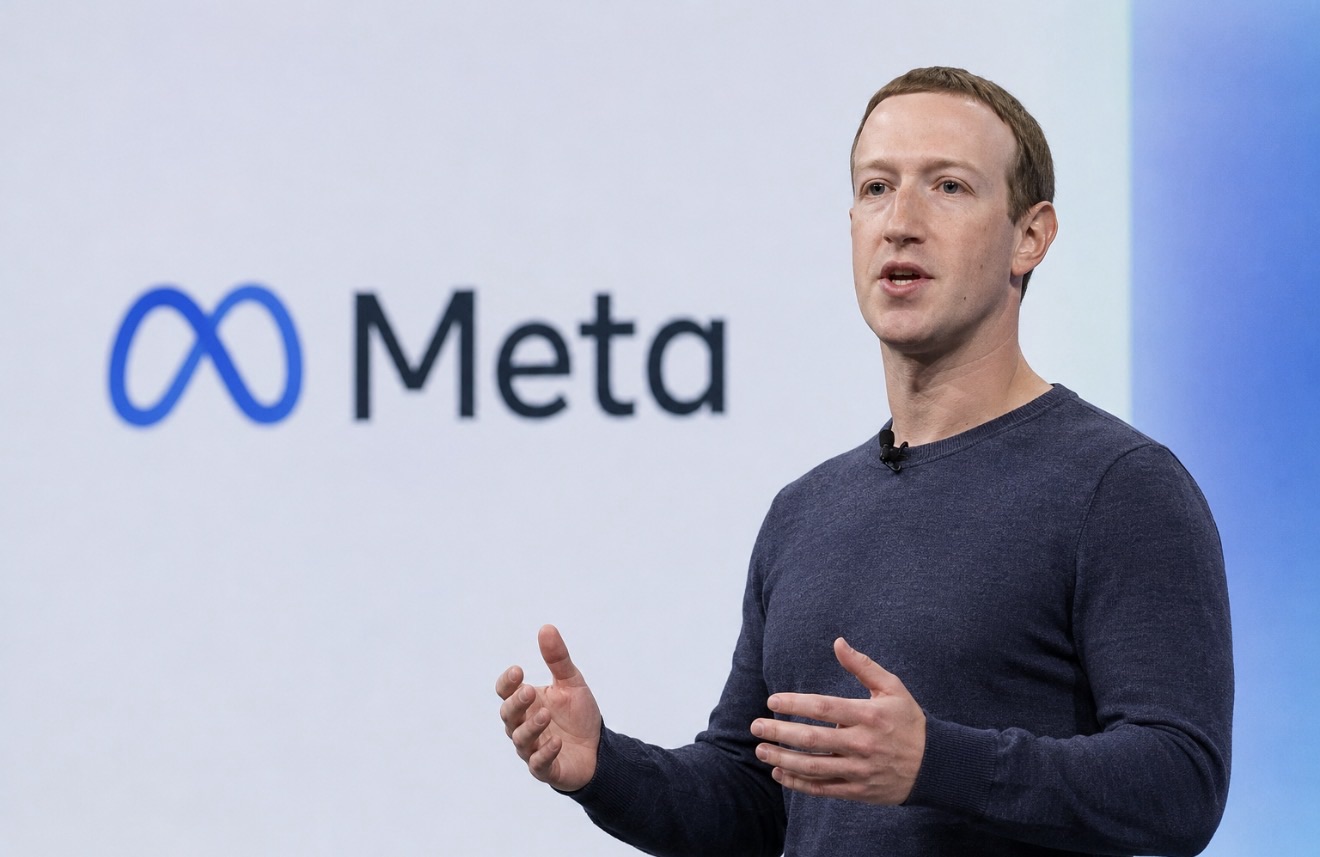

MENLO PARK, Calif. — A year ago this month, Mark Zuckerberg stunned the technology industry by spending $14.3 billion for nearly half of data-labeling company Scale AI and bringing its founder, Alexandr Wang, into Meta to help revive the company’s artificial intelligence ambitions.
In April, Wang’s team delivered what Meta hopes is the payoff: Muse Spark, the company’s first major AI model designed to compete directly with industry leaders. Zuckerberg called it a “first milestone” toward what he describes as personal superintelligence.
Now comes the harder challenge: convincing businesses and consumers to use it.
The urgency traces back to April 2025, when Meta released Llama 4, the latest version of its open-source AI model family. The launch disappointed many developers, a more advanced version was repeatedly delayed, and Meta’s reputation in AI suffered.
Zuckerberg responded by changing course.
Two months later, he recruited Wang, then just 28 years old, along with several top engineers from Scale AI. The move became part of a broader hiring push in which some AI researchers were reportedly offered compensation packages approaching $100 million.
The biggest shift was strategic.
For years, Meta gave away its AI models for free, betting that openness would attract developers and build influence. Muse Spark marks a move toward a more controlled approach that Meta can eventually monetize.
The company has already begun offering limited paid access through private partnerships, with broader commercial availability expected later. The strategy closely mirrors the business models used by OpenAI, Anthropic, and Google.
Rather than focus primarily on developers, Meta is targeting the billions of users already inside its ecosystem.
The company says Muse Spark can perform multiple tasks simultaneously, assist with coding, answer health-related questions, and shop online for users through a new commerce feature.
The technology already powers the standalone Meta AI application and is being integrated across Facebook, Instagram, WhatsApp, Messenger, and the company’s Ray-Ban Meta smart glasses.
According to Thomas Randall of Info-Tech Research Group, Meta’s strategy is straightforward: leverage existing products with massive user bases instead of waiting for third-party developers to build adoption.
Internally, Zuckerberg has reorganized the company to accelerate deployment.
In March, Meta created a new applied-engineering division under longtime executive Maher Saba, working alongside Wang’s Superintelligence Labs to transform research into products. Chief Product Officer Chris Cox continues overseeing broader product strategy.
The next major release is expected to be an image-and-video model code-named Mango, scheduled for launch later this year.
Despite the progress, Meta still trails the industry’s biggest AI players.
Many developers remain focused on OpenAI, Anthropic, and Google, while some analysts question whether Meta can reclaim leadership. Benchmark results published by Meta appear competitive but generally do not surpass rivals across every category.
The company also continues to face skepticism after past criticism over how certain AI benchmark results were presented.
The financial stakes are enormous.
Meta plans to spend between $115 billion and $135 billion this year, nearly double the approximately $72 billion spent last year. Most of that money is being directed toward data centers, Nvidia chips, and AI infrastructure.
More than $100 billion in new AI-related commitments were reportedly added during the first quarter alone.
Investors remain cautious.
Meta shares are down roughly 7% in 2026, making them one of the weaker performers among major technology companies despite strong advertising results. The company reported $56.3 billion in first-quarter revenue after generating approximately $201 billion during 2025.
Even bullish analysts have tempered expectations. Wells Fargo analyst Ken Gawrelski maintained a positive outlook but reduced his price target from $795 to $754, citing concerns about the time required for AI investments to generate meaningful returns.
The pressure is also being felt inside the company.
Meta cut approximately 8,000 jobs in May, representing about 10% of its workforce, bringing total reductions since 2022 to roughly 25,000 positions. At the same time, top AI recruits reportedly received compensation packages approaching $100 million, while median employee compensation declined.
The contrast has fueled concerns among some employees about morale and the company’s direction.
Zuckerberg’s defense is that Meta has faced similar moments before.
The company was late to mobile computing and online video but eventually became a dominant player in both markets after years of aggressive investment.
His latest wager is that Muse Spark can become the foundation for AI systems capable of acting on behalf of users — making purchases, booking travel, and handling everyday tasks with minimal human involvement.
Whether that vision becomes a major new revenue stream or simply an extraordinarily expensive effort to catch up with competitors may be the defining question for Meta during the remainder of 2026.
Technology — JBizNews Desk
© JBizNews.com. All Rights Reserved. Reproduction or distribution without written permission is prohibited.