
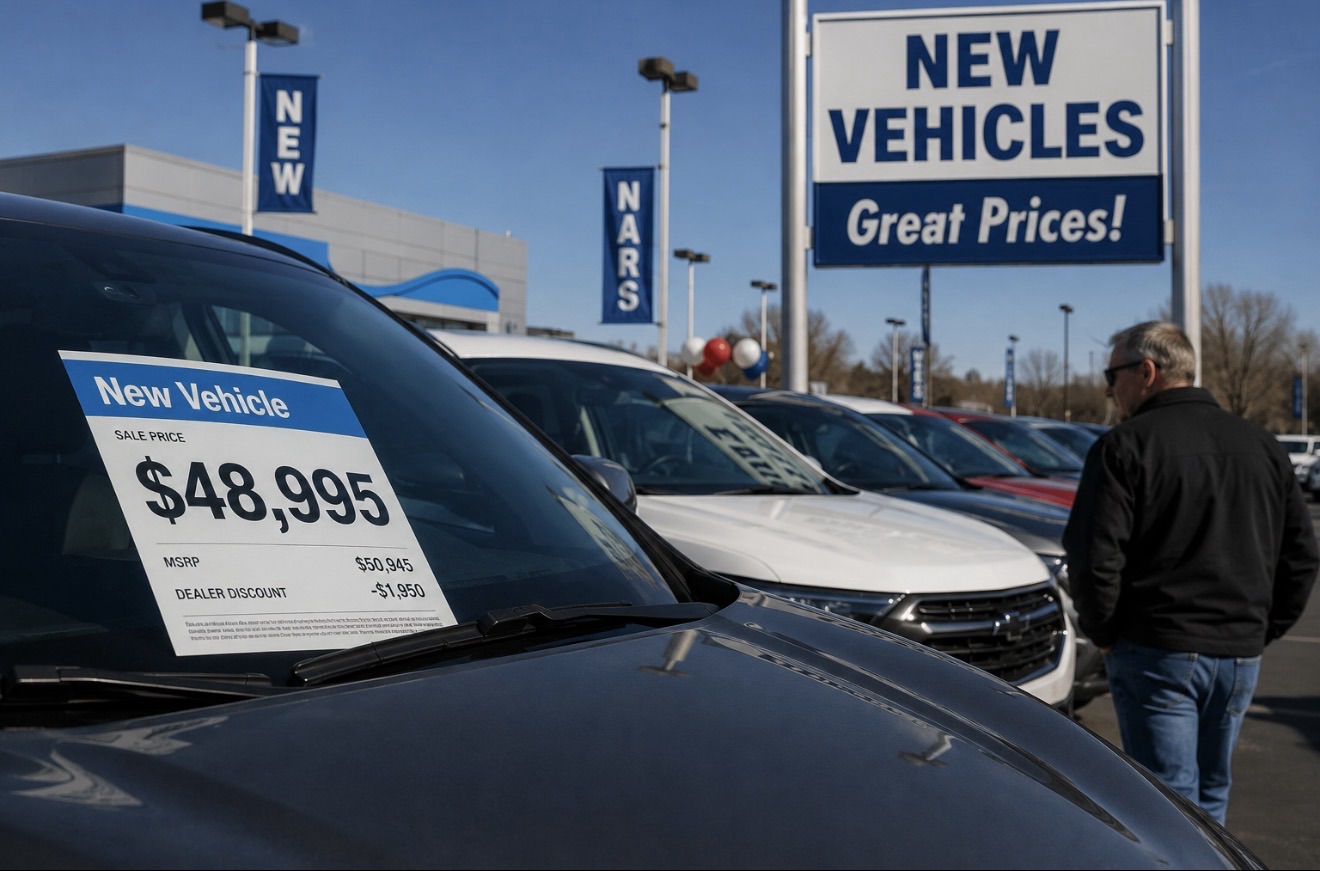

The price of a new vehicle has finally stopped climbing — at least temporarily.
According to Kelley Blue Book, a Cox Automotive company, the average new-vehicle transaction price in the United States was $49,220 in May, down 0.5% from April’s $49,456 and up just 1.2% from a year ago.
While the decline is modest, it represents the smallest annual increase of 2026 and offers evidence that the rapid vehicle-price escalation that defined recent years may finally be slowing.
The relief, however, remains limited.
For millions of Americans, a vehicle priced near $50,000 remains financially out of reach.
The current affordability challenge traces back to the supply shortages that disrupted the automotive industry during and after the pandemic. Inventory shortages pushed prices to record levels, and although supply chains have largely recovered, prices have remained elevated.
Ownership costs have also continued to rise.
Insurance premiums, maintenance expenses, repair costs, and financing rates have all increased significantly over the past several years. Cox Automotive analysts note that these combined costs have created affordability challenges for many middle-income and lower-income households.
The used-car market shows a similar pattern.
The Manheim Used Vehicle Value Index rose 0.3% in May and remains approximately 3.1% higher than a year ago. Because wholesale pricing typically influences retail prices several weeks later, analysts expect used-car prices to remain firm throughout the summer.
Government data tells a similar story.
The latest Consumer Price Index report showed new-vehicle prices falling 0.3% in May, while used-vehicle prices increased 0.1%. The changes suggest stabilization rather than a significant decline.
Affordability remains the industry’s biggest challenge.
Cox Automotive projects 15.8 million new-vehicle sales in 2026, a decline of approximately 2.4% from 2025, citing affordability concerns as the primary reason.
Many consumers accelerated purchases earlier in the year to avoid potential tariff-related price increases, leaving fewer buyers willing to spend near-record prices today.
One important detail often gets overlooked.
The industry average is heavily influenced by high-priced pickup trucks and luxury vehicles. Removing many of those premium vehicles from the calculation produces an average transaction price closer to $39,000, creating a substantially different affordability picture.
Compact cars and smaller crossovers continue to represent the most accessible segments of the market.
Electric vehicles are also becoming more competitive.
Tesla reduced average pricing approximately 1% from April and 3.4% from a year ago, helping narrow the gap between EVs and traditional gasoline-powered vehicles.
Because Tesla represents a significant share of the U.S. EV market, its pricing decisions influence industry-wide averages.
Trade policy also remains a factor.
Many of the lowest-priced vehicles sold in the United States are assembled outside the country and therefore remain exposed to tariffs and other import-related costs. That reality limits how much relief consumers may see at the lower end of the market.
For buyers, the takeaway is straightforward.
Vehicle prices are no longer rising at the pace seen during the pandemic years, but they are not falling meaningfully either.
Combined with elevated financing costs, higher insurance premiums, and increased ownership expenses, affordability remains one of the biggest challenges facing American households.
The market may be cooling.
The cost of owning a car is not.
JBizNews Desk — Automotive
© JBizNews.com All Rights Reserved. Reproduction or distribution without written permission is prohibited.