
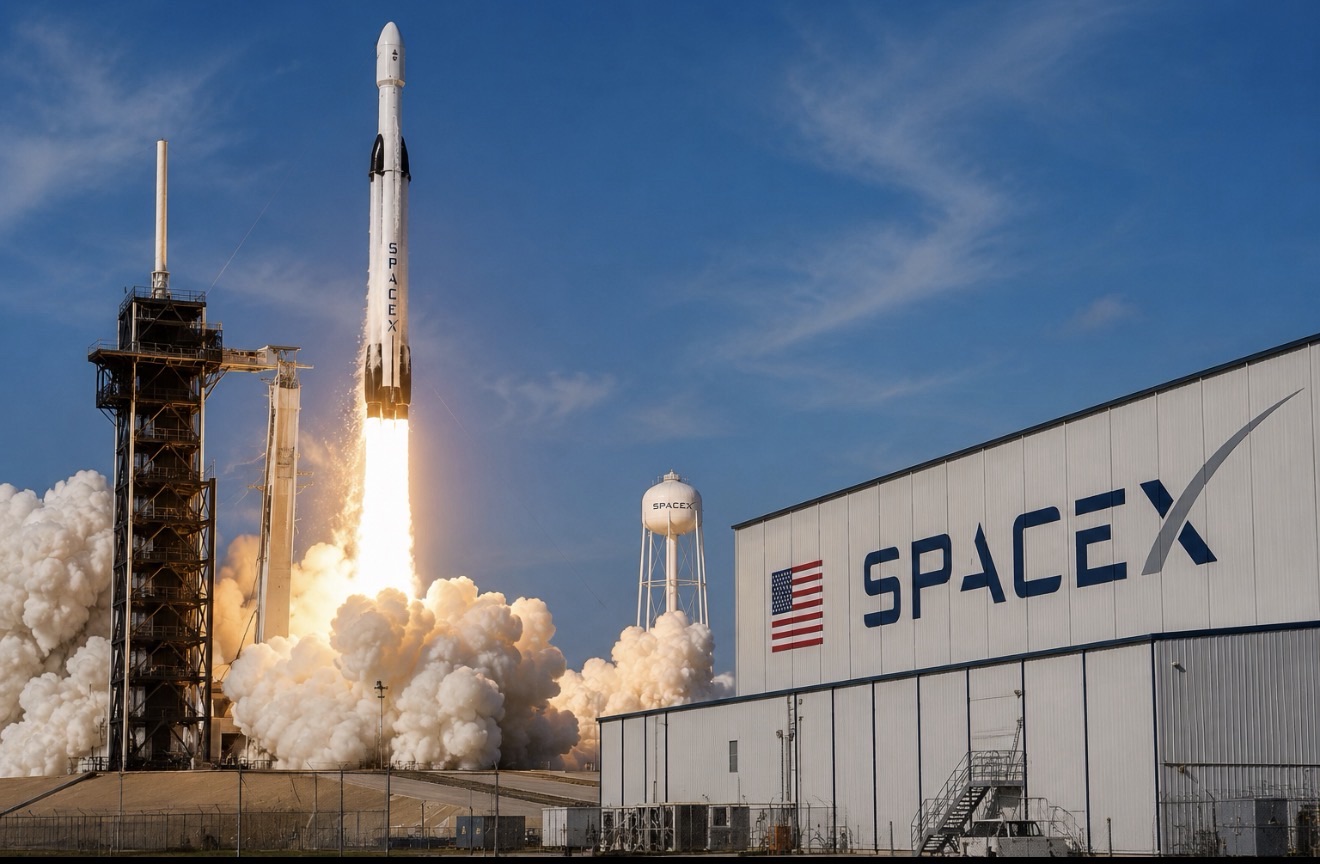

SpaceX extended its remarkable stock-market debut, climbing sharply in its second day of trading and pushing shares more than 40% above their initial public offering price. The rally has propelled the company into the ranks of America’s most valuable corporations and further expanded founder Elon Musk’s position as the wealthiest person in modern history.
Shares of SpaceX, trading on the Nasdaq under the ticker SPCX, closed near $190 per share, up roughly 20% on the session and well above the company’s $135 IPO price. The stock reached fresh highs during trading as investors continued pouring money into one of the most anticipated public offerings ever.
The surge comes after what was already the largest IPO in history.
SpaceX raised approximately $75 billion in its public debut, later increasing that total to roughly $85.7 billion after underwriters exercised an option to sell additional shares. The offering eclipsed the previous IPO record and immediately turned SpaceX into one of Wall Street’s most closely watched stocks.
At current prices, SpaceX carries a market valuation of approximately $2.5 trillion, placing it among the most valuable publicly traded companies in the United States and alongside giants such as Amazon, Microsoft, Nvidia, Apple, and Alphabet.
That valuation is remarkable considering SpaceX generated approximately $18.7 billion in revenue last year and remains focused on aggressive growth initiatives across multiple businesses.
The stock also received a boost from comments made by Elon Musk over the weekend.
Posting on X, Musk said SpaceX could potentially generate approximately $1 trillion in annual revenue by 2030, a projection that immediately fueled bullish speculation about the company’s long-term prospects.
Investors also reacted positively after Australian mining billionaire Gina Rinehart disclosed that her company, Hancock Prospecting, had acquired a stake reportedly worth more than $1 billion, signaling confidence from a major institutional investor.
The broad market environment helped as well.
Stocks generally moved higher following signs of easing tensions in the Middle East and declining oil prices, creating a more favorable backdrop for growth-oriented investments.
The gains have further expanded Musk’s fortune.
Based on current valuations, Musk’s net worth is estimated at roughly $1.1 trillion to $1.3 trillion, depending on methodology and market pricing. His estimated 42% ownership stake in SpaceX alone is worth hundreds of billions of dollars on paper, while his holdings in Tesla, xAI, and X add substantially to his overall wealth.
The figures make Musk the first person in history to achieve trillionaire status.
Yet despite the excitement, Wall Street remains sharply divided over how much SpaceX should be worth.
Supporters point to the company’s dominance in commercial rocket launches, the rapid growth of its Starlink satellite internet network, and its expanding ambitions in artificial intelligence following the integration of xAI technologies. Bulls argue that SpaceX is building multiple businesses capable of generating enormous long-term revenue streams.
The company also continues investing heavily in Starship, its next-generation launch system, while pursuing plans to dramatically expand Starlink and support future missions beyond Earth orbit.
Some analysts believe those opportunities justify a premium valuation.
Investment bank Oppenheimer maintains an Outperform rating on the stock and previously assigned a price target near levels already reached by the shares.
Skeptics, however, question whether the valuation has moved ahead of business fundamentals.
Critics point out that SpaceX still trades at one of the richest valuations in the market relative to its current revenue base. Some analysts argue investors are pricing in years of future success before those profits have actually materialized.
CFRA Research analyst Keith Snyder has maintained a significantly lower valuation target, arguing the stock’s rise reflects investor enthusiasm more than current financial performance.
Other market observers note that historically, many technology companies that debuted at extremely high revenue multiples struggled to match investor expectations over the following years.
The debate ultimately centers on one question: can SpaceX grow into a valuation measured in trillions of dollars?
Optimists believe the combination of launch services, Starlink, artificial intelligence, defense contracts, and future space-related businesses could support enormous long-term growth.
Skeptics argue that the company must execute flawlessly across several major initiatives simply to justify its current market value.
For now, investors are clearly siding with the bullish view.
Just days after becoming a public company, SpaceX has already joined the highest ranks of corporate America, while Musk’s fortune continues to set records of its own. Whether the company ultimately grows into its valuation remains one of the biggest questions on Wall Street, but the opening chapter of its public-market story has been nothing short of historic.
JBizNews Desk
© JBizNews.com All Rights Reserved. Reproduction or distribution without written permission is prohibited.