
 Matzav
Sen. Mark Kelly Blasts Trump-Iran Pact as ‘Total Capitulation,’ Warns Deal Could Strengthen Tehran, Makes Iran ‘More Powerful’
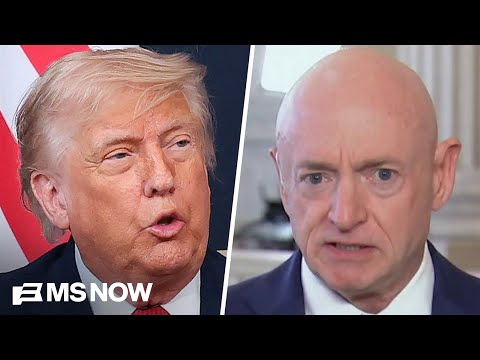
[Video below.] Sen. Mark Kelly (D-Ariz.) sharply criticized President Trump’s newly announced agreement with Iran on Wednesday, arguing that the proposed deal could leave Tehran in a stronger position and provide the regime with additional resources to expand its military capabilities.
During an appearance on MS NOW’s “Money, Power, Politics,” Kelly expressed concern that the agreement may ultimately benefit Iran rather than constrain it.
“Well, I think it emboldens the Iranians and makes them more powerful, it gives them resources to build more ballistic missiles and may leave them with the ability to develop a nuclear weapon,” Kelly told Stephanie Ruhle.
The criticism comes just days after Trump revealed that Washington and Tehran had reached an accord aimed at ending a conflict that had dragged on for three months. The fighting caused extensive destruction throughout the region, rattled global financial markets, and contributed to rising energy prices worldwide.
Kelly suggested that the framework being discussed bears little resemblance to the type of agreement critics of previous administrations would have accepted.
“What I’m hearing and seeing so far in this plan, this is like total capitulation. Imagine if Joe Biden or Barack Obama signed this deal, what Donald Trump would say about it, and so if this is his plan, I think at least if Congress gets a say, this thing’s a nonstarter,” Kelly said.
Trump has maintained that the final details of the agreement will remain private until U.S. and Iranian representatives formally sign the document later this week. Nevertheless, several media organizations have reported obtaining what they describe as a 14-point memorandum of understanding outlining the proposed terms.
The White House disputed those reports Wednesday. Communications Director Steve Cheung said the document circulating publicly was inaccurate and insisted that the reported version “does not reflect the language of the actual MOU.”
According to reports about the alleged framework, the agreement would require an end to military operations on “all fronts,” including in Lebanon, where Israel has been engaged in efforts to dismantle Hezbollah’s military infrastructure.
The reported terms also call for the restoration of commercial shipping through the Strait of Hormuz, with both sides committing to return maritime traffic to prewar levels within 30 days after the agreement is signed.
As debate over the proposal intensifies, critics and supporters alike are awaiting the release of the final text to determine whether the agreement represents a diplomatic breakthrough or a concession that could reshape the balance of power in the Middle East.
WATCH:
{Matzav.com}