
 Vos Iz Neias
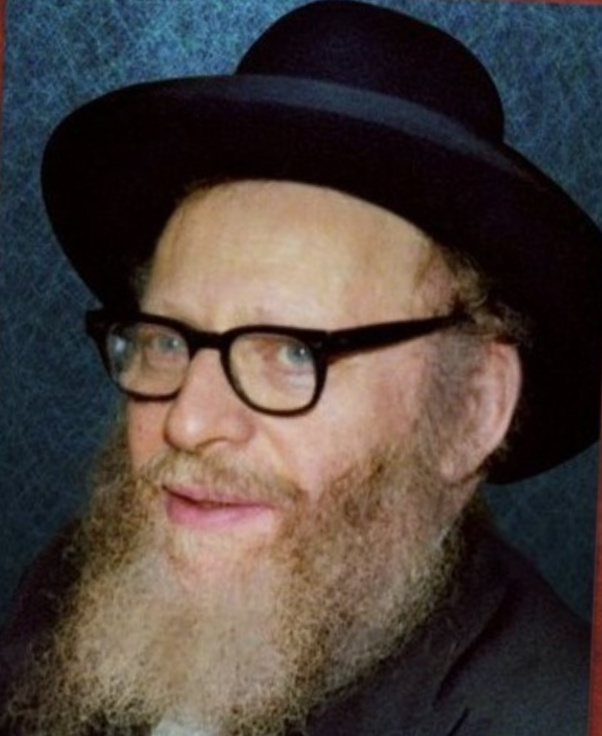
The Builder of Lakewood: Rav Shneur Kotler zt”l On his yahrtzeit, the 3rd of Tammuz
New York (VINNEWS/Rabbi Yair Hoffman) On the 3rd of Tammuz, 5742 — June 24, 1982 — Rav Shneur Kotler suffered a sudden heart attack and was niftar. He was sixty-four years old. In the twenty years he had led Bais Medrash Govoha in Lakewood, the yeshiva had grown from roughly 120 talmidim to more than a thousand. Today it counts well over ten thousand.
But to remember Rav Shneur zt”l only through those numbers is to miss the hidden man. The numbers are the result, but the Rosh yeshiva was something else entirely: a gaon who could deliver a shiur on almost any sugya in Shas with little preparation, and a Rosh Yeshiva of whom thousands of talmidim would later say, each one believing it of himself, that he had felt the Rosh Yeshiva was his best friend.
And then, of course, there is the Torah community that he had built – Lakewood. It is a city where Torah and its endless depth is veritably palpable in the air itself. It is a city that will likely go down in history like Sura, Pumpedisa, and Vilna. And this city has hidden jewels in every corner. What jewels the reader may ask? The Seforim that emerge monthly from this Yerushalayim of America.
Just to name a few – there is a series of eight volumes so far – Aizer laShulchan -written by Rav Shlomo Dickman. The latest is on Amira L’Akum. The volumes are clarity and emes incarnate. And that is just the tip of the iceberg. Another series is one entitled Pshuto K’Mashma’o – ha’aros and chidushim by Rav Avrohom Zev Bieber. It is on Mesechta after Mesechta and is like a brilliant chavrusa in learning.
Everywhere one turns in that city there is another Talmid Chochom and mechaber sefer whose brilliance and deep commitment to Torah learning was on account of the city that Reb Schneur zt”l had built. It is a city that personifies the maariv tefillah of “Ki Heim Chayeinu.”
This is the story of the person who built that city. It is about the man, the malach whose — brilliance joined to warmth, and who exemplified the highest standards of Torah and mussar joined to a home whose door was never locked.
But first – some of his thoughts and sayings:
Rav Shneur zt”l would often quote a Yerushalmi (Shkalim 2:5) that states: Whoever says over a shmuah (saying) from his Rebbe should concentrate and envision that his Rebbe is standing right there before him. He would continue:
“We see from here that it is not sufficient just to say it over in his name. Rather, it is demanded of us that we see him right in front of us as if he is hearing it now from him. The explanation of this is that words are not some separate item or matter. They are part and parcel of his life and his very essence!
The saying and the person who said it are one and the same.
Understanding his saying and truly receiving it can only be accomplished through seeing the person who said it.
Without the sayer – there are no sayings.
And from the sayings, one can learn about the sayer himself, and through them – we can appreciate the personage of the baal hashmuah and the lofty spiritual nature upon which he stood. Studying the sayings lead a person to unprecedented growth – approaching that of his Rebbe from the perspective of, “When will my actions reach those of my father’s.” Other thoughts and sayings are:
- We can learn a lot from the sons of Korach. In the shir shel yom of Monday, we see that the Bnei Korach thought that if they could be in a leadership position – they could then achieve unparalleled closeness to Hashem. The truth is, they learned, that every person, wherever he is – has a potential for unparalleled dveikus.
- The purpose of our life is to take from potential into action – the Divine Image and the light of Torah that are hidden within us.
- Constantly working on improving one’s ruchnius thoughout one’s life – is tantamount to Maaseh Bereishis itself.
- The Shechinah only dwells in Klal Yisroel when we are k’ish echad.
- The true acquisition of our chailek in Torah can only be obtained after the perfection of our character traits.
- Working hard with ameilus in Torah during yissurim – creates a sea-change within the individual.
- A person is obligated to constantly grow and to emulate the malachim themselves.
- The Avodah of the Psil tcheiles, the blue fringe on the tzitzis, is that it reminds a person of the ocean, then it reminds the person of the firmaments, the rakiah. Then it reminds the person of the kisei hakavod. The question is, why this entire process? Why shouldn’t the person just carry a sign reminding him to think of the Kisei HaKavod? The answer is that it is not so simple. He would become used to the sign right away, and eventually, it will have zero impact. If, however, it was an Avodah, a step by step thought process – then it will have a lasting impact. This is the nature of a person – of which the Torah was well aware.
- The value and importance of an action is dependent upon the nature of the intent that one had when the action was first performed.
- The influence of any action is three-fold – it is immediate; it is upon the future; and it is upon countless generations of one’s own descendants.
- Acts of chessed (lovingkindness) have within them the ability to change the very laws that Hashem set forth in Creation itself.
And now on to where this remarkable gadol and builder of
A Son of Two Dynasties
Rav Shneur was born into Torah royalty, though the word “royalty” would have embarrassed him. His father was Rav Aharon Kotler, the orphan from Svisloch who rose to become a leading Rosh Yeshiva of Lithuania and later the builder of the American Torah world. His grandfather, on his mother’s side, was Rav Isser Zalman Meltzer, the great Rosh Yeshiva of Slutzk and author of the Even HaEzel, who later led Yeshivas Eitz Chaim in Yerushalayim. Two of the towering figures of the previous generation stood at either side of his cradle.
Yet his early life was anything but secure. He grew up in Kletzk, where his father had rebuilt the Slutzk yeshiva on Polish soil and was raising a generation of talmidim. The world of the great Lithuanian yeshivos — Kletzk, Baranovitch, Kamenetz, Mir — was the air he breathed as a boy. He learned in Baranovitch under Rav Elchonon Wasserman and in Kamenetz under Reb Boruch Ber Leibowitz, two of the sharpest minds the yeshiva world produced. The mesorah was being handed to him directly, from the hands of those who had received it from Rav Chaim Brisker and the Alter of Slabodka.
Then the world he knew was destroyed.
Escape, Engagement, and Eight Years Apart
In 1940 and 1941, as the Nazis advanced and the Soviets occupied Lithuania, the young Reb Shneur became engaged. His kallah was Rischel, the daughter of Reb Aryeh Malkiel Friedman of Kovno, a family renowned for both yichus and chesed. The shidduch had been suggested by Rav Elchonon Wasserman himself. But the engagement was made in a world coming apart. Reb Shneur escaped the Soviet Union by the narrowest of margins, traveling by boat from Odessa to Turkey — on the same journey, by remarkable providence, as a young scholar named Rav Elazar Menachem Man Shach, who would remain bound to his life for decades.
On January 7, 1941, Reb Shneur reached Yerushalayim. He was twenty-two, recently engaged, separated from his kallah by oceans and war. His father was making his own dangerous way to America. His kallah was trapped in Shanghai, where she would endure typhus and tuberculosis. They would not stand under the chuppah together for nearly eight years.
These were not idle years. In Yerushalayim he lived in the home of his grandfather, Rav Isser Zalman zt”l, learning with him daily and absorbing not only his vast breadth in Torah but his middos — his humility, his readiness to admit when he did not know something. He learned as well from the Brisker Rav, Rav Yitzchak Zev Soloveitchik, drinking the Brisker method directly from the son of Rav Chaim. He kept a chavrusa for six years with Rav Nota Frank, son of the Chief Rabbi of Yerushalayim. He heard shiurim at Chevron from Rav Yechezkel Sarna and learned under Rav Yitzchak Isaac Sher. From the breadth of his grandfather and the depth of Brisk, a Torah personality was forming that drew on both.
And he built. When his uncle Rav Tzvi Yehuda Meltzer established a branch of Yeshivas Kletzk in Eretz Yisrael in 1941 — even as the original Kletzk in Lithuania was being annihilated — Reb Shneur was among the first thirty bochurim. But he did not come merely to learn. While still an engaged bachur, he gave shiurim in the yeshiva, served on its hanhallah, and saw his name printed on its letterhead. At twenty-three, he was already a builder of institutions and a teacher of others. It was a foreshadowing no one yet had recognized.
“Ich Vill Nisht Tcheperen Mit a Yesoma”
Reb Shneur arrived in America aboard the Marine Carp on May 23, 1947, and joined the kollel his father had founded in Lakewood. But before the long-delayed wedding could take place, there was a crisis to confront.
Rischel’s health was precarious. Typhus and tuberculosis had ravaged her in Shanghai. One lung had failed; the other was seriously compromised. The doctors were blunt: she would not live long, and she would never bear children. One physician, learning that Rav Aharon intended to proceed, objected directly — the great Rosh Yeshiva had only one son to carry his name, and it was reckless to marry him to a girl who could never have children.
Rav Aharon’s answer became one of the defining lines of his life: “Ich vell nisht tcheperen mit a yesoma… m’vet vaiter gein mitt der shidduch.” “I will not bargain with an orphaned girl. Let us proceed with the shidduch.” The Yiddish word tcheperen carries the sense of haggling, of treating a person as a commodity to be appraised and found wanting. Rischel had lost her parents to the Nazis, survived Shanghai, and kept faith with the engagement for eight years. She would not be set aside because a doctor’s chart said she was sick.
The wedding took place in the yeshiva building in Lakewood on January 19, 1949. Reb Shneur was thirty; Rebbitzen Rischel was twenty-five. Rabbi Meir Ashkenazi, the Rav of Shanghai who had cared for her like a daughter, walked her to the chuppah in place of the father she had lost.
The doctors were wrong on every count. Rebbetzin Rischel bore eight children. She lived to ninety-two, outliving the physicians who had pronounced her doomed and leaving behind, at her petirah in 2015, generations of descendants living lives of Torah. The moral stand Rav Aharon took — that you do not abandon an orphan because the odds are against her — was vindicated a thousandfold. It was a lesson Reb Shneur would carry into everything he built: that doing what is right matters more than calculating what is prudent.
The Quiet Years
For fifteen years, from 1947 to 1962, Reb Shneur lived as a regular avreich in the Lakewood kollel. He demanded no special treatment as the Rosh Yeshiva’s son. He sat with the other yungeleit, learned with his chavrusos, and attended his father’s shiurim. The family lived simply; money was always tight. Rebbetzin Rischel stretched every dollar, sewed clothes, cooked from scratch, and eventually raised nine children while never pressing her husband to leave learning.
But these were not merely years of personal growth. Reb Shneur was watching. He saw how his father prepared shiurim — the notebooks of chiddushim, constantly revised. He saw how his father refused to lower admission standards for a donation, how he balanced the yeshiva’s needs against the demands of Chinuch Atzmai and the broader klal. He was absorbing not only Torah but the craft of leadership, the kind that can only be learned by living close to a gadol as he navigates real decisions. No one knew it yet, but these were preparation years.
On Friday, the second of Kislev 5723 — November 30, 1962 — Rav Aharon Kotler was niftar after a heart attack. He was seventy-one. The gadol who had built Lakewood from fourteen talmidim, who had saved lives through Vaad Hatzalah and built Chinuch Atzmai, was gone, and the yeshiva had no designated successor.
“Yechi Hamelech”
At the levaya on December 2nd, as the aron was carried, a cry rose from among the bochurim: “Yechi Hamelech! Yechi Hamelech!” Long live the king. It was not a eulogy but a declaration. The melech had died, but the malchus — the kingdom of Torah Rav Aharon had built — would continue, and its new king was standing among them. The talmidim were not waiting for a board to decide. They had chosen their Rosh Yeshiva.
The weight on Reb Shneur in those days is hard to imagine: grief for a father who was also his rebbe and mentor, the shock of a sudden loss, and the crushing question of whether anyone could follow Rav Aharon Kotler. He had never officially given a shiur in Lakewood. He had nine children, the youngest still very young. Yet the gedolim were unanimous. Rav Moshe Feinstein, who had been close with Rav Aharon for decades, put it plainly: “You must take the yeshiva. There is no one else.” Rebbetzin Rischel — who had survived the Nazis, Shanghai, and a death sentence from doctors — told her husband he could do it, and that it was what his father would have wanted.
In January 1963, about six weeks after his father’s petirah, Reb Shneur delivered his first shiur as Rosh Yeshiva. The beis medrash was packed with everyone wondering whether he could fill the role. Within minutes, the question was answered. The depth was there, the breadth across Shas, the ability to penetrate to the core of a difficult sugya. But the style was his own. Where Rav Aharon had been fire, Reb Shneur was light. Where his father challenged through intensity, the son challenged through clarity. He understood early that he did not need to imitate his father; he needed to be himself, and that was enough.
Maintaining the Standard, Adding His Own Voice
Reb Shneur made a foundational decision: the standards his father had set would not soften. Lakewood would not become easier because a new, gentler Rosh Yeshiva had arrived. The learning would remain intense, the expectations high, the commitment to emes — to truth in learning and honesty in character — non-negotiable. When some bochurim tested the boundaries in the early weeks, his answer was clear: the standards would hold.
But his manner was distinct. He kept his door open even more than his father had. He corrected with kindness and challenged with love. He continued the practice of meeting talmidim individually, wanting to know each one’s strengths and struggles. A Rosh Yeshiva, he understood, is not only a lecturer but a builder of people.
He did not lead alone. From the start he worked in close partnership with Rav Nosson Meir Wachtfogel zt”l, the mashgiach ruchani whom Rav Aharon had appointed in 1943. Rav Nosson had been shaped by the mussar masters of Kelm and Mir; he embodied the Lithuanian tradition of relentless work on the self. A new leader might have seen the veteran mashgiach as a rival or a relic of the previous era. Reb Shneur saw a partner in the sacred work of building bnei Torah. He took the learning; Rav Nosson took the middos and the avodah of the heart; and they consulted constantly, each bringing the other into the life of every struggling talmid. Their partnership — lasting until Reb Shneur’s own petirah in 1982 — became a model the talmidim absorbed: that brilliance in learning means little without refined character, and that the two are meant to grow together.
The Vision He Inherited
To understand what Reb Shneur was building upon, it helps to recall the moment his father had defined the mission. In early 1942, less than a year after reaching America, Rav Aharon had gathered some 150 bnei Torah at the Clymer Street Shul in Brooklyn. The yeshiva world of Europe was being systematically destroyed, and most observers assumed serious Torah learning could not be transplanted to America — that American boys could not learn at European levels, that the kollel idea would never take hold. Rav Aharon told them that the earlier generations had been like diamonds, gold, and silver, while theirs was merely iron. But iron, he said, is what the links of a chain are made of. Their task was to keep the chain unbroken.
That image — a generation of iron holding the chain together — was the inheritance Reb Shneur received. The yeshiva his father then built in Lakewood in 1943, beginning with fourteen talmidim, was the proof that the chain could hold. By the time Reb Shneur assumed leadership it numbered around 200. What he would do over the next two decades is take a chain his father had forged from iron and watch it, link by link, become gold again — producing gedolim, talmidei chachamim, and Torah leaders in numbers no one in 1942 would have dared predict.
The Kotler family carried this building-vision across generations and continents. Rav Aharon, together with the philanthropist Zev Wolfson and figures like Rabbi Binyamin Paler, had helped establish yeshivos in Argentina, France, and elsewhere — schools for young children and yeshivos for older ones, bringing Torah education to Jews wherever they lived. Reb Shneur had absorbed this outlook from his earliest years, and it would shape the kollel network and the kiruv work that defined his own leadership. A Torah leader’s responsibility, he understood, extended far beyond the walls of his own beis medrash.
The Children
Reb Shneur and his Rebbitzen raised nine children: Sarah Yehudis who would marry Reb Dovid Schustal shlita; Reb Aryeh Malkiel Shlita who would eventually marry Chana Leah Tikotzky; Reb Meir Z”L who would eventually marry Libby Affen; but was tragically niftar; Batsheva who would eventually marry Rav Shea Krupenia; Reb Isser Zalman who would eventually marry Chanie Weinreb; Liba Esther who would eventually marry Reb Uren Reich; Reb Yitzchok Shraga who would eventually marry Miriam Cohenl Baila Hinda who would eventually marry Reb Gershon Ribner shlita and Reb Aaron who would eventually marry Hencha Dina Eisenberger. Raised in a remarkable home of Torah and Mussar, all of them have inherited the watmyj, love and sensitivity of their illustrious father.
The Small Town That Was Lakewood
It is easy now, when Lakewood is a Torah city of tens of thousands, to forget how small it once was. When Reb Shneur took the helm, the local Jewish day school had so few students they could nearly be counted on one hand. There were only a handful of Shomer Shabbos families in the entire town. The yeshiva stood barely a block from the Kotler home. Money was desperately scarce. This was not Boro Park or Williamsburg, with kosher stores on every corner and a minyan in every shul. It was a resort town in central New Jersey, an island of Torah in a much larger sea.
The smallness exacted a real price from the family. Because Lakewood had so few Torah educational options in those years, the Kotler children were sent away to yeshiva at remarkably young ages — six, seven, eight years old. For Rebbetzin Rischel, who had already lost her parents in the Holocaust and endured years of suffering in Shanghai, sending her young children away and seeing them only on occasional visits could not have been easy. But it was what commitment to Torah required in those early years, and the children understood it even then. What transformed this struggling outpost into a movement was not its size or its facilities, but the warmth that Reb Shneur and Rebbetzin Rischel poured into it.
The Chaburos Revolution
Reb Shneur’s most significant structural innovation was not about size but about scope. The traditional yeshiva model had the entire yeshiva learning a single mesechta together — thorough, unified, but narrow. Over several years a bochur might master six or seven mesechtos at depth. Reb Shneur envisioned something different: that most of the subjects of Shas should be learned in the yeshiva at the same time.
He established a system of chaburos — groups — each studying a different area of Torah under its own rosh chaburah. Some chaburos eventually held as many as a hundred members; others were small and intimate. Together they covered the full spectrum: Nashim, Nezikin, the vast expanse of Kodshim, Moed, Taharos, Zeraim. The yeshiva became, in effect, many yeshivos within one — a world of opportunity for the industrious talmid. A bochur was not locked into one chaburah; he could move from seder to seder, building expertise across Shas, developing breadth as well as depth.
The genius of the system extended beyond coverage. Leading a chaburah — preparing shiurim, guiding discussion, fielding questions — was itself training. The yungeleit who led chaburos were learning to become roshei yeshiva. The system trained the very leaders who would later carry the Lakewood derech to communities across the world. To put this learning in permanent form, Reb Shneur organized a Torah journal, Nhorai, in which bochurim and yungeleit published their chiddushim — because writing forces a clarity that thinking and even speaking do not.
Growth Without Compromise
One of the first questions Reb Shneur faced was whether to grow the Yeshiva at all. His father had deliberately kept the yeshiva small, turning away applicants to preserve its standards. Some urged Reb Shneur to do exactly the same. But he saw something his father had not lived to see: the American Torah world was expanding. The day-school movement Rav Aharon had helped build through Torah Umesorah was now producing more boys who wanted to learn seriously, and there were few places for them to go. He felt a responsibility to serve them.
So he chose to grow it — but carefully, deliberately, never at the cost of quality. He expanded admissions gradually, adding rebbeim and mashgichim to keep pace, watching the beis medrash closely for any sign that the intensity of learning was slipping or that standards were being lowered to accommodate new talmidim. The answer, year after year, satisfied him: the new bochurim rose to Lakewood’s level rather than dragging it down. From roughly 200 talmidim in 1962, the yeshiva reached perhaps 300 by 1970, then 600 by the mid-1970s, and over 800 by 1980 — a trajectory without precedent in American Jewish history, achieved while preserving both the seriousness and the personal warmth that defined the place.
Choosing a Son-in-Law
Reb Shneur would encourage Torah depth and the relentless pursuit of emes in learning. Once while walking into the Beis HaMedrash he noticed an open notebook of one of the bochurim in yeshiva. He perused the Torah written in it and he realized that this was no mere BMG bochur. Its author was a future gadol B’Yisroel. He made inquiries as to who he was and determined that not only were his written Chaburos sheer brilliance, but the bochur’s yiras shamayim, midos, and sense of Achrayos for Klal Yisroel were stellar. Reb Shneur zt”l had discovered his future son-in-law, Rav Uren Reich, shlita
A Mind of Extraordinary Range
Those who heard Reb Shneur’s shiurim describe a rare gift: he could deliver a substantive, brilliant shiur on virtually any topic with minimal preparation. This was not carelessness about preparation. It was the fruit of decades of serious learning — of constantly writing chiddushim, of training a mind to see principles and patterns rather than isolated facts. He had so comprehensive a command of Shas, and so well-developed a framework for approaching any sugya, that he could make connections on short notice that others would have needed weeks to research.
His shiurim followed a clear architecture: he would lay out the sugya so all could follow the shakla v’tarya, identify the core difficulty, weigh competing approaches with their strengths and weaknesses, and then build his own resolution — anticipating objections, showing how it illuminated not just the local question but the entire sugya. And afterward his office was open, sometimes for hours, so that even bochurim who had found the shiur difficult could come and master the material. The accessibility was not incidental to his greatness; it was part of it.
His Torah did not vanish with him. After his petirah, Machon Mishnas Rav Aharon published his work in two series. Noam Siach gathered his maamarim and mussar sichos — his pre-tekios addresses and his vision of Torah, avodah, and gemilus chasadim, each laden with references to Tanach, Chazal, and the Rishonim. Siach Arev preserved his chiddushim across many mesechtos — Pesachim, Shabbos, Eruvin, Sukkah, Kiddushin, Sanhedrin, Seder Kodshim, and more — eventually filling more than a dozen volumes. Those who knew him said his ability to express himself in writing was second to none.
“Every Bachur Felt He Was His Best Friend”
If one phrase captures what set Reb Shneur apart, it is this: every talmid, throughout the entire time he learned in the yeshiva, felt that the Rosh Yeshiva was his closest friend. It was not a technique. When you spoke with him, you had his full attention — he was not glancing past you to see who else needed him. He asked about your family, your background, your struggles, and he remembered the answers weeks and months later.
He had a particular gift for seeing potential that others, including the talmid himself, could not yet see. Bochurim who had struggled or failed elsewhere came to Lakewood and discovered that Reb Shneur believed in them — and that belief changed them.
A Man of Klal Yisroel
Reb Shneur was never content to be only the Rosh Yeshiva of Lakewood. He inherited from his father a sense of responsibility to the entire Jewish people, and he lived it. He served on the Moetzes Gedolei HaTorah, where his voice carried weight on the major questions facing American Orthodoxy. He sat on the boards of Torah Umesorah, which built day schools across America, and Chinuch Atzmai, the Torah school network in Israel that his father had helped found — traveling to Israel to raise funds for it as Rav Aharon had done.
Perhaps most strikingly for his time, he was an early and vocal champion of kiruv. In the 1970s the mainstream yeshiva world largely regarded outreach to secular Jews as someone else’s work. Reb Shneur saw it as central. He supported Aish HaTorah at its inception when others were skeptical of its methods. He pushed Rabbi Shlomo Freifeld of Sh’or Yoshuv toward kiruv, helping turn that yeshiva into one of America’s premier institutions for baalei teshuvah. He backed Shalom Torah Centers, one of the first kiruv schools built not within an established Orthodox community but out among the Jews who needed it. His insistence that kiruv was as worthy as any other Torah work — deserving of the best minds and the most dedicated hearts — was decades ahead of its time, helping to seed the baal teshuvah movement that would later flourish.
He understood, too, that Lakewood’s influence would be measured not only by what happened within its walls but by how far its Torah spread. He sent groups of his finest yungeleit — carefully chosen for learning, middos, and the willingness to sacrifice comfort — to establish kollelim in city after city: New York, Chicago, Miami, Boston, Los Angeles, Philadelphia, and smaller communities that had little Torah infrastructure, and even to Canada and Australia. Each kollel learned with Lakewood intensity and engaged its community with Lakewood warmth, giving shiurim to baalei batim, teaching in day schools, becoming an address for every question. By the early 1980s these kollelim numbered in the dozens. They proved that serious Torah could take root anywhere.
Saving Lives, Even in Mourning
After the Iranian revolution of 1979, the position of Persian Jewry grew precarious, and Reb Shneur threw himself into helping Iranian Jews reach America — securing what help he could, opening Lakewood to Iranian talmidim, connecting families to communities that could absorb them. Hundreds of families built new lives with his direct or indirect help.
One detail reveals the man more than any speech could. In 1982 his eldest son, Rav Meir — a distinguished talmid chacham widely seen as his eventual successor — became ill and was niftar. During the shiva for his own child, Reb Shneur continued working on behalf of Iranian youth who needed rescue. When someone questioned whether this was appropriate in his hour of grief, his understanding was firm: these were matters of pikuach nefesh, and saving Jewish lives could not wait, even for a father’s mourning. His responsibility to Klal Yisroel was not a role he could set down; it was who he was, even when his heart was breaking.
The Third of Tammuz
Reb Shneur never fully recovered from the loss of his son. The grief weighed on him, and those close to him could see it. Yet he continued — the yeshiva needed him, the kollelim needed him, Klal Yisroel needed him — teaching, guiding, and building until the end. Months after Rav Meir’s petirah, on the 3rd of Tammuz 5742, his own heart gave out. He was sixty-three.
The levaya was vast. Talmidim across the decades came, kollel families from cities around the country, gedolim who had served with him on the Moetzes, baalei batim whose lives he had touched, Iranian Jews he had helped rescue, and countless people who had once called the Kotler home in the middle of the night and been received with warmth. The hespedim spoke of his brilliance and the institutions he had built. But mostly they spoke of his love for every Jew — his open home, his endless patience, his willingness to sacrifice his own learning time and even his own grief for others.
This time there was no single successor to cry Yechi Hamelech for. Rav Meir was gone. Under the guidance of Rav Shach — his companion on that boat from Odessa four decades earlier — the leadership passed not to one but to four: his son Rav Aryeh Malkiel Kotler, his son-in-law Rav Dovid Tzvi Schustal, his talmid Rav Yerucham Olshin, and Rav Yisroel Neuman, connected to the founding family by marriage. The arrangement seemed bold, even risky, but Rav Shach’s judgment held. The four led together, and the yeshiva continued to grow.
What He Built, and What It Became
When Reb Shneur became Rosh Yeshiva in 1962, Bais Medrash Govoha had roughly 200 talmidim. When he was niftar twenty years later, it had more than a thousand — a nearly tenfold growth achieved, remarkably, without lowering the standards or losing the warmth. The yeshiva still accepted only advanced postgraduate students; it still had no remedial track; it still maintained that no eligible talmid would be turned away for inability to pay. Growth had come without compromise.
And the growth did not stop. Today Beth Medrash Govoha has over ten thousand talmidim — the largest yeshiva in the world outside Israel — and the chaburos system Reb Shneur designed operates on a scale he could never have imagined, with hundreds of chaburos covering every corner of Shas at once. The kollel network he pioneered now reaches dozens of cities across North America and beyond. The kiruv organizations he defended when they were small have brought tens of thousands of Jews back to Torah. The town of Lakewood, once a resort with a handful of Shomer Shabbos families, has become one of the largest Orthodox communities in the world.
Rebbetzin Rischel lived another thirty-three years after her husband, her door still unlocked, still Tante Rischel to all who came, until her petirah in 2015 at ninety-three. She saw the dream they had built together grow beyond anything they had imagined.
But Reb Shneur did not measure success by numbers, and neither should those who remember him. He measured it in people — the bochur who came doubting himself and left believing he could accomplish great things; the family that crossed the country to plant a kollel where there had been none; the Jew who found his way back to Torah; the refugee who found a warm welcome. His deepest legacy was not the buildings, impressive as they are, but a vision of what Torah leadership looks like when brilliance and warmth are joined — when the highest standards and genuine love for every person are understood not as opposites but as partners in the work of building the Jewish future.
Every morning, ten thousand talmidim walk into the batei midrash of Beth Medrash Govoha, open their Gemaras, and begin to learn. In that sound of kol Torah filling the halls, Reb Shneur Kotler’s life’s work is alive. On the 3rd of Tammuz, his yahrtzeit, it is worth pausing to remember the man behind it — the gaon who could illuminate any sugya, the Baal Mussar who could plumet the Mussar depths of any inyan, the Rosh Yeshiva whose door was never locked, the melech who never forgot that behind every talmid stood a neshamah with infinite potential. Yehi zichro baruch.
The author can be reached at [email protected]. The author apologizes for any errors and welcomes corrections.