
 JBizNews
Justice Department Moves to Kill Pollution Lawsuit Against Musk’s xAI, Calling Its Gas Turbines Vital to National Security and the Iran War
The U.S. Department of Justice asked a federal court in Mississippi on Monday to dismiss a pollution lawsuit against Elon Musk’s artificial-intelligence company xAI, arguing that the natural-gas turbines powering one of its largest data centers are too important to national security to shut down.
The filing, which was joined by the state of Mississippi, marks an unusual intervention by the federal government on behalf of a private company facing environmental claims brought by local residents and advocacy groups.
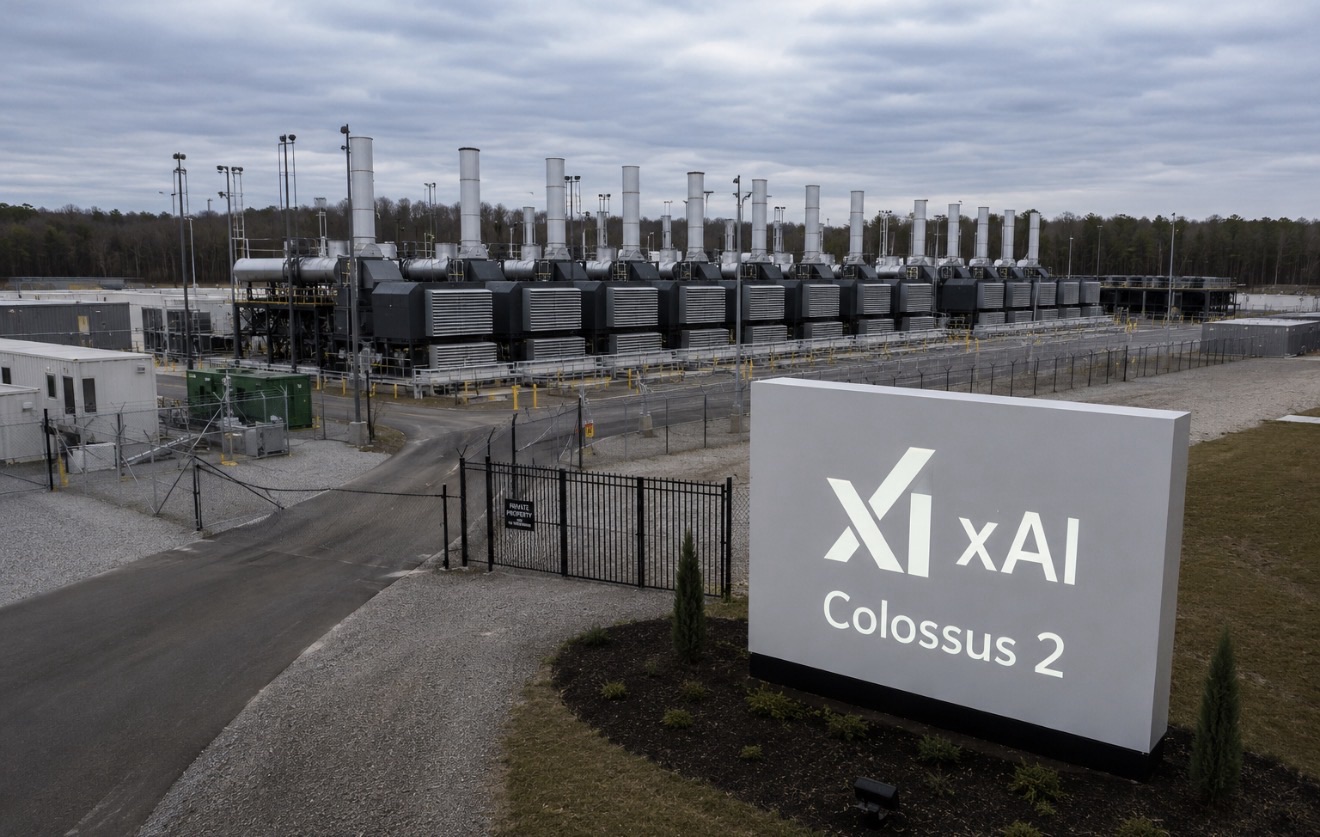
The dispute began in April when the NAACP filed suit under the federal Clean Air Act, alleging that xAI installed dozens of portable natural-gas turbines to power its massive Colossus 2 supercomputer facility without obtaining the permits required under federal law.
The turbines are located in Southaven, Mississippi, near the Tennessee border and within proximity of residential neighborhoods, schools, and churches. In May, the NAACP sought an emergency court order to halt operations, arguing that emissions from the turbines could increase health risks including asthma attacks, respiratory illnesses, and heart disease among nearby residents.
The Justice Department responded with a dramatically different argument.
In its filing, government attorneys said shutting down the turbines would threaten “American national, economic, and energy security.”
The department relied heavily on a declaration from Cameron Stanley, the Defense Department’s chief digital and artificial intelligence officer, who stated that the military version of xAI’s chatbot, Grok, has become an important tool for classified government operations.
According to the filing, the Defense Department used Grok Gov, a government-specific version of the AI platform, during recent military operations involving Iran. The declaration states that the technology helped support operations in which U.S. forces struck approximately 2,000 targets using more than 2,000 munitions over a 96-hour period.
Adam Gustafson, head of the Justice Department’s Environment and Natural Resources Division, argued that the federal government cannot allow private litigation to interfere with infrastructure it considers important to national defense.
The department further argued that only a small number of artificial-intelligence systems are authorized to operate on highly classified government networks and that Grok is among those approved systems.
The filing arrives at a notable moment for Musk’s business empire.
Just days earlier, SpaceX, which now owns xAI following a corporate restructuring earlier this year, completed what reports described as the largest stock offering in history. SpaceX now carries a valuation exceeding $2 trillion, making it one of the most valuable companies in the world and placing it ahead of many of America’s largest public corporations.
The ownership connection means the Southaven facility at the center of the lawsuit is now part of a company that also maintains extensive relationships with the federal government through defense, aerospace, communications, and technology contracts.
The legal challenge has drawn fierce criticism from environmental advocates.
Earthjustice, the law firm representing the NAACP, accused the administration of attempting to weaken one of the Clean Air Act’s most important enforcement mechanisms. The organization argues that citizen lawsuits have served for decades as a way for residents and community groups to enforce environmental laws when regulators fail to act.
If courts allow the government to halt such cases simply by citing national-security concerns, Earthjustice argues, similar protections could eventually be extended to other large industrial projects and corporate operators.
The Environmental Protection Agency, which typically oversees air-permit enforcement, is not participating directly in the litigation and referred questions regarding the filing to the Justice Department.
The result is a high-profile legal battle that places environmental law, artificial intelligence, national security, and executive authority on a collision course.
For businesses, the outcome could have implications far beyond one Mississippi data center.
The Clean Air Act’s citizen-suit provision has long been a factor companies consider when planning major industrial facilities, energy projects, and manufacturing operations. A ruling that allows national-security concerns to override those actions could reshape how companies evaluate legal and regulatory risks, particularly as AI firms race to build energy-intensive data centers across the country.
For residents living near the Southaven facility, however, the issue remains more immediate.
The central question is whether the turbines continue operating while the legal fight unfolds.
The court has not yet ruled on the NAACP’s request for an emergency shutdown order, and no hearing date has been announced. Until a judge issues a decision, the turbines remain online — and so does the broader debate over who ultimately gets to decide when environmental concerns give way to national-security priorities.
Washington – JBizNews Desk
© JBizNews.com All Rights Reserved. Reproduction or distribution without written permission is prohibited.