

The Federal Reserve left interest rates unchanged Wednesday, but its latest projections delivered a surprise: more policymakers now expect the next move to be a rate increase rather than a rate cut.
In its first policy decision under new Chair Kevin Warsh, the Fed voted 12-0 to keep the federal funds rate in a range of 3.50% to 3.75%, where it has remained since December.
The bigger story was not the decision itself, but what came next.
The Fed’s updated economic projections showed officials abandoning their earlier expectation of a rate cut this year. Instead, the median forecast now points to a benchmark rate of 3.8% by the end of 2026, compared with 3.4% in the Fed’s March outlook.
Of the 18 officials submitting forecasts, nine now expect at least one rate hike before year-end, while six foresee two quarter-point increases.
Just three months ago, most policymakers were still expecting lower rates.
Inflation Changes the Conversation
The shift reflects growing concern over inflation.
Fed officials now expect their preferred inflation gauge to finish the year at 3.6%, significantly above the central bank’s 2% target and well above the 2.7% forecast issued in March.
Higher energy prices have been a major factor behind the inflation outlook, forcing policymakers to reconsider the path of monetary policy.
The Fed’s latest projections also show:
- Economic growth: 2.2%
- Unemployment: 4.3%
- Inflation: 3.6%
The new forecasts suggest the central bank is becoming increasingly concerned that inflation could remain elevated longer than previously expected.
What It Means for Consumers
For households, the message is straightforward: borrowing costs are likely to remain high.
Mortgage rates, auto loans, business financing, and credit card interest rates are all influenced by the Fed’s policy stance. If the central bank ultimately raises rates again, those costs could increase further.
The upside for consumers is that savings accounts, money-market funds, and certificates of deposit may continue offering relatively attractive yields.
For Americans waiting for cheaper financing to purchase a home, vehicle, or expand a business, relief may be further away than expected.
Warsh’s First Meeting as Chair
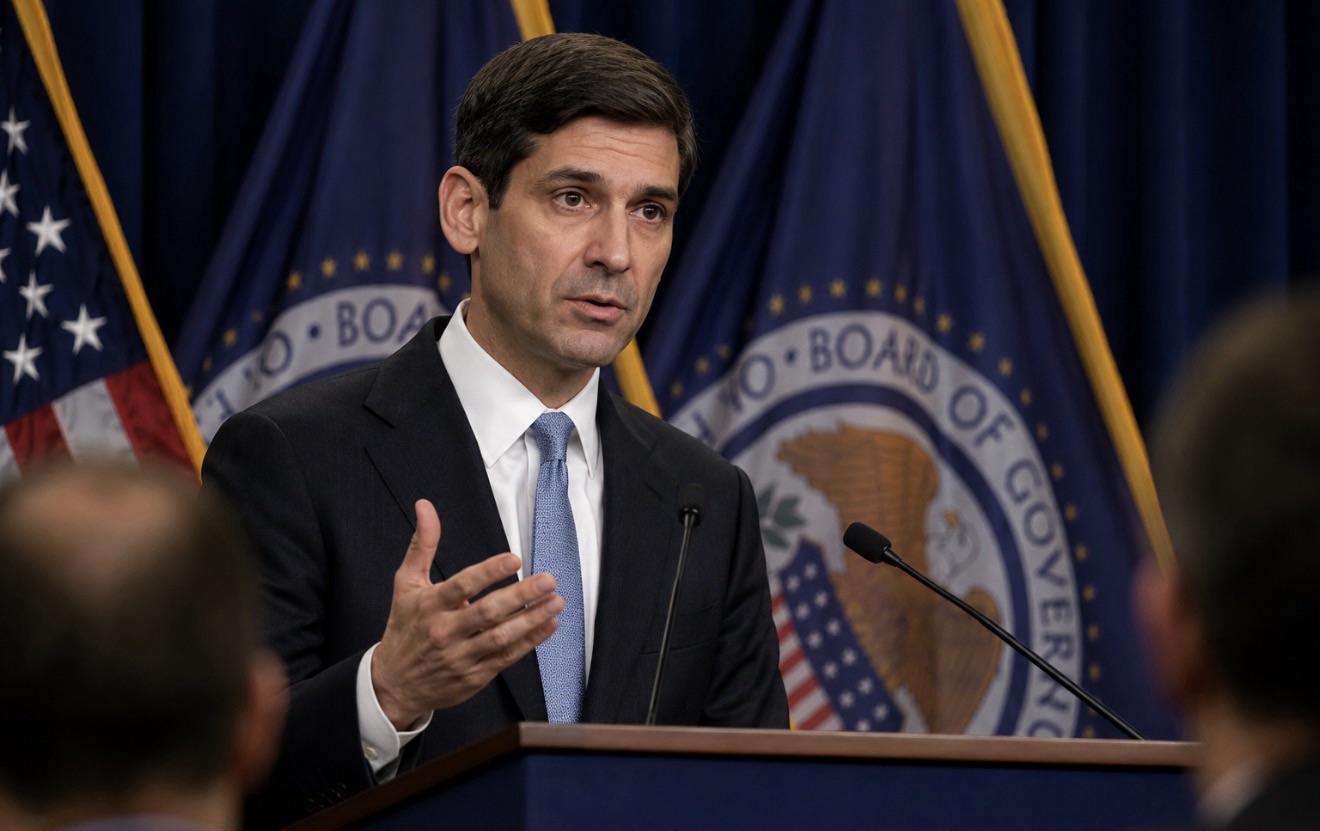
Wednesday’s decision marked the first policy meeting led by Kevin Warsh, who was nominated by President Donald Trump.
Warsh introduced a shorter and simplified policy statement and announced plans to review several aspects of how the Fed communicates with markets and the public.
In an unusual move, Warsh declined to submit his own interest-rate projection to the Fed’s closely watched “dot plot,” saying he did not believe it was helpful to the policymaking process.
He indicated the Fed would review its broader communications strategy, including projections, press conferences, meeting minutes, and transcripts.
Markets React
Investors reacted negatively to the Fed’s more hawkish tone.
By Wednesday afternoon:
- The S&P 500 fell about 0.6%
- The Nasdaq declined roughly 0.7%
- The Dow Jones Industrial Average lost approximately 160 points
- The 2-year Treasury yield jumped nearly 11 basis points
The market reaction reflected disappointment among investors who had hoped a new Fed chair might signal a path toward lower interest rates.
Instead, policymakers delivered a clear message: inflation remains the priority.
Looking Ahead
The Federal Reserve is still officially in a wait-and-see mode, but the debate inside the central bank appears to be changing.
For much of the past year, the question was when rates would be cut.
Now, for the first time in this cycle, the discussion has shifted toward whether the next move may need to be a hike.
JBizNews Desk
Washington, D.C.
© JBizNews.com All Rights Reserved. Reproduction or distribution without written permission is prohibited.