
 JBizNews
Kennedy Announces $700 Million Mental Health Initiative, but Critics Say Most Funds Were Already Approved
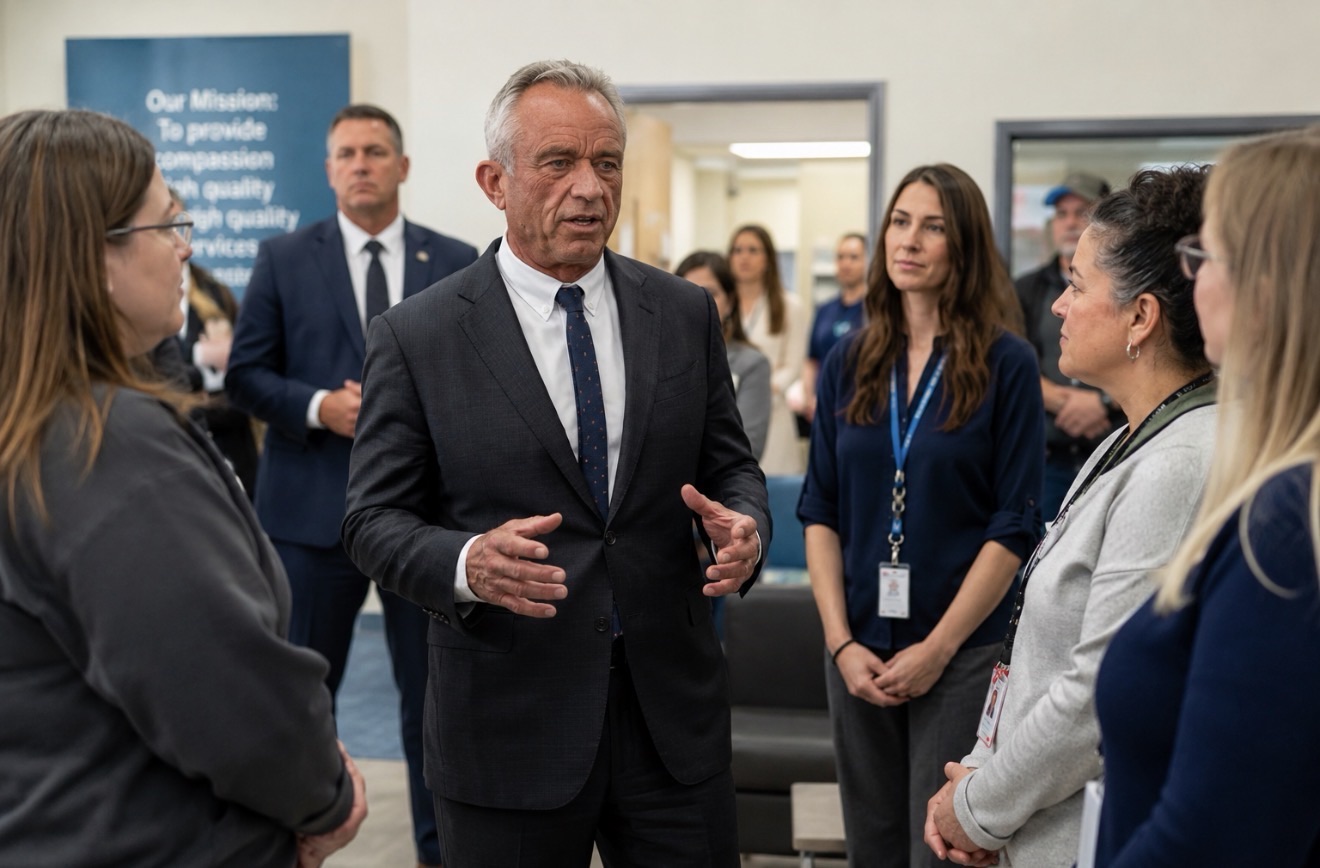
Health and Human Services Secretary Robert F. Kennedy Jr. announced more than $700 million for addiction treatment, mental health services, and homelessness programs during a visit Wednesday to an Easterseals behavioral health clinic in Clinton Township, Michigan, calling the effort part of the administration’s push to expand recovery services nationwide.
Kennedy said the investment would help move people struggling with addiction and mental illness off the streets and into treatment, strengthen families, and improve public safety.
But behavioral health advocates and policy experts quickly noted that most of the money is not newly appropriated funding. Instead, they said, the majority represents grants and programs that had already been approved by Congress and were expected to be distributed through existing federal channels.
The distinction is important because new appropriations expand federal spending, while previously approved grants simply continue programs already operating throughout the country.
The only major newly launched initiative announced Wednesday was a $96 million program known as STREETS — short for Safety Through Recovery, Engagement, and Evidence-Based Treatment and Support. The program will fund eight communities, each eligible for up to $3 million annually for four years, to coordinate treatment, housing, healthcare providers, law enforcement, and local governments in addressing homelessness, addiction, and serious mental illness.
The remaining $612 million will be distributed through existing federal behavioral health programs.
The largest allocation, nearly $239 million, supports the 988 Suicide and Crisis Lifeline, the national crisis hotline that provides phone, text, and online support around the clock. Another $223 million will go to community behavioral health clinics that provide mental health and substance-use treatment regardless of a patient’s ability to pay. Additional grants support mobile crisis teams, childhood trauma programs, tribal suicide prevention initiatives, and services for at-risk infants.
The funding announcement is tied to President Donald Trump’s Great American Recovery Initiative, created by executive order earlier this year. Kennedy co-chairs the effort alongside Kathryn Burgum, the White House senior adviser for addiction recovery.
Drawing on his own history of addiction recovery, Kennedy emphasized the role of faith and spirituality in treatment. He praised 12-step programs such as Alcoholics Anonymous and said faith-based recovery organizations would receive equal consideration for federal funding opportunities. He stressed that secular providers would continue to receive support as well.
The announcement comes after several months of controversy surrounding federal behavioral health funding. Earlier this year, HHS briefly canceled approximately $2 billion in mental health and substance-abuse grants before reversing course following criticism from lawmakers and treatment providers.
The administration also faced legal challenges after attempting to terminate billions of dollars in public-health grants tied to pandemic-era programs. A federal court later blocked those efforts.
Because of that history, providers say they are paying close attention to whether announced funding is truly additional money or simply part of existing grant cycles.
HHS has not disputed that much of Wednesday’s funding will flow through established programs. Instead, department officials have emphasized that the administration intends to direct resources toward recovery-focused approaches, accountability measures, and faith-based partnerships.
For treatment providers, the ultimate measure of success will not be the size of the announcement but whether funding reaches clinics, crisis lines, and local recovery organizations quickly and consistently.
The new STREETS initiative will likely serve as the administration’s first major test. If the program successfully connects vulnerable individuals with treatment, housing, and support services, officials will point to it as evidence that the recovery strategy is working. If implementation stalls, critics may argue that the announcement represented more symbolism than substance.
JBizNews Desk
Washington, D.C.
© JBizNews.com All Rights Reserved. Reproduction or distribution without written permission is prohibited.