
 JBizNews
Global Energy and Shipping Markets Brace for Operational Volatility Following Landmark Geopolitical Treaty
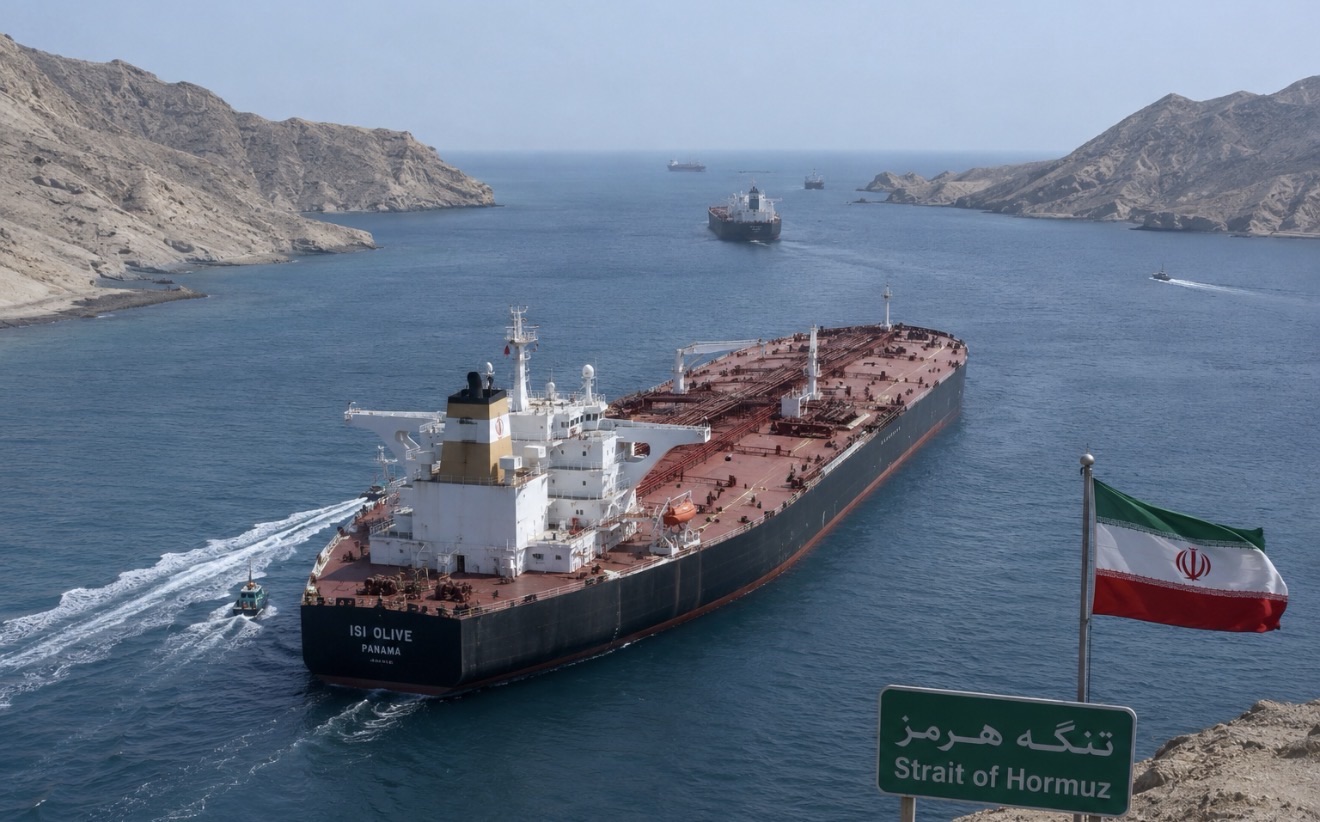
The Associated Press reported on Friday, June 19, 2026, that international shipping routes and commercial commodity desks are experiencing significant transactional swings following the signing of a historic diplomatic treaty between the United States and Iran. The bilateral agreement, which formally ends the recent military conflict between the two nations, contains strict legal mandates to immediately reopen the critical Strait of Hormuz to commercial oil tanker traffic.
According to live tracking data from international maritime hubs, global energy prices reacted sharply to the sudden easing of Middle Eastern shipping bottlenecks. On electronic exchanges early Friday, Brent crude, the international benchmark, slid 0.4% to trade at $79.50 per barrel, while the domestic benchmark, West Texas Intermediate, held completely flat at $75.85 per barrel. Commercial analysts noted that while current energy prices remain well above the $70 baseline recorded prior to the outbreak of regional hostilities, they have collapsed dramatically from the $100-plus peaks that crippled corporate logistics networks just a few weeks ago.
The immediate drop in global crude costs offers critical breathing room for commercial transport firms and retail logistics networks that have struggled under ballooning fuel surcharges. In the domestic retail sector, the average price of consumer gasoline has successfully dipped back below the $4 per gallon threshold, though corporate shipping costs remain elevated. The sudden resumption of maritime transit through the Persian Gulf is expected to gradually relieve supply-chain pressures for a wide array of consumer goods, which had seen wholesale costs climb over the past month due to forced oceanic rerouting.
However, the initial marketplace optimism surrounding the peace accord was partially checked by a sudden postponement of high-stakes diplomatic talks. International trade representatives confirmed that scheduled negotiations regarding the long-term status of Iran’s nuclear material programs and formalized energy quotas were abruptly pushed back. The unexpected diplomatic delay triggered immediate caution across global financial centers, reminding corporate operators that long-term regional stability remains highly vulnerable to political friction.
The geopolitical developments triggered a mixed performance across major international equity boards during thin regional trading sessions. In Asia, Tokyo’s Nikkei 225 index wavered throughout the day before closing 0.3% higher to hit a record-breaking lifetime high of 71,250.06 points, even as local data showed core Japanese consumer inflation holding steady. Conversely, South Korea’s Kospi index slipped 0.1% to finish at 9,052.42 points, pulling back slightly from an all-time record set during the previous session.
European equity indices showed similar fragmentation as commercial participants parsed the shifting energy landscape alongside regional corporate updates. In afternoon trading, Germany’s DAX index advanced 0.2% to reach 25,079.30 points, while France’s CAC 40 remained virtually unchanged at 8,467.75 points. In London, the FTSE 100 shed 0.2% to land at 10,376.64 points, weighed down by localized profit-taking among major multinational energy producers and mining conglomerates.
The global trading day faced significantly lower overall volume due to a complete closure of the American financial infrastructure. The New York Stock Exchange and Nasdaq suspended all regular stock trading on Friday in observance of the Juneteenth federal holiday, while top domestic banking institutions—including Bank of America, JPMorgan Chase, and Wells Fargo—fully halted retail operations and electronic payment processing. Regular corporate delivery logistics and domestic shipping operations are scheduled to resume normal schedules on Saturday, June 20.
For businesses, the reopening of the Strait of Hormuz offers the first meaningful relief to global shipping networks since the conflict began. Yet the delayed diplomatic talks underscore that while tanker traffic may be moving again, the political and economic uncertainty surrounding one of the world’s most important energy corridors is far from over.
JBizNews Desk | Global Markets
© JBizNews.com All Rights Reserved. Reproduction or distribution without written permission is prohibited.