
 JBizNews
Carvana Pushes Into New-Car Sales With Online-First Strategy That Could Reshape Dealerships
Carvana, the company that built its name selling used cars through its signature glass-tower vending machines, is now making a major push into the new-car business — and the strategy could reshape how Americans buy vehicles.
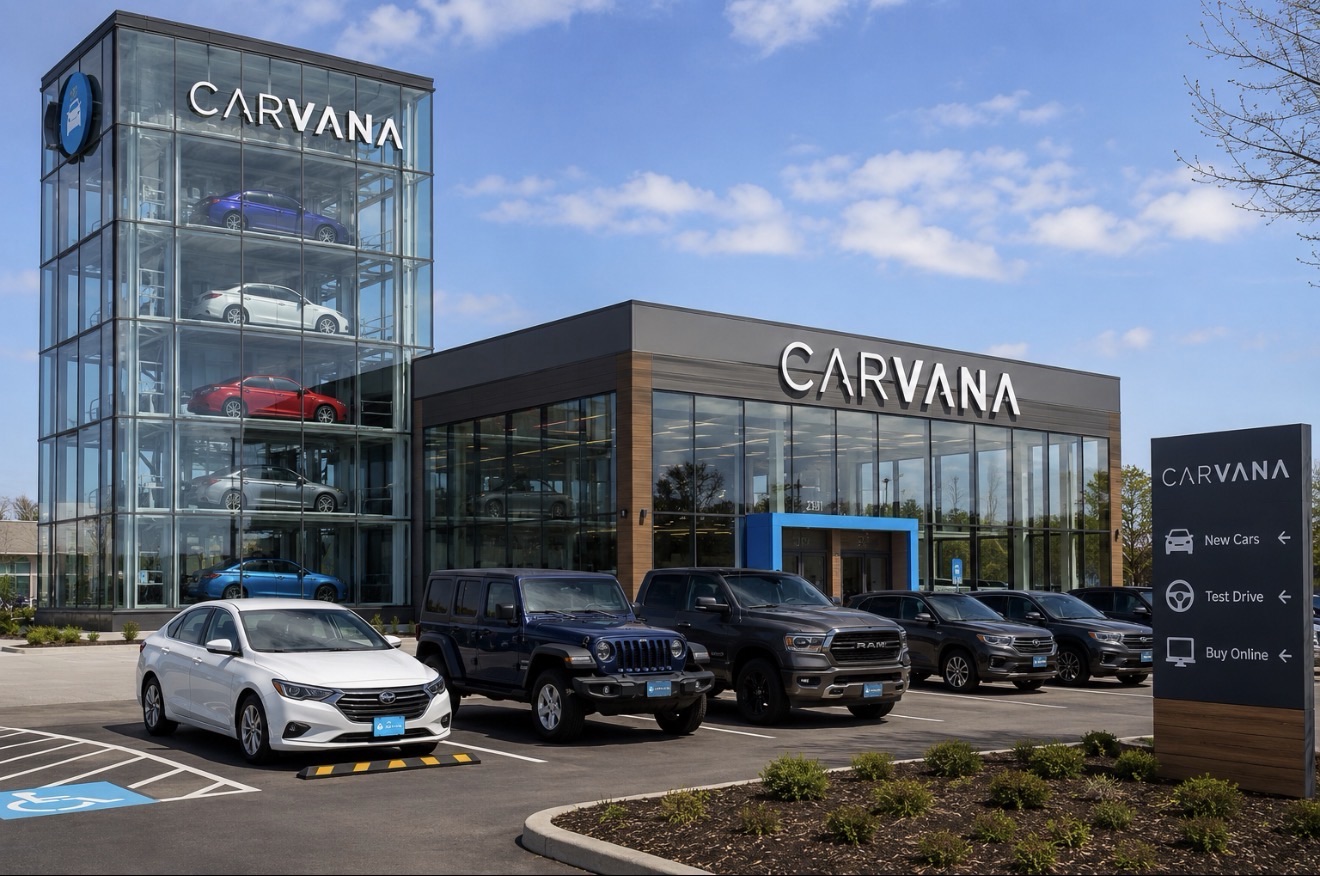
The company showcased its vision this week at a Stellantis dealership in Dallas, where executives demonstrated a retail model that looks very different from the traditional dealership experience.
There are no salespeople roaming the showroom floor and no negotiation desks. Instead, the location functions as a customer experience center where shoppers can explore vehicles, take self-guided test drives, and complete the entire purchase process online.
“Every single car that we sell, whether it’s used or new, is online,” said Tom Taira, the Carvana president overseeing the company’s new-vehicle strategy.
The approach extends the formula that helped transform Carvana into one of America’s largest used-car retailers. The company is betting consumers increasingly prefer transparent pricing, minimal pressure, and digital convenience over the traditional dealership experience.
Carvana has quietly been laying the groundwork for this expansion. Since last year, the company has acquired seven Stellantis franchises representing brands including Jeep, Ram, Chrysler, and Dodge. Those dealerships are located in markets where Carvana already maintains a strong customer base, including Dallas, Atlanta, Boston, Cleveland, Phoenix, Sacramento, and San Diego.
Early results have attracted attention throughout the auto industry.
One Arizona dealership acquired by Carvana reportedly became Stellantis’ highest-volume store in the country after the transition, selling more than 700 new vehicles in a single month compared with roughly 30 to 50 monthly sales before the acquisition.
The move gives Carvana access to opportunities that do not exist in the used-car market alone.
Franchised dealerships can participate in manufacturer-backed programs, exclusive dealer auctions, and new-car financing channels. The business also creates additional trade-in opportunities that can feed Carvana’s used-vehicle inventory operation.
The opportunity is massive. According to the National Automobile Dealers Association, nearly 17,000 franchised dealerships operate across the United States, generating well over $1 trillion in annual sales.
For consumers, Carvana’s appeal remains straightforward.
Buying a vehicle has long ranked among the least popular major consumer experiences. Many buyers dislike lengthy negotiations, financing office pressure, and spending hours inside a dealership. Carvana’s model attempts to eliminate much of that friction by allowing customers to complete most of the process digitally.
The company is also taking a different path than electric-vehicle manufacturers such as Tesla and Rivian, which have spent years challenging state franchise laws.
Rather than fighting the system, Carvana is working within it by purchasing existing dealership franchises and maintaining compliance with state regulations governing new-car sales.
Questions remain about how the model will evolve.
Industry analysts note that vehicle servicing, warranty work, customer retention, and parts operations remain central to dealership profitability. How Carvana integrates those functions into its digital-first strategy could determine whether the model succeeds at scale.
Investors are watching closely as well.
While some analysts see the initiative as one of the most disruptive developments in auto retailing in decades, others are waiting to see whether the approach can be replicated across multiple markets and brands.
The Dallas location is effectively serving as a live test case.
Carvana is wagering that customers still want to see and drive a vehicle in person but increasingly want to complete the transaction online. If that bet proves correct, traditional dealerships across the country may find themselves under growing pressure to modernize their own sales experience.
For now, the company is taking a measured approach. But if the model continues producing strong results, the future of new-car retailing could look very different from the one Americans have known for generations.
JBizNews Desk
Detroit
© JBizNews.com All Rights Reserved. Reproduction or distribution without written permission is prohibited.