

New York (VINNEWS/Rabbi Yair Hoffman) Bnei Torah are now facing a challenge created by a triple-fronted Yetzer Harah. On the one hand, there is the challenge to our very midos – which define who we are. On the other hand, there is a challenge to the very concept of who we are as the Am Hashem. And on the third-hand, there is a challenge to our Mesorah – the Gedolim whose world-view were forged in the Mussar/iron furnaces of the great Yeshivos of Europe – the Mussar traditions Rav Yisroel Salanter zt”l, Rav Simcha Zissel Ziv, of Kelm zt”l, the Alter of Slabodka zt”l, Rav Yeruchem Levovitz of Mir zt”l, Rav Chaim Shmulevitz of Mir zt”l, Rav Mordechai Gifter of Telse Yeshiva zt”l, Rav Nachum Partowitz of Mir Yerushalayim zt”l, Rav Shteinman zt”l, Rav Elyashivz t”l, and Rav Chaim Kanievsky zt”l.
The response must be three things that must be held at once, and the difficulty of this moment is so great that many find it nearly impossible to hold all. But to hold all three is what we must do.
The first is a real and important concern. A current within Zionism — from its early ideologues to many of its current voices — has sought to redefine the Jewish people as a nation like all the nations: a people defined by land, language, sovereignty, and army, explicitly in place of a people defined by Torah and by being the Am Hashem. Many even have a deep sinah for Bnei Torah and Torah. To the extent any movement tries to sever Klal Yisroel from that identity — to undo the mesorah and thousands of years of what Torah-based Yiddishkeit has always been — it must be opposed, and our gedolim across the spectrum opposed it. This response does not soften that truth in the slightest.
The second is equally a Torah obligation. No hashkafic dispute, however serious, may be permitted to corrode our midos, our gratitude, or our basic humanity toward members of Klal Yisroel who place their bodies between us and those who would murder us. We must have an attitude of Kiruv, for nebach, these lost neshamos.
And the third is also a Torah obligation. It is to hold on dearly to our Mesorah. Shma bni mussar avicha v’al titosh toras imecha. To strongly hold to the worldview of our past Gedolim, who clearly spoke of the centrality of maintaining our Midos.
The Challenge
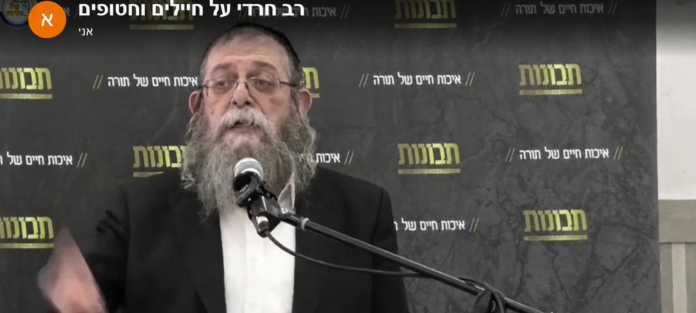
HaGaon Rabbi Yisrael Bunim Schreiber shlit”a (born 5718/1958 in Bnei Brak) is the son of the dayan Rav Pinchas Schreiber zt”l, grandson of Rav Avraham Yitzchok Rothstein of the Diskin Orphanage, talmid of Ponovezh and Brisk, and son-in-law of Rav Yaakov Yehuda Braverman, He is the rosh yeshiva of Yeshivas Meah Shearim, one of the roshei yeshiva of Yeshivas Nesiv HaDaas in Yerushalayim and rav of the “Bnei Pinchas” kehillah in Ashdod. He previously headed the Gerrer Yeshivas Ohr Simcha in Haifa and delivered Daf HaYomi b’iyun shiurim to ram”im and maggidei shiurim in Ramat Elchanan. However, he is not representative of the traditions of our mainstream mussar Yeshivos. He does represent a stream of hashkafa that was held by a minority of our Gedolei Torah which ran counter to that of Agudah.
A transcript of Rav Schreiber shlita’s remarks delivered shortly after October 7th at a gathering of bnei Torah, addressed his recommended attitude toward Israeli soldiers, toward the Jews murdered and taken captive on Simchas Torah of 5784, and toward the question of hakaras hatov toward soldiers. Because these remarks invoke Torah, they deserve a response rooted in Torah: written without rancor, faithful to the mesorah, and conceding what is true in them before answering what is not.
The error running through the remarks is not that they raise the first concern mentioned above. It is that they allow the first to annihilate the second and third.
The remarks lean on the Chofetz Chaim’s parable: a man fell into a pit, another pulled him out and nursed him for months, and when praised, the rescuer admitted, “I dug the pit.” The hashkafic point — applied to the State as an ideological entity — has force.
But the parable says nothing about the individual Jew: the twenty-year-old murdered in his bed on Simchas Torah, or the soldier who fell shielding a Jewish town. He did not dig the pit. He was thrown into it. Our grief and our hakaras hatov are owed to him — the person — not to the “entity.” The Brisker Rav, the Satmar Rav, and the fiercest opponents of Zionism were uncompromising in ideology, yet none taught that a Jew should feel nothing for murdered Jewish children. Chalilah. One may hold the hardest hashkafic line and still weep. Indeed, one must still weep. And let’s not forget the author of the Lecha Dodi, Rav Shlomo Alkabetz, who was murdered by a descendant of Yishmael four centuries before the advent of modern Zionism. He, certainly, did not dig the pit.
- “The garbage collector” — gratitude and hishtadlus reframed as identical questions
“What is the correct attitude of gratitude and hishtadlus toward those who collect the garbage every morning? It is exactly the same question.”
It is not the same question, because the garbage collector does not collect garbage through mesiras nefesh — at the risk of his own life. Dovid HaMelech refused to drink the water that three warriors broke through enemy lines to bring him, pouring it out and declaring, “ha’dam ha’anashim ha’holchim b’nafshosam” — “it is the blood of the men who went at the risk of their lives” (Shmuel II 23:17). Dovid did not treat self-endangering men as vendors. The Sefer HaChinuch (Mitzvah 33) teaches that one must “recognize and repay good and not be a kafuy tovah,” calling ingratitude “middah ra’ah u’meusah b’tachlis” — utterly base — and extends gratitude even to benefit conferred without intent. If gratitude is owed even where there is no risk and no intent, how much more where a man knowingly faces death.
The correct response:
“Dovid HaMelech poured out as a libation the water his men risked their lives to bring, calling it their very blood. The garbage collector does not place his own life at risk. Gratitude is owed even to a benefactor who never intended to help us — how much more to one who offered his life.”
- “The Rock, His work is perfect” — it was aimed only at the living, not at the slain
“It was not aimed at those who were killed there, but at everyone whom it caused anxiety… It is not our business why they were killed. We are not supposed to be prosecutors or defenders of them.”
The premise — that “hatzur tamim pa’alo” (Devarim 32:4), Hashem’s justice is perfect, and that we do not sit in the “secretariat of Gehinnom” judging the slain — is true and even praiseworthy. Refraining from accusing the murdered dead is exactly right; the Gemara condemns those who “throw off the yoke” by blaming victims. But the conclusion drawn from it — that the dead are therefore none of our concern — does not follow. One can decline to judge a fallen Jew while still being obligated to mourn him. The Torah’s response to a single unexplained Jewish death is not detachment but communal trembling: the entire Mitzvah of eglah arufah (Devarim 21) forces the elders to declare “yadeinu lo shafchu” over one anonymous corpse. We do not judge the slain; we grieve them. The two are not the same act.
The correct response:
“Yes — we do not work in the secretariat of Gehinnom, and we do not accuse the murdered. But declining to judge a fallen Jew is not the same as feeling nothing for him. The Torah builds an entire parshah of trembling around one body in a field. We withhold judgment and we still mourn.”
- “What is your connection to the casualties? Why relate to them at all?”
“The attitude toward the casualties — who said there needs to be any attitude? What is your connection to them? Why are you supposed to relate to them?”
This severs the central nerve of Knesses Yisroel. The Gemara (Shevuos 39a) states the foundation: “kol Yisroel areivim zeh ba’zeh” — all Jews are guarantors for one another. The Rambam (Hilchos Aveil 14:1) rules that sharing in a fellow Jew’s distress is included in “V’ahavta l’re’acha kamocha,” owed to every member of Klal Yisroel. Hillel teaches “al tifrosh min ha’tzibbur” (Avos 2:5), and the Rambam (Hilchos Teshuvah 3:11) classifies one who detaches from the suffering of the community — even while keeping every mitzvah — as having no portion in the World to Come. “What is your connection?” is, in the Torah’s own vocabulary, the wrong question. The connection is called being a Yid.
The correct response:
“Kol Yisroel areivim zeh ba’zeh. The Rambam rules that detaching from the pain of the tzibbur — even while keeping every mitzvah — forfeits one’s share in Olam Haba. Our connection to a fallen Jew is not optional; it is the connection of arvus, of one body that feels its own wound.”
- “Is that so!?” — the denial that the slain are “our brothers”
“They are our brothers — ‘They are??’ … It is bobbe-maisos. It is not brothers and nothing of the sort. It is just fantasies!”
The Torah calls every Jew “achicha” — your brother — repeatedly and as a matter of law (e.g., Devarim 15:7, Vayikra 25:46, which forbids ruling over “achicha b’nei Yisroel” with harshness). The brotherhood of Jews is not a sentiment to be dismissed as bobbe-maisos; it is the basis of dozens of mitzvos. The argument offered — that we do not feel this brotherhood at every routine death, so it is fantasy here too — proves the repasuk of what it intends. That we have grown numb to the constant toll of achim lost to illness and accident is itself a deadening of feeling to be corrected, not a proof that brotherhood is imaginary. The cure for under-feeling one death is not to extinguish feeling for fifty.
The correct response:
“The Torah calls every Jew achicha — your brother — as a matter of law, not sentiment. If we have grown numb to the daily loss of our brothers, that numbness is the flaw to be healed, not the proof that brotherhood is fantasy. We do not cure indifference to one by erasing grief for fifty.”
- “One killed or fifty — there is nothing real in it”
“What practical difference does it make whether one was killed or fifty? People get more worked up over it. But it’s not a real thing. There is nothing real in it.”
The Mishnah (Sanhedrin 4:5) is built on the opposite principle: “kol ha’me’abed nefesh achas… k’ilu ibed olam malei” — whoever destroys one soul is as though he destroyed an entire world. The Mishnah’s whole purpose is to teach that number does not diminish the infinite weight of each life. To call fifty murdered Jews “not a real thing” contradicts the Mishnah every Cheder yingel learns.
The correct response:
“Whoever destroys a single soul, it is as though he destroyed a whole world. Number does not shrink the infinite. Fifty murdered Jews are fifty worlds — that is the most real thing there is. If anything, we feel too little, not too much.”
- “The cruelty of the Ishmaelites is no different from a car wheel”
“The people killed in a car accident look, after the accident, exactly like the people who acted there. The same cruelty. Only here the wheels did it, and there the Arab did it.”
Halacha draws the sharpest possible line between an accident and willful murder by the hand of an enemy. An ones — an accident — and retzichah b’yad — murder — are not interchangeable; the Torah devotes whole sections to distinguishing the inadvertent from the intentional (Bamidbar 35; Devarim 19). More to the point, blood spilled by an enemy who hates Jews as Jews engages the category of “sonei Yisroel” and the Torah’s own response to Amalek and to those who rise against us “l’chaloseinu”. A wheel has no malice. To equate the two is to erase the moral unipasuk the Torah is built to defend. Even the remarks concede the cruelty is “the nature of Ishmael” — which is precisely an admission that an intending agent acted, not a mechanism.
The correct response:
“The Torah devotes whole parshiyos to separating the accidental from the willful. A wheel has no malice; an enemy who murders Jews because they are Jews engages the category of sonei Yisroel. To call them the same is to flatten the very distinction the Torah exists to protect.”
- “The Holy One is conveying a message — but it is not connected to them or to the war”
“Of course the Holy One is conveying a message… but it is not connected to them and not connected to the war. You need to learn from the story itself.”
That every event carries a message and demands teshuvah is true and is the Rambam’s explicit ruling (Hilchos Ta’aniyos 1:1–3): one who treats calamity as mere happenstance, “derech mikreh,” is guilty of achzarius — cruelty. So far, correct. But the claim that the message is detached from the specific event — that the slaughter and the war are incidental scenery — runs against the same Rambam, who roots the call to repent precisely in the nature of the calamity that struck. We are meant to read this tragedy, in its particulars, as the call.
The correct response:
“Yes — every event is a call to teshuvah, and to treat tragedy as mere happenstance is, in the Rambam’s word, cruelty. But the Rambam roots the call in the calamity itself. The message is not detached from the slaughter and the war; it is spoken through them.”
- “1,200 killed is not tza’ar hatzibbur”
“The suffering of the community is not when one thousand two hundred people were killed. That is not more ‘suffering’ than a bus that overturned.”
The Rambam (Hilchos Ta’aniyos 1:1–2) defines a communal calamity as “eis tzarah she’titzar bah ha’tzibbur” and lists cherev — the sword, war — as the paradigm case obligating the entire nation to cry out, fast, and repent. A coordinated massacre of twelve hundred Jews, followed by a war that has emptied homes and shuls of fathers and sons across the land, is the textbook tzaras ha’tzibbur of the Rambam. It is difficult to name a clearer example in living memory.
The correct response:
“The Rambam lists the sword — war — as the paradigm of the communal calamity that obligates the whole nation to cry out and do tshuvaht. A massacre of twelve hundred Jews and a nationwide war is not a bus accident; it is the textbook tzaras hatzibbur of the Rambam.”
- The Meron contrast — “there you feel connected because they are your people”
“The Meron disaster — l’havdil, l’havdil. There you feel connected because they are your friends, your family, your people… S’iz dayne! But those killed in the war — don’t tell me ‘brothers.’”
The kedoshim of Meron were precious and Klal Yisroel rightly mourned them. But the principle implied here — “I grieve for my people, the ones who look and daven like me, not for those others” — is the very parochialism the Torah forbids. “V’ahavta l’re’acha kamocha” (Vayikra 19:18) is not “l’re’acha she’domeh lecha” — your fellow who resembles you. Rabbi Akiva called this pasuk “klal gadol ba’Torah.” A Jew murdered al kiddush Hashem for the crime of being a Jew is dayne — yours — whether or not he wore your levush. The honest feeling of kinship the remarks acknowledge toward Meron is the correct feeling; it must simply be extended to every Jew, as the Torah commands.
The correct response:
“V’ahavta l’re’acha kamocha is not ‘love the one who resembles you.’ Rabbi Akiva called it the great principle of the whole Torah. A Jew slaughtered for being a Jew is yours — dayne — in your levush or out of it. The kinship felt toward Meron is right; it must reach every Jew.”
- “Why do the hostages interest you more than the sick in the hospitals?”
“Is there a matter of ‘bearing the yoke’ with all those who lie sick in the hospitals? Why do the hostages interest you more?”
The Torah’s own ranking answers this directly. The Gemara (Bava Basra 8b) calls pidyon shevuyim “mitzvah rabbah” and explains that captivity is graver than all afflictions because “ha’shevi b’chlal kulhu” — the captive is subject to every affliction at once: starvation, the sword, and death. The Rambam (Hilchos Matnos Aniyim 8:10) rules: “Ein lecha mitzvah gedolah k’pidyon shevuyim,” and that delaying it needlessly is tantamount to bloodshed. So the hostages “interest us more” not by sentiment but by the Rambam’s psak. We carry the sick as well — both deserve our concern — but the Torah assigns to captivity a unique and superior urgency.
The correct response:
“The Rambam writes there is no mitzvah greater than pidyon shevuyim, because the captive faces every affliction at once. The hostages are not a sentiment we happen to feel — they are a din that ranks above almost all else. We carry the sick too, but the Torah itself places the captive first.”
- “We sit here as parasites” — feelings of inferiority as the true source
“We have feelings of inferiority… as if they are doing while we sit here as parasites… All these feelings stem from a feeling of inferiority. There is nothing else to it.”
There is a genuine insight buried here: hakaras hatov must flow from clarity, not from guilt, and a bochur who learns should do so with conviction, not with a cringe. True. But the diagnosis that all feeling for the slain is merely disguised guilt is false and, worse, corrosive. The Torah commands “nosei b’ol im chaveiro” — bearing the burden with one’s fellow (Avos 6:6, among the 48 ways Torah is acquired). Moshe Rabbeinu “went out to his brothers and saw their burdens” (Shmos 2:11), and Rashi explains he set his eyes and heart to grieve with them — this is the conduct that made him fit to lead. Empathy for suffering Jews is not a neurosis to be explained away; it is a kinyan ha’Torah and the trait of the greatest of our leaders.
The correct response:
“Yes — our learning should rest on clarity, not guilt. But nosei b’ol im chaveiro is one of the forty-eight ways the Torah is acquired. Moshe went out and saw his brothers’ burdens and grieved with them — and that is what made him their leader. Empathy is not a neurosis to diagnose away; it is a kinyan of Torah itself.”
- “My front is the Mir Yeshiva — woe to that disgrace”
“My front is the Mir Yeshiva. Woe to that shame and that disgrace! Should Torah be the front of the war?”
The instinct being mocked is, in fact, a Torah truth — when said with the right heart. “Torah magna u’matzla” — Torah shields and rescues (Sotah 21a). Chazal teach that Dovid’s warriors prevailed in the merit of those who sat and learned, and that Yoav’s sword succeeded only because of the beis medrash (Sanhedrin 49a). The yeshiva is a front. But — and this is the heart of the matter — a soldier on one front does not hold a soldier on another front in disdain. He honors him, because they defend the same nation from different positions. The Mishnah binds them as equals: “Im ein kemach ein Torah, im ein Torah ein kemach” (Avos 3:17) — without bread no Torah, without Torah no bread; mutually dependent, never ranked. The phrase is not a disgrace. The disgrace would be to say it with contempt for the Jew at the other front.
The correct response:
“Torah magna u’matzla — the yeshiva truly is a front. But a soldier at one front honors the soldier at another; he does not sneer at him. Im ein kemach ein Torah, im ein Torah ein kemach — the two are bound as equals, never ranked. We are the quiet scientists guarding a nation that cannot see our work; that is cause for humility and gratitude, never disdain.”
- “Why don’t yeshiva students go to the army? — you have no answer”
“Why do yeshiva students not need to go to the army? — and you have no answer. Except for that foolish answer that you are ‘serving here.’”
There is a serious and time-honored answer, and it is precisely the one being dismissed — though it must be stated with humility rather than scorn. Chazal teach that “osek ba’Torah” carries protective and even existential weight for Klal Yisroel; the Rambam (end of Hilchos Shemittah v’Yovel 13:13) describes the one who devotes himself wholly to Hashem’s service as set apart “kodesh kodashim.” The position that the masmid is genuinely contributing to the nation’s defense is not “foolish”; it is the considered view of gedolei Yisroel. But the way to vindicate it is not by belittling the soldier — that undermines the claim, for it reveals contempt rather than the ahavas Yisroel that should animate the lamdan. The answer is real; the disdain is what discredits it.
The correct response:
“There is a real answer — that one who toils in Torah is kodesh kodashim and a genuine shield for the nation. But that answer is vindicated by deeper avodah and deeper ahavas Yisroel, never by belittling the soldier. Contempt does not strengthen the lamdan’s claim; it discredits it.”
- “By King David there was an army — but here everything is contrary to law”
“By King David there was an army because he had a state kosher according to law… Here, everything is contrary to law! If we behaved according to law, we would not be in this situation today.”
The hashkafic premise — that a Torah polity is the ideal and that much of the present order departs from it — is a legitimate position with deep roots. But two qualifications are decisive. First, hishtadlus to defend Jewish life from murderers is not suspended because the surrounding political order is flawed; pikuach nefesh and the defense of Jews against those who come “l’horgecha” (Sanhedrin 72a, “haba l’horgecha hashkem l’horgo”) do not wait for an ideal state. Second, and more important here: even if one holds the entire enterprise is “contrary to law,” that is a claim about the entity — and we have already conceded the entity may be critiqued. It says nothing about the individual soldier, who did not legislate the state and did not dig the pit, but only stood between his people and slaughter.
The correct response:
“Whatever one holds about the polity, the defense of Jewish life from those who come to murder us is pikuach nefesh — haba l’horgecha hashkem l’horgo — and does not wait for an ideal state. And a critique of the entity is not a verdict on the individual soldier, who did not build the state and did not dig the pit.”
- “Rav Chaim Shmuelevitz — unequivocally, no!”
“Rabbi Chaim Shmuelevitz writes in Sichos Mussar that they sacrifice their lives for our sake, so we are indebted… ‘Unequivocally, no! He did not hold that way.’”
Rav Chaim Shmuelevitz zt”l, the Mirrer Rosh Yeshiva, taught at length that hakaras hatov is not canceled by the benefactor’s motives. His famous mussar lesson: the Torah commanded that Moshe not strike the Nile (the plagues of blood and frogs came through Aharon) and not strike the dust (the plague of lice likewise), because the water had sheltered the infant Moshe and the sand had concealed the Egyptian he buried (Rashi, Shmos 7:19, 8:12).
If the Torah demands gratitude toward water and sand that felt nothing and intended nothing, the claim that one owes nothing to a living Jew who shielded one’s body cannot stand. To set aside Rav Chaim’s recorded words with “he did not hold that way” and “permit me to skip the answer” requires far more than an assertion. The Mesilas Yesharim (ch. 19) adds that blunting the sense of gratitude is a mark of coarseness, not of daas Torah.
The correct response:
“Rav Chaim Shmuelevitz built his Sichos Mussar on the very principle being denied: the Torah commanded Moshe not to strike the water and dust that once sheltered him — gratitude even to that which cannot feel. If we owe thanks to sand, we surely owe it to a Jew who stood before us with his body.”
- “They were forced — so it is exactly like the Tnuva deliveryman”
“If there were no mandatory draft, no one would come… They come because they were forced. So it is exactly like the Tnuva deliveryman… like a doctor who was forced to heal — one does not say ‘thank you.’”
Let’s, for now, aside that the premise is factually shaky — a huge percentage of soldiers volunteer for combat, and Religious-Zionist youth volunteer far beyond their share. Even granting it, the halachic conclusion fails. The Gemara (Kiddushin 31a) teaches “gadol ha’metzuveh v’oseh” — one who acts under command is greater, not lesser, than the volunteer. Every Jew keeps Shabbos because he is metzuveh; compulsion does not empty an act of worth — in the Torah’s accounting it can elevate it. And the word “nebach” applied to a young man who died defending Jewish life is the wrong word. The Torah’s term for such a person is closer to “naaleh” — elevated — than to “nebach.” One who falls protecting Jewish lives dies “al kiddush Hashem.”
The correct response:
“Gadol ha’metzuveh v’oseh — one who acts under command is greater, not lesser. That a thing was commanded does not empty it of worth; it is the whole basis of our own avodah. A soldier who falls protecting Jewish lives is not a nebach — he is naaleh, and he dies al kiddush Hashem.”
It is possible — it is necessary — to hold both truths at once. One may believe with full conviction that a founding strain of Zionist ideology sought to remake the Jewish people into something other than the Am Hashem, and that this is a profound error against our mesorah. And one must, at that very same moment, feel grief in one’s bones for every murdered Jewish child, gratitude toward every Jew who stood with his body between us and our enemies, and the ache of arvus for every IDF soldier hurt. The Torah does not present these as a contradiction. Failing to hold them together is not a sign of hashkafic strength; it is a sign that the middah of hakaras hatov — which the Sefer HaChinuch calls the root of so much of the Torah — has been allowed to wither.
Let none of this be mistaken for a softening of the third obligation — the duty to hold fast to our Mesorah. The very gratitude, grief, and arvus demanded here are not innovations or concessions to the spirit of the age; they are the inheritance handed down through the Mussar furnaces of Kelm, Slabodka, Mir, and Telz. It was Rav Yisroel Salanter zt”l and the baalei mussar who built their entire avodah upon the refinement of the midos, upon nosei b’ol im chaveiro and hakaras hatov as the foundation of a Torah life. The Torah commands us to weep for a murdered Jew and to thank one who shields us. To abandon these midos in the name of hashkafic purity is not faithfulness to the Mesorah but a betrayal of it, for it discards the very toras imecha — “v’al titosh toras imecha” — that our Rabbeim transmitted as their life works.
Some will ask, but how can one disagree with Rav Schreiber shlita? The Ruach Chaim in Pirkei Avos 4:1 writes that it is forbidden for a talmid to refrain from disagreeing with his master when he has genuine questions on that position. I posed the same question to Rav Dovid Feinstein zt”l while driving him to a Moetzes meeting. He expressed this unequivocally regarding a psak of Rav Elyashivz t”l (which Rav Elyashiv later revised). He, of course, added that it must be done with great respect and humility.
“Ha’kol kol Yaakov” — the voice is the voice of Yaakov. May the voice that emerges from our batei medrash always be a voice of rachamim, of hakaras hatov, and of love for every member of Klal Yisroel — guarding them, grieving for them, and thanking them, even those who cannot see what we are building, even as we daven for the day when all of Klal Yisroel will once again know itself, fully and consciously, as the Am Hashem.
The author can be reached at [email protected]