
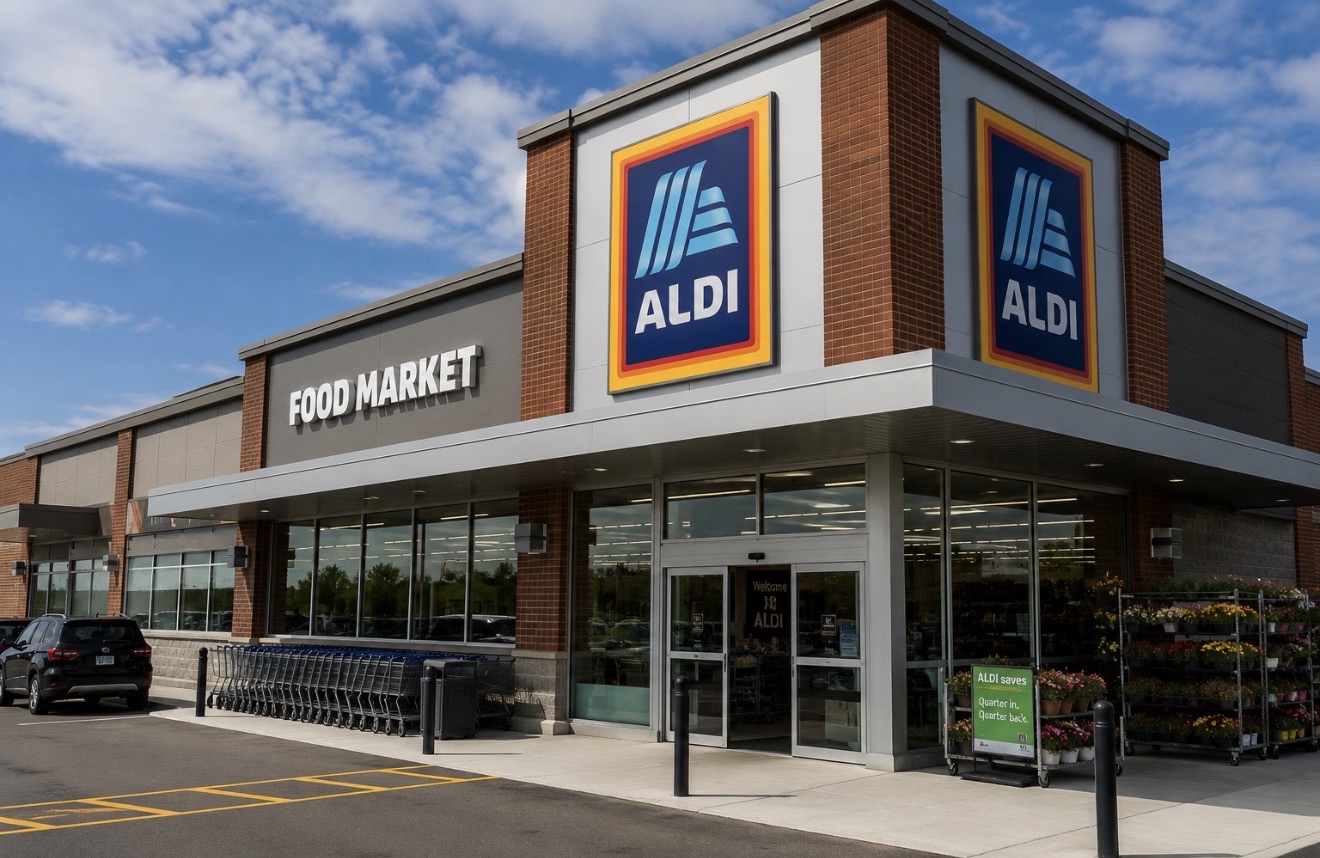

On Thursday, Scott Patton, chief commercial officer of Aldi in the United States, told the Financial Times the discount chain is pressing ahead with a roughly $9 billion U.S. expansion and now sees a path to about 4,000 stores — enough to make it the nation’s largest grocer by store count. “We’re trying to take market share from anyone who sells groceries,” Patton said, adding that the company does not yet know where the ceiling is.
The timing is no accident. Years of rising food prices have stretched household budgets, and Patton framed that strain as an opening for a chain built on low prices and private-label brands. Food inflation, he said, gives shoppers a reason to rethink where they buy groceries — and Aldi wants to be the first stop.
Aldi already runs more than 2,600 U.S. stores, which places it third by store count behind Walmart and Kroger. The company plans to open more than 180 new stores in 2026 across 31 states, pushing its footprint toward 2,800 by year-end. That is part of a five-year, $9 billion plan to reach roughly 3,200 stores by the end of 2028, while the 4,000-store figure represents a longer reach beyond that.
The growth is spreading the chain into new territory. Aldi is entering Maine, its 40th state, with a store in Portland, and plans more than 50 stores in the Denver and Colorado Springs markets over the next five years. It will open 10 stores in the Phoenix area in 2026, aim for 40 there by 2030, and roughly double its Las Vegas count. Much of the Southeast push comes from converting former Southeastern Grocers locations, including Winn-Dixie stores, that Aldi acquired in 2024.
The pitch to shoppers is built around size and simplicity. A typical Aldi store runs about 10,000 square feet — a fraction of a Walmart supercenter’s average 178,000 square feet — and more than 90% of what it sells carries an Aldi store-brand label. “One in three U.S. households shopped at Aldi this past year,” said Atty McGrath, chief executive of Aldi U.S., who tied the expansion to keeping shelves stocked and upgrading the company’s website.
The customer numbers help explain the confidence. Aldi said 17 million new customers visited its stores in 2025, a year in which it opened about 200 locations. The company is also spending to support the growth, with new distribution centers planned in Florida, Arizona, and Colorado.
For rival grocers, the expansion raises the pressure on price. “Aldi’s influence on the market should not be underestimated,” said Neil Saunders, managing director at GlobalData, who noted the chain’s price leadership can force competitors to cut their own prices to keep up. That dynamic lands at a moment when traditional supermarkets are already feeling the squeeze.
The strain showed up the same day across the grocery aisle. Kroger chief executive Greg Foran said Thursday that the largest traditional U.S. supermarket chain saw sales rise just 1% last quarter, as high gas prices and reduced food-assistance benefits left customers shopping with care. Foran said the customer is under pressure and managing spending carefully — the exact behavior Aldi is betting it can capture.
Aldi is running a similar playbook abroad. Last year it launched a $2.2 billion plan to open 80 stores in the United Kingdom within two years, mirroring the value-first strategy it is now accelerating in the United States. The German-owned company has spent decades building a loyal following on the premise that a smaller, tightly edited store can beat a sprawling one on price.
Whether 4,000 stores is reachable will depend on real estate, supply-chain buildout, and how long shoppers keep trading down. But the direction is set: Aldi intends to keep opening stores at a fast clip while food costs stay high, and it is openly aiming at the top of the U.S. grocery business. For shoppers, the near-term result is more discount locations within driving distance — and more pressure on competitors to answer with lower prices of their own.
JBizNews Desk | New York & Washington
© 2026 JBizNews.com. All Rights Reserved. Reproduction, redistribution, republication, or retransmission of this content, in whole or in part, without prior written permission from JBizNews.com is strictly prohibited.