

New York (VINNEWS/Rabbi Yair Hoffman) Rav Chaim Kanievsky zt”l (Lasuach baSadeh p. 897) quoted Rav Shteinmanz t”l that one who brings merit to the masses is greater than a Malach. Thus spreading this column could possibly raise the reader to a level higher than a malach – an angel.
The Gemorah in Bava Basra (89a) provides numerous instructions as to how not to ripoff clients in weighing items for sale. On the next Amud, Rabban Yocḥanan ben Zakkai said with regard to all these halachos: Woe to me if I say them, and woe unto me if I do not say them. If I say them, perhaps swindlers will learn new methods of cheating of which they were previously unaware.
If I do not say them, perhaps swindlers will say: Torah scholars are not well versed in our handiwork. A dilemma was raised before the Sages: Did Rabban Yoḥanan ben Zakkai decide to say these halakhot in public or did he not say them? Rav Shmuel bar Rav Yitzcḥak says: He said them, and he said them on the basis of this posuk: “For the ways of Hashem are right, and the just walk in them; but transgressors stumble over them” (Hoshea 14:10).
In keeping with the example of Rabban Yochanan Ben Zakkai, what follows is the lomdus of how thieves steal cars. It is followed by how it can be prevented. Hopefully this will create a zikui HaRabbim, which can possibly catapult us to beyond the level of a malach.
In New York City cars are stolen every 18 minutes, it seems. How do they do it?
Apparently, your car is constantly emitting a quiet signal a few times every second. It does so every so faintly – like a whisper.
It is asking: “Is my key fob nearby?”
Your key fob is designed to “shout” back a secret password when it hears that whisper. The car whispers softly on purpose — it only wants to unlock if the key is right next to it. The key fob, however, shouts loudly on purpose — so you can be able to either lock or unlock from a distance.
Thieves exploit this with a two-person, two-device setup made from the parts of a baby-monitor
One thief stands near the house holding the part of the baby monitor that is next to the baby. It is usually a round circular device – like a loose hula hoop. This device that acts like a microphone. It captures the car’s faint whisper.
The second thief stands by the car holding a device that acts like a speaker. The first device transmits the car’s whisper through the air to the second, which blasts it loudly toward the house.
Your key fob — sitting on a table inside — hears that familiar whisper, thinks the car is right there, and shouts back the secret password. The car is fooled. It then unlocks and starts itself up. The whole thing takes as little as ten to fifteen seconds, no alarm, no broken glass. The expensive criminal versions of these devices can cost thousands, though the underlying parts are surprisingly cheap.
How to Prevent It
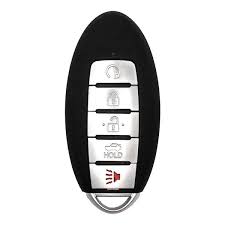
The defense is simple: Put your key fob in a cookie tin. This will stop your key fob from ever hearing the car’s silent cry and responding to it.
Other Tips:
Firstly, never leave your keys by the front door. Distance alone makes the attack much harder.
Secondly, block the signal entirely by storing your keys inside metal. A simple cookie tin works. So does wrapping the key in a single layer of aluminum foil with no gaps.
This creates what is called a Faraday cage — metal conducts the signal around the outside and prevents it from reaching the key, so the key never hears the whisper and never shouts back. You can also buy signal-blocking pouches for around ten dollars. Some, however, do not work.
Halacha is filled with illustrations of great Torah leaders who were concerned about the rising costs that Klal Yisroel faced.
The Origin of Plain Tachrichim
The Gemara in Moed Katan 27b tells us that when Jews were burying their dead in the finest clothing, Rabban Gamliel HaZakain arose and declared that enough was enough. The rising pressures, the “keeping up with the Joneses” in how to dress the deceased was causing enormous economic pressure on the living. “It must stop,” declared the rabbi, and the tachrichim, burial shrouds, we now use became the norm.
Boycotting Fish
The great Tzemach Tzedek (of 17th century Poland), cited by the Magen Avrohom in the beginning of hilchos Shabbos, once ruled (Responsa #28) that when local fishermen collude and raise the price of fish excessively, a prohibition can be levied upon the consumption of fish on Shabbos. It may take a week or two or even three, but eventually the collective buying power of ordinary people would force the price back down.
Obligation Upon Everyone
We will see, however, that it is not just great Torah leaders who have saved and are concerned for the financial well-being of their fellow Jews. It seems that this is what is expected by the Torah of everyone. The Gemara (Menachos 76a) tells us that Hashem commanded Moshe to also feed the nation’s livestock from the water that He had caused to emanate from the rock at Mei Merivah. Also, Rashi (Rosh Hashanah 27a) points out that the Kohen first removes the vessels from the house before declaring a house impure. So we see examples of the Torah being concerned with the financial well-being of the Jewish nation.
For the Public and for Private Individuals
The difference between the two cases is that the former is for the entire nation, while the latter demonstrates that the Torah is concerned even for the individual’s finances.
Social Norm and Torah Obligation
The Chasam Sofer on Bava Basra (54b) states that, generally speaking, one can make the assumption that fellow Jews are concerned with the monetary well-being of their fellow man, and that this assumption has legal ramifications. So we see that it is the normal behavior expected of all Jews. Rabbi Yaakov ben Asher, author of the Tur, discusses (in the Choshen Mishpat section of Shulchan Aruch, chapter 35) a person who does not care about Jewish money, and he writes that such a person will, in the future, surely answer for it. The Minchas Chinuch writes that one who is concerned about the preservation of his fellow Jew’s money fulfills the biblical commandment of v’ahavta l’rei’acha kamocha, love thy neighbor as yourself (see his commentary on that mitzvah). The clear indication from all these sources is that demonstrating concern for the financial well-being of others is not just a mitzvah, it is an expected social norm with reward for those who do it and punishment for those who do not.
Spreading this article is an easy way to fulfill this Mitzvah.
The author can be reached at [email protected]