
 Matzav
18 Hours Later: First Round of US-Iran Talks Ends, Mediators Drafting Joint Statement
Negotiations between the United States and Iran in Switzerland have reportedly progressed beyond early disputes over implementation issues and are now focusing on the structure of a potential long-term agreement, according to comments released Monday by Iran’s Foreign Ministry.
Iranian Foreign Ministry spokesman Esmail Baghaei said the outline for future rounds of diplomacy was developed during approximately 18 hours of intensive discussions involving Iranian and American officials, as well as mediators from Pakistan and Qatar.
One of the most significant developments, Baghaei said, was the establishment of a practical mechanism intended to ensure uninterrupted shipping through the Strait of Hormuz, a vital global energy corridor that has been at the center of recent tensions.
According to Baghaei, the broad understandings reached during the talks will be reflected in a joint document that Qatar and Pakistan are expected to release in the near future.
He added that while the senior negotiating teams have completed the current phase of discussions, technical experts will remain engaged to resolve outstanding questions and work through the details needed to implement the understandings reached so far.
Pakistani Interior Minister Mohsin Naqvi had previously indicated that a joint statement was being prepared by the participating parties.
Naqvi stressed that the document would not be made public until all of the countries involved approved its final language, suggesting that negotiations over specific wording and remaining issues are still underway.
Later, Qatar and Pakistan released a joint statement saying that discussions between Washington and Tehran had taken place in a “positive and constructive atmosphere.”
The statement said the talks produced “encouraging progress” and announced the establishment of a framework for continued technical-level negotiations.
Iranian Foreign Minister Abbas Araghchi also offered an optimistic assessment of the discussions, writing on social media: “Tireless Pakistani and Qatari mediation has delivered major progress to end Lebanon War. Oil and petrochem exports are waived, blockade lifted, some frozen assets released, and major reconstruction & development plan launched for Iran.”
He added, “1st real test: Lebanon deconfliction cell.”
Earlier Sunday, a U.S. diplomat told Axios correspondent Barak Ravid that talks between American and Iranian officials had begun that morning and were continuing in multiple formats throughout the day with little interruption.
According to the diplomat, one of the central topics under discussion involved what he described as “deconfliction mechanisms in Lebanon and enforcing the ceasefire”.
The diplomat also said that negotiators addressed the status of the Strait of Hormuz and recent Iranian threats regarding its closure.
“We made clear we want to ensure it remains fully open. We made good progress on that front,” the U.S. diplomat told Ravid.
The source further explained that negotiators spent considerable time discussing “all elements of the nuclear deal” and said conversations regarding implementation of the memorandum of understanding were productive, with participants working to “make sure everyone is on the same page.”
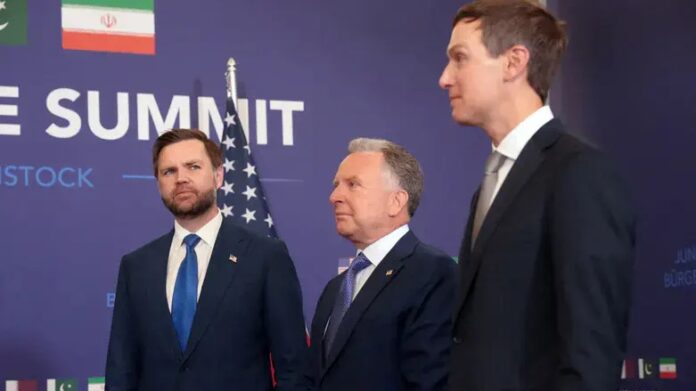
Vice President JD Vance arrived in Switzerland on Saturday to lead the American delegation in the high-stakes negotiations.
Before departing Washington, Vance acknowledged that the diplomatic process remained delicate but expressed cautious optimism.
“I think we’re going to hopefully make progress on the nuclear issue, make progress on the Lebanon ceasefire issue. Those are the two big things that I think we’re to be focused on.”
Preparations for the talks began earlier Saturday when White House envoys Steve Witkoff and Jared Kushner arrived in Switzerland, with the Iranian delegation arriving later that day.
Facilitating the discussions is an international mediation team that includes the prime ministers of Qatar and Pakistan, Pakistan’s top military commander, and the director of the International Atomic Energy Agency, all of whom are participating in efforts to move the negotiations toward a broader agreement.