
 Matzav
Trump Ready to Seize Hormuz? Graham Predicts Iran Deal Will Crash and Burn
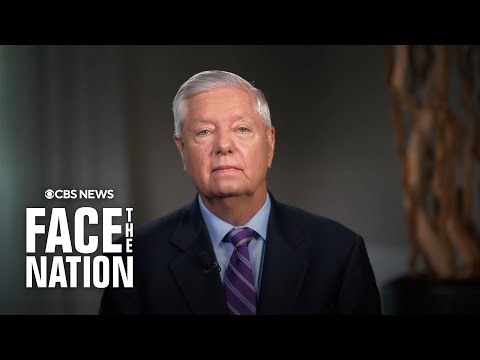
Sen. Lindsey Graham said Sunday that he expects the newly signed U.S.-Iran framework agreement to unravel and warned that President Trump is prepared to use military force to take control of the Strait of Hormuz if diplomacy fails.
The South Carolina Republican made the remarks during an appearance on CBS’s “Face the Nation,” as Vice President JD Vance began a new round of nuclear negotiations with Iranian officials at a resort in the Swiss Alps.
Graham, who said he spent four-and-a-half hours meeting with Trump on Friday, expressed skepticism that the memorandum of understanding signed last week will ultimately succeed.
“If you don’t have a diplomatic path through the MOU, then you have to go to war or some other form of coercion,” Graham said. “Let’s try this. Let’s try a diplomatic solution. I think it’s going to fail.”
According to Graham, the administration already has a contingency plan in place should the negotiations collapse.
He said that if talks break down, “President Trump is going to take the Strait of Hormuz over by force. The United States will control the Strait of Hormuz. We’ll charge a fee for all those who go through to pay for the operation.”
The senator also delivered a stark warning to Iran regarding the fighting involving Hezbollah in Lebanon, suggesting that Washington is prepared to respond directly against Tehran if attacks continue.
“If Iran continues to attack Israel and Lebanon, the new policy will be, we’ll hit Iran,” he said. “When you use Hezbollah to attack Israel, I think the new policy will be, we will attack Iran.”
Graham further escalated his rhetoric by warning that any Iranian effort to challenge American control of the strategic waterway would be met with overwhelming force.
He added that if the Iranians contest U.S. control of the strait, “we will obliterate them.”
The senator also revealed that he has softened his earlier opposition to a proposed $300 billion reconstruction initiative for Iran, a plan he had previously criticized in harsh terms.
Earlier, Graham had compared the proposal to “a Marshall Plan with a Nazi still in charge for Germany.”
He now says his view depends largely on the source of the funding.
“Before, I thought the money was coming from the West,” he said. “Can you imagine if Saudi Arabia, Qatar, and the United Arab Emirates invest $300 billion in Iran? That would tell me that Iran has changed.”
Even so, Graham said he remains doubtful that the Gulf states will actually commit such an enormous amount of money.
President Trump has publicly distanced the United States from the reconstruction proposal.
While attending the G7 summit in Evian, France, on Wednesday, Trump told reporters, “We are not investing in it, and we do not have a fund,” adding that Washington has not requested financial contributions from Gulf nations.
The 14-point memorandum signed in Islamabad calls on the United States, working alongside regional allies, to develop a reconstruction plan valued at no less than $300 billion for Iran.
The negotiations now underway in Switzerland mark the beginning of the 60-day period established by the agreement to address Iran’s nuclear program and a series of unresolved regional disputes.
Energy Secretary Chris Wright said Sunday that maritime traffic through the Strait of Hormuz remains largely stable despite the tensions.
According to Wright, 67 vessels passed through the waterway on Saturday and another 55 on Friday under U.S. military escort along a southern route, with oil shipments remaining “about equal to where we were before the war.”
Those comments came after Iran announced on Shabbos that it was once again closing the strategic passage, citing ongoing Israeli military operations in Lebanon as the reason for the move.
{Matzav.com}