
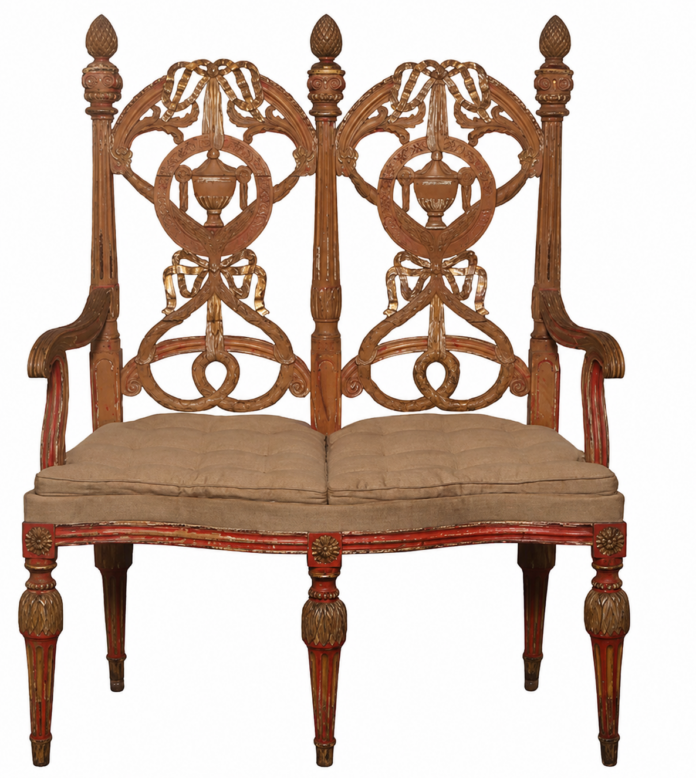

New York (VINNEWS/Rabbi Yair Hoffman) The sandek is, of course, the person who holds the baby on his knees while the Bris Mila is performed.
The word sandek does not appear in the Torah, and its origin has puzzled the teeming masses of Meforshim and lehavdil academics for quite a long time. Several explanations have been offered, and together they tell us something about how the role itself was understood.
The Aruch — Rabbi Nathan ben Yechiel of Rome (c. 1035–c. 1110), author of the Talmudic dictionary by that name — traces the word to a Greek and Roman term meaning a patron or advocate, someone who speaks up on another’s behalf. On this view, the sandek is like a person who offers incense, pleading the cause of the mitzvah. The Otzar HaMichtavim, citing the Maaseh Choshen, adds a simpler idea: the sandek is so named because he guards the child on his knees so that the infant will not fall. However, the Aruch elsewhere connects sandek to simanin, meaning “signs.” At a bris, the signs of the covenant are made “for the sake of love and remembrance, in the bond between a person and his Creator.” The Maharil — Rabbi Yaakov Moelin (c. 1365–1427), the leading halachic authority of Ashkenazic Jewry whose rulings shaped minhag Ashkenaz — citing Rabbi Eliezer of Worms (the Rokeach, c. 1176–1238), brings a similar reading from the Midrash.
The Rashba — Rabbi Shlomo ibn Aderet (c. 1235–c. 1310), the preeminent Spanish halachic authority of his generation — derives sandek from a root meaning to bend forward over the circumcision. The Avudraham — Rabbi David Abudarham (14th century), known for his classic commentary on the liturgy — cites this and links it to a related Aramaic term. The exact source is debated, but the core idea is steady: the sandek is the one who holds the child and leans over him during the milah, and the name fits the act.
“Sanigor” — A Defender
The Taamei HaMinhagim — Rabbi Avraham Yitzchak Sperling (1851–1921), whose encyclopedic study of the reasons behind Jewish customs remains widely consulted — and the Pri Megadim — Rabbi Yosef Teomim (1727–1792), author of the classic supercommentary on the Shulchan Aruch — explain that the one honored as sandek rises through the mitzvah to become a defender of Israel before the Holy One, which links sandek to the word sanigor, an advocate.
The Box That Held the Child
Among the Greek possibilities, the Latin patrinus (“godfather”) matches the Greek synteknos, which is close enough to sandiknus to be a likely source. Dr. Hillel Newman, writing in the Jewish Quarterly Review (Winter 2007), suggested instead sandyx, meaning a box for the infant.
Dr. Newman’s reading fits well with the Rama (Yoreh Deah 265:11) — Rabbi Moshe Isserles (c. 1530–1572), whose glosses on the Shulchan Aruch established the authoritative Ashkenazic practice — who compares the sandek to the Kohen who offered ketores in the Beis HaMikdash. That incense was placed in a pan, and it is likely the infant was set upon a solid box with edges during the milah so that he would not fall, perhaps the very box the etymology preserves. The Otzar HaMichtavim also records a custom in which the infant was brought to the sandek’s house wrapped and bound in a narrow box. After the milah, the sandek would lift the child and set him down gently, the box protecting his whole body. On this account the sandek takes his name from the box, or chest, placed before him.
The same concern for the child’s safety shapes the practical advice the seforim give the sandek. The Bris Shalom teaches that the sandek should set his two legs close together so that the infant cannot slip down, chas v’Shalom, between them, and that a small footstool be placed beneath his feet. He adds that the sandek’s seat should not be too high, lest the child lie upon it as though sunk in a pit and the milah be hindered. The “Sefer Bris Avraham HaKohen” gives a sharper warning: at times the hands tremble from old age or from being unaccustomed to the task, and there is real danger that the child may slip or shift from his place. To guard against this, he brings the advice of the Admor of Ribnitz — that the mohel rest his own right hand over the child’s right leg as it extends past the sandek, and place his left hand below, so that even if the sandek’s hands give way, the child will not fall and will stay firmly held.
“Shein-Dak” — A Fine, Sharp Tooth
The Otzar HaMichtavim further notes that some read sandek as a shortened form of shein-dak, “a fine, sharp tooth” of stone. The phrase recalls the pasuk, “Tzipporah took a sharp stone and cut off the foreskin of her son” (Shmos 4:25) — the act performed upon the knees of the sandek.
When the Practice Began – The Sandek of Avraham Avinu
The Midrash (Bereishis Rabbah) relates that when Avraham Avinu was commanded to perform a bris on himself, he took the knife but, being an older man, trembled and faltered. The Holy One, Blessed is He, as it were extended His hand and held it together with him — as the pasuk hints, “And You remembered the covenant with him.” From here we learn that the Holy One served as the sandek of Avraham Avinu.
The Paaneach Raza — Rabbi Yitzchak ben Yehuda HaLevi (13th century), author of the Tosafist-style commentary on the Torah by that name — adds that the Holy One then gave Avraham the seven nations as a gift, the source for the custom that the sandek presents a gift to the child. The Migdal Oz likewise notes that the sandek “brings about the results,” just as the Holy One gave Avraham Avinu eretz yisroel as a gift.
Why Eliyahu Comes to Every Bris
Before turning to the next sources, it helps to understand why Eliyahu HaNavi is so closely tied to the bris. The Midrash relates that Eliyahu once complained that the Jewish people had abandoned the covenant. The Holy One answered that since Eliyahu was so zealous for the bris, he would be present at every single one. For this reason Eliyahu is called the malach habris — the angel of the covenant — and a special chair is set aside for him at each bris, often called the kisei shel Eliyahu. The sandek sits in the chair beside it, or sometimes in the very chair, holding the child while Eliyahu, as it were, looks on. This is why some of the customs below speak of Eliyahu “attending” the bris, and why the choice of sandek is treated with such care.
“Until Eliyahu There Was No Sandek”
Concerning the mass bris milahs in Mitzrayim before the Exodus, one view in the Midrash (Shir HaShirim Rabbah 3:1) concludes that “until Eliyahu there was no sandek.” This raises a question: how can that be, when the Midrash plainly says the Holy One served as sandek for Avraham? One answer is that there was no human sandek until Eliyahu. Yet we do have a bit of a stirah.
Two earlier figures are named as having served. Regarding Yosef HaTzaddik the pasuk says the children of Machir “were born upon the knees of Yosef” (Bereishis 50:23), which the Targum Yonasan understands to mean that Yosef acted as their sandek.
Dovid HaMelech is even clearer. The Yalkut Shimoni and Midrash Shocher Tov record his words: “All my bones shall declare, ‘Who is like You, Hashem!’ … with my thighs I become sandek to the infants who are circumcised on my lap.” He praises Hashem with every limb — with his head he lays tefillin, with his arm he binds them, and with his knees he serves as sandek. This pasuk becomes the foundational source for the whole practice.
What the Kibud Accomplishes
The Source in Halacha
The Rama writes (Yoreh Deah 265:11): “It is the custom to honor another person with this mitzvah, to be sandek and to hold the child on his knees.” The Vilna Gaon — the Gra, Rabbi Eliyahu of Vilna (1720–1797), the towering Talmudic and halachic authority of Lithuanian Jewry — traces this to the Midrash Shocher Tov on Dovid HaMelech’s pasuk, and the Hagahos Maimoni points to the same source.
Like One Who Offers Incense
The Rama adds that the sandek “is like one who offers ketores – incense.” The Maharil explains that the bris itself is compared to an offering brought up on the altar to Heaven, so the sandek’s knees are, as it were, that altar. The Birkei Yosef — Rabbi Chaim Yosef David Azulai (the Chida, 1724–1806), the renowned halachist, bibliographer, and emissary — adds a striking image: when Avraham brought himself and Yitzchak before the Holy One, the place of the milah was as beloved before Him as incense.
This altar image runs deeper still. There is a long-standing custom to give the infant a drop of wine on the sandek’s knees during the blessings of the milah, and the seforim explain the reason through the same comparison: just as the sandek is likened to the mizbeach, so the wine placed before him is likened to the wine-libation, the nesachim, that was poured upon the altar. The Toras Chaim and others develop the point, noting that the wine of the bris parallels the wine poured upon the corner of the altar in the Beis HaMikdash. Some authorities discuss whether grape juice may be used in place of wine for this drop, weighing it against the rule that only true wine — not mere juice — was fit to be poured upon the altar; in practice the seforim are lenient, since the comparison to the nesachim is a likeness and not the actual avodah.
A Tikkun for the Neshama
The Sefer Chareidim — Rabbi Elazar Azikri (1533–1600), the Tzefas kabbalist and author of the famous work on the mitzvos as well as the piyut Yedid Nefesh — and the Birkei Yosef record in the name of the Arizal — Rabbi Yitzchak Luria (1534–1572), the foremost kabbalist of Tzefas — that serving as sandek brings a tikkun, a spiritual repair, for a flaw of the bris. This helps explain why the honor is so eagerly sought.
A Source of Wealth?
The Rama also writes that sandekaus is a segulah for becoming wealthy, drawing again on the comparison to the Ktores, which the Gemorah says brought wealth to the Kohanim. The Vilna Gaon objected that we do not actually see sandekaus making people rich.
Rav Yaakov Kamenetsky (1891–1986), the revered rosh yeshiva and posek, in his Emes L’Yaakov, answered that the blessing was originally tied to the sandek also being the baal bris — the one who covered all the costs of the bris — which is no longer the practice. Rabbi Akiva Eiger (1761–1837), among the most influential halachic authorities of the modern era, added that the original sandekaus included staying through the naming and all the blessings. In other words, because today’s sandek rarely pays for the bris, the segulah for wealth is far less visible than it once was — which is just what Rav Yaakov’s answer would lead us to expect.
Who Is Greater — the Mohel or the Sandek?
Since both serve at the bris, some meforshim ask which role is more important when a person must choose between them. There are strong opinions on both sides.
The View That the Mohel Comes First
The Bnei Avraham rules that the mohel takes priority, because he performs the actual mitzvah while the sandek only assists. He compares the sandek’s role to the Avodah in the Beis HaMikdash of arranging the wood and coals on the altar — important preparation, but not the offering itself. The Ben Ish Chai — Rabbi Yosef Chaim of Baghdad (1835–1909), the leading Sephardic posek and kabbalist of his era — in Rav Pe’alim, agrees in one respect: the milah is commanded directly by the Torah, while serving as sandek is not.
The View That the Sandek Comes First
On the other side, the holy Rebbe of Ruzhin (cited in Chikrei Lev) held that the sandek is greater. The mohel’s connection to the child ends once the act is done, but the sandek’s connection lingers — it was on his knees that the child entered the covenant. The Rav Pe’alim also gives the sandek priority in a practical sense: the milah can be handed to an appointed agent, while the honor of holding the child remains the chooser’s own.
The Chasam Sofer’s Resolution: The Sandek Does Two Mitzvos
The Chasam Sofer — Rabbi Moshe Sofer (1762–1839), the foremost defender of Orthodoxy in his generation and rav of Pressburg — offers a careful middle position. When the sandek holds the baby, he is not merely watching — without his steady hold, the child could slip and the mohel could not cut properly. Sometimes the mohel cannot grip the child and cut at the same time, and the sandek’s help becomes part of the act itself. Just as slaughtering an offering involves more than drawing the knife — the animal must also be held and bent — so here the sandek shares in the body of the milah. On this view the mohel does one mitzvah, the act of circumcision, while the sandek does two: he shares in the circumcision, and he also “builds the altar” by holding the child. That is why the sandek can be given priority.
Combining the Honors in One Person
May one person serve as both mohel and sandek? The Chut HaMeshulash records that this was the practice of the Ra’ah, and the Chasam Sofer followed it as well; his milah register notes the many times he filled both roles. The Maharsham — Rabbi Shalom Mordechai Schwadron of Berezhan (1835–1911), one of the most widely consulted poskim of his day — defends the combination, reasoning that there is no disgrace to the mitzvah when a person sits as sandek in order to fulfill that role too.
The Chasam Sofer adds a subtle point in the other direction. To let the honor of sandek stand out fully, there is reason to keep the honors separate, because if one person were both mohel and sandek, the sandek’s role — which is a preparatory honor — would be swallowed up within the larger one. In earlier generations, the Tefillas David notes, the role of sandek was reserved for the single most distinguished person present.
Who Should Be Chosen as Sandek
Because the role carries such weight, Poskim give much thought to who is best suited for it. At the heart of the discussion lies a single tension that runs through all the sources: refinement versus relationship. On one side stands the pull toward the most righteous person available, a tzaddik who can shape the child for the good; on the other stands the duty to honor one’s own father, father-in-law, or grandfather. Several principles emerge below, and they sometimes pull in these two different directions.
A Righteous Man
The Rama writes that one should seek out a mohel and sandek “of the very best and most righteous.” The Ohr Zarua, Maharil, and Rikanti — Rabbi Menachem Recanati (c. 1223–1290), the Italian halachist and kabbalist — give one reason: the child should come to resemble the sandek. The Levush — Rabbi Mordechai Yaffe (c. 1530–1612), author of the ten-volume halachic code known by that name — gives another: the milah is done with special intention, and a righteous sandek shapes the child for the good. The Pele Yoetz puts it plainly: a good sandek draws down upon the child “a holy spirit, a pure heart, and an upright soul.”
There is also a gentler tradition, recorded in the name of the Chida and others: the great trust is that all of Israel are fit and proper. Some hold that even when an ordinary person is brought near, the Holy One forgives his sins so that Eliyahu may attend the bris, and one need not search endlessly for a tzaddik.
The Father of the Child
The Pele Yoetz — Rabbi Eliezer Papo (1785–1828), whose beloved mussar work by that name is arranged alphabetically by topic — holds that it is good for the father himself to serve where he can, “for he is like one who offers a korban through his son.” The Maharil and the Chida agree that the father is fittingly the sandek for his own son.
Father Versus Grandfather
The Leket Yosher — recording the rulings and practices of the Terumas HaDeshen, Rabbi Yisrael Isserlein (1390–1460) — rules that the father comes before the grandfather, since a person’s duty to honor his father is greater than his duty to honor his grandfather, though the father may give the honor to the grandfather if he wishes.
The Father’s Father Versus the Mother’s Father
When the two grandfathers compete, customs differ. The Chaim B’Yad — Rabbi Chaim Palagi (1788–1868), the prolific Chief Rabbi of Izmir who authored some seventy works — records an Ashkenazic custom favoring the mother’s father. The Machshirei Milah, citing the Shulchan Gavoah, gives the honor to the father’s side, since the mitzvah of milah falls on the father. The Chayei Chanoch finds a hint of the Jerusalem custom — honoring the mother’s father — in the pasuk about Yosef’s knees.
A Tzaddik, the Father, or the Father-in-Law?
The Chacham Tzvi — Rabbi Tzvi Ashkenazi (1656–1718), the eminent posek who served communities across Europe — reasons that a close relative comes first, much as relatives take priority in the laws of charity. Rabbi Yoel Klopt framed the tension exactly: on one side, the milah is like a korban brought without blemish, which argues for the most refined sandek; on the other, there is a real duty to honor even an ordinary father or father-in-law.
Delaying the Bris So the Sandek May Be a Tzaddik
May one postpone the bris, even past the best early hour, so that a great man can serve as sandek? The Michtav Sofer of Rabbi Shimon Sofer (1820–1883), son of the Chasam Sofer and rav of Krakow, concludes that one should not delay: once the mitzvah is ready, the rule that “the diligent perform mitzvos early” governs, and the Chasam Sofer himself circumcised most of his own children promptly. Some were willing to be more lenient where a delay would secure a more distinguished sandek, but the weight of opinion favors not delaying.
What the Sandek’s Honor Actually Encompasses
A related question sharpens what the honor of sandek truly consists of. Rav Yosef Shalom Elyashiv (1910–2012), the paramount halachic authority of the Lithuanian Torah world in his later years, is cited as holding that the essence of the kibud is the holding of the child at the very moment of the milah and its blessings, rather than merely a title conferred beforehand. From this it follows that, unlike the actual act of circumcision — which the father may discharge through an appointed mohel acting as his agent — the holding of the child is not the kind of honor that is fulfilled through a shaliach, since its whole substance lies in the sandek personally bearing the infant as the covenant is entered. This helps explain why the seforim treat the choice of sandek with such weight, and why the sandek is expected to remain in place through the naming and the blessings.
Serving as Sandek More Than Once
The Rama writes that, because the sandek is like one who offers incense, the custom is not to give two children to the same sandek — just as one Kohen would not offer the incense twice, since the incense was a once-in-a-lifetime honor that brought wealth. The will of Rabbeinu Yehuda HeChasid (c. 1150–1217), the principal author of Sefer Chassidim and leader of the Chassidei Ashkenaz, says the same: one should not make the same person sandek for two of one’s sons, unless the first child died. The Shelah — Rabbi Yeshaya Horowitz (c. 1565–1630), whose monumental work Shnei Luchos HaBris gave him his name — citing Rabbeinu Peretz, records a similar caution.
It Is a Comparison, Not Actual Incense
The Birkei Yosef, however, draws an important distinction. The sandek is like one who offers incense — but he is not literally offering incense. So while the custom discourages making the same person sandek for two sons of one father, it does allow the same person to serve as sandek for the children of different families. He notes there is room to be careful and room to be lenient.
The Lenient Practice
Many communities are lenient. The Beis David writes that the restriction means only that one should not serve repeatedly within a single year, not that one is barred for life. The Chesed L’Alafim (the author of the Pele Yoetz, Rabbi Eliezer Papo) records that some hold a person may serve as sandek as many times as he wishes, and that it all depends on the local custom. The Maharsham, by contrast, was strict, holding to the incense comparison even within a single year.
If repeating the role is a concern, how did Yosef serve as sandek for all the children of Machir? The Chasam Sofer answers that this actually supports the lenient view: the incense itself, on closer study of the Avodah in the Mikdash, could be offered more than once in certain ways. So a person — and especially a community’s rabbi — may serve as sandek many times, just as Yosef did. This is exactly what one sees today: the rav of a community, or a chosen tzaddik, is often asked to be sandek again and again, and it is the Chasam Sofer’s answer about Yosef that most communities lean on.
The practice of the gedolim reflects this leniency. The Steipler — Rav Yaakov Yisrael Kanievsky (1899–1985), the revered rosh yeshiva and author of the Kehillos Yaakov — is recorded as not having been concerned to serve as sandek more than once, and his son Rav Chaim Kanievsky (1928–2022), the preeminent posek and Torah scholar of his generation, transmitted that the segulah of sandekaus is fundamentally bound up with holding the child at the moment of the milah itself, so that doing it more than once does not diminish it. The Shevet HaLevi, Rav Shmuel Wosner (1913–2015), is also cited among those who took the lenient view on serving repeatedly.
Can the Honor Be Taken Back Once Offered?
A final, very practical question: once a father has promised the sandek honor to someone, may he change his mind? This is a genuine dispute among the early authorities.
The Basic Machlokes
The Beis Yosef — Rabbi Yosef Karo (1488–1575), author of the Shulchan Aruch brings the view of the Rosh that the promise lacks a formal acquisition (kinyan), which would leave room to retract. The Taz — Rabbi David HaLevi Segal (c. 1586–1667), author of the Turei Zahav commentary on the Shulchan Aruch — discusses this and stresses that a Jew should “not speak falsehood,” so going back on one’s word is a serious matter, yet he concludes there may still be room to retract in certain cases. The Chacham Tzvi holds that even when one only wishes to upgrade to a more fitting person for the mitzvah, one cannot simply pull the honor back at will.
Before the Baby Is Born Versus After
The Radbaz — Rabbi David ben Zimra (c. 1479–1573), the leading halachic authority of Egyptian Jewry — draws a useful line. If the honor was promised before the baby was born, it concerns something “not yet in the world,” so the promise may not be binding and one may retract. But if it was given after the birth, one should stand by his word, since all of Israel treat this promise as a weighty matter. The Pri Yitzchak similarly rules that once a person is honored as mohel or sandek, it is wrong to take the honor back.
Special Cases
The authorities discuss several specific situations. The Maharsham considers a person who was promised the honor “if a son is born,” when a daughter came first and a son only later — and weighs whether the promise still stands. The Beis Yisrael discusses a “partnership of sandek,” where the honor is awarded by lottery, and asks what happens if the baby dies before the bris. And the Chashukei Chemed — Rabbi Yitzchak Zilberstein (b. 1934), the contemporary posek known for his case-based halachic works — treats a case where a grandfather was honored because everyone assumed the father could not attend, and then the father arrived after all.
From the many names offered for the sandek —to the debates over which kavod is greater and who is most fitting to receive it, one idea returns again and again. The differing customs and rulings are all, in the end, ways of guarding that single instant of Kedusha. Much of the material here came from a work written by Rabbi Avrohom Yechezkel Strauss entitled HaSandek, the Kuntres Shmonas HaYamim of Rabbi Rafael Elchanan Rabinowitz and from the Niflaos MiTorascha. The reader is referred to the former for greater depth of study and sources. Printed in honor of Rabbi Yehudah Meir and Ariella Aron whose child’s bris takes place today.
The author can be reached at [email protected]