
 JBizNews
Apple’s Worst Day in a Year as $250 Billion Vanishes on iPad and MacBook Price Hikes
Apple Inc. raised prices on several MacBook and iPad models on Thursday, saying it could no longer absorb soaring memory and storage costs driven by the artificial intelligence boom. In a statement to NBC News, the company said the unprecedented surge in demand for memory and storage components tied to AI data centers had forced it to pass some of those higher costs on to consumers. The announcement sparked a sharp selloff on Wall Street, wiping out roughly $250 billion in market value in a single trading session.
Apple shares closed more than 6% lower, marking the company’s worst one-day decline since April 2025. Although Apple remains valued at more than $4 trillion, the drop significantly narrowed its lead over Alphabet in the race to remain one of the world’s most valuable companies, while Nvidia continues to hold the top spot with a market capitalization approaching $5.4 trillion.
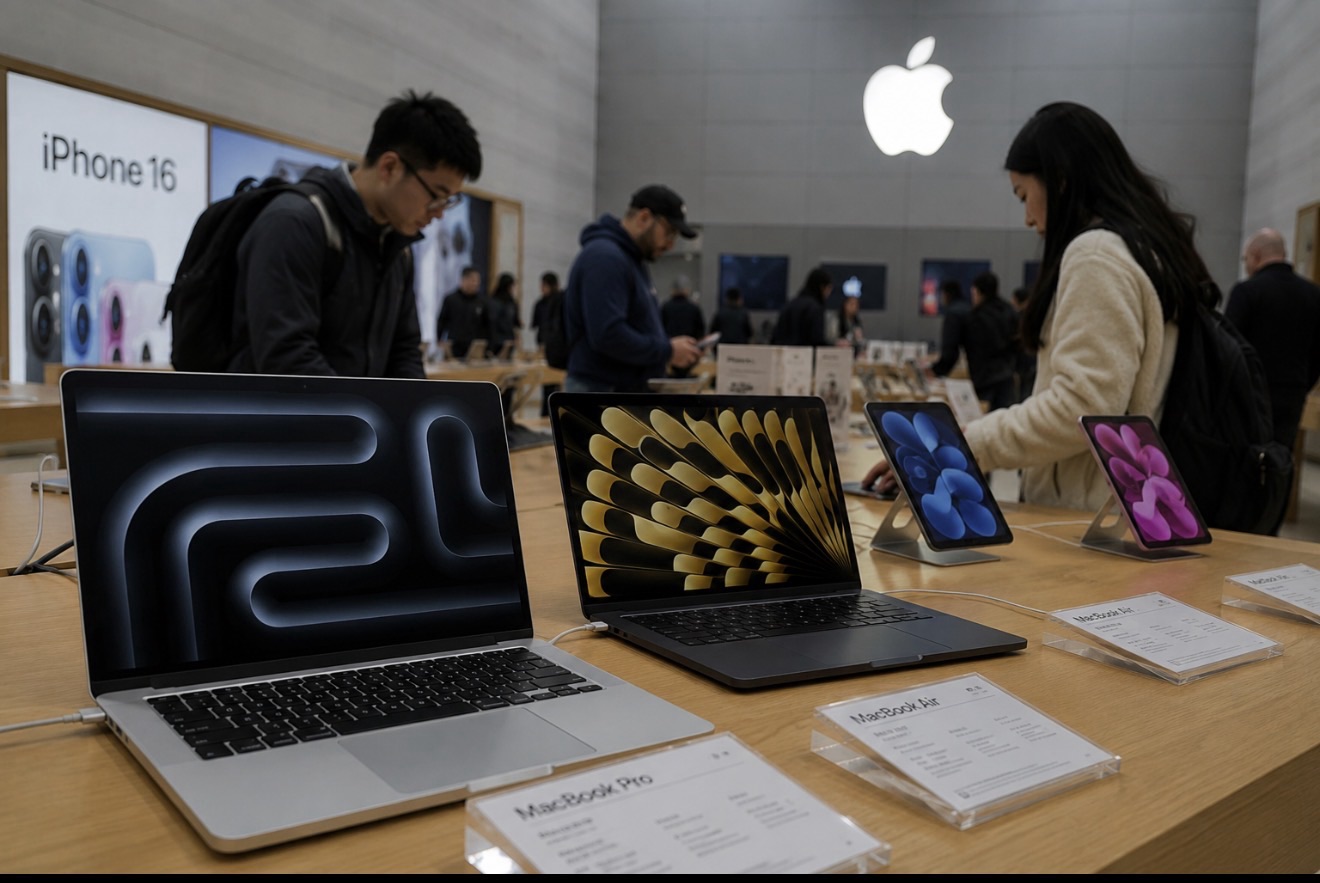
The increases affect several of Apple’s most popular computers and tablets. The MacBook Neo now starts at $699, up from $599. The MacBook Air rises to $1,299 from $1,099, while the entry-level 14-inch MacBook Pro climbs to $1,999 from $1,699. The 11-inch iPad Pro now begins at $1,199, compared with $999 previously, and the iPad Air increases to $749 from $599. Apple also raised the price of its Apple TV streaming device by $70, bringing it to $199. Prices for the iPhone, Apple Watch, and AirPods remain unchanged for now.
Industry analysts were caught off guard because Apple rarely raises prices outside of a new product launch cycle. Evercore analyst Amit Daryanani called the move unexpected, estimating that the increases ranged from 17% to 25% across many Mac and iPad models, while the Apple TV jumped approximately 54%.
At the center of the increases is an industry-wide shortage of memory chips that some analysts have dubbed “RAMageddon.” According to Counterpoint Research, prices for memory and storage components have quadrupled during the past three quarters as manufacturers shifted production toward high-bandwidth memory used in AI servers. The shortage has dramatically benefited memory suppliers such as Micron Technology, which recently reported record quarterly revenue and sharply higher profit margins fueled by AI demand.
Apple Chief Executive Tim Cook had hinted that pricing pressure was building. In an interview with The Wall Street Journal last week, Cook described today’s semiconductor supply environment as unlike anything he had experienced during his decades in the technology industry, calling it a “hundred-year flood” in component pricing. Apple also indicated Thursday that additional price increases could follow if component costs remain elevated.
The biggest question now facing consumers is whether the iPhone will eventually see similar increases. Counterpoint Research estimates that higher component costs could add roughly $150 to $200 to the manufacturing cost of future iPhones. Rather than dramatically increasing sticker prices, Apple could instead continue its recent strategy of eliminating lower-priced entry-level models, effectively raising the average selling price across the lineup without announcing large headline price hikes.
Artificial intelligence also provides Apple with an opportunity to justify more expensive hardware. IDC expects future iPhones to feature 12GB of RAM to support the company’s expanding Apple Intelligence platform. The research firm estimates that more than half of iPhones sold since 2022 will not support Apple’s newest AI-powered Siri capabilities, encouraging consumers to upgrade to newer, higher-priced devices.
Despite Thursday’s sharp decline, several analysts remain optimistic about Apple’s long-term outlook. Wedbush Securities analyst Dan Ives maintained his outperform rating and $400 price target, arguing that Apple’s premium customer base has historically shown a willingness to absorb higher prices in exchange for the company’s ecosystem and brand loyalty.
Thursday’s move nevertheless highlights how deeply the artificial intelligence boom is reshaping the broader technology industry. The race to build AI infrastructure is no longer affecting only semiconductor manufacturers and cloud providers. It is now reaching everyday consumers purchasing laptops, tablets, and eventually smartphones, as rising component costs ripple through the global technology supply chain.
JBizNews Desk
New York
© JBizNews.com All Rights Reserved. Reproduction or distribution without written permission is prohibited.