
 JBizNews
Microsoft CEO Nadella Warns a Few AI Giants Could Swallow the Economy
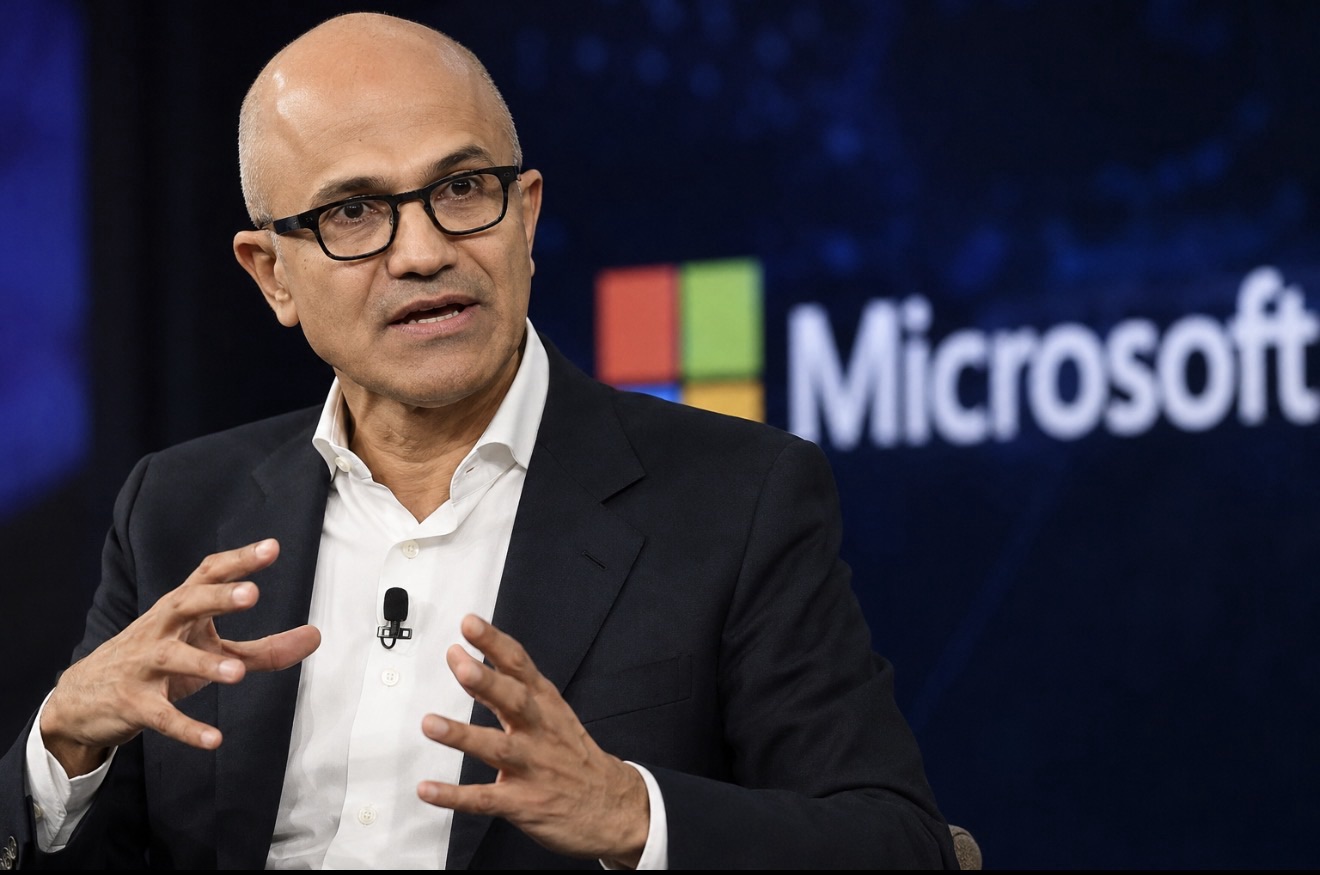
Microsoft Chief Executive Satya Nadella warned that a small group of powerful artificial intelligence companies could end up capturing most of the wealth the technology creates, hollowing out entire industries along the way. He laid out the argument in an essay posted June 14 on X and expanded on it in a new interview published over the weekend.
The warning is striking because Nadella runs one of the very giants he is describing. Microsoft is worth around $3 trillion, is one of the largest backers of OpenAI, and sits near the center of the AI boom.
His core worry is about concentration, not technology. If only a few AI models end up holding all the value, Nadella argued, ordinary businesses across every sector will quietly hand over the expertise they spent decades building. He titled his essay “A frontier without an ecosystem is not stable” and said there is no societal permission for an AI future that guts whole industries.
To make the danger concrete, he reached for a comparison most people lived through. The first wave of globalization, he wrote, made the top-line economic numbers look fine while it hollowed out factory towns through outsourcing. The damage was real and is still being felt. His fear is that AI could do the same thing, only faster, with a few systems soaking up the returns while everyone else loses their edge.
Nadella’s proposed fix is for companies to keep control of their own knowledge. Instead of pouring their data and judgment into someone else’s model and getting commoditized, he said firms should build their own “learning loops” that lock in what makes them special. He splits a company’s worth into two parts: human capital, meaning the experience of its people, and what he calls “token capital,” meaning its own in-house AI capability. The goal is to be able to swap out the underlying model without losing the company-veteran know-how built on top of it.
He was blunt about jobs. Nadella criticized executives who treat AI mainly as a way to cut costs by eliminating positions. His preferred approach is to reorganize the work instead. He acknowledged it would mean real disruption and change, but insisted there is a path that keeps people central rather than discarding them.
There is also a hard business strategy underneath the philosophy. Microsoft has fallen behind rivals in building the most advanced models. In the second half of 2025, many Copilot users drifted toward other options such as Google’s Gemini. Without a clear lead in frontier models, Microsoft is using its deep pockets to push in the opposite direction, turning models into cheap, interchangeable commodities.
That helps explain a move now under discussion. Microsoft is weighing whether to offer a version of DeepSeek, an ultralow-cost AI provider based in China, on its Copilot platform. Such a step would boost the Chinese model-maker and could come at the expense of OpenAI and Anthropic, which have accused DeepSeek of copying their top models and now face the prospect of a long price war. A Microsoft spokesman said the company would keep nurturing its partnerships with both and that Nadella’s call for an AI reset is not a zero-sum game.
Not everyone takes the warning at face value. Microsoft is under antitrust scrutiny in both the United States and Europe, partly over whether its huge investment in OpenAI amounts to a quiet takeover. Google is fighting a landmark search monopoly ruling, and Amazon faces questions about its cloud dominance. Skeptics note that an AI giant calling for guardrails can be a smart way to shape regulation it would otherwise have to simply obey.
For everyday businesses and workers, the stakes are easy to see. Companies that lean entirely on outside AI tools risk cutting staff in the roles those tools can do, while the value those workers once created flows up to the AI providers. The competing pitch from Nadella is that firms can use AI and still keep their own knowledge, their own people and their own profits.
Other voices in the industry have framed the same shift differently. Anthropic Chief Executive Dario Amodei has warned that AI could wipe out half of entry-level office jobs within a few years. OpenAI Chief Executive Sam Altman also predicted heavy job losses, then said recently he was glad to have been wrong so far.
Here is the plain bottom line. Nadella, sitting atop a $3 trillion company, is making the case that the AI economy should spread its rewards rather than funnel them to a few winners. Whether he means it will show up in the specifics: how Microsoft prices its tools, what rules it lobbies for, and whether it makes switching away from its own products easy or hard.
JBizNews Desk | New York
© JBizNews.com All Rights Reserved. Reproduction or distribution without written permission is prohibited.