
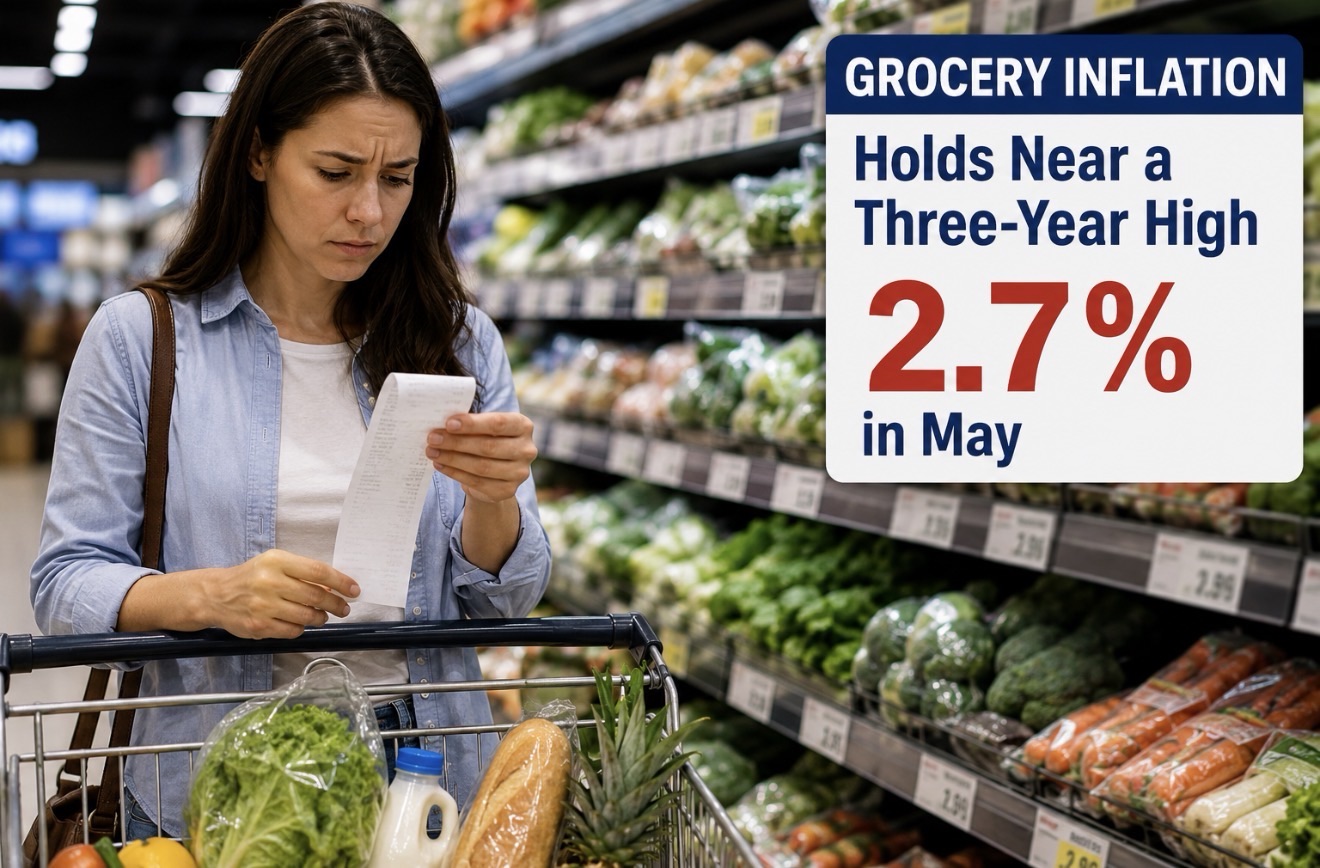

Grocery prices are still climbing at close to their fastest pace in years, keeping pressure on household budgets even as the broader economy’s inflation story is dominated by energy. According to the U.S. Bureau of Labor Statistics, whose Consumer Price Index for May was released Wednesday, June 10, the food-at-home index — the cost of groceries — rose 2.7% over the prior 12 months. That followed a 2.9% annual increase in April, which was the sharpest grocery inflation rate since August 2023, leaving food-at-home prices hovering near a three-year high.
The strain is uneven across the store. Fresh produce led the way, with the fruits and vegetables category up about 6.1% over the year, while nonalcoholic beverages rose 5.8%, pushed higher by global coffee prices. Beef remained a sore spot, with farm-level cattle prices up nearly 18% from a year earlier amid tight supplies. One bright spot for shoppers was dairy, where prices fell 1.0% over the year and cheese dropped 2.9% in May alone, giving grocers room to run promotions.
The figure sits below restaurant inflation. Prices for food away from home — meals at restaurants and takeout — rose 3.5% over the year, according to the same report. That gap has narrowed in 2026, an important shift for grocers and restaurants alike as families weigh whether to eat out or cook at home.
For context, food-at-home prices rose just 1.2% in 2024 and 2.3% in 2025, both below the long-run average. The U.S. Department of Agriculture now expects grocery prices to climb about 3.2% across 2026, faster than the 20-year historical pace of 2.6%, and warns the war in Iran could push prices higher still by raising gasoline, transportation and production costs in the months ahead.
The business and consumer fallout is already visible. Grocery inflation running ahead of its recent trend pressures the margins of chains like Kroger and Albertsons, fuels the political push against “surveillance pricing,” and helps explain why a growing share of shoppers are trading down to store brands or financing grocery runs with buy now, pay later loans. While the Federal Reserve, now led by Chair Kevin Warsh, focuses on an energy-driven jump in headline inflation to 4.2%, the steadier grind in grocery aisles is the number families feel most directly every week.
JBizNews Desk
© JBizNews.com All Rights Reserved. Reproduction or distribution without written permission is prohibited.