
 JBizNews
SpaceX Plans an 8-Mile “Starpipe” Gas Line in Texas to Fuel Its Starship Rockets
SpaceX plans to begin construction next month on an eight-mile natural gas pipeline called Starpipe to feed its South Texas launch complex, according to a filing made last month with the Texas Railroad Commission by SpaceX affiliate Lone Star Mineral Development and reviewed by Reuters, as Elon Musk’s company moves to dramatically increase the pace of its next-generation Starship rocket. The pipeline, which will end at the company town of Starbase, is expected to be in service by January 26, 2027.
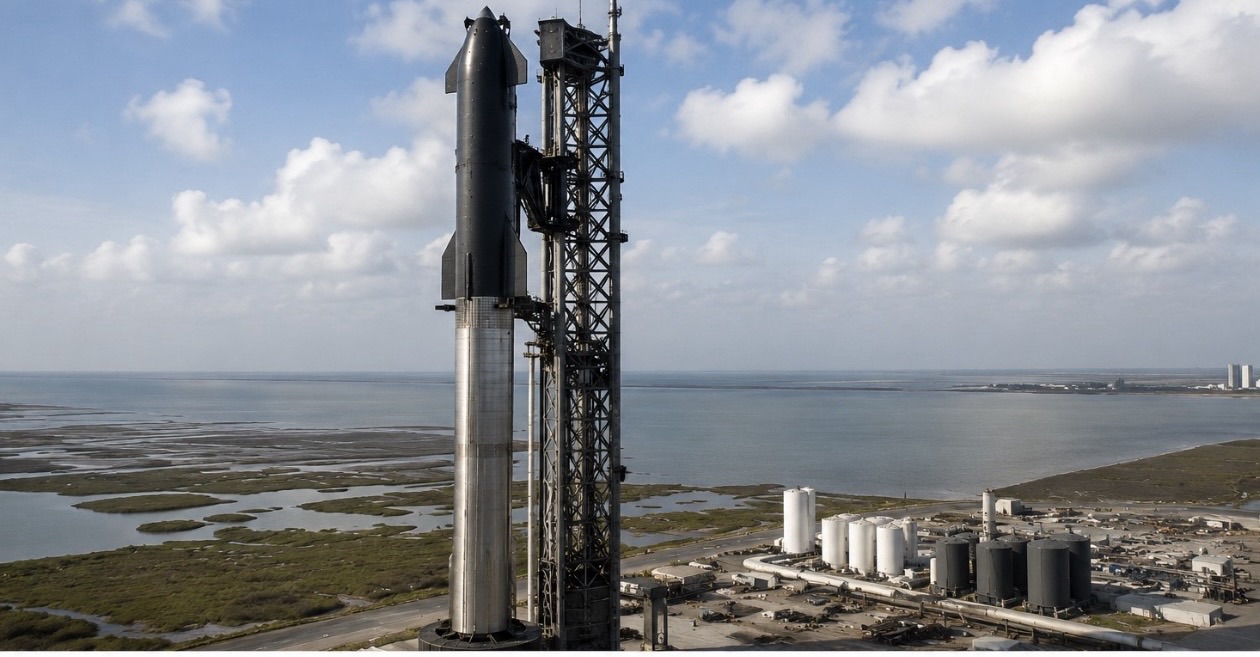
The reason for the project comes down to logistics. Starship, designed to be fully reusable, burns about 630,000 gallons of liquid methane per launch, currently delivered by hundreds of tanker trucks in an hours-long process that Musk’s expansion plans have rendered impractical. Starship has completed 12 test launches since 2023, but Musk aims to ramp up to dozens, then hundreds, and eventually thousands of launches a year. Trucking fuel one tanker at a time cannot support that cadence.
The pipeline is only one piece of a larger fuel operation taking shape at Starbase. Engineering plans SpaceX filed with the U.S. Army Corps of Engineers show the company also wants to build a liquefaction facility at Starbase to process the piped natural gas into the liquid methane Starship uses. Starpipe would begin on an 83-acre site at the Port of Brownsville that SpaceX is negotiating to lease from the city for 50 years.
The scale of the infrastructure hints at ambitions well beyond current limits. The pipeline’s 16-inch diameter suggests fuel demand exceeding what Starship would require for the 25 launches a year currently approved by the Federal Aviation Administration. In other words, SpaceX is building capacity for a launch rate it is not yet cleared to fly, a sign of how aggressively the company is laying groundwork for the future.
For a space company to build its own gas pipeline is unusual, and it reflects a strategy SpaceX has used to outpace rivals: control as much of the supply chain as possible. SpaceX has spent years exploring its own drilling operations near Starbase and across Texas, and land records show it has signed more than 100 paid-up oil and gas leases with Texas property owners since 2023. SpaceX President Gwynne Shotwell told CNBC on June 12, the day the company went public, that SpaceX planned to build pipelines and process its own propellant, and was looking into drilling its own natural gas.
That vertical-integration approach is capital-intensive but has been central to the company’s edge. SpaceX’s move into gas infrastructure, normally the domain of energy and pipeline firms, underscores its longstanding strategy of controlling its supply chain, an approach that has helped it outrun competitors in rocket and spacecraft development. The same playbook that brought rocket manufacturing in-house is now being extended to the fuel itself.
There are practical hurdles and open questions. A consultant noted that gas extraction would be challenging for a company without oil and gas experience, and SpaceX may lean on existing infrastructure rather than go it alone. SpaceX could tap into Enbridge’s Valley Crossing Pipeline expansion, which would run close to Starpipe’s start point, though Enbridge did not immediately respond to a request for comment. SpaceX also did not respond to a request for comment.
The business stakes reach far beyond a single fuel line. Starship is central to SpaceX’s plans to expand its Starlink broadband network, deploy orbital AI data-center satellites, and carry astronauts to the Moon and Mars. Every one of those revenue ambitions depends on flying Starship far more often than it does today, and a faster flight rate depends on a reliable, high-volume fuel supply. Starpipe is the unglamorous link that makes the rest of the plan possible.
For the broader economy, the project is a window into how the newly public SpaceX intends to spend and build. The company went public in a historic June 2026 initial public offering, and Starpipe shows it pouring capital into the kind of heavy industrial infrastructure that turns a launch business into something closer to an integrated energy-and-aerospace operation. If the pipeline performs as designed, it would cut a major bottleneck at Starbase and move Musk’s vision of routine, high-frequency spaceflight a step closer to reality.
JBizNews Desk
© JBizNews.com All Rights Reserved. Reproduction or distribution without written permission is prohibited.