
 JBizNews
AI Chip Rout Drags Emerging Markets Down 3.9%, Triggers New Korea Trading Halt
The Korea Exchange halted trading on its benchmark Kospi index on Friday, June 26, after a fresh wave of selling in artificial-intelligence and memory-chip shares tore through emerging markets and capped one of the roughest weeks for developing-nation stocks this spring. The trigger came from the United States, where the U.S. Bureau of Economic Analysis reported that May Personal Consumption Expenditures (PCE) inflation, the Federal Reserve’s preferred inflation gauge, rose 4.1% from a year earlier, a near three-year high that hardened expectations the Fed could keep interest rates higher for longer.
An MSCI gauge of emerging-market equities fell as much as 3.9% on Friday, marking its steepest one-day decline since early June. The selloff began in Asia before spreading across global markets, with investors dumping many of the AI-related stocks that had driven much of this year’s market gains.
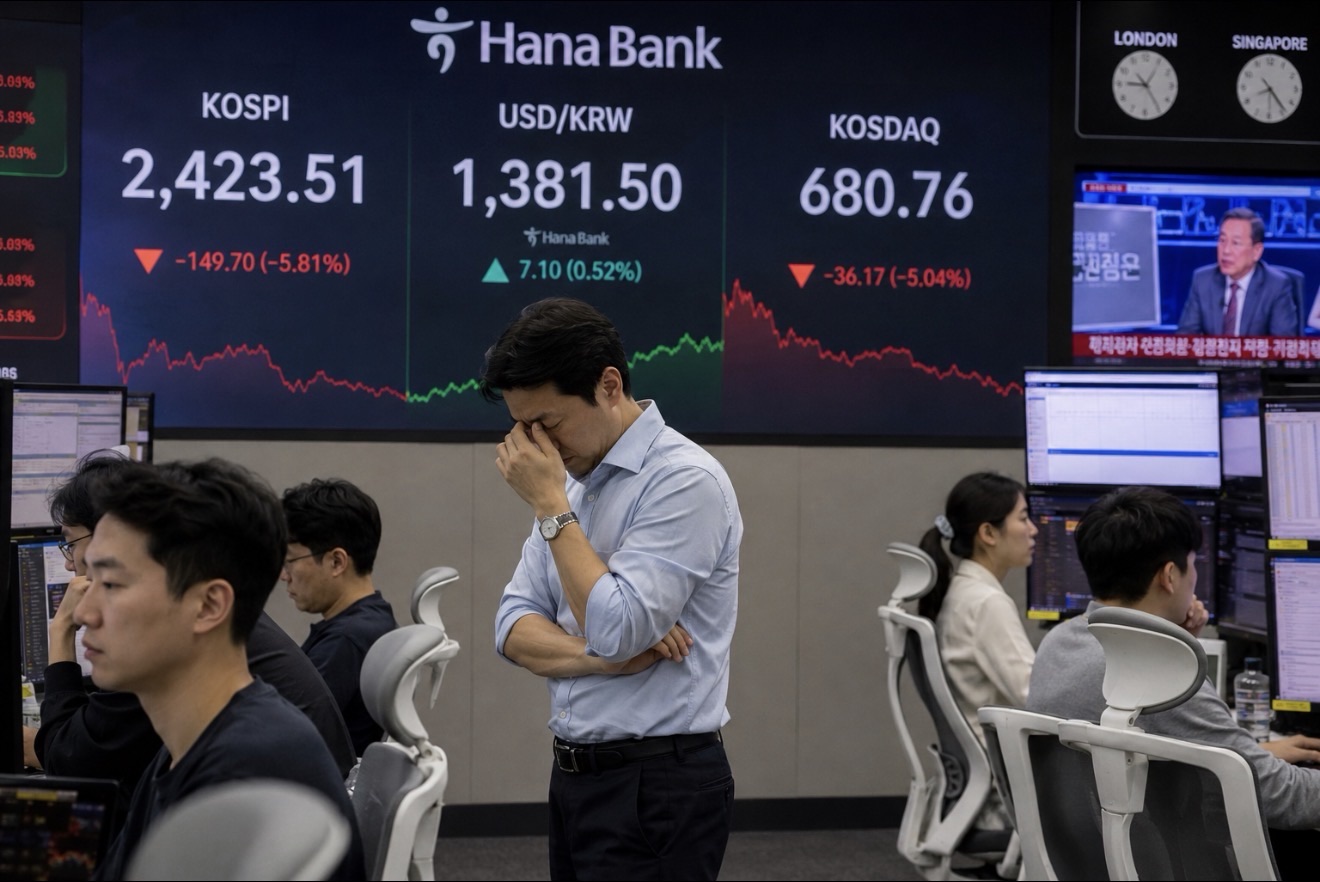
South Korea absorbed the heaviest losses. The Kospi plunged more than 8% during the session before recovering some ground to finish down 5.81%, triggering the exchange’s sidecar trading safeguard. Samsung Electronics and SK Hynix, which together account for roughly half of the index’s weighting, each fell about 9% despite news that the companies are expected to unveil a 1,000 trillion won semiconductor investment initiative on June 29. Traders instead chose to lock in profits after months of AI-fueled gains.
Japan also came under pressure. The Nikkei 225 dropped 4.15% to 69,360.83, erasing the previous day’s advance. The biggest casualty was SoftBank Group, whose shares fell more than 14% during trading before closing down 12.53% at 6,226 yen, wiping out roughly 5.6 trillion yen in market value. Investors reacted to reports that OpenAI, in which SoftBank owns approximately a 13% stake valued near $65 billion, may delay its initial public offering until 2027 as losses continue to mount.
Selling pressure was already spreading into U.S. markets before the opening bell. In premarket trading, ON Semiconductor fell as much as 13.6%, Micron Technology dropped 4.7%, while both Advanced Micro Devices and Intel declined more than 3%. Futures also pointed lower, with Nasdaq 100 futures down 1.08% and S&P 500 futures slipping 0.44%.
The inflation report transformed what had been a technology-sector pullback into a broader global retreat. Hotter inflation reduces the likelihood of near-term interest-rate cuts, increasing borrowing costs and reducing the present value of future earnings. That dynamic tends to weigh most heavily on high-growth technology companies whose valuations depend on profits expected years into the future.
Corporate news added to the pressure. Apple raised prices on its Mac and iPad product lines to offset rising memory-chip costs, sending its shares down more than 5%. Although analysts at JPMorgan argued investors had overreacted to the move, the price increases highlighted how rising semiconductor costs are increasingly reaching consumers rather than remaining confined to the supply chain.
Market strategists largely characterized Friday’s decline as a sharp reset rather than the beginning of a prolonged downturn. Dan Ives of Wedbush Securities has repeatedly described similar pullbacks as “gut-check moments,” maintaining that the artificial-intelligence investment cycle remains in its early stages. James Reilly, senior markets economist at Capital Economics, said the latest swings reflect the growing volatility that has become common across technology shares. Foreign investors have also accelerated their selling, unloading roughly $22 billion of South Korean equities since May.
The week had already been difficult for Korean markets. On Tuesday, June 23, the Kospi tumbled 9.99%, falling from record levels to 8,203.84, as both Samsung Electronics and SK Hynix lost roughly 12% in a single trading session that local investors dubbed “Black Tuesday.” Strong quarterly results from Micron Technology released after the U.S. close on June 24 briefly improved sentiment, but Friday’s hotter-than-expected inflation report erased that optimism.
Underlying the volatility is the question of valuation. Before this week’s decline, the Kospi had surged more than 90% for the year, driven overwhelmingly by enthusiasm surrounding AI memory demand. That left investors with little margin for disappointment when inflation concerns resurfaced. Because Samsung Electronics and SK Hynix supply memory chips used in many of the world’s leading AI systems, their decline has renewed debate over whether valuations across the broader artificial-intelligence sector have become stretched, including recently public companies such as SpaceX (ticker: SPCX), whose shares have traded near $156 following their June 12 debut despite strong investor demand for the company’s bond offering.
For everyday investors, the message is straightforward. The artificial-intelligence rally that helped propel markets higher throughout the year can reverse quickly when inflation data surprises to the upside or investor sentiment suddenly shifts. South Korea’s markets will reopen Monday with traders closely watching Samsung Electronics’ planned June 29 investment announcement and any new signals from the Federal Reserve that could determine whether investors return to the AI trade or continue taking profits.
JBizNews Desk
© JBizNews.com All Rights Reserved. Reproduction or distribution without written permission is prohibited.