
 Vos Iz Neias
Israeli Govt. To Freeze Arrests Of Yeshiva Students: ‘Could Cause Civil War’
JERUSALEM (VINnews) — The Israeli government is promoting a freeze on arrests of Haredi yeshiva students who evade military service during the coming months, warning that the arrests are deepening the rupture with the charedi public and could lead to what Cabinet Secretary Yossi Fuchs described as a “civil war.”
Fuchs sent a letter to Knesset Foreign Affairs and Defense Committee Chairman Boaz Bismuth stating that the government supports a temporary freeze on the arrests, after heads of charedi hesder yeshivas demanded a one-year halt.
According to the letter, the proposed freeze would be for three months and would apply only under supervision and only if the individuals are proven to be Torah students. Those who are not studying would not be able to benefit from the proposed temporary order.
Defense Minister Israel Katz is expected to send Bismuth a separate letter calling on him to convene the committee and discuss Fuchs’ proposal. The letter argues that the arrests are pushing charedim away from enlistment rather than encouraging them to serve.
“The legal counsel, which had never previously intervened in the issue of IDF enforcement, instructed that frequent arrest operations be carried out without distinguishing between yeshiva students who sit and study in yeshivas and those who are not studying,” Fuchs wrote. “This deepened the rift with the charedi public and did not contribute meaningfully to enlistment.”
He added that an examination of recent charedi enlistment figures and the impact of the arrests “indicates that these arrests of Torah students do not promote enlistment among the charedi public, but rather distance it, and there is a real fear of tearing the rope with the charedi public to the point, God forbid, of civil war, less than a week before the start of the Three Weeks.”
Fuchs stressed that the temporary order would not exempt yeshiva students from military service, would not allow them to receive IDF approval for deferment and would not exempt them from the financial sanctions already imposed on them.
Prime Minister Benjamin Netanyahu addressed the issue during a press conference on Lebanon on Saturday evening, claiming that charedi hesder yeshiva heads had sent him a message saying: “When you send people into the yeshivas, take Torah students out and send them to prison, no one enlists.”
Netanyahu quoted what he presented as the yeshiva heads’ message and said, “We received a simply enormous response from the charedi public, young charedim want to enlist, but when arrests are sent into Torah study, this is something that causes us to get the opposite result.”
He then added: “If I told you, if I told you that in some country in Europe they send police into yeshivas, take young men studying Torah and put them in prison, you would be shocked.”
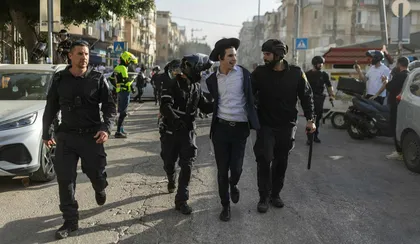
However, no such cases are known. In incidents in which military police arrived to arrest a Haredi deserter and were caught at the scene, they were surrounded by rioting crowds and required rescue. In cases where a deserter was arrested, the arrests led to protests, road blockages and even break-ins at the homes of senior officials. The police do not assist the IDF in arresting deserters.
Netanyahu said that anyone who is not studying Torah should be subject to the law, including arrest. “In my view, anyone who is not studying Torah, where the special arrangement that is being made needs to apply, which will also include sanctions, can have the full weight of the law applied to him, including arrest,” he said. “Here I would make a certain pause in order to reach broad agreements. That is what I am looking for. That will be my policy.”
In their letter to Netanyahu, the heads of the Haredi hesder yeshivas wrote that for more than a decade they had worked “out of deep Torah and public responsibility” to build tracks that allow young Haredi men to combine Torah study with sharing the burden of Israel’s security.
“In recent months we have watched with deep concern as this enterprise is being undermined before our eyes,” they wrote. “The wave of arrests of yeshiva students and Torah learners is causing a severe shock in the heart of the charedi public. Instead of bringing closer, it distances; instead of building trust, it breaks it; and instead of allowing a responsible dialogue, it creates a feeling of persecution, pain and radicalization.”
They demanded “immediate legislation of a temporary order defining a one-year halt to arrests of yeshiva students,” but did not claim that students were being arrested inside yeshivas.
They wrote that the goal of the freeze would be “to create during this year the full conditions in which charedi young men who wish to do so will be able to combine the burden of Torah, fear of heaven and sharing the burden of security.”
They added that during that year, legislation would also regulate the status of Torah students alongside those combining Torah study and military service.“At this time, the people of Israel need unity, responsibility, protection of the world of Torah and protection of Israel’s security, not another rupture within the camp,” they wrote.
Under the current legal situation, and in the absence of a new Knesset law, draft orders have been sent to about 90,000 Haredim who did not report for service. Of them, only a negligible share of draft evaders has been arrested and later released.