
 Vos Iz Neias
Iran Sees Strait Of Hormuz Control As Critical Leverage In Future Negotiations Or Conflicts
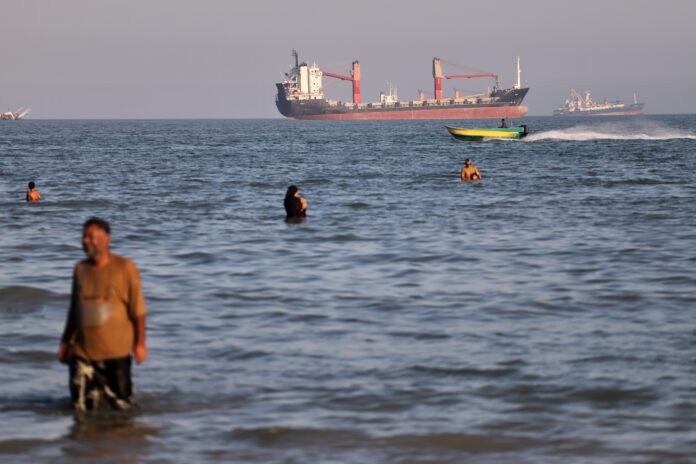
NEW YORK (VINnews) — The recent exchanges of attacks between Iran and the United States over the Strait of Hormuz threatened the ceasefire that was recently reached in a conflict both sides are eager to end. But for Iran, Middle East analysts say, the move was a necessary one.
Speaking to The New York Times, the experts explained that Iran’s ability to disrupt traffic through the waterway, a route vital to the global economy, is a critical source of leverage that it cannot afford to lose, whether at the negotiating table or in a conflict with the United States.
Last week, Oman and the International Maritime Organization (IMO) approved a new shipping route through the waterway that passes exclusively through Omani territorial waters. According to the report, this route could undermine Iran’s broader strategy of ensuring that it alone controls the Strait.
“Whether the best-case scenario or the worst-case scenario unfolds, they need this source of leverage,” Ali Vaez, an Iran expert, told The New York Times. “There has still been no official confirmation that talks will resume, and it is unclear when the sides will actually meet. But if they do, the Iranians view their control over the Strait as their strongest means of extracting concessions from the Americans.”
Iran is seeking sanctions relief if the two sides move forward with a nuclear agreement. Such a deal would likely require Iran to surrender or significantly reduce its stockpile of highly enriched uranium, a material that could potentially be used to build nuclear weapons.
Iranian officials reportedly suspect that the Trump administration agreed to a preliminary deal with Iran merely to buy time, easing economic pressures ahead of the U.S. midterm elections, after which President Trump would resume military action. If that were to happen, Iran would once again need its ability to create disruption in the Strait.
“It’s absolutely critical. This is their primary leverage,” Vaez said. “It makes no sense for them to allow that leverage to erode before they have a final agreement.”
“The Iranians realized they were losing control,” Farzan Sabet, an Iran expert at the Graduate Institute in Geneva, Switzerland, told The New York Times. According to him, Iranian leaders likely concluded that their influence is effective only “during wartime and during a hostile ceasefire in which attacks continue.”
According to the report, this explains why Iran responded so quickly to the recently announced shipping route bypassing Iranian waters by attacking a Singapore-flagged container ship.
The attacks reportedly led to four days of exchanges of fire, including strikes against U.S. military targets in Gulf countries. Yesterday, Iranian Foreign Minister Abbas Araghchi warned that if attempts to bypass Iran’s control of the Strait continue, so too would “instability.”
“Any attempt to adopt arrangements that differ from those currently implemented by the Islamic Republic will only lead to further complications, delays in the reopening of the Strait of Hormuz, and increased tensions,” Araghchi said during a press conference while visiting Baghdad, Iraq.
Iran’s willingness to provoke conflict during an ongoing peace process is consistent with the approach of the country’s new leadership, according to Ellie Geranmayeh, an Iran analyst who oversees the European Council on Foreign Relations’ work on Iran’s nuclear program.
She said that Iran’s former Supreme Leader, Ayatollah Ali Khamenei, who was killed in the opening strikes of the U.S.-Israel war with Iran in February, had pursued a strategy of “no war, no peace.” He long avoided direct confrontation with Washington while also preventing high-level direct negotiations.
“The political elite surrounding his son and successor, Mojtaba Khamenei, has a different appetite for risk,” she said. “The regime is prepared to escalate in bold ways, for example, through the recent attacks in the Strait, even if they jeopardize the memorandum of understanding. But it is also prepared to pursue peace with America through a new, direct, high-level negotiating track.”