
 Matzav
MK Tzvi Succot Warns: Illegal Weapons in Arab Sector Outnumber Police Arsenal 10-to-1, Calls It ‘An Existential Threat’
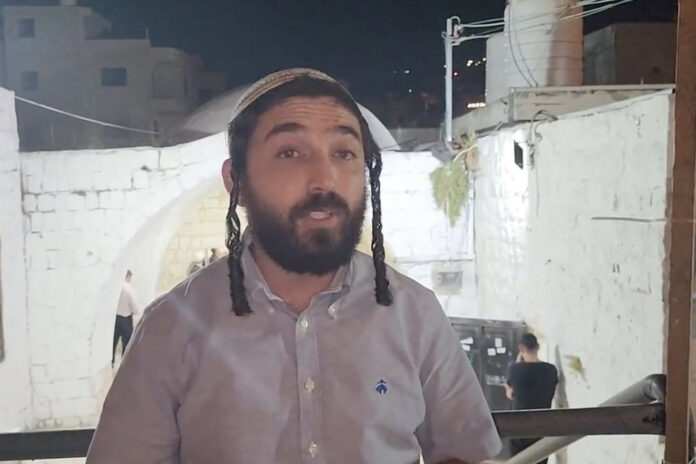
Religious Zionism MK Tzvi Succot issued a stark warning about what he described as a growing security crisis within Israel’s Arab sector, claiming that the amount of illegal weaponry in Arab communities is ten times greater than the arsenal available to the Israel Police. He also sharply criticized the government’s handling of Arab educational institutions, accusing authorities of ignoring incitement while placing disproportionate scrutiny on chareidi schools.
Speaking in an interview, Succot said that during visits to eastern Yerushalayim and Umm al-Fahm, he encountered what he described as deeply troubling conditions within parts of the Arab educational system.
“I saw schools run by Hamas-affiliated organizations, schools that independently organize delegations for the Palestinian Authority, schools operating without licenses while inciting terrorism, and schools that invite designated terrorist organizations to address students,” he said.
Succot argued that the roots of terrorism, crime, and violence begin in the classroom.
“When you ask where crime comes from, where terrorism comes from, where violence comes from—it all begins with education,” he said.
According to Succot, the government continues to fund institutions that, in his view, fail to educate students toward loyalty to the State of Israel or cooperation with law enforcement, while avoiding meaningful enforcement measures.
“Dozens of schools in eastern Yerushalayim alone are operating without licenses and are inciting terrorism,” he claimed.
The lawmaker also addressed the broader issue of organized crime and illegal weapons, praising the work of the Israel Police while arguing that officers lack the necessary tools to confront the problem effectively.
“I have to say that, based on what I’ve seen, the police are doing an excellent job. The problem is that they simply don’t have the tools,” Succot said.
He then cited what he described as an alarming statistic.
“The amount of weaponry currently in the Arab sector is ten times greater than the amount of weapons in the hands of the Israel Police. That’s an unbelievable figure. It has already become an existential threat to the State of Israel.”
Succot warned that if violence similar to the disturbances during Operation Guardian of the Walls were to erupt again, Israel could face an unprecedented internal security challenge.
“If, chas veshalom, there is a Guardian of the Walls II tomorrow, I’m not aware of a single body in the State of Israel that is seriously preparing for such a scenario,” he said.
He argued that confronting the threat will require stronger legislation, tougher enforcement, and expanded powers for Israel’s security agencies.
During the interview, Succot was also asked about the controversy surrounding Finance Minister Betzalel Smotrich’s recent assertion that his policies were responsible for the return of the hostages.
Succot defended Smotrich, saying the minister had opposed hostage deals that would have required Israel to make strategic concessions.
“We were the ones who stood firm,” Succot said. “Smotrich was the one who came forward and said, ‘There will be no surrender.’”
According to Succot, only after Hamas and the United States realized Israel would not agree to end the war on Hamas’s terms did an acceptable agreement become possible.
“When they understood there would be no surrender, and the Americans understood there would be no surrender, then there was a deal that brought everyone home without surrender,” he said.
He added that the IDF continues to operate freely throughout Gaza and maintained that Hamas has been unable to rebuild its military capabilities.
Looking ahead to Israel’s next election, Succot warned against efforts to divide the right-wing bloc, arguing that political opponents view internal divisions as the key to defeating the current coalition.
“The Left’s strategy in these elections is ultimately to split the right-wing camp,” he said. “Its goal is to sow hatred, division, and polarization within the right.”
He claimed that substantial resources would be invested in promoting such divisions.
Succot concluded by urging unity despite internal disagreements.
“We have to remain strong and understand that there are disagreements—of course there are—but we also have to remember the bigger picture,” he said.
“If the right-wing camp fractures, we will lose the government. In the end, they will trample both us and the chareidim.”