
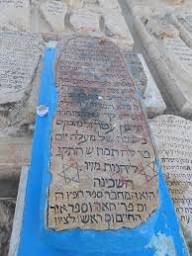

New York (VINNEWS/Rabbi Yair Hoffman) Today, the 15th of Tammuz is the yahrtzeit on one of the most famous meforshim on Chumash – the famed Ohr HaChaim. The Novaminsker Rebbe zt”l would give shiur every Shabbos morning in his Yeshiva in the 1980’s and this author was privileged to attend it on a number of occasions. It was filled with hashkafa, mussar, and cutting edge topics.
Rav Chaim ben Attar zt”l was born in 5456 (1696) in the city of Salé, on the Atlantic coast of Morocco. He was the son of Rabbi Moshe ben Attar and the grandson of Rabbi Chaim ben Attar the Elder, after whom he was named in keeping with the Sephardic custom of naming children after living grandparents. The grandfather served as Rosh Yeshiva in Salé and was renowned for his diligence in Torah, his hosting of Torah scholars, and his nightly recitation of Tikkun Chatzos. It was at the feet of his illustrious grandfather that the young Chaim received his earliest and most formative instruction.
Salé was a center of the Barbary corsairs who raided European shipping, not unlike today, and the Jewish community lived under constant uncertainty. When Chaim was still a boy, the family was forced to flee to Meknes to escape a hostile local official, and the death of his great-uncle and business partner Shem Tov ben Attar in 1705 was the cause of a further relocation.
A Rising Scholar
While still a young man, Rabbi Chaim became famous as a master of Talmud and a deep mekubal. He led a life of extraordinary piety and tzidkus, and he was among the select few tzaddikim to whom the title HaKadosh, the holy one, was applied. This rare designation places him alongside such luminaries as the Alshich and the Shelah HaKadosh.
Notably, the Ohr HaChaim refused to turn his Torah into a means of earning a livelihood. As a student he had learned the trade of becoming a goldsmith specifically so that he would never need to be paid for teaching or for serving in a rabbinic position. Even after his fame had spread and honored posts were his for the taking, he declined to accept payment for his Torah, embodying the dictum that one must not make the crown of Torah a spade with which to dig.
The Journey Toward Eretz Yisrael
In 1733, Rabbi Chaim resolved to leave Morocco and settle in Eretz Yisrael, then under Ottoman rule. The journey was long and circuitous. He was detained in Livorno, Italy, where the wealthy gvirim of the Jewish community, recognizing his greatness, established a yeshiva for him and pressed him to remain. Many of the talmidim he taught there went on to prominence, and it was they who provided the funds to print the Ohr HaChaim. Wherever he traveled he was received with great honor, a tribute to his vast knowledge, his sharp intellect, and his exceptional kedusha.
It was during this period, in Venice in 1742, that his commentary on Chumash first appeared in print. He composed his peirush along the four classical paths of Pardes, weaving together plain meaning, midrashic teaching, and deeper mystical insight in a manner that spoke to learned and unlearned readers alike.
Yerushalayim and His Final Year
The arrival in Yerushalayim was delayed by an epidemic in the city, and Rabbi Chaim settled for a time elsewhere, establishing his yeshiva and teaching Gemara. On the 15th of Elul 5502 (1742) he entered Yerushalayim at last, where he presided over the Beis Midrash Knesses Yisrael.
Among the talmidim who studied under him during these final months was the young Rabbi Chaim Yosef David Azulai, the Chida, who would become one of the towering scholars of the following generation. The Chida recorded his Rebbe’s greatness in unforgettable terms, describing a heart that pulsed with Talmud, a scholar who uprooted mountains, and a kedusha like that of a malach Elokim.
Wherever the Ohr HaChaim had lived he founded a yeshiva and a synagogue that bore his name and endured long after him. The Ohr HaChaim shul and yeshiva in the Old City of Yerushalayim stood for generations until they were destroyed during the Jordanian occupation that followed 1948.
The Light from the West Is Extinguished
Less than a year after entering Yerushalayim, on Motzaei Shabbos the 15th of Tammuz 5503 (July 7, 1743), the Ohr HaChaim was taken from this world at the age of forty-seven. Rabbi Chaim ben Attar was buried on Har HaZeisim, the Mount of Olives, outside the walls of the Old City. His resting place draws thousands of visitors, particularly on the 15th of Tammuz, his hilula, when Jews gather to learn his Torah and to pray.
A Living Legacy
The enduring power of the Ohr HaChaim is reflected in the practices of the great tzaddikim who followed him. The Baba Sali, Rabbi Yisrael Abuchatzeira, was known to complete the Ohr HaChaim’s commentary on the weekly parsha every Friday. The sefer remains a fixture of Shabbos preparation in countless homes, and its teachings continue to be quoted in shuls, yeshivos, and schools throughout the Jewish world.
Commenting on the posuk describing the passing of Moshe Rabbeinu, that he died there in the land of Moav, the Ohr HaChaim observed that he died only there, in this world, while in another holy and sublime place he lives on by the word of Hashem. The same may be said of the author himself. Through a peirush that has illuminated the Torah for generations of learners, the light of the Ohr HaChaim HaKadosh has never been extinguished.
Light on Sefer Devarim: Insights of the Ohr HaChaim
This 15th of Tammuz, the yahrtzeit of the Ohr HaChaim HaKadosh, is a fitting time to enter his Torah directly. What follows are insights drawn from across his peirush on Sefer Devarim, gathered and arranged to teach the central conviction that runs through them: no person stands alone. Every Jew is bound to every other, and that bond is the foundation on which everything else rests.
Bound to One Another
Every Person Is a Guarantor
You are standing today, all of you, before Hashem. (Devarim 29:9)
When the whole nation entered the covenant together, standing as one body, it was designed to be that way. The arrangement made each person a guarantor, an areiv, for everyone else. To be a guarantor means a person is responsible not only for himself but for his neighbor too, caring enough to step in and help him stay away from wrong. This mutual responsibility is the very shape of the covenant. When one person falls, the rest are caught up in it, because they were meant to reach out a hand.
Responsible, But Only for What Could Have Been Stopped
The hidden things belong to Hashem our G-d, and the revealed things to us and our children. (Devarim 29:28)
Responsibility has limits, and that is a chessed of Hashem. A person is held to account only where he actually had the power to speak up and make a difference. No one is blamed for a failure he had no way to prevent. The Ohr HaChaim is careful to explain that the duty to step in is real and serious, yet it is measured against real ability. The guilt lands on the chance that was not taken, not on results that were never in one’s hands. This keeps the idea of mutual responsibility from crushing a person, asking of each one exactly what was possible, and nothing more.
A Secret Sin Belongs to One; an Open Sin Belongs to All
The hidden things belong to Hashem, and the revealed things to us and our children. (Devarim 29:28)
There is a clear logic to how far blame spreads. A sin done in secret stays with the one who did it, because no one else even knew to object. But a sin done out in the open, where others watched and said nothing, becomes the whole community’s burden. The chance to speak up was right there, and it was let go. It is the very visibility of the wrong that creates the duty to respond. This is also why, painfully, the consequences of sin can fall even on the righteous who did not sin themselves. When they had the standing to protest and stayed silent, they are folded into the reckoning, not because they did wrong, but because they tolerated it. In a covenant of guarantors, silence in the face of open wrong is itself a kind of taking part.
The Work of the Heart
Once a person knows he is tied to others, the next question is how he serves Hashem from the inside. The Ohr HaChaim maps out the inner life: love, fear, and the slow climb toward closeness.
Two Roads Up the Same Mountain
To love Hashem your G-d, for He is your life. (Devarim 30:20)
There are two ways into the service of Hashem, love and fear, and they are not equal. Fear is the lower, easier road. Love is the higher one. The command to love Hashem with all one’s heart and soul sets the harder standard, the path that asks more of a person but also lifts him higher. A mature spiritual life does not throw fear away, but it reaches past it, climbing from the discipline of awe up toward the warmth of love.
Love Is the Root; Fear Is the Fence
You shall love Hashem your G-d, and you shall guard His charge. (Devarim 11:1)
The order that the Torah chooses is significant: Ahavah comes first, before the mitzvos and the warnings. First a person plants love of Hashem as the root. Everything that grows after, the careful keeping of mitzvos and even the awe that holds us back, grows out of that root and protects it. Love gives the reason to act. Fear builds the fence around it. Without the love, keeping mitzvos becomes hollow and mechanical. Without the fence, love has nothing guarding it from wearing away.
Yirah That Comes From Ahavah
To fear Hashem your G-d, and to love Him. (Devarim 10:12)
Even fear itself the Ohr HaChaim refines. The fear the Torah really wants is not the dread of getting punished. It is the Yirah that grows out of love, the way someone who treasures a relationship is afraid to do anything that would damage it. Fear practiced only for itself, as plain terror of consequences, is the smaller thing. Fear that flows from love is awe in its truest form. Rightly ordered, love and fear are not rivals at all. They are one devotion seen from two sides.
Loving With Every Part of Yourself
With all your heart, with all your soul, and with all your might. (Devarim 6:5)
To love Hashem with all one’s heart means with both inclinations, the good and the evil alike, the whole divided self made to point one way. With all your soul means even at the cost of life. And with all your might is read in a striking way: with whatever measure Hashem hands a person, he gives thanks and loves Him for it, when life is full and when it is empty, in the cup of rescue and in the cup of suffering. A love that depends on good circumstances is not yet the love the Torah is asking for. The love it asks for holds steady through every condition a life can take.
The Ladder of Closeness
And to cleave to Him. (Devarim 30:20)
Cleaving to Hashem, d’veikus, is the highest and most precious rung in His service, reached only at the top of a long climb. The Ohr HaChaim pictures it as a ladder whose rungs are degrees of nearness. Every act of love and every mitzvah carries a person one step up, until he reaches a closeness that is its own reward. The picture insists that real intimacy with Hashem is never handed over in a single jump. It is built, one patient step at a time.
Speech and Justice
A person who is bound to others and serving from the heart must now act in the world. That means weighing his words and weighing his judgments, because both carry real power.
Why the Torah Says See and Not Hear
See, I place before you today a blessing and a curse. (Devarim 11:26)
The Torah says see rather than hear because some truths cannot be heard about secondhand. They have to be looked at directly, the way a person looks at something standing right in front of him. Moshe does not want the people to treat the choice between blessing and curse as a distant report. He wants them to face it as a real thing, right before their eyes. Moral clarity depends on this kind of seeing, the refusal to keep one’s most important choices at the safe distance of having merely heard about them.
The Judge Who Looks Only at the Truth
And they shall judge the people with righteous judgment. (Devarim 16:18)
A judge must be a person whose only concern is the truth of the case, nothing else. He cannot be swayed, cannot curry favor, cannot lean toward either side. He looks at the case the way an honest outsider would. The Ohr HaChaim treats fair judgment as a spiritual discipline. The judge’s whole task is to keep his own interests, his own sympathies, and his own reputation completely out of the scale, so that what comes out is the truth of the case itself, not the judge’s preference dressed up to look like a ruling.
Justice That Is Both Near and Anchored
Judges and officers you shall appoint in all your gates. (Devarim 16:18)
Courts belong in every gate of every city, and yet the highest court sits in one place, in Yerushalayim, beside the Sanctuary. The setup teaches that justice has to be two things at once: near and anchored. It must be close enough to reach everywhere, so that no person is beyond its help. But it must also be tied to a single source of authority, so that it does not splinter into as many different laws as there are towns. Local justice with no center drifts apart. A center with no local reach cannot serve the people who actually need it.
The Power of Words, to Wound and to Heal
Take with you words, and return to Hashem. (Hoshea 14:3)
One of the hardest things for a person to truly grasp is how much power lives inside words, and especially inside the words of prayer. Speech is not a weak, throwaway thing. The Ohr HaChaim insists it has real force in the world: force to wound and force to heal, force even to reach upward and move what looks immovable. This is exactly why teshuvah is done with words. A person rebuilds himself using the very tool he could have used to tear others down. When the people could no longer bring sacrifices, the prophet taught them to bring words instead, to let their lips take the place of bulls. And this was not merely an emergency backup. The honest, broken-hearted offering of words was always the thing the outer sacrifice was pointing toward. A ritual that never passes through the heart is incomplete, and a broken heart that has only words to give has, in fact, the main thing.
Failure and the Road Back
No honest life avoids failure. So the Ohr HaChaim turns to the most hopeful subject of all: how a person who has fallen finds the way home, and why that home was never really lost.
Return Reaches Even the Farthest Person
You shall return to Hashem your G-d, and He will return your captivity. (Devarim 30:2-3)
No one is ever beyond return. The Ohr HaChaim stresses that the door of teshuvah stays open even for those who have wandered the farthest. And the moment a person turns back toward Hashem, G-d is already turning toward him. Return is never a lonely climb done all by oneself. The instant a person turns, he finds the distance already being shortened from the other side. Real return also has an inner order: leaving the wrong behind, deciding firmly not to repeat it, and turning the whole self back toward its source. Each stage does real work. Skip them, and the word repentance loses its meaning.
Your Deepest Self Was Never Stained
Is He not your Father who acquired you? (Devarim 32:6)
This is one of the Ohr HaChaim’s most comforting teachings. He reads the names Hashem gives Israel as a statement about how indestructible the core of a person really is. Even when someone does an aveirah, the deepest part of his neshama is not corrupted. The sin clings to an outer layer, while the essential self stays Hashem’s own, still able to be cleaned off and restored. This is not an excuse to do wrong; it is the cure for it. Precisely because the innermost soul stays pure, no failure is ever the end. The work of return is always the recovery of something that was never truly lost.
Suffering as Nearness, Not Abandonment
In all their distress, He was distressed. (Yeshayahu 63:9)
When trouble comes to Klal Yisroel, Hashem, as it were, feels the trouble with them. The Ohr HaChaim turns this into a teaching about what suffering even means. Hardship is not Hashem turning His back. It is Hashem drawing near in a hidden form, present right inside the pain. The same Hashem who sends hardship to refine us is the Hashem who shares that hardship with us. Read this way, suffering stops being a sign of abandonment and becomes, however painfully, a form of closeness.
Why the Wicked Are Called Dead While Still Alive
Destruction to him, corruption, not His children. (Devarim 32:5)
The verse refuses to call the wicked living, naming them instead with words of ruin and blemish even as they walk and breathe. The point is moral, not medical. A life cut off from its source, handed over to corruption, has thrown away the very thing that makes living matter. And the opposite is just as true: a soul attached to Hashem draws on a wellspring that even death cannot shut off. What we call life and death, the Ohr HaChaim suggests, comes down in the end to one question, what is a person connected to?
Trust and the Character of a Servant
Having returned, how does a person carry himself going forward? The Ohr HaChaim sketches the character of a true servant of Hashem: one who trusts in the dark, stays humble without lying about his worth, and keeps going after the inspiration fades.
Trust Is Measured in the Dark
Who among you fears Hashem, let him trust in the name of Hashem. (Yeshayahu 50:10)
Real trust in Hashem shows itself precisely in the dark, in the hour when a person is walking with no light, nothing visible to lean on, and still refuses to light his own false fires of self-reliance. The one who lights a substitute flame to keep the darkness away has shown that his trust was conditional all along. True bitachon is the willingness to keep walking toward Hashem right through the night, sure that the One he trusts will not let him stumble. And the sharp flip side is just as real: the one who trusts is saved, and the one who lights his own fire is not.
Humility That Still Knows Its Own Worth
As my righteousness, He repays me. (Shmuel II 22:21)
Here the Ohr HaChaim raises a sensitive problem. How could David call himself righteous and pure, when humble people are supposed to dwell on their flaws? His answer reshapes what humility even means. The good kind of self-knowledge is not denying the real virtues a person has. It is refusing to take the credit for them, seeing the good one has done while tracing its source back to Hashem and to one’s circumstances. A person may, and sometimes must, know the truth about his own conduct. Humility is not pretending to be worse than one is. It lives in what a person does with the truth once he sees it.
When a Human Outgrows the Material
Moshe, the man of Hashem. (Devarim 33:1)
The Ohr HaChaim reads the title man of Hashem as marking the moment a human being has refined himself so completely that the physical no longer runs him. The lower half of his nature has been mastered and folded into the service of the higher. Moshe earns that name not by ceasing to be human, but by perfecting his humanity, until his physical self becomes a clear, transparent instrument of the Divine. And the title is held up less as a description of one unrepeatable man and more as the direction every person’s work is meant to face. True spiritual stature, he adds, shows itself most in those who keep serving even after the inspiration is gone. It is one thing to act when the heart is on fire. It is a greater thing to stay faithful through the long, ordinary stretches when nothing is felt. Character is what is left of devotion after the excitement cools.
Torah and the Discipline of Joy
The servant of Hashem is, above all, a learner. And the Ohr HaChaim makes a surprising demand about how learning must be done: with joy. Joy is not the reward for the work; it is the condition that makes the work possible.
Torah Must Be Learned From Inside Joy
And it will be, because (eikev) you heed these laws. (Devarim 7:12)
The Ohr HaChaim teaches that Torah has to be learned from inside joy. The obligation is not only to study, but to study gladly, and learning pursued out of gloom or grimness falls short of what is asked. He goes so far as to say that someone who simply cannot reach that joy is, in that moment, exempt, because joyless study is not the thing the Torah commanded. This honors emotion as part of the mitzvah itself. How a person learns is not a side detail. It is part of the learning. And the reason runs deep: the early generations faltered, and prophecy itself withdrew, because Hashem’s spirit rests on a person only through gladness and pulls back from heaviness and gloom. Joy is not a prize for spiritual success. It is the very air in which connection to Hashem can happen at all. Sorrow seals the soul shut. Gladness opens it.
The Whole Self Must Be Present
Place these words of Mine upon your heart. (Devarim 11:18)
In a powerful image, the Ohr HaChaim describes how Torah engages the entire human being, heart, soul, and the body’s own faculties, so that learning becomes a force that sustains the whole person, the way food sustains the body. The words of Torah are themselves life. A person who takes them in is not just collecting information; he is feeding the deepest part of himself. This is why the Ohr HaChaim reads the language of life so literally. Torah is to the soul what bread is to the body, and a life cut off from it is, in the way that matters most, starving.
Teaching the Young, Before They Understand
Gather the people, and their children. (Devarim 31:12)
The Torah seems to repeat its call to bring even the smallest children to hear, and the Ohr HaChaim explains that the repetition is on purpose. The youngest are brought not because they will understand the words, but so that the very atmosphere, the awe and the love of learning, can settle into them before understanding even arrives. What a child is surrounded by reaches the heart long before the mind can put it into words. Education, in this reading, begins as the shaping of an environment, not the handing over of facts.
Holiness Turned Outward
The journey ends where it must: not in private perfection, but in holiness that reaches beyond the self, to the stranger, to the nations, and to the generations still to come.
The Holiness of a Place Lived In Rightly
Pass over and possess the good land. (Devarim 3:25)
Moshe’s deep longing to enter the Land, the Ohr HaChaim explains, was a longing for a spiritual height that is only reachable there, a closeness and a completeness the Land itself makes possible. Holiness is not entirely portable. Certain peaks can be climbed only in the place set apart for them. The teaching respects the idea that place and spirit are woven together, and that part of the work of becoming holy is the work of living in the right place in the right way.
Even the Stranger Is Drawn In
He loves the stranger, to give him bread and garment. (Devarim 10:18)
The Ohr HaChaim dwells on Hashem’s love for the convert and the stranger, reading it as a model for how holiness is supposed to reach outward. The one who comes from the outside, hoping to draw near, is met not with suspicion but with food, clothing, and love. The same Hashem who set Israel apart reaches past that boundary to gather in anyone who sincerely turns toward Him. And the people are meant to copy that reach, to mirror the open hand rather than guard the gate against newcomers.
A People Meant to Give Light
Arise, shine, for your light has come. (Yeshayahu 60:1)
Running through the haftaros of consolation is one steady conviction: Israel’s restoration is not for Israel’s sake alone. The redemption of the people is meant to teach the nations, turning a private rescue into public testimony. To be chosen, on this reading, is to be handed a message to carry. The dignity of the calling is not mainly in what it secures for the chosen. It is in what it gives to everyone else.
Each member of Klal Yisroel is bound to others as their guarantor, yet judged only for what was truly in his power. He serves out of love rather than dread, climbing the ladder of closeness one rung at a time. He weighs his words knowing their force, and weighs his judgments knowing the cost of bias. He fails and returns, trusting that his deepest self was never lost and that mercy is already walking back toward him as he walks toward it. He keeps faith in the dark without lighting false fires. He learns from inside joy, and shapes the joy of those who come after him. And he understands his own holiness as something owed outward, to the stranger, to the nations, and to the generations not yet able to understand. This is the world the Ohr HaChaim opens on Sefer Devarim, and it is the world that opens, each Erev Shabbos, to anyone who learns him.
The author can be reached at [email protected]