
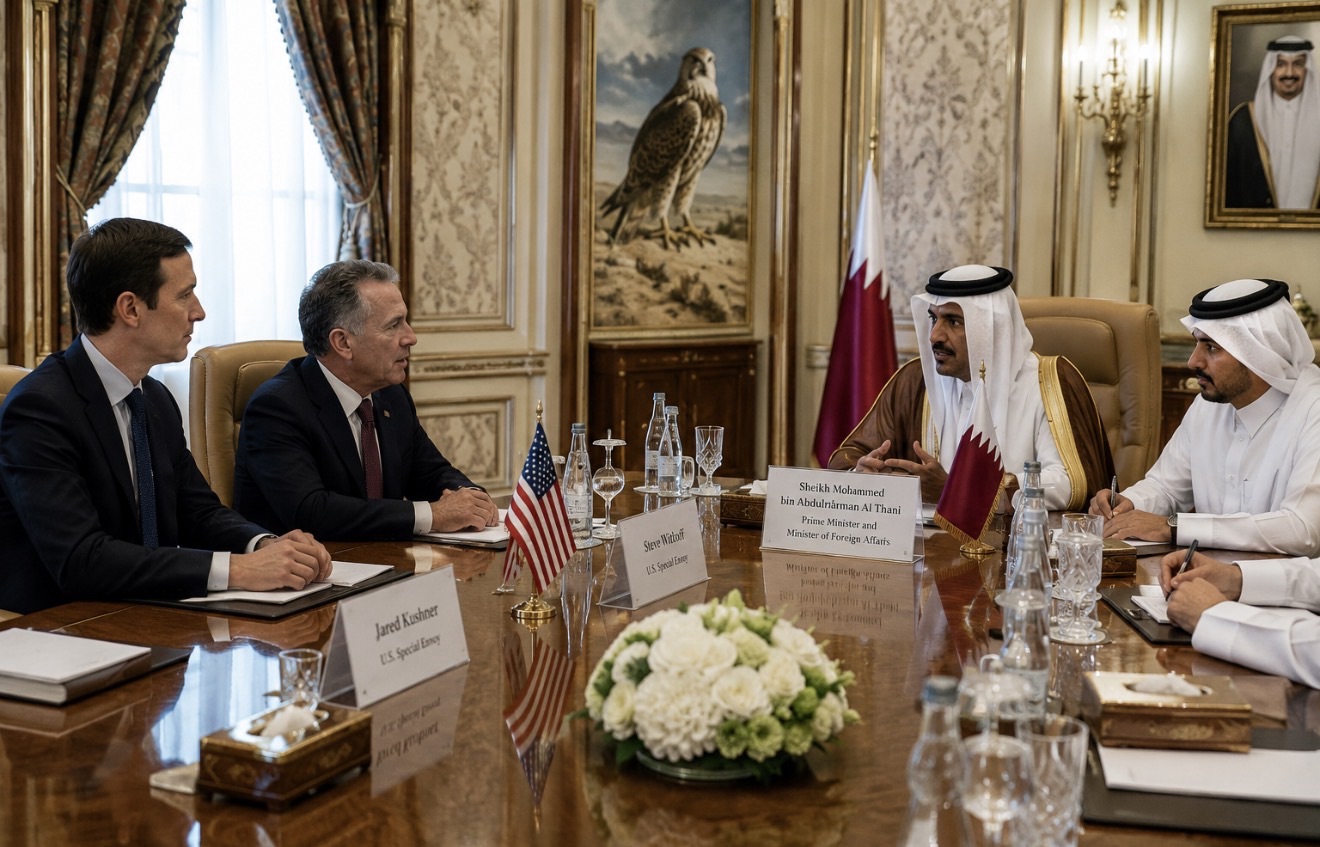

U.S. negotiators Jared Kushner and Steve Witkoff met Tuesday with senior Qatari officials in Doha as Washington worked to preserve the fragile ceasefire with Iran and advance negotiations toward a longer-term nuclear agreement. While U.S. officials described the discussions as constructive, Qatari officials emphasized that negotiations remain focused on technical issues and that no direct, high-level meetings between American and Iranian officials are currently taking place.
Following the meetings, a senior U.S. administration official said technical discussions are moving in a positive direction and that negotiators are making meaningful progress. However, Majed Al Ansari, spokesperson for Qatar’s Foreign Ministry, cautioned against expecting an immediate breakthrough, stressing that the current round of discussions is centered on mediation and confidence-building rather than direct political negotiations.
Qatar continues to play a central role as an intermediary between Washington and Tehran. Officials said separate working groups remain focused on nuclear issues, economic matters, and broader regional security concerns. The mediation effort also involves neighboring Oman, which has long served as a diplomatic channel between the two countries.
Negotiations follow the interim agreement reached in June that paused months of military confrontation and established a framework for continued diplomacy. Although recent exchanges around the Strait of Hormuz briefly raised concerns that the ceasefire could unravel, both sides have since reduced military activity, allowing commercial shipping to continue through one of the world’s most important energy corridors.
Public messaging from both governments remains noticeably different. The White House has maintained that discussions continue at Iran’s request, while Iranian officials insist additional negotiations depend on implementation of previous commitments before moving forward. Those differing public positions underscore the complexity of the talks despite continued diplomatic engagement behind the scenes.
For businesses and consumers, the negotiations carry significance well beyond foreign policy.
The Strait of Hormuz handles roughly one-fifth of global seaborne oil shipments, making stability in the region critical for energy markets. As shipping traffic has resumed, oil prices have retreated from recent highs, easing pressure on gasoline prices, freight costs, airline fuel expenses, and inflation more broadly.
Lower energy prices also provide some relief for businesses that rely heavily on transportation and logistics while helping reduce costs for households already facing elevated living expenses. Continued stability could strengthen supply chains and support broader economic growth if negotiations remain on track.
Financial markets are also closely monitoring developments. A sustained diplomatic process reduces the likelihood of renewed disruptions to global oil supplies, one of the key factors influencing inflation expectations and future Federal Reserve interest-rate decisions.
Despite the encouraging tone, officials acknowledge the negotiations remain delicate. Major issues surrounding Iran’s nuclear program, sanctions, and regional security have yet to be resolved, and mediators continue working to narrow significant differences between the two sides.
For now, the message emerging from Doha is one of cautious optimism. Technical negotiations continue, communication channels remain open, and commercial shipping through the Strait of Hormuz is operating normally. While significant challenges remain before any comprehensive agreement is reached, continued dialogue has helped ease immediate concerns over renewed conflict and provided welcome stability for global energy markets.
JBizNews Desk
© JBizNews.com All Rights Reserved. Reproduction or distribution without written permission is prohibited.