
 JBizNews
World’s Central Bank Body Warns an AI Bust Could Spread to Credit and Growth
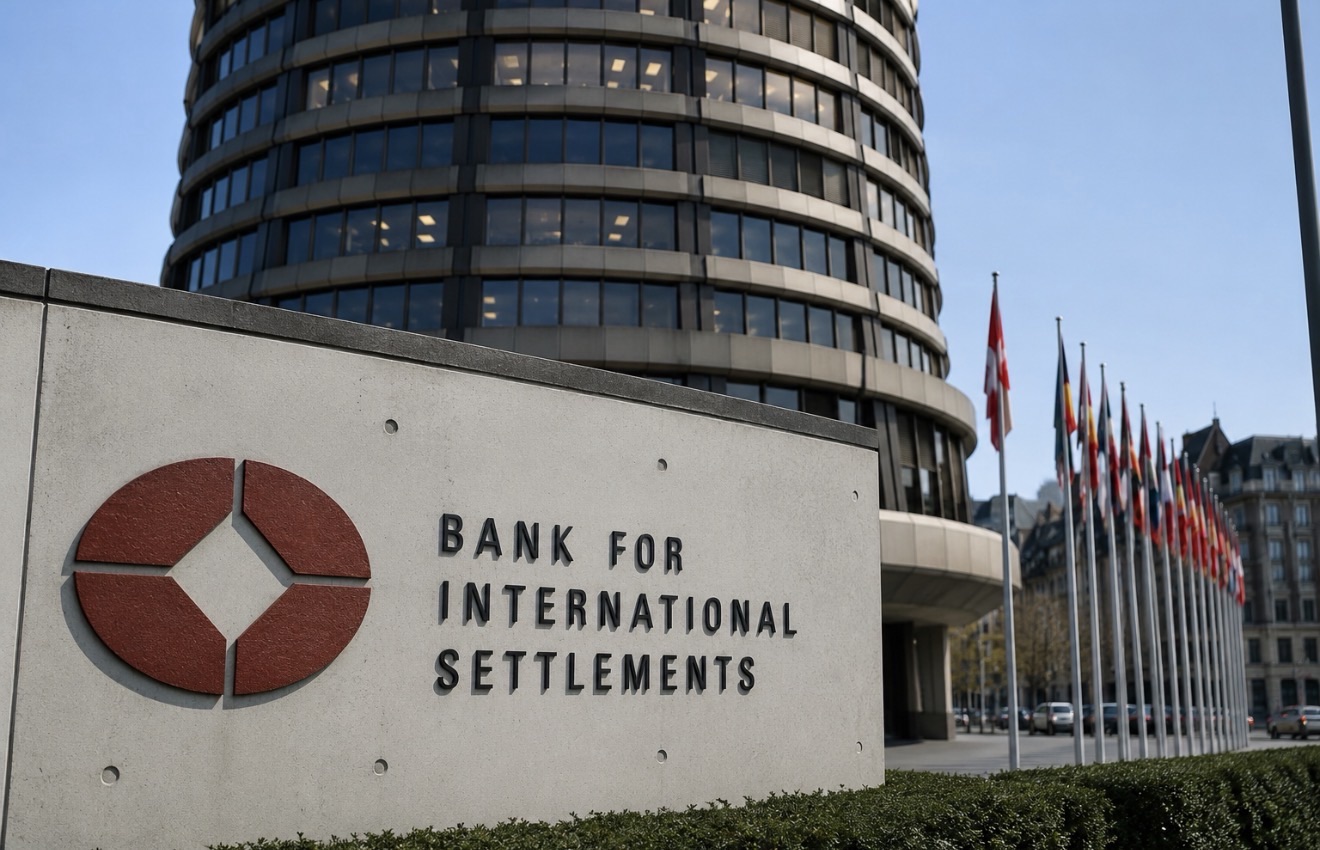
The institution often described as the central bank for the world’s central banks warned Sunday that a sharp reversal in artificial intelligence investment has become one of the biggest risks facing the global economy. In its Annual Economic Report, the Bank for International Settlements (BIS), headquartered in Basel, Switzerland, identified an AI investment bust alongside persistent inflation and rising government debt as key threats to global financial stability. The report carries significant influence because the BIS serves as a forum for cooperation among the world’s leading central banks, and its assessments often shape economic policy discussions worldwide.
The report stresses that the primary concern is not artificial intelligence itself, but how the unprecedented wave of AI infrastructure spending is being financed.
Technology companies are investing hundreds of billions of dollars in data centers, advanced computer chips, networking equipment, power infrastructure and cooling systems needed to support artificial intelligence. According to the BIS, the scale of those investments has grown so rapidly that even the world’s largest technology companies increasingly rely on borrowing to finance expansion rather than paying for projects solely through operating cash flow.
BIS General Manager Pablo Hernández de Cos said the pace of AI investment is raising fundamental questions about how the global economy may evolve, although he cautioned it would be premature for central banks to establish long-term policy responses before the technology matures further.
The report highlights another growing concern: much of the financing is flowing through areas of the financial system that receive less regulatory oversight than traditional commercial banks.
Private credit funds, hedge funds and other non-bank lenders have become increasingly important sources of financing for AI-related projects. According to the BIS, those funding arrangements often involve complex financial structures and off-balance-sheet obligations that may not be fully visible through conventional financial reporting.
As a result, investors could underestimate the amount of leverage supporting portions of the AI economy, leaving financial markets more vulnerable if investment conditions deteriorate.
The scale of borrowing has been substantial.
The largest technology companies driving the AI buildout—including Amazon, Alphabet, Microsoft, Meta and Oracle—issued more than $100 billion in corporate bonds during 2025, much of it with maturities extending beyond five years. While the financing provides companies with long-term capital for infrastructure construction, it also represents a significant bet that future AI revenues will justify today’s enormous spending.
The BIS compared current conditions to previous technology investment cycles, warning that supply constraints and intense competition could eventually result in overinvestment, where companies collectively build more capacity than long-term demand ultimately requires.
If that occurs, the consequences could extend well beyond the technology sector.
The report warns that a sudden retreat by private credit providers could amplify any slowdown, particularly if investors rapidly withdraw funding from AI projects. Financial guarantees embedded within complex financing arrangements could also trigger unexpected losses, potentially spreading stress into broader credit markets.
In that scenario, reduced lending could affect businesses and consumers far removed from artificial intelligence, increasing borrowing costs and slowing overall economic growth.
The report also links today’s financial risks with recent geopolitical developments.
According to the BIS, disruptions surrounding the Strait of Hormuz earlier this year contributed to higher global energy prices, creating renewed inflationary pressures at a time when many central banks were already struggling to bring inflation back toward long-term targets.
Although tensions have eased, the organization warned that higher energy costs continue flowing through global supply chains, raising manufacturing expenses, transportation costs and agricultural input prices. Those increases, the report noted, could place additional pressure on food prices, particularly in lower-income countries.
Taken together, the BIS describes an unusually complex global economic environment in which governments face elevated debt levels, inflation remains vulnerable to renewed shocks and artificial intelligence investment continues expanding at an extraordinary pace using increasingly sophisticated financing structures.
Hernández de Cos emphasized that fiscal, monetary and regulatory policies should complement one another rather than work at cross purposes as policymakers navigate these overlapping challenges.
For businesses and investors, the report serves as a reminder that the AI boom has become far more than a technology story. The financing supporting artificial intelligence now reaches deeply into global credit markets, meaning any significant slowdown could affect lending, investment, employment and economic growth across a wide range of industries.
The BIS stopped well short of predicting an AI crash. However, by placing a potential AI investment bust among its principal global financial risks, the organization signaled that central banks are paying close attention to how the next phase of the AI economy is being financed.
JBizNews Desk
© JBizNews.com All Rights Reserved. Reproduction or distribution without written permission is prohibited.