
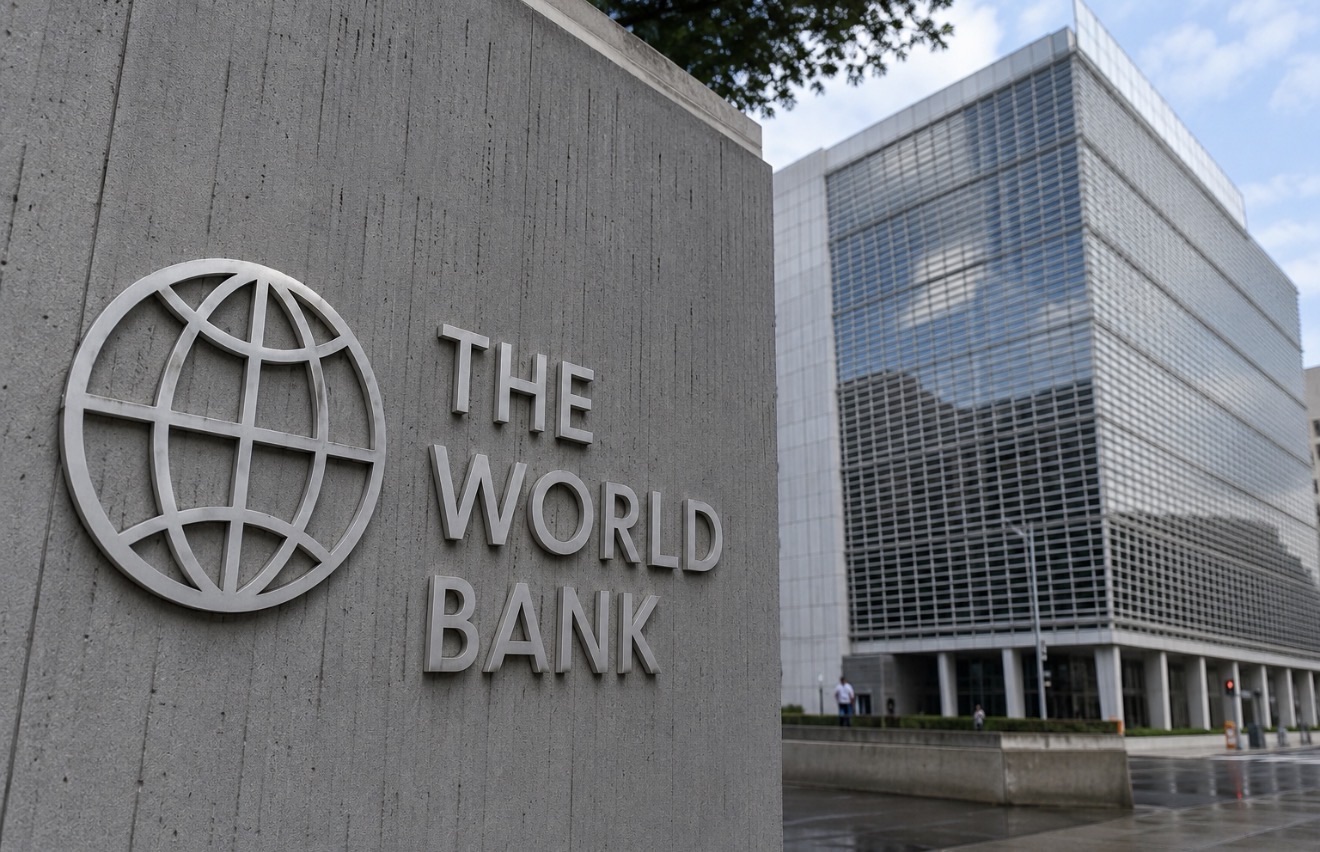

The World Bank said Monday it will eliminate its formal climate lending targets, marking a major policy shift that follows months of pressure from the United States, the institution’s largest shareholder. While the bank extended its overall climate change policy framework indefinitely, it will no longer require a fixed percentage of its financing to be dedicated to climate-related projects.
“We will retire the 45-percent climate co-benefits target and the 35-percent target,” the World Bank Group said in a statement, adding that it will instead “complete our shift from inputs to outcomes to maximize development impact.”
In practical terms, the bank will no longer promise that a set share of its annual lending must support climate-related projects. Instead, future financing decisions will be guided by the priorities and development needs of individual member countries.
The targets had become a central part of the bank’s strategy over the past several years. Its previous five-year framework called for 35% of annual financing to generate climate benefits by 2025. World Bank President Ajay Banga later raised that goal to 45% during the 2023 United Nations climate conference.
Under that framework, the bank’s climate financing nearly doubled—from approximately $21 billion in 2021 to $39 billion in 2025—making it the world’s largest provider of international climate financing for developing nations.
The policy change represents a significant victory for the Trump administration.
Treasury Secretary Scott Bessent had urged the World Bank to abandon what he described as a “distortionary” climate finance target, arguing that it diverted resources from poverty reduction and economic growth. The Treasury Department welcomed the expiration of the climate targets and has encouraged the bank to place greater emphasis on expanding access to reliable energy, including natural gas projects. The United States has also withdrawn from the Paris climate agreement.
For the global economy, the decision carries significant implications because the World Bank helps finance infrastructure, energy, transportation, agriculture, manufacturing, and industrial development across emerging markets. Its lending priorities often influence what types of projects governments pursue and private investors support.
Supporters of the policy shift argue that removing rigid climate targets gives developing countries greater flexibility to finance the projects they believe are most urgently needed, including conventional energy infrastructure capable of supporting economic growth and expanding electricity access.
Critics argue the opposite.
Environmental groups warn that eliminating formal targets could gradually reduce funding for climate projects while making it more difficult to measure progress and hold the institution accountable.
“The current plan, while imperfect, provides a basis for accountability,” said Rajneesh Bhuee of the advocacy organization Recourse.
The decision also highlighted divisions among the bank’s shareholders. While the United States pressed for removing the lending targets, several European governments, joined by some Latin American countries and small island nations, favored maintaining a formal climate framework. Many of those countries continue supporting the broader international goal of mobilizing $300 billion annually in climate finance for developing economies by 2035.
Even before Monday’s announcement, the policy had faced criticism from multiple directions. Some analysts argued that much of the increase in climate financing had been directed toward projects containing only limited climate-related components, while others maintained that measurable targets remained essential regardless of imperfections.
Most economists do not expect climate lending to decline immediately. However, the absence of formal benchmarks could gradually reduce internal incentives to prioritize climate investments and make it harder for governments and investors to track how development funding is allocated.
For developing countries seeking financing, Monday’s decision signals a shift away from fixed climate commitments and toward greater flexibility based on national priorities. It also underscores the growing influence of the United States in reshaping how one of the world’s most important development institutions allocates tens of billions of dollars each year.
JBizNews Washington Desk
© JBizNews.com All Rights Reserved. Reproduction or distribution without written permission is prohibited.