
 Vos Iz Neias
Supreme Court to Hear Orthodox Jew’s Challenge Over Permit Required for Home Prayer Gathering
WASHINGTON (VINnews) — The U.S. Supreme Court has agreed to hear the case of an Orthodox Jewish man who alleges an Ohio city violated his constitutional rights by requiring him to obtain a permit before hosting a small prayer gathering in his home.
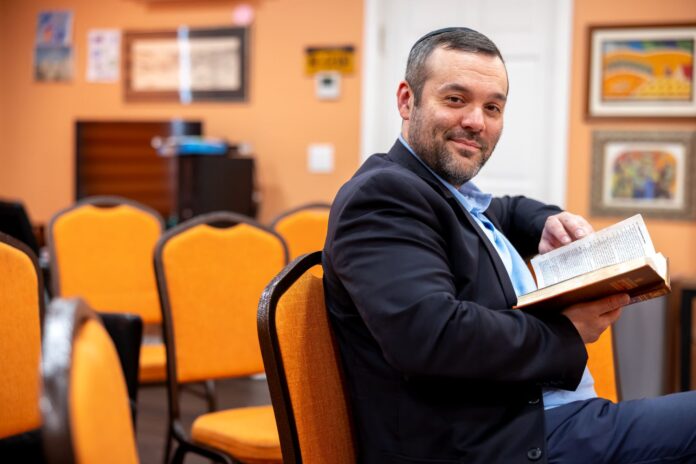
Daniel Grand, an Orthodox Jew from University Heights, Ohio, sued the city after officials ordered him in 2021 to cancel plans to host a minyan — the quorum of 10 Jewish adults required for certain communal prayers — unless he first obtained a special-use permit typically required for houses of worship.
According to court filings, Grand invited about a dozen friends to pray at his home on the Sabbath, but city officials issued a cease-and-desist order before the gathering took place. Grand canceled the prayer service and began the permitting process but later withdrew his application after learning approval would require his residence to be classified as a house of worship, preventing his family from living there. Court filings also allege neighbors objected to the permit, with some expressing opposition to having a Jewish gathering in the neighborhood.
Grand’s attorneys argue the city improperly singled out a private religious gathering while allowing similarly sized secular gatherings, such as book clubs or poker nights, without permits. They also allege city officials retaliated against him through increased code enforcement and other actions after he challenged the city’s decision.
Lower federal courts dismissed the lawsuit, ruling Grand had to complete the permitting process before pursuing his constitutional claims. The Supreme Court will now decide whether his lawsuit can proceed.
Grand is represented by attorneys from Orrick, Herrington & Sutcliffe LLP and the Alliance Defending Freedom, a nonprofit legal organization that advocates for religious liberty and free speech. His attorneys argue the case could have broad implications for religious freedom and whether local governments may require permits for small prayer gatherings held in private homes.
The case could become a significant milestone for Orthodox Jewish communities across the United States, where small prayer groups are commonly held in private homes, particularly in neighborhoods without nearby synagogues or where worshippers gather for daily prayers. A ruling in Grand’s favor could clarify the constitutional limits on local governments’ ability to regulate religious gatherings in private residences and establish an important precedent for similar communities nationwide.