
 Matzav
Iran’s Jewish Community to Attend Khamenei Funeral, Sends Letter to New Supreme Leader Mojtaba Khamenei
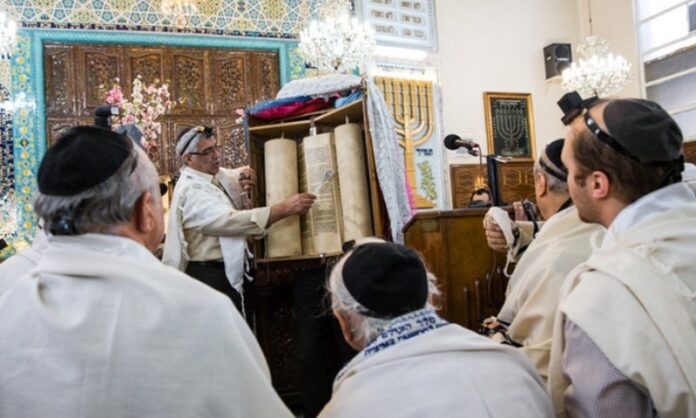
Representatives of Iran’s Jewish community announced that Jews and members of other recognized religious minorities will participate in the funeral and memorial ceremonies for Iranian Supreme Leader Ayatollah Ali Khamenei, who was killed during Operation Roaring Lion. A leading representative of the community also praised the Iranian regime’s treatment of religious minorities and revealed that he recently wrote to Iran’s new supreme leader, Ayatollah Mojtaba Khamenei, over concerns about renewed anti-Jewish rhetoric in the country.
Homayoun Sameh, the official representative of Iran’s Jewish community, addressed the issue on Friday, confirming that the Jewish community would join other minority groups in mourning ceremonies for Khamenei.
Sameh, who is known for expressing loyalty to the Iranian regime and frequently criticizing Israel, said, “In coordination with officials from the Ministry of Culture and Islamic Guidance and representatives of the country’s religious minority communities, we will make every effort to attend all events related to the funeral and memorial ceremonies for the Leader of the Islamic Revolution.”
He added that foreign diplomats, representatives of religious minorities, political and religious leaders, and delegates from abroad had also been invited to various events.
“We have received official invitations to additional ceremonies, and we hope to be there alongside the rest of the Iranian people,” he said.
Sameh also praised Khamenei’s relationship with Iran’s Jewish community and other religious minorities.
“The attitude, support, and fatherly concern that the late leader showed toward all religious minorities, especially the Jewish community, were always deeply valued and gave us hope,” he said.
Addressing concerns within the Jewish community following the 12-day war, Sameh acknowledged that “some misconceptions” had emerged among segments of the population. However, he said Khamenei consistently emphasized the importance of safeguarding the civil rights and dignity of religious minorities.
According to Sameh, just as Ayatollah Ruhollah Khomeini distinguished between Iran’s Jewish citizens and Zionism, Khamenei continued that same policy. He said that during the years immediately following the Islamic Revolution, many Iranians failed to distinguish between Jews and Zionists, creating significant challenges for the country’s Jewish community.
Sameh recounted that about 12 years ago, while serving as head of Iran’s Jewish Association, he wrote a letter to Khamenei after media outlets published reports that blurred the distinction between Judaism and Zionism.
He said that roughly two weeks later, Khamenei addressed organizers of the annual Jerusalem Day events and instructed them: “Shout against the Zionists, not against the Jews.”
Sameh said the Jewish community regarded those remarks as “a position of great value and significance.”
He added that in recent days, certain public statements and media broadcasts once again raised concerns within the Jewish community about anti-Jewish incitement. As a result, he said, he sent a letter to Ayatollah Mojtaba Khamenei, who has assumed leadership following his father’s death.
According to Sameh, anti-Jewish rhetoric declined noticeably afterward, while the distinction between Jews and Zionists became more clearly reflected in official media coverage and government slogans.
“The Jewish community in Iran has always regarded itself as part of the Iranian nation,” Sameh said. “The level of satisfaction within the Jewish community is very high, and we all share in mourning the loss of the late leader. We hope that under the leadership of Ayatollah Mojtaba Khamenei, the path of respect, peace, and mutual understanding among all sectors and religions in the country will continue to grow stronger.”
{Matzav.com}