
 JBizNews
New Jersey Storms Knock Out Power to 230,000 as Record Heat Pushes Grid to the Brink
A violent line of thunderstorms tore across New Jersey Friday evening and left more than 230,000 homes and businesses without electricity, according to restoration updates from Jersey Central Power & Light (JCP&L), the FirstEnergy subsidiary serving much of northern and central New Jersey. By Saturday afternoon, the utility said crews had restored power to nearly 80,000 customers, leaving about 150,000 still without service—roughly 95,000 in northern New Jersey and 55,000 in the central part of the state.
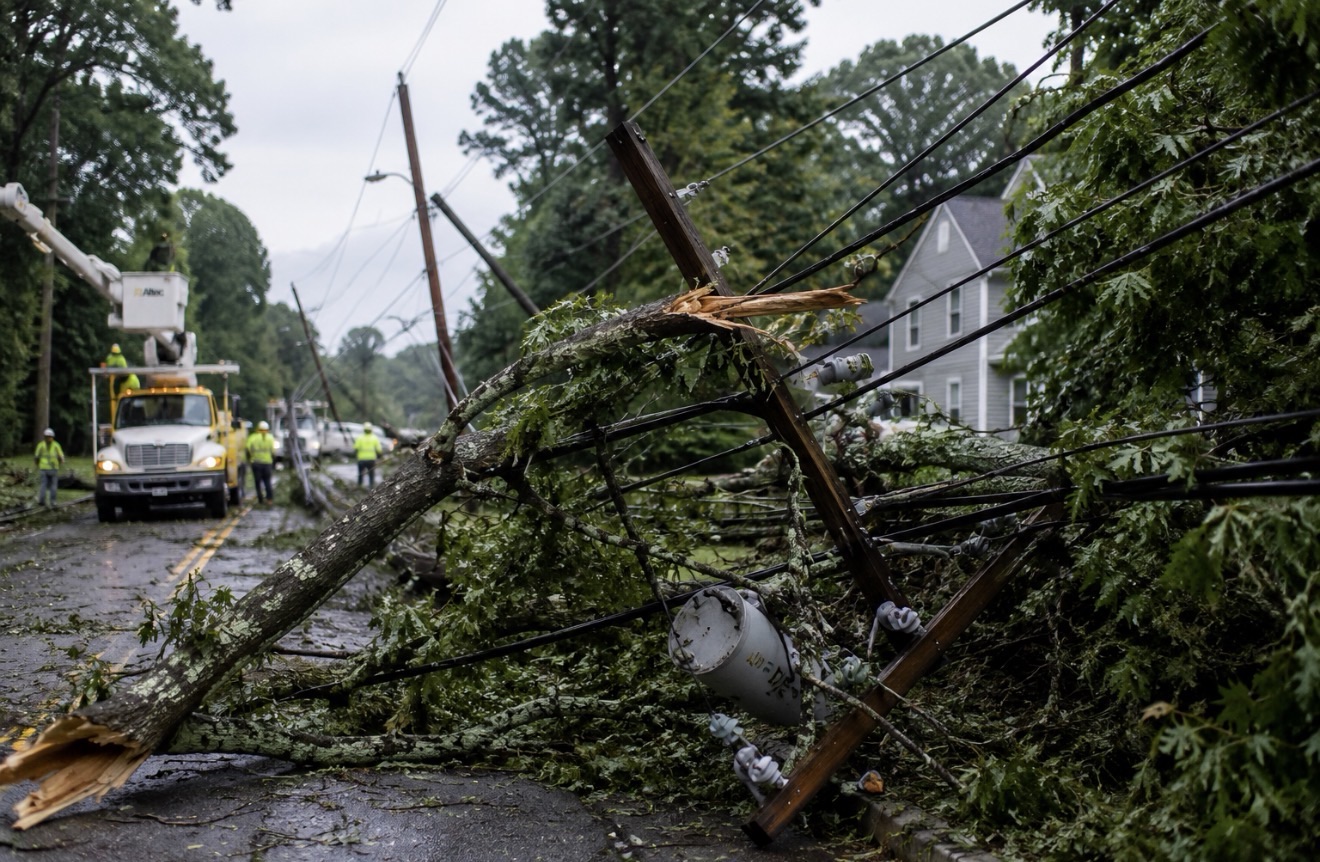
Public Service Electric & Gas (PSE&G), New Jersey’s largest electric utility, also reported widespread storm damage. As of Saturday morning, the company said it had restored power to 138,000 customers since extreme heat began on July 1, with powerful winds toppling trees, power lines, and approximately 165 utility poles throughout its service territory.
“We know being without power is challenging, particularly in hot weather,” said Paul Toscarelli, PSE&G’s Vice President of Electric Operations, adding that additional line crews were working throughout the Independence Day holiday weekend to restore service as quickly as possible.
The storm was driven by intense straight-line winds rather than a tropical system or widespread tornado outbreak. Dan Zarrow, chief meteorologist for New Jersey 101.5, said the combination of extreme heat and humidity fueled wind gusts exceeding 70 miles per hour in some locations.
JCP&L spokesman Chris Hoenig said the storm swept across virtually the utility’s entire service territory from north to south, leaving few communities untouched. Morris County and Monmouth County sustained the greatest damage, accounting for more than 90,000 outages at the height of the storm.
The timing could hardly have been worse. Communities across New Jersey were preparing for one of the busiest holiday weekends of the year when widespread outages forced the cancellation of Independence Day celebrations, including Summit’s fireworks at Soldiers Memorial Field. Restaurants, grocery stores, retailers, and other small businesses lost valuable holiday sales while many also faced spoiled inventory after prolonged power failures. JCP&L established free water and ice distribution sites for customers left without electricity during the dangerous heat.
Behind the storm damage sits a larger business story involving the region’s electrical grid.
PJM Interconnection, which manages the electric grid serving New Jersey and 12 other states along with the District of Columbia, reported electricity demand climbing to roughly 163 gigawatts on Thursday as the Northeast heat wave pushed heat index values above 110 degrees across portions of the Mid-Atlantic. That demand came within striking distance of PJM’s all-time record of 165,563 megawatts, established during the summer of 2006.
To help maintain reliability, the U.S. Department of Energy issued emergency orders under the Federal Power Act. Energy Secretary Chris Wright authorized PJM to temporarily operate certain power plants beyond normal environmental restrictions and, if necessary, require large industrial customers—including major data centers—to switch to backup generators during emergency conditions. Facilities drawing at least 50 megawatts of electricity can be directed to move onto backup generation within 15 minutes if the grid becomes critically stressed.
It marked the third time during 2026 that federal emergency authority has been used to support PJM’s electrical system.
The strain also drove electricity prices sharply higher. Wholesale electricity prices in portions of PJM exceeded $2,000 per megawatt-hour on Thursday, while the region’s Western Hub benchmark settled near $1,223, almost three times the level seen during comparable summer demand periods a year earlier. Businesses on demand-based utility rates and consumers with variable-rate electricity plans face the greatest exposure to those price spikes.
PJM officials say the long-term driver behind rising electricity demand is no longer a mystery.
The grid operator projects that approximately 30 of the next 32 gigawatts of expected electricity demand growth through 2030 will come from expanding data centers, which require enormous amounts of power to support artificial intelligence, cloud computing, and digital infrastructure. PJM’s latest capacity auction produced a record clearing price of $333.44 per megawatt-day, significantly increasing the future cost of guaranteeing sufficient generating capacity across the region.
Those higher costs ultimately flow through to utility customers, helping explain why New Jersey lawmakers recently advanced legislation requiring large data centers to bear a greater share of future electric infrastructure costs.
The immediate concern, however, remains restoration efforts.
PSE&G warned that additional thunderstorms could move through New Jersey on Sunday, creating the possibility of new outages while crews continue repairing damage from Friday night’s storms. By early Sunday, FirstEnergy’s outage maps showed the number of customers without electricity gradually falling toward 90,000, although the company cautioned that complete restoration would require several more days because of the widespread damage.
For New Jersey residents and business owners, utility officials continue urging customers to avoid downed power lines, minimize refrigerator openings to preserve food, monitor official outage maps, and prepare for continued restoration work as crews race to rebuild the electric system during one of the hottest stretches of the summer.
JBizNews Desk | New Jersey
© JBizNews.com All Rights Reserved. Reproduction or distribution without written permission is prohibited.