
 Matzav
Captured Hamas Files Reveal Sinwar’s Secret Plan for Full-Scale Multi-Front War Against Israel
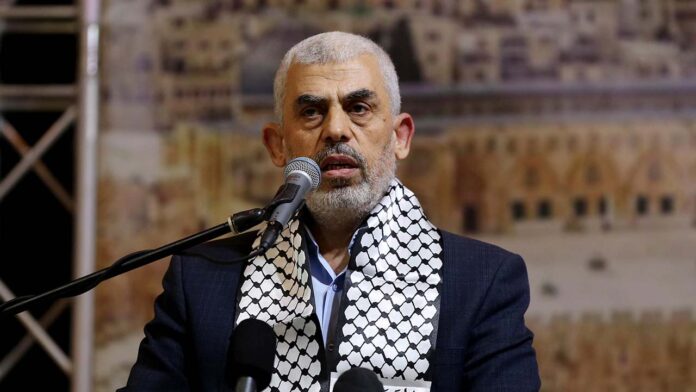
Newly analyzed documents detailing communications between Hamas and Hezbollah leaders reveal that Yahya Sinwar spent years trying to orchestrate a coordinated regional assault on Israel, believing Hezbollah would launch a massive offensive alongside Hamas once the war began.
The documents, examined by researchers at the Amit Terrorism and Intelligence Research Institute and published Sunday by Doron Kadosh of Galei Tzahal, shed new light on Sinwar’s extensive strategic discussions with Hezbollah leader Hassan Nasrallah in the years preceding the October 7 massacre.
According to the documents, Sinwar presented Nasrallah with multiple operational plans for attacking Israel, not just a single proposal. Each envisioned cooperation among members of the Iranian-backed regional alliance, although the degree of participation varied from one scenario to another.
Even in the less ambitious proposals, one strategic objective remained unchanged. Sinwar consistently viewed Israel’s border with Jordan as a critical battlefield in any future conflict, alongside the traditional fronts in Gaza and Lebanon.
The correspondence indicates that as early as June 2022, Sinwar advocated for a coordinated assault in which guerrilla forces would infiltrate Israel simultaneously from Syria and Jordan. He believed opening multiple fronts at once would overwhelm Israel’s military and force it to divide its resources across several theaters of combat.
The exchanges also suggest that Nasrallah responded favorably to the proposals. According to the documents, he described one of the plans as a “realistic scenario that can be realized.” Nasrallah reportedly said he intended to present the proposal to Iranian Supreme Leader Ali Khamenei for approval. Despite that, the plans did not envision direct Iranian military involvement, with Tehran expected to remain outside the fighting itself.
Researchers concluded that Sinwar became increasingly confident after each meeting with Hezbollah’s leadership. He came away believing that Nasrallah was committed to participating in a major war and that Hezbollah would assume a central role once hostilities began.
By June 2023, Sinwar was expressing that confidence publicly within Hamas leadership circles. During a meeting of Hamas’s political bureau in Gaza, he declared, “In recent months, we have succeeded in bringing Hezbollah and the Iranians out of their ‘psychological deterrence’ mindset that has existed since 2006 in the Dahieh. Now the Iranians and Hezbollah are prepared…” The documents indicate that Sinwar believed both Hezbollah and Iran had become increasingly willing to confront Israel directly.
His confidence only grew as October approached. Addressing Hamas’s Shura Council in August 2023—roughly six weeks before the attack—Sinwar predicted that the conflict would rapidly spread throughout the region.
“We are certain that if the great strategic battle breaks out, God willing, many fronts will be opened against this enemy,” he told the gathering.
Not everyone within Hamas shared that optimism. Internal military intelligence assessments painted a more cautious picture, warning that Hezbollah still faced a significant “psychological barrier” when it came to entering a large-scale war with Israel. The intelligence analysis suggested Hezbollah remained hesitant despite Sinwar’s assurances to Hamas’s leadership.
Nevertheless, the documents indicate that Sinwar never altered his expectations. He remained convinced that Nasrallah would honor their understandings and enter the war immediately once Hamas launched its offensive.
According to the report, at 6:29 a.m. on October 7, shortly after Hamas began its assault, Sinwar sent an urgent message to Nasrallah apologizing for not informing him beforehand of the exact timing of the operation while pleading for Hezbollah to join the battle without delay.
“We ask for support and assistance,” Sinwar wrote before urging Hezbollah to “hurry and take part… in concentrated rocket bombardments… and begin a major ground offensive.”
The report, first revealed by Israeli journalist Ben Caspit, indicates that one of Sinwar’s immediate priorities during the opening hours of the massacre was to transform the conflict into a broad regional war by bringing Hezbollah into the fighting at full strength.
That plan never materialized.
Although Hezbollah eventually entered the conflict a day later, its involvement remained far more limited than Sinwar had anticipated. Rather than launching the sweeping invasion he envisioned, Hezbollah confined its operations to a much narrower campaign along Israel’s northern border.
Researchers concluded that the documents highlight a striking disconnect between Sinwar’s expectations and reality. While he believed the October 7 assault would almost automatically trigger simultaneous attacks on multiple fronts, that scenario never fully developed.
The analysis concludes that although the October 7 massacre itself represented an unprecedented terrorist attack and intelligence failure, the consequences could have been substantially more devastating had Hezbollah executed the full-scale offensive Sinwar expected. According to the report, Hezbollah’s decision not to immediately launch a major assault likely spared communities throughout the Galilee from a far broader and more destructive attack.