
 Matzav
Court Clears Way for Trump Administration to Restore Revised Slavery Displays at Washington Historic Site
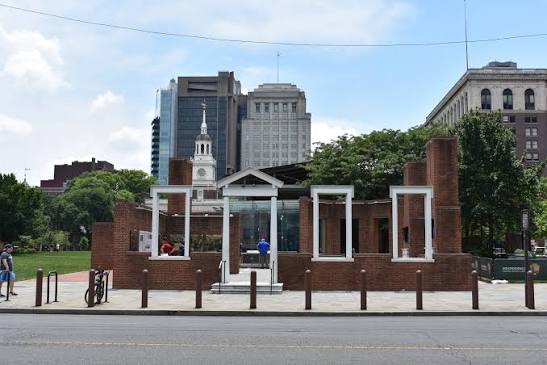
A federal appeals court has cleared the way for the Trump administration to reinstall revised historical exhibits at the site of President George Washington’s former Philadelphia residence, rejecting an effort to block displays that critics argue soften the history of slavery in early America.
The interpretive panels are slated to be placed at the President’s House site, just steps from where the Declaration of Independence was adopted on July 4, 1776. The National Park Service did not immediately respond to a request for comment Friday.
The updated displays are intended to replace exhibits installed in 2010 that focused on the lives of the nine enslaved people who lived in the household of George and Martha Washington during the 1790s, when Philadelphia served as the nation’s temporary capital.
The changes were prompted by President Donald Trump’s 2025 executive order directing federally owned historic sites to avoid presenting material that would “disparage Americans past or living” and instead emphasize the “greatness of the achievements and progress of the American people.”
Friday’s decision by a three-judge panel of the U.S. Court of Appeals for the Third Circuit was procedural in nature, allowing a ruling issued last month to take effect. The appellate court sits directly across the street from the President’s House historic site.
The earlier ruling—issued by a panel consisting of one judge appointed by Trump, one appointed by President George W. Bush, and one appointed by President Barack Obama—held that a lower court had improperly ordered the federal government to remove the revised exhibits.
On Thursday, the administration asked the court for permission to immediately reinstall the panels, arguing that they were ready to be put in place and should be installed “without further delay.” Court filings submitted by the administration maintain that the new exhibits continue to address the subject of slavery.
Historians, academics, preservation advocates, and public officials have expressed concern for months that the revised presentation, drafted to comply with Trump’s executive order, minimizes the brutality of slavery in favor of a more celebratory account of American history.
Images posted on a government website show that the replacement panels still discuss the enslaved people who lived at the President’s House and include information about the abolitionist movement, the Constitution’s treatment of slavery, the abolition of slavery in Pennsylvania, the views and actions of George Washington and President John Adams regarding slavery, and the Civil Rights movement of the 20th century. However, the new displays omit some material that appeared on the earlier panels, including a map of the transatlantic slave trade, a slavery timeline, and headings such as “The Dirty Business of Slavery.”
The City of Philadelphia, which sued after the original exhibits were removed, continues to fight the changes. On Friday, city attorneys asked the appeals court to temporarily withdraw its order, at least long enough for the city to formally respond to the administration’s request filed the previous day.
In its filing, Philadelphia argued that allowing the new panels to be installed would cause harm, stating: “The President’s House is a site of exceptional importance to Philadelphia and the Nation, developed through years of federal-local collaboration to tell a historically significant and long-suppressed story.”
Roughly half of the original interpretive panels had already been reinstalled earlier this year before a court order halted that effort.