
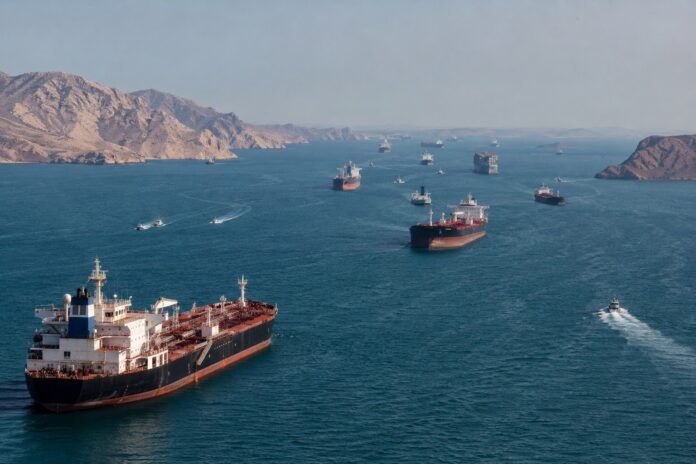

A dramatic new escalation unfolded overnight in the Strait of Hormuz after Iran’s Islamic Revolutionary Guard Corps (IRGC) reportedly launched missiles at commercial vessels, damaging two ships and fueling fresh concerns that the fragile calm between Washington and Tehran may be unraveling.
According to Axios, citing a U.S. official, the IRGC fired at least two missiles at commercial ships traveling through the strategic waterway late Monday night. The official said both vessels sustained substantial damage, though no injuries or fatalities were reported.
Earlier in the day, the United Kingdom Maritime Trade Operations (UKMTO) announced that an “unknown projectile” struck an oil tanker off the coast of Oman near the Strait of Hormuz, igniting a fire aboard the vessel.
The latest attack comes as tensions remain elevated across the region, despite ongoing diplomatic contacts between the United States and Iran aimed at securing a lasting agreement after the two sides signed a Memorandum of Understanding.
The uneasy ceasefire has already been tested. In recent days, the United States carried out two separate strikes against Iranian targets in the Strait of Hormuz, saying the operations were in response to Iranian violations of the ceasefire agreement.
Following those incidents, President Donald Trump cautioned that the United States could be compelled to “militarily complete the job” if Iran continued to breach the ceasefire.
The Strait of Hormuz is among the world’s most strategically vital maritime corridors, serving as the passageway for approximately one-fifth of global crude oil and liquefied natural gas shipments. During the wider Middle East conflict, Iran’s blockade of the waterway brought commercial traffic to an almost complete standstill, sending global energy prices soaring.
After reaching an initial framework agreement with the United States to suspend hostilities, Tehran reopened the Strait of Hormuz, allowing commercial shipping to resume through one of the world’s most critical energy chokepoints.