
 JBizNews
Iran Fires Missiles at Two Ships Near Hormuz as Qatari Gas Tanker Is Hit
Iran’s Islamic Revolutionary Guard Corps (IRGC) fired missiles at two commercial vessels near the Strait of Hormuz early Tuesday, according to U.S. officials, damaging both ships and marking the latest escalation in one of the world’s most strategically important shipping lanes. The attack comes as commercial traffic had begun returning to normal following weeks of regional tensions and raises fresh concerns about global energy supplies and shipping security.
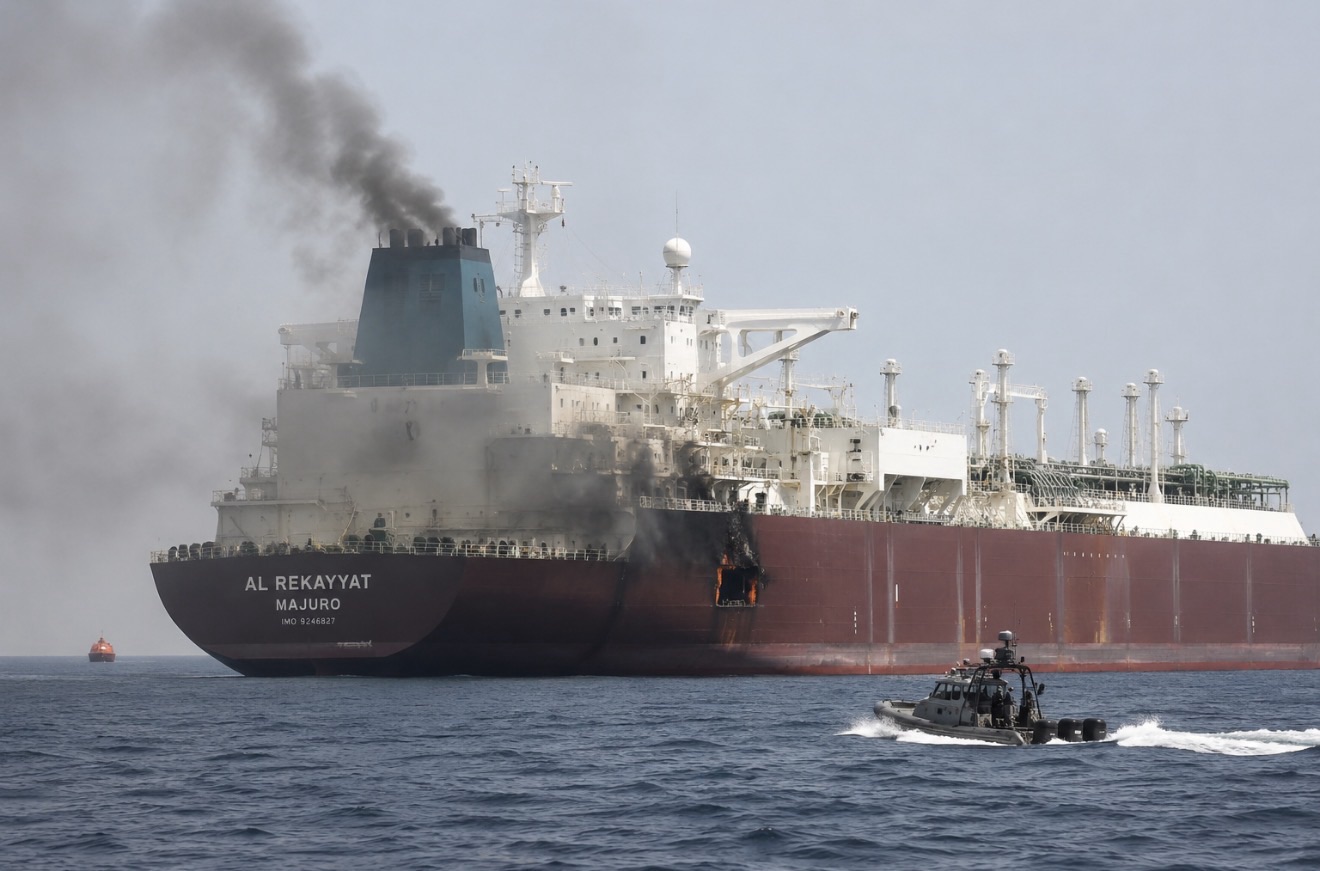
One of the vessels struck was identified as the Al Rekayyat, a liquefied natural gas tanker owned and managed by Nakilat, Qatar’s state-backed LNG shipping company. According to reports, the tanker was transiting the mouth of the Strait of Hormuz in the Gulf of Oman when it was struck on the port side near the engine room. A fire broke out after the impact, sending smoke through part of the vessel. Crew members reported that everyone aboard was accounted for and no fatalities or injuries were immediately reported.
The United Kingdom Maritime Trade Operations (UKMTO) also received reports of a commercial tanker being struck by an unidentified projectile approximately eight nautical miles east of Limah, Oman. The agency said a fire was reported aboard the vessel, although there were no immediate indications of environmental damage.
The attack represents a significant escalation in a waterway through which roughly one-fifth of the world’s seaborne oil and liquefied natural gas shipments pass each day. The Strait of Hormuz remains the most critical maritime chokepoint for global energy markets, linking oil and natural gas producers in the Persian Gulf with customers across Asia, Europe and North America.
Energy traders had recently become more optimistic as shipping volumes gradually recovered and crude oil prices retreated from earlier highs. Before Tuesday’s attack, Brent crude had been trading near pre-conflict levels while West Texas Intermediate (WTI) also moved lower as concerns about supply disruptions eased and OPEC+ continued increasing production.
That optimism could now be tested.
Any renewed threat to commercial shipping through Hormuz has the potential to increase insurance costs, delay cargo movements and place upward pressure on global oil and natural gas prices. Even short-lived disruptions in the strait can ripple through supply chains, affecting transportation costs, manufacturing expenses and consumer prices around the world.
The incident carries particular significance for Qatar, one of the world’s largest exporters of liquefied natural gas. LNG shipments leaving Qatar’s Ras Laffan export complex depend on safe passage through the Strait of Hormuz before reaching customers in Europe and Asia. Any sustained disruption to that route could have consequences for global energy markets at a time when demand for natural gas remains elevated.
Shipping companies and commercial operators are expected to closely monitor security conditions in the region before determining whether to continue normal transit schedules or adopt additional safety measures. Maritime security organizations have repeatedly warned that commercial vessels operating in the Gulf face elevated risks during periods of heightened regional tension.
Financial markets are also expected to react as investors evaluate the potential impact on oil prices, shipping companies and energy producers. Previous disruptions involving the Strait of Hormuz have often resulted in increased volatility across energy, transportation and insurance sectors.
The latest incident also raises broader geopolitical concerns as governments seek to prevent additional escalation in the region. Diplomatic efforts aimed at reducing tensions now face renewed uncertainty following an attack involving commercial shipping in one of the world’s busiest maritime corridors.
For businesses and consumers, developments in the Strait of Hormuz extend well beyond the Middle East. Energy prices influence everything from gasoline and diesel fuel to airline tickets, shipping costs, manufacturing expenses and household utility bills. Any sustained increase in oil or LNG prices could eventually work its way into the broader economy.
Maritime authorities continue monitoring the situation while shipping companies evaluate operational risks in the region. The coming days will likely determine whether the attack proves to be an isolated incident or the beginning of renewed instability affecting one of the world’s most vital energy corridors.
JBizNews Desk | Strait of Hormuz
© JBizNews.com All Rights Reserved. Reproduction or distribution without written permission is prohibited.