
 JBizNews
Hanwha Ocean Shares Plunge 23% After Losing Canada’s $100 Billion Submarine Contract
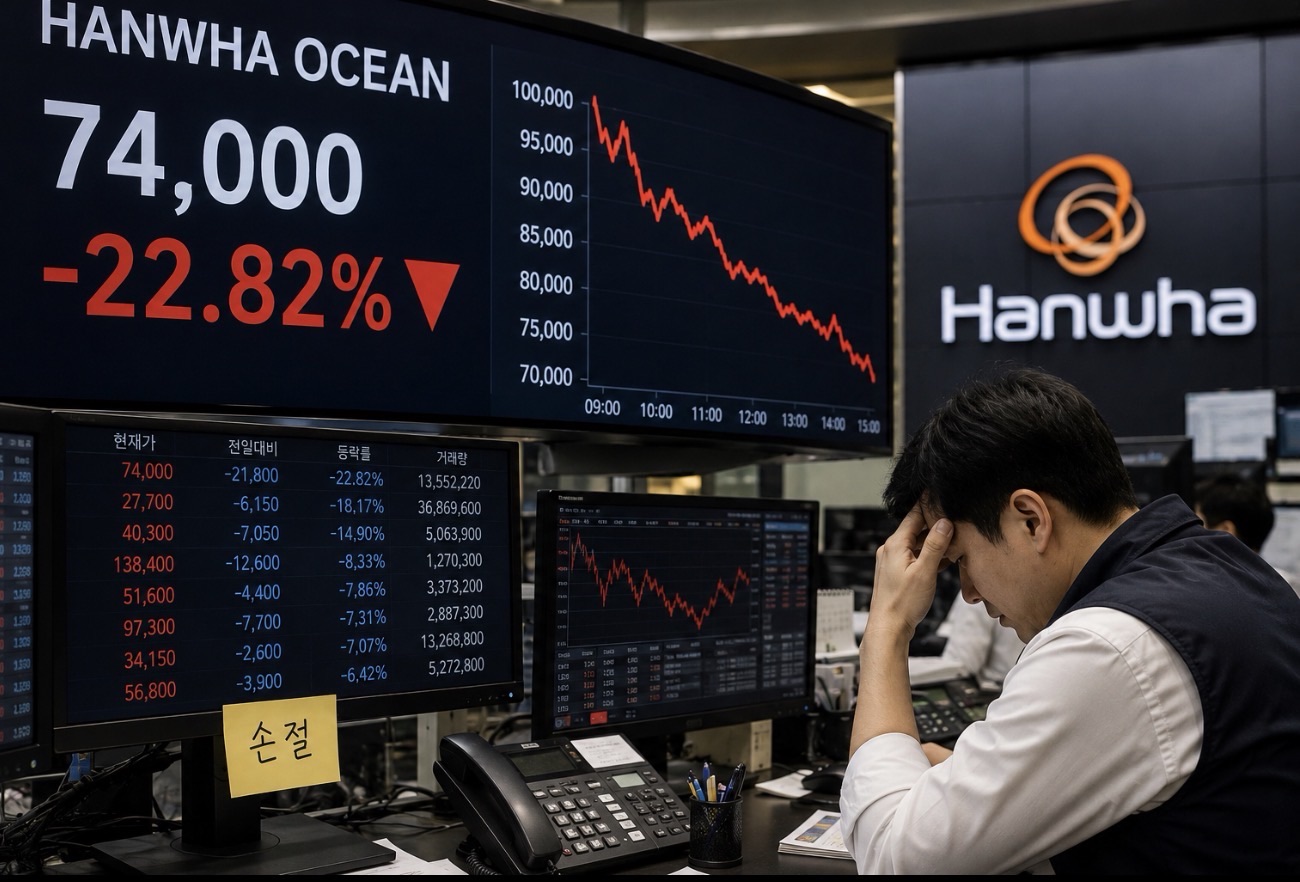
Shares of Hanwha Ocean tumbled about 23% on Tuesday, July 7, after Canadian Prime Minister Mark Carney announced that Germany’s ThyssenKrupp Marine Systems (TKMS) had been selected as the preferred supplier for Canada’s next-generation submarine fleet, handing South Korea one of its biggest defense-export disappointments in years.
The announcement came Monday during a visit to Halifax, Nova Scotia, before Carney departed for the NATO Summit in Ankara, Turkey. Investors reacted immediately when trading opened in Seoul, wiping billions of dollars from Hanwha Ocean’s market value as hopes for one of the world’s largest naval contracts disappeared.
The Canadian Patrol Submarine Project calls for replacing Canada’s aging Victoria-class submarines with up to 12 modern diesel-electric submarines over the coming decades. Industry estimates place the total value of the program at as much as $100 billion, making it one of the largest military procurement projects currently underway anywhere in the world.
For Hanwha Ocean, winning the contract would have represented the largest overseas defense export in the company’s history and a major breakthrough into the NATO defense market.
“This was a difficult, close decision between two highly qualified suppliers,” Carney said, noting that both Germany and South Korea submitted proposals capable of meeting the Royal Canadian Navy’s operational requirements. He said Canada ultimately selected the proposal that best aligned with the country’s strategic, security and economic priorities.
Industry analysts believe several factors helped Germany secure the victory.
ThyssenKrupp’s Type 212CD submarine is already being jointly developed for Germany and Norway, both NATO members, giving Canada confidence in its long-term interoperability with allied naval forces. Equally important, Germany pledged substantial economic investment inside Canada, including commitments covering manufacturing, research, defense technology, critical minerals and domestic industrial development.
Those economic commitments increasingly influence major defense contracts around the world.
Rather than simply purchasing military equipment, governments now evaluate how procurement projects will generate local jobs, manufacturing capacity and long-term investment.
A setback for South Korea’s defense ambitions
Hanwha Ocean entered the competition with an aggressive proposal centered on its KSS-III submarine, already operating with the Republic of Korea Navy. The company pledged accelerated delivery schedules and assembled a network of more than 80 Canadian industry partners in an effort to maximize domestic economic benefits.
An independent KPMG analysis prepared during the bidding process estimated Hanwha’s proposal could have supported approximately 25,000 Canadian jobs annually while contributing more than 120 billion Canadian dollars to Canada’s economy through 2044.
The South Korean government strongly backed the campaign.
Senior government officials traveled repeatedly to Canada during the selection process, viewing the submarine competition as strategically important for expanding South Korea’s rapidly growing defense export industry. The country has emerged as one of the world’s fastest-growing arms exporters, securing major contracts across Europe, Asia and the Middle East.
President Lee Jae Myung acknowledged the disappointment following the announcement but emphasized that South Korea would continue pursuing opportunities in the global defense market.
The setback also marks the second major submarine competition in which Hanwha Ocean has lost to ThyssenKrupp, highlighting the continued challenges of competing for large NATO naval programs where long-standing military relationships often influence procurement decisions alongside technical performance.
Negotiations are still ahead
Despite selecting Germany as the preferred bidder, Canada has not yet signed a final contract.
Government officials confirmed negotiations with TKMS will continue over the coming months, with a definitive agreement expected around 2028. Canadian officials also indicated they retain the flexibility to reopen discussions with Hanwha Ocean should negotiations fail to produce a final agreement.
That leaves South Korea technically still in contention, although industry observers view Germany as the overwhelming favorite to complete the transaction.
For investors, Tuesday’s sharp decline illustrates how heavily defense companies depend on major government procurement decisions. A single contract can determine years of future revenue, manufacturing activity and shareholder value.
The broader lesson extends beyond one company.
Modern defense contracts increasingly resemble long-term economic development partnerships rather than traditional military purchases. Governments are evaluating not only technology and cost, but also domestic investment, supply-chain development, employment and geopolitical relationships.
For Hanwha Ocean, the loss is significant but unlikely to slow South Korea’s broader ambitions to become one of the world’s leading defense exporters. For shareholders, however, Tuesday served as a reminder that billion-dollar defense opportunities can disappear with a single government announcement.
JBizNews Desk | Seoul, South Korea
© JBizNews.com All Rights Reserved. Reproduction or distribution without written permission is prohibited.