
 JBizNews
Alibaba Bans Employees From Using Anthropic’s Claude as AI Rivalry Intensifies
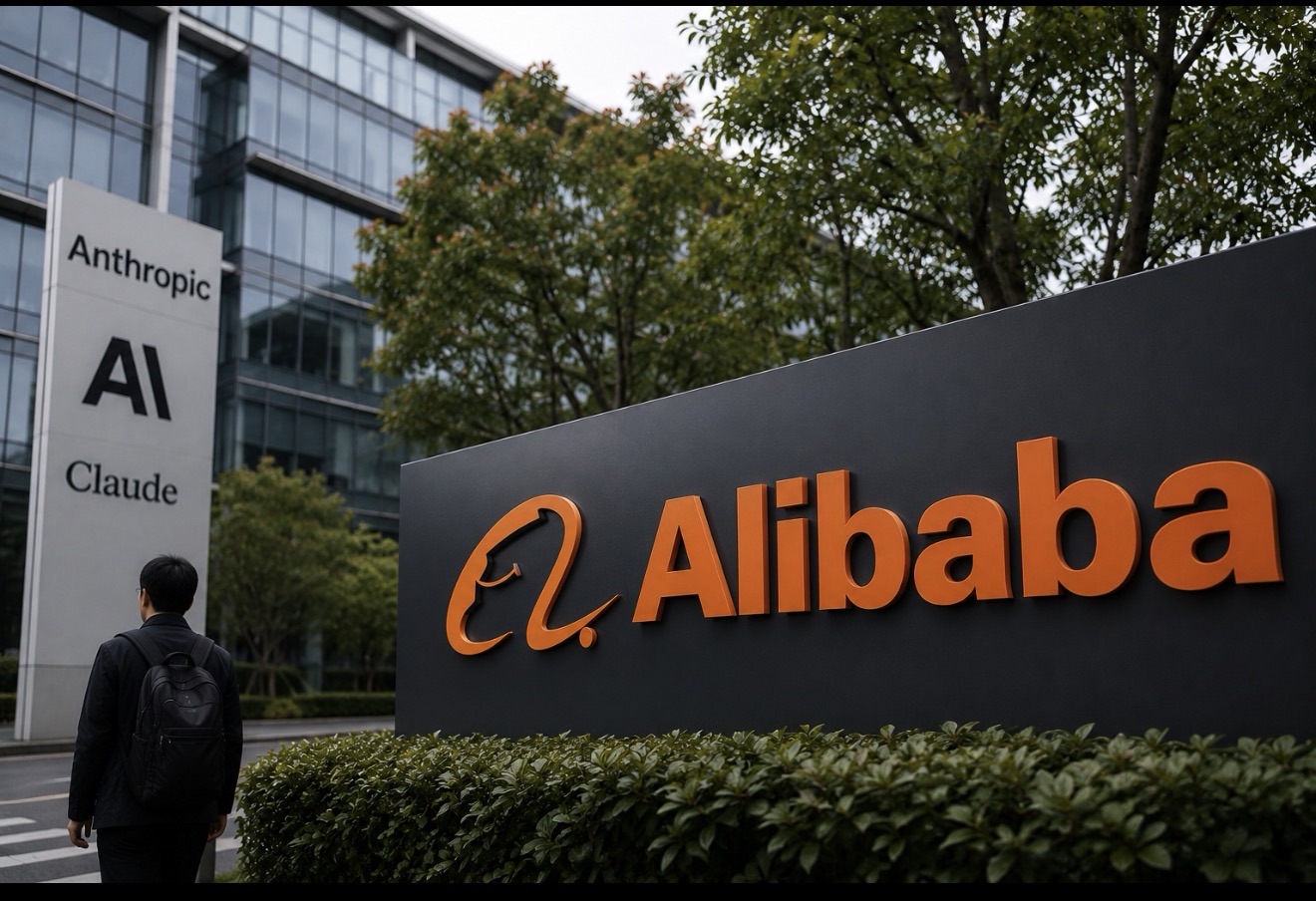
Alibaba has ordered employees to stop using Anthropic’s Claude artificial intelligence tools, placing Claude Code on an internal list of restricted software and directing engineers to switch to Alibaba’s own coding assistant, Qoder, beginning July 10. The move, first reported by the South China Morning Post, marks a significant escalation in the growing competition between two of the world’s leading AI developers.
According to people familiar with the directive, Alibaba classified Claude Code as a “high-risk” application because of what it described as potential security and “back-door” concerns. Employees who previously relied on Anthropic’s software for programming assistance have been instructed to transition to Qoder, Alibaba’s internally developed AI coding platform.
The decision follows weeks of rising tensions between the two companies.
In June, Anthropic submitted a letter to the U.S. Senate Committee on Banking, Housing, and Urban Affairs, alleging that operators connected to Alibaba’s Qwen artificial intelligence division carried out what it described as the largest known AI model distillation attack against Claude.
Anthropic claimed approximately 25,000 accounts generated nearly 28.8 million conversations with Claude over several weeks in an effort to reproduce the model’s capabilities. Alibaba has denied the allegations.
At the center of the dispute is a rapidly emerging issue within artificial intelligence known as model distillation.
The technique allows developers to train smaller AI systems by studying responses produced by more advanced models. Supporters argue it can improve efficiency and reduce computing costs, while critics contend unauthorized large-scale use may improperly copy years of expensive research and development.
Anthropic maintains that using Claude in this manner violates its terms of service and infringes on its intellectual property.
The conflict intensified further after users reported discovering code inside Claude Code that appeared designed to identify whether certain users were located in China or connected to Chinese AI laboratories.
The discovery, widely discussed on online developer forums, prompted renewed scrutiny of Anthropic’s software.
Anthropic acknowledged the experimental feature and said it had already decided to remove it in a future software update. Company representatives described the functionality as part of an effort to detect unauthorized account resellers and misuse of the platform rather than to monitor ordinary users.
Neither company has publicly expanded on the dispute beyond previously issued statements.
The internal policy represents a sharp shift for Alibaba.
Earlier this year, the company actively encouraged employees to experiment with leading AI assistants, reimbursing developers for subscriptions to outside platforms including Claude, OpenAI’s ChatGPT and Google Gemini. Many engineers reportedly relied heavily on Claude Code because of its strong reputation for software development and debugging.
Under the new policy, employees are expected to migrate to Alibaba’s own AI ecosystem.
The dispute also reflects a broader geopolitical divide emerging across the artificial intelligence industry.
Anthropic has reportedly briefed U.S. policymakers on concerns involving foreign access to advanced AI systems while tightening access restrictions for users in mainland China and other regions. Those measures include expanded identity verification requirements and additional safeguards designed to prevent unauthorized commercial use of Claude.
For businesses, the implications extend beyond one corporate disagreement.
Artificial intelligence is becoming increasingly intertwined with national security, trade policy and technology competition between the United States and China. Companies operating internationally may soon face growing restrictions over which AI platforms employees are permitted to use, depending on corporate ownership, regulatory requirements and geopolitical considerations.
For software developers, the dispute highlights how quickly the AI landscape is changing. Tools that only months ago were viewed simply as productivity software are increasingly becoming strategic assets at the center of global technology competition.
The battle between Alibaba and Anthropic illustrates a broader shift now unfolding across the AI industry: competition is no longer focused solely on building the most capable models, but also on controlling access to them.
JBizNews Desk
© JBizNews.com All Rights Reserved. Reproduction or distribution without written permission is prohibited.