
 Matzav
RAHM TO ATTACK: Emanuel to Deliver Scathing Rebuke of Netanyahu, Warn U.S.-Israel Alliance Is at ‘a Crossroads’
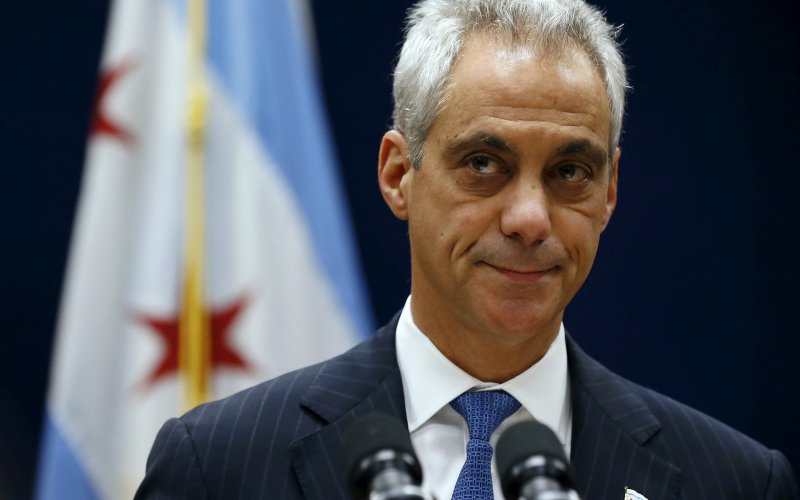
Rahm Emanuel, who is widely viewed as a potential Democratic presidential contender and has long been regarded as a strong supporter of Israel, is set to deliver a forceful speech in Tel Aviv this week criticizing Prime Minister Binyamin Netanyahu and warning that the U.S.-Israel relationship is facing a critical turning point.
Speaking Wednesday at Tel Aviv University, Emanuel will argue that the longstanding alliance between the two countries cannot continue on its current trajectory.
“It cannot stand or survive as it has been,” Emanuel is expected to say. “To maintain the strength of our ties, we need significant changes and a new direction.”
In an interview before the address, Emanuel sharply criticized Israel’s conduct during the war that followed Hamas’ October 7, 2023, massacre. He accused Israel of being “reckless and careless in the treatment of Palestinian life — not only the military campaign but using food and medicine as an instrument of your military goals.”
When asked whether he believed Israel had committed genocide—an accusation rejected by both the Israeli and U.S. governments despite being advanced by some human rights groups—Emanuel declined to give a direct answer, arguing that such discussions should also encompass other major conflicts around the world.
“I’m ready to have that discussion,” he said, “but I don’t think it should be politicized, and then dilute the power of what genocide means.”
Emanuel’s speech and accompanying interview underscore the growing shift within the Democratic Party regarding Israel, nearly three years after the Gaza war began. While centrists like Emanuel have historically been among Israel’s strongest Democratic supporters, the party’s base has increasingly adopted a more critical posture.
A recent Associated Press-NORC survey found that 58% of Democrats now believe the United States is “too supportive” of Israel, compared with 45% in January 2024. Approximately half of Democratic respondents also said they believe Israel has committed genocide against Palestinians during the conflict with Hamas.
Among the policy proposals Emanuel plans to outline are sanctions targeting Israelis who attack Palestinian civilians or damage Palestinian property, as well as financial penalties against companies and banks that support Israeli communities in areas regarded by much of the international community as illegal settlements.
He will also call for ending direct U.S. subsidies to Israel’s defense budget, arguing that Israel “should be able to buy American arms under the same financial terms, the same restrictions, and the same requirements as every other trusted ally that abides by our laws.”
Emanuel also intends to place much of the blame for Israel’s current diplomatic position on Netanyahu, accusing the prime minister of steering the country toward what he describes as a political “dead end.”
“For too long, American policy toward Israel operated under the assumption that the best thing Washington could do for Jerusalem was to blindly and silently stand behind your government, without conditions, without demands, and without consequences when we disagreed,” Emanuel will say. “That has been our mistake. Unconditional support has produced a prime minister who has presumed that his strategic interests would incur no cost if he ignored America’s concerns.”
It is highly unusual for an American politician with apparent presidential ambitions to travel abroad and publicly criticize the leadership of a close U.S. ally so directly. Emanuel’s planned address reflects the growing willingness among Democratic leaders—even those from the party’s centrist wing—to publicly challenge longstanding U.S. policy toward Israel.
His remarks could draw a sharp response from Netanyahu, who has clashed with Emanuel in the past and once referred to him as a “self-hating Jew.” With Israeli elections approaching in October, Netanyahu could also seek to use the criticism to rally political support by portraying himself as standing firm against foreign pressure.
Emanuel, who arrived in Tel Aviv on Sunday ahead of the speech, said he deliberately avoided scheduling meetings with Israeli elected officials to prevent influencing Israel’s election campaign. Instead, he plans to visit a hospital that treats both Israelis and Palestinians and meet with the family of a hostage abducted during the October 7 Hamas attack.
The speech is also expected to serve as a signal to Democrats weighing presidential bids in 2028 as they navigate the political fallout from the Gaza war and Netanyahu’s increasingly close relationship with President Donald Trump. The conflict has reshaped political debate in both major parties, particularly among younger voters who have demanded a tougher American stance toward Israel, making the issue a likely point of contention in the next Democratic presidential primary.
Emanuel will argue that Netanyahu’s government has failed to pursue meaningful diplomatic efforts to end the war and warn that Israel’s international standing has deteriorated dramatically.
“Support for Israel is plummeting around the world,” he will aver.
“You’ve lost Europe,” he will say. “Your scientists face exclusion from international research networks. Your artists and academics are shut out of exhibits and conferences.”
Although Netanyahu has maintained strong ties with President Trump and Republican leaders, Democratic support for Israel has continued to decline. Emanuel’s portrayal of Israel’s growing diplomatic isolation echoes comments recently made by Vice President JD Vance, who argued that President Trump was “the only head of state in the entire world who is sympathetic to the nation of Israel at this moment in time.”
Despite his criticism, Emanuel’s address will also acknowledge Israel’s trauma following the October 7 Hamas attack, in which approximately 1,200 people were murdered and more than 250 others were taken hostage. He will also recognize the repeated failures of previous peace negotiations with Palestinian leaders.
“But even while acknowledging that history, the path forward cannot be held hostage to a past defined exclusively by recriminations,” he will say.
Rather than advocating the traditional two-state solution, Emanuel plans to promote what he calls a “23-state solution,” envisioning a regional agreement involving Israel, the Palestinians, and the 21 member states of the Arab League.
“The 21 Arab nations that have exploited Palestinian rights as a slogan for decades now need to roll up their sleeves and stand up a governing authority capable of accepting the historic Jewish connection to this land,” he will say.
Although no major Democrat has formally entered the 2028 presidential race, Emanuel is widely considered a possible candidate. The former White House chief of staff, congressman, Chicago mayor, and U.S. ambassador has spent much of the past three decades in public office and has recently increased his national profile through policy proposals, visits to early-voting states such as New Hampshire, podcast appearances, and an expanded presence on social media.
{Matzav.com}