
 Vos Iz Neias
Rav Moshe Cordovero on His Yahrtzeit 23 Tammuz (and his Tomer Devorah!)
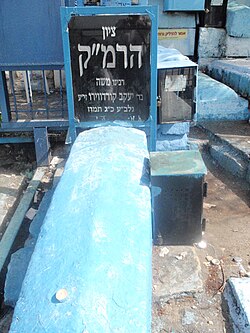
New York (VINNEWS/Rabbi Yair Hoffman) On the twenty-third of Tammuz, the Torah world remembers one of the most towering figures of the world of Kaballah. Rabbi Moshe Cordovero, known by the acronym the Ramak, passed from this world in 5330 (1570) at the age of forty-eight, and yet in his short life he accomplished what generations of scholars had not dared attempt: he built a system.
Although name may be unfamiliar to some, but one of his works sits on the shelf of nearly every serious student of mussar: the slender, luminous Tomer Devorah, the Palm Tree of Deborah. So enduring is this little classic that more than three centuries after it was written, Rav Yisroel Salanter — the father of the entire Mussar movement — chose it as the vehicle for further launching his own life’s mission. In 1858, in Koenigsberg, Rav Salanter published a fresh edition of the Tomer Devorah, and appended to it, printed for the very first time, was his own now-famous Iggeres HaMussar — the Epistle of Mussar — the foundational document of a movement that would reshape the yeshiva world.
The story of the Ramak cannot be separated from the geopolitical earthquake that shaped it. In 1492, the Catholic monarchs Ferdinand and Isabella signed the Alhambra Decree and expelled the Jews of Spain. Among the refugees fleeing the Iberian Peninsula were families from the city of Córdoba – including that of the Ramak.
Where does a shattered people go? For tens of thousands of Iberian Jews, the answer lay eastward, in the rising Ottoman Empire. In 1516–1517, Sultan Selim I defeated the Mamluks and folded Eretz Yisroel into his expanding dominion. The Ottomans, who left commerce largely to their minority subjects and distrusted their newly conquered Christian populations, welcomed the Jewish refugees. All that was asked was a poll-tax and acknowledgment of Muslim authority; in exchange, the empire became the largest haven for Jews in the world. By the end of the sixteenth century, the Ottoman realm held the largest Jewish population on earth.
Tzfas sat at the crossroads of this new order. Perched in the Upper Galilee along the vital Damascus–Acre and Damascus–Cairo trade roads, and blessed with the springs and rushing waters of Nahal Amud, the town possessed exactly the geological conditions needed for one industry above all: the manufacture of cloth.
The Sephardic exiles had carried with them the guarded secrets of high-quality Spanish wool production, and they transformed Tzfas into a booming textile capital. An Italian Jewish merchant named David de-Rossi, visiting in 1535, was astonished — he reported that more than fifteen thousand suits of clothing had been produced in the city in a single year.
This was Tzfas in its Golden Age: prosperous, self-confident, and swelling with newcomers.
Under Sultan Suleiman the Magnificent, a protective wall was raised around the city in 1549 and a garrison stationed to guard it. The Jewish population climbed from a few hundred families at the century’s opening to some seven thousand souls by mid-century, making it the largest Jewish community in Ottoman Syria. Wealth built yeshivos; wool financed Torah.
Into this crucible of commerce, refuge, and spiritual ambition, Rabbi Moshe Cordovero was born in 1522.
The Prodigy Who Thought He Was Asleep
From his earliest years, the young Moshe was recognized as an extraordinary genius — and his brilliance shone all the brighter against the hardship that surrounded it. Despite the poverty and financial strain that pressed upon him in his youth, he pored over the Babylonian Talmud, the codes of halachah, and philosophy with relentless diligence. He mastered the revealed Torah under the guidance of Rabbi Yosef Karo, the author of the Shulchan Aruch, whose court and yeshiva of two hundred students anchored the religious life of the city. So formidable was the boy’s command of Jewish law that already at the age of eighteen he was ordained to render halachic rulings by his teacher Rabbi Yaakov Beirav, the leader of Tzfas’s bid to restore the ancient semichah.
He married the daughter of Rabbi Moshe HaLevi Alkabetz — which made him the brother-in-law of Rabbi Shlomo HaLevi Alkabetz, the composer of the Lecha Dodi, the inspiring song that Jews the world over still sing to greet the Shabbos bride every Friday night.
His awakening to Kabbalah came in 1542. At the age of twenty, he heard what he described as a heavenly voice urging him to enter the hidden wisdom, the Kabbalah, and he began to study the secrets of the Torah at the side of his brother-in-law, Rabbi Shlomo Alkabetz. Again and again the two would walk out together to the graves of the Tannaim in the hills around Tzfas, reviewing and plumbing the mysteries they had learned as they went.
His devotion took on an almost ferocious intensity. He would seclude himself after midnight and labor over the pages of the Zohar in the still hours of the night. When distractions and disturbances rose up to break his concentration — and when they grew too fierce — he would invoke the holy Names and pray that whatever was interfering be driven away, so that nothing might stand between him and the wisdom he sought.
That awakening changed the course of Jewish thought.
The young man did not merely master the mysteries of the Zohar; he resolved to do something no one had accomplished before him — to take the Zohar and organize it into a single coherent structure. By the age of twenty-six he had completed his first great work.
The Orchard of Pomegranates
The result was Pardes Rimonim — the Orchard of Pomegranates — the most celebrated of the Ramak’s writings and one of the foundational works of systematic Kabbalah. In it he gathered the divergent schools of the earlier mystics, laid their views side by side, debated them, and rendered rulings among them.
But Pardes Rimonim was only the beginning. The Ramak wrote with uncanny productivity. He composed Or Yakar, a monumental commentary on the entire Zohar and the Tikunei Zohar — a work of sixteen volumes to which he devoted the greater part of his life. He wrote Eilima Rabbati, a soaring and abstract treatment of the Ein Sof and the sefiros. He wrote Shiur Komah on the structure of the spiritual worlds, and Or Ne’erav, a passionate defense of the very enterprise of studying Kabbalah — though with a stern warning that one must first master Tanach, Mishnah, and Gemara before entering the orchard.
In all, the Ramak composed more than thirty works, and the Kabbalists of his generation regarded his rulings in matters of the hidden wisdom as the most authoritative of all. He merited a revelation of Eliyahu HaNavi and was crowned with the title HaEshel HaGadol, — and yet, for all his towering stature, those who knew him remarked above all on his humility.
Tomer Devorah: When the Palm Tree Bends
Of all the Ramak’s writings, none has entered more deeply into the bloodstream of the Torah world than a slender volume of mussar called Tomer Devorah — the Palm Tree of Deborah. Here the Ramak performed a quiet revolution. He took the loftiest and most abstract of Kabbalistic concepts — the thirteen attributes of Divine mercy, the sefiros themselves — and turned them into a practical guide for how a human being should live.
The central teaching is breathtaking in its simplicity: man is created in the image of G-d, and therefore man must strive to imitate the Divine attributes. Just as the Almighty is patient with the sinner, so too must a person be patient. Just as G-d bears no lasting grudge, so too must a person learn to forgive. Just as the Creator sustains even those who rebel against Him, so too must one extend kindness even to the undeserving.
Around 1550, the Ramak founded an academy of Kabbalah in Tzfas, which he led for some twenty years until his passing. But his circle was not confined to the Beis HaMedrash. The tzaddikim of Tzfas lived their Kabbalah. Since the Shechinah, the Divine Presence, had gone into exile with the destruction of the Temple, they would leave their homes and walk out into the fields of the Galilee, meditating and davening among the hills, visiting the ancient graves of the Tannaim and Amoraim scattered across the countryside. The record of these mystical wanderings and the teachings that flowed from them was collected in a work called Sefer Gerushin, the Book of Banishments — a document in which the very landscape of the Land of Israel becomes the meeting place between Heaven and earth.
It was said that Eliyahu HaNavi himself revealed himself to the Ramak. And the students who gathered around him comprised the greatest of Kabbalistic authors: Rabbi Chaim Vital, who would later become the recorder of the teachings of the Arizal; Rabbi Eliyahu di Vidas, author of the classic Reishis Chochmah; Rabbi Eliezer Azkari, author of Sefer Chareidim; Rabbi Avraham Galanti; and Rabbi Menachem Azariah of Fano, who would carry the Ramak’s Torah across the sea to Italy and teach from Pardes Rimonim to the Kabbalists of Europe. Even Rabbi Yeshayahu Horowitz, the great Shelah HaKadosh, considered himself a disciple of the Ramak and quoted him constantly.
The Cloud of Fire
In the final year of the Ramak’s life, a newcomer arrived in Tzfas — the Arizal. He too studied under the Ramak, whom he reverently called “our teacher.” Only the Ramak, with his penetrating vision, seems to have perceived who this humble student truly was.
Before his passing, the Ramak spoke words that would echo through the centuries. He told his followers that after his death, someone would rise to replace him, and that although this successor’s teachings might appear to contradict his own, they should not oppose him — for both drew from the same holy source, and the newcomer’s soul was a spark of Rabbi Shimon bar Yochai himself.
Then, on the twenty-third of Tammuz, 5330, Rabbi Moshe Cordovero passed away. The entire community of Tzfas — every Jew in the city — poured out to accompany him on his final journey, weeping bitterly as the eulogies were recited. Among the eulogizers stood the Arizal, who declared that the Ramak had no sin in him at all — that he had departed this world not through any fault of his own, but, in the language of the sages, “by the bite of the snake,” the primordial decree of mortality itself. To this day, the Ramak lies in the old cemetery of Tzfas, close to the resting place of the Arizal himself.
After his passing, Rabbi Chaim Vital revealed that the soul of Zechariah the Prophet had been reincarnated within him. And such was the hunger for his Torah that the great Italian Kabbalist Rabbi Menachem Azariah of Fano — the Rema of Fano — sent one thousand gold coins to the Ramak’s widow, that she might lend him the manuscript of Or Yakar so that it could be copied and brought to the printing press for the world to learn from.
The Arizal would live only two more years, until 1572, but in that brief span he revolutionized the entire conceptual system of Kabbalah with his doctrines of tzimtzum, the breaking of the vessels, and the cosmic repair. Lurianic Kabbalah swept the Jewish world, and in time the systematic Kabbalah of the Ramak was pushed into the background. Yet — precisely as the Ramak had foretold — it was never rejected. The Ramchal offered a beautiful reconciliation: the Kabbalah of the Ramak, he taught, describes the “World of Tohu,” while the Kabbalah of the Arizal describes the “World of Tikkun” — two stages of the same unfolding reality. Others, like Rabbi Shabsai Horowitz in his Shefa Tal, worked to weave the two systems together. The study of the Ramak’s works never ceased; to this day many consider his Torah the essential gateway through which one must pass before entering the deeper mysteries of the Ari.
In honor of his yahrtzeit, the author is appending a translation of the Tomer Devorah written for his students to introduce them to the world of Mussar.
The Palm Tree of Devorah – Tomer Devorah
Rabbi Moshe Cordovero (the Ramak, 1522–1570)
Translated simply by Rabbi Yair Hoffman
This sefer has two main parts. The first three chapters explain how to imitate Hashem through the Thirteen Attributes of Mercy and the qualities of the highest spiritual level. The remaining chapters (four through ten) are more mystical and are organized around the sefiros — the ten spiritual channels through which Hashem relates to the world.
A Quick Guide
Keser is the “crown,” the highest and most hidden level. Chochmah is wisdom. Binah is understanding, linked to repentance. Chesed is kindness and love. Gevurah is strength, power, and sometimes strictness. Tiferes is beauty or harmony, linked to Torah, truth, and balance. Netzach and hod are two lower channels, associated with those who support Torah. Yesod is the channel that connects and delivers blessing into the world, linked to guarding personal Kedusha. Malchus is kingship — also called the Shechinah, Hashem’s presence dwelling in the world.
Contents
Chapter One — Becoming Like Hashem Through the Thirteen Attributes of Mercy
Chapter Two — The Eight Qualities of Keser and the Path of Humility
Chapter Three — The Attribute of Chochmah (Wisdom)
Chapter Four — The Attribute of Binah (Understanding): The Power of Repentance
Chapter Five — The Attribute of Chesed (Kindness): Love of Hashem and Acts of Kindness
Chapter Six — The Attribute of Gevurah (Strength): Mastering the Evil Inclination
Chapter Seven — The Attribute of Tiferes (Truth): Torah Study Without Pride
Chapter Eight — The Attributes of Netzach, Hod, and Yesod: Supporting Torah and Guarding Kedusha
Chapter Nine — The Attribute of Malchus: Humility, Fear of Hashem, and the Shechinah
Chapter Ten — Binding Oneself to Kedusha Throughout the Day
Chapter One: Becoming Like Hashem Through the Thirteen Attributes of Mercy
Why We Should Act Like Our Creator
A person should try to act the way Hashem acts. When someone does this, he taps into the deep secret of being made “in the image and likeness” of Hashem. The Torah says that people were created in Hashem’s image and likeness. But there is a catch. If a person’s body looks like the higher, spiritual “form,” yet his actions do not match it, then he is living a lie. People will look at him and say, “What a handsome shape — but what ugly deeds!”
The real meaning of being made in Hashem’s “image and likeness” is not about physical shape. It is about behaving the way Hashem behaves. So what good is it for a person to look the part if his actions do not copy his Creator? Because of this, a person should make his actions match the Thirteen Attributes of Mercy — the qualities that flow from the highest spiritual level, called Keser (“crown”). These thirteen qualities are hinted at in a passage from the prophet Michah.
The Psukim That List the Thirteen Attributes
The prophet Michah writes: “Who is a Hashem like You, who pardons sin and overlooks the wrongdoing of the remnant of His people? He does not hold on to His anger forever, because He loves kindness. He will again show us mercy; He will conquer our sins, and You will throw all their sins into the depths of the sea. Show faithfulness to Yaakov and kindness to Avraham, as You promised our ancestors long ago.” (Michah 7:18–20)
Since Hashem has these thirteen qualities, a person should try to have them too. The rest of this chapter explains each one and shows how a person can live by it.
Attribute 1: “Who Is a Hashem Like You” — Patience Even When Insulted
This attribute describes Hashem as a patient King who puts up with insults in a way no human could. Nothing is hidden from Hashem, and there is not a single moment when a person is not being kept alive by Hashem’s power.
Think about what this means. No one can sin against Hashem without Hashem, at that very moment, giving that person the energy and strength to move his own arms and legs. Even while a person is using that strength to do something wrong, Hashem does not shut off the power. Instead, Hashem accepts the insult and keeps the person’s body working — even during the very act of sin.
We cannot say that Hashem is unable to stop this. Hashem could freeze a person’s limbs in an instant, the way He once did to King Yaravam. Hashem could even say, “Since you are sinning against Me, at least sin using your own strength, not Mine.” Yet Hashem does not do this. He keeps giving the person life and strength anyway. This kind of patience is beyond description. This is why the angels call Hashem “the long-suffering King.”
The lesson for us: a person should copy this patience. Even when he is deeply insulted, he should not cut off his kindness from the people he normally helps.
Attribute 2: “Who Pardons Sin” — Carrying the Weight of Another’s Wrong
This quality is even greater than the first. Our sages taught that when a person sins, that sin actually creates a kind of harmful spiritual “accuser.” This accuser stands before Hashem and says, “So-and-so made me.”
Now, nothing in the world can exist unless Hashem keeps giving it life — including this harmful creation. By strict justice, Hashem could say, “I do not feed destructive things. Go get your life from the person who made you.” If Hashem said that, the harmful creation would immediately take the sinner’s life or punish him. But Hashem does not do this. Instead, Hashem patiently keeps even that harmful thing alive until one of three things happens:
First, the sinner changes his ways and, through his return to Hashem, cancels out the harmful thing. Second, Hashem cancels it through suffering or death that the sinner experiences. Third, the sinner pays his debt in the afterlife.
This is how the sages explained Kayin’s words, “Is my sin too great to bear?” Kayin was really saying, “You carry and feed the whole world — is my sin so heavy that You cannot carry it too, until I fix it?” Hashem shows enormous patience by “feeding” the harmful result of a sin until the sinner repairs it.
The lesson for us: a person should learn to be patient and to “carry” the burden of someone who has wronged him, tolerating that person until he changes or the harm fades away.
Attribute 3: “Who Overlooks Wrongdoing” — Hashem Personally Cleans Away Sin
This attribute is greater still. When Hashem forgives, He does not send a messenger to do it. Hashem Himself does the forgiving, as the pasuk says, “With You is forgiveness.” And how does this forgiveness work? Hashem washes the sin away, as the psukim describe: Hashem “washes away the filth” and “sprinkles pure water” on a person to cleanse him.
The lesson for us: a person should act the same way. He should never say, “Why should I be the one to clean up someone else’s mess?” After all, when people sin, Hashem Himself — not a messenger — cleans up the mess. There is also a deeper point here: a person should feel too ashamed to keep sinning, knowing that the King Himself personally washes the dirt off his clothes.
Attribute 4: “The Remnant of His People” — Treating Others Like Family
Hashem treats the Jewish people like close relatives. He says, in effect, “What can I do for Israel? They are My own flesh and blood.” Hashem calls them by loving family names. The sages taught that Hashem has a real, close relationship with His people, like a parent with children.
Because of this closeness, Hashem says, “If I have to punish them, it hurts Me too.” The pasuk teaches that Hashem shares in Israel’s pain and cannot bear to see them suffer or be shamed, because they are His own.
The lesson for us: a person should treat others this way, because all Jews are truly connected. All souls are linked together, and each person contains a piece of everyone else. This is why a group doing a mitzvah is greater than one person doing it alone — everyone completes everyone else.
The sages illustrated this with the reward for being one of the first ten people to arrive at the synagogue. Even if a hundred people come later, that early person receives a reward equal to all of them, because the souls of the first ten are included in one another. Since every Jew shares a portion of every other Jew, “all of Israel is responsible for one another.” When one person sins, he damages not only his own soul but also the piece of himself found in every other person.
So a person should want good things for others, be happy about their success, and care about their honor as if it were his own — because, in a real sense, it is. This is why we are commanded to “love your fellow as yourself.” A person should never speak badly about others or wish harm on them. Just as Hashem does not want to see us shamed or hurt, we should not want to see others shamed or hurt. Instead, we should feel their pain as if it were our own — and feel joy at their good fortune.
Attribute 5: “He Does Not Hold on to His Anger Forever” — Letting Go of Anger
This attribute is different from the ones before. Even when a person keeps on sinning, Hashem does not stay angry forever. And even when Hashem does become angry, He does not hold on to it. He lets go of the anger even if the person has not yet repented.
We see this in the days of King Yaravam ben Yoash, when Hashem restored the borders of the Land of Israel even though the people were still worshipping idols and had not changed. Why did Hashem show them compassion? Because of this very attribute of not staying angry. Hashem actually eases His anger on purpose, even while the sin still exists, and hopefully waits for people to return.
The lesson for us: even if a person has every right to correct his friend or child sharply, and even if the other person would accept it, that is no reason to stay angry or hold a grudge. He should let the anger go and not cling to it, even where he would be allowed to be upset.
The sages taught something similar from the pasuk about helping unload the donkey of “someone you hate.” They explained that this “hatred” comes from seeing the person do something wrong — but because you were the only witness, you cannot bring it to court, so you are technically allowed to dislike him for that sin. Even so, the Torah says to help him and to “let go” of the resentment in your heart. In fact, it is a mitzvah to pull that person closer with love, since kindness may fix what anger cannot.
Attribute 6: “Because He Loves Kindness” — Focusing on the Good in People
Certain angels are assigned to collect the acts of kindness that people do in this world. When strict judgment tries to accuse Israel, these angels bring out those good deeds, and Hashem shows mercy because He loves kindness. Even if the people are guilty, Hashem has mercy on them when they are kind to one another.
This is like the moment when the Temple was about to be destroyed. Hashem commanded an angel to bring judgment, and that judgment grew so severe it wanted to wipe everyone out. Yet the account also mentions “the form of a human hand” appearing to hold back the destruction. This teaches that Hashem said, in effect, “Since they still do kindness for one another, even though they are guilty, they will be spared, and some of them will survive.” Hashem remembers the kindness that people show each other and counts it in their favor.
The lesson for us: a person should do the same. Even if someone is treating him badly and making him angry, if that person has some good quality — he is kind to others, or he has some other virtue — that should be enough to melt the anger away. He should tell himself, “It is enough for me that he has this one good quality.” This is even more true about one’s spouse, and it applies to everyone: focus on the good, and take pleasure in the kindness a person does.
Attribute 7: “He Will Again Show Us Mercy” — Loving Someone Even More After They Return
Hashem does not act the way people usually do. When a person is offended, he often cannot bring himself to love the offender as much as before, even after they make up. But Hashem is different. When a person sins and then sincerely returns to Hashem, his standing before Hashem becomes even higher than it was before he sinned.
This is the meaning of the sages’ statement that “even the completely righteous cannot stand in the place” reached by those who return from sin. The sages explained this using the shape of the Hebrew letter hei. The letter is open at the bottom, like a porch with no wall — meaning the world Hashem made has plenty of openings for a person to go astray. Wherever a person turns, temptation is available, and someone who wants to leave the right path can find an exit anywhere.
But the letter hei also has a small opening at its top. That opening stands for the path of return, which Hashem accepts. Why not simply come back through the same door you left by? Because, the sages answer, that would not work. Someone who has already sinned needs stronger protection than someone who never did. A person who has never broken through the “fence” needs only a small guard rail. But a person who already smashed through that fence once needs many strong safeguards, because if he goes back the same way, his weakness might trap him again.
So a person who returns does not sneak back through the hole he broke. Instead, he climbs up to the narrow top opening — which stands for the extra self-discipline and hard work he takes on to rebuild what he damaged. Because of this extra effort, those who return actually rise higher than the righteous who never fell, reaching a more elevated spiritual level.
There is also a wordplay here: the word for repentance, teshuvah, can be read as “return the hei” to its place. When a person returns the letter to where it belongs, Hashem returns His presence to that person — and He restores His love in an even greater measure than before.
The lesson for us: a person should behave the same way toward others. He should not keep old anger burning. When he sees that someone wants to make peace, he should show that person even more love and closeness than before, treating him like one who has returned and now stands on higher ground. In this way, he draws that person closer than even those who never wronged him.
Attribute 8: “He Will Conquer Our Sins” — Not Letting the Bad Cancel Out the Good
Good deeds are compared to a climbing grapevine that shoots upward without limit and enters Hashem’s presence. Sins, however, are not allowed in. Hashem holds them back and blocks their entry, as the pasuk teaches that “no harm will dwell” in Hashem’s presence.
Because mitzvot rise up into Hashem’s presence, their true reward is spiritual and cannot be fully paid out in this physical world — the whole world is not worth even a single mitzvah’s true value. This also means Hashem does not “trade” mitzvot to cancel sins. Hashem does not say, “You did forty mitzvot and ten sins, so I’ll subtract ten and leave you with thirty.” Instead, a person is held accountable for his sins, and separately he receives full reward for every mitzvah he did. Hashem does not subtract from a person’s mitzvot, because they are precious and rise straight up to Him. Sins, whose consequence is something low and shameful, cannot cancel mitzvot, whose reward is the glow of Hashem’s presence. So Hashem collects what is owed for the sins, and still gives full reward for all the good.
This is what “conquering sin” means: sins are not allowed to win out or rise up the way mitzvot do. Hashem watches all of a person’s ways, both good and bad, but He does not suppress the good — the good rises up and combines into a beautiful spiritual “garment.” Sins do not get that treatment; instead, they are held down and blocked.
The lesson for us: a person should do the same. He should not “bury” the good qualities of others while remembering only their faults. He should do the opposite — push down the memory of the wrong, let it go, and keep the person’s good qualities in front of him. He should always remember the good and let it outweigh any harm the other person did. He should not shrink that good in his heart by saying, “Yes, he helped me, but he also hurt me,” and then forget the good. Instead, he should let himself be calmed about the wrongs and never lose sight of the good. As much as possible, he should look past faults, just as Hashem “conquers” our sins.
Attribute 9: “You Will Throw All Their Sins into the Depths of the Sea” — Mercy Even Toward the Punished
This attribute shows Hashem’s goodness. When Israel sinned, Hashem sometimes let enemies punish them. But once the people returned to Hashem, why should those enemies — like Pharaoh, Sancheriv, or Haman — go free? It is not enough for Hashem to simply tell Israel, “Return to Me, and no more harm will come.” Instead, the harm that those enemies planned comes back onto their own heads.
There is a deeper idea connected to the goat used in the Yom Kippur service, which “carried away” the sins of Israel. This is hard to understand: if the people sinned, why should the goat bear it? The explanation is this. When a person confesses and truly wants his sin cleaned away, he hopes his correction will be gentle — not the kind of harsh suffering that would stop him from serving Hashem and learning Torah. King David expressed both ideas: he asked to be cleansed of wrongdoing, and he also showed willingness to accept even harder consequences for sins that can only be cleaned that way.
Hashem has set a rule in His world that those who harm Israel will eventually be brought down. This is why, in certain Torah laws, even an animal or an object used to carry out a sin or a punishment is afterward removed, so that its role ends once the judgment is done. In the same way, the nations that punished Israel are eventually judged themselves.
A famous example is the giant statue that King Nevuchadnetzar saw in his dream. Its head of gold, chest and arms of silver, and legs of iron and clay stood for one empire after another that ruled over Israel. In the end, Hashem will bring judgment in Israel’s favor and shatter the whole statue — meaning He will judge the wrongdoers and their agents. Hashem’s “arrows” will be spent, but not against Israel.
This is the meaning of “throwing their sins into the depths of the sea.” The “depths of the sea” refers to the wicked, who are compared to a restless, churning sea that tosses up mud. Hashem sends judgment against those who harmed Israel and returns their deeds onto their own heads. After Israel has received its own correction, Hashem feels compassion and regrets, so to speak, having let them be shamed — all the more so because the nations went too far in causing harm.
The lesson for us: a person should act the same way toward others. Even if someone is guilty and already crushed by his own suffering, one should not look down on him — for once he has “taken his punishment,” he is like a brother again. On the contrary, a person should draw close those who are down and punished, have compassion on them, and even help save them from harm. He should not say, “His own sin brought this on him.” Instead, he should have mercy.
Attribute 10: “Show Faithfulness to Yaakov” — Fair and Honest Treatment
The name “Yaakov” stands for average, ordinary people — those who do what the law requires but do not go beyond it. Hashem deals with such people through the quality of “faithfulness,” meaning honest, straight fairness. To people who live correctly, Hashem also acts with steady fairness, showing them compassion by treating them justly.
The lesson for us: a person should treat others fairly and honestly. He should not twist what is right or cheat anyone of the justice owed to him. He should be reliable and fair, just as Hashem treats ordinary, decent people with faithful fairness in order to help them grow.
Attribute 11: “Kindness to Avraham” — Going Beyond the Bare Minimum
The name “Avraham” stands for people who go beyond what the law strictly requires — people of extra generosity and devotion, like Avraham himself. For such people, Hashem also goes beyond the strict letter of the law. He does not insist on exact, measured justice with them; instead, He treats them with extra kindness, matching the way they treat others.
The lesson for us: even though a person should deal fairly and correctly with everyone, when it comes to people who are especially good and devoted, he should go beyond the minimum. Wherever he is patient with ordinary people, he should be even more patient with the truly righteous — showing them extra compassion, treating them as especially important and beloved, and keeping them among his close friends.
Attribute 12: “As You Promised Our Ancestors” — Compassion Even for the Undeserving
Some people simply do not deserve good treatment — and yet Hashem has compassion for everyone. The sages explained a pasuk where Hashem says He will show kindness “to whomever I choose.” They taught that Hashem has, so to speak, one storehouse of goodness for people who do not deserve it, given as a free gift. Hashem says, “They have the merit of their ancestors. I made a promise to Avraham, Yitzchak, and Yaakov. So even if these people are not deserving on their own, they will still receive good, because they are descendants of the ancestors I promised. I will guide them until they are made whole.”
The lesson for us: a person should act the same way. Even when he meets people who are behaving badly, he should not be cruel to them or insult them. Instead, he should have compassion, telling himself, “After all, they are the children of Avraham, Yitzchak, and Yaakov. Even if they themselves are not acting properly, their ancestors were good and worthy. Whoever disgraces the children disgraces the ancestors too — and I do not want to be the cause of that.” So he should cover up their shame and help improve them as much as he can.
Attribute 13: “From Days of Old” — Remembering Early Goodness
This is the attribute Hashem uses when every other reason for mercy has run out — when a person truly seems undeserving. What does Hashem do then? He remembers the early days, as the pasuk says: “I recall the kindness of your youth, your love when you were like a new bride.” Hashem remembers the love from long ago, and His compassion is stirred. He recalls all the good a person did from the very beginning, and from all of that He forms a kind of special treasure of merit and shows compassion. This attribute includes all the others.
The lesson for us: a person should do the same. Even if he cannot find a single present-day reason to love and have mercy on someone, he should say, “Surely there was a time, back in earlier days, before he went wrong, when he was worthy.” He should remember the person’s early goodness, like the innocence of a young child. In this way, he will never find anyone who is completely undeserving of kindness, prayer, and compassion.
Summary of Chapter One
These are the Thirteen Attributes of Mercy, and a person should try to copy each one in how he treats others. There is a powerful principle here: the way a person acts down here in this world opens up that same quality of mercy from Above. In other words, when a person is merciful, he causes mercy to flow into the world. For this reason, a person should keep these thirteen attributes in mind and not let them slip away. Whenever a situation calls for one of them, he should recognize it and tell himself, “This moment needs this particular attribute — I will not walk away from it, so that this quality does not fade from the world.”
Chapter Two: The Eight Qualities of Keser and the Path of Humility
What This Chapter Is About
To act like Hashem according to the deep secret of Keser (the “crown,” the highest spiritual level), a person needs to develop several inner qualities. These qualities describe the very way Hashem runs His world. There are eight of them, and they all connect to different “limbs” or parts of a person — the head, the mind, the forehead, the ears, the eyes, the nose, the face, and the mouth.
Quality 1: Humility — The Quality That Contains Them All
The first and most important quality is humility, which includes all the others because it flows from Keser. Even though Keser is the highest of all spiritual levels, it does not act proud or lift itself above the others. Instead, it always “looks downward.”
There are two reasons for this. First, Keser is, so to speak, humble before its own Source: rather than staring “upward” at what is above it, it looks down to help what is below it. In the same way, a person should not stare upward and puff himself up. He should lower his gaze and see himself as small. This quality is connected mainly to the head, because a proud person lifts his head high, while a humble person lowers it.
Second, no one is as patient and humble as Hashem. Hashem is complete compassion. No fault, sin, or harsh judgment stops Him from watching over people and constantly giving them good. A person should be the same way: nothing should stop him from doing good to others at all times, and the faults of undeserving people should not stop him from helping those in need. And just as Hashem sustains every creature — from the greatest to the smallest — and looks down on none of them, a person should do good to everyone and look down on no one. Even the lowliest beings should matter to him, and he should care about them and help all who need his help.
Quality 2: Pure Thoughts — Keeping the Mind Clean
A person’s thoughts should copy the way Keser “thinks.” The wisdom of Keser never stops thinking good thoughts, and because it is pure compassion, it lets no evil in. In the same way, a person’s mind should be free of anything low or ugly. And just as the wisdom of Keser holds all the secrets of Torah, a person’s mind should be filled with Torah thoughts — thinking about the greatness of Hashem, His kindness, and how to do good. As a rule, strange or unworthy thoughts should not be allowed in. This was the high level of Rabbi Shimon bar Yochai and his students; the Zohar records how sharply Rabbi Shimon corrected Rabbi Yose when his thoughts drifted even a little from Torah.
Quality 3: A Calm Forehead — No Harshness on the Face
A person’s forehead should show no hardness or harshness. Instead, it should show acceptance and good will toward everyone. Even when certain people make him angry, he should calm them and win them over with kindness. This is what Hashem does: He calms the forces of harshness that come with anger, gently softening them with great wisdom so the anger does not “break out” and cause damage. A person should copy this by always being pleasant to others, because if he is harsh with people, he will not find favor Above. As the sages taught: “Anyone whom people are pleased with, Hashem is pleased with too.”
Quality 4: Ears That Listen Only to Good
A person’s ears should always turn toward hearing good, and refuse to take in lies or ugly talk. Just as the higher spiritual “listening” does not accept accusations or harmful gossip, a person should not listen to anything but good and helpful things. He should not listen at all to talk that stirs up anger. The Torah’s command “do not accept a false report” teaches this. And if false or harmful reports should be refused, then all the more so should other ugly speech be kept out of one’s ears — a person should listen only to good things.
Quality 5: Eyes That Look for the Good
A person’s eyes should not gaze at anything shameful. Instead, his eyes should be open to notice people who are suffering and to have as much compassion for them as he can. He should not shut his eyes to the pain of the poor. Rather, he should think hard about their situation and stir up compassion — both his own and that of others — on their behalf. He should keep his eyes away from noticing evil, just as the higher spiritual “eye” is always open and always looking at the good.
Quality 6: A Nose Free of Anger
In Hebrew, anger is linked to the nose (as in “flaring nostrils”). So a person should keep any breath of anger out of his “nose.” Instead, his breath should carry life, good will, and patience — even toward those who do not deserve it. He should always try to fulfill others’ wishes, grant their requests, and lift up the brokenhearted. He should always be ready to forgive and to overlook wrongdoing. He should not stay angry at those who offend him; instead, he should always be willing to make peace and eager to do kindness, pleasing everyone.
Quality 7: A Face That Always Shines
A person’s face should always be bright and welcoming, and he should greet everyone with a cheerful expression. The pasuk says, “In the light of the King’s face there is life.” Just as no flash of anger enters the higher source, a person’s face should stay steady and pleasant, so that everyone who looks at him finds only joy and warmth. Nothing should be allowed to spoil this.
Quality 8: A Mouth That Speaks Only Good
A person’s mouth should express only good. What comes out of it should be Torah and constant good will. No ugly words, curses, angry outbursts, or empty chatter should escape his lips. His mouth should be like the higher spiritual “mouth,” which is never shut and never stops speaking good. So a person should speak well of everything, always expressing kindness and blessing.
When to Use These Qualities
These are eight good qualities, and all of them fall under the umbrella of humility. They match the spiritual “limbs” of Keser. So whenever a person wants to come close to the higher worlds and copy Hashem in order to bring blessing down to the world, he needs to be skilled in the ideas of these two chapters.
Now, we know a person cannot always live purely by these gentle qualities, because sometimes other qualities — including a measure of strictness — are needed too. But there are special times when strictness is not called for and Keser’s gentle influence rules. At those times, a person should use all the qualities described above and set aside the harsher ones, because the light of Keser overrides them.
Shabbat is one such time, when the world is “sweetened” by the special peace of the day (which is also why courts do not judge cases on Shabbat). On Shabbat, festivals, Yom Kippur, and during prayer and Torah study, a person should focus his mind on all these gentle qualities. If a person prays with his mind on the lights of Keser but then acts in the opposite way — harshly and angrily — he blocks the very blessing he is trying to draw down. In fact, acting out anger at such a time is a kind of arrogance, as if the person were claiming a spiritual level he has not earned. At other times of the year, a person may make use of other qualities in his service of Hashem, but never the negative ones, since letting those rule is always to his own harm.
Humility Is the Master Key
Every person should slowly train himself in these qualities. The master key to all of them is humility, since it is the highest quality of Keser and contains all the rest.
True humility means a person does not see any special value in himself — he considers himself as nothing. This was the level of Moshe, the humblest of all, who said, “What are we?” A person can even reach the point of seeing himself as the lowest of creatures. When a person works to gain this humility, all the other good qualities follow after it. Just as Keser sees itself as nothing before its Source, a person should see himself as nothing. As a result, when people insult him, he will treat them as if they were right and he were at fault — and this becomes a path to acquiring good qualities.
A Three-Part “Medicine” for Pride
Rabbi Cordovero offers a remedy to help a person slowly cure himself of arrogance and enter the gates of humility. It has three parts.
First, a person should train himself to run away from honor as much as possible. If he lets people honor him, he will get used to feeling proud, and by nature he will always crave honor — and then he will be very hard to heal.
Second, a person should train himself to notice his own weaknesses and lowly side. He should tell himself, “Even if others don’t know my shortcomings, so what? I myself know the ways in which I fall short.” Thinking honestly about his own limits will keep him humble.
Third, a person should regularly recall his mistakes and actually want a gentle form of correction. He should ask himself, “What kind of hardship is best — one that will not pull me away from serving Hashem?” The answer is being scorned or insulted, because that kind of hardship does not drain his health, take away his food and clothing, or endanger his life or his children. So he should even welcome the sting of insults, telling himself, “Why should I fast and weaken my body, when being insulted corrects me without harming my strength?” When people insult him, he should actually feel glad — the opposite of how people usually react.
From these three “ingredients” a person can make a healing medicine for his heart, and he should practice this approach throughout his life.
A Second, Gentler Remedy
Rabbi Cordovero adds another excellent remedy, though not as strong as the first. It has two parts.
First, a person should respect every creature, recognizing that the greatness of the Creator shines through them. Hashem formed everything with wisdom, so all creatures deserve real honor. If a person looks down on any creature, it is as if he is insulting the Creator who made it. This is like a master craftsman who builds something with great skill; if someone mocks his work, he is really mocking the craftsman’s skill — and that hurts the craftsman. In the same way, Hashem is pained when His creatures are looked down upon. The pasuk “How many are Your works, O Hashem — You made them all with wisdom” teaches that since Hashem’s wisdom is in everything, a person should look for the wisdom inside creatures rather than despise them. This is also why the sages warned against treating food disrespectfully.
Second, a person should train his heart to love others — even the wicked. He should keep working on this until love for all people is settled in his heart. About the wicked he should say, “I only wish they were righteous and would return to Hashem, so they could all become great people, dear to Him,” just as Moshe, who loved all Israel, said, “If only all of Hashem’s people were prophets.”
How does a person come to love others? By focusing on their good qualities and covering over their flaws, refusing to dwell on their faults. He might tell himself, “If this poor, looked-down-upon person were rich, I would enjoy his company — just as I enjoy the company of someone respected. And if he were dressed in fine clothes like that respected person, there would be no difference between them. So why should he have less honor in my eyes? In truth he may be greater in Hashem’s eyes, because his poverty and suffering cleanse him of wrongdoing. Why, then, should I dislike someone whom Hashem loves?” In this way, a person turns his heart toward the good and trains himself to focus on people’s good qualities.
Chapter Three: The Attribute of Chochmah (Wisdom)
Wisdom That Reaches Everywhere
How should a person train himself in the quality of chochmah (wisdom)? Even though this wisdom is hidden and extremely lofty, it spreads out over all of creation, as the pasuk says, “How many are Your works, O Hashem — You made them all with wisdom.” In the same way, a person’s own wisdom should reach into everything he does. He should be ready to share and use his wisdom to benefit others — each one according to what they can handle — and let nothing stop him.
Two Directions of Wisdom
The quality of wisdom Above has two sides. Its higher side “faces upward” toward Keser and simply receives from above. Its lower side “faces downward” to opasuke and give to the levels below it.
A person should have these two sides as well. The first is to spend quiet, private time connecting with his Creator, in order to grow and perfect his own wisdom. The second is to teach others the wisdom that Hashem has given him. And just as the higher wisdom gives to each level exactly according to what it can hold, a person should share his wisdom with each individual according to how much that person’s mind can grasp — no more than the listener can absorb, so that it helps rather than harms.
Watching Over Others Like a Wise Guide
Wisdom is the “Supernal Thought” that watches over everything that exists. Fittingly, the psukim describe Hashem’s thoughts as loftier than ours, as planning ways to bring back those who are pushed away, and as “thoughts of peace and not harm, to give you a future and hope.”
In the same way, a person should keep a caring, watchful eye on the wellbeing of others in order to help them. His thoughts should be about bringing back those who have strayed and thinking well of them. Just as Hashem’s wisdom plans the good of all creation, a person should plan the good of those around him. He should give wise, caring advice on both personal and community matters. And when someone has wandered off the right path, he should gently guide him back, acting as his advisor and leading him toward good, honest behavior — just as the higher wisdom guides the worlds.
Wisdom Gives Life
The pasuk says, “Wisdom gives life to those who have it.” In the same way, a person should teach the whole world the ways of life — helping others gain life in this world and the next, and giving them the means to live. In general, a person should be a source of life to others.
Being a Father to All Creation
Wisdom is also the source of all existence: “You made them all with wisdom.” Since everything comes from that source, a person should act like a loving father toward all of Hashem’s creatures — and especially toward Israel, whose holy souls come from that source. He should constantly pray for mercy and blessing on the world, just as our Father Above has compassion on His creatures. When people are suffering, he should pray for them as if they were his own children.
Moshe, the faithful shepherd, once said, “Did I give birth to this nation, that You tell me to carry them in my arms?” The lesson is that a person should indeed carry all of Hashem’s people the way a nurse gently carries an infant. As the pasuk describes, he should “gather the lambs in his arms and lead them softly.” He should care for those who are lost, seek out the young, heal the broken, feed the needy, and bring back the ones who have wandered. He should have compassion for people, carry their burdens cheerfully — just as the merciful Father carries all — and never grow tired, hide away, or give up. This is the quality of wisdom: a father who is merciful to his children.
Compassion for Every Creature
A person’s compassion should reach all creatures, and he should not look down on them or destroy them, because the higher wisdom flows into all of creation — rocks, plants, animals, and people alike. This is why the sages warned against wasting or disrespecting food. Since the higher wisdom looks down on nothing (because everything was made with wisdom), a person should be compassionate toward all of Hashem’s works.
The Talmud tells a striking story. Rabbi Yehudah the Prince once showed no pity to a calf that tried to hide behind him to avoid being slaughtered; he said, “Go — this is what you were created for.” Because he lacked compassion in that moment, he suffered for many years, since compassion is what shields a person from strict judgment. Later, when he showed mercy to some small creatures and quoted the pasuk “His mercy is on all His works,” his suffering ended, because the light of wisdom — which brings compassion — spread over him again.
So a person should not look down on any creature, since all were made with wisdom. He should not pull up plants unless he needs them, or kill animals unless there is a need. And when there is a genuine need, he should choose a humane death for the animal, using a carefully checked knife, in order to be as merciful as possible.
The General Principle of Chochmah
Here is the rule: having compassion on all beings and not hurting them flows from wisdom. However, there is an important exception. If the purpose is to lift a creature to a higher level — raising a plant into an animal by becoming its food, or raising an animal into a human being by nourishing a person — then it is allowed to pull up the plant or slaughter the animal. In that case, what looks like taking from them is actually elevating them and doing them good.
Chapter Four: The Attribute of Binah (Understanding) — The Power of Repentance
Repentance Is the Path to Binah
How should a person train himself in the quality of binah (understanding)? The way to do it is through complete repentance — sincerely returning to Hashem. Nothing is as important as repentance, because it repairs every kind of flaw. Just as binah “sweetens” harsh judgments and takes away their bitterness, a person’s repentance repairs all his flaws.
Someone who keeps the idea of repentance in mind every single day fills all his days with the light of binah. In effect, his whole life becomes a life of repentance, and he joins himself to binah — which is repentance itself — so that all his days are “crowned” with this high spiritual level.
Repentance Reaches Even Into the Darkness
All of existence is rooted in repentance. Even the source of the harsh, “outer” forces — which the Kabbalah calls the “River of Fire” and describes as the outpouring of Divine anger — is rooted there and can be traced back to that same place. And through the deeper meaning of the pasuk “Hashem smelled the pleasing scent of the offerings,” that outpouring of anger “returns to its source,” the harsh judgments are sweetened, the anger stops, and, as the Torah says, “Hashem held back from the harm.”
A person reaches this same effect through repentance. So one should not think that repentance only helps the good parts of a person. It repairs the bad parts too — just as binah sweetens even the harshest judgments.
Turning Evil Into Good: The Lesson of Kayin
Kayin himself came from a bad, low place. And yet Hashem told him, “If you do good, will you not be lifted up?” In other words, Hashem was saying: “Do not think that because you come from a bad root you have no hope. That is not true. If you do good and anchor yourself firmly in repentance, you can rise up — reaching the good that is hidden even in your own root and doing yourself real good.”
This is because every bitter thing has a sweet root high above. So a person’s bad actions can be turned into good, and even his deliberate sins can be turned into merits. When someone returns to Hashem completely, those very same wrong deeds — which used to stand as accusers against him — rise up, take root in Kedusha, and are transformed into good rather than simply erased. This is exactly what Kayin was told about how he could better himself. Had Kayin repented, even the circumstances of his flawed beginning could have been turned to his credit. But Kayin chose not to repent.
The Lesson for Us
When a person purifies his evil urge and turns it into good, that good takes root in Kedusha. This is the high level of repentance that a person who wants to live this way should think about every day. He should also do some act of repentance each day, so that all his days are spent in a state of return to Hashem.
Chapter Five: The Attribute of Chesed (Kindness) — Love of Hashem and Acts of Kindness
The Foundation: Loving Hashem Completely
How should a person train himself in the quality of chesed (kindness)? The main gateway to chesed is to love Hashem so completely that nothing will ever pull him away from serving Him. Compared to the love of Hashem, no other love has any real value. So a person should take care of his religious duties first, and only then use whatever time is left for his other needs.
This love should be firmly fixed in the heart whether Hashem sends good things or hardship. Both should be seen as expressions of Hashem’s love, as the pasuk says, “The wounds of a loving friend are faithful.” The Torah’s command to love Hashem “with all your might” is explained by the sages to mean “with whatever measure Hashem gives you” — accepting good and hard alike with love. This is why even strictness, which comes from the channel of Malchus (kingship), is ultimately tied back to kindness.
This was the practice of the sage Nachum Ish Gamzu, who would always say, “This, too, is for the good.” He trained himself to connect everything to the side of kindness — even things that looked harsh — seeing the good hidden inside them. This is a powerful way to keep oneself constantly bound to chesed.
“Doing Kindness to the Creator”
The Kabbalistic work Tikkunim asks, “Who is a truly kind, devoted person?” and answers, “One who does kindness to his Creator.” The idea is that when a person does an act of kindness here in this world, he should have in mind that he is also strengthening the matching spiritual channel of kindness above. To do this, a person needs to know the different kinds of kind acts people do for one another, because he must also “do” each of them, in a spiritual sense, toward his Creator. The following eight acts of kindness are the classic examples.
Kind Act 1: Caring for a Newborn
When a child is born, a person should provide everything the baby needs. Spiritually, this points to the “birth” of Tiferes (harmony) out of binah (understanding). If that birth is “difficult” — pulled toward harsh judgment — it is a problem. So a person should aim, through his good deeds, to “ease the birth,” keeping Tiferes on the side of kindness and light rather than harshness. Almost all the Torah’s prohibitions connect to this idea: keeping harshness from overpowering the flow of goodness. The practical point is to help every “new beginning” come into the world cleanly and on the side of kindness.
Kind Act 2: Circumcising the Child — Removing What Blocks Goodness
Circumcision stands for doing the mitzvot perfectly and “cutting away” anything harmful that clings to yesod (the channel that delivers blessing into the world). A person should work to bring back those who cause spiritual “blockage,” helping them repent so that the blockage is removed. This is why Pinchas earned the priesthood: through an act connected to circumcision, he “did kindness to his Creator” by removing what was blocking the flow of goodness. From this example, a person can learn all the other forms of chesed.
Kind Act 3: Visiting and Healing the Sick
The Shechinah (Hashem’s presence in the world, linked to Malchus) is described poetically as “lovesick,” longing to be reunited with the higher channels, as in the pasuk “I am sick with love.” Her “healing” is placed in human hands, through Torah and good deeds. When a person visits and helps the sick down here, he is also, in a spiritual sense, “sustaining” and “healing” above — helping to reconnect and comfort the Shechinah, who is “ill” because of the sins of the people. In the same way, Tiferes is described as restless and separated in this world, like “a bird wandering far from its nest.” The healing of both is in our hands, and we bring it about through Torah study and the mitzvot. So visiting the sick and tending to their needs is far more than a simple kindness — it repairs something on high.
Kind Act 4: Giving Charity to the Poor
Giving charity to the poor connects to yesod and Malchus above. The Tikkunim describes the “charity” that fits here through daily spiritual acts: answering “amen” many times in prayer, saying the Kedushah, reciting one hundred blessings a day, and learning from the five books of the Torah each day. Beyond that, a person should “draw down” spiritual sustenance for those in need, each according to his ability. The Torah’s laws of leaving gifts for the poor — the gleanings, the forgotten sheaf, and the corner of the field — all carry deeper meanings about supporting and repairing these higher channels. The tithe given to the poor also “raises up” these channels. Many spiritual repairs are bound up in the simple act of giving charity.
Kind Act 5: Welcoming Guests
Offering hospitality to travelers and guests connects to giving the higher channels (Tiferes and yesod) a “resting place” in Malchus. In the deeper meaning, these channels are like wayfarers in exile, searching for what they have lost, and welcoming them “home” helps restore them. This is also linked to those who leave home to travel and study Torah. Anyone who works to reunite these channels — for example, by setting fixed times for Torah study — is, spiritually, “hosting” them.
Just as a good host prepares food and drink for guests and then walks them out on their way, a person should, in his intentions, “feed” and “escort” these higher channels. The psukim from Shir HaShirim about eating honey and drinking wine and milk are read as pointing to this spiritual “nourishing” and reconnecting. The general rule is this: a person should do whatever the ordinary, physical act requires — preparing the food, hosting the guest — while at the same time keeping in mind the deeper meaning it points to. Better still, once he has learned these ideas, he can even speak the intention out loud, fulfilling the pasuk “the matter is very near you, in your mouth and in your heart, to do it.”
Kind Act 6: Caring for the Dead
Explaining how caring for the dead connects to the higher worlds is very deep and difficult. It touches the secret of the sefiros as they “withdraw” and are hidden away above. Just as we must cleanse a body and dress it in white, there is a parallel idea of “cleansing” and “clothing” these channels through good deeds, lifting them up and binding them together in unity. Carrying the deceased on one’s shoulders points to lifting the sefiros, one after another, to higher and higher levels until they reach a place beyond human understanding. Even the word for “valley,” in the pasuk describing where Moshe was buried, is read by the Tikkunim as a hint to the Thirteen Attributes of Mercy, which are rooted in Keser. From there, the one being buried rises to the highest level of Eden. Understanding this fully takes long, careful study.
Kind Act 7: Bringing a Bride to the Chuppah
Helping bring a bride to the wedding canopy stands for all the “unifications” in the spiritual world — which is really the deeper meaning of prayer. Prayer rises in stages, each higher than the last: the passages about the offerings, then the psukim of praise, then the seated prayers including the Shema with its blessings, and then the Amidah and the rest of the service. Each stage is, in a sense, an act of kindness to the “groom” and “bride” above — helping tend to their needs and bring about their union.
Kind Act 8: Making Peace Between People
Making peace between two people who are at odds connects to Tiferes and yesod, which sometimes become “separated” from each other. A person must, through good deeds, restore harmony between them so they are bound together again in love. When these channels fall out of alignment — or when sin creates a blemish in the world — there is, so to speak, “conflict” and disconnection above. The same idea applies to making peace between any two channels, one on the “right” and one on the “left,” and to making peace between a husband and wife, which parallels Tiferes and Malchus. Every act of peacemaking down here is also an act of kindness that repairs something above.
Chapter Six: The Attribute of Gevurah (Strength) — Mastering the Evil Inclination
Why Arousing the Evil Urge Is Dangerous
How should a person train himself in the quality of gevurah (strength, and sometimes strictness)? The key idea is this: whenever a person stirs up his yetzer hara (evil inclination), he is actually stirring up powerful forces of gevurah above. So a person should be careful not to awaken the evil urge, because doing so awakens harsh strictness in the higher worlds.
Two Inclinations, Two Sides
A person is created with two inclinations: the yetzer hatov (good inclination), which is connected to chesed (kindness), and the yetzer hara (evil inclination), which is connected to gevurah (strength). The Zohar explains something striking: the good inclination was created for a person’s own sake, while the evil inclination was created for the sake of his wife and family life. In spiritual terms, Tiferes leans to the “right” (the side of kindness and the good inclination), while Malchus leans to the “left” (the side of strength). So the right approach is not to arouse the evil inclination, because doing so awakens harsh strictness above and can damage this world.
Every time a person stirs up the aspect of gevurah and the evil inclination inside himself, he creates a matching flaw in the higher worlds. Seen this way, it becomes clear how ugly and harmful anger and similar feelings are: they cause harsh forces of strictness to take over.
Binding the Evil Urge — With One Exception
Ideally, the evil inclination should be tied down so tightly that it cannot be activated at all — not for craving physical pleasure, not for chasing money, not for anger, and not for honor. There is one important exception: for the sake of his wife and household, a man may gently arouse his drive in a “sweetened,” proper way — for example, to provide her with clothing and a home.
When he does this, he should tell himself, “By providing for my wife, I am helping to restore the Shechinah.” The Shechinah is “adorned” by binah, which also includes an aspect of strength — but binah’s great compassion sweetens that strength. So taking care of the household needs helps “restore” the Shechinah, and the evil inclination, in this narrow case, is used only to carry out the will of the Creator.
Redirecting Desire Toward Kedusha
For this reason, a man should not aim to squeeze selfish pleasure out of the evil inclination. Instead, when his wife dresses up and they enjoy their home together, he should focus his mind on the restoration of the Shechinah — a repair brought about through the beneficial powers of the “left” side, which is also the source of wealth and honor. For the sake of that repair, he may arouse the drive, but he should direct it toward “loving” the Shechinah rather than toward selfish desire.
The pasuk “His left arm is under my head, and his right arm embraces me” is read as a two-step process: first the Shechinah is drawn near through the “left” (the aroused drive), and then everything is “sweetened” and completed through the “right” (the good inclination). In this way, a person literally helps reconnect and gladden the Shechinah through a mitzvah done for the sake of a higher unity, and all the harsh forces are sweetened and repaired through the side of kindness.
The General Principle of Gevurah
This is the rule for every kind of desire that comes from the evil inclination: it should be used mainly for the good of the wife whom Hashem gave a person as his fitting partner. And afterward, a person should redirect all of these drives toward the service of Hashem, binding them firmly to the “right” — the side of kindness and Kedusha.
Chapter Seven: The Attribute of Tiferes (Truth) — Torah Study Without Pride
Torah Learning and the Danger of Pride
How should a person train himself in the quality of Tiferes (harmony and truth)? Tiferes is found mainly in the study of Torah. But there is a serious danger to avoid: becoming proud and aloof because of one’s learning. When a scholar holds himself above others because he is learned, he causes Tiferes — which is the Torah — to “withdraw” and rise away, out of reach. By contrast, someone who stays humble in his Torah study causes Tiferes to come down and flow into the world (to Malchus). Below Tiferes are four channels and three matching lessons, which follow.
Lesson 1: A Teacher Who Looks Down on His Students
A teacher who exalts himself above his students causes Tiferes to rise up and away from netzach and hod, which are called “the students of the L-rd” — the “students” of Tiferes. But a teacher who humbles himself and teaches his students with love causes Tiferes to come down and flow to them. So a teacher should be pleasant to his students and teach them at the level they can absorb. Through this, the flow of Torah reaches “the students of the L-rd” in the right measure.
Lesson 2: A Scholar Who Looks Down on the Poor
A scholar might, because of his learning, feel superior to a poor person and look down on him. The Talmud tells that the prophet Eliyahu once appeared to Rabbi Shimon ben Elazar disguised as an ugly, lowly pauper, precisely to teach him this lesson: caught up in pride over his learning, Rabbi Shimon insulted the “pauper,” who then rebuked him sharply for this flaw. A scholar who exalts himself over the poor causes Tiferes to stay aloof from yesod instead of flowing into it. But when a scholar pays attention to the poor and draws them close, Tiferes flows into yesod. So scholars should hold the poor in high regard and bring them near.
Lesson 3: A Scholar Who Looks Down on Ordinary People
A scholar who, because of his knowledge, holds himself aloof from ordinary, unlearned people causes Tiferes to soar above Malchus rather than flow into it. Instead, a person should be warm and pleasant toward all of Hashem’s creatures, seeing every decent human being as worthy. He should never call people “donkeys” or the like, Hashem forbid, because that pushes them down toward the “outer forces.” The Talmud even teaches that someone who does this will not merit a son enlightened by the light of Torah.
Rather, a person should treat others kindly, according to their level, just as Tiferes flows down to Malchus and works with it gently. Included in this is never being arrogant toward anyone simple-minded, since even such a person has real value. This is why the earlier generations never grew proud over their Torah learning, as the Zohar and Tikkunim illustrate with stories of great sages who fled from honor — one even running away when Rabbi Shimon bar Yochai wished to kiss him, so that he would not become proud of his learning.
Debating Torah for the Sake of Heaven
When a person debates matters of Torah, he should have in mind the goal of “beautifying” the truth and reaching the correct ruling. This is the real meaning of “a dispute for the sake of Heaven”: two opposing forces (kindness and strength) argue in order to arrive at the truth. But a person should keep far away from any argument that is not for this pure purpose. Tiferes does not want to be dragged into pointless quarrels, even quarrels about Torah, if they are really about winning; such disputes end badly. The only argument that does not damage this quality is one about Torah for the sake of Heaven, “whose ways are all peace” and “whose end is love.”
A person who uses Torah for personal gain damages this holy quality by mixing something sacred with selfish ends. Happy is the person who works hard in Torah purely to bring delight to Hashem. Most important of all is to purify one’s motives — to examine his own thoughts honestly during a debate. If he notices even a trace of an impure motive, he should take back his words and always admit the truth, so that Tiferes, the quality of truth, can be found in him.
Chapter Eight: The Attributes of Netzach, Hod, and Yesod — Supporting Torah and Guarding Kedusha
Supporting Those Who Study Torah
How should a person train himself in the qualities of netzach and hod? These two channels are closely related. The main way to connect with them is to help and support those who study Torah — with money or with effort — giving them what they need, preparing their food, and taking care of their wishes so they can keep learning without interruption. A person should be careful never to belittle their learning, which would discourage them; instead, he should praise their good deeds so they are strengthened in their service. He should provide them with the books they need, a place to study, and so on.
Anything that strengthens and supports those who toil in Torah — whether through words, actions, or money, and whether by inspiring people’s hearts toward Torah or by helping them hold fast to it — is rooted in these two channels, which are called “those who support the Torah.” Every person should contribute whatever he can, whether a little or a lot.
Learning From Everyone
A person who studies Torah must be willing to learn from everyone, as the pasuk says, “From all my teachers I have gained wisdom.” Complete Torah knowledge cannot come from a single teacher alone. By learning from everyone, a person becomes fit to be a “vehicle” for netzach and hod, the “students of the L-rd,” while the one who teaches Torah stands at the level of Tiferes. So when a person sits and learns, Tiferes flows into netzach and hod, and he reaches their level.
There is a further pattern: learning Scripture (which comes from the “right”) connects especially to netzach, and learning Mishnah (which comes from the “left”) connects especially to hod. Talmud includes everything, since it brings proofs from Scripture for the laws of the Mishnah, completing both.
Guarding Yesod: Purity of Speech and Thought
How should a person train himself in the quality of yesod? Yesod is linked to guarding personal Kedusha and purity. A person must be extremely careful about the kind of speech that leads to impure thoughts. It goes without saying that he should not use foul or crude language; but he must also guard against otherwise “clean” speech that still stirs up impure thoughts.
This is learned from the pasuk “Do not let your mouth bring sin to your flesh.” The pasuk continues, “Why should Hashem be angry at your voice?” Now, if the “voice” meant outright obscenities, then those are already sinful on their own — so why does the pasuk speak of words that “bring sin”? The answer is that even words that are technically permitted, if they lead to impure thoughts, must be guarded against. Because such words “bring sin” — even though the words themselves were allowed — Hashem is, so to speak, “angry at the voice” that spoke them, since the resulting harm traces back to the speech that caused it. This is how careful a person must be to guard his Kedusha, keeping impure thoughts far away so as not to cause spiritual damage.
The Image of the Bow
Yesod is also linked to “the covenant of the rainbow.” A rainbow is shaped like a drawn bow. In the spiritual meaning, the “bow” is only ever drawn when it is aimed at its proper “target” — which here refers to guarding the Kedusha of marital life within its proper bounds. Just as the higher “bow” is never drawn except toward its proper target, a man should keep his own drives directed only where they belong: toward his wife, in purity, at the proper time. He should never cross that boundary, so that the quality of yesod is not damaged. This takes great care, above all in guarding oneself from impure thoughts.
Chapter Nine: The Attribute of Malchus — Humility, Fear of Hashem, and the Shechinah
Never Let Wealth Make You Proud
How should a person train himself in the quality of Malchus (kingship)? First of all, wealth should never make a person arrogant. He should always carry himself like a poor person, standing before his Maker like a beggar, humbly asking and pleading. Even a wealthy person should train himself in this attitude, remembering that nothing he owns truly belongs to him, that he depends entirely on Hashem’s ongoing mercy, and that he has nothing except the bread he eats. He should humble his heart, especially during prayer, because this is a very powerful help.
The Torah warns of the opposite: “your heart may grow proud, and you may forget” — because forgetfulness of Hashem often comes with pride. King David trained himself in this humble attitude, saying, “I am alone and humbled.” After all, when a person stands in judgment before Hashem, and when his soul finally leaves this world, what help will his wealth — or even his wife and children — be to him then? So a person should humble and perfect himself according to this quality.
Accepting a Kind of “Exile”
A second, very important practice is taught in the Zohar: a person should, for the sake of Heaven, sometimes uproot himself and wander from place to place, becoming a “vehicle” for the exiled Shechinah. He should think to himself: “Here I am in exile, but I still have all my belongings with me. What about the honor of Heaven — for the Shechinah is in exile with nothing?” So he should get by with as little as possible, letting the discomfort of travel humble his heart while he binds himself to Torah. Then the Shechinah is with him.
He should also “banish” himself from the comforts of home, just as Rabbi Shimon bar Yochai and his companions withdrew from comfort in order to toil in Torah. Better still, he should tire out his legs going from place to place on foot, without a horse or wagon. About such a person the pasuk says his “hope is in the L-rd his Hashem” — the word for “hope” also hinting at “breaking,” because he “breaks” his body for the honor of Heaven.
The Right Kind of Fear of Hashem
Another aspect of Malchus — and one of the most important, since it is the gateway to serving Hashem — is fear of Hashem, the glorious and awesome One. But fear itself can be dangerous if aimed at the wrong thing. If a person is afraid of suffering, death, or punishment, he is really fearing those harmful forces themselves. Proper fear is fear of Hashem, and it is reached by reflecting on the following things.
First, the greatness of the Creator fills all of existence. A person is afraid of a lion, a bear, a robber, fire, or a falling wall — yet these are only minor “messengers.” How much more, then, should he stand in awe of the great King Himself? He should say: “How can a lowly person dare to sin against such a great Master? If he angered a bear, it would devour him. Yet just because Hashem patiently overlooks the insult, is that any reason not to be in awe of His greatness?”
Second, Hashem’s watchful care is constant. A servant is always careful in his master’s presence — and a person is always in the presence of Hashem, who examines all his ways. So he should be careful and in awe never to disregard Hashem’s commandments.
Third, Hashem is the root of all souls, which are rooted in the higher channels. When a person sins, he damages, so to speak, Hashem’s own “sanctuary.” Should he not fear soiling the King’s sanctuary with his wrongdoing? And fourth, flawed deeds push away the Shechinah. A person should fear causing this great harm — driving the King’s love away from the Queen. Reflecting on these kinds of fear sets a person on the right path to perfecting this quality.
Keeping the Shechinah Close in Married Life
A person should take great care to live in a way that keeps the Shechinah close and does not drive her away. Until a man marries, the Shechinah does not rest with him in the same way, because a person stands, spiritually, between two “female” aspects: his wife below, whom he provides with sustenance, clothing, and marital rights; and the Shechinah above, who blesses him with all these things so that he can continue to give to his wife. This parallels Tiferes, which stands between binah (which provides for all its needs) and Malchus (which receives). But the Shechinah rests with a person only when he mirrors this higher pattern in his own life.
Sometimes a man is separated from his wife for one of three reasons: during her period of ritual separation (niddah), while he is immersed in Torah study on weekdays, or while he is traveling and guarding himself from sin. At these times, if he conducts himself properly, the Shechinah draws close and stays with him, so that he is never abandoned but always “complete.” Because of this, a man should be especially careful while traveling not to drive the Shechinah away — reciting the traveler’s prayer and holding fast to Torah, so that the Shechinah guards his way. Likewise, when he keeps the laws of separation properly, the Shechinah stays with him.
The proper times for marital union — the night his wife returns from her separation, Shabbat night, or his return from a journey — are times when the higher worlds are open to receive holy souls. So a man should be with his wife at these times, according to the secret taught in the Zohar. He should approach marital life only when the Shechinah is “in place,” and not, for example, at a time when the community is in distress, when such union is not fitting.
“Adorning” Oneself to Draw the Shechinah Near
To bind oneself to the Shechinah (“the King’s daughter”) so that she never departs, a person must first “dress himself” in fine spiritual garments — which means perfecting all the qualities described in this book. After perfecting himself this way, he should always aim to “receive” the Shechinah through Torah study and the mitzvot. In practical terms, this means three things. First, through all his good deeds he should draw down the blessing of kindness (the “right”), which “sustains” the Shechinah. Second, he should “protect” the Shechinah through the discipline of gevurah — doing every mitzvah purely for the sake of Heaven, with no trace of the evil inclination, not for physical pleasure or imagined honor, since such motives drive the Shechinah away. Tefillin and tzitzit are described as especially powerful protections here, and a person should wear them constantly. Third, he should “unite” with Tiferes through reciting the Shema and setting fixed times for Torah study, keeping in mind that these set times are dedicated to the Shechinah, the King’s daughter.
Chapter Ten: Binding Oneself to Kedusha Throughout the Day
The Idea: Match Your Service to the Time
In the Zohar, Rabbi Shimon bar Yochai gives wonderful advice for how a person can stay bound to Kedusha at all times and never become separated from the higher channels. The key is to act at the right time — that is, to recognize which spiritual quality is “dominant” at a given part of the day, and then to bind oneself to it and do the work that matches that quality. This chapter walks through a full day, from night to night.
Night and Sleep
The cycle begins at night, as a person prepares for sleep. At night the dominant quality is Malchus, and sleep itself is compared to death — a time when the “Tree of Death” holds sway. What should a person do? Before sleeping, he should prepare to bind himself to Kedusha by focusing his heart on fully accepting the “yoke of Heaven” — completely committing himself to Hashem.
If a person rises at midnight, he should wash his hands, remove the impurity that has settled on them, recite the blessing, and then “restore the Shechinah” through Torah study. Of this the pasuk says, “When you lie down, it will guard you” from harmful forces, “and when you wake, it will speak with you.” In this way a person travels, together with the Shechinah, from the state of sleep-and-death into the secret of higher life, becoming bound up in Kedusha so that the light of Tiferes, which shines on the righteous, begins to shine on him.
Morning: Entering the Synagogue
At dawn, a person prepares to enter the synagogue, binding himself to the three Patriarchs. At the entrance he should recite the pasuk, “And I, through Your abundant kindness, will enter Your house; I will bow toward Your holy sanctuary in awe of You.” This pasuk merges a person with the three fatherly qualities: “Your abundant kindness” corresponds to Avraham; “I will bow toward Your holy sanctuary” corresponds to Yitzchak (bowing represents lowering oneself before strict judgment); and “in awe of You” corresponds to Yaakov, who said, “How awesome is this place.”
In this way a person joins himself to these qualities in thought, speech, and action all at once: the thought is his inner focus, the speech is reciting the pasuk, and the action is entering the synagogue and bowing. Then, standing in prayer, his mouth becomes like a flowing wellspring, and he “repairs” the Shechinah with all the concentration of his prayer.
Daytime: Torah, and the Rhythm of the Prayers
When a person leaves the synagogue, he rises to the “secret of Torah” and binds himself to it, according to the quality of “day.” He continues this way through the day until the afternoon prayer. The three daily prayers follow a pattern: in the morning he binds himself to chesed (kindness), during the day to Tiferes, and toward evening, at the afternoon prayer, to gevurah (strength) — coming to the synagogue to “unify” gevurah just as he did with chesed in the morning.
Between the prayers, a person also binds the Shechinah to himself through his meal, showing kindness to his own “animal soul.” As Hillel the Elder taught, “A righteous person knows the soul of his animal.” The point is that even eating can be done with holy intention — to care properly for the body’s needs for the sake of serving Hashem.
Evening Again: Completing the Cycle
After the afternoon prayer, when a person has bound himself to gevurah, he waits for night, when Tiferes descends to Malchus. So from the start of the night he is again with Malchus. He binds himself to it and enters the evening prayer with this in mind. When he leaves, he unites himself with Malchus alone, according to the secret of accepting the “yoke of the Kingdom of Heaven.”
This is a person’s daily schedule, matched to the cycle of the spiritual channels, so that he always clings to the light of whichever quality is dominant at that moment. This advice is drawn mainly from the Zohar, gathered together into one complete system. By living this way, a person can bind himself to Kedusha at all times, with the “Crown of the Shechinah” never departing from his head.
A Closing Word
In the closing lines of the original work, the one who brought the book to press offers praise and thanks to Hashem for the privilege of beginning and completing this awesome book. Though the work is small in size, it is described as “the head of the tribes of Israel” — small, yet a leader — because through it a person comes to understand that all of his actions, whether good or, Hashem forbid, the opposite, leave a real mark in the higher worlds. He also records that he heard this teaching from the author’s own son, Rabbi Gedaliah, one of the “seventy palm trees” whom his father the author had planted. He closes with a prayer that, like Moshe, he should merit to bring merit to the many and to produce many worthy books — amen, so may it be His will.
— End of Tomer Devorah —
The author can be reached at [email protected]