
 Vos Iz Neias
Responding to The Times of Israel Post Exonerating Kasztner August 22, 2017
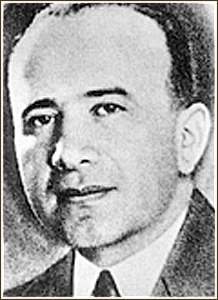
New York (VINNEWS/Rabbi Yair Hoffman) This a response to the Times of Israel post that defends Kasztner. That post was written by the nephew of Ottó Komoly (pictured above), the chairman of the Budapest Jewish Rescue Committee in the 1940’s.
A point to make at the outset: Ottó Komoly was a genuine hero through and through. His actions saved 18,000 to 20,000 people. His associate, however, was another matter.
This response addresses Mr. Komoly’s nephew’s specific claims about Paul Bogdanor’s book, its text, its documents, and its notes. On several points the nephew is correct, and those points will be marked plainly below. On the central charge — that Bogdanor invented a fantasy of Hungarian resistance and convicted Kasztner for failing to lead it — the book says something quite different from what Mr. Komoly’s essay reports.
This is a response to the hero’s nephew – who it seems has, unfortunately conflated the heroic efforts of his uncle, with that of Kasztner.
1. “The Kasztner Train … departed Budapest for the safety of neutral Switzerland”
“In June 1944, the so-called Kasztner Train, with 1,684 Jews on board, departed Budapest for the safety of neutral Switzerland. Most historians have concluded that Kasztner’s negotiations saved another 20,000 Hungarian Jews.”
Reply. The train did not depart “for the safety of neutral Switzerland.” That is a gross error and one orchestrated by the master of evil Adolf Eichmann himself,
It went to Bergen-Belsen, a concentration camp in the Reich, where the passengers were held as hostages.
One group of 318 reached Switzerland in August 1944; the remainder not until December, after further payments and negotiations.[1] This is not a quibble: the hostage status of the passengers is precisely what gave the SS its hold over Kasztner for the rest of the war, and the survivor’s own essay elsewhere acknowledges the danger he was under. The “safety of Switzerland” was the destination promised, not the destination reached.
The “another 20,000 saved” figure is addressed under Strasshof below, where the survivor makes his strongest empirical point — and where a concession is owed.
2. “The sources he quotes are mostly appreciative of Kasztner”
“I find it quite remarkable that the vast array of sources that Bogdanor quotes … are in reality mostly appreciative of Kasztner’s efforts … Egon Mayer … wrote that ‘the ransom negotiations successfully saved 1,648 deportees from Bergen-Belsen. They also saved about 18,000 deportees who were placed on ice at the Strasshoff camp.’”
Reply. That a source is broadly sympathetic to Kasztner does not make its factual admissions inadmissible; historians routinely draw damaging facts from friendly witnesses. Bogdanor’s method is to build the case largely from Kasztner’s own postwar report (the Bericht), his own trial testimony, and his own letters — not from hostile secondary writers. The question is never whether a cited author admired Kasztner, but whether the document quoted says what Bogdanor says it says.
On the Egon Mayer quotation specifically, the phrase “placed on ice” is doing concealed work. It is Kasztner’s own euphemism, drawn from Eichmann, who told him on June 14 that the Jews would be kept “on ice” (auf Eis) in Austria.[2] To repeat the murderers’ vocabulary as though it settles the question of who did the saving is exactly the danger Bogdanor’s book is written to expose.
3. Strasshof: “They saved about 18,000 deportees”
“They also saved about 18,000 deportees who were placed ‘on ice’ at the Strasshoff camp in Austria.”
Reply — and a concession.
The nephew is right that the Strasshof group very largely survived, and Bogdanor himself records that some fifteen thousand to eighteen thousand provincial Jews — including children, pregnant women, and the elderly, all of whom would have been gassed on arrival at Auschwitz — were sent instead to Austria for labor, and that most of them lived. That is a real outcome, and roughly twenty thousand human beings came home who would otherwise have died. No honest account of this period can pass over it, and the survivor is correct to insist on it.[3]
Where Bogdanor parts company with the survivor is on causation and credit, not on survival.
His argument, documented from the Nazi side, is that the diversion to Strasshof did not originate with Kasztner’s bargaining at all! Ernst Kaltenbrunner yimach shmo had already ordered Hungarian Jews sent to Vienna-Strasshof for slave labor, at the request of Austrian industrialists, before Kasztner’s supposed “deal.”[4]
Kasztner asked Eichmann to send Jews to Austria for labor on the very day Eichmann had independently been ordered to do exactly that; Bogdanor’s point is that Kasztner then claimed the credit for a transfer the SS had already decided upon for its own reasons. And Kasztner conceded under oath that he had “no confidence that the 15,000 wouldn’t be sent to extermination.”[5]
So the fair statement is this: the Strasshof Jews survived, which is a genuine good; whether Kasztner caused their survival, as opposed to attaching his name to a Nazi labor decision after the fact, is the matter in dispute. The survivor treats the survival as proof of the causation. It is not the same thing, and the documents Bogdanor cites make the causal claim doubtful.
4. “The protected houses … a fact he then mentions on page 215”
“Bogdanor’s repeated rhetorical question as to how many Jews the Rescue Committee saved conveniently overlooks the 5–6,000 children and the 30,000 adults placed in protected houses by the Committee (a fact he then mentions on page 215 of his book).”
Reply. This is the essay’s most important misreading, and it is worth stating carefully, because it concerns the survivor’s own uncle. Bogdanor does not “overlook” the protected houses and the children’s homes; he devotes pages to them, and he credits them — emphatically — to Moshe Krausz and to Ottó Komoly, acting independently of Kasztner. The protected houses were organized by Krausz with the Swiss diplomat Carl Lutz; the twenty-four thousand who sheltered under Swiss extraterritorial status did so through Krausz’s operation.[6] It was not Kasztner! It was Krausz and the autho’s uncle – tzaddikim!
The five to six thousand children were sheltered in the Red Cross “Department A” homes run by Ottó Komoly — the survivor’s uncle, whom Bogdanor names, praises, and mourns:
Under Komoly’s leadership, Department A set up dozens of children’s homes with Red Cross extraterritorial status. In these homes a total of five thousand to six thousand children were sheltered … Komoly persisted … after repeated arrests. He was murdered by the Arrow Cross before the end of the war.
Bogdanor’s whole point is that these achievements — the safety passes, the protected houses, the children’s homes — show “what it was possible for even a few hundred dedicated and resourceful Zionists to achieve … without the patronage of the SS and without the dubious aid of Kasztner’s dealings with Eichmann.”[7] The survivor has read a tribute to his uncle as though it were an omission. Far from crediting Kasztner with the 30,000 and the children, Bogdanor uses them to argue that real rescue happened where Kasztner was not. The disagreement between the survivor and the author on this page is, in fact, no disagreement at all about the facts — only about who deserves the honor. And on that, they may be closer than the essay realizes: both hold Komoly a hero.
5. The resistance argument: “He posits the old canard that there were options to evade or resist”
“A cornerstone of his argument is the assumption that, had it not been for Kasztner’s interference … there could have been a mass exodus or armed resistance to the oppressors, on the model of the Warsaw ghetto uprising … At which point does Mr Bogdanor suggest we should have started resisting?”
Reply.
Here the essay refutes a position Bogdanor does not hold. Half of the survivor’s blog is a moving and persuasive demonstration that armed Jewish revolt in Hungary in 1944 was impossible — the population atomized, the men conscripted, the weapons cache pitiful (150 pistols, a few grenades), no partisans, a hostile 90% population. On all of this he is correct, and the striking thing is that Bogdanor agrees with him. The survivor even notices this, conceding that “Bogdanor says as much himself, on pages 31 and 172.”
The survivor is right that a Warsaw-style armed uprising was not a realistic option for Hungarian Jewry in 1944, and he is right that Bogdanor concedes it. The weapons figures the essay cites — 150 pistols, 40 grenades, three carbines, two machine guns (one unserviceable) — come straight from Bogdanor’s own account of the Hungarian Haganah’s failure to arm. Anyone who reads the book as demanding a doomed military revolt has grounds for anger; that reading should be corrected wherever it appears.ut the alternative Bogdanor actually charges Kasztner with sabotaging was never armed resistance. It was two much humbler things: warning the victims, and flight. His central geographic fact is that the Kolozsvár ghetto — Kasztner’s own city, holding 18,000 Jews — sat four kilometers from the Romanian border, a crossing the Zionists “used constantly.”[8] Romania was, by mid-1944, a place from which Jews were no longer being deported to death. The charge is not that 18,000 middle-class families should have taken up arms; it is that Kasztner, sent into the ghetto by the SS on May 3, discouraged the border escape that some were already attempting — and that Wisliceny explicitly asked him to suppress.[9]
The distinction is everything. “Could half a million weaklings have stormed the Nazis?” — no, and Bogdanor never says they could. “Could some thousands near an open border have slipped across if warned instead of reassured?” — that is the real question, and the survivor’s essay does not engage it, because it is busy answering the other one.
6. The Auschwitz Protocols: “Lily turned white … and typed out copies for distribution”
“It has been alleged that Kasztner suppressed the report … This again is patently false. I know … that Lily [Ungar] turned white after reading the Vrba-Wetzler report, and then … spent the following night typing out several copies for distribution to Jewish mail boxes.”
Reply.
Two things are true at once here, and they do not contradict each other. It may well be that inside the rescue committee’s own Budapest circle the report was read, copied, and passed hand to hand; the survivor’s family knowledge on this is not something a researcher can wave away, and it should be recorded with respect.
**The survivor’s account that the report was typed and circulated within Budapest Jewish channels deserves to stand alongside the documentary record; personal knowledge from those close to the Rescue Committee is genuine evidence, and Bogdanor’s book, resting on trial transcripts, does not capture every such act.**
But this does not meet Bogdanor’s actual charge, which is not that the report vanished in Budapest but that it never reached the provincial ghettos — the hundreds of thousands actually boarding the trains — in time to matter. Bogdanor’s evidence is that the Zionist messengers sent into the provinces (some 55 emissaries to 97 cities, by one count) went without the Auschwitz information: their postwar accounts “do not even mention the Auschwitz Protocols.”[10] A warning that says “somewhere bad, perhaps Poland” has no power against a ghetto leadership announcing a comfortable resettlement at “Kenyérmező.” Circulation among informed activists in the capital and delivery to the doomed in the provinces are different acts, and it is the second that the trains required.
7. “The Jews were well-informed … additional information about gas chambers was rather immaterial”
“The Jews of Hungary were fully aware that ‘deportation’ was synonymous with a death sentence … even with that knowledge, when it came to the crunch, they would comply … additional information about gas chambers was rather immaterial.”
Reply.
This is the essay’s subtlest argument, and it partly concedes Bogdanor’s premise in order to defang it: yes, information was suppressed — but it would not have changed the outcome, because a paralyzed population would have boarded the trains anyway. The survivor invokes Wiesel (“people not only refused to believe, they refused to listen”) and Cesarani to this effect.
The trouble is that Bogdanor’s own witnesses — survivors of Kasztner’s Kolozsvár — say the reassurance was decisive. David Rosner gave up a chance to slip back to his labor unit because he believed the “Kenyérmező” story; the physician Dr. Elkes, dressing in prison stripes at Auschwitz, said simply, “We were deceived.”[11] Bogdanor also quotes a witness on the opposite side of the survivor’s claim: Moshe Sanbar, who watched the fake “Waldsee” postcards arrive in Kecskemét and wrote that they “acted as a sleeping drug … to remove any thought of revolt or escape. … As far as I know nobody fled.”[12] If accurate information were truly “immaterial,” the Nazis would not have invested so heavily in false information. The deception was not decoration; it was the machinery. That the SS worked so hard to supply reassurance is itself evidence that reassurance mattered.
8. “Client institution under SS protection … is plain nonsense”
“Other arguments he makes, such as the Jewish Rescue Committee having functioned as a client institution under SS protection, are plain nonsense. Do I take it that my uncle Otto … was either a traitor or a fool?”
Reply.
This objection conflates Kasztner with the whole committee, and the book is careful not to. Bogdanor’s indictment falls on Kasztner personally; his portrait of Ottó Komoly is one of independent heroism, and his portrait of Moshe Krausz — who “viewed Kasztner as a collaborator and refused to have anything to do with him” — is one of a rival rescuer working around Kasztner, not under the SS.[13] So the dilemma the survivor poses — traitor or fool? — is a false one, because it is not asked of his uncle. Komoly is neither, in Bogdanor’s telling; he is a hero who worked apart from Kasztner. The “client institution” charge is leveled at the specific relationship Kasztner built with Eichmann’s staff, under whose protection he alone was exempted from the anti-Jewish measures. One can dispute that charge, but it is not answered by pointing to the honor of a different man on the same committee.
9. “Komoly used discretion … the absence of Strasshof in his diary is not evidence”
“The absence of a mention of Strasshof or Kenyermezo in Otto Komoly’s appointments book is repeatedly used as evidence against Kasztner. Clearly, Otto Komoly used discretion … he also did not mention … the Vrba-Wetzler report.”
Reply.
**This is a fair caution. An appointments diary kept under occupation is a hazardous source to argue from silence, and the survivor — who has actually read his uncle’s diary — is entitled to warn against over-reading its omissions. Arguments from what a wartime diarist did not write down should indeed be made lightly, if at all.**
That concession granted, the diary is a minor thread in Bogdanor’s case, not a load-bearing beam. The weight of the argument rests on Kasztner’s own Bericht, his own sworn testimony, his own letters to Saly Mayer, and the sworn testimony of Auschwitz survivors from Kolozsvár. If every inference from Komoly’s diary were struck out tomorrow, the documentary spine of the book — the “Waldsee” letter, the reversed-signature cable, the “rescue secret had to be kept” passage — would stand untouched. The survivor is right to flag the diary; he is wrong to imply the case depends on it.
10. “Bogdanor ignores the Hungarian scholarship — Schmidt, Karsai, and 40–50 works”
“The names of Mária Schmidt, László Veszprémy, László Karsai, and others (some 40–50 works) are strangely absent … This glaring omission … can only be ascribed to abysmal ignorance and to cynical disregard.”
Reply.
There is a legitimate methodological point buried here, and it deserves acknowledgment: a fuller engagement with the Hungarian-language historiography would strengthen any book on this subject, and a critic is within his rights to ask for it.
**It is a reasonable scholarly criticism that a book on the Holocaust in Hungary should engage the major Hungarian-language historians directly, and the survivor is entitled to press it.**
But the charge overreaches when it claims Bogdanor ignored Hungarian scholarship wholesale. His notes lean heavily on Hungarian and Hungarian-derived research — Randolph Braham’s monumental The Politics of Genocide is cited on nearly every contested point; so are Gábor Kádár and Zoltán Vági’s Self-Financing Genocide and the DEGOB survivor protocols collected in Budapest.[14] Notably, several of the Hungarian scholars the survivor invokes as pro-Kasztner authorities are contested figures in their own right, whose readings other historians dispute; “confirmatory bias” is a charge that cuts in more than one direction. Preferring one national historiography’s conclusions is not the same as proving the opposing book “ignored” the field.
11. “Following in the footsteps of Ben Hecht … an agenda for the Zionist right”
“In using as half his evidence records of the first (1954) court case … Bogdanor is following in the footsteps of Ben Hecht (‘Perfidy’, 1961), a right-wing Zionist … was there an agenda in writing ‘Kasztner’s Crime’ 70 years after the events?”
Reply.
This is an argument about the author’s politics, not the book’s evidence, and it proves less than it seems to. The 1954 trial transcript is not a “right-wing” document; it is sworn testimony, much of it from Auschwitz survivors describing what they were told in the ghettos, tested under cross-examination before an Israeli court. Its political provenance does not alter what Yechiel Shmueli, David Rosner, or Paul Gross said under oath about “Kenyérmező.”[15]
The survivor’s essay is candid that his own standpoint is shaped by loyalty — his uncle was Komoly, and he defends the committee’s honor with a family member’s love. That is honorable, and it is also, by the essay’s own logic, an “agenda.” If motive disqualified testimony, it would disqualify the defense of Kasztner as readily as the prosecution. Better to set motive aside on both sides and read the documents, which is what the book asks its critics to do — a request the survivor quotes against Bogdanor, and which applies equally to the reply.
12. “You have no right to judge”
“Anyone who has not lived through those days must tread very, very carefully … nobody who has not participated and suffered through those months … has any right to pontificate … ‘do not judge your fellow until you stand in his place’ (Pirkei Avot 2:5).”
Reply.
This is the heart of the essay, and it deserves a serious answer rather than a debater’s one. The survivor is owed a great deal here, and part of what he says is simply true:
**He is right that a person who did not live through occupied Hungary cannot fully imagine the terror, the entrapment, and the impossible choices, and he is right that this should breed humility in anyone who writes about it. The condemnation of ordinary Jews who boarded the trains — the frightened, the elderly, the mothers — is a condemnation no historian should make, and Bogdanor, to his credit, does not make it: he reserves his indictment for the leader, not the led.**
But the maxim from Avot cuts precisely the other way when it is applied to Kasztner. “Do not judge your fellow until you stand in his place” is a plea for the victims — for the trapped, the deceived, the ones with no power. It is not a shield for the one man in Budapest who did hold a measure of power: who alone was exempted from the yellow star, who met Eichmann as a negotiator, who chose what to write to Switzerland and what to tell Kolozsvár. Standing in Kasztner’s place is not standing in the place of the 18,000; it is standing in the place of the man who was in contact with them ten times by telephone while they boarded the trains believing in “Kenyérmező.” The survivors of that ghetto — who did stand in their own place — returned from Auschwitz demanding Kasztner’s prosecution.[16]
The right to raise the question, then, does not belong only to the modern researcher. It was claimed first, and with unanswerable authority, by the survivors themselves — people who were there, who lost everyone, and who did not regard judgment as a luxury of the safe. Bogdanor’s book is, in large part, the transcript of their accusation. To honor the principle of Avot is to let their voices be heard alongside the voice of the nephew who defends the committee — both are survivors’ voices, and they do not agree.
A closing word
The survivor closes with “chazak, chazak,” and with the charge that Kasztner’s Crime has done the Jewish cause a disservice. The reply offered here is that the book has done something harder and less comfortable: it has preserved the accusation of one group of survivors — the Jews of the provincial ghettos — against a verdict of history that had come to favor the man they blamed. On the points where the survivor corrects the record, he has been credited above without reservation: the Strasshof group’s survival, the impossibility of armed revolt, the caution owed to a wartime diary, the respect owed to those who were there. On the central matter he has misread the book — mistaking a tribute to his uncle for an omission, and mistaking a charge about warning and flight for a fantasy of uprising.
Two truths can be held together, and holding them is the only honest course. Ottó Komoly was a hero, and Bogdanor says so. And Rezső Kasztner — a different man, with different power and different choices — stands accused by the people he was closest to and did least to warn. The survivor is right that none of us should judge the frightened Jew who boarded the train. He is asked, in return, to let the survivors of Kolozsvár judge the man who told them it was safe.
[1]Bogdanor, Kasztner’s Crime (Routledge, 2016), ch. 14. The passengers “had been delivered, not to freedom, but to a concentration camp in the Third Reich”; the final group left German-controlled territory only on the night of December 6–7, 1944.
[2]Bogdanor, ch. 9, “The Strasshof Deal,” quoting Veesenmayer to Foreign Office, June 30, 1944, and Kasztner’s account; Eichmann’s phrase was that the group would be held “on ice.”
[3]Bogdanor, ch. 9: “Some fifteen thousand to eighteen thousand provincial Jews were actually delivered to Strasshof … The Strasshof group included children, pregnant women, and old people, all of whom would have been gassed immediately had they been sent to Auschwitz.”
[4]Bogdanor, ch. 9, citing Kaltenbrunner’s instructions to divert transports to Vienna-Strasshof for labor — a demand that pre-dated Kasztner’s June 13–14 approach to Eichmann.
[5]Kasztner Trial testimony, quoted in Bogdanor, ch. 9. Kaltenbrunner’s order also contained a proviso for a “special action” (Sonderaktion) against those unfit for labor.
[6]Bogdanor, ch. 14, “Zionist Rescue without Kasztner”: “Krausz organized dozens of ‘protected houses’ … Some twenty-four thousand Jews found a measure of safety in homes with Swiss extraterritorial status.”
[7]Bogdanor, ch. 14, closing the “Zionist Rescue without Kasztner” section. Funding for Komoly’s Department A came from the reconstituted Judenrat, “not from Kasztner’s committee.”
[8]Bogdanor, ch. 4, “Two Days in May,” quoting Kasztner’s own testimony that the Romanian border was “just 4 km away (a place of escape we used constantly).”
[9]Bogdanor, ch. 4: Wisliceny told Kasztner the border guard had been increased and asked him to warn Jews attempting the crossing “to be more careful” — which Bogdanor reads as an instruction to help stop the escape.
[10]Bogdanor, ch. 8, “Sabotaging Rescue in the Ghettos,” citing David Gur on the scale of the missions and the messengers’ lack of the Protocols. A messenger at Kassa could only warn that Jews were being taken “probably to Germany or possibly to occupied Poland” — he “did not know that it was in fact Auschwitz.”
[11]Bogdanor, ch. 7, “The Kenyérmező Deception,” Kasztner Trial testimony of David Rosner, June 18, 1954.
[12]Bogdanor, ch. 11, quoting Moshe Sandberg (Sanbar), My Longest Year (Yad Vashem, 1968), 18.
[13]Bogdanor, ch. 14: Krausz “refused to have anything to do with” Kasztner; Komoly “acted independently to save Budapest Jews, especially children.”
[14]These sources recur throughout Bogdanor’s notes — e.g. Braham on the deportation figures and the Judenrat (chs. 3, 9, 11), Kádár and Vági on Becher and the Weiss-Manfréd affair (ch. 3), and the DEGOB protocols on the ghetto testimonies (ch. 11).
[15]Bogdanor, ch. 7, draws the Kenyérmező testimony from the sworn trial record of multiple Kolozsvár survivors, cross-examined in 1954.
[16]Bogdanor, ch. 7: on returning from the camps, the Kolozsvár survivors “demanded the prosecution of Kasztner and the former ghetto leaders as war criminals.”