
 Matzav
Mamdani, Hochul Unveil Massive Plan to Revolutionize NYC Buses With Faster Service and Billions in Upgrades
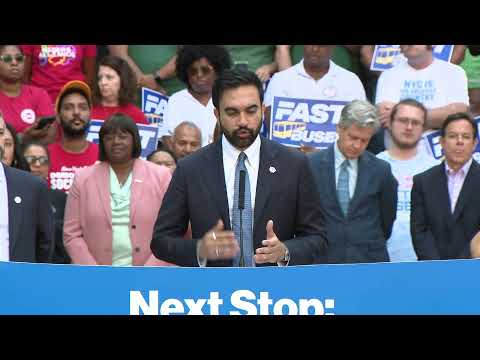
Mayor Zohran Mamdani and Governor Kathy Hochul announced a sweeping new initiative on Wednesday aimed at dramatically overhauling New York City’s bus system, pledging major investments to speed up service, modernize infrastructure, and improve the daily commute for millions of riders. The ambitious proposal, dubbed “Next Stop: Fast Buses, Better Service,” represents an unprecedented partnership between City Hall, the Metropolitan Transportation Authority, and the New York City Department of Transportation.
Under the plan, New York City will invest $254 million in operating funds and an additional $628 million in capital funding over the next five fiscal years. Officials say the initiative will target 50 major bus corridors throughout the five boroughs, with the goal of increasing bus speeds by 20%, cutting travel times by as much as six minutes each way, improving reliability, and making buses more accessible and comfortable.
“For working New Yorkers, every minute matters. But for too long, our buses have been stuck in traffic instead of keeping pace with the city that never sleeps,” said Mayor Mamdani. “When a commute stretches longer than it should, that’s less time with your kids, less time with your loved ones and less time enjoying the greatest city on earth. Together with Governor Hochul, we’re investing in faster, more reliable buses because New Yorkers deserve a transit system that respects their time. This plan will make it easier to get to work, school and home — and build a city that works better for the people who keep it running.”
“Every day, millions of New Yorkers rely on buses to get around this city, but for far too long, making their journeys faster and their lives easier has seemed out of reach. That all changes today,” said Governor Hochul. “New York is in the midst of a transit renaissance, with historic investments being made to improve the lifeblood of our city. Now, working with Mayor Mamdani, we are advancing a bold and ambitious plan to move buses faster, dramatically expand bus priority, reduce delays and make our bus system the envy of the world.”
The MTA praised the new partnership, saying years of stalled efforts to improve bus service are finally gaining momentum.
“For years, we at MTA have wanted more bus lanes, more enforcement of cars and trucks blocking bus lanes. Faster buses. Congestion pricing. But it’s no secret we didn’t have support at the local level,” said Janno Lieber, Chair and CEO of the MTA. “That is not the case anymore. Our partners today — this Governor, this Mayor and this NYC DOT — all want to make sure that riding the bus is always faster than walking. They want to follow through on long overdue commitments to build bus lanes and busways. They will ramp up traffic enforcement to keep streets moving. Buses can only move as fast as traffic allows, so if you are a bus or a bus rider this is terrific news.”
Deputy Mayor for Operations Julia Kerson described the initiative as a milestone for transit in New York City.
“Next Stop represents a historic partnership to build the fastest, best bus system in our city’s history,” said Deputy Mayor for Operations Julia Kerson. “The plan is designed to deliver for riders, to give time back to our neighbors and to make our bus system easier, more reliable and more comfortable for everyone. It represents a unique spirit of collaboration in which Albany and City Hall do not hesitate to work together to improve working people’s lives. The City has the streets, the State has the buses, and together, we are committed to delivering fast buses and better service for New Yorkers.”
Transportation Commissioner Mike Flynn said the city is making bus riders a priority after years of neglect.
“Too often, New York City’s bus riders have felt like an afterthought. The Mamdani administration is putting the city’s one million daily bus riders front and center through this historic partnership and investment,” said NYC DOT Commissioner Mike Flynn. “Bus service shouldn’t be treated as a second-rate option at the mercy of traffic congestion. It should be a world-class system for a world-class city: fast, comfortable, reliable and convenient enough that every New Yorkers sees the bus as a great way to get around. Next Stop: Fast Buses, Better Service provides the blueprint for transforming our bus system, and we are deeply appreciative of Governor Hochul and the MTA for their strong partnership.”
Elizabeth Adams, Mayor Mamdani’s Senior Advisor for Fast and Free Buses, said the proposal fulfills a central campaign promise to improve bus service.
“The Mayor came in with a mandate for fast and free buses, and today he’s proudly delivering on fast, with a bold plan that will speed up buses for millions of daily riders,” said Elizabeth Adams, Senior Advisor for Fast and Free Buses for Mayor Mamdani. “Thanks to a historic partnership between the MTA and DOT, we are marking a new chapter for bus riders. These improvements will give people real time back in their day for what’s truly needed. The bus is a lifeline for countless New Yorkers and when someone is made late to work, school or to pick up their kids, it can have devastating impacts. Thank you to the advocates and partners who made this plan possible and helped bring this vision forward.”
New York City’s bus network carries approximately 2.75 million passenger trips each day, making it the busiest bus system in the United States—handling more riders than the combined bus systems of Los Angeles, Chicago, San Francisco, and Philadelphia. Despite that enormous ridership, buses in New York average only about eight miles per hour, making them the slowest among major American cities.
City officials emphasized that improving bus service is a key component of their effort to make New York more affordable and livable for working-class residents. They noted that bus riders are disproportionately women, working-class commuters, and people of color, and are more likely than subway riders or drivers to come from households earning less than $100,000 annually.
The initiative identifies 50 major corridors where improvements will be concentrated, with construction and upgrades beginning this year.
The first five routes selected for the city’s next generation of rapid bus service are Tremont/Cross Bronx in the Bronx, Northern Boulevard in Queens, Flatbush Avenue in Brooklyn, Utica Avenue in Brooklyn, and the Kensington-JFK corridor spanning Brooklyn and Queens. Officials said those routes were chosen because they connect residents to employment centers, schools, subway lines, and neighborhoods experiencing continued housing and economic growth.
Beginning in 2026, the city and the MTA plan to introduce protected bus lanes, more frequent all-day service, upgraded stations with covered waiting areas, and redesigned streets modeled after successful bus rapid transit systems around the world.
To improve reliability, the MTA will strengthen maintenance operations, modernize bus depots, and focus on ensuring scheduled trips are completed. Through its fully funded $68 billion capital program covering 2025 through 2029, the authority plans to purchase roughly 2,500 new buses, replacing about 40% of the existing fleet.
Officials also announced that all-door boarding will begin rolling out in 2027 as the transit system fully transitions to tap-and-go fare payment, allowing passengers to board more quickly and reducing delays at bus stops.
The plan also focuses on improving the overall passenger experience by expanding accessibility upgrades to 65 bus stops annually by 2030, installing 300 new shelters by 2028, adding seating to 875 bus stops each year until every feasible stop has seating by 2035, planting trees at bus stops to provide shade, testing new shelter designs to reduce extreme heat, and installing thousands of real-time arrival displays across the city.
Keeping bus lanes free of illegally parked and moving vehicles is another major component of the proposal. Officials pointed to automated camera enforcement, which they said has already increased bus speeds by as much as 30% while reducing crashes by 20%.
To build on that success, bus-mounted enforcement cameras will expand to 25 additional routes annually during 2026 and 2027. Another 200 fixed bus lane cameras will also be installed by 2027, while the NYPD will expand targeted enforcement from 14 corridors to 20 beginning next year.
Officials also pledged to make riders a central part of the planning process. Community meetings, surveys, partnerships with advocacy organizations, and public education campaigns will accompany each project before construction begins. After projects are completed, the city and MTA will publish performance data measuring travel times, reliability, and rider satisfaction to ensure transparency and accountability.
A broad coalition of elected officials, transit advocates, disability organizations, environmental groups, and rider organizations praised the proposal, calling it one of the most ambitious bus improvement initiatives in New York City’s history. Supporters said the investments have the potential to shorten commutes, improve accessibility, reduce traffic congestion and emissions, strengthen economic opportunity, and finally deliver the faster, more reliable bus service that millions of New Yorkers have sought for years.