
 Matzav
Mamdani’s $800 Million Bus Plan Sparks Backlash as Critics Warn of More Cameras, More Fines, and Little Time Saved
New York City Mayor Zohran Mamdani and Gov. Kathy Hochul have unveiled an $800 million initiative aimed at speeding up bus service across the city, but critics argue the proposal is less about improving transportation and more about expanding traffic camera enforcement and increasing penalties for drivers.
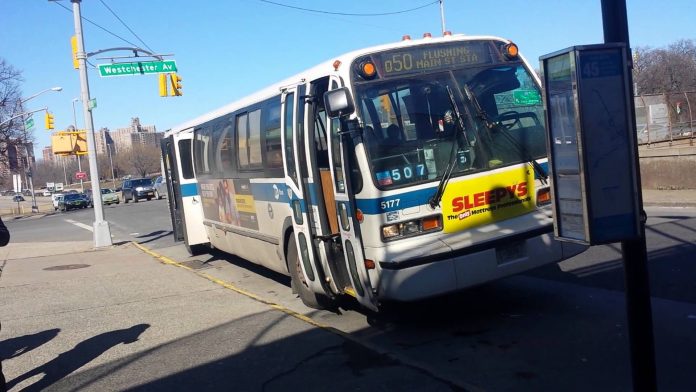
The Democratic leaders announced the plan Wednesday during a press conference in Flatbush, saying the project will create additional rapid bus corridors while installing 200 new automated traffic enforcement cameras along 50 more routes by next year. They claim the upgrades will reduce travel times by approximately six minutes per bus trip.
“In New York City, time is money. And we are going to give New Yorkers some of that time back,” Mamdani said. “Six minutes precisely.”
To emphasize the promised time savings, Mamdani started a stopwatch before speaking and pledged to finish his remarks within six minutes. Instead, his speech ran longer than planned, prompting comparisons to the city’s frequently delayed buses.
Not everyone is convinced the projected time savings are realistic. Allan Rosen, vice chairman of the rider advocacy group Passengers United, argued the numbers are misleading because they assume riders travel an entire bus route.
“They are saying that bus lanes will save you up to six minutes,” said, who spent three decades at the MTA, including a stint running bus planning.
“That means if you travel the entire bus route, say 8 miles, you save six minutes,” he added. “The average local bus trip is 2.3 miles. So the average passenger would save only an insignificant two or three minutes from their 45 or 60 minute trip.”
The proposal, developed jointly by the city Department of Transportation and the Metropolitan Transportation Authority, also calls for new traffic signals that give buses dedicated green turn arrows, along with expanded tap-and-go fare payment to reduce boarding delays. Even so, Rosen believes the overall impact on commute times will be modest.
Under the proposal, City Hall plans to invest $254 million, while another $628 million in capital funding will be spent over the next five years. Officials also intend to increase the distance between bus stops to better match national and international transit guidelines as part of the MTA’s continuing redesign of the city’s bus network.
That change would eliminate some existing bus stops. According to the MTA, most urban transit systems place local bus stops roughly every quarter mile, while many New York City routes currently have stops about every 800 feet apart.
Rosen warned that removing stops could actually leave many riders with longer commutes despite slightly faster buses.
“If you miss a bus because your bus stop was removed, you can easily add another 10 minutes to your trip. So your trip can take 20 minutes longer under the MTA’s planning,” Rosen said.
He argued that the real weakness in the city’s bus system is unreliable scheduling rather than slow travel speeds.
According to Rosen, only about 20 supervisors oversee scheduling for approximately 6,000 buses operating throughout the city, and he said the new initiative does nothing to address that staffing shortage. The MTA did not respond to requests for updated figures regarding the number of bus schedule supervisors it currently employs.
Rosen also sharply criticized the plan’s significant expansion of automated traffic enforcement.
“The real reason bus lanes are implemented is to raise fines from violators and to discourage automobiles by clogging up traffic by removal of lanes. It’s not to help bus passengers,” Rosen said.
The proposal has also drawn scrutiny because it closely mirrors recommendations made by Transportation Alternatives, an advocacy organization that supports reducing automobile traffic. In its November 2025 policy agenda for the incoming Mamdani administration, the group called for broader camera enforcement and additional rapid bus routes—both central features of the mayor’s newly announced plan.
Mamdani’s proposal identifies Transportation Alternatives as one of the stakeholders involved in the initiative, and his administration also appointed a former executive from the organization to oversee city bus operations.
Financial disclosures previously released by Transportation Alternatives show that Verra Mobility—the company operating New York City’s automated traffic enforcement camera network—contributed more than $100,000 annually to the organization from 2020 through 2023, the most recent year donor information was publicly available.
Earlier this year, the New York City Department of Transportation awarded Verra a new five-year contract worth $998 million, representing roughly a 34% increase over the company’s previous agreement with the city.
In announcing the expanded contract, Verra stated that the anticipated growth in bus lane camera enforcement was one of the primary reasons for the larger agreement.
According to the city’s annual Local Law 6 report, bus lane enforcement cameras generated $152.9 million in fines during fiscal year 2025, with the city collecting approximately $126 million from drivers. Revenue from cameras mounted on buses surged by 551% compared to the previous year.
That dramatic increase followed the state’s decision to expand the MTA’s authority to issue camera-generated tickets not only for driving in bus lanes, but also for blocking bus stops and double-parking along designated bus routes.
{Matzav.com}