
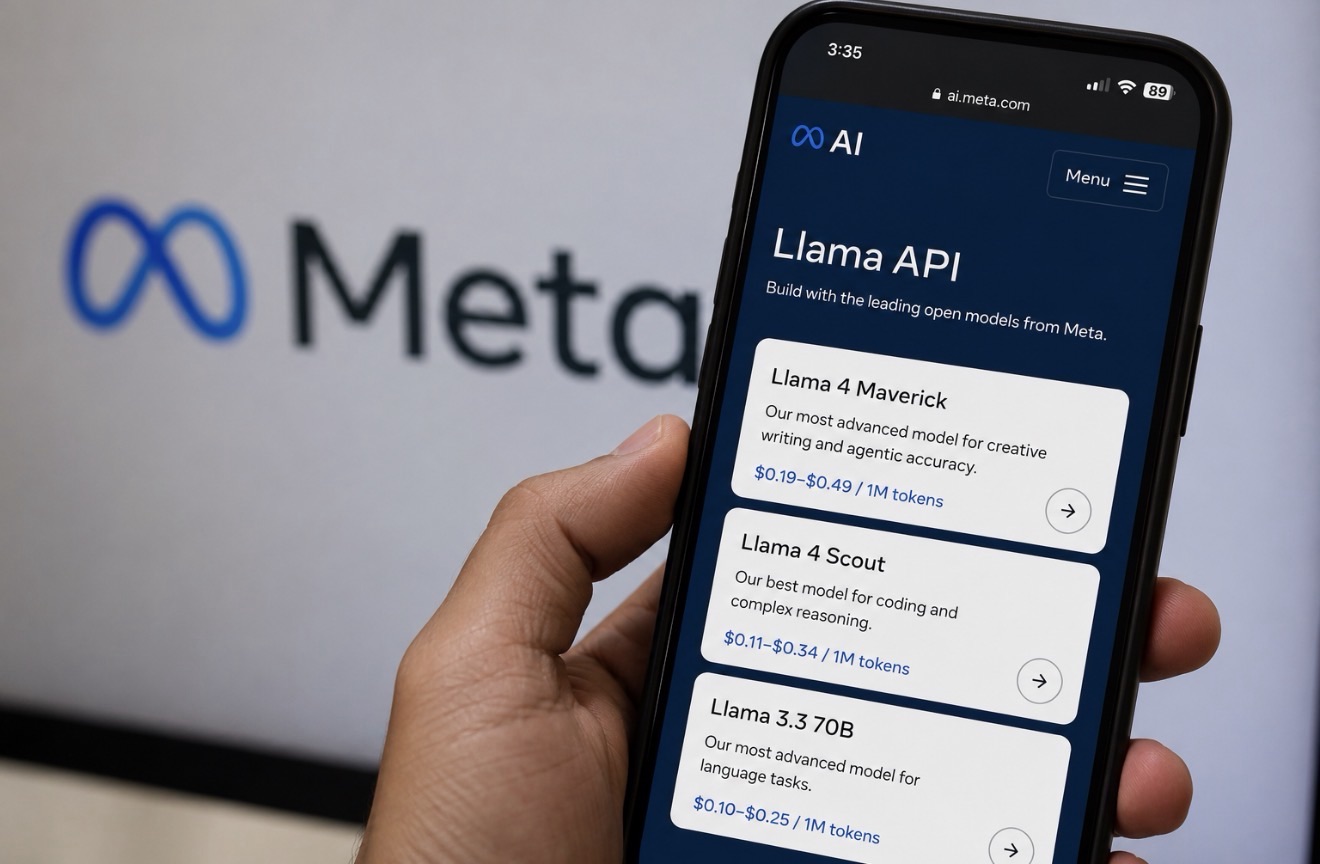

Meta Platforms began charging businesses to use one of its artificial-intelligence models for the first time on Thursday, July 9, when Mark Zuckerberg rolled out an upgraded model called Muse Spark 1.1 alongside a public preview of the new Meta Model API. In an interview with Bloomberg News timed to the launch, the chief executive said the company would compete on cost, describing the pricing as “very aggressive and attractive” and taking direct aim at the fat margins he says rival labs charge for comparable tools.
The numbers back up the pitch. According to Meta’s own developer blog, the Meta Model API will charge $1.25 per million input tokens and $4.25 per million output tokens, with $20 in free credits for every new account. Zuckerberg put that at roughly a quarter of what OpenAI and Anthropic charge for models in the same class. The preview is open to developers in the United States at launch, with additional access handled through a waitlist.
For Meta, the move is less about the model than about the business behind it. The company built its AI reputation by giving its Llama models away for free, arguing open-source software was good for the industry and bad for closed-model competitors. Muse Spark 1.1 is the opposite: proprietary, closed-weight, and reachable only through Meta’s apps or the paid interface. It marks the first time the company has turned one of its models into a direct revenue line, and it plants Meta squarely in the market for paid developer tools that OpenAI and Anthropic have largely had to themselves.
The man driving the shift is Alexandr Wang, the 28-year-old former co-founder of Scale AI whom Zuckerberg brought in last summer to run Meta Superintelligence Labs. Meta paid $14.3 billion for a 49% nonvoting stake in Scale AI in June 2025 and handed Wang a newly created chief AI officer role after the disappointing reception of the Llama 4 series. Wang echoed his boss on price, positioning the new model against offerings from Anthropic and OpenAI and calling it Meta’s strongest work yet for coding and agent-style tasks.
Agents are the selling point. Muse Spark 1.1 is a multimodal reasoning model with a one-million-token context window, built to plan and carry out multi-step jobs across outside apps, use software and tools, write and debug code, and read text, images and video in a single pass. Zuckerberg described its reasoning and tool use as state-of-the-art or close to it, and said Meta employees have already been using the model in-house to build features across the company’s products. He also claimed it beat Alphabet‘s Gemini on several benchmarks tied to agents, coding and multimodal work — in his telling, the first time Meta’s models have topped all of Google’s.
Meta lined up early partners to make the case. Replit chief executive Amjad Masad pointed to the long context window and the model’s coding strength, particularly on front-end and design work. Cline chief executive Saoud Rizwan said the pricing makes it realistic to run heavy coding jobs at scale. Yashodha Bhavnani, who runs AI products at Box, said the model held its own against top frontier systems on the company’s internal tests. A quiet but important detail: the Meta Model API speaks both the OpenAI and Anthropic software formats, so a developer can point an existing setup at Muse Spark by changing a web address and a key rather than rebuilding anything.
That compatibility is the sharp edge of the strategy. It lowers the cost of switching to near zero at the same moment Meta is undercutting the field on price — a squeeze aimed at pure-play labs that need model revenue to survive. Meta, by contrast, funds its AI push with an advertising machine and has told investors it will spend as much as $135 billion to $145 billion on capital projects this year.
Investors were split on the day. Meta shares opened lower, trading down about 3.5% near $581.70 in the first hour, then reversed higher through the session as the market weighed the new revenue angle against the spending. The stock had already jumped about 9% on July 1 on separate reports that Meta plans to sell excess cloud capacity. The company carries a market value near $1.51 trillion, and Wall Street’s consensus rating sits at “strong buy” with an average 12-month target around $824.
The open question is whether cut-rate pricing wins share fast enough to justify the outlay. Zuckerberg is betting that getting Meta’s technology into as many hands as possible matters more than protecting margins today — and that the companies charging premium rates will feel the pressure first.
JBizNews Desk | Menlo Park, Calif. © JBizNews.com All Rights Reserved. Reproduction or distribution without written permission is prohibited.