
 JBizNews
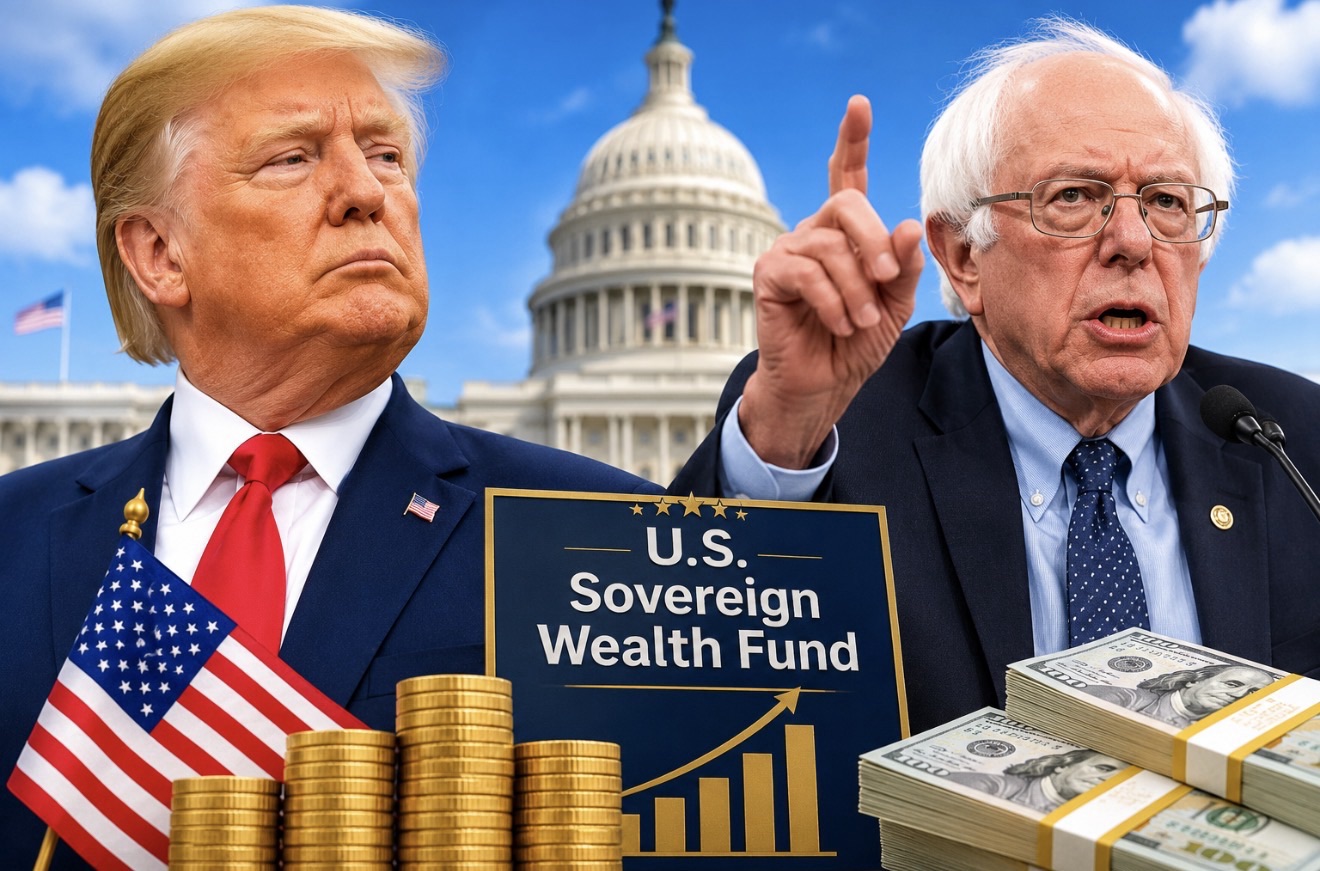
Trump and Sanders Share an Unlikely Goal: A U.S. Sovereign Wealth Fund
President Donald Trump and Senator Bernie Sanders rarely agree on economic policy, but both are now advocating for a U.S. sovereign wealth fund—a government-owned investment vehicle designed to hold stakes in private companies and other assets. While the two envision very different purposes for such a fund, their shared interest has moved the concept from a fringe idea into a serious policy discussion.
The foundation of the debate is President Trump’s February 2025 executive order directing the U.S. Treasury Department and the Department of Commerce to develop a plan for creating a sovereign wealth fund that would “maximize the stewardship of our national wealth.” The order outlined the goal but left unanswered the most important questions, including where the money would come from, who would manage it and what assets it would own.
Unlike countries such as Norway, Saudi Arabia and Singapore, which built sovereign wealth funds using large budget surpluses or natural-resource revenue, the United States currently runs persistent budget deficits. That has made funding a national investment vehicle far more complicated.
Several ideas have been discussed, including directing revenue from tariffs or proceeds from a possible sale of TikTok’s U.S. operations into the fund. None has been formally adopted.
Rather than waiting for a fully structured fund, the Trump administration has already taken strategic stakes in selected industries, including semiconductor manufacturers, rare-earth mining companies and quantum-computing firms. Among those investments is a passive ownership position in Intel, reflecting the administration’s broader effort to strengthen domestic technology and manufacturing.
Meanwhile, Sanders has proposed a dramatically different approach.
The Vermont independent recently introduced legislation that would create an American AI Sovereign Wealth Fund, financed through a one-time 50% tax paid in stock by large artificial intelligence companies generating more than $200 million in annual AI-related revenue.
Instead of collecting cash, the federal government would receive equity in qualifying companies, placing those shares into a professionally managed public investment fund.
According to Sanders, the fund could eventually hold approximately $7 trillion in assets. Investment returns would help finance direct payments to Americans while supporting priorities such as healthcare, education and affordable housing.
Although both proposals use the term “sovereign wealth fund,” the philosophies behind them differ substantially.
Trump has generally described government investments as strategic assets that could strengthen America’s industrial competitiveness and national security.
Sanders argues that much of today’s AI industry was built upon decades of publicly funded research and therefore believes Americans should directly share in the wealth created by the technology.
Despite those differences, the fact that leaders from opposite ends of the political spectrum support some form of public investment fund has attracted growing attention from economists and investors.
Ashby Monk, executive director of Stanford University’s Research Initiative on Long-Term Investing, has described sovereign wealth funds as an increasingly common tool for governments seeking long-term economic growth rather than relying solely on taxes and regulation.
Several countries have recently expanded or created national investment funds to support artificial intelligence, advanced manufacturing, clean energy and strategic industries.
Critics, however, warn that government ownership of private companies raises significant concerns.
Free-market organizations argue that political leaders should not influence corporate decision-making through government share ownership, while some economists caution that concentrating public money in rapidly appreciating technology companies could expose taxpayers to unnecessary investment risk.
Others question whether Washington could manage such a fund independently of political pressures.
Supporters counter that professionally managed sovereign wealth funds around the world have successfully generated long-term returns while maintaining operational independence from day-to-day politics.
The debate also carries major implications for the private sector.
If the federal government eventually becomes a significant shareholder in leading artificial intelligence companies, semiconductor manufacturers or other strategic industries, it could reshape corporate governance, investment priorities and the relationship between government and business.
For investors, the discussion reflects a broader shift in economic policy as governments worldwide become more directly involved in financing industries viewed as critical to long-term national competitiveness.
Whether Congress ultimately embraces either proposal remains uncertain.
Sanders’ legislation faces significant political obstacles in a Republican-controlled Congress, while the Trump administration has yet to present a detailed structure for implementing its own sovereign wealth fund.
Still, the unusual convergence between Trump and Sanders illustrates how rapidly attitudes toward government investment have evolved. An idea once viewed as politically improbable has become an increasingly prominent part of the national conversation over artificial intelligence, technology leadership and America’s economic future.
JBizNews Desk | Washington
© JBizNews.com All Rights Reserved. Reproduction or Distribution without Written Permission is Prohibited.