
 Matzav
Coke Crushes Pepsi on Wall Street as Beverage Giant Pulls Further Ahead
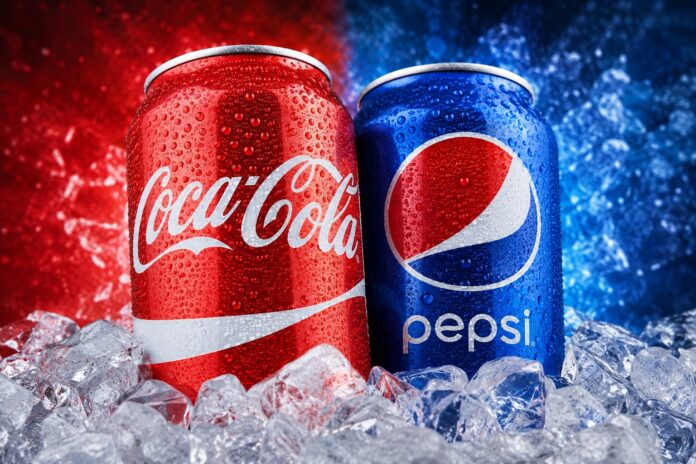
Coca-Cola is widening its lead over longtime rival PepsiCo, with investors rewarding the beverage giant’s streamlined business model while Pepsi continues to struggle under the weight of its snack division. Coca-Cola’s stock is hovering near record highs, while Pepsi shares have fallen sharply from their peak as concerns mount over slowing sales and shrinking profit margins.
Shares of Coca-Cola are trading close to the highest levels in the company’s more than century-long history as a publicly traded company. By contrast, PepsiCo’s stock has dropped nearly 30% since reaching just under $200 per share in 2023.
PepsiCo reported second-quarter earnings on Thursday that exceeded Wall Street’s expectations, but the stronger-than-expected results did little to ease investor concerns after the company’s core North American beverage business posted declining sales.
Overall, PepsiCo generated net revenue of $24.2 billion during the quarter, a 6.4% increase from a year earlier. Of that total, $7.2 billion came from its North American beverage operations.
For decades, Coca-Cola and Pepsi battled for dominance through high-profile marketing campaigns, including the famous “Pepsi Challenge” and Coca-Cola’s infamous “New Coke” rollout. While many believed Coca-Cola had already won that battle years ago, investors now appear to be reinforcing that conclusion through the companies’ market valuations and financial performance.
One of the clearest differences between the two companies is profitability. Coca-Cola posted a first-quarter operating margin of 35%, an improvement from roughly 33% during the same period last year. PepsiCo’s operating margin for the first half of the year stood at approximately 16.5%—less than half of Coca-Cola’s.
“It’s becoming more obvious to the investor base that Coke has a superior business model,” Nik Modi, co-head of global consumer research at RBC Capital Markets, told Barron’s.
Much of PepsiCo’s difficulty can be traced to its large snack-food business and the way the company manages its bottling operations.
Snack products such as Lay’s potato chips, Doritos, and Cheetos accounted for 58% of PepsiCo’s revenue in 2025.
However, steep price hikes introduced during the COVID-19 pandemic have weighed heavily on demand, as many shoppers have increasingly turned to lower-priced store brands in an effort to reduce grocery bills.
During the second quarter, North American snack revenue declined 2% compared to the same period last year, while overall unit sales remained essentially unchanged.
PepsiCo CEO Ramon Laguarta said higher gasoline prices have also contributed to weaker snack sales because consumers are making fewer impulse purchases at convenience stores.
“I think the consumer is worse than what we had anticipated and driven mainly by gas prices,” the exec said Thursday during a conference call with investors.
Citi analyst Filippo Falorni said the company faced “continued weakness in North America” in a note to clients on Friday. He cautioned that sluggish sales are likely to continue as inflationary pressures tied to the Iran war continue affecting the U.S. economy.
“This dynamic also creates carryover risk to numbers in 2027,” he added, “with still elevated cost inflation pressuring margins.”
Unlike PepsiCo, Coca-Cola has concentrated almost entirely on beverages, fueling growth through products such as Fairlife ultra-filtered milk and smaller, premium-priced soda cans that generate higher margins.
The company also maintains a leaner cost structure by franchising the vast majority of its bottling operations. PepsiCo, meanwhile, still owns roughly 80% of its bottling network, resulting in significantly higher operating costs that weigh on profitability.
PepsiCo’s recent struggles have also attracted pressure from activist investor Elliott Investment Management.
After revealing a $4 billion investment in PepsiCo last September, Elliott urged the company to simplify its business, reduce prices, and explore refranchising its North American bottling operations to more closely resemble Coca-Cola’s model.
Pepsi later reached an agreement with Elliott that calls for a broad restructuring effort. The plan includes eliminating 20% of its U.S. product lineup by early 2026, lowering prices on key brands, and closing several manufacturing facilities.
Although PepsiCo has stopped short of fully franchising its bottling business, it has begun experimenting with combining its snack and beverage distribution systems in an effort to improve efficiency.
According to RBC’s Modi, the company may ultimately have to reconsider its extensive ownership of manufacturing plants and distribution assets if it hopes to improve profitability.
“They may have to make some tough choices,” he said.
Investors continued favoring Coca-Cola on Friday, further expanding the gap between the two beverage giants.
As of 2 p.m. EDT, Coca-Cola shares were trading at $83.34, up 71 cents, or nearly 1%, from Thursday’s closing price of $82.63. The stock remains close to its 52-week high of $85.68.
PepsiCo shares, meanwhile, slipped 56 cents, or 0.4%, to $137.30, leaving the stock much closer to its 52-week low of $133.75 after closing Thursday at $137.86.
Coca-Cola is scheduled to release its second-quarter earnings report on July 28, a report investors will watch closely to see whether the company can continue extending its lead over its longtime rival.
{Matzav.com}