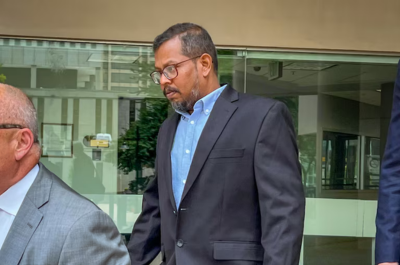
Karthikeyan Deenadayalan, chief engineer of the Dali cargo ship involved in the deadly 2024 Francis Scott Key Bridge collapse, was prevented from boarding a flight from India to Baltimore earlier this week by U.S. Customs and Border Protection. Deenadayalan had been visiting family in India, and his attorneys said the reason for the travel restriction has not been made public.
Deenadayalan entered into a deferred prosecution agreement in June 2026 over his role in the case. The Dali lost power and struck the Key Bridge on March 26, 2024, killing six construction workers and closing the Port of Baltimore’s main shipping channel for weeks.
According to the Justice Department, Deenadayalan admitted that he knew the ship was using an unsafe fuel supply pump and failed to notify the U.S. Coast Guard of the hazardous condition. Under the agreement, he must comply with specified conditions, which may include cooperating in the separate criminal case against another Dali employee.
His attorneys said he is ready to return to the United States once the travel issue is resolved.
This article was independently written by the BJL Newsroom based on reporting from WBAL-TV and the U.S. Department of Justice.
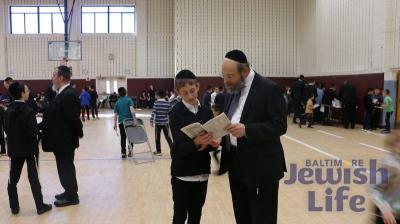
Baltimore, MD – October 23, 2026 - Torah Institute/Yeshivas Kochav Yitzchak kicked off its annual Chemdas Mishnayos program on Thursday with an inspiring BYOM (Bring Your Own Mishnayos) event. Nearly 600 talmidim in grades 3–8 gathered in the gym for a tremendous Maamad HaTorah, collectively learning well over 1,000 perakim of Mishnayos.
The Chemdas Mishnayos program, established many years ago by Rabbi Juravel, is now led by Sgan Menahel Rabbi Reischer. The special gathering featured divrei chizzuk from fifth-grade Rebbi Rabbi Heineman, who encouraged the boys to strengthen their commitment to Torah learning and make the most of the opportunities ahead.
Adding to the excitement, each talmid received a bag of chips and a can of soda to celebrate the occasion.
The powerful sight of hundreds of talmidim learning Mishnayos together was a beautiful expression of the Cheder's dedication to fostering a lifelong love of Torah. The event provided an uplifting start to another year of Chemdas Mishnayos, inspiring the boys to continue growing in their learning and reaching new heights in Torah.

Baltimore, MD – October 23, 2026 - BJL wishes a hearty Mazel Tov to Rafi & Chedva Cohn on the birth of a daughter.
Mazel Tov to grandparents Jeff Cohn (Karen, a’h) and Rabbi & Mrs. Zvi & Esti Zuravin.
!יה"ר שיזכו לגדל את בתם לתורה, לחופה ולמעשים טובים. אמן
Baltimore, MD – October 23, 2026 – BJL regrets to inform the community of the petira of Mrs. Anita Polovoy, a”h, who served as the Executive Secretary at TA for over 35 years.
The levaya will take place on Sunday, October 25, at 10:00 a.m. at Sol Levinson’s.
Kevurah will take place at Hebrew Young Men’s Cemetery, 5824 Windsor Mill Road, Gwynn Oak, MD 21207.

Baltimore, MD – October 23, 2026 – BJL wishes a hearty Mazel Tov to Rabbi and Mrs. Akiva Feldman on the birth of a baby boy.
Mazel Tov to the grandparents, Jonathan and Judy Feldman.
יה״ר שיזכו לגדלו לתורה, לחופה ולמעשים טובים. אמן.
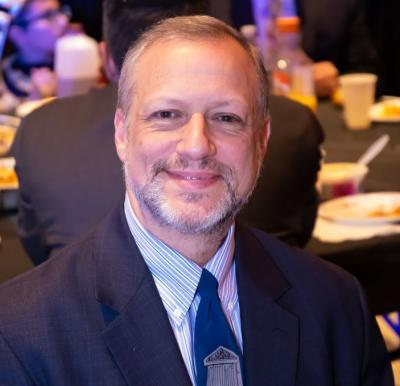
I have always been amazed by how what I was learning on a particular week had direct relevance to what was going on in my life or the world at the same time. As one example, eight years ago when my first grandson was born. It just happened that three weeks later in the Parsha Hashavua was the mitzvah of Pidyan Haben, exactly while we were planning that event for our new grandson. Or how Shaluach Hakan appeared just as we went camping and happened upon a bird on its eggs. People that learn Daf Yomi find this happening with startling regularity. So this week I learned a Pasuk which I have certainly learned no less than 50 times. Avram and Lot are conducting themselves in different ways. Avram was careful to muzzle his cattle as they crossed others land whereas lot allowed his flock to graze freely on others property. 1 This led Avram to his well known proclamation -”If you go to the left, I will go to the right and if you go to the right, I will go to the left”. The understanding of this Pasuk was never in question in my mind – Avram was troubled by the way Lot's Shephards conducted themselves and insisted they must separate. Indeed, it was not enough that Avram and his shephards were honest, it still pained them to be in the vicinity of others who were not as careful.
Except Rashi didn't see it that way at all (Rashi, 13:9). Rashi's understanding of this Pasuk is that whichever direction you go, I will settle very close to you and be your helper. Huh? That certainly appears to be contrary to the Pasuk's simple meaning. And I never noticed this Rashi until this week. I certainly have learned it a dozen times previously but the words never grabbed me. Until this week when my brother Ahron pointed them out to me. He went on to explain the context of Rashi's deviation from the plain words of the Pasuk. In the Pasuk before (13:8) Avram says we should not allow this dispute to continue “because we are brothers”. Avram's suggestion that it was difficult for him to watch this conduct did not alter his perception, his responsibility to his brother. He would always be there for him, he would always have his back even if he at times disapproved of his conduct.
What a telling act and word of our original Patriarch. We may not always agree, I may even disapprove, but you are my brother and I will watch over you. This was so startling to see in Rashi that I actually wondered whether Hashem just put it there this week so Klal Yisroel could be reminded of our obligation to ALL our brothers, even those who maybe to our right or to our left. Of course, the Rashi has been there since Rashi wrote it some eight hundred years ago2 But it sure seems more germane today after this last year of strife, History has repeatedly taught us that our greatest challenges come during times of internal strife. Despite this lesson being reinforced in Navi, the Gemara and secular history, we stubbornly refuse to learn. Perhaps we need to relearn this Rashi a few extra times this week. We are brothers. I may not approve of the way you do everything but I've got your back.
Dovid Fink
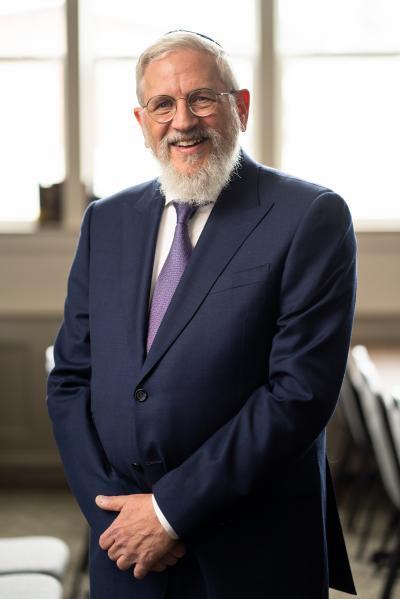
The very first world war broke out in the days of Avraham. The alliance of the Four Kings quashes the rebellion of the group of Five Kings — among them king of Sodom and its illustrious citizen Lot — taking them all captive together with all their possessions.
ויבא הפליט — Then there came a refugee, ויגד — and told, אברהם העברי — Avram, the Ivri, the news of his nephew Lot being taken captive. Avram immediately sets out to save Lot and miraculously succeeds in defeating the alliance of Four Kings, restoring all the captured souls and possessions to their rightful rulers. (בראשית יד יג)
The Ramban reveals that embedded within this conflict is an allusion to the four exiles we will endure in the course of history, with an assurance that just as Avram overcame these enemies, so too will we be released from our exile to be returned to our rightful heritage in the Land of Israel.
The reference to Avram as 'The Ivri' is the one and only time it appears in context to Avram. Evidently this title must be relevant to this episode exclusively.
This title HaIvri, the Midrash explains has multiple intimations. It refers to the descendants of עבר — Ever, a prophet, who established a center of study and devotion to G-d, who dwelled in a region מעבר הנהר — on the 'far side' of the [Euphrates] river, which was headed by their illustrious ancestor Shem — Ever's great grandfather. (שם י כג ע"ש ברש"י וברמב"ן)
The notion of their dwelling 'on the far side of the river' also seems to allude to the inherited trait attributed to Avraham who defiantly stood מעבר אחד — 'on one side against the nations of the world who stood on the other side'.
We as a people are proudly called עברים — Ivrim, or its anglicized version 'Hebrews', due to this quality to stand up against the world in upholding our heritage.
The war 'refugee' who escaped and informed Avram was none other than עוג — Og the giant. (Rashi)
His being classified as הפליט — the refugee, also only appears this once and nowhere else.
He is not referred to as Og, the Midrash informs, because it was at this juncture that Avram first conferred this name of 'Og' upon him.
The Midrash records how Og arrived on the eve of Pesach as Avram was preparing to bake the עוגות מצות — 'round cakes' of Matzah. Some suggest Og was invited by Avram to partake in the cakes in Avram's his quest to draw others to G-d. He was thus forever called עוג alluding to his encounter with these special round cakes. (תפארת ציון)
It seems strange that due to his having eaten matzah on the eve of Pesach he would forever be branded by that association.
Og became the king of Bashan, a mighty opponent who we had to conquer — together with his giant brother Sichon, the king of Cheshbon — as a prerequisite to entering the Holy Land.
Clearly, the Torah is portraying for us a contrast between Avraham, the 'Ivri', and Og, the 'refugee', who in later history became an arch enemy of our nation who attempted to destroy us by threatening to toss a mountain upon the entire encampment, only to be defeated by Moshe.
Within this divide lies the essence of our ultimate survival against a world that seeks our eradication by following the attribute of Ivri and discarding the negative trait of הפליט — the refugee.
Why is the eternal symbol of freedom, Matzah, regarded here and elsewhere asעוגות מצות — round cakes of matzah?
In a famous episode recorded in the Talmud, חוני המעגל — Choni the Circle-Maker, was asked during a drought to pray for rain. His initial attempt to pray fell empty. He then implemented a mode of prayer utilized by the prophet Chabakuk, to עג עוגה — draw a circle in the dust around him, standing inside of it, stood inside it, and saying to G‑d: “Master of the Universe! Your children turned to me because I am like a member of Your household. I swear by Your great name that I’m not budging from here until You have compassion on Your children!” and vowed not to leave until rain fell. It began to pour, prompting requests for him to pray for the rain's cessation.
The great 16th century rabbinic figure, Rav Moshe of Trani, who served as Chief Rabbi in Tzefas for fifty-five years, popularly known as the Mabit explains this unusual method of prayer: “There is a very deep message hidden within the circle of Choni HaMe’ageil. The sages taught that the world is round. For this reason, a circle alludes to the natural world or the natural order of things. Choni made a circle around himself to show that if Hashem would not help His children by sending rain, this would imply that we are subject to the natural order of things, to the cycle of nature. This is a tremendous desecration of Hashem’s Name, because we are His chosen people who have been uplifted to higher things. This is why Choni said that he would only leave the circle when the rain came. It was his way of showing that we are actually above the circular cycle of nature when there are tzaddikim among us. When such lofty people are in our midst, all natural cosmological and astronomical influences are suspended for the Jewish people. This is the meaning of Hashem taking Avraham Avinu out of the stratosphere of the world to gaze at the stars. This was meant to show him that Hashem had raised him far above the influence of the stars and the order of nature. And it was this that would allow him to have children, because by nature, Avraham was physically unable to bear children. The Mabit concluded: “The verse says that Hashem took Avram outside, above the natural order of things, and said, ‘That is how your descendants will be.’ (Bereshis 15:5) When will your descendants merit to transcend the circular cycle of natural influence? When they are truly ‘your descendants’— when they are righteous like you!”
The Midrash tells us that Og survived the deluge by hanging onto the Ark of Noach. Rav Chaim Vital, the prized disciple of the Arizal states that what merited his 'escape' from the flood was the fact that in contrast to the rest of the world who descended into debauched immorality, Og had drawn a circle in the sand, declaring he would not 'waste seed' — a metaphor for preserving his morality, unlike his errant compatriots.
In his desire to display his conviction not to be vulnerable to the instincts we share with the natural world of beasts he defied these forces of nature in declaring or perhaps praying he would not succumb, until he achieved his objective.
Og, a mighty giant of a man who possessed unusual physical strength and dimensions clearly struggled mightily with those innate forces of nature.
Ultimately, he failed.
When escaping to inform Avram of his nephew's being taken captive we are taught he had an ulterior motive. He sought to lure the valiant Avram into the battle to save his kin, hoping Avram might die and in turn he would take his widowed beautiful wife Sarai.
Although upon entering the sanctuary of Avram he 'escaped' from his inner beast, experiencing a moment of inspiration permitting himself to be uplifted spiritually by the delicious 'round cakes' of freedom, he remained forever a פליט — a refugee. He could have fleeted clarity but could not unshackle himself from his negative behaviors and desires.
Avram is a true Ivri, always standing on the 'far side of the river', with the river a metaphor for the powerful forces of nature that seek to drown us in its distractions and temptation.
There are those of us that live within that circle of nature occasionally seeking refuge in a world of spirituality. But we choose to remain refugees, unwilling to become full citizens of the Torah and its world of exhilarating opportunity.
We must be like Choni who can stand amidst that circle and exclaim in defiance we will never succumb. Even as we stand in that circle, we retain our total consciousness that we are on the 'far side of the river'!
Take a side. Where do you stand?
We can no longer escape the question. Only if we shout out with every fiber of our body and existence: עברי אנכי! — "I am from the far side of the river!", will we be immune to its force, conquering this last galus, the barrier to our freedom, and return to our holy land, once and for all.
באהבה,
צבי יהודה טייכמאן

Federal agents searched Rep. Ilhan Omar’s (D-Minn.) Washington, D.C., home on October 12 as part of a criminal investigation reportedly focused on possible false statements in immigration paperwork from decades ago. The probe has renewed scrutiny of allegations about Omar’s immigration history that have circulated for years.
According to The Washington Post, investigators are examining claims that Omar or her late father provided false information on documents connected to her family’s immigration and eventual U.S. citizenship. Republicans have also repeatedly raised allegations that Omar married her brother to help him obtain immigration status, a claim she denies. Neither allegation has been established in court, and authorities have not publicly detailed the evidence in the current case.
The search followed public comments by Trump administration officials indicating that investigators were examining possible fraud involving Omar’s family’s immigration paperwork. The Justice Department confirmed that agents executed a court-authorized search warrant. More than a dozen grand jury subpoenas, including some targeting Omar’s relatives, have reportedly been issued as part of the investigation.
Omar said she plans to move from the home because she fears her address has been exposed amid the death threats she says she receives. She recalled that 15 to 25 Homeland Security Investigations agents arrived around 6 a.m. and spent roughly five hours searching the property, leaving with 17 items, including cellphones, notebooks and her husband’s 1960s camera. She described the experience as “so bizarre.”
Omar called the search “an outrageous abuse of power” and accused President Donald Trump’s administration of targeting political opponents. Trump has repeatedly criticized her but denied involvement in the search. Federal authorities have not publicly announced charges against Omar or identified the specific offenses under investigation.
This article was independently written by the BJL Newsroom based on reporting from The Washington Post, CBS News and The Associated Press.
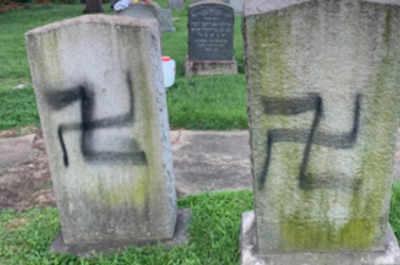
A Dundalk man has pleaded guilty to damaging religious property after vandalizing Jewish gravestones with swastikas and other antisemitic symbols at a Baltimore County cemetery in 2023.
George Horn, 36, admitted targeting Ohr Knesseth Israel Anshe Sfard Cemetery specifically because it is Jewish, according to the U.S. Attorney’s Office for Maryland. He faces a maximum sentence of three years in prison.
Authorities said Horn entered the cemetery in July 2023 and spray-painted several gravestones, primarily with swastikas. Cemetery caretakers later discovered 12 damaged headstones. Despite efforts to clean the graffiti, some swastika outlines remained, requiring replacement of certain stones.
Investigators recovered additional evidence from Horn’s vehicle, storage unit and phone, including antisemitic messages, a journal referencing Nazism and white supremacy, a video showing him spray-painting two grave markers, and a translated copy of Adolf Hitler’s manifesto.
Prosecutors said the evidence demonstrated Horn’s antisemitic animus and deliberate targeting of the Jewish cemetery, which was established in Dundalk in the late 19th century.
Horn is scheduled to be sentenced on January 14, 2027, at 3 p.m.
This article was independently written by the BJL Newsroom based on reporting from FOX45 News and the U.S. Attorney’s Office for the District of Maryland.

Israel’s Shin Bet security agency has removed multiple social media accounts suspected of attempting to influence the country’s upcoming election, the agency announced Thursday.
According to the Shin Bet, the accounts were involved in activity that could allow foreign actors to interfere in the election process. The agency said it would continue working to protect the integrity of the vote and Israel’s democratic process.
During previous election cycles, Israeli officials identified Russia, Iran and China as countries that have attempted to interfere in elections.
The announcement came as Prime Minister Benjamin Netanyahu warned that Iran and its regional allies were considering ways to influence Israel’s upcoming election, scheduled for October 27. Netanyahu said Israel would respond forcefully if such efforts were carried out.
The concerns also come amid broader warnings about the growing role of artificial intelligence in cyberattacks. Israel National Cyber Directorate chief Yossi Karadi recently urged world leaders to establish clear rules governing how AI systems can be used in cybersecurity, including which decisions must remain under human control.
Karadi warned that increasingly autonomous systems could respond to cyberattacks faster than humans can intervene, but could also make mistakes that disrupt essential services.
The Shin Bet did not publicly identify the operators of the removed accounts or provide further details about the suspected interference.
This article was independently written by the BJL Newsroom based on reporting from The Jerusalem Post.

Baltimore, MD – October 22, 2026 - Exciting progress continues at Torah Institute/Yeshivas Kochav Yitzchak as construction of the Cheder's new building moves steadily forward. With walls beginning to rise and rooms taking shape, the vision of an expanded campus is becoming more visible with each passing week.
Recent construction milestones include the paving of an additional section of the parking lot and the beginning of work on the elevator shaft and stairwell areas. Crews are also excavating and pouring wall footings for the new gymnasium, while rock drilling continues in preparation for the next phases of construction.
Baruch Hashem, these developments mark significant progress in Torah Institute's ambitious expansion project, designed to accommodate its rapidly growing enrollment of more than 930 talmidim and provide the facilities needed to support their continued growth in Torah and chinuch.
As the new building begins to take shape, the Cheder looks forward to reaching additional milestones in the months ahead. Torah Institute's administration expresses its heartfelt appreciation to the families and broader Baltimore community for their continued patience, encouragement, and support throughout the construction process.
Each new wall, foundation, and completed section brings Torah Institute one step closer to realizing its vision of a beautiful, expanded campus that will serve generations of Baltimore's Bnei Torah.
To learn more about the expansion project or participate in the building campaign, visit InvestInTorah.com.

Baltimore, MD – October 22, 2026 - Udder chaos unfolded when a runaway cow led Baltimore County police on an unexpected chase after escaping from a Pikesville farm. The cow fled through the woods before taking its great escape all the way to the Beltway.
The adventure began around 1 p.m. Wednesday, when the cow escaped from Hidden Waters Farm in the 3200 block of Old Court Road, according to Patch. “When officers located the runaway suspect, it refused to cooperate and fled through the woods,” the Baltimore County Police Department wrote in a post on X.
The chase eventually reached the I-695, where police worked with the cow’s owner to bring the situation under control. Using a rope from a patrol car, officers helped wrangle the animal and took it into custody. The cow remained with police until a farmhand arrived with a trailer to take it home.
No injuries were reported.
This article was independently written by the BJL Newsroom based on reporting from WBAL-TV and Patch.

Robert Kraft’s Blue Square Alliance Against Hate raised $32 million at its inaugural benefit gala in New York City, bringing together business leaders and philanthropists committed to combating antisemitism and other forms of hate.
The gala honored Brian Moynihan, chairman and CEO of Bank of America, for his leadership and support of the organization’s mission.
Kraft, owner of the New England Patriots, founded the organization in 2019 under the name Foundation to Combat Antisemitism. In 2023, it launched its blue square campaign, encouraging Americans to show support for Jewish communities and speak out against antisemitism.
“When there are no words, at a minimum, you can show your support with a blue square,” said Adam Katz, president of the Blue Square Alliance Against Hate, describing the campaign’s message.
The organization has promoted the campaign through television commercials, social media, billboards and partnerships with businesses and community groups. Funds raised at the gala will support its continued efforts to raise awareness and encourage people to speak up when they encounter hate.
This article was independently written by the BJL Newsroom based on reporting from Jewish Insider, eJewishPhilanthropy and the Blue Square Alliance Against Hate.

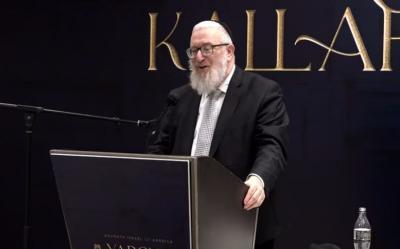
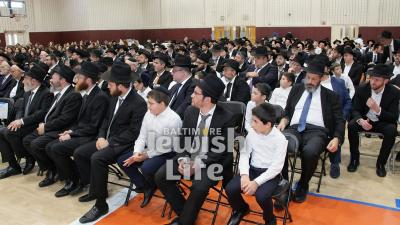
Baltimore, MD – October 21, 2026 - This past Sunday, Torah Institute/Yeshivas Kochav Yitzchak celebrated a special milestone as its four fifth-grade classes marked the exciting occasion of Haschalas Gemara. More than 300 parents and grandparents joined the talmidim for this meaningful step in their journey toward becoming shtarke Bnei Torah.
The boys, together with their devoted Rebbeim, heard inspiring divrei chizzuk from Menahel Rabbi Shimon Hirsch, Sgan Menahel Rabbi Nosson Adlin, and Harav Yosef Berger, who encouraged the talmidim as they embarked on this important new stage of Torah learning.
After receiving their very first Gemaros, the boys joined their fathers and grandfathers in spirited dancing, celebrating the momentous occasion. They then proceeded to their respective classrooms, where they began their first limud of Gemara together with their fathers and grandfathers.
Meanwhile, the mothers and grandmothers gathered to hear divrei hisorerus from the Cheder's CEO, Rabbi Raphael Schochet.
The beautiful celebration brought together Torah, family, and mesorah, marking the beginning of an exciting new chapter in the boys' growth as Bnei Torah and future talmidei chachamim.

Baltimore, MD – October 21, 2026 – BJL wishes a hearty Mazel Tov to Mr. and Mrs. Avi Ray and their family on the birth of a baby boy.
יה״ר שיזכו לגדלו לתורה, לחופה ולמעשים טובים. אמן.

Baltimore, MD – October 21, 2026 - Baltimore has been named one of 25 destinations on National Geographic’s “Best of the World 2027” list, which highlights places around the globe worth visiting in the coming year.
A major reason for the recognition is Baltimore’s role in American railroad history. The Baltimore and Ohio Railroad, chartered in 1827, will mark its 200th anniversary in 2027. To commemorate the milestone, the National Museum of Railroad History & Innovation is undergoing a $38 million upgrade, including the restoration of a 33,000-square-foot building expected to open in early 2027 with new exhibits and historical artifacts.
Beyond its railroad heritage, Baltimore offers visitors a mix of historic landmarks, local food and waterfront attractions. National Geographic highlighted Lexington Market, the Inner Harbor and the developing Baltimore Peninsula waterfront, as well as the Baltimore Blueway’s kayaking trails. The publication also pointed to Fort McHenry, where the defense against British forces during the War of 1812 inspired the lyrics of “The Star-Spangled Banner.”
This article was independently written by the BJL Newsroom based on reporting from National Geographic.

Baltimore, MD – October 21, 2026 – BJL wishes a hearty Mazel Tov to Feige Hoffman on her engagement to Zari Segal.
Mazel Tov to the parents Dovid and Hadara Segal and Mordechai and Leah Hoffman.
יה״ר שיזכו לבנות בית נאמן בישראל. אמן.
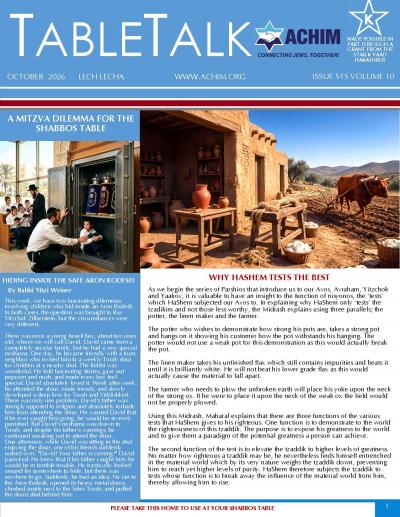
[.jpg)](https://baltimorejewishlife.com/pdfs/515 Lech lecha.pdf)
Click the image to view this week’s full issue.
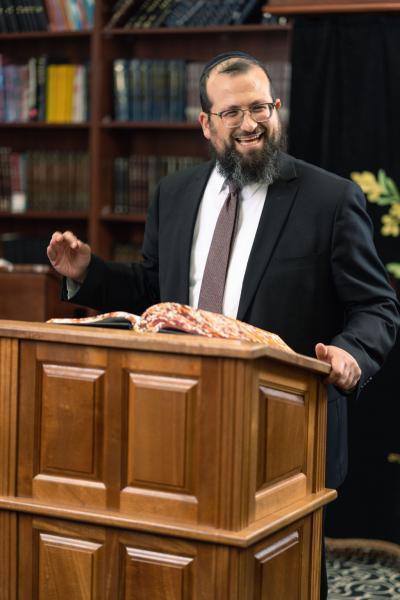
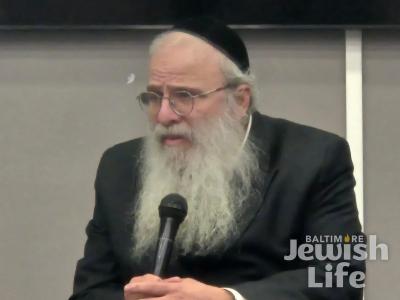
Over 165 administrators, principals, rabbeim, moros, and educators representing almost every Jewish day school in the Baltimore community gathered on Monday evening for Inspired Education, featuring Rav Sholom Kamenetsky, Rosh Yeshiva of Yeshivas Philadelphia. Presented by JES in partnership with the Association of Jewish Day Schools, the event presented an opportunity for educators and school leaders to pause, reflect, and draw strength for the important work of chinuch habonim.
Widely respected for his wisdom, warmth, and decades of educational leadership, Rav Kamenetsky delivered messages that were both practical and deeply inspiring to those entrusted with educating the next generation.
The evening began with a focused session for school leaders and administrators. Drawing on the pasuk, "Al Mei Menuchos Yenahaleini" - lead along a peaceful path - Rav Kamenetsky spoke about the responsibility of a menahel to guide with menuchas hanefesh, patience, and consistency. Quoting the well-known teaching, "Divrei Torah b'nachas nishma'im, he reminded participants that people are far more likely to accept guidance when it is delivered with calmness, respect, and understanding. Effective leadership, he explained, is not about exercising authority, but about creating the conditions in which teachers and students can thrive.
Rav Kamenetsky then addressed the larger audience of educators, opening with a powerful thought: Chinuch is more than education. Chinuch is dedication. Education, he explained, is a means to an end. The ultimate goal is to help children become dedicated Jews who are connected to Hashem, Torah, and Klal Yisrael. In that process, teachers serve not only as mechanchim, but as mashpi'im - influencers whose words, actions, and personal example leave a lasting imprint on their students.
He encouraged educators to recognize the uniqueness of every child.
"No two human beings look exactly alike or possess the exact same qualities," he noted. Taking the time to identify and cultivate those individual strengths is among the greatest gifts a teacher can give a student.
Rav Kamenetsky also challenged attendees to view their own personal and spiritual growth as an investment in their students. Whether through additional Torah learning, strengthening tefillah, or taking on small acts of personal growth, the impact inevitably finds its way into the classroom.
The timing of the event felt especially meaningful. As schools settle into the new academic year following the Yomim Tovim, teachers and school leaders return to their work carrying not only professional goals, but heartfelt tefillos for their own success and the success of their students. While educators certainly appreciate resources, support, and professional development, the enthusiastic response to the event reflected a deeper desire to reconnect with the purpose and meaning behind their work.
For many in attendance, the evening provided exactly that.
One participant reflected, "I didn't realize how much I needed this until afterward. It was life changing."
Another shared, "He spoke so sweetly and powerfully at the same time. My staff very much enjoyed it."
JES looks forward to building on the inspiration, renewed purpose, and motivation participants gained from this event and continuing to support Baltimore's educators through professional development, mentoring, consultation, and the Teacher Helpline throughout the year.
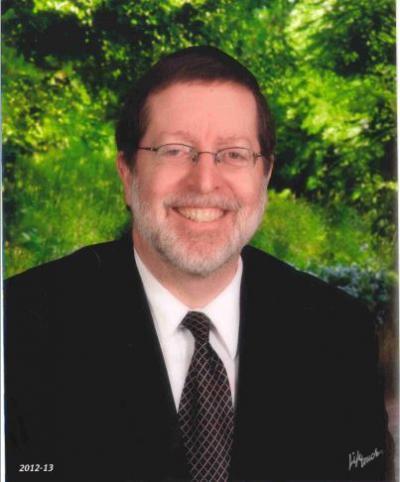

Vice President JD Vance declined to endorse Israeli Prime Minister Benjamin Netanyahu’s reelection bid, taking a different approach from President Donald Trump, who publicly backed Netanyahu ahead of Israel’s October 27 election.
Trump announced his “Complete and Total Endorsement” of Netanyahu on Truth Social on Sunday, praising him as a “Great Warrior Prime Minister” and a key partner in confronting Iran. He also warned that Israel’s choice of leadership could affect the United States’ role in addressing the Iranian threat.
Netanyahu thanked Trump for his endorsement, while opposition leader Gadi Eisenkot said Israel’s voters, not foreign leaders, would decide the election.
Asked about Trump’s endorsement during a Monday interview with journalist Mark Halperin on 2WAY Tonight, Vance said he would leave Israel’s election to Israeli voters.
“The president has the most effective endorsement in American or international political history,” Vance said. “I endorse American candidates, and that’s where I’m focused on in the midterms. So I’m not getting involved in Israeli elections.”
When asked whether that meant he opposed Netanyahu, Vance clarified, “I’m not anti-endorsing him. I’m not pro-endorsing him. I’m not getting involved in Israeli elections.”
Vance’s position is notable given his previous involvement in a foreign election. In April, he traveled to Hungary to campaign alongside then-Prime Minister Viktor Orbán, who subsequently lost his reelection bid.
This article was independently written by the BJL Newsroom based on reporting from NBC News and The Jerusalem Post.
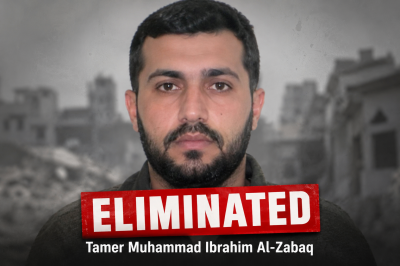
The IDF and Shin Bet announced that Tamer Muhammad Ibrahim al-Sabbagh, a Hamas terrorist involved in taking Shani Louk’s body into Gaza on October 7, 2023, was killed in an airstrike in Jabalia, northern Gaza, on Monday.
Al-Sabbagh was the last remaining member of the cell identified in footage of Louk’s abduction. Three other members had been killed, while another was captured by Israeli forces.
Louk, 22, was murdered during the Hamas-led attack on the Supernova music festival near Re’im. Images of her body being taken into Gaza became among the most widely recognized images of the October 7 massacre. Israeli forces recovered her body in May 2024 and returned it to her family for burial.
This article was independently written by the BJL Newsroom based on reporting from The Times of Israel.

Dozens of Chabad yeshiva bochurim returning to Israel from New York were detained by Israeli Military Police at Ben Gurion Airport on Tuesday morning over suspected draft evasion.
The students had spent the past year studying at Chabad’s world headquarters at 770 Eastern Parkway in Brooklyn as part of the annual kvutza program. Approximately 80 bochurim arrived on the flight, and military police were waiting at the airport to arrest those whose military service status had not been resolved.
The Times of Israel reported that 42 students were detained. Some students had their passports confiscated, and those remaining in custody were taken to the IDF recruitment center at Tel Hashomer for proceedings.
Twenty-seven detainees were released after signing a commitment to enlist and receiving suspended jail sentences. Thirteen others were sent to military prison after refusing to enlist, while two additional detainees were imprisoned because they had been evading military service for more than 540 days.
The arrests were particularly distressing for families who had come to the airport to welcome their sons home. Parents had waited for the bochurim after an extended period apart, but some were unable to greet their sons before they were taken into custody.
Chabad rabbonim and community representatives were working with government officials and military authorities to address the situation and assist the bochurim.
Prime Minister Benjamin Netanyahu criticized the arrests in a Tuesday morning radio interview, saying, “This is unacceptable. We need to preserve the world of Torah study because it has preserved us.” He also said, “These arrests are a deliberate attempt to undermine the process of recruiting Haredim without coercion. I greatly respect the world of Torah study, but anyone who is not studying should enlist.”
Charedi political leaders also alleged political interference ahead of the upcoming elections, although The Times of Israel reported that evidence supporting those allegations had not been provided. The IDF said it was enforcing the Defense Service Law and the obligation to serve.
The incident has renewed attention to the unresolved status of Charedi yeshiva students. In June 2024, Israel’s High Court ruled that, following the expiration of the legal framework for military-service deferments, the government could no longer exempt yeshiva students from conscription and was required to enforce the existing draft law.
This article was independently written by the BJL Newsroom based on reporting from The Jerusalem Post, The Times of Israel, and additional news sources.
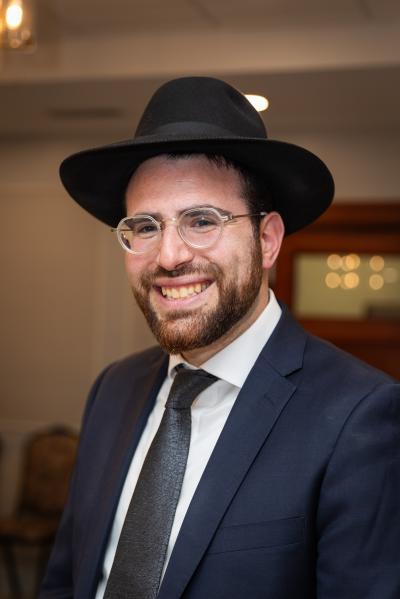
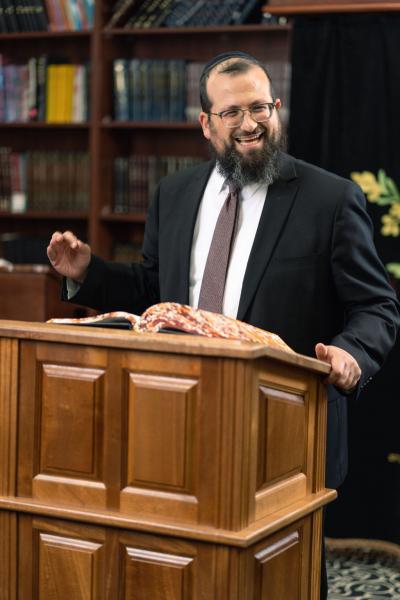
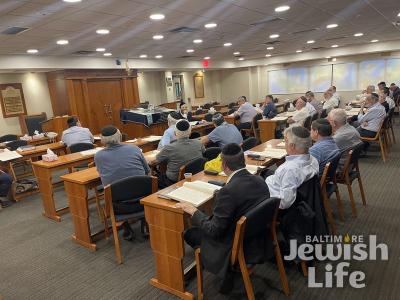
Baltimore, MD – October 20, 2026 - Outnumbered. That's how I felt when I covered Baltimore's inaugural Agra D’Pirka event on September 1, 2018, at Khal Ahavas Yisroel Tzemach Tzedek (KAYTT). It was a sea of men, of all ages, stages, professions, and hashkafos, and me. That feeling only intensified when my coverage of subsequent Agra D’Pirka Yarchei Kallah programs had me sitting alone behind the mechitza, writing notes, then scrambling to snap photos and collect participants' quotes at their conclusion.
But then, on November 24, 2019, with the encouragement of Agra D’Pirka founder Reb Ezra Klein, I made the trip to Tiferes Rivka Hall in Boro Park to cover the organization's very b'kovodik gala Decade Dinner. There, I met the n'shei chayil, the great women behind the great men, who also attended. For the first time, I gathered their quotes, too, and heard repeatedly how their husbands' learning permeated their homes and families. The newfound daily meaning and purpose Agra D’Pirka provided was immeasurable. For many, it also added a much-needed social dimension, giving them chiyus.
Fast forward. I have since become a "kollel wife," and my appreciation of Agra D’Pirka and its successful $600,000 CauseMatch fundraising campaign is perhaps even greater. I now more fully understand the mesiras nefesh of a kollel couple, in addition to what it takes to make such an ambitious nationwide program successful. And instead of feeling like an outnumbered outsider, Agra D’Pirka now feels like family, with Rabbonim, Maggidei Shiur, and participants graciously accommodating me under the tightest deadlines and at the most inconvenient times.
I personally participated in the campaign with this feeling of "family." I couldn't help checking the online contributions repeatedly, just about every hour I was awake. The nail-biting finish, as the campaign crossed the finish line and exceeded $600,000, was more exciting than any close race on election night!
May the heilige neshamah of Reb Ezra's mother, Pirka, a”h, in whose memory Agra D’Pirka was founded, have a higher and higher aliyah with each new Agra D’Pirka kollel member who joins and, iy”H, with each new nationwide location that opens, thanks to the tremendous Siyata D’Shmaya of the CauseMatch campaign!

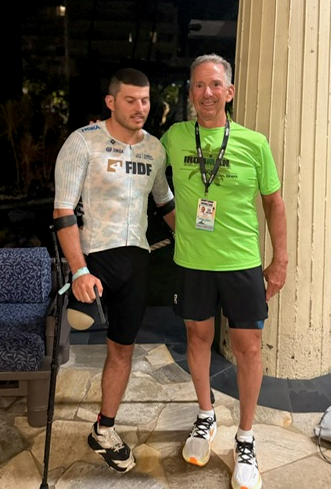
NEW YORK - Nearly three years after being severely wounded in combat in Gaza and losing his right leg above the knee, Boris Baruch Shtonda, 29, of Tel Aviv, completed the Ironman World Championship in Kona, Hawaii, on Oct. 10. Shtonda competed using a specialized running prosthesis custom-fitted for the race, marking another milestone in his rehabilitation with support from Friends of the Israel Defense Forces (FIDF) and a donation from FIDF supporter Mike Hochstein of Dallas.
The Hawaii Ironman is among the world’s most demanding endurance competitions, requiring athletes to complete a 3.8-kilometer swim, a 180-kilometer bike ride and a 42.2-kilometer marathon. Shtonda competed in the division for athletes with disabilities.
A veteran of the IDF’s Duvdevan special forces unit, Shtonda was in Japan on Oct. 7, 2023, and immediately returned to Israel to join the reserves. A month later, he was severely wounded by an explosive device during combat in Beit Hanoun in the Gaza Strip. He underwent numerous surgeries before his right leg was amputated above the knee.
Since his injury, Shtonda has made athletic challenges a central part of his rehabilitation. He climbed Kilimanjaro twice, completed a swim across the Sea of Galilee and finished a half Ironman in Valencia, Spain, in April. He then set his sights on the Ironman World Championship in Hawaii, training while working and pursuing a master’s degree. During that time, he also became a father.
After a year and a half of intensive training, he crossed the finish line in Kona.
“I want to share a message with all wounded soldiers and anyone going through a rehabilitation process: you are your own compass,” Shtonda said. “Sometimes, we have to be our own heroes and pull ourselves out of the predicaments we find ourselves in. Keep the faith, and always—always—believe in yourselves.”
During a visit to Israel, Hochstein met Shtonda and heard about his recovery and ambition to compete in Hawaii. Impressed by Shtonda’s determination and mental resilience, Hochstein decided to support his participation through FIDF.
“I first met Boris during an FIDF bike ride through Israel last year, and from that first meeting, Boris’s determination and spirit made a lasting impression,” Hochstein said. “His dedication, perseverance and commitment to pushing his limits are truly inspiring. I'm so proud to support Boris on this extraordinary journey.”
Hochstein also expressed gratitude to FIDF for supporting wounded soldiers as they work toward recovery and new goals.
The assistance provided to Shtonda is part of FIDF’s broader support for wounded IDF soldiers and their families. Through rehabilitation initiatives, sports and adventure activities and programs focused on physical and mental resilience, FIDF helps wounded service members regain independence, return to everyday life and pursue goals beyond their initial medical treatment.
“Boris’s achievement reflects the determination wounded soldiers bring to the long process of rehabilitation,” said FIDF CEO Maj. Gen. (Res.) Nadav Padan. “Recovery does not end when medical treatment is over. It takes continued support, opportunities to rebuild strength and confidence and the chance to set new goals. Through the commitment of FIDF supporters in the United States, we help wounded soldiers and their families navigate that process and continue moving forward.”
Friends of the Israel Defense Forces (FIDF) is a 501(c)(3) not-for-profit organization dedicated to honoring and supporting the brave men and women of the IDF who risk everything to protect the State of Israel and the Jewish people. While the mission of the IDF’s heroes is to look after Israel, defending its people, borders and freedom, FIDF’s mission is to look after them. FIDF provides life-changing support through education, financial aid, bereavement programs, mental health services and more, ensuring that every soldier, veteran and bereaved family knows they are not alone. Through global partnerships and unwavering commitment, FIDF stands as a pillar of strength for those who sacrifice so much in service to the Jewish homeland. For more information, visit: https://www.fidf.org/.

.jpg)


NEW YORK - Nearly three years after being severely wounded in combat in Gaza and losing his right leg above the knee, Boris Baruch Shtonda, 29, of Tel Aviv, completed the Ironman World Championship in Kona, Hawaii, on Oct. 10. Shtonda competed using a specialized running prosthesis custom-fitted for the race, marking another milestone in his rehabilitation with support from Friends of the Israel Defense Forces (FIDF) and a donation from FIDF supporter Mike Hochstein of Dallas.
The Hawaii Ironman is among the world’s most demanding endurance competitions, requiring athletes to complete a 3.8-kilometer swim, a 180-kilometer bike ride and a 42.2-kilometer marathon. Shtonda competed in the division for athletes with disabilities.
A veteran of the IDF’s Duvdevan special forces unit, Shtonda was in Japan on Oct. 7, 2023, and immediately returned to Israel to join the reserves. A month later, he was severely wounded by an explosive device during combat in Beit Hanoun in the Gaza Strip. He underwent numerous surgeries before his right leg was amputated above the knee.
Since his injury, Shtonda has made athletic challenges a central part of his rehabilitation. He climbed Kilimanjaro twice, completed a swim across the Sea of Galilee and finished a half Ironman in Valencia, Spain, in April. He then set his sights on the Ironman World Championship in Hawaii, training while working and pursuing a master’s degree. During that time, he also became a father.
After a year and a half of intensive training, he crossed the finish line in Kona.
“I want to share a message with all wounded soldiers and anyone going through a rehabilitation process: you are your own compass,” Shtonda said. “Sometimes, we have to be our own heroes and pull ourselves out of the predicaments we find ourselves in. Keep the faith, and always—always—believe in yourselves.”
During a visit to Israel, Hochstein met Shtonda and heard about his recovery and ambition to compete in Hawaii. Impressed by Shtonda’s determination and mental resilience, Hochstein decided to support his participation through FIDF.
“I first met Boris during an FIDF bike ride through Israel last year, and from that first meeting, Boris’s determination and spirit made a lasting impression,” Hochstein said. “His dedication, perseverance and commitment to pushing his limits are truly inspiring. I'm so proud to support Boris on this extraordinary journey.”
Hochstein also expressed gratitude to FIDF for supporting wounded soldiers as they work toward recovery and new goals.
The assistance provided to Shtonda is part of FIDF’s broader support for wounded IDF soldiers and their families. Through rehabilitation initiatives, sports and adventure activities and programs focused on physical and mental resilience, FIDF helps wounded service members regain independence, return to everyday life and pursue goals beyond their initial medical treatment.
“Boris’s achievement reflects the determination wounded soldiers bring to the long process of rehabilitation,” said FIDF CEO Maj. Gen. (Res.) Nadav Padan. “Recovery does not end when medical treatment is over. It takes continued support, opportunities to rebuild strength and confidence and the chance to set new goals. Through the commitment of FIDF supporters in the United States, we help wounded soldiers and their families navigate that process and continue moving forward.”
Friends of the Israel Defense Forces (FIDF) is a 501(c)(3) not-for-profit organization dedicated to honoring and supporting the brave men and women of the IDF who risk everything to protect the State of Israel and the Jewish people. While the mission of the IDF’s heroes is to look after Israel, defending its people, borders and freedom, FIDF’s mission is to look after them. FIDF provides life-changing support through education, financial aid, bereavement programs, mental health services and more, ensuring that every soldier, veteran and bereaved family knows they are not alone. Through global partnerships and unwavering commitment, FIDF stands as a pillar of strength for those who sacrifice so much in service to the Jewish homeland. For more information, visit: https://www.fidf.org/.


.jpg)
.jpg)

France is facing one of its most serious episodes of unrest in years after protests over rising living costs, poor school conditions and underfunded public services escalated into widespread looting, arson and clashes with police. More than 2,400 people have been arrested, and approximately 3,000 businesses have been damaged or looted, according to reports from French authorities.
The violence continued for a second night in cities including Paris, Lyon and Marseille, where groups set fire to trash bins, bicycles and other objects, smashed storefronts and looted businesses. In Limoges, flames engulfed the historic city hall, causing its roof to collapse and leaving the building nearly destroyed.
Interior Minister Laurent Nuñez acknowledged Monday that police had “lost control” in some major cities. He cited failures to anticipate the scale of the unrest and said police numbers had been insufficient in some areas. Nuñez offered his resignation to President Emmanuel Macron, who rejected it and directed him to ensure greater transparency regarding security planning and intelligence failures, while introducing new policing tactics.
Prime Minister Sébastien Lecornu called for localized overnight curfews to prevent further violence. Paris police subsequently announced curfews in two areas of the capital, including Place de la République and the Les Halles shopping district, from 11 p.m. Monday until 6 a.m. Tuesday.
The violence has intensified pressure on the government to restore order while addressing the concerns that brought protesters into the streets. Macron has condemned the destruction and called for changes to the security response as authorities continue assessing the damage.
A viral footage filmed near the Arc de Triomphe in Paris shows a couple casually sipping drinks and smoking cigarettes at an outdoor café as flames from a burning bin are visible in the background. The couple appears unfazed, continuing their afternoon as unrest unfolds nearby.
This article was independently written by the BJL Newsroom based on video published by The Guardian and reporting from Reuters.
This article was independently written by the BJL Newsroom based on reporting from The Guardian, The Associated Press and Reuters.

Baltimore Mayor Brandon M. Scott and the City Council have filed a lawsuit against Yardi Systems, RentCafe, and Pennrose Management Company, accusing the companies of charging tenants hidden fees for paying rent online in violation of Baltimore's Consumer Protection Ordinance.
The city alleges that fee information is buried behind multiple clicks, spread across several webpages in fine print, and disclosed for a selected payment method only at the final step of the payment process. Tenants who choose not to pay these additional “pay-to-pay” fees risk late charges or eviction, according to the complaint.
“These illegal junk fees effectively raise the rent for thousands of Baltimore residents,” Mayor Scott said. City Solicitor Ebony M. Thompson added that renters should not have to navigate complicated webpages and fine print to understand what they are being charged.
The city also pointed to the financial strain facing local renters. Last year, four in 10 Baltimore renter households spent at least 35% of their income on rent and utilities. Among households earning $35,000 or less, more than half spent at least 50% of their income on those expenses.
The allegations have not been proven in court.
This article was independently written by the BJL Newsroom based on a press release from the Mayor's Office of Baltimore City.

Baltimore, MD – October 19, 2026 - BJL wishes a hearty Mazel Tov to Peninah & Moishe Couzens on the birth of a daughter.
Mazel Tov to grandparents Andrew & Lenie Singer and Yakov & Nili Couzens.
Mazel Tov to great-grandparents Peter & Paula Singer.
!יה"ר שיזכו לגדל את בתם לתורה, לחופה ולמעשים טובים. אמן

A National Guard member was shot late Sunday night in Washington, D.C., after attempting to break up a fight near Capitol Hill. The suspect was also wounded in an exchange of gunfire, according to police.
D.C. Interim Police Chief Jeffery Carroll said seven or eight National Guard members were traveling in a van when they spotted the fight in the Eastern Market neighborhood shortly after 11 p.m. and got out to intervene.
During the confrontation, one person involved in the fight pulled out a gun and began firing. When the suspect pointed the weapon toward the Guard members, three of them returned fire, police said. One Guardsman was struck in the leg, while the suspect was hit in the abdomen.
Both were taken to area hospitals with injuries that were not considered life-threatening. The suspect was taken into custody, and police said there was no ongoing threat to the public. The shooting remains under investigation.
This article was independently written by the BJL Newsroom based on reporting from CBS News and The Associated Press.
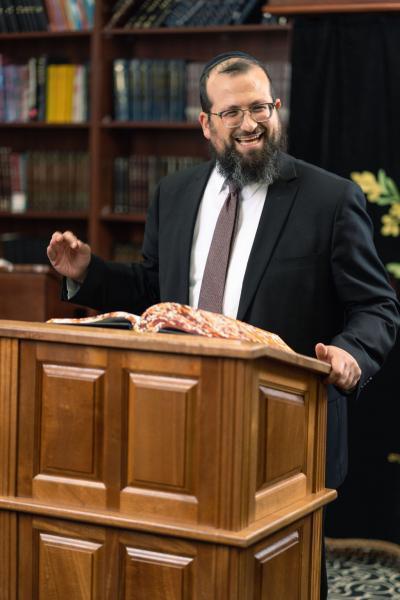
What Does It Mean to Dedicate a Torah Class to Someone?
One question in the chat caught me by surprise recently. Some 4,000 women had registered for an open class on Parashat Bereishit, organized by the “Mitchadshot” community. At the beginning of the Zoom session, I mentioned that the class was dedicated to the recovery of the students who had been injured in an explosion just hours earlier, during a trip in northern Israel.
Then someone wrote in the chat: “This is my first-ever Torah class. What does it mean to dedicate a class to someone? I’ve never heard of such an idea.”
I explained that every good deed we do in this world generates zechuyot—spiritual merits. Torah study and prayer have a special spiritual power. And when we do something good, we can dedicate the merit of that act to a particular purpose. For example, to the recovery of someone who was injured just hours earlier.
The Jewish people are bound together by a sense of mutual responsibility. We all affect one another through our good deeds and mitzvot—or, God forbid, through our wrongdoing. We are all part of one human fabric, and every action has an impact.
Then, just as the Zoom class was ending, almost as though it were a direct continuation of our discussion, I received a message written by Chani Leiter, the mother of Neria, who was seriously wounded in a terrorist attack a few weeks ago:
“From the the intensive care unit at Shaare Zedek Medical Center, we are receiving messages and videos of so many prayers, Torah study, acts of kindness, and good deeds being performed all around the world on behalf of our Neria. If only I could describe how much strength this gives us.
“We are seeing how the mutual responsibility and concern of the Jewish people extend far beyond our own personal ordeal. This is the hidden Jewish soul, now revealing itself.
“We named our son Neria—the light of God—because we wanted him to spread God's light in the world. God's ways are mysterious, but we can see with our own eyes how Neria is doing exactly that right now. All of this surrounds us with love and gives us strength.”
Wow.
A question from one woman and an answer from one mother remind us of something fundamental: No one is ever alone, and no good deed benefits only the person who performs it.
May Neria Dov ben Chana, and all those who were injured, have a complete and speedy recovery.
If Not Now, When?
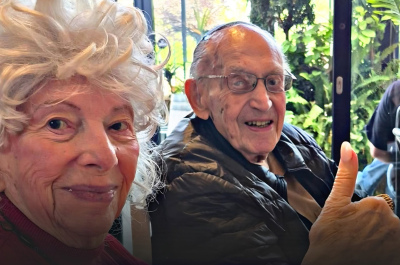
When Sandy and Rosalie Goldstein were in their forties, they were both considering making Aliyah from the United States. Somehow, after a conversation with an official they mistakenly received the impression that they were already too old. They understood that Sandy would not be able to find work in Israel as an accountant at his age, and so they put the dream aside and continued building their lives in New Jersey.
Decades passed. But it is always possible to grow, to renew ourselves, to do better. And today, you can find the Goldsteins in Netanya, surrounded by grandchildren and great-grandchildren. Some members of the family had already made aliyah before them, and they themselves are just one small part of the worldwide wave of aliyah.
You look at their ID cards, and you cannot help but be inspired. Sandy has just celebrated his 105th birthday, and Rosalie will turn 101 in January. This month, they will celebrate their 79th (!) wedding anniversary.
They could have stayed in their comfort zone. They had already built careers in the United States, raised a family, worked on behalf of Soviet Jews behind the Iron Curtain, and over the years had also grown stronger in their observance of Torah and mitzvot.
They both love to quote the ancient words of Hillel the Elder: “If not now, when?”
They remind us: whatever change or improvement we have been dreaming about, whatever new beginning we have been postponing — now is the time.
5 Things About the Parashah
1. This week’s Torah portion, Lech Lecha, is the third portion in the Torah. In a sense, we are starting from the beginning for the third time. The universal, global experiments of the Garden of Eden, Noah’s Ark, and the Tower of Babel have all failed. The world needs nations, countries, and distinct identities. The world needs Avraham.
2. Avraham Avinu and Sarah Imeinu make their first appearance on the stage of history—and, in fact, have never left it. If there were a ranking of the most influential people in human history, they would take first place. Billions of people around the world consider themselves their spiritual heirs.
3. Avraham and Sarah are the first olim, the first immigrants to the Land of Israel. “Go forth from your land, from your birthplace, and from your father’s house,” God tells Avraham—and he sets out for the Land of Israel. Millions have followed in his footsteps over the generations.
4. The first mitzvah Avraham fulfills is also the only mitzvah in this Torah portion: brit milah, circumcision. Close to 100% of his Jewish descendants continue to observe it to this day.
5. It’s worth remembering: In his own time, nobody called him Avraham Avinu. They probably called him Avraham the eccentric, the lunatic. The entire world worshipped idols, while he introduced us to the revolutionary ideas of monotheism, charity and kindness, faith and optimism. Today, everyone knows he was right.
Want to read more by Sivan Rahav Meir? Google The Daily Thought or visit sivanrahavmeir.com

Baltimore, MD – October 18, 2026 - BJL wishes a hearty Mazel Tov to Mr. & Mrs. Aryeh Pleeter on the birth of a baby girl.
Mazel Tov to the grandparents Dr. and Mrs. Joel Pleeter and the great-grandparents Mr. & Mrs. Bennet Pleeter
!יה"ר שיזכו לגדלה לתורה לחופה ולמעשים טובים. אמן

Baltimore, MD - October 18, 2026 - 4:25 PM (BJL) - An accident on Seven Mile Lane, directly in front of Sephardi Shul, has both lanes blocked. Police are on the scene. Drivers should avoid the area and use an alternate route if possible.

The Rebbe has successfully revived a nearly 200-year-old chassidus, which descends from the Rebbes of Lechovitch and Karlin/Stolin
Baltimore, MD - October 17 2025-The Baltimore community is honored to host the Koidenover Rebbe, shlit"a, from this Monday, October 19th- Tuesday, October 27th. Those who were privileged to see the Rebbe during his past visits, know that he is a captivating speaker who conveys a message relevant to our generation. In addition, the Rebbe is known for and much sought after for his wise counsel and brachos. Those who have had a private audience with the Rebbe can tell you how truly electrifying the experience was, replete with chizuk and inspiration.
The Rebbe has successfully revived a nearly 200-year-old chassidus, which descends from the Rebbes of Lechovitch and Karlin/Stolin. It now consists of two batei midrash and one Yeshiva, in addition to a multitude of chesed projects. The Rebbe's unique beis midrash on Tel Aviv's Dizengoff Square, serves as a kiruv center; it includes a Kollel and provides weekly Shabbos meals. The Koidenov yeshiva has become known as one of the top Chasidishe yeshivos in the country, and its unique derech halimud has been replicated in other yeshivos.
There will be several opportunities to see the Rebbe during his stay in Baltimore.
Shabbos Parshas Lech Lecha (October 23/24) with the Rebbe will be a unique opportunity for the Baltimore community.
Friday night Mincha/ Kabbolas Shabbos at 5:58pm at Congregation Derech Chaim (Rabbi Gross)
The Friday night Shabbos tish will be held at Mercaz Torah uTefilah (Rabbi Eichenstein, Zidichover Rebbe) at 9:15 pm.
Shabbos morning, the Rebbe will be davening at Shomrei Emumah's (Rabbi Marwick) 8:15 am minyan. He will sharing be giving a shiur during the learning break.
Shabbos will close with Shalosh Seudos (following Mincha at 5:55pm) at Mercaz Torah uTefilah (Rabbi Eichenstein, Zidichover Rebbe**)**
It is sure to be an uplifting and unforgettable Shabbos. All drashos will be in English.
The Rebbe will be available by appointment for private consultations and brochos at the home of our gracious hosts, Dr and Mrs Yossi Scheller.
The Rebbe will also be in Silver Spring, Thursday evening, October 22th for private meetings.
To schedule an appointment or for more information about the Rebbe's visit please call or text Rabbi Shlomo Slatkin at 443-570-7598 or email **[email protected]_. The American Friends of Koidenov, Inc., would like to take this opportunity to welcome the Rebbe, a member of its board and Nasi of Mosdos Koidenov B'Eretz haKodesh, to America._**
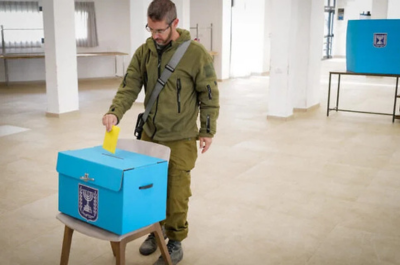
Israeli election officials are preparing for the possibility that the October 27 election for the 26th Knesset could take place during missile attacks or other security emergencies. A joint command center involving police, the Shin Bet and IDF Home Front Command is assessing threats and coordinating preparations to keep polling stations operating safely.
The goal is to hold the election as scheduled, with adjusted hours and additional security measures if needed. Many polling stations are being located inside protected spaces or near shelters. If sirens sound, voting can be suspended while voters and staff move to safety, then resume when conditions permit.
Under Israeli law, postponing a national election requires legislation supported by at least 80 of the Knesset’s 120 members. The committee chairman cannot postpone the election independently. Israel has postponed a Knesset election only once, moving the 1973 vote because of the Yom Kippur War.
Officials say postponement should be a last resort, considered only if an emergency makes it impossible to hold free, equal and accessible elections.
This article was independently written by the BJL Newsroom based on reporting from CBNUnfiltered.com
Rabbi Simon said: The Holy One blessed be He, שלש מציאות מצא — found three [precious] finds:
Avraham, as it is written: ומצאת —You found his heart נאמן — faithful before You” (נחמיה ט ח)
David, as it is written: “מצאתי — I found David, עבדי — My servant” (תהלים פט כא)
Israel, as it is written: “Like grapes in the wilderness מצאתי — I found Israel”
(הושע ט י)
The students raised an objection to Rabbi Simon: But is it not written [also]: “But Noach, מצא חן — found favor”?
He said to them: הוּא מָצָא — He [Noach] found [favor], הַקָּדוֹשׁ בָּרוּךְ הוּא לֹא מָצָא
the Holy One blessed be He, did not find.
Much ink has been spilled on this cryptic response Rabbi Simon offered to answer his students query.
Isn't the statement regarding Noach's finding favor, — בעיני ד' 'in the eyes of G-d' a reference to G-d 'finding' Noach favorable in His eyes? How does that jive with Rabbi Simon's assertion that 'Noach found' favor and not G-d?
Despite Noach having been termed a איש צדיק — righteous man, that stature is seemingly diminished as compared to Avraham the נאמן — faithful, and David's being termed עבדי — My servant.
In what way is being faithful and a servant greater than a tzaddik?
Another contrast is observed by Rashi in the name of Midrash Tanchuma, how Noach התהלך — walked with G-d. But concerning Abraham, the Torah says: “[the Lord] התהלך לפני — before Whom I walked.” Noach required סעד לתומכו — [G-d’s] support to uphold him [in righteousness], but Abraham strengthened himself and walked in his righteousness by himself.
Was Noach simply weaker in spirit and beckoned for extra support, as opposed to Avraham who had greater conviction?
Perhaps the issue that stifled Noach was his lack of confidence in his worthiness. He constantly measured his relationship with G-d by the accomplishments he achieved.
If he measured up to his expectations, Noach was sure G-d favored him, but when he didn't fulfill his personal goals, he felt unworthy of G-d's favor.
Avraham and David, exemplars of humility, both expressed how no matter how much they accomplished they were in their own eyes as עפר ואפר — dust and ashes, or as a lowly תולעת — worm, in contrast to G-d's magnanimity towards them.
Noach needed constant 'support' to plod onward when not living up to his standards. Noach questioned his worthiness before G-d. Avraham and David never faltered, never feeling dejected, always remaining 'faithful servants'. Even if they were disappointed in their choices, it never caused them to lose faith in themselves because ultimately they knew G-d had confidence in them.
They always sensed G-d's love, knowing it would never wane. They never gave up.
Noach though truly a righteous man, in his need for reassurance, never attained a that sense of G-d's unconditional love even in failure, that would have fueled his devotion without any lapses.
No wonder Avraham is fondly called by G-d as אברהם אוהבי — My loved one. (ישעיה מא ח)
Might that be the intent of Rabbi Simon when he says הוא מצא — Noach found favor.
When he felt he had successfully fulfilled his tasks, he sensed G-d's favor in terms of his 'own' accomplishment that validated his worthiness. But in moments of self-doubt, he lost his verve, permitting himself to wallow in mind numbing alcohol indulgence to soften his sense of disappointment and rejection.
הוא מצא — 'He' found favor in 'himself' vis a vis his responsibility to G-d, butוהקדוש ברוך הוא לא מצא — he never discovered 'G-d' and His boundless and unconditional love.
I recently received a profound and poignant email from a former student, a young student from my days as a High School principal in T.A. Yaakov Wasilewicz endured much challenge in his life. His grew up in Poland total unaware of his identity as a Jew. One day after reporting to his mother he was going to church with his friends his mother finally revealed to him that they were Jews. A journey of discovery began with his eventually ending up in Baltimore as a fifteen year old teenager, graduating from first grade through high school in four years, going on to learn in different Yeshivos. Although he grew in Torah and Mitzvos, he remained conflicted and confused regarding his relationship with G-d.
I share this with his permission and hope you will be as inspired and enlightened by his words. He is a true hero in his willingness to be vulnerable, for in that ability lies our greatest strength. Only one who attains a healthy relationship with G-d can gain a powerful sense of confidence in his true self-worth and continue that journey successfully.
Since Rosh Hashana I started a new journey. The journey of making some healthy changes in my life. One of the changes I began doing is I started to view Judaism differently.
I recently realized that since the day I became a Baal Teshuva, for the last 23 years my relationship with Hashem and His Torah was based on fear. I kept His Torah and mitzvot as best as I possibly could. But I realized that if I missed a davening with a minyan or if I did something wrong, I was very hard on myself. I felt bad and I feared. I didn’t just fear the punishment, but I also feared the loss of the connection with Hashem. I feared the rejection. I felt that if I don’t keep His Torah and mitzvot I will lose His love.
Besides that, I realized that I have a hard time loving myself. If I keep His Torah and mitzvos I like myself, felt good about myself and I felt Hashem was proud of me. I felt worthy of His love and therefore I was able to say I also love myself too. But if I didn’t keep His mitzvos well enough or did something wrong I felt like I’m not worthy of being loved. I felt like Hashem was disappointed in me. Therefore, I didn't like myself because Hashem was upset with me.
I finally realized that my connection with Hashem, my Judaism was very unhealthy. I realized that I used to say to myself “I have to” do this, because otherwise I was afraid of punishment or that I would not be worth anything unless I do it.
So I decided to press the “Restart” Button.
I began working on my self-worth, self-love allowing myself to love and accept myself with love just the way I am as a human being, the exact way I am, believing that I am worthy of love. Not because of the talents I have; songs I compose; smiles I give to people; Torah and mitzvos I keep. No. I am worthy of love - just because I am here, right here and right now. I am in love with myself. And I know that Hashem loves me.
He created me for me to be here in His beautiful world. That realization that He is in love with me made a huge difference in my life. It made me love Hashem and appreciate Him even more. It made me want to connect with Him when I can and however I can.
There is something that we as a people follow - called Halacha. It’s things we must do based on the Torah Hashem gave us. By Mount Sinai we didn’t even want His Torah. That’s why Hashem picked up the mountain Sinai above our heads and had to force us to accept it. So really, we were all forced to accept the Torah. We accepted it out of fear. So why did Hashem have to force us? Because we didn’t at that time realize Hashem loves us.
By Purim we accepted His Torah willingly, out of love. Because we realized how much He loves us and how much we love Him back. Same thing on Yom Kippur - we say in our prayers that we are sorry, but that’s out of fear. But on Sukkos we say we are sorry - out of love. Because we feel His Love and we Love Him back.
So when we don't feel love we have fear. But when we get rid of fear, we have love. We have happiness. And that’s Sukkot - zman simchateinu. Then we connect with Hashem in a very different, deeper, more real way. When I love myself, I allow myself to be free, without fear and worry. I do things for my wellbeing, for my Self-care. When I take care of myself, I am happy.
I am calm. I'm free from anxiety. No pressure. No fear. Just joy. Because I have freedom. No need, no pressure. I don’t need to listen to anybody but myself, my inner voice - taking care of my own needs. That way I can be calm because I know I don’t have to do anything. I can if I want to. But if I don’t want to, I don’t have to. This is what Hashem gave us - freedom of choice. Hashem is my father.
And like any parent who has a gift for their child - the parent wants the child to be happy. That’s why the parent gets the child a gift. But if the child doesn’t want the gift he doesn’t have to take it, he doesn’t have to use it. He can if he wants to.
My father (Hashem) gave me a gift - the connection to Him anytime I want. Morning, afternoon, evening - if I want to - I can put on the tefillin. Tzitzis, Talis. Say Shma. He said to do it. But it’s not for Him that we do it. It’s for us to have a nice, beautiful, happy, meaningful relationship with Him, if we want. Because being in this world, having needs, going through life, experiencing painful things, and having questions can get lonely, sad and sometimes even depressing. So, knowing we are not alone, we have a Father - Hashem to whom we can always talk to, someone who is always ready to listen and to help - makes us calm.
So He gave us a gift called Torah and mitzvot, If mitzvos help us in our life - great. That’s the point. Mitzvos are supposed to give us pleasure, to make our life better - with a meaning and connection to Hashem, our Father. Learning His Torah is supposed to help us navigate life with holiness and happiness. But if it’s not helping us, if it makes us fearful, anxious and causes a burden in our life - we have a free choice to leave it all behind. Or we can pick and choose the mitzvah that helps us and makes us happy, and we are still connected to Hashem and our neshama. And what doesn't work, we leave. Until such time we are up to moving forward.
Of course Hashem wants us to fulfill His whole Torah because He knows how good and sweet it is. And so do we. So, we ask Hashem every morning in our prayers- to make it sweet. Because we don’t always taste that sweetness. We don’t always feel happy observing His mitzvot.
And many times it’s because of people who sought to teach us and influence us that made the Torah and mitzvot appear bitter.
But God’s Torah and mitzvot are and supposed to be sweet and make us happy. If we don’t feel it, it’s because someone failed in his job giving us the Torah and mitzvot the way Hashem our father gave it to us.
May our Yiddishkeit be as sweet as the apples we ate dipped in honey on Rosh Hashana.
באהבה,
צבי יהודה טייכמאן

The Torah’s account of the most prominent siblings in early civilization is not a pretty picture. Kayin kills Hevel and Noach’s sons’ differences spawn the 70 nations. Indeed, most Mepharshim understand the “world is not big enough for all of us” was a prevalent attitude among some of the early brothers. They did not feel they should have to “share” the world with their brothers. Moreover, by the time of Noach, one of his sons saw no reason to give any deference to his father, even though it was in his father’s zchus that the world and his sons were saved.
While no one has all the answers and the world is a constantly changing place, I have been asked repeatedly for my insights into raising children in todays environment. It is a daunting task but we all can benefit from brainstorming with each other about what has and has not worked. First and foremost, I would most strongly stress that raising children cannot be a one size fits all approach. Each child is different than his or her sibling and even different from their identical twin. Nevertheless, there are some general rules which seem to apply to nearly all children.
First, children need love. Unconditional love. That does not mean that there is not a place for appropriate guidance and discipline, but your child must know that they are loved by their parents. That is why when I counsel divorced couples I always make them promise that neither will ever utter a negative word about their former spouse in front of their children. Children perceive that they are part from their mother and part from their father. When you demean a child’s parent you are necessarily insulting the child in the child’s eyes. Second, children need to feel secure. Not that they have a million-dollar trust fund, but that their needs are being taken care of. Children who constantly hear their parents struggling with the finances worry, and that is not healthy. Children must be able to focus on learning, growing, and social development. They cannot advance in those areas when they are concerned about whether they are safe. I readily understand the financial strains that often come with tuition etc. but discussing those strains in front of your children will only add more things onto your platter of concerns. Children can be taught about choices, affordability and responsibility and still be reassured that their needs are being taken care of and that they are safe at home.
Third, being a parent is a non-delegable duty. You can pay people to baby sit or teach your children but that does not change the fact that it is your job. Hachnosos Ohrchim is a mitzvah. But who you bring into your home and ensuring that they are appropriately supervised around your children is your responsibility. The same is true for schools. Your job does not end at the carpool door or the school house steps. You must be actively involved and listen to your child about their concerns at school. Your child has no advocate other than you and even the best teachers can make mistakes. You know your child better than anyone. As an aside, schooling may be necessary but absent the rarest of circumstances, sending your son to a dormitory Yeshiva for his teenage years is usually a mistake, sometimes a very big one. Dormitories are largely unsupervised and in todays day and age, your child will be exposed to some of the most damaging and inappropriate things imaginable. And you sent him there. Don’t.
Fourth, children learn much more from what they see than what they hear. If you value Torah, make sure your children see you learn and quote from it, particularly at the Shabbos table. Most of all, take time to learn with your children. Your children will be challenged to be good spouses, siblings and friends if you do not set the example. Your children observe how you talk about others. Let them see you look out for other people and allocate monies for Tzedaka. Make time to spend with your children. Play games, study and just talk with them. Let them see that they are important to you. A child who sees you keep a Seder may learn that you value Torah but a child who you learn Torah with learns that Torah binds people together.
Fifth, teenagers often find less than good things to do with their time. In todays world of Smart Phones and Social media, parents must be ever more vigilant of who their kids spend their time with. You may not give your child a smart phone at age 12 but other parents do. Speak to your kids about the dangers that are at many people’s fingertips as soon as appropriate. Let them know they can come to you with questions about anything. Remember, anything your children don’t learn from you they will probably learn from a school friend who may or may not know what they are talking about and almost certainly will not know the proper context to place things in. There was a time when some parents chose to avoid this responsibility by raising their children in a “bubble”. Maybe that made sense for some a generation ago but newsflash – there is no bubble anymore. Don’t be fooled into thinking your child won’t be exposed. You will spend thousands and thousands of dollars to educate your children. Spend some of that money to create a fun home where your children can play with their friends under your supervision.
Sixth, if your teenage son enjoys sports, encourage it at every turn. It is one of the few healthy outlets for their burgeoning masculinity. Aside from being a healthy distraction, it promotes teamwork, healthy competition and physical fitness – all parts of a healthy Torah life.
Finally, avoid the biggest mistake that most parents make. Most parents view children as miniature versions of themselves. THEY ARE NOT!! Even if they look like you they may have the skills and talents of their maternal Grandmother. Genetics are a funny thing. Trying to guide and steer your children to be more like you can be devastating and is wholly inconsistent with your mission as parents. You may have the head for Science and Math but your child who looks exactly like you may be more talented in areas of music or art. Your job is to help your child maximize the talents which Hashem gave them, hopefully to benefit the Klal. Everyone can learn Torah and be Shomrei Torah and Mitzvos but telling your musically gifted child that he should stop playing because you want him to spend more time developing skills which you were given naturally, will not work and will cause struggling and frustration. One last suggestion which amplifies and compliments all of these ideas – marry a great partner. Discuss your thoughts on parenting before you marry and when the unexpected comes up, discuss it again and again and speak with one voice.
Sefer Bereishis spends an inordinate amount of time documenting the difficulties which siblings had in the earliest days and later. After Noach there was Yitzchak and Yishamael, Yaakov and Eisav. The Shevatim had numerous difficulties in their relationships. There can be little question that Mechiras Yoseph, Yaakov’s purchase of the Bechora and everything that led up to those incidents are painstakingly detailed so we can learn from them. It has never been easy to raise good children and while the challenges have changed, today poses its own unique ones. While the above is a good starting point, it’s just that, a starting point. May we be zoche to raise the Nesahmos we have been entrusted with k’darchei Hashem.
Dovid Fink

An envelope containing 25 checks mailed from the Nottingham Post Office in Baltimore County never reached its destination. Three of the checks later surfaced with altered amounts totaling more than $35,000, according to WMAR-2 News.
The checks, worth approximately $5,655 altogether, were intended to pay for tickets to a community crab feast. On September 5, the organization’s secretary deposited the envelope into a mailbox inside the post office on Mercantile Boulevard. It was addressed to Solomons, Maryland, but never arrived.
Madge Jones, who chaired the crab feast committee, had written two of the checks. One, originally for $2,325, was altered to $8,000 and made payable to someone she did not recognize. Another, originally for $150, was changed to $4,612.97 and used to pay a BGE bill. A third check from the envelope, originally worth $75, was altered to $23,041.52.
The missing checks also created financial difficulties for the organization, which discovered at its September 27 crab feast that it did not have enough money in its account to pay vendors. Jones used personal checks to help cover expenses, but one of those checks bounced.
Most of the money involved in the identified transactions has been recovered or reimbursed, but $8,000 remains tied up while banks investigate. The woman who mailed the envelope has filed complaints with postal authorities and police. No one has established where the envelope disappeared or who may have taken the checks.
The case comes as a federal audit has raised concerns about mail security at the Nottingham Post Office and three other Baltimore-area postal facilities. The USPS Office of Inspector General found three missing or lost arrow keys at Nottingham, along with four additional keys that were not properly recorded in the facility’s inventory. Arrow keys allow postal employees to access collection boxes and other mail receptacles.
Auditors warned that inadequate oversight of these keys increases the risk of mail theft. However, the audit did not establish any connection between the missing keys and the checks in this case.
This article was independently written by the BJL Newsroom based on reporting from WMAR-2 News.

Club Centre on Reisterstown Road will soon be home to two new destinations: Smash House and Aviva’s Place!
🍔 Smash House will take over the space formerly occupied by The Club Deli & Grill, near Goldberg’s Bagels at 1500 Reisterstown Road. The opening is anticipated in late November or December.
🎨 Aviva’s Place will open on the lower level of Club Centre, offering a program center and art studio for children of all ages.
Stay tuned for more updates!

You can help save lives at an upcoming blood drive at Beth Tfiloh Synagogue. Every donation can make a difference for someone in need.
📅 Tuesday, October 20, 2026
🕐 1:00 PM to 7:00 PM
📍 BT Synagogue Lobby
The drive is sponsored by Blood Bank of Delmarva in partnership with American Friends of Magen David Adom.
Schedule your appointment or volunteer:
🔗 https://donate.bbd.org/donor/appointment/drive/218599

Croatian leaders and Israel’s embassy condemned antisemitic and pro-Nazi chants by supporters of Hajduk Split ahead of the Croatian club’s UEFA Conference League match against Dutch team Ajax on Thursday in Split, Croatia.
Groups of Hajduk supporters known as Torcida marched toward the stadium, chanting “Crush the Jews,” “Rise up, Adolf,” and “Let’s go Ustasha,” according to local media reports and footage shared on social media. Other footage captured chants referencing Auschwitz. A car carrying a coffin marked with Ajax’s name also led the procession.
Croatian President Zoran Milanović called the chants “unacceptable and shameful” and urged swift action against those responsible, saying there was no place in Croatia for the glorification of Nazism or Ustasha ideology. Prime Minister Andrej Plenković condemned the antisemitic messages, calling them incompatible with the values Croatia seeks to uphold. Israel’s embassy in Zagreb said it was “deeply shocked” by the incident.
Police opened an investigation into the chants. Dozens of fans had been detained ahead of the match over violence, and the Associated Press reported Friday that at least a dozen Hajduk supporters had been arrested following the incident. During the game, fans set off flares and other pyrotechnics, forcing a stoppage of about 12 minutes.
Hajduk Split won 2-1 and apologized to UEFA and Ajax, saying the visitors had witnessed scenes the club did not want Europe to remember. The Croatian Football Federation also condemned the incident.
The incident follows other cases involving pro-fascist imagery in Croatian soccer. In 2015, UEFA deducted a point from Croatia after a swastika was marked on the pitch in Split before a European Championship qualifying match against Italy. The perpetrators were never identified.
This article was independently written by the BJL Newsroom based on reporting from The Times of Israel, the Associated Press and Euronews.
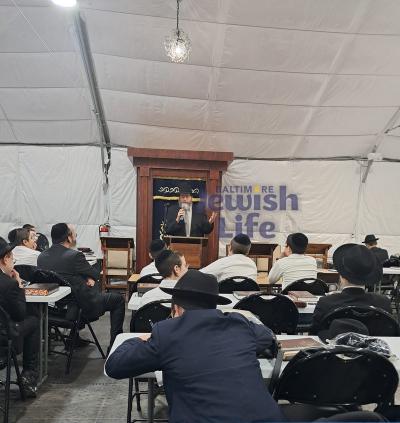
Baltimore, MD – October 16, 2026 - On Erev Shabbos, Torah Institute was privileged to welcome Rav Menachem Feifer, R”M at Yeshivas Darchei Torah and father-in-law of the Cheder’s sixth-grade Rebbi, R’ Shaul Simon.
Rav Feifer delivered inspiring divrei chizzuk to the middle school talmidim, encouraging them to recognize the tremendous power of their Torah learning and maasim tovim.
He emphasized that their efforts help sustain the world and can have a lasting impact for generations to come. His powerful message left the talmidim with a renewed appreciation for the significance of every moment spent learning Torah and performing mitzvos.

Baltimore, MD – October 15, 2026 - BJL wishes a hearty Mazel Tov to Sonny Blashka and Sarala Lefkowitz on their engagement.
Mazel Tov to the parents, Joe & Elizabeth Lefkowitz and Dovid and Raizy Blashka.
!יה”ר שיזכו לבנות בית נאמן בישראל. אמן
Baltimore, MD – October 15, 2026 - BJL regrets to inform the community of the petira of Mrs. Judy (Dina Tova) Banker, a”h, mother of Dr. Jeffrey (Chanan) Banker and Marc Banker.
The levaya will take place today, Thursday, October 15, at 2:00 PM, at Mount Hebron Cemetery in Queens, NY.
Shiva will be observed at the Banker home:
3305 Labyrinth Road
Baltimore, MD 21215
Thursday, October 15
Maariv: 9:30 PM
Friday, October 16
Shacharis: 7:30 AM
Mincha: 1:45 PM
Motzei Shabbos, October 17
Maariv: 7:25 PM
Visiting hours until 9:30 PM
Sunday, October 18 – Tuesday, October 20
Shacharis: 7:30 AM
Mincha/Maariv: 6:05 PM
Wednesday, October 21
Shacharis: 7:30 AM
Shiva concludes following Shacharis.
Visiting hours end at 8:30 PM, except Motzei Shabbos, when visiting hours extend until 9:30 PM.
בלע המות לנצח

Baltimore, MD - October 15, 2026 - STAR-K Certification is relocating to 104 Church Lane, Suite 300, effective Monday, October 26.
The Slade Avenue location will be vacated on Wednesday, October 21.
During our transition, we will be available only by phone or email: 410-484-4110 and [email protected]. Our phone number/kosher hotline and email address are staying the same.
Shatnez checking will not be available the week of October 19, and the public is asked to not drop off any more shatnez at our Slade Avenue location. Shatnez checking will resume at our new Church Lane location the following week, starting on October 26, with pick up resuming on Thursday after 3 p.m. as before.
Any shatnez dropped off at our Slade location should be picked up no later than Tuesday, October 20. We cannot take responsibility for any items that were not picked up.
We thank you for your patience during this brief period of disruption and look forward to continuing to help the Baltimore community meet its kashrus needs for many years to come.
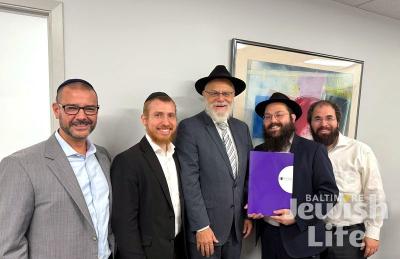
BALTIMORE, Oct. 15, 2026 — Cheder Chabad of Baltimore has closed on the purchase of a new campus at 5800 Smith Avenue and 1701 Regent Road in Mount Washington, a major step for a school that has grown every year and is now at capacity in its Park Heights Avenue building.
Founded in 2007 by Rabbi Elchonon Lisbon, Cheder Chabad of Baltimore is an affiliate of Chabad-Lubavitch of Maryland, under the auspices of Rabbi Shmuel Kaplan. The school began with 12 preschool children and today serves over 430 students in its boys school, girls school and preschool.
Demand for a Cheder Chabad education has grown faster than the school's space can keep up. The new 3.5-acre campus includes a school building with 11 classrooms, a gymnasium, offices and tutoring spaces; a separate gathering hall; and a large estate home, together totaling approximately 45,000 square feet, with 50 on-site parking spaces. It sits just minutes from the current campus and the neighborhoods its families call home.
"Our community is growing, and our Cheder is growing with it," said Rabbi Elchonon Chaikin, CEO of Cheder Chabad of Baltimore. "For years our space simply couldn't keep up with the demand. This campus gives our children room to learn, play and grow b'simcha. We are grateful to Hashem and to every parent and friend who believes in what we're building."
The school plans to operate two campuses, one for boys and one for girls. The new building will be renovated and licensed before students move in, and a timeline will be shared as plans develop. Classes continue as usual this school year.
Cheder Chabad extends its deep thanks to Mark Gheiler of MiCasa Title; Yanky Schorr and Aaron Loeb of Tide Realty Capital; Michael Denise of Cushman & Wakefield; and Yossi Abenson, a dear parent of the Cheder, for their help in bringing this purchase to closing.
To fund the purchase and renovation, the Cheder has launched TAKE THE LEAP, a capital campaign: crowdspark.com/chederchabad/taketheleap. A community open house will be announced soon.
Photo Caption: At the closing, from left: Mark Gheiler, MiCasa Title; Shmuel Wolosow, treasurer and board member, Cheder Chabad; Rabbi Shmuel Kaplan, Regional Director, Chabad-Lubavitch of Maryland; Rabbi Elchonon Chaikin, CEO, Cheder Chabad; Rabbi Yekusiel (Kushi) Schusterman, President of the Board, Cheder Chabad.
Photo Caption: Rabbi Elchonon Chaikin, CEO of Cheder Chabad, with Gary Olschansky of Trout Daniel & Associates, the seller's broker, as he puts on tefillin.
Photo Caption: At the new campus: Rabbi Elchonon Chaikin, CEO, Cheder Chabad; Rabbi Shmuel Kaplan, Regional Director, Chabad-Lubavitch of Maryland; Neal Gerstman, Facilities Director, Cheder Chabad; and Rabbi Elchonon Lisbon, founder, Cheder Chabad.
Photo Caption: The school building on the new Mount Washington campus.
Photo Caption: The school building on the new Mount Washington campus.
Photo Caption: The school building on the new Mount Washington campus.
Photo Caption: Classrooms and hallway inside the school building.
Photo Caption: Classrooms and hallway inside the school building.
Photo Caption: Classrooms and hallway inside the school building.
Photo Caption: The gymnasium.
Photo Caption: The gymnasium.
Photo Caption: The estate home on the campus.
About Cheder Chabad of Baltimore
Founded in 2007, Cheder Chabad of Baltimore is a Chabad-Lubavitch day school serving over 430 students from preschool through eighth grade. It is an affiliate of Chabad-Lubavitch of Maryland. 5713 Park Heights Ave., Baltimore, MD 21215. mycheder.com
Media contact: Rabbi Elchonon Chaikin, [email protected], 410-585-1498
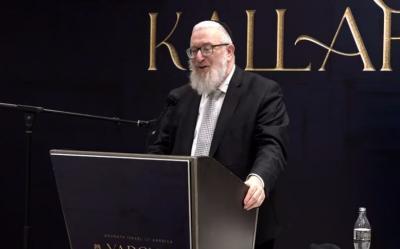

Former U.S. President Barack Obama criticized Israel’s treatment of Palestinians during a conversation in Belfast, Northern Ireland, saying Israel had “took land off people and they were excessive,” according to The Jerusalem Post.
Obama made the remarks Tuesday while visiting Queen’s University Belfast to receive an honorary doctorate. Speaking with journalist Susan McKay, he discussed the Israeli-Palestinian conflict and the hostility toward Israel following the October 7 massacre.
Obama acknowledged the history of persecution faced by the Jewish people and their search for refuge, but argued that Israel’s military strength should not determine how it treats its neighbors. “You have ceded moral ground if that is the position you take,” he said, referring to an approach based on using Israel’s strength without making concessions.
He also said Israelis and Palestinians must recognize that both peoples will remain in the region. Obama urged Israelis to consider how future generations could live securely while acting ethically, and said Palestinians must recognize they cannot defeat Israel through greater violence or weaponry. He pointed instead to nonviolent strategies as a possible path toward change.
This article was independently written by the BJL Newsroom based on reporting from The Jerusalem Post.


Maryland homeowners may soon have more flexibility to build small secondary homes on their properties, creating opportunities for rental income and additional living space for family members. The units, known as accessory dwelling units (ADUs), can include basement apartments, converted garages or separate backyard cottages.
Under the new law, local governments must allow ADUs on properties with existing single-family detached homes, subject to applicable requirements. The changes also limit certain zoning restrictions, including some density limits and setback rules, that could otherwise make these projects more difficult.
For homeowners, the benefits could include renting out a small apartment, providing a separate home for aging parents or adult children, or making better use of their property. ADUs could also add housing options without requiring the construction of entirely new neighborhoods.
The law does not eliminate all restrictions. Homeowners must still meet applicable building and safety codes, obtain permits and comply with relevant local requirements. Construction costs, utility connections and property limitations may also affect whether a project is practical.
Prince George’s County has adopted an ordinance scheduled to take effect November 16, while Montgomery County already allows ADUs under its own zoning and permitting rules. Homeowners should check with their local government before beginning construction.
This article was independently written by the BJL Newsroom based on reporting from WJLA-TV and published information about Maryland’s ADU law.

Baltimore, MD – October 15, 2026 - BJL wishes a hearty Mazel Tov to Shlomo and Etti Pollock on the birth of a baby girl.
Mazel Tov to the grandparents Mr. and Mrs. Eli Pollock and Mr. and Mrs. Moshe Meir Rubin.
Mazel Tov to Great Grandparents Dr. and Mrs. Mordechai Bodenheimer.
!יה"ר שיזכו לגדלה לתורה לחופה ולמעשים טובים. אמן
Baltimore, MD – October 15, 2026 - BJL regrets to inform the community of the petira of Mrs. Helen Silver, a"h, mother of Rabbi Zev Silver and Avi Silver.
Shiva will be at 674 Ogden Avenue, Teaneck, NJ.

The IDF and Shin Bet eliminated two terrorists in a strike in southern Gaza who were involved in smuggling weapons and military equipment into the Strip.
The strike took place Wednesday in the Khan Yunis area, targeting Basel Nabil Abd al-Rahman Kashta and Ahmad Raja al-Shaer. According to the IDF, the two were responsible for procuring and trading weapons and advancing smuggling operations into Gaza.
The military noted that the operation was intended to remove an immediate threat to Israeli civilians and IDF troops operating near the Yellow Line. It added that precautions were taken to reduce the risk to civilians, including the use of precision munitions and aerial surveillance.
The IDF said forces under Southern Command remain deployed in the area in accordance with the agreement and will continue operating against immediate threats.
This article was independently written by the BJL Newsroom based on reporting from Israel National News.
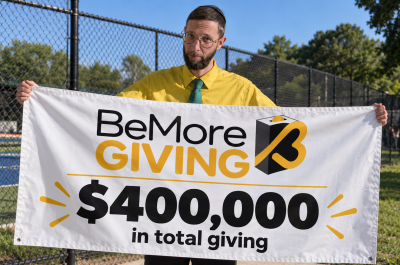
BeMore Giving, a charitable initiative supporting institutions and organizations throughout the Greater Baltimore Jewish community, has reached a significant milestone: $400,000 in total giving.
BeMore Giving has built its model around a simple idea: when individuals make small, consistent contributions to local organizations, those gifts can create a powerful collective impact. The organization encourages community members to give tzedakah on a daily basis, helping both strengthen local institutions and cultivate a lasting habit of generosity.
The $400,000 milestone reflects the combined impact of countless individual gifts. Rather than depending primarily on large, occasional donations, BeMore Giving has created a steady stream of support fueled by everyday acts of giving.
“Our goal is about more than simply raising money,” said Rabbi Elie Meyer, Executive Director of BeMore Giving. “We want to create a culture of giving throughout our community and make tzedakah something that everyone has the opportunity to practice consistently.”
The milestone is a testament to the generosity of the Baltimore Jewish community and to the power of collective action. Each contribution may be modest, but together, those gifts have provided meaningful assistance to organizations serving the community.
For BeMore Giving, reaching $400,000 is both an accomplishment and an opportunity to look ahead.
“We’re proud of what our community has accomplished together,” Meyer said. “And we’re excited to see how much more we can accomplish when even more people make giving a regular part of their lives.”
Now it’s your turn to be part of the next milestone. Learn more about BeMore Giving at bemore.giving and join the community of daily givers through the BeMore Giving Giving Portal.
Give a little. Give consistently. Be More Giving.
$400,000 given—and counting

Unfinished Business
Liora Ben Tzur of Kibbutz Ein HaShlosha gave birth to her third daughter just 30 hours before the events of October 7, 2023. Her mother, , came from her home in Kiryat Arba to the kibbutz to help Liora’s husband with the children. On the morning of Simchat Torah, while Liora was still in the maternity ward, her mother was murdered as she walked along the paths of the kibbutz, carrying candy for the children.
This year, during Sukkot, as her mother’s yahrtzeit approached, Liora remembered that her mother’s bag must still be somewhere in her house. “It was the backpack she carried everywhere,” she recalled. Sure enough, she found it and began rummaging through it.
“I don’t know what I was looking for. Maybe a little letter she had left behind, something we hadn’t discovered yet. I opened a document wallet and found 2,000 shekels inside. Attached to the banknotes with a paper clip was a small note on which Mom had written one word: Tzedakah. And underneath it, her last name: Talia.
“Wow. Two thousand shekels. Three years after Mom was murdered, she suddenly “pops in for a visit” and leaves us all with one more obligation: Give tzedakah.
“My siblings and I divided the money, and each of us chose a different cause. My husband and I decided to use our share to buy candy and little surprises for the grandchildren and the other children of Kibbutz Ein HaShlosha for Simchat Torah. I told the children that it was a holiday gift from Savta Marcelle.
“It was so typical of Mom, leaving us 2,000 shekels with a single-word instruction. She never talked about grand ideals. She never sat us down to explain her worldview. She simply gave. She would save bottles for people in need who collected them, and she wouldn’t hesitate to hand a beggar a 200-shekel bill.
“So I wanted a part of her to return to the place where she had been when she was murdered. To the children she loved so much, to the grandchildren she never managed to reach that morning, and to all the children of the kibbutz.
“On that Simchat Torah morning, Mom had set out to bring treats to the children. And now, in her backpack, we had found a small way to finish what she had started.
“Three years later, on Simchat Torah 5787, some of the residents of Kibbutz Ein HaShlosha had already returned home. And the children of the kibbutz danced with Torah scrolls and enjoyed the candy that Savta Marcelle had wanted to give them.”
A Three-Year-Old Magen David
On Yom Kippur, we were at Kibbutz Gevim, near Sderot. Shlomi Davidovitch, a beloved member of the kibbutz, was murdered on October 7. In his memory, the kibbutz opened its first-ever shul, named in his honor.
After Musaf on Yom Kippur, Gil Schwartzman, another member of the kibbutz, told us an emotional story about one of the bullets fired by terrorists at the kibbutz gate during their unsuccessful attempt to break in. The bullet struck the gate and passed through to the other side, leaving a hole in the shape of a Magen David. The kibbutz members decided not to repair the hole, but instead placed a sign beside it.
.png)
At the end of Yom Kippur, as we were leaving, we stopped the car and got out to see it for ourselves. It was just minutes after a large and deeply moving Ne’ilah service, during which everyone had proclaimed "Shema Yisrael" and sung "Next year in a rebuilt Jerusalem."
Their voices were still echoing in my head as I stood before the kibbutz gate and saw a symbol that seemed to tell the entire story: The enemy had tried to hurt us, to destroy us. But instead, he had created a Magen David. He had strengthened our identity. Through the very damage he inflicted, he had reminded us who we are and what our story is.
May we find the strength, even amid such tremendous pain, to reconnect, grow stronger, and unite.
Finding Your Own Noach’s Ark
This week’s Torah portion is Parashat Noach. Humanity had become corrupt, and Hashem brought a flood to wash away and destroy the evil in the world. Only Noah and his family survived, taking refuge in the ark that Noach had built.
Rabbi Shalom Noach Berezovsky, in his book Netivot Shalom, explains that we, too, have a mission to build our own “Noach’s ark.”
“Even when a raging flood surrounds us and everything seems bleak, there is a Noach’s ark that can save us. When a person feels low and discouraged, the solution is found in the words of this week’s Torah portion: ‘Make yourself an ark.’ In our generation, there are three Noach’s arks: Torah, Shabbat, and unity. These are powerful forces for good that enable us to overcome the evil around us.
“This Torah portion is not relevant only to Noach’s generation. It contains a lesson for all generations to come: No matter what situation we find ourselves in, there is always a place of refuge. Even in the worst circumstances, we can still hold fast to what is good.”
Rabbi Berezovsky identifies three “Noach’s arks” that we can enter to draw strength and find inner peace: Torah study, Shabbat observance, and unity. Other commentators suggest additional “Noach’s arks,” encouraging us to find our own safe haven in a turbulent world. What is yours?
Want to read more by Sivan Rahav Meir? Google The Daily Thought or visit sivanrahavmeir.com


To the Baltimore Community:
We hope this finds you well having had an uplifting Yom Tov season.
As you know, the Trump Administration’s One Big Beautiful Bill (OBBB) Act that passed in July 2025 included the historic and exciting Federal Scholarship Tax Credit (FSTC) Program. To briefly refresh you, the FSTC program has two components to it. First, taxpayers can receive a dollar-for-dollar tax credit off their federal taxes for donations to scholarship-granting organizations (“SGOs”). Second, the SGOs use the money gathered through these donations to provide scholarships for K-12 school children. After the July 2025 passage of the OBBB Act, two items remained before this program could proceed: one, the development of the program’s rules and regulations by the IRS/Treasury Department; and two, the state-by-state “opting in” to the program by e ach state’s governor.
THE REGS HAVE BEEN RELEASED! At long last, during the recent Chol Hamoed Sukkos, the IRS/Treasury Department released the highly anticipated regulations for the program providing all the details as to how it will work when the program begins in January 2027. (One key takeaway from the regs: the $1,700 tax credit is for a single filer - but a married couple filing jointly will receive a $3,400 tax credit.)
SECURING MARYLAND’S OPT-IN – As of this writing, 31 governors/states have opted in to participate in the program (with New York becoming #31 this past Friday).
Maryland is one of the remaining states that has yet to decide if it will be opting in or not. Beginning immediately after the July 2025 signing of the OBBB Act, we and a broad group of similarly-focused colleagues have been heavily engaged in our communication with Governor Wes Moore and his top staff demonstrating why opting in is a “no-brainer” and would bring enormous benefit to all Maryland school children. These efforts have included working with public school officials to impress upon them the incredible benefits this program would offer them as well. As Gov. Moore previously told us that he was waiting to see the “regs” before making his decision, we are now hopeful that his decision to opt in will come shortly, and we are working on various fronts to help secure that outcome.
**As part of these critical efforts, we implore each and every one of you to click here and take one moment to contact Gov. Moore’s office, and urge him to opt in to the program, so that we in Maryland can seize this historic opportunity for students and families.
**Thank you and best regards,
Rabbi Ariel Sadwin
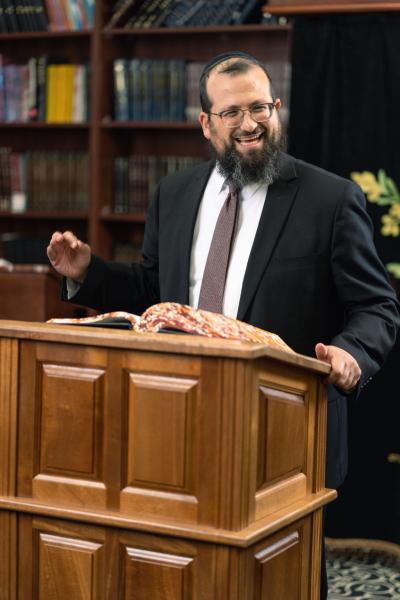

A heartbreaking tragedy unfolded Wednesday in Beitar Illit, where a 10-year-old boy lost his life after a fire in a dumpster near a residential building in Beitar Illit reportedly triggered an explosion, leaving the child with critical injuries and burns.
Emergency responders from ZAKA and Magen David Adom found the boy unconscious, not breathing and without a pulse. Paramedics immediately began life-saving treatment, including chest compressions, artificial ventilation, medication and efforts to stop bleeding. He was rushed to Hadassah-University Medical Center in Jerusalem’s Ein Kerem in critical condition as resuscitation efforts continued, but he was later pronounced dead.
The cause of the incident remains unclear. Initial suspicions are that children lit garbage on fire, possibly causing an aerosol can to explode. Authorities and emergency services are investigating the circumstances surrounding the tragedy.
This article was independently written by the BJL Newsroom based on reporting from The Jerusalem Post.

Baltimore, MD – October 14, 2026 - Excitement is growing across Baltimore’s Jewish community as Miriam’s Library prepares to welcome children to its first after-school classes at its new Pikesville home.
Registration is now open for the inaugural six-week session, beginning Sunday, October 25. Geared primarily toward fourth- and fifth-graders, the program is built around hands-on learning, giving children the chance to explore practical skills, discover new interests and express their creativity.
The first lineup includes 3D Printing & Design, Guitar Fundamentals, Mosaic Art, Screen Printing, Baking & Decorating, and Hairstyling & Braiding. Rather than a conventional homework-focused after-school setting, students will have opportunities to create, experiment and learn directly from instructors working in each specialty.
Girls’ classes will be held on Sundays, while boys’ classes will take place on weekday afternoons. Families with children outside the primary grade range can inquire about eligibility when registering.
To make participation more accessible, Miriam’s Library has established an $18,000 scholarship fund through the generosity of the Ben and Zelda Cohen Foundation. Families who need assistance can submit a scholarship request. Parents can also request transportation from school, with arrangements and costs to be confirmed individually.
The program’s debut follows a Chol Hamoed concert featuring Joey Newcomb at Goucher College, which drew nearly 1,000 people and gave families an early look at the new offerings.
Momentum continued on October 6 when U.S. Congressman Johnny Olszewski, a former special educator and Baltimore County Executive, toured Miriam’s Library at 201 Milford Mill Road. He reviewed the pilot space and future plans alongside Mendel Mintz, former Baltimore County Councilman Mel Mintz, and representatives of the Pikesville Improvement Corporation.
Established in memory of Miriam Mintz (née Fink), a Baltimore special education teacher who devoted herself to helping children learn and succeed, Miriam’s Library is transforming a 14,000-square-foot building into a welcoming center for learning, creativity and inclusion. Its after-school classes are the first step in a larger plan for educational and community programming.
For Baltimore families, the long-awaited vision is becoming something tangible: children will soon be walking through the doors, trying new skills and discovering what they can accomplish.
Registration and additional information are available at www.MiriamsLibrary.com.
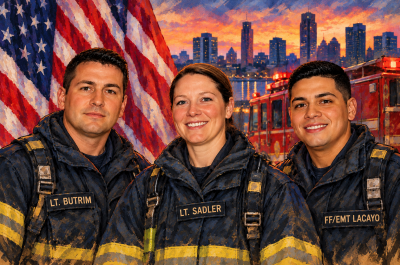
A Baltimore judge has dismissed three second-degree murder charges against James Edwin Barnett, 58, who is accused of setting the January 2022 fire in a vacant South Stricker Street rowhome that killed three Baltimore City firefighters and seriously injured a fourth. Barnett remains on trial on charges related to the blaze, which devastated the Baltimore firefighting community.
The fire broke out early on January 24, 2022, at 205 South Stricker Street in the Mount Clare neighborhood. Firefighters responded after a 911 call reported a fire in the vacant three-story rowhome, along with reports of people trapped inside. As crews entered the burning building, the structure partially collapsed, trapping firefighters beneath the debris. Lt. Paul Butrim, Lt. Kelsey Sadler and EMT/firefighter Kenny Lacayo died from their injuries. EMT/firefighter John McMaster survived but suffered serious injuries.
The case against Barnett relied in part on surveillance footage and forensic analysis. According to court documents, video showed Barnett entering the rear of the building late on January 23, 2022, with several flashes of light visible while he was inside. He left several minutes later, and footage subsequently showed smoke coming from the rear of the rowhome. Investigators used light-source analysis to examine the flashes and concluded they were consistent with sparks and an open flame from a butane cigarette lighter. The Bureau of Alcohol, Tobacco, Firearms and Explosives classified the fire as incendiary, meaning it was intentionally ignited.
Barnett had previously lived in the building and told investigators in 2022 that he had access to it, but he denied setting the fire. He was arrested in November 2025 after a lengthy investigation involving the ATF, Baltimore City Fire Department and Baltimore Police Department.
The judge dismissed the three second-degree murder counts after prosecutors and the defense rested their cases, ruling that the state had not presented sufficient evidence to support a conviction under the legal standard for second-degree depraved-heart murder. The ruling does not end the trial. The jury will still consider charges of second-degree arson, three counts of involuntary manslaughter and five counts of reckless endangerment. Closing arguments were scheduled for Wednesday morning, October 14, 2026.
This article was independently written by the BJL Newsroom based on reporting from FOX45 News, WBAL-TV and the Baltimore City State’s Attorney’s Office.

Baltimore, MD – October 13, 2026 – (BJL) Slade Avenue is closed to traffic at Park Heights Avenue due to a car accident.
Drivers are advised to avoid the intersection and use alternate routes.

President Donald Trump said Monday that the killing of senior Iranian leaders may have complicated efforts to negotiate with Tehran, acknowledging that the United States is uncertain about who is now making decisions within Iran’s leadership.
“We might have gone too far with the leaders because we don’t know who the hell we’re dealing with anymore,” Trump told supporters at a campaign rally in Youngstown, Ohio. He also suggested that potential candidates were reluctant to take over Iran’s leadership, saying, “Nobody wants to be the president of Iran.”
Despite the challenges, Trump maintained that US military operations had severely weakened Iran’s armed forces and reiterated that Tehran would not be allowed to obtain nuclear weapons. He claimed Iran had lost all 159 of its naval vessels, describing them as “resting beautifully in the bottom of the sea.”
The comments come as questions remain about who is directing Iran’s government and military following the strikes against its leadership. Vice President JD Vance has also acknowledged uncertainty surrounding decision-making in Tehran, while stressing that any agreement to end the conflict would need to address Iran’s nuclear enrichment program.
This article was independently written by the BJL Newsroom based on reporting from The Jerusalem Post.
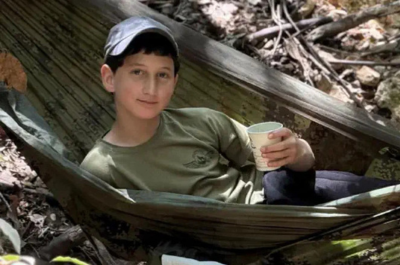
Elazar Yair Wilensky, a 14-year-old ninth-grade student at ORT Ma’alot Yeshiva High School and the youngest of five siblings, was identified as the student killed Monday when unexploded Hezbollah ordnance detonated during the school’s annual hiking trip in the Ramim Ridge area of the Upper Galilee, near Israel’s border with Lebanon. He leaves behind his parents, three sisters and a brother. The explosion also injured 24 others. Preliminary findings indicated that a student had picked up unexploded Hezbollah ordnance and placed it in a bag before it detonated. The circumstances remain under investigation.
His family remembered him as “a boy who loved life. Smart and intelligent, full of joy, a good and beloved friend, whose entire future was still ahead of him.”
The Ma’alot-Tarshiha Municipality expressed condolences to the Wilensky family and said welfare teams and educational psychological services were providing support to those affected by the tragedy.
Meanwhile, 15-year-old Yair Frankenthal, a classmate who was also injured in the blast, rushed to help others despite suffering shrapnel wounds himself. Frankenthal, a youth volunteer with Magen David Adom (MDA), relied on his first-aid training to assist the wounded.
“After hearing the huge explosion, I realized that I had been injured too, but I immediately began checking who needed medical assistance so I could help using the knowledge I had gained in my first aid course,” Frankenthal recounted.
When Frankenthal reached a seriously injured classmate who was not breathing and had no pulse, he immediately began CPR, continuing until an emergency responder arrived. He also checked on his younger brother, who had been wounded by shrapnel, and helped another friend stop the bleeding before returning to assist other injured students. Despite suffering shrapnel wounds to his own leg and shoulder, Frankenthal continued helping others at the scene. He was later treated at the hospital and was expected to be released Tuesday.
David Radko, a 29-year-old Magen David Adom EMT and volunteer motorcycle responder, was the first emergency responder to reach the difficult-to-access scene. He found students already trying to help their injured friends, with some applying tourniquets to stop bleeding before medical teams could arrive. Radko began treating the wounded and directing the students in how to assist. “Despite the horrific scenes and the distress, the teenagers cooperated with me in an extraordinary way. Everyone tried to help their friends as much as they could,” he said.
This article was independently written by the BJL Newsroom based on reporting from The Jerusalem Post and Israel National News.

[.jpg)](https://baltimorejewishlife.com/pdfs/weekly-specials (1).pdf)
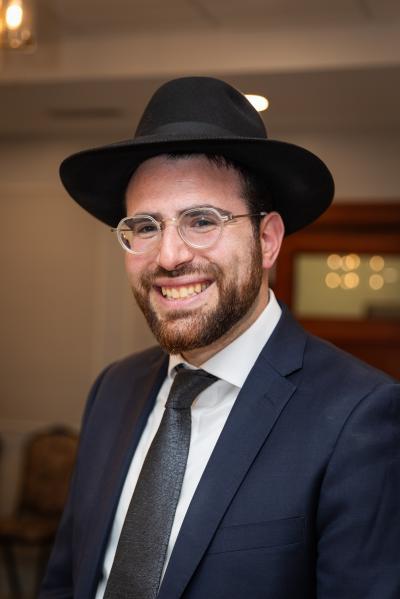
Baltimore, MD – October 13, 2026 - BJL regrets to inform the community of the petira of Mrs. Debra Hirsch a"h, mother of Rabbi Moshe Hirsch.
Rabbi Hirsch is sitting shiva at 110 Girton Blvd. Winnepeg, MB, R3P-0A5, Canada through Wednesday. He can be reached at (204) 793-2776 while in Canada.
Rabbi Hirsch will return to Baltimore and sit Shiva at 411 Yeshiva Lane on Thursday.
Rabbi Hirsch will end shiva on Friday at 409 Yeshiva Lane, Apt 1D.
Minyanim
Shacharis: 7:15am
Mincha: 2:30pm
Mincha (Friday): 1:22pm
Maariv: 8:45pm
בלע המות לנצח
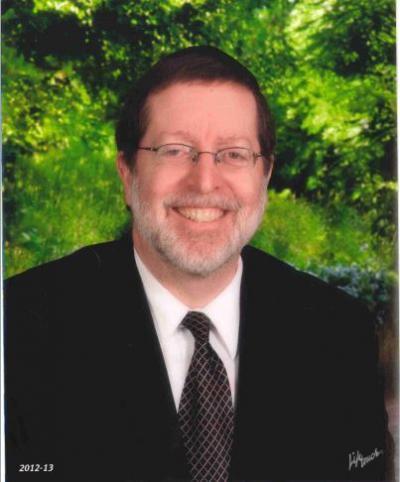

One person was killed and 24 others were wounded Monday when an unexploded Hezbollah cluster munition detonated near the Lebanon border in northern Israel. The explosion occurred between Kibbutz Manara and Kibbutz Yiftah and was declared a mass-casualty event by the IDF. Several of the wounded were seriously injured.
Students and staff from ORT Ma’alot Yeshiva High School were among those hurt while on an annual field trip in the area. According to a preliminary investigation by Israel’s Fire and Rescue Authority, one student appears to have placed an explosive device in his bag, which later detonated. The circumstances surrounding how the device was found and handled remain under investigation.
Rescue teams, police officers, bomb disposal experts, Magen David Adom paramedics, and military and Hatzalah helicopters responded to the scene. The wounded were taken to hospitals across northern Israel. Rambam Health Care Campus treated four victims, including three teenagers, while Ziv Medical Center treated 13 and Galilee Medical Center treated six, including one person with serious injuries.
Israel Police Commissioner Daniel Levi visited the scene and said the field trip had received approval from the relevant authorities, to the best of his knowledge. He said he was considering scaling back future field trips to the area while officials reassess the risks to students. Ma’alot Mayor Moti Ben-David said an operations center staffed by social workers and psychologists had been established to support the students, and a bus was sent to pick up those who were not injured.
The incident has renewed warnings about the dangers posed by unexploded munitions left behind during fighting. Orly Silvinger, CEO of child safety organization Beterem, urged parents to explain to children that suspicious objects must never be approached, touched or moved. Anyone who encounters a suspicious object should move away, notify an adult and report it to police by calling 100.
This article was independently written by the BJL Newsroom based on reporting from The Jerusalem Post and additional published reports.

Baltimore, MD – October 12, 2026 - BJL wishes a hearty Mazel Tov to Moshe Lichtman & Allison Gandlin on their engagement.
!יה"ר שיזכו לבנות בית נאמן בישראל. אמן

I guess our tefillah of משיב הרוח ומוריד הגשם worked! The remnants of Hurricane Isaias brought several inches of rain to Maryland over the weekend, giving Baltimore and surrounding communities a good soaking. While the rain was welcome, other parts of the country faced far more dangerous conditions, including flooding, damaging winds, widespread power outages and storm-related deaths.
Rainfall totals across Maryland ranged from 2.34 inches in Park Heights to 5.23 inches in Cape St. Claire, according to reports from the National Weather Service’s Baltimore/Washington office through 7 a.m. Monday. Maryland received plenty of rain, but the storm’s impact was much more severe farther south.
Isaias made landfall near Destin, Florida, as a Category 2 hurricane, bringing strong winds, heavy rain and dangerous storm surge. Florida experienced significant wind damage and power outages, while flooding in North Carolina prompted water rescues. As of Monday, at least four deaths had been reported in connection with the storm, according to The Associated Press.
Meanwhile, at ZooWorld in Panama City, Florida, zookeepers took an unusual approach to keeping their animals safe, moving 30 flamingos into a bathroom to shelter them from the hurricane’s winds. Staff secured the doors, and all the flamingos made it through the storm safely.
Maryland may have gotten the rain without the worst of the destruction, but the flamingos offered their own lesson in storm preparedness: when a hurricane is coming, sometimes the safest place really is the bathroom.
This article was independently written by the BJL Newsroom based on reporting from WBAL-TV and The Associated Press.

Baltimore City will activate five new speed cameras near schools beginning on or about October 26, as the city expands automated enforcement to curb speeding and improve safety for students and pedestrians.
The cameras will monitor the following locations:
Loch Raven Boulevard: 5700-6000 blocks, near Cardinal Shehan School and Yorkwood Elementary School
Moravia Road: 4600-5300 blocks, near Furley Elementary School
West Baltimore Street: 2800-2900 blocks, near The SEED School of Maryland
McClean Boulevard: 6200-6400 blocks, near Reginald F. Lewis High School
East Northern Parkway: 2300-2500 blocks, near Baltimore Revolutionary Academy
The cameras are designed to catch vehicles traveling at least 12 miles per hour over the posted speed limit in signed school zones. Baltimore’s school-zone speed cameras operate year-round, Monday through Friday, from 6 a.m. to 8 p.m., so drivers should remain alert even when school is not in session.
Fines are based on how far a vehicle travels above the posted speed limit. A camera violation begins at 12 mph over the limit, with penalties increasing as the speed increases:
12-15 mph over the limit: $40
16-19 mph over the limit: $70
20-29 mph over the limit: $120
30-39 mph over the limit: $230
40 mph or more over the limit: $425
No points are added to a driver’s license for these camera violations.
City officials are urging motorists to obey posted speed limits and use extra caution when driving through school zones to help protect students and pedestrians.
This article was independently written by the BJL Newsroom based on reporting from FOX45 News.

Baltimore, MD – October 12, 2026 - BJL wishes a hearty Mazel Tov to David Kreis & Adena Jurkowitz (both Baltimore) their engagement.
!יה”ר שיזכו לבנות בית נאמן בישראל. אמן
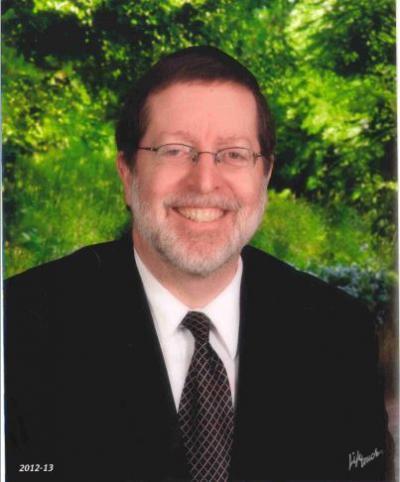

Baltimore, MD – October 12, 2026 - BJL wishes a hearty Mazel Tov to Zechariah & Dena Grauer and their family on the birth of a baby boy.
!יה"ר שיזכו לגדלו לתורה לחופה ולמעשים טובים. אמן

Baltimore, MD – October 12, 2026 – BJL wishes a hearty Mazel Tov to Avi Gruen & Rivka Horowitz on their engagement.
Mazel Tov to the parents Shmuel & Ruth Horowitz and Anshie & Michal Gruen.
!יה”ר שיזכו לבנות בית נאמן בישראל. אמן

A FedEx driver named Troi Smith in Lakewood, New Jersey, has drawn attention for playing and singing along to Chasidic music during his delivery route, bringing smiles to locals. The non-Jewish driver developed an appreciation for songs by Hasidic artists, including Hershy Weinberger.
“The music is so positive. How can you not like it?” the driver said.
A video of the driver playing the music spread online and caught Weinberger’s attention. The singer reportedly began looking for the driver, hoping to meet him and sing together.
This article was independently written by the BJL Newsroom based on reporting from 5 Towns Central.

Baltimore, MD – October 11, 2026 – BJL wishes a hearty Mazel Tov to Yitzchok Itzkowitz (New York) & Atara Reich on their engagement.
Mazel Tov to the parents Reueven & Estie Reich.
!יה”ר שיזכו לבנות בית נאמן בישראל. אמן
Baltimore, MD – October 10, 2026 - BJL regrets to inform the community of the petira of Mrs. Freyda Stein, a”h, wife of Rabbi Zalman Stein and mother of Rabbi Yochanan Stein.
The levaya will take place tonight, Motzei Shabbos, at 10:00 PM, in the Bnos Yisroel parking lot.
Kevura will take place in Eretz Yisrael.
Shiva information to follow.
בלע המות לנצח

Baltimore, MD – October 10, 2026 - BJL wishes a hearty Mazel Tov to Asher and Aliza Bortz on the birth of a baby boy.
Mazel Tov to the grandparents, Izzy & Chaya Hyatt and Dovid & Chaya-Chaina Bortz.
!יה"ר שיזכו לגדלו לתורה לחופה ולמעשים טובים. אמן


Baltimore, MD – October 9, 2026 - BJL wishes a hearty Mazel Tov to Rabbi Shaul Elchonon and Shoshana Sofer and their family on the birth of a baby boy.
!יה"ר שיזכו לגדלו לתורה לחופה ולמעשים טובים. אמן

Baltimore, MD – October 9, 2026 – BJL wishes a hearty Mazel Tov to Naftali Hollander (New York) & Chaya Pessi Zuckerman on their engagement.
Mazel Tov to the parents Ben & Sara Shayndle Zuckerman.
!יה”ר שיזכו לבנות בית נאמן בישראל. אמן
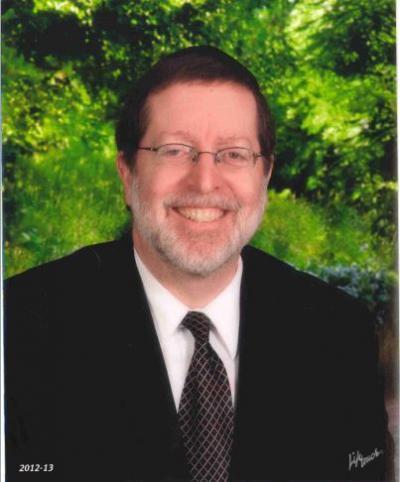
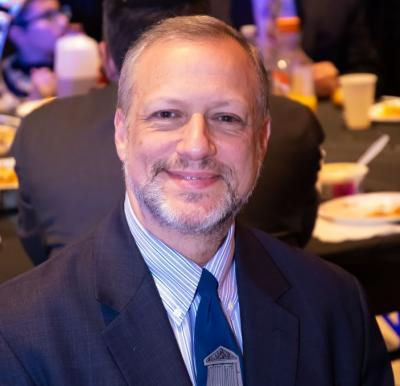
Occasionally, when learning Torah, we come face to face with historical facts which may be at odds with the scientific perception or agenda of the day. Parshas Bereishis contains perhaps a thousand of those possibilities, in the first Aliya alone. Today, where evolution and the Big Bang are no longer advanced as theories, but rather taught as scientific facts, we must be very deliberate in how we explain these apparent inconsistencies to our children.
Several very dedicated and talented Mechanchim that my children have had, have dealt with this issue with different approaches and styles. One approach has simply been to say “science is wrong”. Indeed, history is full of many examples of scientific impossibilities becoming reality. Whether it was the impossibility of flight, breaking the sound barrier, running a four minute mile or breaking molecules down below the atomic level, the one thing we can be absolutely certain of is that scientific understanding is truly the only thing constantly evolving and changing.
Others have tried to offer superficially appealing explanations to apparent contradictions. Fossils which are carbon dated to be millions of years old are said to have been skewed due to the Mabul (Great Flood) in Noach’s time. Some scholars have even written great scientific works expounding on the expansion of the universe and how the billions of years that science estimates the world to be is actually very close to Five Thousand Seven Hundred years when one accounts for the different rate at which time passes with the continuous expansion of the galaxy.
Nevertheless I believe these approaches, while working for many people, may not be the best way of dealing with these apparent conflicts, particularly when the questions are being posed by children. The age of the world may seem to cry out for reconciliation but do we really have to touch our elbow to our nose to reconcile secular science with our Torah? We have no way of knowing how long the first six “days” of creation were. Who was there to keep track? Moreover, before the fourth day, there was not a sun or a moon, so how precisely was the passage of a day measured? In fact the first day is singled out as day “one”, as opposed to the “first” day like all days which followed, strongly implying the different reality of day one to all subsequent days of creation. Similarly, Adam seems to have been created as an adult as were the animals and trees. So to, the world could easily have been created as an “adult” world along with a history and fossils. Were the first mammals created with umbilical cords? I don’t know but it is certainly plausible.
Clearly there is an appeal to encouraging pure Emunah (faith) at the earliest of ages. But we must be very careful that we don’t force intelligent children to question their faith at those same tender years. Science can be very persuasive, particularly when it is banged into us at every turn. Obviously, we must reinforce the concept that some things being advanced as scientific “facts” are only theories. Allowing our children to deal with these perceived contradictions in a palatable way can only pay dividends as their Torah and secular knowledge increase. They then can develop their own sense of comfort with what science is pontificating as the particular flavor of the decade, while remaining firm in their Emunah.
Dovid Fink

The Pikesville Precinct has recently experienced multiple overnight thefts of airbags from residents' vehicles. Airbags are targeted by thieves due to their high resale value, but taking a few simple precautions can help protect your vehicle from costly damage and keep you safe. Here are quick steps you can take to prevent airbag theft:
⚠️ Use a Steering Wheel Lock: A standard bar or club-style lock across your steering wheel blocks physical access to the airbag and serves as a strong visual deterrent.
⚠️ Park Smart: Whenever possible, park in a locked garage, a well-lit area, or a spot with high foot traffic or visible security cameras.
⚠️ Lock Up & Remove Valuables: Always lock your doors and roll up windows completely. Keep personal items out of sight so you don't attract unwanted attention.
If you observe suspicious activity around vehicles in your neighborhood overnight, please call 911.
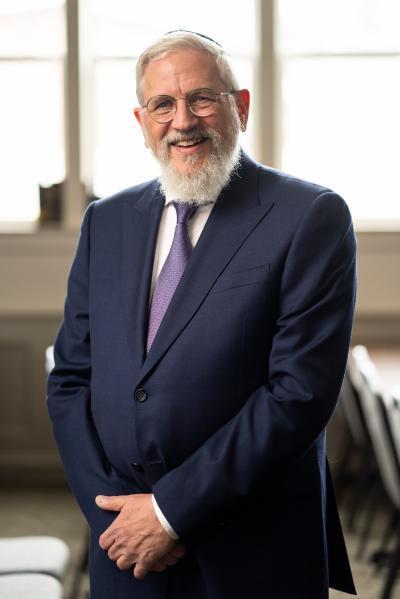
After partaking from the forbidden fruit Adam and Chava subsequently hear G-d's voice moving about in the garden, go and hide among the trees in the garden.
ויקרא — G-d called out to them אַיֶַכָּה — "Where are you?"
Adam responds that he hid out of fear since he was 'naked'.
G-d asks מי הגיד — "Who told you that you are naked? Have you eaten from the tree I have commanded you not to eat?"
Adam tells how Chava gave him to eat, after which G-d turns to Chava inquiring how she came to do this and she in turn reveals that the serpent seduced her to eat it.
G-d probing as to where they were is most often understood as a rhetorical question — since He certainly knew where they were, leading into the interrogation that will eventually result into a distribution of punishment to the various parties for their participation in the sin.
The Midrash corresponds this summons of אַיֶַכָּה — Where are you? — to another expression found in Megillas Eichah, where the prophet Yirmiyahu bemoans the distressed state of exile the Jewish nation suffered, expressing אֵיכָה — How, ישבה בדד — sits in isolation a city that was full of people!
Just as I sentenced Adam to expulsion, as it is stated: “He expelled the Adam”, and I lamented over him: ‘How could it be as it is stated: “The Lord G-d called to the man, and said to him: אַיֶַכָּה — Where are you?”, so it was with His descendants: I brought them into the Land of Israel, I commanded them and they violated the command, I sentenced them to banishment and expulsion, and I lamented over them: אֵיכָה — How, ישבה בדד — sits in isolation a city that was full of people.
Although the letters are the same the vowelization is different, one meaning 'where' while the other 'how'.
The commonality appears to be in G-d's bewilderment, "How could you have brought yourselves to hide from me or be driven out of the land?"
The late beloved Mashgiach of Chevron, Rav Meir Chodosh, offers a novel approach in interpreting these expressions.
Perhaps, he suggests, G-d in calling out 'Where are you' is a loving expression of 'I am seeking you, please do not fall into a depressed state of failure, there is hope. I am here to embrace you!'
In the beginning of the Book of Vayikra the first words ויקרא — And He called to Moshe; we are taught indicates a language of חבה — endearment.
It's been observed that the first letters of the lament — איכה-ישבה-בדד, equal thirteen, the gematria of אהבה — love.
When G-d speaks to Adam asking of his whereabouts the Torah uses the word ויאמר rather than וידבר to introduce the inquiry, as the former indicates רחמים — warmth, and the latter דין — harsh judgment.
When Adam apologizes for his reticence to face G-d by hiding his 'nakedness' out of shame and guilt, G-d responds מי הגיד — who told you, using the verb הגיד which is associated with the word גיד — a tough tendon, intimating to Adam, 'whoever introduced to you that rough attitude that you must hide from me'.
'I am here for you and will never reject you! There is never a need to hide.'
The consequences of their sin were never intended as a mere punishment, but rather as a path to rediscover G-d and His unconditional love for us even in the most seemingly harsh and implausible situations.
In man's pursuit of sustaining life, man will have to sweat the hard stuff but ultimately find G-d always by his side if he truly seeks Him.
In the challenges of raising families with all its travails, women will endure pain, loss, and stress but will come to fathom how G-d is the force of their strength.
Navigating relationships will be tough but if we emulate G-d's attributes we will peer into G-d's eyes when we view one another through the lens of Torah's prescription for character development.
It was the catalyst for sin, the serpent, that G-d expels forever, providing him with an eternal supply of food, עפר — dust, denying him the privilege to seek and find G-d in his endeavors — the ultimate curse.
The world became disjointed with sin of Adam. With G-d now camouflaged in nature and invisible in His orchestration of life's circumstances it is incumbent on us to scream out to the world "G-d is One" — the unifying force within all events without exception.
The G-d of י-ה-ו-ה — compassion is also the G-d of אל-הינו — judgment.
Accepting the Divine presence and His abiding love in all circumstances exemplifies the notion of אַיֶַכָּה — G-d is seeking us out to embrace us.
The Holy Chida writes that the need to express Shma Yisrael and its message of G-d's compassion is embedded from the moment of creation.
The letter value of these two words, בראשית ברא equal 1116, adding two for the number of letters, 1118, is the gematria of the entire phrase, Shma Yisroel Hashem Elokeinu Hashem Echad.
The Talmud says whoever lingers over the word 'Echad' in Krias Shma has his days and years lengthened.
The late great Maggid, Rav Yankel Galinsky quoted this passage at a celebration of his 70th birthday, after reminiscing the difficult challenges he endured over his lifetime, with the following remarks.
The Vilna Gaon explains that the first and deepest problem a person faces in life when life becomes hard — when the gezeiros come, when everything is taken away, when there seems to be no way forward — is the feeling that 'm'hut im ibergeluszt af hefker', that he has been abandoned. That no one is watching and no one is arranging and no one cares. That the Eibershter of the good years has nothing to do with the Eibershter of these terrible ones. That Hashem and Elokim, the middos of rachamim and din, are somehow two different forces, and that you have fallen out of the hands of one and into the hands of the other.
Echad. He is One. The same Being everywhere, at every moment, in every country, under every regime, in every circumstance without exception. The Hashem of the beautiful years and the Elokim of the terrible of the terrible ones are one and the same, operating with one and the same intention, moving toward one and the same purpose.
Hashem Hu HaElokim. Internalizing that, not merely knowing it as an intellectual proposition but feeling it as a lived and breathing reality, the way you feel it when you are sitting in a Siberian labor camp or a Soviet courtroom facing a death sentence or isolated in a detention cell is what gives a person the strength to keep going when there is no earthly reason to keep going. That recognition itself, says the Gaon, is the source of long life. Maarichin lo yamim v'shanav.
He ended by saying, " I know this not as a vort. I know it as the story of my life."
May we each work towards righting the world back to its original axis by living this reality and lingering over the notion of Hashem lovingly seeking us out in all circumstances!
באהבה,
צבי יהודה טייכמאן

Baltimore, MD – October 8, 2026 - BJL wishes a hearty Mazel Tov to Meir & Sara Strobel and their family on the birth of a baby boy.
!יה"ר שיזכו לגדלו לתורה לחופה ולמעשים טובים. אמן
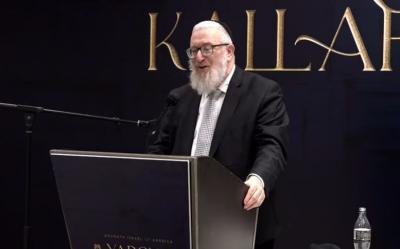

Scroll for Pictures and video**
Baltimore, MD – October 7, 2026 -** Nearly 1,000 people packed Goucher College’s Kraushaar Auditorium on Chol Hamoed for a Miriam’s Library concert featuring Joey Newcomb, as the organization announced the launch of a new hands-on after-school program and an $18,000 scholarship fund for participating families.
The concert featured Newcomb together with Baltimore’s 8th Note Band, led by Menachem Manevich, and marked the public rollout of the first programming at Miriam’s Library’s new Pikesville home.
The new six-week program, beginning October 25, is geared toward fourth- and fifth-graders and takes a different approach from the traditional after-school model. Rather than centering on homework help or classroom-style enrichment, the program is built around practical, creative, and skill-based activities designed to give children opportunities to discover interests they may not encounter during the regular school day.
The first slate of classes includes 3D printing and design, guitar fundamentals, mosaic art, screen printing, baking and decorating, and hairstyling and braiding. Girls’ classes will be held on Sundays, while boys’ classes will take place on weekday afternoons.
The launch represents what organizers hope will become a broader model of hands-on after-school programming for Baltimore’s Jewish community, with children learning directly from instructors in areas ranging from technology and music to art and practical skills.
A video shown during the evening introduced several of the instructors who will lead the first classes and gave families a preview of what the new program will offer.
During the concert, Miriam’s Library also announced the creation of an $18,000 scholarship fund, made possible by the Ben and Zelda Cohen Foundation, to help ensure that cost does not prevent families from participating in the new programming.
Transportation from school will also be available, and financial assistance is being offered to families who need it.
Democratic nominee for Baltimore County Council District 4 Karson Kamenetz also addressed the crowd, offering greetings and recognizing the launch of Miriam’s Library’s new programming.
Miriam’s Library was established in memory of Miriam Mintz following her passing in August 2024. The organization later acquired an approximately 14,000-square-foot building at 201 Milford Mill Road in Pikesville for roughly $2.3 million, following a community fundraising campaign supported by more than 4,000 donors.
Renovations have been underway at the property, but rather than waiting for the entire building project to be completed, Miriam’s Library is beginning programming in phases. The new after-school initiative will be among the first regular programs to operate from the center.
Additional classes and activities are expected to be added as the program develops and more of the building comes online.
Registration for the first six-week session is now open. More information and registration are available at MiriamsLibrary.com.
Miriam’s Library Concert Video Recap by Yosef Weil