
Israeli news site with a religious-Zionist perspective covering Israel and the Jewish world.
Israeli news site with a religious-Zionist perspective covering Israel and the Jewish world.
 Israel National News14 minutes ago
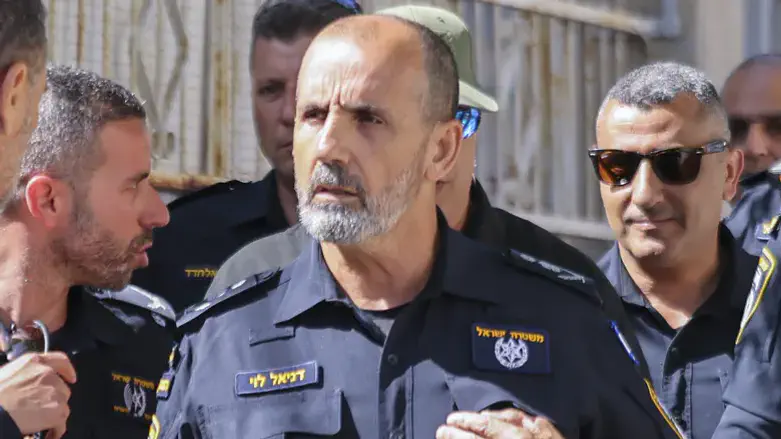
Police Commissioner Danny LevyYossi Aloni/Flash90
Israel Police Commissioner Danny Levy published a statement to the citizens of Israel on Sunday ahead of the elections after meeting with Prime Minister Benjamin Netanyahu and warned against attempts to harm election integrity and interfere with the democratic process.
The commissioner announced that the police completed prolonged and comprehensive preparations for election day, including the deployment of forces to polling stations, on roads, and in the streets, along with counterterrorism efforts alongside the Shin Bet.
Additionally, the police are preparing to maintain public order following the publication of the results and in the following days.
"I turn to all Israeli citizens with a clear message: exercising your democratic right to vote is our mission. On election day, the Israel Police will be deployed at polling stations, on roads, and in the streets to protect Israel's democracy, and to protect public order and security," Levy stated.
The Commissioner stressed that preparations have been ongoing for months: "For months, we prepared for this national mission, and we will use our full force to ensure free, safe, and fair elections."
He warned those attempting to interfere with the elections: "Whoever tries to hurt election integrity, threaten voters, or disrupt the democratic process, during or after, will find themselves facing a strong, determined, stately, and unbending police force."
Levy clarified that the police will act against violence and threats from any side: "We will not allow violence, threats, incitement, or criminality to harm the will of the voter. I declared in recent months that we will not allow thuggery on any side to harm the democratic process, and that is what we'll do."
He added: "Protecting Israel's democracy is our mission. We will accomplish it without discrimination or compromise."
The Commissioner concluded by calling on civilians to adhere to the police: "Citizens of Israel, feel safe to exercise your democratic right. We will be there to ensure that your right is upheld. I call on the entire public to follow the police officers' directives and to maintain law and order.
 Israel National News42 minutes ago
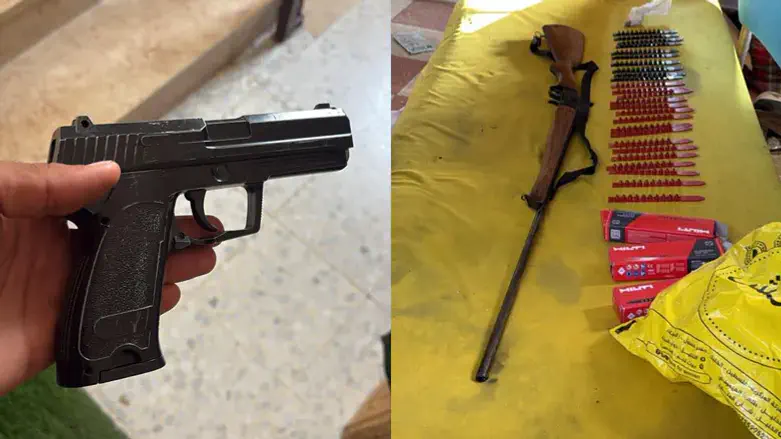
The weapons found in Hebron raidsIDF Spokesperson
Security forces have searched over 500 locations in Hebron in the ongoing counterterrorism operation that was launched following Friday's deadly shooting attack in the area. However, the amount of weaponry located is raising questions.
Galei Tzahal's military correspondent Doron Kadosh wondered on Sunday how such an extensive operation in a city known for its weaponry has turned up so few weapons.
"The city of Hebron is full of endless amounts of weaponry. If over 500 houses were searched already, and they only found a hunting rifle and a pistol, something here is odd," Kadosh wrote.
The criticism comes after the IDF reported on its ongoing operation in the ancient city, which was launched after Staff Sergeant Ron Yonatan Roytman and Sergeant Yuval Shai Svilem were killed and three additional soldiers were lightly injured in a shooting attack in the area.
According to a statement by the IDF, since the operation began, forces searched more than 500 locations and arrested approximately 50 suspects. Overnight, forces from the Paratroopers Brigade and Maglan Unit arrested 12 additional suspects, seized illegal vehicles, and located weapons. The IDF Spokesperson's Unit included photographs of the weapons: a hunting rifle and a pistol.
At the same time, IDF forces under the command of the Judea Regional Brigade sealed the homes of the two terrorists who carried out the attack and were eliminated in an exchange of fire with security forces.
The homes were sealed overnight after the commander of the IDF Central Command signed seizure and temporary sealing orders. Defense officials intend to proceed with the process of demolishing the homes.
 Israel National News59 minutes ago
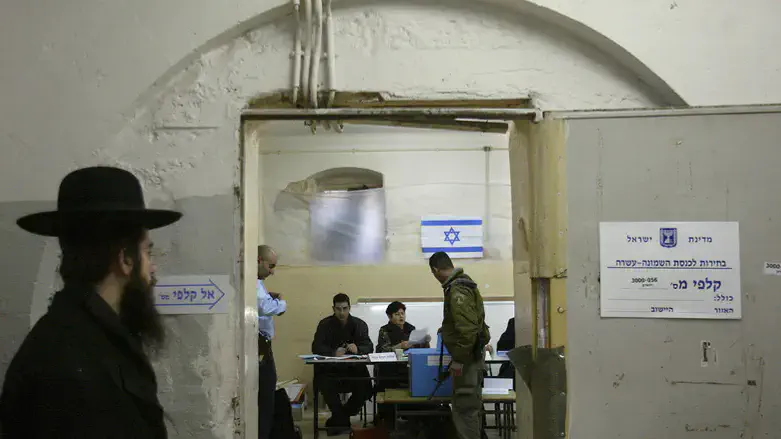
Police at voting stationFlash 90
On Tuesday, Israelis will vote for the 26th Knesset.
Israel uses the proportional representation system. This means that Israeli voters vote not for an individual representative to Parliament (as with the constituency system in Britain, Canada, and Hungary, for example) but for a political party. A party which receives, say, 15% of the popular vote country-wide receives 15% of seats in the Knesset; a party which receives 40% of the popular vote country-wide receives 40% of seats in the Knesset.
Therefore votes are not regional but sectoral: the entire country constitutes one single electoral unit.
One consequence of this is the plethora of parties which contest every election, and the multitude of parties which invariably end up in the Knesset.
For the first 40 years of the state, the electoral threshold was 1% of the overall vote. In 1988 the threshold was raised to 1.5%, then to 2% in 2003, and finally to 3.25% in 2014, which is today’s threshold.
Since no party in Israeli history has ever received more than 50% of the popular vote, and since the ruling coalition has to number more than half of the Knesset’s 120 seats (i.e. 61 seats or more), every government in Israeli history has been a coalition.
The Basic Law: The Knesset ordains that the final election results must be announced a maximum of nine days after the elections, after which the seats are apportioned among the parties.
Following this, each member of the new Knesset will be invited to meet with President Yitzchak Herzog to recommend his or her choice for Prime Minister.
Within seven days of the elections results being announced, the president will charge one Member of Knesset with the task of forming a government.
This MK then has up to 28 days to put together a coalition, which must comprise more than half the Knesset, meaning 61 or more seats.
If he fails within that time, the president can then grant him up to 14 days extension to complete the task.
If he fails after that extra time, the president then invites another MK (in practice invariably the leader of the other bloc) to form a coalition, who then has 28 days, with no extensions.
If he fails, then an absolute majority of MK’s (61 or more) has the option of deciding on the Prime Minister. This has never happened before, and isn’t likely to happen now or any time in the foreseeable future.
If after this time (approximately 80 days after the elections) there is still no government, then the country goes to new elections 90 days after the deadline expires, which means slightly less than half-a-year after the previous elections.
This is what happened for the first time in history in April 2019, again in September 2019, and again in March 2020.
And now, some brief facts and statistics on Israeli electoral history:
The Knesset (Hebrew: “Gathering" or “Assembly") has 120 seats, modelled after the Knesset ha-Gedolah (“the Great Gathering" or “Great Assembly"), the constituent body which governed Israel from the end of the Biblical period, approximately 515 B.C.E., until the Greek invasion in 333 B.C.E., which was composed of Prophets (in its early years), Talmudic sages, scholars, scribes, and other leaders.
Israeli law grants a government a mandate for 4 years; a government can call an early election any time within that 4-year period.
First elections ever: 25th January 1949, 8 months after independence from the British Empire, while the War of Independence was still raging.
The First Knesset included 117 Jews and 3 Arabs, 108 men and 12 women.
The current (25th) Knesset includes 13 Arabs (including Druzes) and 31 women. There are two Arab women - Iman Khatib-Yassin (Ra’am) and Aida Touma-Souleiman (Hadash).
The first Government of Israel was sworn in on 8th March 1949, six weeks after the elections. The first ruling coalition consisted of 5 parties: Mapai (46 seats), the United Religious Front (16 seats), the Progressive Party (5 seats), the Sefaradim and Eastern Communities (4 seats), and the [Arab] Democratic List of Nazareth (2 seats).
Highest voter turnout ever: 1949 elections (86.9%)
Lowest voter turnout ever: 2006 elections (63.5%)
Number of eligible voters in 1949: 506,567.
Number of eligible voters today: 7,331,981.
Number of votes needed for each seat in 1949: 3,592.
Number of votes needed for each seat today: estimated at approximately 40,000 (depending on how many people vote, how many of those votes are valid, how many go to parties which fail to cross the threshold, etc.).
Biggest party ever in the Knesset: Ma’arach (Labour Alignment), 1969-1974, with 56 seats (46.2% of the popular vote).
Longest gap between elections: 11th Knesset, 23rd July 1984-1st November 1988.
Shorter by just 1 day was the 3rd Knesset, 26th July 1955-3rd November 1959.
Number of parties contesting the elections in 1949: 22, of which 12 won seats in the Knesset.
Highest number of parties ever contesting an election: 40 in the April 2019 elections, of which 11 won seats in the Knesset.
Number of parties contesting the elections this week: 38.
The most well known parties and what is written on their ballot:
מחל Likud, headed by Binyamin Netanyahu
ט Zionut Datit, headed by Bezalel Smotrich, and Zehut, headed by Moshe Feiglin
ג Yahadut HaTorah v’ha’Shabbat (United Torah Judaism) - Agudat Yisrael and Degel HaTorah
זך HaTzibbur HaHaredi, headed by Moti Leitner
שס Shas, Hit’ahdut haSefaradim Shomrei Torah, headed by Arye Deri
אמת HaDemocratim, headed by Yair Golan
ב Otzma Yehudit, headed by Itamar Ben Gvir
ל Yisrael Beyteinu, headed by Avigdor Liberman
די The Reservists and the New Economic Party list, headed by Yoaz Hendel and Yaron Zelekha
ך Amcha Yisrael, headed by Ofer Winter
דרך Yashar! headed by Gadi Eizenkot
רק Be’Yahad, headed by Naftali Bennett
ני Noam L’Yisrael, headed by Avi Maoz
 Israel National News1 hour ago
His Life Depends on Treatmenצילום: באדיבות המשפחה
When one of our babies needs help, we all show up.
That's what our community does. We take care of each other, especially the littlest ones.
Right now, a 3-month-old baby named Baruch is in the hospital fighting a serious kidney condition. His treatments aren't fully covered, and no family should have to carry that alone.
So let's carry it together. Every gift, big or small, helps a family focus on what matters most: getting their baby healthy and home.
I look at my tiny baby sleeping peacefully in the ICU.
But my heart knows the truth this is only the beginning of our battle.
A battle for his life and for my strength to keep going.
My name is Miriam.
He is only two months old.
He should be sleeping peacefully in my arms.
He should be growing, smiling, and filling our home with joy.
He should be wrapped in blankets, not surrounded by doctors, tests, medicine, and pain.
His tiny kidneys are not working the way they should.
The doctors are still trying to understand exactly what is happening inside his little body.
We still do not have all the answers.
But one thing is already painfully clear:
My baby is in terrible pain.
And this is not something that will end tomorrow.
I look at my tiny baby sleeping peacefully in the ICU.
But my heart knows the truth: this is only the beginning of our battle.
A battle for his life - and for my strength to keep going.
Since Baruch became sick, our whole life has changed.
There are appointments.
There are tests.
There are medicines.
There are long days of fear and long nights with almost no sleep.
I hold him in my arms and try to stay calm.
I whisper to him that Mommy is here.
That everything will be okay.
But inside, I am falling apart.
 Israel National News1 hour ago
John F. KennedyiStock
Leonard Grunstein, a retired attorney and banker, founded and served as Chairman of Metropolitan National Bank and then Israel Discount Bank of NY. He also founded Project Ezrah and serves on the Board of Revel at Yeshiva University and the AIPAC National Council. He has published articles in the Banking Law Journal, Real Estate Finance Journal and other fine publications. He is the co-author of "Because It’s Just and Right: The Untold Back-Story of the U.S. Recognition of Jerusalem as the Capital of Israel and Moving the U.S. Embassy to Jerusalem."
I had the privilege of seeing then US Senator John F. Kennedy ob"m, when he was successfully running to become the President of the United States, in 1960, on Eastern Parkway in Brooklyn, NY.
His love of America and message of “getting America moving again" was electrifying. As President he proposed tax cuts, not increases. He embraced the American free market system and was against the dystopian systems of socialism and communism.
Young Jack (or JFK as he was popularly known) Kennedy, commanded a PT Boat (PT-109), in World War Two. He was a genuine hero. After a Japanese Destroyer sunk his ship, he personally led the survivors to safety. He also personally saved a number of the crew, swimming back and forth in the ocean, until he delivered them ashore to safety. He was awarded the Navy and Marine Corps Medal for his heroism and a Purple Heart.
His Pulitzer Prize winning book, Profiles in Courage, profiled eight US Senators, who courageously took principled stands for constitutional integrity, individual liberty and rule of law. It was a classic expression of American devotion to Western culture’s tradition of limited government, free and reasoned debate and individuals overcoming doctrinal policy constraints imposed by political party affiliation or the dictates of the mob.
Who can forget President John F. Kennedy’s inaugural address where he boldly declared to fellow Americans the guiding ethic that has made this country great, ‘"ask not what your country can do for you -- ask what you can do for your country".
JFK was a genuine and consistent supporter of Israel. He firmly believed in the existence of the Jewish State of Israel, which he viewed as a US national commitment not a partisan one. He rejected the myth that Israel was the source of Middle East tensions and praised its democratic and pioneering spirit. He also spoke of the special relationship between the US and Israel. Indeed, Israel is one of the US’ most treasured allies, with truly shared values and interests.
When JFK was assassinated on Friday, November 22, 1963, the world seemed to stand still. I remember well hearing the sad news on the transistor radio, while I was standing by my bike, talking to a friend. We, like so many, just froze in silence. It was a moment engraved in our memories, as well of those of so many others that day.
To hear El-Sayed tritely invoke the name of John F. Kennedy to contrive a baseless claim that he too is being subjected to allegations of dual-loyalty, is galling. JFK confronted anti-Catholic prejudice head on and pledged absolute separation of church and state.
El-Sayed’s issues are manifold. It’s not about his faith; it’s about his policy positions and record. There are serious questions about a letter he cosigned, which endorsed the Egyptian Muslim Brotherhood authoritarian regime of Mohamed Morsi and explicitly called for him to purge the media and police as quickly as possible. El-Sayed also penned an Op Ed, where he supported the Muslim Brotherhood endorsed protesters against Egyptian President Mubarak and panned Israel.
The financial backers of his campaign also include figures associated with the Muslim Brotherhood, as well as other Islamists. Indeed, some of the co-signers with him of the letter noted above are also substantial supporters of his campaign. There is also the apparent support by his family of the Muslim Brotherhood, which standing alone might not be disqualifying; but given these other matters noted above calls for further examination.
Unlike JFK, El-Sayed opposes military aid to Israel, which JFK championed. El-Sayed also viciously libels Israel. Imagine, he can’t even say whether the terrorist Iranian Regime, which has been in a state of war with the US for 47 years, calls it the ‘Big Satan’ and threatens to wipe it out, is the bigger threat to US security than Israel, the US’s loyal ally and treasured security partner. There is also the matter of the IRGC being a US designated foreign terrorist organization (FTO), and the Iranian Regime’s proxies, FTO’s Hamas and Hezbollah, all of whom have brutally murdered Americans.
El-Sayed’s platform of tax the rich, so called ‘Medicare for all’ (tax-funded, government controlled and rationed socialized medicine, to replace all private insurance) and government ownership and control mechanisms for key industries contradict the core ethic and policy positions of JFK. Frankly, they are an anathema to the American traditions that made this country great. The guiding principle is not to ask what your country can do for you; but rather what you can do for your country.
In summary, it’s fair to say, El-Sayed is no Jack Kennedy.
 Israel National News2 hours ago
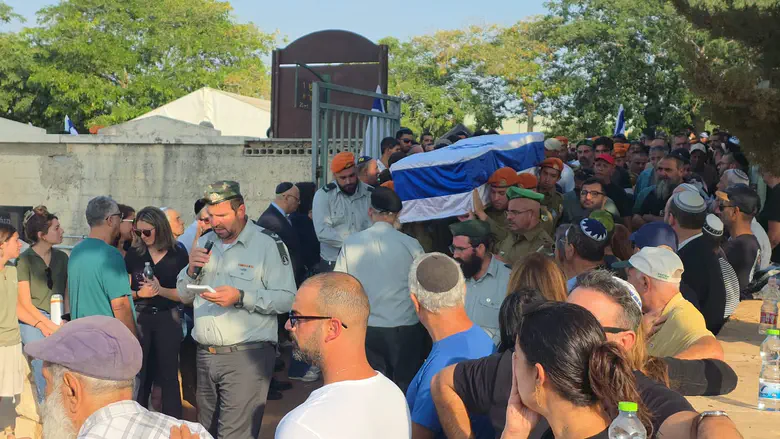
סמל יובל שי סוילם מובא למנוחותערוץ 7
Hundreds of family members, friends, and others arrived on Sunday at the Hod Hasharon Military Cemetery to pay final respects to 20-year-old Sergeant Yuval Shai Svilem, who fell in battle during the shooting attack at Judea Junction near Hebron.
During the funeral, Yuval's sister, Shira, spoke about her decision not to allow the terrorists to break her spirit. "You will always be engraved in my heart. I will not give the terrorists the pleasure of breaking my spirit," she stated.
She described the close relationship with her brother and the shared memories of him: "Only you and I know how we felt about each other. Only we know your and my small gestures. A language of secrets between us, a language of actions. We also knew how to cover for each other, to laugh at each other, and to listen."
She promised to remember him: "Don't worry, of course, I'm calming only myself. The external terrorists will not be able to tarnish what you were for us and for others."
Amnon Svilem, Yuval's father, eulogized his son during the funeral and called on the state to deport the families of the terrorists who carried out the attack. "Those damned terrorists took the law into their own hands. They didn't care about Yuval, they didn't care about us, and they didn't care about anyone around them. They shattered an entire family, shattered several families, and took everything from us."
He appealed to the government and the judiciary: "I am asking you, we are not living anymore. I am asking you to have the state take their families and not leave them in this country. I don't want to hear that they are still here. I hope that by the end of the shiva, I will know that they are no longer here. I am begging you."
He cried out: "We are here burying our child, while they are eating baklava at our expense. The Palestinian Authority will provide them with another home. Their house will be demolished, but that's not enough. Those wicked people should not be here."
According to Svilem, deporting the terrorists' family members could deter future attackers. "If there were a deportation law, I promise you that his wife would have run to the army, his father and brothers would have run to the army. Things cannot go on like this. They would know what would happen to them. We need to wake up. They need to understand that this will not happen anymore."
He then described the devastating loss suffered by the families following the attack. "They took our souls. We are all dead. They didn't just hurt Yuval and the other soldier. We are all dead, we are dead. And I hope they will not be allowed to live in this country."
The father warned that if the authorities failed to take action against the terrorists' families, he might act himself. "And if the state doesn't do its job, and if the army doesn't do its job, we will have to take the law into our own hands. This cannot be."
Later in his eulogy, Amnon criticized the judicial system and the handling of the olive harvest season in Judea and Samaria. "Politics is dirty. The courts are doing things that are wrong. Unfortunately, the army has to prepare during this period, during the olive harvest. Every single year, anarchists come and cause trouble in our country, and we remain silent. People come from outside and cause trouble. Why? To incite the Palestinians?"
He continued, arguing that activists arriving in the area fuel tensions and that soldiers ultimately pay the price. "They don't want to leave. People come from outside and stir them up. Every photographer comes and photographs them to provoke them, and in the end, what happens? Who gets hurt? The soldiers here get hurt."
He again emphasized the need for change. "Every year there is an olive harvest, every year they cause trouble, every year soldiers are hurt. Enough already, enough."
He then returned to his demand to deport the terrorists' families. "They need to understand one thing: Just as those damned terrorists didn't think about us, they need to understand that their families will not remain in this country. They will not celebrate at our expense."
The father again warned that he might take action himself if the state did not meet his demand. "And if the state doesn't do it, we will take the law into our own hands. This is my army, Yuval's army, and the army of all the soldiers and all the bereaved families. Enough of this already. Let's put an end to it."
He went on to express hope that his son would be the last soldier to fall and that no additional families would join the ranks of the bereaved. "I hope Yuval will be the last soldier, and that we will not hear of any more sorrow."
Toward the end of the eulogy, he once again appealed to the state and the judiciary, emphasizing the heavy personal price he had paid. "And if the army and the state don't know how to do their job, I, who gave them my diamond, I gave them my diamond, I hope the state will hear me, that the court will hear me, and that they will remove them from the country by the end of the shiva."
He added a stark warning: "And if not, I will go; I will take the law into my own hands. I am willing to go to prison for it. I will take it all upon myself. I gave up my son, and I want them to give up their lives here in this country. They will not remain here."
National Security Minister Itamar Ben-Gvir also delivered a eulogy, opening with a Midrash about Moses, who asked G-d to see Rabbi Akiva's reward and was shown the suffering he endured before being executed for sanctifying G-d's name.
Ben-Gvir connected the Midrash to the pain over Yuval's death, saying: "I think about this Midrash today, here, before the coffin of the late Yuval Shai, and try to understand how it is possible to bear this pain, how one can stand before a family that has lost what is most precious to them, before parents who sent their son to the army and, instead of welcoming him home, are today embracing his memory."
He added: "I have no answer that can truly offer comfort. There are no words that can fill the void left in the family's heart, and no explanation that can make this loss any easier."
He then spoke about Yuval's life and military service, emphasizing that his life should not be measured solely by the moment of his death, but also by his decision to serve as a combat soldier and defend the citizens of Israel.
Ben-Gvir also shared a personal memory of meeting Yuval: "I remember sweet Yuval, our meeting, the moment he approached me and asked to take a picture with me. I remember a charming, smiling young man, full of warmth, who knew how to approach people, speak to them, and express his appreciation."
He went on to discuss the significance of the soldiers' self-sacrifice, saying: "Yuval fell while fulfilling his duty, as part of the chain of generations of those who carry the security of the Jewish people on their shoulders."
The minister returned to the story of Rabbi Akiva, who gave his life while reciting the Shema Yisrael prayer, drawing a connection between Jewish faith and the responsibility borne by generations of soldiers to defend the Jewish people and the State of Israel.
Later in the eulogy, Ben-Gvir addressed the fight against terrorism and called for tougher measures against terrorists and their families.
"Our responsibility is to act decisively against those who choose to harm Israeli civilians and soldiers. We are working to tighten the prison conditions of terrorists, and we will not accept a reality in which those who harmed us and murdered our sons enjoy better conditions," he said.
He added: "At the same time, I believe we must also advance decisive measures to distance terrorism from our lives, including the implementation of emigration plans in Judea and Samaria, so that those who seek to harm the people of Israel will no longer be able to endanger our security."
He concluded by addressing the Svilem family: "There are no words that can bring Yuval back, and no promise that can make the pain disappear. But know that Yuval will not be forgotten. His heroism, his devotion, and the love that drove him to defend his people will be part of this nation's story."
Sergeant Svilem and Staff Sergeant Ron Yonatan Roytman were killed when two terrorists from Hebron arrived at the Judea Junction on Route 35 and opened fire at the IDF forces operating there.
The soldiers engaged the terrorists in a shootout that lasted over 20 minutes. Additional forces that arrived at the scene managed to surround the terrorists and eliminate them.
On Sunday morning, several hours before the funeral, Yuval's father, Amnon, spoke with Kan Reshet Bet radio about the difficult moments in which he was notified that his son fell in battle.
"Friday was hell. When they came to our home and knocked on the door, we weren't there. My daughter answered. She received the news. They notified us, 'Come home,'" the bereaved father recounted.
 Israel National News3 hours ago
Proposed Adumim Towers, Ma'ale Adumim3 Vision
A group of Canadian lawyers and civil society representatives has filed a complaint with Canada's Competition Bureau against Israeli real estate agencies accused of misleading Canadian buyers about properties marketed at real estate events in Toronto and Montreal.
The complaint, submitted by the Global Echo Litigation Center and Canadian Lawyers for International Human Rights, and reported by La Presse Canadienne alleges that at least four Israeli real estate companies and a Canadian marketing agency promoted properties in Judea and Samaria while presenting them as being located in Israel.
The Competition Bureau said it would review the complaint to determine whether the allegations warrant an investigation.
The complaint, filed on behalf of six Canadian residents, includes photographs, social media posts and promotional materials relating to condominium projects advertised at real estate fairs between 2024 and 2026.
One photograph from the 2024 Great Israeli Real Estate Event in Montreal allegedly shows a real estate agency promoting projects in Ma'ale Adumim and Adam alongside properties elsewhere in Israel. The booth reportedly invited prospective buyers to find their "dream home in Israel."
James Yap, president of the lawyers' association and a law professor at the University of Windsor, argued that Canadians purchasing properties in Judea and Samaria could face legal consequences under international law, including allegations of complicity in war crimes.
The complaint comes amid growing international pressure on Israel over Jewish communities in Judea and Samaria. Canada and several other countries regard the communities as illegal under international law, a position Israel disputes.
Israel's presence in Judea and Samaria dates to the 1967 Six-Day War. The issue has become a renewed focus of diplomatic pressure since Hamas's October 7, 2023, massacre in southern Israel, in which approximately 1,200 people were murdered and 251 were taken hostage to Gaza.
In August, the Canadian government advised Canadian companies against engaging in business activities involving Israeli communities in Judea and Samaria, warning of potential legal and financial risks.
Yap called on Ottawa to take further action, arguing that the complaint offered the government an opportunity to enforce its stated position on the issue.
The allegations have not been established, and the Competition Bureau's review does not itself constitute a finding of wrongdoing by the companies involved.
 Israel National News3 hours ago
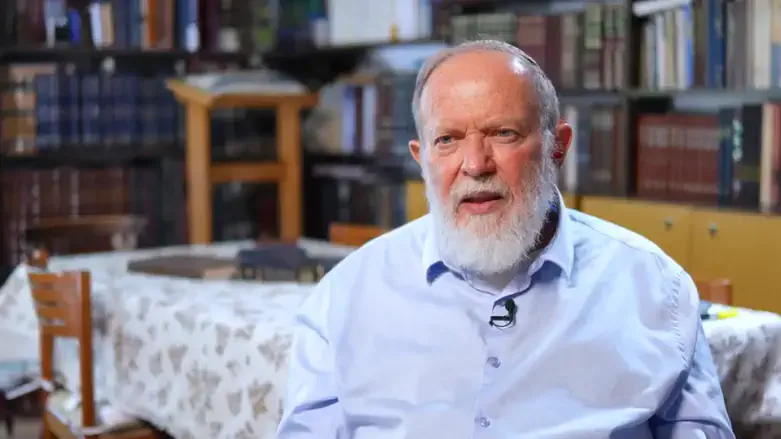
הרב אלי סדןצילום: מיזם סיפורי הקמת ההתיישבות
Rabbi Eli Sadan, head of the pre-military academy in Eli, has expressed support for Ofer Winter's Amcha Yisrael Party crossing the electoral threshold, despite a visit to his home last week by Prime Minister Benjamin Netanyahu and Religious Zionist Party chairman Bezalel Smotrich aimed at encouraging Winter to withdraw from the Knesset race.
In a circulated recording, Rabbi Sadan clarified that, contrary to reports attributed to him, he does not oppose voting for Winter. He even believes that Winter's party crossing the electoral threshold could be the key to establishing a fully right-wing government headed by Netanyahu.
"I generally try not to get involved in elections. Full disclosure: I think Benjamin Netanyahu has been an excellent prime minister who has done many good things for the people of Israel over the years, and I would very, very much like him to continue serving as prime minister," the rabbi said.
He went on to explain why he had so far chosen not to intervene in political disputes within the right-wing bloc.
"Therefore, when people came to me and said, 'Tell these people to withdraw, tell those people to move up,' and made all kinds of suggestions, I decided to remain silent, because just as he has managed to get through the elections successfully until now, I assume he will manage to get through these elections successfully as well."
However, according to Rabbi Sadan, reports that came to his attention claiming that he was calling on voters not to support Winter's party prompted him to clarify his position.
"But today people called me and showed me that reports were being circulated claiming that I was saying not to vote for Ofer Winter because he would not cross the electoral threshold."
The rabbi clarified: "I think that is incorrect. Of course, I never said that, and I wish Ofer Winter success in crossing the electoral threshold. I think that only if Ofer Winter crosses the electoral threshold will Bibi have a fully right-wing government. That is what I hope will happen."
Rabbi Sadan's remarks take on particular significance against the backdrop of last week's visit to his home by Netanyahu and Smotrich, which was intended to encourage Winter to withdraw from the race.
Despite the visit, Rabbi Sadan chose to publicly clarify that he hopes Winter will cross the electoral threshold and even regards this as a necessary condition for establishing a fully right-wing government headed by Netanyahu.
 Israel National News3 hours ago
Retired Maj. Gen. Gil Regev, a former fighter pilot who served as head of the IDF Personnel Directorate, said in a conversation with Guy Peleg on the All-In podcast that he has more in common with Palestinian Arabs than with Finance Minister Bezalel Smotrich.
Asked what he and Smotrich have in common, Regev replied emphatically, “Nothing." When Peleg suggested that they are both Jewish, Regev dismissed the idea.
“That’s nonsense. I happen to be Jewish; my mother was Jewish. Nobody checked, but I think we tell the truth," he said.
Regev went on to describe encounters with Palestinians during his career, including in Rafah, Sinai and Judea and Samaria.
“I can share a plate of hummus with a Palestinian. I’ve done that in the past," he said, recalling a period when he worked on the construction of prefabricated buildings, including on the roof of the Rafah municipality building.
“We worked in Judea and Samaria. Palestinians worked alongside us for a full day, two days, sometimes longer. We would share hummus and eat olives. In those moments, we would talk about life, not politics or the occupation, just life. They told me about their lives. I understood that they wanted to live," he said.
Regev explained that these personal encounters had created a sense of human connection that he did not feel with the finance minister.
“They and I had more in common than I will ever have with Smotrich. I will never have that kind of connection with him, where we sit at the same plate, pita touching pita," he said.
Regev added, “I ask myself, what do I have to do with him? Nothing. I have nothing in common with them."
Later in the conversation, Regev was asked why he chooses to remain in Israel despite his feelings. He replied, “I’m old. Where would I go? I have family and friends. I live in a bubble."
 Israel National News4 hours ago
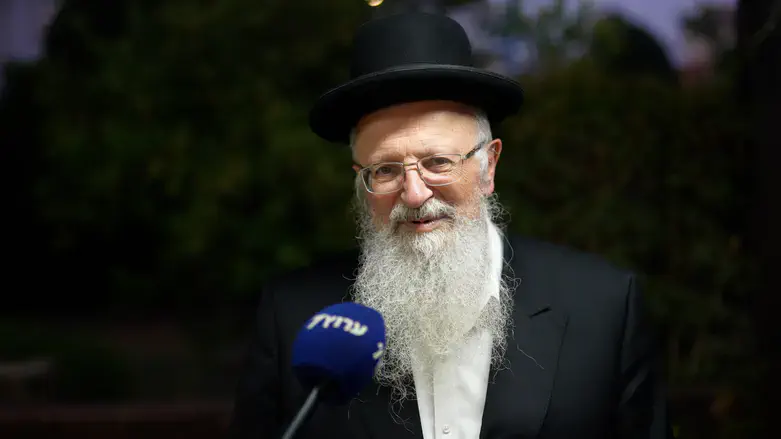
Rabbi Shmuel EliyahuArutz Sheva
Rabbi Shmuel Eliyahu, the Chief Rabbi of Safed and father of Minister Amichai Eliyahu, spoke out today against voting for parties belonging to the right-wing bloc that have particularly low chances of crossing the electoral threshold.
In a published recording, Rabbi Eliyahu addressed the potential significance of every vote in the elections, warning that voting for a party that fails to cross the electoral threshold could affect the identity of the next prime minister and the composition of the coalition.
"We need to think about a situation in which there is one vote, and that vote is what decides between Eisenkot as prime minister and Bibi as prime minister. Between evacuating communities and building communities, between nine left-wing judges on the Supreme Court and nine right-wing judges on the Supreme Court," the rabbi said.
Rabbi Eliyahu went on to emphasize the responsibility borne by every voter and the potential consequences of their choice at the ballot box.
"A person can bring about a situation in which there are nine Supreme Court justices who will say all the terrible and foolish things in the world, or nine other justices," he said.
The rabbi continued by explaining that every individual should regard their vote as though it could determine the outcome of the elections.
"Therefore, every person who has the power to decide the elections must be told: Listen, my friend, you are the one deciding. You need to understand what you are doing with your vote. You are deciding between Bibi and Eisenkot."
Rabbi Eliyahu even used an unusual example to illustrate his position:
"The situation is so serious that even if a prophet comes and tells you, 'Do this,' you tell him, 'No. I will not do that.'"
Despite his emphatic remarks, Rabbi Eliyahu refrained from naming any right-wing parties that are polling below the electoral threshold, focusing instead on the general message about the importance of voting for parties with a realistic chance of entering the Knesset.
 Israel National News4 hours ago
Ron Yonatan Roytman and EllaCourtesy of the family
Hundreds gathered at the military cemetery in Ashkelon on Sunday to attend the funeral of Staff Sgt. Ron Yonatan Roytman, 23, who was murdered on Friday in a shooting attack at Yehuda Junction near Hebron. His family, girlfriend and friends bid him farewell in tears, delivering heartbreaking eulogies in memory of the young soldier.
Roytman served as a squad commander in the Ari Battalion (775) of the Home Front Command's Search and Rescue Brigade. He was killed alongside Sgt. Yuval Shai Svilem, 20, from Hod Hasharon, during an exchange of fire with terrorists.
One of the most poignant eulogies was delivered by Ron's girlfriend, Ella, who described how a friendship forged during military training gradually blossomed into a love story.
"Love of my life, it seems impossible to try to sum you up in a few pages, to sum us up," she began. "Ron'chuk, one day with you feels like years of adventure, so how the hell do you sum yourself up like this?"
Ella described Ron as witty, funny and full of life, a young man who naturally drew people to him.
"He had a funny, sarcastic sense of humor that I loved. He was theatrical and witty. I became addicted to him. He was always the center of attention, but not in an annoying way, just because he was happy. He would sing at the top of his lungs."
She recalled how their relationship gradually deepened until Ron found the courage to make the first move.
"Ron and I became a duo. My eyes would search for him. At the end of training, Ron worked up the courage to tell me how he felt. We both knew there was something there," she said.
Ella admitted that she initially struggled to imagine a romantic relationship with her best friend, but Ron was determined to give their love a chance. He asked her to talk again, and eventually the two became a couple.
"We were a duo, pure love. He went from being my best friend to the best partner I could have asked for," she said, recalling the small gestures that defined their relationship, including the bouquets he brought her at every opportunity.
She concluded by addressing Ron directly: "You are my anchor. It was so important to you that I was happy. How do I wake up without you?"
Ron's brother, David, also struggled to find words to describe the loss. The two had shared nearly every aspect of their lives, from rooms and clothes to the smallest moments of everyday life.
"My brother, my best friend. I remember we once sat down and thought about what would happen if one of us fell in battle, what we would want people to say about us. You didn't like talking about it; that possibility wasn't even in your mind," he said.
"You are my little brother, but you were like a twin. We would blow up at each other, fight and get angry, but we had each other's backs. We covered for each other and looked after each other, watched shows together. We completed each other."
Concluding his eulogy, David addressed his brother directly.
"You are my world, my other half who was taken from me. You are the strongest and wisest flame I have ever seen. Keep shining for us from above; we will take care of everything else."
Ron's sister, Yona, remembered a brother she could always count on, someone who would answer any request from a family member at any hour. That made the final unanswered call all the more painful.
"I waited on the line, and my ears waited for you to answer me. You are an exemplary brother, excelling at everything you touched. This time, I am disappointed in you. You could have tried harder and come home. I love you, my little brother," she said.
Ron's father, Alexander, recited Kaddish for his son before bidding him farewell in Russian.
"I love you so much, my little son. I love you so much, I love you so much," he said.
His mother, Marina, also asked to deliver part of her eulogy in her native Russian. Before beginning, she addressed those gathered at the funeral.
"First of all, thank you all for coming. I will say a few words in Russian. I apologize to anyone who doesn't understand, but this is how my heart speaks."
Roytman and Svilem were killed Friday morning when two Palestinian terrorists from Hebron arrived by car at Yehuda Junction on Route 35 and opened fire on IDF troops operating in the area. An exchange of fire between the terrorists and the soldiers lasted more than 20 minutes. Additional forces summoned to the scene maneuvered around the terrorists and killed them.
 Israel National News4 hours ago
Revolutionary Guards, IranMorteza Nikoubazl via Reuters Connect
Iran is preparing to target American diplomats and government officials amid the possibility that Israel and the United States will resume military operations against it.
Two senior Iranian officials, one of whom is a senior member of the Islamic Revolutionary Guard Corps (IRGC), confirmed overnight Sunday to The New York Times that Tehran is preparing operations against American representatives in response to the killing of senior regime officials and members of their families.
According to the two officials, Israel and the United States have killed dozens of senior Iranian officials, as well as several of their family members. They claimed that, as a result, American diplomats and government officials are also considered "legitimate targets."
The information concerning Iran's preparations has raised concerns within the US administration. Senior American officials said that the threat was one of the considerations that led the State Department to order the evacuation of diplomats' family members and nonessential personnel from embassies across the Middle East last week.
The directive was issued amid concerns about an expansion of the regional conflict and the possibility of attacks against American diplomatic missions and citizens. According to the officials, intelligence regarding Iran's intentions was among the factors that influenced the decision.
Alongside the Iranian threat, the United States is also closely monitoring the potential activities of the Houthi rebels in Yemen. American officials fear that the Houthis could expand their attacks beyond Saudi Arabia and target additional countries in the region.
Adding to the tensions is the possibility that Israel and the United States will resume military operations against Iran. According to the report, one scenario under consideration involves renewing military operations after the US midterm elections.
The report on Iran's preparations comes after the US State Department had already ordered a reduction in the presence of diplomats' family members and nonessential personnel at diplomatic missions throughout the Middle East, following intelligence assessments and concerns about a security escalation in the region.
 Israel National News5 hours ago
עידן עמדי מודיע: אצביע למפלגתו של יועז הנדלמתוך הרשת
Singer Idan Amedi has announced that he will vote for the Reservists-Economic Party, led by Yoaz Hendel and Yaron Zelekha, in the upcoming elections.
In a video posted on social media, Amedi, who was seriously wounded while serving in the reserves in Gaza, explained his decision and outlined what he hopes to see in the political system after the election.
"I'm voting for Yoaz Hendel, Yaron Zelekha, the Reservists-Economic Party," Amedi declared.
Before revealing his choice, the singer addressed voters' concerns about parties failing to cross the electoral threshold. He urged voters not to let electoral calculations outweigh their own positions and values.
"Don't think about the electoral threshold. I know people will say that's naive, but it's not naive," he said.
Amedi said he has known Hendel for many years and respects his positions on issues affecting Israeli society.
He noted that Hendel has long focused on issues such as governance and internal divisions within Israeli society, which Amedi believes have not received sufficient attention in public discourse.
"I think he's a leader with a broad, long-term vision," he said.
Amedi also expressed support for the idea of a third political bloc that would bring together Zionist parties and work toward forming a broad-based government.
"I also believe in the third bloc. I believe in this bloc that is trying to bring Zionist parties together. A government as broad as possible, one that addresses the challenges we face at home and abroad. We have no other choice."
 Israel National News5 hours ago
Ben Gurion International AirportAirport Authority
Passenger data from Ben Gurion Airport show a gap between the number of travelers arriving in Israel and those leaving the country just days before the Knesset elections. Over the past two weeks, an average of approximately 32,200 passengers landed at the airport daily, compared with around 26,000 departing passengers.
Israir CEO Uri Sirkis believes the trend is being driven by Israelis returning from abroad to take part in the vote.
In a post published overnight Saturday on LinkedIn, Sirkis addressed passenger traffic at Ben Gurion Airport, writing: “In recent days, we have seen a clear trend at Ben Gurion Airport. The number of passengers arriving in Israel is greater than the number leaving the country."
He added: “Behind these figures are Israelis choosing to come to Israel - sometimes from thousands of kilometers away - to take part in the elections and exercise their democratic right to vote. This is an inspiring testament to commitment, a sense of belonging and responsibility. No matter where you are in the world, when your voice matters, you find a way home."
However, the figures do not establish how many passengers actually traveled to Israel specifically to vote. Although the gap between arrivals and departures is significant, the number of arrivals itself is not unusually high compared with previous months.
In August, for example, Ben Gurion Airport recorded an average of approximately 44,000 arriving passengers per day, while in September the figure stood at around 37,300. In both months, arrivals exceeded the current average of approximately 32,200 per day.
The most notable feature of the past two weeks’ figures, therefore, is the gap between arrivals and departures, rather than an exceptional increase in the number of passengers landing in Israel.
 Israel National News6 hours ago
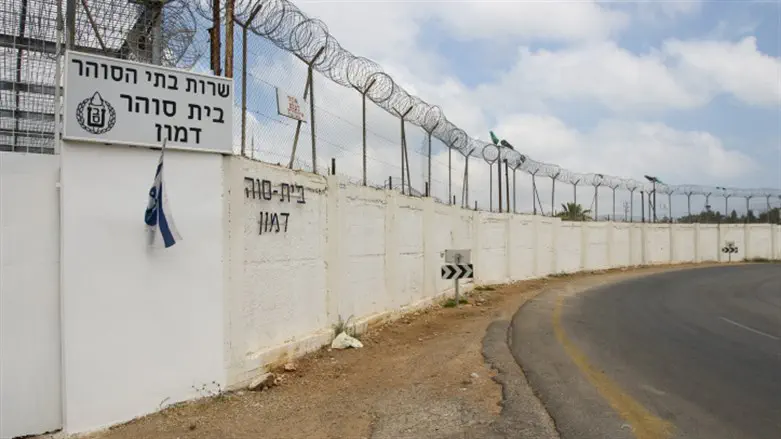
Damon PrisonFlash 90
Two German citizens were arrested overnight Sunday near Damon Prison on Mount Carmel after they were suspected of photographing the entrance to the detention facility.
The incident began when prison guards noticed the two suspects standing outside the compound and apparently photographing its entrance. Damon Prison is used, among other purposes, to incarcerate terrorists.
An examination of their mobile phones revealed photographs of security facilities and security-related activities.
The two are currently being questioned in a joint investigation by the Israel Police and the Israel Security Agency (Shin Bet), which is examining the circumstances surrounding the photographs and the findings discovered on their devices.
They are expected to be brought before a judge for a hearing on a request to extend their detention.
 Israel National News6 hours ago
The scene of the road accident near Beit She’anMagen David Adom
A man and a woman were killed Saturday night in a serious collision between two private vehicles on Route 6678, near Kibbutzim Sde Eliyahu and Tirat Zvi in the Beit She’an Valley.
One of the victims was 17-year-old Zohar Tamir of Kibbutz Tirat Zvi, who was about to enlist in the IDF.
Itamar Matias, a member of the kibbutz, mourned his death: “We received the heartbreaking news of Zohar’s death in last night’s car accident with profound sorrow. He was a wonderful young man about to enlist in the IDF. Deep sorrow has fallen on the Tirat Zvi community and the entire Emek Hama'ayanot region. We will stand by his dear family."
Paramedics who arrived at the scene found the man and woman unconscious, suffering from severe multiple injuries, and pronounced them dead.
Magen David Adom teams treated three other injured people and evacuated them to HaEmek Medical Center in Afula. A woman, approximately 25, was in moderate condition with multiple injuries, while two others were lightly injured.
MDA volunteer physician Shimon Dayan and paramedics Netanel Shukrun and Zvi Greenhut said: “We saw a vehicle overturned onto its roof, with a man and a woman inside, unconscious, without a pulse or breathing, and suffering from very severe injuries."
“We performed medical examinations, but unfortunately, their injuries were so severe that we had no choice but to pronounce them dead. At the same time, we treated three other people who were moderately and lightly injured," they added.
Three firefighting and rescue teams from the Afula district were dispatched to the scene and worked to extract the two people trapped inside the overturned vehicle.
Fire and Rescue Service officer Almog Ohayon, who commanded the teams at the scene, said: “We worked to rescue two people trapped in a private vehicle that overturned in a very serious road accident. Sadly, both people we extracted from the vehicle were already dead when we arrived."
 Israel National News6 hours ago
Bill Ackmanreuters
American billionaire investor Bill Ackman weighed in on Israel's political future ahead of the Knesset elections, arguing that a government formed without National Security Minister Itamar Ben Gvir and Finance Minister Bezalel Smotrich would help restore Israel's international reputation.
In a post on X, Ackman emphasized that he did not intend to endorse a candidate for prime minister, saying that the decision belongs exclusively to Israeli voters.
"I said I wasn't going to weigh in on who should be prime minister of Israel as that is a decision for Israeli citizens," Ackman wrote.
He explained, however, that he wanted to offer his perspective on how Israel is viewed in the United States.
"I did, however, want to share one point of view from the perspective of someone who has an understanding of how Israel is perceived in America."
Ackman then sharply criticized Ben Gvir and Smotrich, arguing that their public statements and conduct have damaged Israel's image abroad.
"Itamar Ben-Gvir and Bezalel Smotrich have caused Israel enormous reputational damage with their statements and actions which are presented in the global media as representing the voice and will of all Israelis," he wrote.
According to Ackman, excluding the two ministers from the next coalition would signal a change in Israel's political direction to the international community.
"As such, a government formed without Ben-Gvir and Smotrich will send a message to the rest of the world that Israel is turning a new page," he stated.
Ackman argued that such a move could have significant diplomatic benefits, particularly in Israel's relations with the United States and in efforts to expand normalization agreements with Arab countries.
"This will allow Israel to rebuild lost credibility, increase the opportunity for an expansion of the Abraham Accords, and enjoy a better relationship with Democrats and Republicans and Americans at large," he concluded.
Ackman did not endorse a particular candidate for prime minister or specify which parties he believed should form Israel's next governing coalition.
 Israel National News7 hours ago
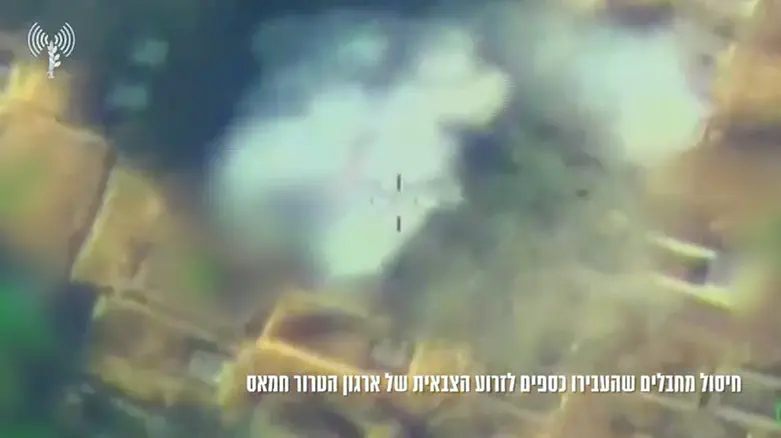
תיעוד מעזה | חוסלו מחבלים שהעבירו מיליונים לחמאס מאיראן וטורקיהצילום: דובר צה"ל
The IDF eliminated two terrorists involved in transferring millions of shekels to Hamas' military wing and destroyed a weapons storage facility in the Gaza Strip, the IDF and Israel Security Agency (ISA, Shin Bet) announced.
Last Wednesday, the IDF struck in the Gaza City area, killing Alaa Ibrahim Nimer Arshi, a commander of a terrorist cell in Hamas' military wing.
In a separate strike on Tuesday in the Nuseirat area, the IDF eliminated Karam Riyad Hassan Abu Butaihan, a terrorist affiliated with Palestinian Islamic Jihad who was involved in transferring funds to Hamas' military wing.
According to the joint announcement, both terrorists had been involved throughout the war in facilitating the transfer of millions of shekels from the Iranian regime and Turkey to Hamas' military wing.
The funds were recently used to support Hamas' efforts to rebuild its military capabilities and plan terrorist attacks against IDF troops and Israeli civilians, in what the security agencies described as a systematic violation of the ceasefire. The strikes were carried out to eliminate the threat posed by the two terrorists.
Additionally, on Thursday, the IDF and ISA struck and destroyed a weapons storage facility in the central Gaza Strip in an aerial attack. The facility was used by Hamas' military wing to store various weapons, including Kalashnikov rifles, a launcher and rockets.
The security forces said they would continue operating to disrupt terrorist organizations' ability to finance and rebuild their forces in Gaza, degrade their military capabilities and thwart attempts to rearm or obtain weapons intended to harm IDF troops.
The announcement said precautions were taken to minimize civilian casualties ahead of the strikes. These included advance warnings to residents before the attack on the weapons storage facility, the use of precision munitions and aerial surveillance.
Forces under the IDF's Southern Command remain deployed in the area in accordance with the agreement and will continue operating to eliminate threats, the statement said.
 Israel National News7 hours ago
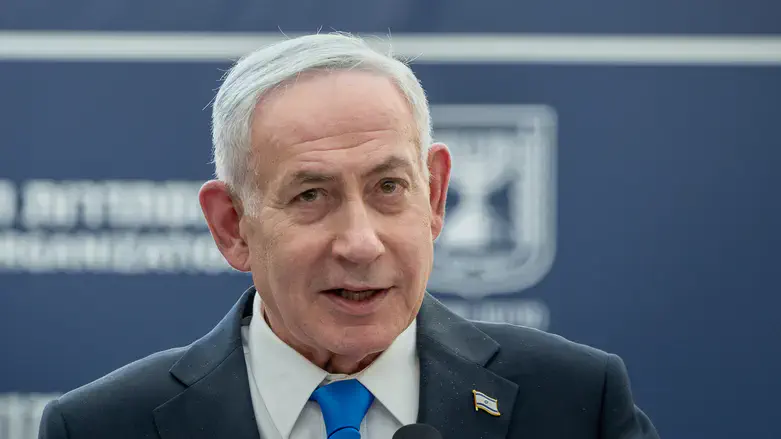
NetanyahuChaim Goldberg/FLASH90
Two days before the Knesset elections, Prime Minister Benjamin Netanyahu summoned Police Commissioner Danny Levy on Sunday for a meeting concerning police preparations for Election Day.
National Security Minister Itamar Ben Gvir is also expected to participate in the discussion. The Central Elections Committee stated that, on the face of it, there is no obstacle to holding the meeting. However, the committee emphasized that the police commissioner may decide what information to present during the meeting and that the Prime Minister is not permitted to interfere in police plans concerning the elections.
The invitation drew criticism from the Yashar Party, which appealed to the Attorney General and the chairman of the Central Elections Committee, demanding that the meeting be canceled.
In its appeal, the party demanded that authorities "stop Netanyahu's interference in the elections and cancel his meeting with the police commissioner, which is being held without representatives of the Central Elections Committee."
Yashar argued that Netanyahu's position as Prime Minister does not grant him the authority to interfere in police preparations for the elections, particularly when he himself is a candidate.
"Netanyahu is himself running in the elections, is not responsible for ensuring the integrity of the elections, and the police commissioner is not subordinate to him on this matter," the party stated.
The party also expressed concern that the meeting itself was intended to allow Netanyahu to raise allegations about possible threats to electoral integrity in a manner that would undermine public confidence in the election results.
Likud responded that the meeting with the police commissioner was intended to complete a security discussion held with all the heads of the security establishment in light of security threats, and was not intended to address electoral integrity.
Likud added that Justice Sohlberg was welcome to send a representative of the Central Elections Committee to participate in the discussion.
The office of National Security Minister Itamar Ben Gvir also addressed the meeting and rejected Yashar's allegations.
"Summoning the police commissioner for a briefing on police preparations for the elections is a routine and accepted step, as previous ministers have also done. It is the minister's duty, as was also emphasized by the Meron Commission, to ask questions, prevent loss of life, examine the preparations, and identify shortcomings wherever they exist.
"The State of Israel is a democratic country, and a meeting between the Prime Minister, the National Security Minister, and the police commissioner is entirely routine and legitimate. There is nothing improper about it. On the contrary, it is part of the responsibility entrusted to the political leadership.
"Gadi, Naftali, and Yair Golan - you, who blocked the Ayalon Highway, will not lecture us about preserving democracy. You are the biggest anti-democrats and inciters."
 Israel National News8 hours ago
Eitan Mor with his parentsIDF spokesperson
Former Hamas hostage Eitan Mor has defended his father, Tzvika Mor, following criticism from Amir Sperling of the Democrats party.
In a post on Instagram, Eitan rejected the claim that his father had not cared about his fate while he was held captive by Hamas. He argued that, on the contrary, his father’s efforts helped secure his release.
The controversy began after Sperling claimed in an interview with i24NEWS that “Tzvika Mor didn’t care that his son was in the tunnels."
Eitan, who was released from Hamas captivity, responded publicly, addressing Sperling directly.
“Amir Sperling, it’s such a shame you can’t understand that it was precisely my father’s actions that brought me home," he wrote.
Eitan explained that his father’s position throughout the war had centered on the need to exert significant military pressure on Hamas, arguing that such pressure would force the terrorist organization to negotiate and release the hostages.
He rejected the suggestion that demonstrations had persuaded Hamas to release hostages, maintaining that military action was the decisive factor.
“Hamas doesn’t return hostages voluntarily. Hamas isn’t moved by demonstrations," he wrote.
Eitan specifically pointed to the military campaign in Gaza City, arguing that the pressure on the city had been crucial in bringing Hamas to the negotiating table.
“Hamas would never have come to the negotiating table without enormous military pressure on Gaza City itself, which my father demanded throughout the war," he wrote.
מפגש קצוות רגע לפני בחירות גורליות, עם האיש שמושך בחוטים מאחורי הקמפיין של השמאל
Four months ago, Sperling sparked controversy with a post on X in which he wrote: “Tzvika Mor’s first campaign promise: I pledge to return my son to the tunnels."
The post drew widespread criticism on social media, prompting Sperling to delete it.
 Israel National News9 hours ago
Aviya Antman outside the Jerusalem District CourtCourtesy of the photographer
Five years after they were brutally attacked in Jerusalem, minutes after getting engaged on the Mount of Olives, Aviya and Shachar Antman are to receive additional compensation from two of the terrorists who took part in the mob attack against them.
Under a settlement reached in a civil lawsuit, Omar and Yousef Jaber agreed to pay the couple an additional NIS 26,000, beyond the compensation ordered in the criminal proceedings.
The compensation was secured following a lawsuit filed by attorney Chaim Bleicher of the Honenu organization, who represents the couple. According to the organization, those involved in the attack have so far been ordered to pay a combined total of approximately NIS 200,000 in compensation.
The attack took place in 2021, during Operation Guardian of the Walls and the riots in Jerusalem. Aviya and Shachar went to the Mount of Olives, where Aviya proposed to Shachar. Shortly afterward, however, as they were leaving the area, the joyous occasion turned into a violent, life-threatening ordeal.
As the couple drove away, they were identified as Jews. Omar and Yousef Jaber, together with other rioters, blocked their path and began attacking them. Aviya was brutally beaten all over his body and stabbed in the back by one of the rioters, while Shachar managed to escape the vehicle and hide among the bushes, where she could see and hear her fiancé fighting for his life.
Despite the severity of the attack, no investigation leading to the arrest of suspects was initially launched. Honenu maintains that the investigation advanced and those involved were arrested only after Bleicher contacted the Jerusalem Police's Central Unit directly.
Omar and Yousef Jaber were subsequently tried and convicted of committing a terrorist act of causing grievous bodily harm with aggravated intent. They were sentenced to six and nine years in prison and ordered to pay the victims a total of NIS 80,000 in compensation.
The criminal proceedings, however, did not mark the end of the couple's legal battle. Through Honenu, they filed civil lawsuits against their attackers, seeking additional compensation for the harm they suffered.
Bleicher said, "We sued all the terrorists one by one and succeeded in actually collecting substantial sums in compensation from them, and our work is not over. The terrorists were forced to pay an additional amount on top of what they had already paid in the criminal proceedings. We will continue working to help victims of terrorism and create real deterrence against anyone who considers carrying out a terrorist attack against Israel's law-abiding citizens".
Alongside the proceedings against the attackers themselves, the Antmans are continuing to pursue a separate compensation lawsuit against the Palestinian Authority.
 Israel National News9 hours ago
תיעוד: יורד מהקורקינט, לוקח את הנשק - ובורחללא
A suspect snatched a handgun from a security guard at the Kanfei Ruach School in Givat Shmuel and fled the scene. Numerous officers from the Mesubim Police Station in the Dan District are searching the area in an attempt to locate him.
Police emphasized that no one was injured in the incident and that the circumstances are under investigation.
The security guard told parents that the suspect, who spoke Hebrew, apparently arrived at the scene at approximately 7:30 a.m. and seemingly fell to the ground.
When the security guard approached to assist him, the suspect snatched the guard's personal firearm and fled.
 Israel National News9 hours ago
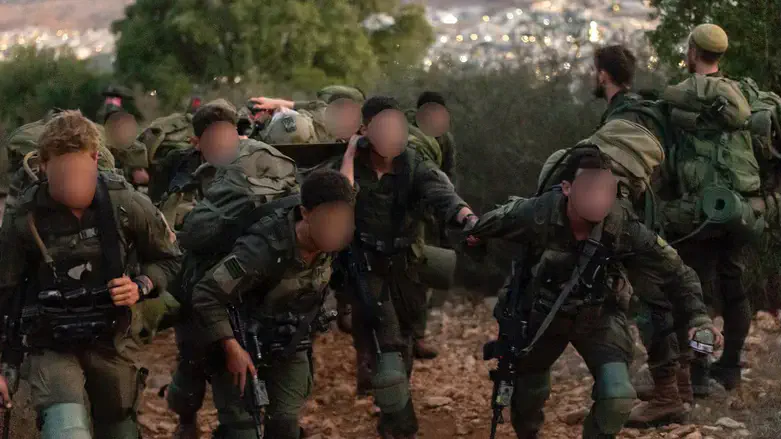
SoldiersIDF spokesperson
The IDF is on high alert across all fronts two days ahead of the elections, amid concerns about a possible security escalation and attempts by Iran and terrorist organizations to launch a surprise attack or carry out attacks.
Kan News reported that, as part of the preparations, additional forces have been deployed, readiness levels have been raised in the Air Force and air defense systems, and leave has been canceled in military units.
Alongside the heightened alert, the IDF is holding a large-scale exercise today and tomorrow across northern and central Israel, involving the Air Force and four divisions. The exercise will simulate a surprise attack on multiple fronts simultaneously, including terrorist infiltrations by land and air, the defense of communities, and a rapid transition from defensive to offensive operations.
The exercise involves the Northern Command's 210th Division, the Judea and Samaria Division, the 98th Division, and the Central Command's 96th Division. Ground forces and the Air Force will practice coordinated operations, incorporating lessons learned from the October 7 attacks.
The IDF stressed that the exercise was planned in advance as part of its annual training program and is not being held in response to any specific intelligence warning. Nevertheless, it comes amid heightened vigilance and concerns about potential security developments on several fronts.
IDF Chief of Staff Lt. Gen. Eyal Zamir has made clear that the military is on alert across all fronts to thwart threats and ensure that the elections proceed as scheduled, without outside interference. According to the report, one of the main concerns is that a miscalculation by one of the parties could trigger a security escalation, particularly on the Iranian and Hezbollah fronts.
Meanwhile, in Judea and Samaria, the IDF and Shin Bet security agency are continuing their large-scale operation in Hebron following Friday's deadly terrorist attack at Yehuda Junction. Two soldiers from the Home Front Command's Ari Battalion were killed in the attack, and three others were wounded.
The operation involves forces from the Duvdevan and Maglan units, paratroopers, reservists from the Givati Reconnaissance Unit, and Judea and Samaria Border Police officers. The forces are operating on the basis of intelligence provided by the Shin Bet and the Judea Brigade command.
So far, troops have searched approximately 200 sites in and around Hebron. No weapons or terrorist infrastructure have been found at the sites searched, and ten suspects have been arrested.
The operation is focused on the area inhabited by the Ja'aba clan, which numbers approximately 2,000 people. According to the IDF's assessment, the clan is affiliated with Hamas, and the two terrorists who carried out the attack were members of the clan.
The investigation into the attack at Yehuda Junction is also continuing. Investigators are examining the sequence of events, the deployment of forces, and the circumstances in which the soldiers were hit. They are also exploring the possibility that the terrorists received assistance from others rather than acting alone.
 Israel National News9 hours ago
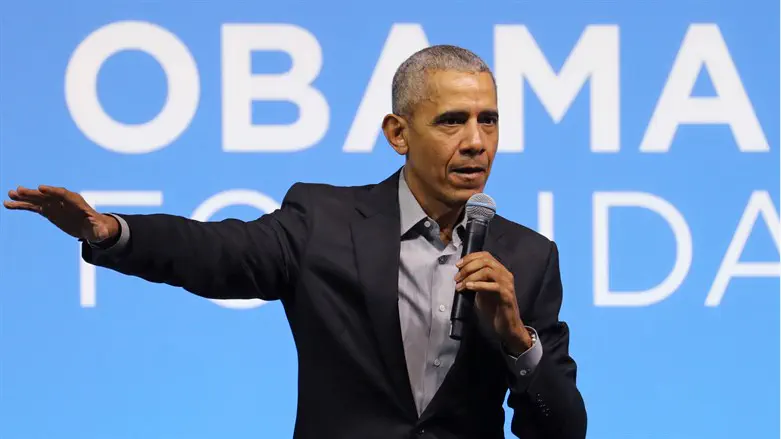
Barack ObamaReuters
US President Donald Trump sharply criticized former President Barack Obama on his Truth Social platform following Obama's endorsement of Democratic Senate candidate Abdul El-Sayed in Michigan, accusing Obama of repeatedly backing losing presidential candidates and attacking El-Sayed over his political views and professional background.
"Obama was a grossly incompetent President!" Trump wrote, opening his statement with criticism of the former president's foreign policy, particularly his administration's nuclear agreement with Iran.
"He paid off Iran with $Billions, and gave them a road to a Nuclear Weapon," Trump claimed.
The President then pointed to Obama's support for former Secretary of State Hillary Clinton in the 2016 presidential election and former Vice President Kamala Harris in the 2024 election, both of whom lost to Trump.
"He said that Crooked Hillary Clinton was going to WIN, he campaigned hard for her, and she lost in all directions and ways. He then campaigned full out for Kamala, and likewise, she lost," Trump wrote.
Turning to Obama's endorsement of El-Sayed, Trump accused the Democratic candidate of extremism and hostility toward Jews, Black Americans, and the United States.
"Now he's campaigning for a Muslim Brotherhood Jihadist, who hates Jews and Blacks and AMERICANS and TRUMP, and he is going to lose, also," Trump declared.
The accusations concerning El-Sayed's alleged extremist affiliations and hostility toward religious and racial groups were not substantiated in Trump's post.
Trump also attacked El-Sayed's medical credentials and professional record, describing him as a "Fake Doctor" and claiming that he operates what Trump characterized as the worst clinic in the country. The President did not provide supporting evidence for those allegations.
The President went on to highlight his own record in Michigan, citing his electoral performance and claiming credit for economic developments in the state.
"I won Michigan, BIG, have brought back the Car Industry, the Air Force Base, and everything else. Also, more jobs than ever before," Trump wrote.
He continued his criticism of El-Sayed, accusing him of supporting open borders and suggesting that further damaging information about the Democratic candidate would emerge.
"Michigan doesn't want an arrogant, Open Borders, Fake Doctor, Jihadist, whose reputation will only get worse as more information is revealed - And there's plenty," Trump stated.
Concluding his post, Trump reiterated his support for Republican Senate candidate Mike Rogers, who is running against El-Sayed.
"VOTE FOR MIKE ROGERS! He will never let you down!" the President wrote.
 Israel National News10 hours ago
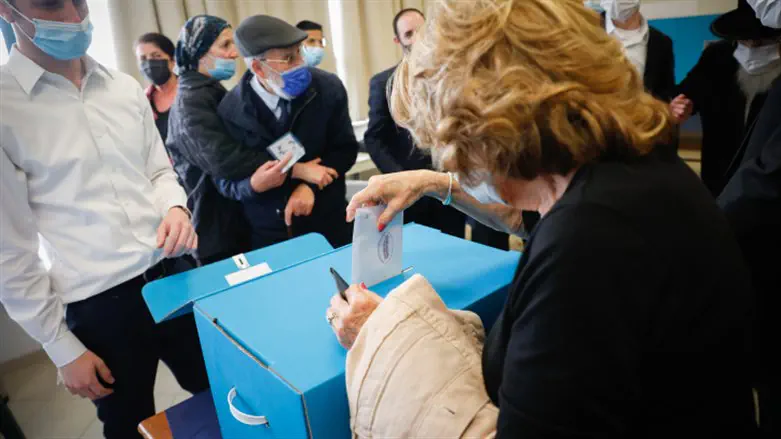
Israeli voters cast their ballotsOliver Fitoussi/Flash90
On October 19, Benjamin Netanyahu met US Defense Secretary Pete Hegseth at the Uvda air base in southern Israel. Their discussions focused on Iran, regional threats and military cooperation between the two countries. Eight days before Israel’s parliamentary election, the meeting offered a familiar picture of Netanyahu’s political career: a prime minister dealing with questions of national security while fighting to preserve his position at home.
Netanyahu first took office on June 18, 1996. Thirty years later, he remains Israel’s longest-serving prime minister, with nearly 19 years in office across several terms. His political career has survived electoral defeats, coalition collapses and periods in opposition. Yet the election on October 27 presents a challenge unlike those he faced before October 7, 2023.
For much of his career, Netanyahu has built his political identity around the belief that Israel must be able to defend itself without depending entirely on the promises of other governments. He has repeatedly warned, even when the lone voice to do so, about Iran’s nuclear ambitions and the threats posed by armed groups operating along Israel’s borders.
That security doctrine has earned him a loyal following. His supporters point to his knowledge of regional affairs, his relationships with American leaders and his experience in making decisions under pressure. They regard those qualities as the most important in a country that has faced years of military confrontation.
But the Hamas-led attacks of October 7, 2023, fundamentally changed the debate. The failure to prevent the assault on southern Israel remains one of the most serious questions surrounding Netanyahu’s leadership. His critics hold him politically responsible for the breakdown in security, while his supporters argue that responsibility as head of state does not mean blame and that the massacre must also be examined throughout the military and intelligence establishment.
The wars that followed reshaped the region and brought immense suffering, particularly in Gaza. They also forced Israel to confront difficult questions about the relationship between military operations and long-term political security. Netanyahu’s response has remained focused on confronting Hamas, Hezbollah and Iran, sticking to that even as his decisions have faced constant scrutiny at home and abroad.
His years in government, however, cannot be understood through military affairs alone. Before becoming prime minister, Netanyahu served as Israel’s ambassador to the United Nations. He later held senior ministerial positions, including foreign minister and finance minister, and became closely associated with successful market-oriented economic policies which led to the hi-tech boom.
One of the most significant diplomatic developments during his premiership came in September 2020, when Israel signed normalization agreements with the United Arab Emirates and Bahrain under the Abraham Accords. The agreements, reached with substantial American involvement, opened a new chapter in Israel’s relations with parts of the Arab world.
Their importance lay partly in the diplomatic assumption they challenged. For decades, progress toward wider Arab-Israeli relations had been closely tied to resolving the Israeli-Palestinian conflict. The accords showed that some Arab governments were prepared to establish formal relations with Israel before such a settlement. Subsequent wars have tested that diplomatic opening, but the agreements remain an important part of Netanyahu’s record.
His relationship with Washington has been more complicated. Netanyahu has worked with successive American administrations, cooperating closely on security while sometimes disagreeing publicly over Iran and the Palestinian Arab issue. The October meeting with Hegseth demonstrated the continuing importance of that partnership, particularly as tensions involving Iran remain high.
Inside Israel, the arguments are different. The handling of the October 7 failures, judicial reform, exemptions from military service for haredi men and the cost of living have all become important election issues. Netanyahu’s ongoing corruption trial also remains a source of controversy; he denies wrongdoing and the case seems to be melting away.
The political opposition offers its own experienced figures, including former military chief Gadi Eisenkot and former prime minister Naftali Bennett. Their differences with Netanyahu do not always concern the identification of Israel’s security threats. Often, the disagreement is over how those threats should be managed and whether the current government can restore public confidence.
Israelis will not vote directly for a prime minister on October 27. They will elect party lists to the 120-seat Knesset, after which coalition negotiations will determine who can form a government. Netanyahu’s political future will therefore depend on more than Likud’s performance alone.
His influence on Israel is already a matter of historical record. He has helped shape the country’s security doctrine, its regional diplomacy and its relationship with the United States over three decades. He has also become a central figure in some of the deepest disagreements within Israeli society.
The election will not settle every argument about his legacy. It will, however, determine whether the man who first entered the prime minister’s office in 1996 is given another opportunity to lead Israel through a period whose consequences will extend well beyond his political career.
 Israel National News15 hours ago
US army strikes in IranCENTCOM
The US military has prepared multiple options for renewed strikes against Iran that could be carried out following the November 3 midterm elections, The Hill reported Saturday, citing sources familiar with the planning.
According to one source, US Central Command (CENTCOM), which oversees American military operations in the Middle East, has developed plans for additional attacks that could be implemented if President Donald Trump authorizes them.
A second source confirmed that CENTCOM has prepared several potential operations for consideration by Secretary of War Pete Hegseth.
The source emphasized that Trump intends to preserve his freedom of action and will not rule out any option before making a final decision.
Asked about the reported preparations, a Pentagon official told The Hill that the Defense Department's “job is to develop and present military options to the President."
“We don’t speculate on hypothetical situations or future operations," the official added.
CENTCOM did not respond to the publication's request for comment.
The report comes days after Hegseth traveled to Israel, where he visited American troops in the Middle East and met with Prime Minister Benjamin Netanyahu on Monday.
The meeting had not been announced in advance, and Hegseth subsequently confirmed that it had taken place without disclosing the subjects discussed.
Speaking to reporters in Wisconsin on Tuesday, Hegseth highlighted the longstanding military cooperation between Washington and Jerusalem, particularly in efforts to prevent Iran from obtaining nuclear weapons.
“We’ve worked with the Israeli military quite a bit. That’s nothing new. We have for a long time. They have great capabilities, and we appreciate their contributions to assuring Iran never gets a nuclear weapon," Hegseth said, describing Israel as “good partners."
Saturday's report follows an article published Thursday by The Atlantic, which indicated that Trump was considering another military campaign against the Islamic Republic shortly after the American congressional elections.
Officials familiar with those discussions said the potential operation could involve several days of attacks targeting Iran's nuclear facilities, missile and drone capabilities, and energy infrastructure.
COULD THERE BE A STRIKE THIS WEEKEND? "ABSOLUTELY" - Trump's Special Envoy Amb. Tom Barrac
The possibility of an even earlier American strike was raised Friday by Tom Barrack, the US Ambassador to Turkey and Trump's special envoy for Syria and Iraq.
Speaking with Lebanese-Australian entrepreneur and podcaster Mario Nawfal, Barrack suggested that military action could take place as soon as the weekend, while emphasizing that the administration remained open to a negotiated agreement.
“Could there be a strike this weekend? Absolutely. The president has been clear, I’m giving you American policy, the president is very clear: he’s open, and available and accessible to a deal. And we’ve been at the table for months and months and months," Barrack said.
Trump was subsequently asked about the ambassador's comments during an exchange with reporters Friday.
“[Barrack] is a pretty powerful man, I guess. If that’s the case, I don’t know anything about it," the President replied.
Later that day, Trump again raised the possibility of military action while addressing supporters at a campaign rally in Florida.
“We may do another little Operation Epic Fury, or they will agree. If they're smart, they will just say, ‘Let's get down to business.’ But I doubt they will do that because perhaps they're not smart.
When The Hill requested comment from the White House regarding the reported military preparations, officials referred the publication to Trump's remarks to reporters on Friday.
 Israel National News15 hours ago
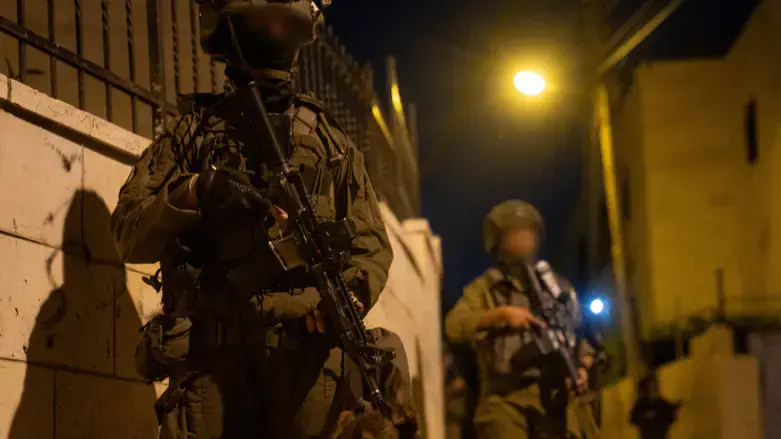
Soldiers in Judea and SamariaIDF Spokesperson's Unit
The IDF is stepping up security preparations ahead of Israel's upcoming elections. The IDF Spokesperson's Unit announced overnight Saturday that, in accordance with a situational assessment, it was decided that, starting on Sunday and through Monday, Palestinian Arab workers will not be permitted to enter Israeli communities in Judea and Samaria and the Jordan Valley for work, with the exception of industrial zones and a limited number of other approved areas.
The IDF also announced that, following a recommendation by the security establishment, the political echelon approved a ban on the entry and exit of Palestinian Arab workers throughout Judea and Samaria and the Jordan Valley, including industrial zones, as well as the closure of all land crossings throughout Election Day on Tuesday.
The announcement follows a decision made last Monday by IDF Chief of Staff Lt. Gen. Eyal Zamir to implement a series of measures aimed at strengthening the military's readiness ahead of the Knesset elections.
The measures include a suspension of leave for IDF personnel, which took effect on Thursday, and the deployment of additional troops to Judea and Samaria and other areas.
The decisions were made following a multi-front situational assessment conducted by Zamir, with the participation of the head of the Operations Directorate, the head of the Military Intelligence Directorate, and the commanders of the Northern, Central, Southern, and Home Front Commands.
At the beginning of the assessment, Zamir emphasized that the IDF's mission is to ensure that Israel's democratic elections can take place as scheduled and in a secure environment.
The Chief of Staff stressed that the IDF remains on the highest level of alert and will continue maintaining heightened vigilance and operational readiness across all fronts.
Meanwhile, IDF troops, Border Police officers, and Shin Bet (Israel Security Agency) personnel conducted operations over the weekend in approximately 40 villages and 400 locations throughout Judea and Samaria, focusing particularly on areas associated with Hamas.
During the operations, security forces arrested approximately 40 suspects, including Hamas and Islamic Jihad operatives and individuals suspected of incitement, rioting, and rock-throwing.
Weapons were also confiscated, and monuments commemorating terrorists were demolished.
 Israel National News17 hours ago
IllustrationiStock
Israel officially switched to Winter Time early Sunday morning, with clocks moving back one hour from 2:00 a.m. to 1:00 a.m. Winter Time will remain in effect until March 26, 2027.
The transition between Winter Time and Daylight Saving Time in Israel is governed by the Time Determination Law of 2013. Under the law, clocks are turned back one hour on the last Sunday of October and moved forward one hour on the Friday before the last Sunday of March.
Most smartphones and computers adjust automatically, provided they are set to update the time automatically and use Israel's time zone.
The switch to Winter Time is intended to better align daylight hours with the shorter days of the winter season. Moving the clocks back means the sun rises earlier in the morning, but also sets earlier in the afternoon.
As a result, more people begin their workday in daylight, while evenings become darker sooner.
One of the main disadvantages of winter time is the significant reduction in daylight during the afternoon and early evening hours. This can contribute to heavier traffic during periods of darkness and affect recreational activities and time spent outdoors.
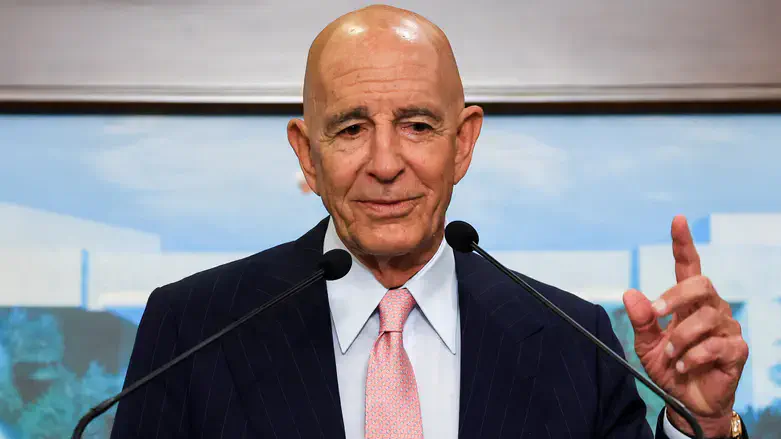 Israel National News17 hours ago
Tom BarrackREUTERS/Mohamed Azakir
Stephen M. Flatow is an attorney and the father of Alisa Flatow, who was murdered in an Iranian-sponsored Palestinian terrorist attack in 1995. He is author of A Father’s Story: My Fight for Justice Against Iranian Terror (now available in an expanded paperback edition on Amazon.com) and is the chair of the Religious Zionists of America-Mizrachi. An oleh chadash, he divides his time between Jerusalem and New Jersey.
Tom Barrack has a problem with history.
And at some point Americans-and particularly those who care about the American-Israel relationship-are entitled to ask whether that problem makes him unfit for the enormous diplomatic responsibilities President Donald Trump has given him.
Barrack is America's ambassador to Turkey and special presidential envoy for Syria and Iraq. He is therefore one of the most important American officials dealing with Israel's increasingly dangerous neighborhood.
Yet once again, he is making statements about Jews, Zionism and Israel that range from historically indefensible to diplomatically astonishing.
Speaking at the Global Security Forum in Doha, Barrack declared that when he was growing up, “there was no antisemitism in the U.S. It just didn't exist."
He then extended the thought to the Middle East, where there was supposedly “very little antisemitism."
And then came the history lesson:
“The Jews existed side by side forever. Zionism in '48 became another issue."
Where does one begin?
Perhaps in Culver City, California.
That is where Barrack grew up.
Not Beirut. Not Damascus. Not Baghdad. Culver City.
He was born in Los Angeles, the grandson of Lebanese Christian immigrants. His father operated a grocery store. Barrack attended Loyola High School and the University of Southern California before his professional career eventually brought him into extensive contact with Saudi Arabia and other parts of the Arab world.
Barrack has repeatedly invoked his upbringing as evidence for his understanding of Jewish-Arab relations. He has described himself as a Lebanese Catholic raised in a heavily Jewish environment where everybody did business with Jews.
Fine.
But childhood recollections are not history.
Indeed, Culver City's own historical reckoning makes Barrack's sweeping claim about American antisemitism particularly strange. The city has acknowledged a past of discriminatory housing practices and deed restrictions barring racial minorities and people of non-Christian faiths from property ownership. Historical accounts of Culver City specifically include Jews among those subjected to exclusion.
Perhaps young Tom Barrack never personally encountered antisemitism.
Good for him.
That does not mean it “didn't exist."
Father Charles Coughlin existed. University quotas existed. Restricted hotels and clubs existed. Employment discrimination existed. Housing restrictions existed. American Jews did not imagine any of them.
An American ambassador should know the difference between autobiography and history.
But Barrack's rewriting of Middle Eastern Jewish history is more disturbing still.
Jews did indeed live throughout the Arab and Muslim world for centuries. Sometimes relations with their Muslim neighbors were peaceful and productive. Jewish civilization flourished at various times in Muslim lands.
But Barrack's idyllic picture of Jews happily living “side by side forever" until Zionism somehow intruded in 1948 is historical nonsense.
Was there no antisemitism when Damascus Jews were subjected to a notorious blood libel in 1840?
Was there no Jew-hatred when the ancient Jewish community of Hebron was attacked in 1929 and Jews were slaughtered-nineteen years before the creation of Israel?
Was there no antisemitism during the Farhud in Baghdad in 1941, when Jews were murdered, women assaulted and Jewish homes and businesses looted-seven years before Israeli independence?
Apparently all of that disappears in Barrack's version of Middle Eastern history.
And Zionism did not suddenly appear in 1948.
The First Aliyah began in the nineteenth century. Theodore Herzl convened the First Zionist Congress in 1897. The Balfour Declaration came in 1917. The Arab riots of 1920 and 1921, the Hebron massacre of 1929 and the Arab revolt of 1936-1939 all occurred because the Arab-Jewish conflict over Jewish national restoration was already well underway.
So what exactly does Barrack mean when he says, “Zionism in '48 became another issue"?
The implication is difficult to miss: Jews and Arabs lived peacefully together until Zionism-and ultimately Israel-spoiled everything.
That is not history. It is a political narrative.
And it is a narrative Israel's enemies have been promoting for generations: Judaism is acceptable; Jews are acceptable; what caused the trouble was Zionism and Jewish sovereignty.
One might expect to hear that formulation from anti-Zionist activists on an American campus.
It is alarming to hear something resembling it from a senior American diplomat responsible for some of the most sensitive relationships in the Middle East.
Unfortunately, Barrack's latest remarks cannot be viewed in isolation.
Earlier this year, he declared that “the world is not antisemitic" and again invoked his Lebanese Catholic upbringing to minimize the problem.
He has called Israel and Hezbollah “equally untrustworthy."
Think about that for a moment.
Israel-a democratic American ally whose soldiers defend their country under civilian authority-and Hezbollah, an Iranian-sponsored terrorist organization responsible for decades of murder, kidnapping and destabilization, are apparently equally deserving of suspicion.
Barrack has questioned Israel's democratic character, saying that Israel can “claim" to be a democracy while suggesting that benevolent monarchies have worked better in the Middle East.
He described Israel as occupying the Golan Heights even though the administration he represents recognizes Israeli sovereignty there. He later had to clarify his remarks.
He suggested that an Israeli military operation in Syria might have been intended to “bait" Turkey into confrontation ahead of an Israeli election.
Now he tells us that Iran is “not an evil regime," while carefully distinguishing its religious government from the Revolutionary Guards.
There is a pattern here.
Again and again, Barrack minimizes the ideological hostility of Israel's enemies while subjecting Israel's motives, history and actions to extraordinary skepticism.
Turkey receives understanding.
The Syrian government receives encouragement.
Iran receives semantic refinement.
Hezbollah receives moral equivalence.
Israel receives lectures.
That is precisely backwards.
This does not mean an American diplomat must defend everything an Israeli government does. Friendship does not require silence, and diplomacy certainly does not require agreement.
But an envoy entrusted with America's interests in the Middle East ought to possess three elementary qualifications.
He should understand the history of the region.
He should accurately represent American policy.
And he should be able to distinguish America's democratic ally from the terrorist organizations and authoritarian regimes seeking to weaken or destroy it.
Barrack's repeated statements raise legitimate questions about all three.
Perhaps his comments are simply careless. If so, carelessness on this scale is itself alarming in a man carrying such a large diplomatic portfolio.
Perhaps he genuinely believes this romanticized version of Middle Eastern history. That would be more troubling.
And if he understands the history perfectly but nevertheless chooses to present it this way, that would be worse still.
I cannot know which explanation is correct.
But President Trump should want to know.
Because Tom Barrack is no longer a private businessman reminiscing about his Lebanese heritage or his years doing deals with Arab princes.
He speaks for the United States.
When an American envoy rewrites the history of antisemitism, dates the Zionist problem to 1948, equates Israel with Hezbollah and repeatedly seems more anxious to explain Israel's adversaries than to understand Israel's security concerns, Americans have every right to ask a simple question:
Is Tom Barrack the right man to represent the United States in the Middle East?
.
...
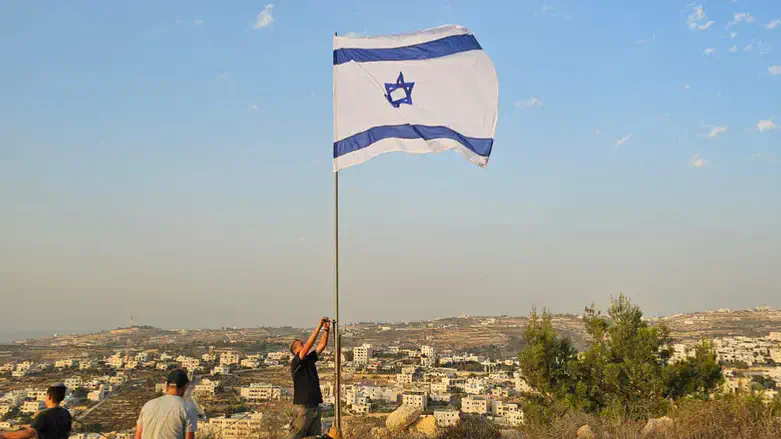 Israel National News18 hours ago
Hebron HillsPress Release
The Har Hebron Regional Council has announced plans to establish two new communities and six agricultural farms in the southern Hebron Hills following Friday's deadly terrorist attack near Hebron, in which two IDF soldiers were killed.
The initiative, which includes eight new settlement sites across the region, is being advanced with the support of the Defense Ministry's Settlement Administration and the Amana settlement movement.
The council said the plan is intended to strengthen Israel's presence in the area, establish territorial continuity, protect state land, and improve security along roads and in open areas.
The two planned communities are Magad, located between Negohot and Eshkolot, and Nofei Gulot, between Otniel and Afeka.
Six agricultural farms are also planned at locations throughout the regional council. Mitzpe Tzur Farm will be established near Telem, close to the site of Friday's attack. Noi Farm is planned between Karmei Yehuda and Adora, while Lev Amit Farm will be located between the new community of Makeda and Adora.
Three additional farms will be established in other parts of the region: Eshel Farm between Negohot and Eshkolot, near the planned community of Magad; Lema'an Achai Farm between Otniel and Shima; and Mitzpe Or Farm between Carmel and a nature reserve in the Judean Desert.
Har Hebron Regional Council head Eliram Azulai said, "Terrorism seeks to destroy lives, spread fear, and undermine our hold on our homeland, but our historic and Zionist response is being written on the ground. We will not retreat or give in," Azulai said.
"Out of the immense pain and grief over the loss of our heroic soldiers, we choose life and deepen our roots. The establishment of two communities and six farms sends a clear message: We are here to stay, build, and grow," he added.
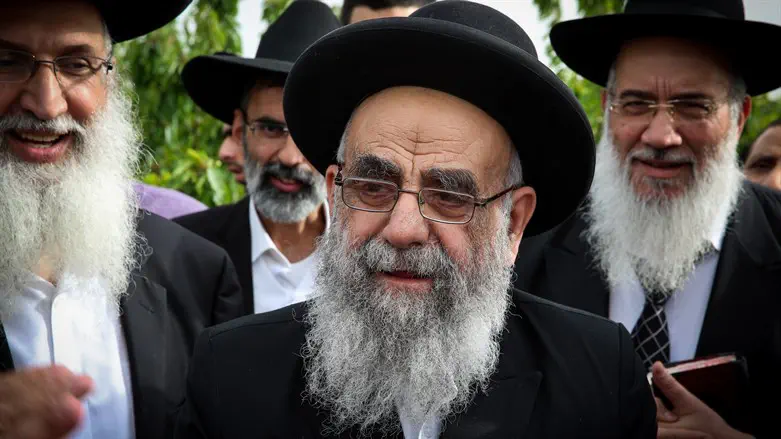 Israel National News19 hours ago
Rabbi Moshe TzadkaYaakov Cohen/Flash90
Rabbi Moshe Tzadka, the senior dean of the Sephardic yeshiva world and head of the Porat Yosef Yeshiva, signed an unusual letter instructing voters not to support the Shas party.
The letter was signed amid allegations that Shas had expressed willingness to allow the drafting of yeshiva students who are not actively enrolled in a yeshiva program.
The development has raised concerns within Shas's election headquarters, given Rabbi Tzadka's prominent standing in the Sephardic haredi community and the potential influence of his directive on the party's voters.
Following the signing of the letter, Shas chairman Aryeh Deri is working to enlist senior rabbis, including Council of Torah Sages member Rabbi Moshe Maya and former Sephardic Chief Rabbi Yitzhak Yosef, to visit Rabbi Tzadka at his home and attempt to persuade him to withdraw his instruction not to vote for the party.
The development comes at a particularly sensitive time for Shas as it prepares for Election Day, bringing the dispute over the drafting of yeshiva students and its potential consequences for the party's support to the forefront.
According to a report by i24NEWS, the letter was drafted through the mediation of Kabbalist Rabbi Benayahu Shmueli, head of the Nahar Shalom Yeshiva.
 Israel National News19 hours ago
Changing the clock (illustrative)iStock
On the night between Saturday and Sunday, at 2:00 a.m., clocks across Israel will be turned back one hour to 1:00 a.m., marking the end of daylight saving time and the beginning of winter time.
The change will bring earlier sunrises, along with earlier nightfall.
The clock change is carried out in accordance with Israel's Time Determination Law. Under the law, winter time begins on the last Sunday of October, while daylight saving time begins on the Friday before the last Sunday of March.
Accordingly, daylight saving time will resume on March 26, 2027.
Behind the time displayed on phones, computers, and communication systems is the National Physics Laboratory at the Ministry of Economy and Industry.
The laboratory is responsible for Israel's national time standard, designated UTC(INPL), and operates highly precise measurement systems that allow Israel's time to be compared with international time standards.
According to the Ministry of Economy, the system performs 86,400 comparisons every 24 hours to maintain the accuracy of the time used by civilian and commercial systems, including television broadcasting, telephone communications, and computers.
The laboratory operates three atomic clocks based on the element cesium, which provide exceptionally precise time measurements.
Israel's time is calculated in relation to Coordinated Universal Time (UTC). During winter time, Israel is two hours ahead of UTC (UTC+2), while during daylight saving time, it is three hours ahead (UTC+3).
On most smartphones and computers, the transition to winter time takes place automatically, provided the device is configured to update the time automatically and is set to Israel's time zone.
However, clocks that do not update automatically must be manually turned back by one hour.
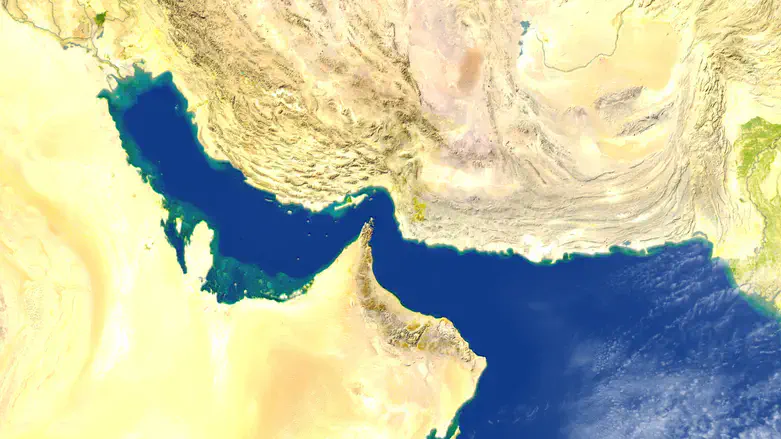 Israel National News20 hours ago
Persian Gulf, Strait of HormuziStock
Iran has developed detailed plans to attack undersea communications cables in the Gulf if the United States and Israel launch renewed military strikes, two senior Iranian security officials told Reuters, warning that Tehran would seek to prolong disruptions by preventing repairs.
The threats come amid concerns that diplomatic efforts with Washington could collapse and trigger another round of fighting. Iranian officials have warned that undersea cables and other digital infrastructure could become targets in a renewed conflict.
The two officials, speaking anonymously, did not disclose how or where Iran might carry out the attacks. One warned that Tehran would no longer observe previous limits on its potential targets if Iran came under attack.
"If Iran is attacked, there will be no more red lines, from undersea cables to military bases, including covert ones," the official said, warning Washington not to "play with fire."
The official also claimed that Iran had access to the undersea cables and could destroy them.
On Wednesday, Yadollah Javani, deputy head of political affairs for Iran's Islamic Revolutionary Guard Corps (IRGC), said Tehran could target seven major internet cables beneath the Strait of Hormuz if Iranian infrastructure came under attack.
Undersea cables carry approximately 99% of global internet traffic, according to the International Telecommunication Union. However, the international bandwidth passing through the Strait of Hormuz accounts for less than 1% of the global total, limiting the potential worldwide impact of attacks in that area.
Alan Mauldin, research director at telecommunications research firm TeleGeography, said the consequences would depend on the ability of operators to reroute traffic and the capacity available on alternative connections.
Nevertheless, multiple cable cuts could disrupt regional internet services, financial transactions, e-commerce and cloud computing. Repairs could also become significantly more difficult during wartime because of security risks, higher insurance costs and delays in obtaining permission to operate in territorial waters.
Neither the US State Department nor Iran's Foreign Ministry immediately responded to Reuters' requests for comment. Gulf states had not issued an immediate response to the reported plans.
The threats reflect Tehran's apparent determination to respond more aggressively if Washington launches another military campaign.
Earlier this month, senior Iranian security official Mohsen Rezaei warned that US-linked digital infrastructure across the Gulf, including data centers and artificial intelligence facilities, could be targeted in a renewed conflict.
The second Iranian security official said Gulf states that have invested heavily in American technology should hold Washington, rather than Tehran, responsible for any damage to undersea cables.
Alex Vatanka, director of the Iran program at the Middle East Institute in Washington, said the threats were intended to deter further military action by increasing concerns among Gulf governments and American companies about the security of their investments.
"Tehran wants Gulf states and corporate executives to press Trump over the risks his policies pose to their investment plans," Vatanka said.
The potential threat extends beyond the Strait of Hormuz. The Red Sea could present a more consequential target for communications infrastructure, particularly if Iran received support from its Houthi allies in Yemen. Tehran has not publicly announced plans to attack cables in the Red Sea.
According to Mauldin, the Red Sea carries data between Europe, East Africa and Asia. Its cable routes account for approximately 3% of global international bandwidth demand and around 10% of traffic traveling between regions.
The threats also come as Gulf states seek to diversify their economies beyond oil and establish themselves as major artificial intelligence and technology hubs, deepening their relationships with American technology companies.
Iranian strikes directly hit two Amazon Web Services facilities in the United Arab Emirates in March and damaged infrastructure near another facility in Bahrain. At the height of the war that month, the IRGC also identified Microsoft, Google, Apple and Nvidia as legitimate targets.
Governments and technology companies are investing in alternative routes to make regional communications networks more resilient. Land-based connections can help reroute internet traffic if undersea cables are damaged.
Microsoft has announced plans to invest more than $400 million in undersea and terrestrial connectivity across the Middle East by 2030, as the region's strategic importance to global digital infrastructure continues to grow.
The extent of any disruption from a future attack would depend on the number of cables damaged, the availability of alternative routes and how long repairs could be delayed.
 Israel National News20 hours ago
Marco RubioREUTERS/Jonathan Ernst/Pool
The United States is reducing embassy staffing in several Middle Eastern countries after American intelligence agencies warned that Iran has intensified efforts to assassinate US officials and diplomats abroad, Axios reported.
According to the Axios report, an October 23 intelligence memorandum addressed to US Secretary of State Marco Rubio states that Iranian assassination efforts have "substantially increased," with some plots reaching "advanced stages."
The warnings concern potential attacks in the Middle East and elsewhere, although the memorandum does not identify specific targets, describe the planned operations or name the countries outside the region where attacks could occur.
Earlier this week, the US State Department ordered family members and nonessential personnel to leave the US Embassy in Riyadh and the American consulates in Jeddah and Dhahran.
On Friday, additional staffing reductions were ordered at US diplomatic missions in the United Arab Emirates, Lebanon, Qatar and Jordan, according to an American official cited by Axios.
The embassies in the UAE, Lebanon, Qatar and Jordan remain open under restricted operations, and personnel have not been ordered to leave, unlike the designated employees and family members at US diplomatic missions in Saudi Arabia.
The intelligence memorandum, obtained by Axios, was sent to Rubio by Director of National Intelligence Jay Clayton. It warns that information concerning the suspected Iranian assassination plots needs to be shared with a wider group of US government personnel than those currently authorized to receive it.
Clayton offered to lower the classification level of as much of the relevant intelligence as possible, allowing the State Department to distribute the warnings more broadly to personnel potentially facing danger.
The memorandum indicates that senior State Department officials have already received the underlying intelligence.
The developments come amid concerns about another military confrontation involving Iran, Israel and the United States, potentially following the November 3 American midterm elections.
At a rally in Florida on Friday, US President Donald Trump raised the possibility of renewed US military action against Iran if Tehran does not reach an agreement with Washington.
"We may do another little Operation Epic Fury, or [the Iranians] will agree [to a deal]," Trump said. "If they're smart, they will just say, 'Let's get down to business,' but I doubt they will do that because perhaps they're not smart."
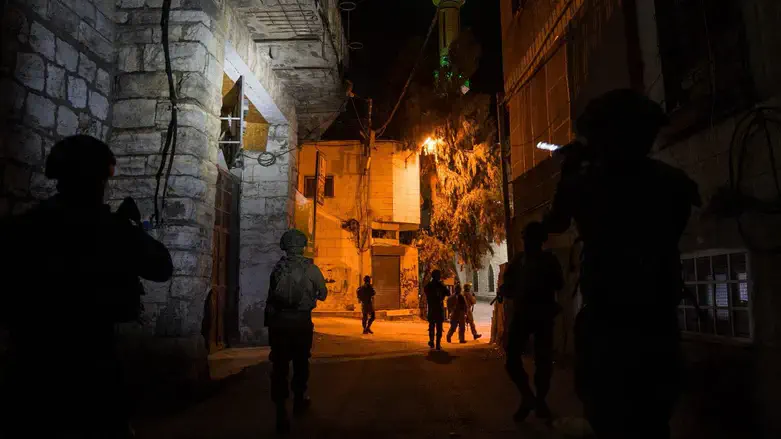 Israel National News21 hours ago
IDF soldiers in Judea and Samaria (illustrative)IDF spokesperson
Over the weekend, IDF soldiers, Israel Border Police, and the ISA operated throughout Judea and Samaria in approximately 40 areas and 400 locations as part of counterterrorism activities, focusing on areas identified with Hamas.
As part of the activity, the forces apprehended approximately 40 suspects, including terrorists affiliated with the Hamas and Islamic Jihad terrorist organizations, as well as suspects involved in incitement, public disorder, and rock-hurling.
In the Judea Brigade, forces are operating extensively at dozens of locations in Hebron and Halhul to thwart terrorism and have apprehended approximately 20 suspects.
At the same time, IDF soldiers from the Etzion Brigade entered more than 70 locations across more than 10 areas as part of a brigade-level operation. During the activity, suspects involved in planting explosive devices and advancing terrorist activity were apprehended, including Hamas operatives.
In the Samaria and Menashe brigades, IDF soldiers and Israel Border Police dismantled memorials commemorating terrorists who took part in terror attacks in which Israeli civilians were killed. In the Samaria Brigade, two suspects involved in a terror attack against Israeli civilians in the area of Burin were apprehended. A hunting rifle used by suspects in the area of Silat al-Dhahr was also located.
Throughout the Benjamin Brigade, IDF soldiers operated in approximately 15 areas and apprehended terrorists affiliated with Hamas, terrorist operatives, and individuals involved in public disorder.
In the Ephraim Brigade, forces apprehended several suspects, conducted dozens of questioning sessions, and searched for weapons.
"The security forces will continue to operate with determination to prevent the entrenchment of terrorism in the area and thwart any threat to Israeli civilians," the IDF stressed following the activities.
On Friday, Staff Sergeant Ron Yonatan Roytman and Sergeant Yuval Shai Svilem were killed in a shooting attack at the Judea Junction near Hebron.
Roytman, aged 23, from Ashkelon, was a squad commander in the Ari Battalion (775), Search and Rescue Brigade. Svilem, aged 20, from Hod Hasharon, was a soldier in the same battalion.
Three additional soldiers from the battalion were lightly injured and received medical treatment from Magen David Adom (MDA) teams.
Responding to the attack, IDF soldiers, the Shin Bet (Israel Security Agency), Israel Border Police officers, and personnel from the Judea District Coordination and Liaison Administration launched a counterterrorism operation in the Hebron area, from which the terrorists had emerged.
In a joint statement on Friday evening, the IDF and Shin Bet said the forces have begun conducting precise, targeted and thorough searches throughout the area to locate and dismantle terrorist infrastructure and weapons, while questioning suspects.
The statement stressed that the operation is targeted and limited to the area from which the terrorists operated, and is expected to continue for several days.
 Israel National News21 hours ago
Rabbi Yaakov MenkenCoalition for Jewish Values
Rabbi Yaakov Menken is the Executive Vice President of the Coalition for Jewish Values (CJV), the largest rabbinic public policy organization in America
Forty years ago, the Norwegian Nobel Committee gave its Peace Prize to Elie Wiesel and called him "a messenger to mankind." Wiesel had survived Auschwitz and Buchenwald, and spent the rest of his life making sure the world would remember the genocide inflicted upon the Jewish People. In Oslo he told his audience: "We must always take sides. Neutrality helps the oppressor, never the victim."
This month, the Nobel Committee gave the same prize to Navanethem "Navi" Pillay, the woman who chaired the United Nations commission that accused Israel of genocide. It would be comforting to call this ignorance. It isn't, neither regarding Pillay nor the Nobel Committee.
Pillay certainly knows what genocide is better than most. As a judge on the International Criminal Tribunal for Rwanda, she sat on the panel that convicted Jean-Paul Akayesu in 1998, issuing a landmark ruling that recognized that sexual violence committed to destroy a people can itself be an act of genocide. She went on to serve on the International Criminal Court and as the UN's High Commissioner for Human Rights.
And that is where what had been an illustrious career went off the rails.
During her tenure as High Commissioner, she raised no objection as the UN Human Rights Council issued 39 condemnations of Israel. By comparison, North Korea was condemned just six times and Iran four, while many of the world's most notorious human rights abusers-including China, Saudi Arabia, Cuba, Uzbekistan, Russia, and Qatar-went untouched.
Many of these regimes actively pushed the UNHRC to obsess over Israel in a way that deflected attention from their own conduct, and Pillay was worse than neutral as the Council made a mockery of its mission. Her office even reportedly provided the Chinese government with the names of Chinese human rights defenders planning to attend UN sessions. Among them was Cao Shunli, who was detained at the Beijing airport en route to Geneva and died in captivity six months later.
When the UNHRC created a Commission of Inquiry on Israel in 2021 - the first in its history with an open-ended mandate for endless investigation of a single country - it needed a chair guaranteed to reach a predetermined conclusion. Just a year prior, Pillay had signed an open letter calling to "Sanction Apartheid Israel." By any objective judicial standard, signing such a biased statement would be disqualifying; at the UN, it made her the ideal candidate. A fellow commissioner, Miloon Kothari, opined in 2022 that social media was "controlled largely by the Jewish lobby," and wondered aloud whether Israel deserved to be a member of the UN at all. Though he eventually apologized, Pillay only defended him.
In September 2025, the commission delivered the verdict it was built to deliver: Israel, it declared, was committing genocide in Gaza - at a time when Hamas was still holding and torturing 48 hostages.
The commission's report barely acknowledged either the hostages or the start of the conflict: the deadliest day for Jews since the Holocaust, with over 1,200 murdered and over 250 dragged into captivity. Instead, it accused Israel's president, prime minister and former defense minister of inciting genocide, as if the release of the hostages was not even a plausible justification for Israel's actions.
It is that report that capped Pillay's career. And it is that which led directly to her Nobel Prize.
The Nobel Committee’s chairman, Jørgen Watne Frydnes, told AFP that the committee “is not the court" and takes no position on whether Israel committed genocide. In the same breath, he professed “great faith" in Pillay’s “integrity." The same day, he told reporters that her work on Gaza was “an important part of the reasoning" for the prize. He cannot have it both ways. One cannot honor a judge for her integrity while disclaiming her verdict, least of all when that verdict is the reason for the honor.
The committee cited Pillay for ensuring that genocide is prosecuted, yet the most prominent genocide charge of her career was a despicable libel. Those who welcomed the award understood exactly what was being honored. The Palestinian Authority’s foreign ministry promptly praised her for defending the rights of the oppressed “including Palestine."
There is an irony Mr. Frydnes may well have missed. Pillay also sits as an ad hoc judge at the ICJ, in the Rohingya case of The Gambia v. Myanmar - the very case in which the court is being asked to lower the threshold for proving genocidal intent. The same jurist who helped define genocide in Rwanda is now positioned to permanently dilute it, in a way that will make a charge against the defensive actions of any Western government far easier to sustain.
If Elie Wiesel turned the memory of genocide into a moral duty owed to the living, then Navi Pillay turned the accusation of genocide into a political weapon aimed at its survivors. The committee that honored the first has now honored the second, and it apparently sees no contradiction.
The Nobel Committee’s most fundamental disservice, though, is to the cause of peace itself.
Our Sages taught that "the world stands on three things: on justice, on truth, and on peace" (Avos 1:18). The Jerusalem Talmud (Taanis 4:2) adds that the three are really one: "when justice is done, truth is done, and peace is made," citing the prophet Zechariah - "Judge truth and the justice of peace in your gates" (8:16). Peace, in the Jewish understanding, is not merely the absence of shooting. It is the fruit of justice founded on truth. A judgment built on falsehood produces not peace, but the next war.
That is what the Nobel Committee accomplished with this award. Branding self-defense as genocide does not end wars; it tells the barbarians that start them that the world will take their side if only they hide behind enough civilians. Hamas understood that strategy from the first day, and now has Pillay's Nobel to prove it.
When the Nobel Committee gave its Peace Prize to arch-terrorist Yasser Arafat in 1994, one member, Kåre Kristiansen abruptly resigned in protest. No one resigned this time.
Elie Wiesel was right: we must always take sides. And the Nobel Committee took sides in a way that will now make real peace more difficult to achieve, in every conflict around the world.
 Israel National News22 hours ago
Yair GolanGili Yaari/Flash90
Democrats party leader Yair Golan has outlined a series of demands ahead of the 2026 elections, including requiring Channel 14 to sign the Press Council's ethics code or face closure, ending funding for the Bnei David pre-military academy in Eli, and demanding control over four key government ministries. Golan announced the proposals Saturday evening during an appearance on Meet the Press. He said his party would seek control of the Justice, Education, National Security, and Communications ministries.
Golan also declared that funding for the Bnei David pre-military academy in Eli would be discontinued.
Finance Minister Bezalel Smotrich responded sharply, warning that a government led by Gadi Eisenkot and Golan would pursue policies aimed at shutting down right-wing media outlets and closing the academy.
"Throughout the past several months, I have warned about what an Eisenkot-Golan government would bring upon us," Smotrich said. "Yair Golan promises to close the academy in Eli, shut down right-wing media channels, and expel the new communities and farms we have established in Judea and Samaria."
Smotrich called on voters in the national camp to support only a party that is certain to pass the electoral threshold. Justice Minister Yariv Levin also condemned Golan's statements, accusing the political left of seeking sweeping control over government institutions.
"The left, led by Gadi Eisenkot and Yair Golan, is not hiding its Bolshevik intentions," Levin said.
He argued that control of the Justice Ministry would be used to undermine democracy and strengthen the power of legal officials, while the Education Ministry would be used to weaken Jewish identity and promote what he described as radical progressive ideology.
Levin further accused the left of seeking to use the National Security Ministry to enforce selective policing and the Communications Ministry to censor social media and close Channel 14.
"All of this will happen if we do not go out and vote, and if we give up on relatives and friends who are too lazy to reach the polling station," Levin said.
 Israel National News22 hours ago
"יש בינינו תהום אידיאולוגית": וינטר עונה אם יישב תחת איזנקוט - והחיבוק באולפן
Amcha Yisrael party chairman Ofer Winter made clear in an interview with i24NEWS that he would not agree to sit in a government headed by Yashar! party chairman Gadi Eisenkot because of the ideological differences between them.
"With Gadi Eisenkot, although I respect him on a personal level, there is an enormous ideological gulf between us. An enormous gulf," Winter said during the interview.
Winter criticized Eisenkot's security approach, saying: "Gadi led the policy of containment. Gadi led the policy of reaching understandings. Gadi reduced the size of the military. I know him very well from the army, and that's why I look at the path - I judge people by their path. That's why I said I will not sit under Gadi. That's not our way."
Eisenkot served as the IDF's 21st Chief of Staff between 2015-2019. Just months after Eisenkot took office, in summer 2015, the IDF shortened mandatory service for men from 36 months to 32 months, and in 2016, it was shortend again from 32 months to 30 months.
At the end of the interview, as Winter was preparing to leave the studio, he encountered Eisenkot, who had arrived for his own appearance. Eisenkot wished him success, and Winter replied, "I just said that I respect you on a personal level." The two even embraced.
The presenter took advantage of the encounter to ask Winter once again whether he would agree to sit in a government led by Eisenkot.
"I will not serve under him, but I said that I have great respect for him on a personal level. I even gave him a hug," Winter reiterated.
Eisenkot ended the brief encounter by saying, "May we all succeed."
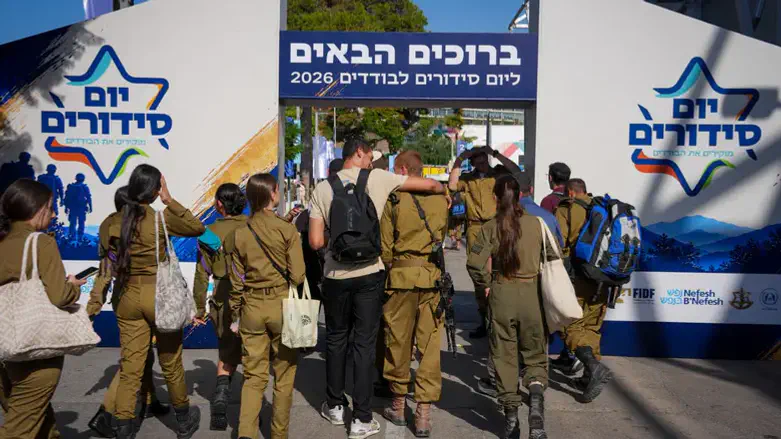 Israel National News22 hours ago
The Yom Siddurim organized by Nefesh B'NefeshShahar Azran
A full 9,200 lone soldiers serving in the IDF attended the annual Yom Siddurim (Errands Day) on Thursday at EXPO Tel Aviv, where essential government, military and civilian services were brought together under one roof.
The event was organized by the FIDF-Nefesh B’Nefesh Lone Soldiers Program, in partnership with the Mofet Unit of the IDF Manpower Directorate, and the Association for Israel’s Soldiers, as part of the IDF’s annual Lone Soldier Appreciation Week.
Each year, more than 7,000 lone soldiers from Israel and around the world are required to serve in the IDF, including over 3,700 new immigrant soldiers who have made aliyah (immigrated to Israel) from countries across the globe and more than 4,000 native-born Israelis who serve without the support of immediate family.
"Errands Day is another example of our ongoing commitment to supporting IDF soldiers, particularly lone soldiers, who face unique challenges alongside their military service," said Brig. Gen. (Res.) Liron Donel, CEO of Friends of the Israel Defense Forces (FIDF) in Israel. "The deep connection between FIDF donors in the United States and the State of Israel enables us to provide year-round support to active-duty soldiers and reservists, wounded IDF veterans, bereaved families, and lone soldiers, offering them comprehensive assistance and support tailored to their needs."
This year, thousands of lone soldier olim (immigrants to Israel), alongside Israeli lone soldiers from across the country, attended Yom Siddurim, where they were able to complete bureaucratic processes, access government and IDF services, receive professional guidance and take care of everyday needs that can be particularly difficult to manage during military service.
"The young men and women who make aliyah and are required to serve in the IDF demonstrate a remarkable commitment to the State of Israel and to the future of the Jewish people," said Shraga Weissmann, Director of the FIDF-Nefesh B’Nefesh Lone Soldiers Program. "Their contributions deserve more than our admiration, it carries with it a responsibility to ensure they have the support they need throughout their time in uniform. Yom Siddurim is an incredibly meaningful way we can help lone soldiers manage their day-to-day needs and remind them that they are supported every step of the way."
In total, over 70 government ministries, public agencies, organizations and service providers took part in the event, offering assistance with driver’s license conversions, biometric IDs and passports, National Insurance, housing, employment, academic degree recognition, banking, legal guidance, military benefits, and aliyah services. Soldiers also got the opportunity to learn about the FIDF-Nefesh B’Nefesh Lone Soldiers Program’s resilience programming and emotional support resources, offering comprehensive mental health support to lone soldiers, reservists, and soldiers returning to civilian life.
Among the most utilized services at this year’s event were those provided by the Ministry of Transportation, which operated an entire area dedicated to foreign driver’s license conversions. The area included vision exams, driving tests and photo stations, with dozens of volunteer driving instructors and certified examiners helping hundreds of lone soldiers receive Israeli licenses on-site. Throughout the day, hundreds of exams were administered, and new drivers licenses were issued.
The Population and Immigration Authority also operated 20 service stations at the event, issuing biometric ID cards and passports on-site. The Ministry of Aliyah and Integration, National Insurance Institute, foreign embassies, and multiple organizations provided services ranging from legal guidance and degree recognition to housing, employment, and bureaucratic assistance.
"Alongside the extensive support we provide to lone soldiers throughout the year, Errands Day allows us to bring together, in one place, a meaningful range of services, rights and resources that help ease the challenges of daily life alongside their military service," said Lt. Col. (Res.) Merav Ben-David, Vice President of the Fund of The Association for Israel’s Soldiers. "We are deeply grateful to the donors who chose to support this important cause, and to all of our partners who enable us to continue supporting lone soldiers, honoring their contribution, and ensuring that they know there is always someone standing by their side."
Beyond government and administrative services, the event also addressed many of the everyday needs that can become particularly challenging during military service. Volunteer seamstresses provided uniform repairs and tailoring, the Technology and Logistics Corps distributed and replaced uniforms, IDF Lone Soldier Center representatives provided assistance with salaries, military housing, rights and benefits and recently discharged soldiers received guidance.
The breadth of services offered reflects the wider year-round mission of the FIDF-Nefesh B’Nefesh Lone Soldiers Program, which provides guidance and support to Lone Soldiers before, during, and following their mandatory military service.
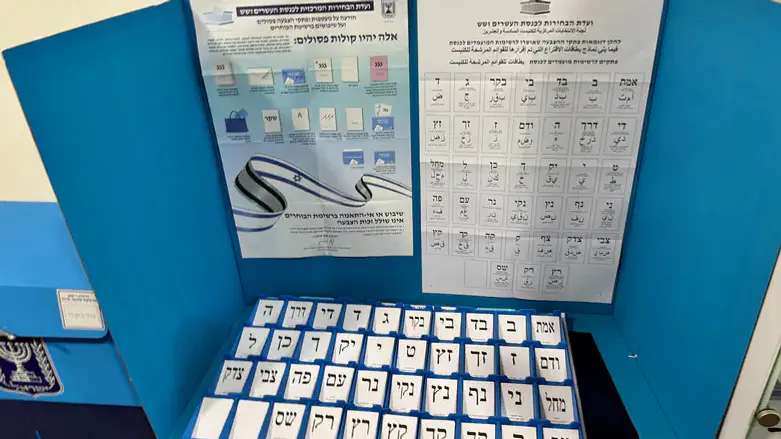 Israel National News23 hours ago
Voting boothArutz Sheva
Just four days before Israelis head to the polls, a final Channel 12 News election poll shows a significant lead for the opposition parties, alongside an improvement in Prime Minister Benjamin Netanyahu's standing in head-to-head comparisons with his political rivals.
According to the poll, Gadi Eisenkot's Yashar! party wins 23 seats, unchanged from the previous survey. Netanyahu's Likud gains two seats to reach 21, leaving a gap of just two seats between the two largest parties.
The poll shows Naftali Bennett's "Together" party maintaining its strength with 15 seats, while Yair Golan's Democrats gain one seat to reach 10. The Joint List, led by Yousef Jabareen, receives nine seats.
Three parties follow with eight seats each: Aryeh Deri's Shas, Avigdor Liberman's Yisrael Beytenu, and Itamar Ben Gvir's Otzma Yehudit, which gains support compared to the previous poll.
United Torah Judaism (UTJ), led by Yaakov Asher, receives seven seats, the Religious Zionism-Zehut list headed by Bezalel Smotrich wins six, and Mansour Abbas's Ra'am (United Arab List) rounds out the parties crossing the electoral threshold with five seats.
Ofer Winter's Amcha Yisrael party receives 2.5% of respondents' votes, while the Reservists-Economic list headed by Yoaz Hendel receives 2.4%. Both remain below the threshold required to enter the Knesset.
The Haredi Public Party, led by Moti Leitner, and the Noam LeYisrael party, led by Avi Maoz, also fail to cross the electoral threshold, each receiving 0.5% of the vote.
Divided into political blocs, the Channel 12 poll shows the anti-Netanyahu bloc reaching 70 seats, compared to 50 for the coalition parties. However, of those 70 seats, 56 belong to the Zionist parties of the Change Bloc, while 14 belong to the Arab parties.
A majority of 61 seats is needed to form a coalition.
Alongside the projected distribution of Knesset seats, the poll indicates a shift in the personal contest for the premiership. Although Eisenkot continues to lead Netanyahu on the question of suitability for prime minister, the gap between them has narrowed.
In a direct comparison, 44% of respondents believe Eisenkot is better suited to serve as prime minister, compared to 38% who prefer Netanyahu. The gap now stands at just six percentage points, down from 11 points in the previous poll. Another 14% believe neither candidate is suitable, while 4% are undecided.
Netanyahu has also improved his standing against Naftali Bennett. After Bennett led in previous polls on the question of suitability for prime minister, the two are now tied, with 39% supporting Bennett and 39% Netanyahu. Another 17% believe neither is suitable for the position, while 5% are undecided.
Against Avigdor Liberman, however, Netanyahu enjoys a clear advantage. Forty percent of respondents prefer Netanyahu as prime minister, compared to 28% who favor Liberman. The gap has widened from nine to 12 percentage points since the previous survey.
Another question examined which type of government respondents would prefer after the election, with the results indicating a clear preference for a government led by the anti-Netanyahu bloc.
Forty-six percent prefer a government led by the "bloc of change," compared to 32% who want a government led by Netanyahu's bloc. Another 15% prefer a national unity government, while 7% are undecided.
However, a more complicated question concerns what will happen after the election: What should the anti-Netanyahu parties do if they cannot secure a 61-seat majority without the Arab parties?
The poll asked "bloc of change" voters how they would prefer their parties to proceed under such circumstances. The responses indicate substantial support for forming a government that would rely on Ra'am abstaining during the Knesset confidence vote.
Sixty percent of "bloc of change" voters prefer establishing a minority government with Ra'am abstaining from the confidence vote. Only 10% favor a unity government with Likud, while 20% prefer another election. An additional 10% are undecided.
 Israel National News23 hours ago
Shmuel Cohen (L) takes a break from wrapping tefillin with passersby, NYC, Oct. 23, 2026.Joseph Strauss/JTA
(New York Jewish Week) - Less than 24 hours after he was stabbed in midtown Manhattan, Yosef, a Chabad-Lubavitch man from Crown Heights, was back on the same street where he’d been assaulted, popping into Diamond District businesses as usual to help employees wrap tefillin.
Yosef, 26, who did not share his last name to maintain his privacy, told the Jewish Telegraphic Agency that he was back on 47th Street on Thursday afternoon, the day after the stabbing, without missing a beat in his Monday-through-Thursday rounds even as police investigate the incident as a possible hate crime.
A number of the people he visited pieced together that the widely circulated footage of a man being stabbed the previous night was of him.
"They were in shock. They were obviously scared for me," said Yosef, who has been wrapping tefillin and distributing Shabbat (Sabbath) candles to Jewish Diamond District employees for about three years. He started that routine when his father, a Chabad-Lubavitch Jew who works in the jewelry business, realized he needed his son’s help to handle the demand for those acts. Yosef told Chabad.org that he was "still shaken" by the attack a day later.
Still, he told JTA, "We can’t allow some hate to stop us."
Yosef said he felt it was important to communicate that message because "we need more mitzvahs in the world, we need more light in the world."
Yosef was taken to Bellevue Hospital on Wednesday evening around 6 p.m., where medical staff assessed that he had no internal bleeding and would not need stitches. No arrests have been made, but the assailant has been described as a woman in her 40s.
The attack has renewed concerns about security that have faced Chabad-Lubavitch hasidim and institutions, which often host public events and maintain a visible street presence. But the threat didn’t diminish their presence in midtown Manhattan on Friday.
Multiple Chabad men stood under a bright yellow tent on the sidewalk wrapping tefillin for a steady stream of workers in the heavily Jewish Diamond District.
"The Rebbe says that the way to defeat darkness is only through the addition of light," said Shmuel Cohen, who was handing out small photographs of the movement’s late leader, the Lubavitcher Rebbe Menachem Mendel Schneerson.
Cohen told JTA that he had not heard about the attack that took place just down the block two days earlier, though his partner under the sidewalk tent had. Cohen said that the best way to respond is through "the observance of Torah and mitzvot without being ashamed of our Judaism but presenting it to everyone."
Also on Friday, Chabad-Lubavitch officials met with New York Police Department representatives for their annual meeting about security ahead of Chabad’s international conference in Crown Heights, the Brooklyn neighborhood where the movement is headquartered. The conference begins on Nov. 5.
Chabad has been targeted in multiple high-profile attacks in the past year, including the deadly Bondi Beach shooting in Australia in December. The following month, a man rammed a car into the doors of the Chabad-Lubavitch headquarters in Brooklyn, raising further questions over how the movement should balance its commitment to making its events accessible with security.
Meanwhile, Jews have been targeted in more than half of hate crimes committed in New York City in 2026, despite making up about 12% of the city’s population.
"Security is our top priority. Our goal is to provide an environment where every participant feels safe and can fully experience the purpose and spirit of the gathering," said Rabbi Mendy Kotlarsky, a top organizer of the upcoming conference.
In the wake of the attack, Yosef said he is not concerned about going out in public as a visibly Jewish person and doesn’t plan to change how he approaches the world.
"I was wearing the same clothes on Tuesday and Wednesday and Thursday," he said. "I didn’t change my routine."
 Israel National News1 day ago
IDF strikes terrorists (illustrative)IDF spokesperson
On Friday, in two separate incidents, IDF troops identified two terrorists who crossed the Yellow Line in the northern and southern Gaza Strip.
Following the identification, the troops eliminated the terrorists.
The IDF stressed that "troops under the Southern Command remain deployed in the area in accordance with the agreement and will continue to operate to remove any immediate threat."
 Israel National News1 day ago
Itamar Ben GvirYonatan Sindel/Flash 90
Otzma Yehudit chairman and National Security Minister Itamar Ben Gvir on Friday criticized efforts by the Likud party to attract voters away from his party, claiming that Prime Minister Benjamin Netanyahu wants to establish a broad coalition with Gadi Eisenkot in which Ben Gvir would have limited influence.
In a Facebook post published before the start of Shabbat, Ben Gvir urged his supporters to reject what he described as Likud's campaign to draw votes away from smaller right-wing parties. He warned that a weakened Otzma Yehudit might leave him outside the next government.
"I need your help to ensure that Ben Gvir is part of the next government," he wrote.
According to Ben Gvir, Netanyahu has already made clear that he does not intend to keep him as National Security Minister or appoint him Defense Minister, while expressing interest in forming a broad coalition with Eisenkot.
"You heard the Prime Minister announce that he would remove me from the National Security Ministry, that he would not give me the Defense Ministry, or the Justice Ministry to Tally Gotliv, while at the same time saying that he wants a broad government with Eisenkot," Ben Gvir claimed.
He framed the dispute as a choice over the composition of the next government.
"This is your choice: A strong Ben Gvir in the government, or a strong Eisenkot in the government."
Much of the post focused on rejecting the argument that right-wing voters should consolidate their support behind Likud to ensure that it remains the largest party. Ben Gvir maintained that the decisive factor in determining who forms the government is the number of Knesset members who recommend a candidate to the President.
"I keep hearing the 'vote-draining campaign' about the supposed need for 'the largest party.' Apart from the fact that it is simply incorrect, because what matters to the President is solely the number of recommendations within the bloc," he wrote.
To support his argument, Ben Gvir cited a Channel 14 poll conducted by Shlomo Filber, which he said gave Likud 30 seats and Eisenkot's party 20.
"That is an enormous, insurmountable gap of 10 seats in Likud's favor," he argued. The figures were presented by Ben Gvir as polling results, not election results.
Ben Gvir emphasized that voting for Otzma Yehudit does not contradict support for Netanyahu as Prime Minister.
"You know that every vote for Itamar Ben Gvir is automatically a vote for Bibi as Prime Minister," he wrote.
Nevertheless, he warned that a decline in his party's electoral strength would undermine his ability to influence government policy.
"If I am weak, I may not be in the next government, and certainly not in a position where I can influence the people of Israel," he added.
Earlier in the post, Ben Gvir reviewed his record over the past four years, presenting it as evidence of what he described as a fundamental change in the right wing's approach to governing.
He highlighted his demand to dismiss the Attorney General during the government's first month in office, changes he introduced in the prison system, demolitions of illegal construction in the Negev, and the expansion of civilian firearms licensing.
According to Ben Gvir, 10,000 illegally constructed homes have been demolished in the Negev over the past year and a half, while 300,000 firearms have been distributed to Israeli civilians during his tenure. These figures were presented in his post and have not been independently verified.
"Over the past four years, I fundamentally changed the right wing's outlook. Instead of trying to please others and compromise, I came from the very first moment to carry out what we promised. Without fear and without apologizing!" he wrote.
Ben Gvir argued that his approach had replaced what he characterized as an apologetic attitude with a more assertive political outlook.
"I changed the apologetic outlook of the right wing into an offensive approach, one that is not afraid to stand up for what is ours."
He concluded with a direct appeal to voters ahead of the elections: "If you want a strong Ben Gvir in the government, give me the power."
(Arutz Sheva-Israel National News' North American desk is keeping you updated until the start of Shabbat in New York. The time posted automatically on all Israel National News articles, however, is Israeli time.)
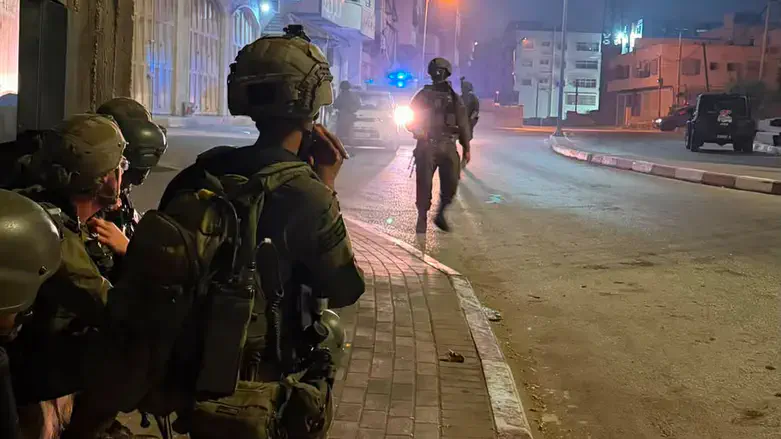 Israel National News1 day ago
Security forces in Hebron (archive)IDF Spokesperson's Unit
In response to Friday morning’s shooting attack in the Judea Junction, in which two IDF soldiers fell and several others were wounded, IDF soldiers, the Shin Bet (Israel Security Agency), Israel Border Police officers, and personnel from the Judea District Coordination and Liaison Administration launched a counterterrorism operation in the Hebron area, from which the terrorists had emerged.
In a joint statement on Friday evening, the IDF and Shin Bet said the forces have begun conducting precise, targeted and thorough searches throughout the area to locate and dismantle terrorist infrastructure and weapons, while questioning suspects.
The operation is targeted and limited to the area from which the terrorists operated, and is expected to continue for several days, the statement said.
From the start of the operation, residents living in the area where forces are operating will be able to leave through three designated exit points, following questioning and security screening. Individuals who raise suspicion during the screening process will be referred to security forces for further questioning.
The IDF and Shin Bet noted that the operation is a direct continuation of a series of offensive counterterrorism measures carried out since this morning, including mapping the terrorists’ residences, imposing a cordon on the areas of Hebron and Halhul, establishing roadblocks, and conducting counterterrorism activities in areas throughout the sector.
In addition, efforts are underway to improve security conditions in the area by demolishing illegal structures that could pose a security threat at the site of the encounter.
“Security forces are currently conducting counterterrorism operations at dozens of locations throughout Judea and Samaria. They will continue to operate proactively to prevent terrorist attacks, address security threats, and protect Israeli civilians," the statement concluded.
(Arutz Sheva-Israel National News' North American desk is keeping you updated until the start of Shabbat in New York. The time posted automatically on all Israel National News articles, however, is Israeli time.)
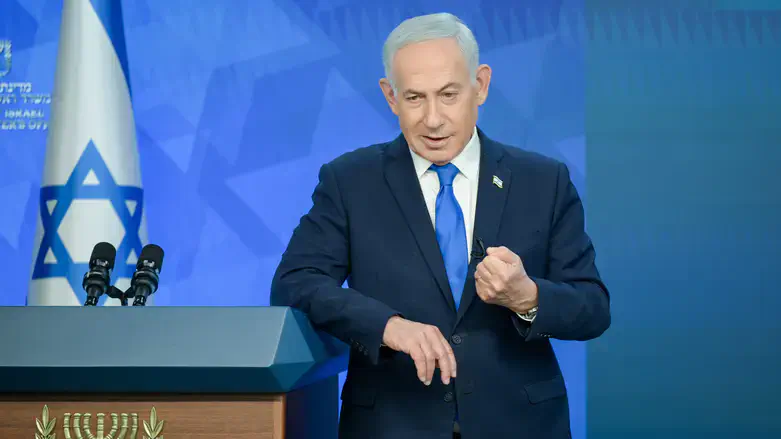 Israel National News1 day ago
Benjamin NetanyahuMa'ayan Toaf/GPO
Prime Minister Benjamin Netanyahu raised eyebrows on Friday when he said Israel must begin preparing solutions for the possibility that sanctions imposed by Western countries could extend to the Israeli banking system.
Speaking in an interview broadcast on Israel's Economy Channel, the Prime Minister stated that digital currencies could offer one possible solution.
"Of course I'm concerned," Netanyahu replied when asked about the possibility of sanctions targeting Israel's financial system. "You have to understand that there could be sanctions, including banking sanctions. You need to prepare an alternative economic system. And you know what that is. You know about digital currencies, and I'm working on that as well. There are other things, too."
Asked whether he was referring to blockchain technology as an alternative, the Prime Minister replied: "Yes, that's one of the ways. And I've already asked for a plan to be prepared for that."
Netanyahu also commented on the issue of US military assistance to Israel.
"If you think we're going to continue receiving what I secured twice, tens of billions of dollars in American assistance for the defense budget, get used to the fact that it won't continue, because America has changed. It's over. It's only a matter of time."
Opposition leader Yair Lapid responded to Netanyahu's remarks, saying, "Netanyahu's statement is insane, but correct. If his government is reelected, military aid will stop and severe economic sanctions will be imposed on the State of Israel."
Nir Hirshman, CEO of the Israeli Crypto Companies Forum, also commented on the Prime Minister's statements.
"Israel is among the world's leaders in developing cryptocurrency and blockchain technologies. Crypto has the potential to strengthen Israel's connections to global financial markets and make capital transfers more efficient. At the same time, the technology is not a safe haven for hiding money: Public blockchain networks allow transparency and the tracking of transactions."
"The Crypto Companies Forum is ready to work with the government and regulators to advance appropriate reforms in this field, strengthen the economy, and reinforce its ties with the rest of the world," Hirshman added.
(Arutz Sheva-Israel National News' North American desk is keeping you updated until the start of Shabbat in New York. The time posted automatically on all Israel National News articles, however, is Israeli time.)
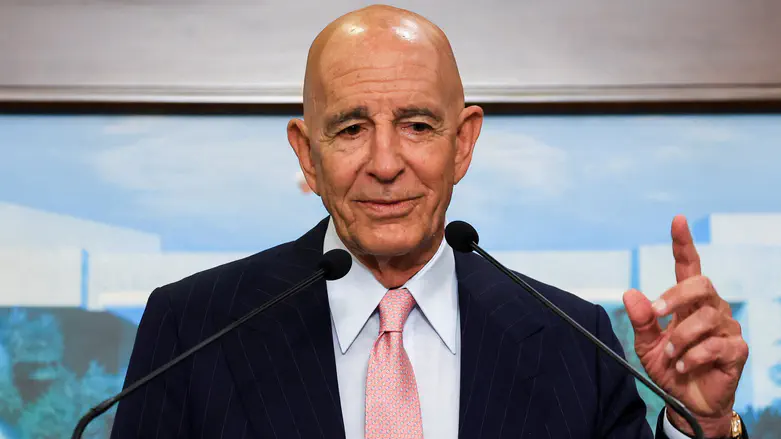 Israel National News1 day ago
COULD THERE BE A STRIKE THIS WEEKEND? "ABSOLUTELY" - Trump's Special Envoy Amb. Tom Barrac
US Ambassador to Turkey Tom Barrack said Friday that the United States could launch military strikes against Iran as early as this weekend, warning that President Donald Trump is prepared to act if Tehran continues threatening American allies and international security.
Speaking in an interview with podcaster Mario Nawfal, Barrack emphasized that the possibility of imminent military action remained on the table, even as Washington continued seeking a diplomatic agreement with the Islamic Republic.
"Could there be a strike this weekend? Absolutely. The President has been clear."
Barrack stressed that Trump remained willing to negotiate with Iran but would not allow diplomatic efforts to continue indefinitely without meaningful progress.
"I'm giving you American policy. The President is very clear. He's open and available and accessible to a deal."
The ambassador said months of negotiations had focused initially on eliminating the immediate threat posed by Iran's nuclear program, an objective he suggested had largely been achieved.
"And we've been at the table for months and months and months. Starting with what's clear is the elimination of the imminent threat of nuclear. I think we've established that."
According to Barrack, the remaining nuclear questions involve the future of uranium enrichment, preventing proliferation, and determining the duration of any agreement.
He explained that negotiations had considered different time frames for restrictions on Iran's nuclear activities, ranging from five to 20 years, and suggested that the sides were approaching an understanding on that issue.
However, the ambassador indicated that the nuclear question was only one component of a broader dispute involving Iran's regional activities, economic sanctions, and control over the Strait of Hormuz.
Barrack said the negotiations also concerned the possibility of unfreezing Iranian assets, lifting sanctions, ending military confrontations, and ensuring continued American support for Israel.
Despite those efforts, Barrack suggested that reaching an agreement had become increasingly complicated by uncertainty over who could make binding decisions within Iran's leadership.
He pointed to the impact of American military operations against senior members of the Islamic Revolutionary Guard Corps (IRGC), arguing that the loss of key figures had complicated Tehran's decision-making structure.
The ambassador also acknowledged diplomatic efforts by Qatar, Pakistan, and Oman to facilitate negotiations.
Barrack distinguished between the Iranian people and the country's ruling military establishment, emphasizing that Trump respected Iran's history and civilization.
"President Trump has great respect for the Iranian civilization. It's 3,000 years old. It's some of the most amazing poetry, some of the most amazing art, some of the most amazing people."
He identified the IRGC, rather than the Iranian population, as the principal adversary of the United States.
"The adversary is the IRGC. Since 1979, this harsh entity that was created that's at odds with Israel and at odds with us. The Iranian people themselves are not, can't be in this fabric."
Barrack also clarified that Washington's objective was not to overthrow Iran's government.
"The consequence won't be regime change. The United States, the president of the United States has said he's not interested in regime change. He's interested in rebalancing so that there's no hostages, there's no threats, and the world can calm down and ensure of what's there."
He explained that attempts to replace governments frequently create uncertainty about what follows, particularly when there is no clear plan for maintaining stability.
Instead, the administration seeks an arrangement that would eliminate nuclear threats, curb Iran's activities through regional armed groups, and reduce tensions with neighboring countries.
Barrack compared Iran's regional network to a hand with five fingers, identifying Hamas, Hezbollah, the Houthis, and Iran-backed militias in Iraq among the organizations through which Tehran exerts influence.
He said ending those activities was a central American demand, alongside protecting Israel and other regional partners.
Nawfal cited Trump's recent remarks suggesting that a decision on Iran could come sooner than many observers expected, despite widespread speculation that additional strikes would be delayed until after the November midterm elections.
Barrack did not confirm that a decision to attack had been made. However, he emphasized that Trump's warnings should be taken seriously.
"So one thing I know for sure is the president doesn't make idle threats. He just doesn't."
The ambassador said the President's decisions were informed by intelligence and developments that were not necessarily available to the public, explaining why American policy might appear to shift from one day to the next.
"It's on and off because he has more information than all of us. And he's making intelligent decisions, heartful decisions on a day-by-day basis. But if the world is starting to be choked, and it seems that there's not a parallel path, I think that we can be certain that he will do what he said."
Trump was later on Friday asked by a reporter about Barrack’s comments and replied, “[Barrack] is a pretty powerful man, I guess. If that’s the case, I don’t know anything about it."
He subsequently spoke at a rally in Florida and said, “We may do another little Operation Epic Fury, or they will agree. If they're smart, they will just say, ‘Let's get down to business.’ But I doubt they will do that because perhaps they're not smart.
(Arutz Sheva-Israel National News' North American desk is keeping you updated until the start of Shabbat in New York. The time posted automatically on all Israel National News articles, however, is Israeli time.)
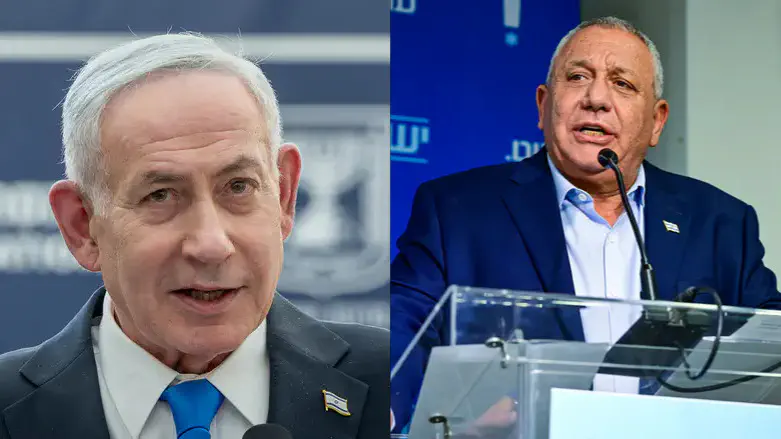 Israel National News1 day ago
Netanyahu and EisenkotChaim Goldberg and Avshalom Sassoni/Flash 90
Israel's three major television news networks released their final election polls on Friday evening, the last polls permitted to be published under Israeli law ahead of Tuesday's elections.
In the Kan 11 News poll, Gadi Eisenkot's Yashar party receives 22 seats, followed by Likud with 20 and the Together party, led by Natftali Bennett, with 14. The Joint List wins nine seats, while Otzma Yehudit, the Democrats, Yisrael Beytenu, and United Torah Judaism each receive eight.
The Religious Zionist Party-Zehut alliance and Shas each receive seven seats, Ra'am wins five, and the Reservists and Economic Party, led by Yoaz Hendel and Yaron Zelekha, receives four.
According to the Kan 11 News poll's bloc breakdown, Eisenkot's bloc receives 52 seats, compared to 50 for Netanyahu's bloc. The Arab parties hold a combined 14 seats, while the four seats won by Hendel and Zelekha's party are not assigned to either of the two main blocs.
In the Channel 12 News poll, Yashar leads with 23 seats, followed by Likud with 21 and Naftali Bennett's Together party with 15. The Democrats receive 10 seats, the Joint List nine, and Shas, Yisrael Beytenu, and Otzma Yehudit eight each.
United Torah Judaism receives seven seats, the Religious Zionism-Zehut alliance six, and Ra'am five. Ofer Winter's party, the Reservists and Economic Party, and HaTzibur HaCharedi (the Haredi Public party) all fail to cross the electoral threshold.
According to Channel 12's bloc breakdown, the coalition parties receive 50 seats, the opposition parties 56, and the Arab parties 14.
Eisenkot's Yashar party also leads the Channel 13 News poll, receiving 22 seats. Likud follows with 19 seats, while Bennett's Together party receives 14. The Democrats win 10 seats, and the Joint List receives nine.
The Religious Zionism-Zehut alliance receives eight seats, as do Yisrael Beytenu, Otzma Yehudit, and United Torah Judaism. Shas and Ra'am each receive seven seats.
In Channel 13's bloc breakdown, the opposition bloc receives 54 seats, the coalition bloc 50, and the Arab parties 16.
The Channel 13 poll also examined parties that fail to cross the electoral threshold. The Amcha Yisrael party, led by Ofer Winter, receives 3.1% of the vote, just below the 3.25% threshold. Yoaz Hendel and Yaron Zelekha's party receives 3%, while HaTzibur HaCharedi, led by Moti Leitner, receives 1.3%.
In addition to projecting the distribution of Knesset seats, the Kan 11 News and Channel 12 polls examined which political leader respondents considered most suitable to serve as Prime Minister.
In both surveys, Eisenkot leads Netanyahu by 44% to 38%. A comparison between Netanyahu and Bennett produces a tie in both polls. In the Kan 11 News survey, each receives 38%, while in the Channel 12 poll, both stand at 39%.
The Kan 11 News poll also examined a potential contest between Eisenkot and Bennett. Of those surveyed, 35% said Eisenkot was better suited to serve as Prime Minister, compared to 22% who preferred Bennett. Another 43% said neither candidate was suitable for the position.
(Arutz Sheva-Israel National News' North American desk is keeping you updated until the start of Shabbat in New York. The time posted automatically on all Israel National News articles, however, is Israeli time.)
 Israel National News1 day ago
US President Donald Trump said Friday that Iran has been severely weakened economically and militarily, suggesting that Washington could either intensify its campaign against the Islamic Republic or allow continued economic pressure to further undermine the regime.
Speaking to reporters, Trump claimed that the United States had achieved its objectives in the conflict and was now in a position to determine how to proceed.
"They have no money. The question is, do we want to finish it off or do we just want to let it wither? Because we are getting everything we want. We have more oil coming out of the Hormuz Strait today than they did a year ago," Trump said.
The President also asserted that American forces had established complete control over the strategically important Strait of Hormuz, while suggesting that the United States possessed the military capability to seize Iranian territory and oil resources.
"Iran is not able to do much now," he continued. "And we could, if we wanted to, just take all of the oil. We could take the whole country. And as you know, the Hormuz Strait is totally ours, and that's the way we'll keep it."
Trump further pointed to Iran's deteriorating economic situation, citing what he described as exceptionally high inflation.
"They have no money. They have inflation that's 301 percent, that's the highest in the world right now. So we'll see," Trump stated.
His comments followed remarks Thursday in which he indicated that additional American military operations against Iran remained under consideration.
Speaking outside the White House before traveling to a campaign rally in Iowa ahead of the November 3 midterm elections, Trump defended his decision to launch the military campaign, arguing that previous administrations had failed to address the Iranian threat.
He said he is "doing what should have been done by other presidents. There's a price to pay, which I knew immediately when I did it."
The President acknowledged that the war had generated differing opinions but reiterated that preventing Iran from developing nuclear weapons was a central objective of his administration.
"But we can't let Iran have a nuclear weapon. I mean, in one way, people probably don't love it. But many people, many great patriots really love it."
Trump then suggested that the American military campaign might not yet be over.
"This should have been done a long time ago by other presidents, the Iran war. And we've knocked the hell out of them. And we may do it a little bit further."
Meanwhile, The Atlantic reported Thursday that Trump is considering authorizing another round of military strikes against Iran, potentially beginning shortly after the November 3 congressional elections.
According to officials familiar with the administration's deliberations, the proposed operation could involve several days of attacks targeting Iran's nuclear facilities, missile and drone capabilities, and energy infrastructure.
The report indicated that Trump's growing impatience with Tehran's refusal to return to negotiations has contributed to discussions about renewed military action, although no final decision has been announced.
(Arutz Sheva-Israel National News' North American desk is keeping you updated until the start of Shabbat in New York. The time posted automatically on all Israel National News articles, however, is Israeli time.)
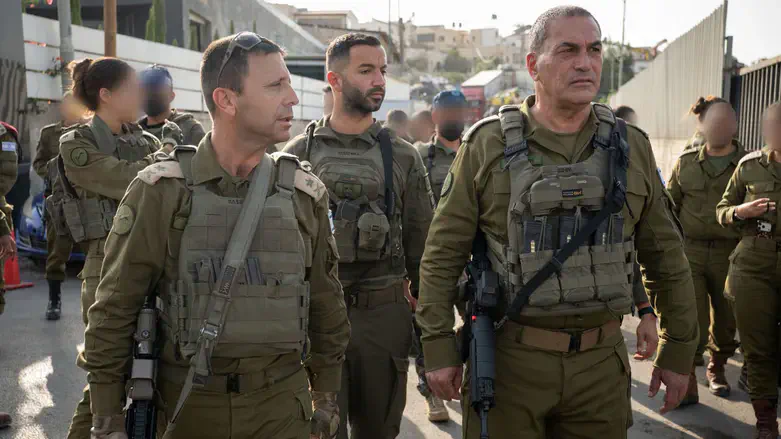 Israel National News1 day ago
Eyal Zamir at scene of Judea Junction shooting attackIDF Spokesperson's Unit
The Chief of the General Staff, LTG Eyal Zamir, arrived on Friday at the scene of the shooting attack near the Judea Junction, in the Judea Regional Brigade’s area of responsibility, where he toured the scene and held a situational assessment alongside the Commander of the Central Command, MG Avi Bluth; the Commander of the 98th Division, BG Meni Liberty; the Acting Head of the Civil Administration, BG (Res.) Ilan Malka; the Commander of the Judea Regional Brigade, COL D.; the Commander of the Judea and Samaria Border Police; representatives of the Israel Security Agency (ISA); and additional senior commanders.
“The outcome of the encounter with the terrorist cell is painful, but the initial inquiry indicates that the actions of the Ari Battalion troops prevented a serious attack against Israeli civilians. We will act decisively, pursue and reach all those involved in the attack," Zamir said.
“Based on the situational assessment, we prepared for the possibility of escalation in Judea and Samaria, reinforced our troops and deployed the 98th Division headquarters and numerous additional troops to the area. Our troops’ operations in the area have prevented and thwarted numerous attacks in recent weeks. We will act decisively and pursue all those involved in the attack. Anyone who attempts to harm us should know that we will reach them," he added.
“We are at the highest level of readiness and alert across all fronts. Our primary mission is to thwart terrorism and ensure security and stability for Israeli civilians. We will continue to strike and take proactive action wherever necessary, while acting with composure. We will not be drawn into provocations or allow our enemies to influence our actions, particularly as we enter this sensitive week. We will also conduct an inquiry into this attack to learn from it and draw lessons for the future," the Chief of Staff continued.
“I extend my deepest condolences to the families of SSGT Ron Yonatan Roytman and SGT Yuval Shai Svilem, who fell while defending Israeli civilians and preventing an even more serious attack. I also wish the wounded a speedy recovery," concluded Zamir.
(Arutz Sheva-Israel National News' North American desk is keeping you updated until the start of Shabbat in New York. The time posted automatically on all Israel National News articles, however, is Israeli time.)
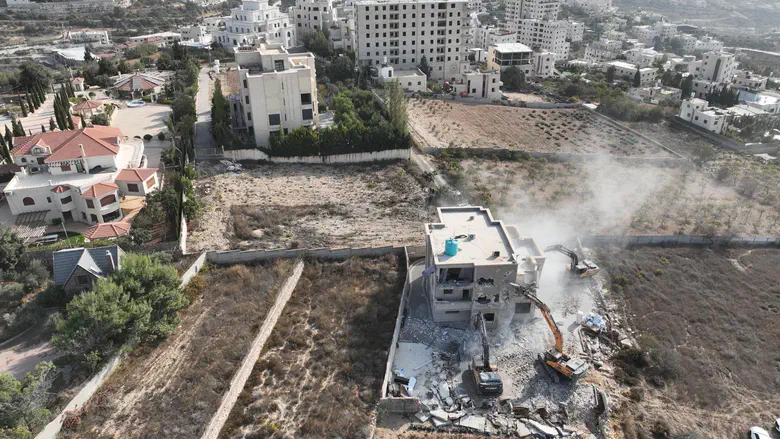 Israel National News2 days ago
דחפורים החלו לפעול בפאתי חברוןלשכת השר
Hours after the deadly attack near Hebron in which two IDF soldiers were killed, the Civil Administration’s enforcement unit began demolishing structures deemed illegal on the outskirts of the city Friday, near the scene of the attack.
The operation is being carried out at the direction of Minister in the Defense Ministry Bezalel Smotrich, who arrived at the site to oversee the demolitions.
According to a statement from the minister’s office, the operation involves the demolition of dozens of structures in the area and is being carried out in coordination with the IDF and the Civil Administration. Smotrich described the move as part of the response to the attack and an effort to strengthen deterrence.
“As part of establishing deterrence and exacting a price for the serious clash, we are now carrying out a series of demolitions of illegal structures here, in coordination with the military and the Civil Administration," he said during his visit.
“We are already here with the heavy equipment on the ground, sending an unequivocal message to our enemies: Anyone who messes with us will pay a very heavy price."
Alongside the demolition operation, Smotrich announced that four additional farms in the southern Hebron Hills had been approved Friday.
“We are continuing to do good, but also to remove evil," he said.
According to the minister, the demolitions are expected to continue until Shabbat begins. “By Shabbat, we will have taken down quite a few structures here, and it will be clear that terrorism targeting Israeli civilians comes at a very heavy price. This is just the beginning."
Smotrich added that he had reached an agreement with the prime minister and defense minister to map the area and other locations throughout Judea and Samaria, with the aim of concentrating efforts and expanding the operation.
“We also agreed here with the prime minister and defense minister to map this area and many others, concentrate our efforts, exact a price and establish deterrence. Jewish blood is not hefker," he said.
At the end of his remarks, Smotrich thanked the head of Central Command, the deputy head of the Civil Administration for civilian affairs, the Civil Administration’s infrastructure division and members of the enforcement unit, who, he said, had been called away from their homes on Friday to carry out the demolitions.
 Israel National News2 days ago
Rabbi Lazer GurkowCourtesy
The Torah tells us about a dispute between the shepherds of Abraham and the shepherds of his nephew Lot. G-d had promised the land of Canaan to the descendants of Abraham. Lot considered himself a descendant and felt entitled to the land. He instructed his shepherds to graze his herds on private lands because all of the land belonged to him. Abraham told his shepherds that the Divine promise would be implemented in the future. Privately owned land in the present was still off-limits to Abraham’s herds.
Abraham said to Lot, “Let there not be a dispute among us, for we are brothers. Let’s part ways; if you go left, I will go right. If you go right, I will go left" (Genesis 13:8-9). Indeed, Lot parted ways with his illustrious uncle and moved to the fertile, prosperous region of Sodom.
On the surface, this sounds like Abraham was looking for a clean break. You and I can have nothing to do with each other. If you are on the left, I will go to the right. If you are on the right, I will cross over to the left. Wherever you are, I will not be. I will forever oppose you.
This sounds a lot like our contemporary political climate. People who are on the left despise the ideas of the right. And those on the right despise the left. No one ever crosses the aisle. If someone from the other side is walking down the block, you cross the street. If they go right, you go left.
While this comparison sounds valid at first blush, it fails when you examine Abraham’s first sentence. He did not suggest their parting because they were on opposite sides. He suggested it because they were brothers. This is perplexing: Why should their kinship force a separation, should it not enable them to find common ground?
It is true that nothing hurts more than a brother who betrays us, but we would expect someone like Abraham to overcome this rejection and reach across the divide. Someone like Abraham, the father of the multitudes, should have been able to look past their divergent opinions and see their brotherhood. Their common root, their inherent oneness, should have been enough to overcome their surface differences.
Carving our Space
The biblical commentaries argue that Lot was indeed too wicked for Abraham to abide him. However, allow me to suggest a novel interpretation. Abraham was not dealing with an equal. He was dealing with a young adult who grew up in his home. Haran, Abraham’s brother and Lot’s father, died when Lot was a baby, and Abraham adopted the little boy. Abraham and Sarah treated Lot like their own child, and when G-d told them to relocate to the land of Canaan, they took Lot along. There was no question of leaving Lot behind. He was like their son.
When Abraham and Sarah traveled to Egypt, and Pharaoh rewarded Abraham with gold and silver, Lot also benefited. As a member of Abraham’s family, Pharaoh awarded gifts to Lot, too. Abraham did not resent this. He was happy. Lot was like a child to him.
Lot returned to Israel with his aunt and uncle, a wealthy man. Now he could finally step out of his uncle’s shadow and establish some independence. Indeed, this is the first time we hear anything about Lot’s opinions or personality. Upon his return, he staked out a position different from his uncle. His uncle understood the Divine gift of land as a long-term promise. Lot claimed it was immediately valid.
If this was, indeed, Lot’s motivation, then he wasn’t driven by G-d’s promise as much as by his desire to establish independence from Abraham. If you say yes, I will say no. If you say white, I will say black. This is common among children raised in the shadow of illustrious people. Those who tower over their community often eclipse their own children. Such children often push back. And Abraham discerned this.
Parenting Advice
Let’s pursue this train of thought and see what unfolds. Abraham doesn’t fight him. He doesn’t turn it into a power struggle. In his wisdom, the father of the Jewish people understands that the time had come for him to step back and let his nephew make his own mistakes.
In this light, we can understand his response to Lot. Let’s make space for your growth process. You are old enough to make up your own mind and do not need me to tell you how to think. Go ahead, my child, and establish your homestead. I will not stand in your way. In fact, I will give you all the space you need. If you move to the left, I will move a corresponding distance to the right. I won’t make you do all the relocating. We can share that burden.
The process of growing our own wings does not need to be a child’s fight. It should be something parents and children learn and do together. Parents realize that the time has come to pull back, and the child takes their first tentative steps into independence. Parents don’t always approve of the children’s choices, but they realize that they have done all they can to equip their child to make choices. Now that the child is making choices, the parents need to make space for them by stepping back.
The time to mold their child has passed. Now it is time to let their young adult find their footing. Parenting transitions into a hands-off relationship. It is much subtler and harder to do, but if done correctly, the child will eventually appreciate it and love them all the more for it.
The Rest of the Story
Lot moved to Sodom, where he showed his true colors as a man of greed. In Sodom, Lot found a like-minded society that enjoyed their wealth and drafted laws to ensure it could never be shared. Lot settled among them and never pursued his national claims again. This suggests that his dispute with his uncle was never about national aspirations. It was simply about greed. He wanted what others owned. (Perhaps he made his national argument knowing that pushing back with an argument based on G-d’s promise would carry more weight with Abraham than a greedy land grab.)
Yet, bullies who thrive off other people’s suffering never succeed for long. At some point, their avarice catches up with them, and that happened to Sodom. When they offended the wrong person, refusing to pay taxes to the regional overlord, he raised an army and marched against them. He defeated the wealthy men of Sodom and took many, including Lot, captive.
This is when Abraham demonstrated that the space he gave Lot was born of love, not malice. When Lot was in need, Abraham waded into battle at grave personal risk and saved him.
Love and Respect
With this, our patriarchal father taught us that parenting is a blend of respect and love. You can’t smother a grown child with love and micromanage their affairs. That deprives them of the space they need to grow. You must respect them enough to give them their space. However, respect alone is also never enough. In the end, every child, no matter how old, needs to know they are loved. They have a funny way of showing it during certain stages of their lives, but they always need it.
Abraham demonstrated this dual approach with his nephew Lot. He gave him all the space he needed, including the space to make unwise choices. But when Lot was in need, Abraham marched right in to save him. With this, Abraham demonstrated that Lot was more precious to him than life itself.
 Israel National News2 days ago
BrothersRandy/Yisroel Settenbrino
When Avraham set out on his journey to Eretz Yisrael, his nephew Lot travelled with him.
Lot and Avraham were very different. They did not share the same lifestyle, beliefs, ideologies, priorities, interests or values. Whilst Avraham was on a spiritual mission and focused on serving G-d, Lot was interested in the pursuit of material wealth. The commentators teach that Lot could not stand the faith of Avraham or his Divine sense of morality.
Things came to head when they returned from Egypt. A fight erupted between Lot’s shepherds and Avraham’s shepherds. This was not just a petty dispute, but a clash of values. Lot saw himself as the inheritor of the land and was happy for his sheep to graze in other people’s fields. But Avraham, careful to avoid any theft, would only allow his sheep to graze in ownerless pastures.
Avraham turned to Lot and said, “let there not be fighting between us, for we are brothers." Avraham proposed that they separate and go their own ways. “The whole land is before you, let us separate. If you go the left, I shall go to the right and in if you go to the right, I shall go to the left."
Once he was free to choose, Lot chose Sodom, a place of sin and immorality - the antithesis of the home and values of Avraham.
Even though Lot was Avraham’s nephew, in this verse, Avraham said “we are brothers". Rashi tells us that contextually it means that we are relatives. Nonetheless, the Torah’s use of the word “brothers" is deliberate.
The relationship of brothers is a very close bond, with a deep love that connects them. Even when brothers disagree and even if they live completely different lifestyles, their love transcends their differences.
Avraham was saying that because we are brothers, there should not be fights between us.
Their differences were irreconcilable and if they were to continue living together, there would be more clashes and strife. For the sake of peace and to preserve their relationship, Avraham and Lot would have to part ways. This way, they could each live their lives in the manner that they chose, without imposing on the other, and without their differences becoming a constant source of friction.
Later in the Parsha, Lot is described as Avraham’s brother for a second time.
In the War of Kings, the city of Sodom was attacked, and all its inhabitants, including Lot, were taken captive. The Torah relates that “Avraham heard that his brother had been taken captive."
Immediately on hearing this news, without a moment of hesitation, Avraham armed himself and went out to battle. He did not think about the size and strength of his opponents, and he did not give regard to the danger to his own life. He knew one thing. His brother had been taken captive and was in danger, and he had to do something to try to save him.
Abrabanel explains that the verse describes Lot as “his brother" because in that moment, when Lot was taken captive and was suffering, Avraham’s feelings for him and his closeness became so strong, that he felt like it was his actual brother.
Avraham was ready to risk his life for the very same Lot whom he had separated from, the same Lot who lived and believed so differently from him and whose own choices had led him to Sodom.
Separating himself for Lot was not an abandonment. It was not out of hatred or to sever his ties and stop caring about him. It was driven by his brotherly love for Lot, so that they would not end up fighting with one another. The same brotherly love that had led Avraham to separate himself for Lot, now drove Avraham immediately to his rescue.
Like all the Torah’s teachings, this lesson is eternal. It is especially relevant today in a time as we head to elections in Israel, a time where our differences are highlighted and tensions can run high.
The Jewish people are diverse. We differ in our religious levels and lifestyles, and we hold many different world outlooks and political views. You don’t have to look further than the spectrum of parties running in the election to see just how many different streams there are, with diametrically opposing platforms on so many critical issues.
Each of us holds our values and beliefs strongly and passionately. And when others do not think, live or believe as we do, tensions can run high. Like the shepherds of Lot and Avraham, when we live on top of one another, these differences can unfortunately spill out into open rifts, strife and even fights.
But even in these moments of heightened tensions, we must remember that like Avraham and Lot, “we are brothers". And so there should not be fights between us, despite our differences and fiercely held beliefs.
Even when we disagree on significant issues, our discourse must always be respectful and civil. Our words must be measured and the way that we campaign and debate must be within the context of a sense of genuine love for one another, like members of our own family. We need to respect that they may “go left" while we “go right" or vice versa.
In extreme circumstances, the only way to keep our brotherly peace and coexistence is often to live separately, in separate communities.
But even when we live our separate and very different lives, we cannot forget that at all times, we remain one family, we are brothers.
The proof of this is in times of crisis, when our brother is taken captive.
In the aftermath of October 7th, all of the differences that separate us fell away. Without any regard to lifestyle, beliefs, religiosity or political allegiances, in that moment, we all knew one thing. Our brothers and sisters had been taken captive and we must do something to help save them. Jews in Israel and around the world rallied as one behind the army, the victims and the captives.
This is the true spirit of the Jewish unity and the uniqueness of our people. We may argue and disagree. We may seem so different and distant from one another. But we are brothers and we would do anything for one another in a time of need.
Just as Avraham succeeded in rescuing Lot, Baruch Hashem all of our hostages are home and crisis has subsided. As we move forward, it is so easy to slip back to old habits as the rifts emerge and threaten to pull us apart once again. We need to retain this sense of brotherly love and responsibility in the forefront of our hearts and minds, and most importantly to see one another as our brother in our daily interactions.
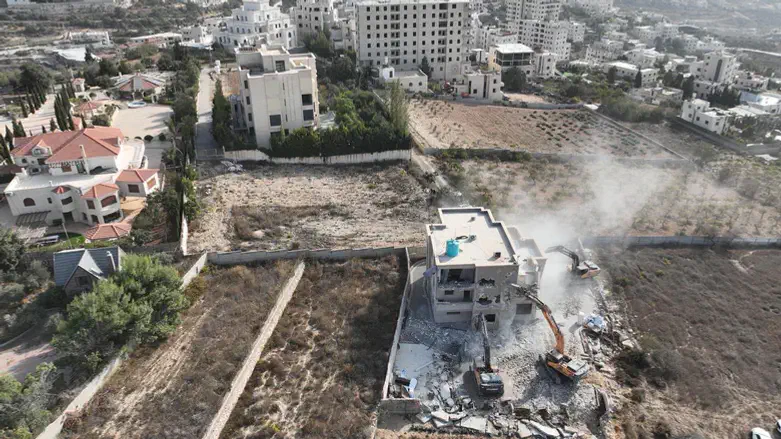 Israel National News2 days ago
Demolitions near the site of the attackMinister's office
Just hours after the terrorist attack that claimed the lives of two IDF soldiers near Hebron, Civil Administration enforcement units began operating on Friday to demolish illegal structures in the outskirts of the city, near the scene of the attack.
The operations were ordered by Bezalel Smotrich, a Minister in the Defense Ministry, who arrived at the scene to oversee the operation.
According to a statement from the Minister's office, the forces will demolish dozens of structures in the area in coordination with the IDF and the Civil Administration. The minister presented the move as part of the response to the attack and as a step designed to increase deterrence.
"As part of our efforts to establish deterrence and exact a price for the serious confrontation, we are now carrying out a series of demolitions of illegal structures here, in coordination with the military and the Civil Administration," he said during his visit to the scene.
"We are already here with heavy machinery on the ground, sending an unequivocal message to our enemies: Whoever messes with us will pay a very painful price."
Alongside the demolitions, the minister announced that four additional farms in the southern Hebron Hills had been approved today.
"We are continuing both to do good and to turn away from evil," he said.
According to the minister, the demolitions are expected to continue until the onset of Shabbat. "By Shabbat, we will demolish quite a few structures here, and it will be clear that terrorism targeting Israeli civilians carries a very heavy price. This is just the beginning."
He also stated that he had reached an agreement with the Prime Minister and Defense Minister to map the area and additional locations throughout Judea and Samaria, with the aim of concentrating efforts and expanding operations. "We have also agreed with the Prime Minister and Defense Minister to map this area and many other areas, concentrate our efforts, exact a price, and establish deterrence. Jewish blood is not cheap."
At the conclusion of his remarks, he thanked the commander of the IDF Central Command, the deputy head of the Civil Administration for civilian affairs, the Civil Administration's Infrastructure Department, and personnel from its Inspection Unit, who, he said, had been called away from their homes on Friday to carry out the demolitions.
 Israel National News2 days ago
תיעוד העימותדוברות מועצת שומרון
Three ATV riders were lightly injured Friday after allegedly being ambushed by a group of 30 to 40 Palestinians and foreign activists on their way to Ein Amasha in Samaria.
The hikers said they were attacked with clubs and stones, while foreign activists filmed the incident without intervening. The three fled on foot, leaving their ATVs behind, which were subsequently vandalized.
One of the injured hikers, identified only as M., said the group had been waiting for them along the road.
“We were on our way to Ein Amasha. Between 30 and 40 Arabs and anarchists were waiting for us in an ambush," he said. “Arabs attacked us with stones and clubs, while the anarchists stood there filming and made no effort to hide their delight."
Samaria Regional Council head Yossi Dagan spoke with the hikers after the incident and called on the security establishment to arrest those involved and deport the foreign activists who allegedly filmed the attack.
“This was a serious attack on hikers who were on their way to a spring," Dagan said. “I expect the government, the IDF and the security establishment to act with full force and a firm hand against the terrorists who harmed the hikers."
Dagan also criticized the foreign activists, accusing them of coming to the area to provoke tensions and filming as the hikers were attacked.
“We demand that the foreign anarchists who come to Samaria to create provocations be deported from Israel," he said.
At the same time, Dagan stressed that the authority to use force rests solely with the security forces.
“We trust the IDF and expect a forceful response and the deportation of the foreign anarchists from Israel. We expect the IDF and the security establishment to do their job. Only the IDF and the security establishment are authorized to use force," he said.
Dagan added that Samaria residents stand behind the security forces and expect a firm response to the incident.
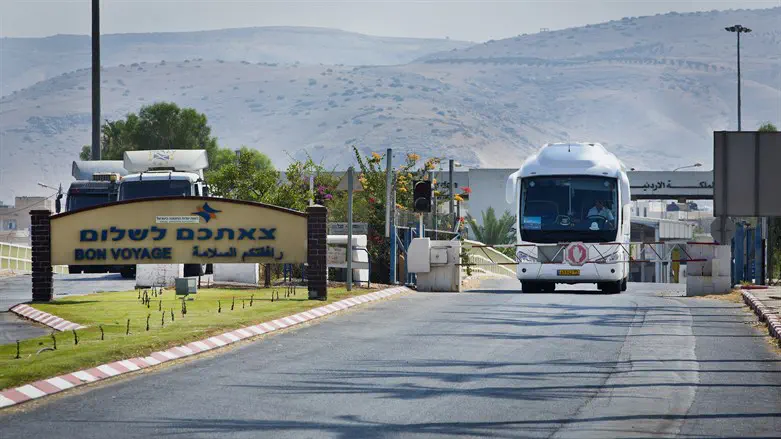 Israel National News2 days ago
Israel-Jordan border crossingMoshe Shai/FLASH90
At least seven people were killed and 10 others wounded Friday in a deadly shooting during a church funeral near the southern Jordanian city of Karak.
According to initial reports in Arab media, two gunmen arrived at the scene, opened fire on mourners and fled. Jordanian security forces launched a manhunt for the suspects.
The reports, citing Jordan's Al-Mamlaka TV channel, said the two gunmen exited a vehicle and fired at those attending the funeral. The casualty count has not yet been confirmed as final.
Jordanian security forces are continuing efforts to locate the suspects. No verified details have been released about their identities, and it remains unclear whether the attack targeted the mourners because of their religious affiliation or for another reason.
 Israel National News2 days ago
Rav Reuven Taragin, Educational Director at World MizrachiThe Western Wall Hesder Yeshiva
A Privilege Overlooked
"At 5:35 AM, we woke up: my wife, my brother Reb Shimon Leib, and my brother-in-law Reb Natanel Solduchil. And after we drank coffee, we put on Shabbat clothing in honor of this great and holy day, because 'This is the day the Lord has made, we will rejoice and be happy on it.'
"After 2000 or more years of exile, you could say that from the six days of Creation until this day, we have not merited to see a day like this, that we are holding elections in a Jewish state. Shehechiyanu! Blessed is the One who kept us alive and sustained us and brought us to this day!
"So we went to the voting station near Chabashim Street with our identity cards in hand. With great and mighty joy, we walked the short way there, and the entire way I walked as if it were Simchat Torah, circling with a Torah scroll, because I was holding the identity card of our new Jewish state in my hand.
"My happiness and joy knew no bounds! The assistant at the voting station brought the ballot box, and the chairman called out to me and said, “V'hadarta p’nei zaken - And you shall honor the old man," and he told me that since I was the oldest person present, I would be the first to vote. With a thrill of awe and holiness, I handed my identity card to the chairman, who read my name aloud from the card and the voters' register.
"The deputy chairman wrote down my name and handed me the number 1, then handed me an envelope. I went into the other room, where there were ballots from all the parties. With a shaking hand, moved with holiness, I took one ballot marked "B" for the Religious Union party and placed it inside the envelope I had received from the deputy chairman.
"I reentered the polling room and showed them I held only one envelope. Then the holiest moment of my life arrived. The moment that neither my father nor my grandfather had the privilege to experience in their lifetimes. Only I, in my time, in my lifetime, did I merit to experience such a holy and pure moment as this... What joy for me and my portion!
"At 6:28 AM, we returned home and went to pray. What a great holiday!"
This is how Rabbi Moshe Alpert, a haredi rabbi who served as the leader of several Jewish communities in Jerusalem during the Mandate, describes his experience of voting in the first Israeli Knesset elections in 1949.
Nearly eighty years and countless election cycles later, many of us have come to take for granted the privilege of voting for a Jewish government in a Jewish state.
We should not.
For nearly two millennia, our people lacked the opportunity to vote for Jewish representatives in our own country. Regardless of the candidates or the election outcome, we should recognize and appreciate the profound zechut of possessing this right.
How To Choose
Indeed, Jews know how to celebrate elections. Indeed, we take full advantage of the democratic process by consistently fielding one of the world’s largest numbers of political parties per capita.
This situation complicates voters' decision-making. Many party platforms are similar, and numerous significant issues are under debate. How, then, should we choose?
While each of us must ultimately make a personal decision, the Torah provides guidance. The pasuk describing the appointment of a king states: “Som tasim alecha melech - Place a king upon yourself," implying that the people are responsible for the appointment. Yet, the conclusion of the pasuk appears to suggest otherwise: “asher yivchar Hashem elokecha - that Hashem, your G-d, chooses." Who then is ultimately responsible for choosing the king: the people or Hashem?
The Sifri, emphasizing the end of the pasuk, views Hashem as the ultimate chooser, with the Navi designating the individual to be appointed. This was indeed the process by which Shaul, Dovid, and many subsequent kings were selected.
The Ramban, however, identifies a difficulty with this interpretation: the continuation of the pasuk instructs the people to select a Jew, rather than a gentile, as king. If Hashem determines the king through the prophet, the need for Torah guidelines regarding eligibility becomes unclear.
The Ramban therefore cites a second interpretation, which emphasizes the words “som tasim" and asserts that the decision rests with us. The phrase “that Hashem your G-d chooses," on this reading, means that we should use Hashem’s will as our guiding criterion. The appointment of a king, like all significant decisions, should be based on our understanding of Hashem’s desires for us and for the world.
Pirkei Avot instructs us to align our will with Hashem’s, encouraging us to desire what He desires. This alignment should inform both our daily choices and our selection of leaders.
May It Be His Will
Ultimately, the Ramban favors a third interpretation that connects Hashem’s Will to our decision-making. According to this view, the pasuk teaches that Hashem “chooses" whomever we appoint, provided the selection aligns with His guidelines. The decision rests with us, and Hashem affirms our choice.
May we, together with the Jewish people, select leaders in a manner that merits Hashem’s support and blessing for their endeavors.
In memory of my mother, Mrs. Susan Taragin (Shulamit Bat HaRav Shmuel Tzvi Z"L).
Rav Reuven Taragin is the Dean of Overseas Students at Yeshivat Hakotel and the
Educational Director of World Mizrachi.
His new book, Essentials of Judaism, is available at rabbireuventaragin.com_._
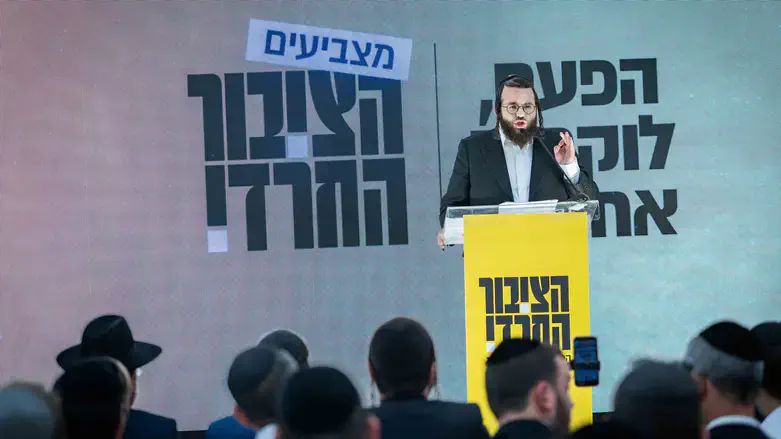 Israel National News2 days ago
Moti Leitner launches Haredi Public partyChaim Goldberg/Flash90
Henie Fialkoff, PhD, MD is _a physician at Shaareן Zedek. She made aliyah with her husband David in 2013 from Los Ang_eles and is looking forward to having the rest of her family join them.
I recently attended a pre-election parlor meeting, thinking that it would be a synopsis of the current parties and their platforms. Due to there being a plethora of parties, I don’t always know their names, candidates, or how they are listed.
To my surprise, a new kid on the block was being touted--- Hatzibur Hachareidi. Although my family has been chasidish for many generations, with a stray Litvak thrown in, the name turned me off. Not another Shas or United Torah or Tzeva Shachor! But, to my surprise, my preconceived notions were rapidly dispelled.
This is a grassroots movement within the traditional hareidi community that is committed to fulfilling their responsibilities to their fellow Israeli Jews by serving in the army, pursuing higher secular education, working in whatever field they desire, and including women in this sea change, all while maintaining a hareidi lifestyle.
This is not your father’s hareidi party. It’s more like your great-great-great-great……………..grandfather’s party. Think Rashi, Ramban, Yochanan HaSandlar, Elazar Hakapar, and many others who were not afraid of earning a living in business, medicine, the trades, etc., and yet became talmidei chachomim known throughout the generations.
Prior to the last century, the only Jews in the shtetl who learned full-time were the rabbi’s son, the rich man’s son, and the “Ilui", the genius. Only a poor ilui was considered deserving of community support. In all of Europe there were perhaps 400 young men who actually learned full time. Everyone else worked to support their families and then spent their free time learning.
Skip to 1948, when Ben Gurion and Moshe Dayan agreed that young bochrim who learned could be exempted from the army. They had arrogantly assumed that Torah study was an anachronism and would quickly die out, so a measly 400 men were the proverbial drop in the bucket.
G-d had other plans, and now tens of thousands of bochrim claim that their learning exempts them from fulfilling their responsibilities to serve in the army and work. Gedolei Torah do not want their students tainted by a secular society, nor do chiloni parents want their children to be exposed to an outdated religious concept. Unless there is an open discussion, the twain will never meet
The lack of unity is what has plagued us individually, nationally, and internationally. The platform of Hatzibur Hachareidi helps foster this unity. While teaching both advanced Torah and secular studies, we learn to appreciate each other’s contributions. If Jews are strong enough in their convictions and see the beauty and support of their fellows, they will be a positive influence on those around them.
The current rabbinical heads of the hareidi parties either disapprove of such a progression or, even if privately in favor of change, are too afraid to stick their necks out. What will the neighbors think? How can I marry off my daughter? If leadership is not courageous enough to take a stand, the most efficacious step is to simply ignore the noise and let the change come from within.
Not everyone is cut out to be a soldier, and so Sherut Leumi is another avenue for service. Since hareidim agree that yeshiva study is so fundamental to us as a people, how about having a cadre of haredi students who go out to the bases and outposts to teach Torah?
Fine-tuning the marketing of this new party, finding courageous gedolim who will approve the platform, will take time. This is a process that should have begun long ago by many in the Jewish world. This new party is picking up the gauntlet, and they are climbing in popularity but still need our support to make it a reality. With the elections only a few days away, interested individuals must spread the word about Hatzibur Hachareidi’s important work and come out to vote in support. The election ballot letters are zayin-chaf. זך
Get out and VOTE!
 Israel National News2 days ago
פריזצילום: רויטרס
One person was killed and at least four others wounded on Friday after an armed man opened fire on passersby in several locations in Trappes, near Paris. A 12-year-old girl was among the wounded.
According to French reports, the shooting occurred in several neighborhoods, with the gunman reportedly also targeting a playground. Police launched a search and later arrested the suspect near the town. His motive remains unclear.
Trappes Mayor Ali Rabeh described the shooting as a deliberate attempt to cause as many casualties as possible.
“He wanted to cause a massacre. It's a miracle there were no more casualties," Rabeh said, adding that the gunman moved between neighborhoods and fired randomly at people he encountered.
The mayor also raised the possibility of a racist motive, suggesting the gunman targeted people of African origin. Authorities have yet to determine whether the incident was terrorism, a hate crime or an attack driven by other motives.
Prime Minister Sébastien Lecornu said all available security and judicial resources had been mobilized. The National Anti-Terrorism Prosecutor's Office is monitoring developments, and counterterrorism authorities are examining the circumstances of the shooting.
Rabeh expressed condolences to the victim's family, offered support to the wounded and praised police and emergency services.
The shooting comes as France prepares for another day of planned protests on Saturday, amid concerns over renewed unrest. Museums have announced closures, and the government is preparing a large-scale security deployment. No link between the shooting and the planned protests has been reported.
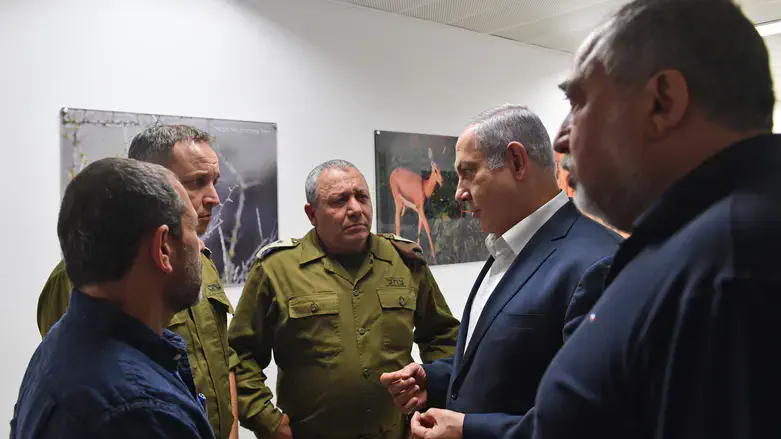 Israel National News2 days ago
Eizenkot, Netanyahu, and LibermanFlash 90
With the October 27th election approaching with disconcerting speed, the decision of whom to vote for is becoming increasingly persistent in the public consciousness.
But while wrestling with the dilemma of who to vote for, the inevitable converse quandary-of who not to vote for-is no less pertinent. Indeed, given the copious blemishes of most political parties, it is hardly surprising that numerous voters base their decision on election day on a process of elimination-i.e., on who not to vote for-with a sense of rejection rather than of attraction, having the greater role.
Bennett: Unprecedented deceit
Clearly, in my opinion, topping the list of whom voters should avoid is none other than Naftali Bennett, who has brought deceit and deception on the part of politicians seeking election to unprecedented heights-or is that “depths"? Readers will recall his breathtaking about-face when he reneged on his pledge (written and televised) not to facilitate leftist Yair Lapid becoming Prime Minister-"neither by rotation nor otherwise"-and then did precisely that.
No less grave was the fact that, in order to enable the establishment of a non-Netanyahu government, Bennett agreed to include the Muslim Brotherhood-affiliated Ra’am in his coalition. Indeed, on the very night of the election, Bennett declared with great flourish and fanfare: “I won’t allow Yair Lapid to be prime minister, including in a rotation (agreement)" and “I will not establish a government based on the support of Mansour Abbas from the Islamic Movement." He did both.
Apparently, for Bennett there is no taboo-social, security, or ethical - that he will not violate in his seemingly pathological pursuit of power. Accordingly, voters should avoid him like the political plague that I feel he is.
Liberman: Personal vindictiveness eclipses national interest
Next on the rung of the ladder of infamy is the odious Avigdor Liberman, the man to blame, more than any other, for the political deadlock that resulted in five elections in less than four years. Indeed, solely because of his personal enmity towards Netanyahu, Liberman preferred to partner with racial Left-wing elements and even with the Muslim Brotherhood-affiliated Ra’am, rather than serve in a Netanyahu-led government.
This choice comprised an act of twofold hypocrisy.
The first being that Liberman’s party repeatedly submitted/supported petitions to the Central Election Commission of the Knesset to bar Ra’am from taking part in the election on the grounds that the party does not conform to the provisions of Clause 7A of Israel’s Basic Law: The Knesset-which mandates(a) recognition of Israel as a Jewish and democratic state and (b) prohibition of support for armed struggle against Israel.
None of this prevented Liberman, as Minister of Finance, from approving the allocation of tens of billions of shekels to the Arab sector-raising concern that significant portions thereof might find their way into the coffers of Arab crime syndicates.
Secondly, Liberman’s barefaced hypocrisy was further amplified by the fact that although he has served in multiple pre-2019 coalitions that included Haredi factions, he suddenly insisted on ensuring Haredi conscription into the IDF as a condition for his joining Netanyahu’s government-this despite the fact that he initially recommended that Netanyahu be designated by then-President Rivlin for the premiership. Curiously, the fact that the Ra’am electorate does not serve in the IDF seems not to have bothered him in the slightest...
Lapid: Ensconcing anti-Zionists in positions of power
Thus, both Bennett and Liberman have proven that neither can be counted on to fulfill their election platform or their campaign promises. But worse, they have shown that they are quite capable of undertaking precisely what they pledged to avoid/prevent-and thus are utterly unworthy of the trust of the voters.
Another outstanding hypocrite is the current head (in name only) of the ineffectual opposition, Yair Lapid, who likewise provides the electorate with a myriad of reasons for not voting for him. Like Bennett and Liberman, he has demonstrated that he has scant regard for national interest. Thus, driven by his almost pathological Bibiphobic animus, he set up a government comprised of a motley collection of post/non/anti-Zionists, thus ensconcing radical extremists in positions of power, from which the general public has long wished to exclude them.
Likewise, readers will doubtless recall the scandalous concession of potentially resource-rich stretch of maritime waters adjacent to Lebanon, under the specious claim that this would placate Hezbollah and reduce the threat of hostilities with the Islamist terror group.
And we all know how splendidly that worked out!
Even more outrageous was his refusal to bring the measure to parliament for approval, under the shameless claim that the Knesset composition was not to his liking and unlikely to authorize/ratify the handover. No kidding!
Topping off Lapid’s list of ignominious misdeeds was his government's hurried appointment of Herzi Halevi as IDF Chief-of-Staff-at the very end of his incumbency as interim prime minister. Traditionally, interim governments are required to refrain from senior appointments so as not to impose such choice on any duly-elected successor government. Significantly, Halevi was later forced to resign in ignominy following the disastrous failure of the IDF in October 2023, something that reflects poorly both on Lapid’s judgement and on his utter (dis)regard for democratic principles.
Golan: The Despotic “Democrat"
Probably the easiest choice of whom not to vote for is Yair Golan, a former IDF general and deputy Chief-of-Staff. Thus, despite a measure of personal charm and charisma, he has allowed his animus toward his political rivals to eradicate any constraints on his political rhetoric-providing Israel’s most vehement foes with ample affirmation for their vitriolic condemnation of the Jewish state. Thus, while still in uniform, he alleged outrageously that he could identify in Israeli society developments reminiscent of the “abhorrent processes that took place in Europe, and Germany in particular" in the 1930s, lending credence to those accusing Israel of being a “fascist state". Later, as a deputy-minister in the short-lived Bennett-Lapid government, he himself adopted Nazi-like terminology, dubbing some of his fellow countrymen as “sub-human."
In 2024, Golan gathered up the shreds of the far-Left Mertz faction and remains of the once-hegemonic Labor party in a new party under his leadership, perversely named “The Democrats"-as his political credo seems antithetical to anything “democratic". Indeed, Golan has repeatedly threatened that if his party attained a position of power, it would shut down media channels and educational institutions, of whose political orientation he disapproves -all in the interests of “freedom of speech," of course. The prospective targets of Golan's future vindictiveness would, according to him, be the popular TV outlet Channel 14 and the legendary pre-military academy Eli, many of whose former students have given their lives and limbs in defense of the country in IDF combat units.
So, unless one is in favor of monolithic uniformity of thought and opinion, Yair Golan’s party is one to avoid.
Eisenkot: Exceptionally unequipped to PM post
Lastly, there is Gadi Eisenkot, currently the leading candidate to challenge Netanyahu for the premiership. Eisenkot, a former IDF Chief of Staff who served between 2015 and 2019, and together with his predecessors (Ehud Barak, Gabi Ashkenazi, Benny Gantz, Moshe Yaalon, Amnon Lipkin-Shachak) makes up half a dozen former IDF chiefs who tried-and failed to remove Netanyahu from power-sharply underscoring that military rank is a poor predictor of effective political leadership.
Indeed, a wide swathe of opinion in Israel points to Eisenkot’s misguided doctrine of restraint and moderation in Gaza as creating the conditions that precipitated the disastrous events of October 2023. Moreover, after retiring from the IDF, and during the war, he did little to dispel misgivings over his strategic judgement. Significantly, had his positions been accepted, the IDF would have been denied some of its most important achievements in Gaza, particularly regarding Rafah and the Philadelphia Route adjacent to the border with Egypt.
Today, even after all previous contenders have fallen by the wayside. Eisenkot is manifestly devoid of the qualities to lead Israel in these challenging times-most importantly a stiff backbone, and is acutely lacking international stature, governmental experience, and language skills.
And this is hardly time for on-the-job training.
An uncluttered view
So dear reader, having discarded all of the foregoing options from your list -along with the multitude of micro-splinter parties that have little chance of passing the 3.25% electoral threshold-and of course, the dominantly Arab anti-Zionist factions, you should now have an uncluttered view of whom to choose from 38 (!) parties that have registered for next week’s poll.
Choose wisely!
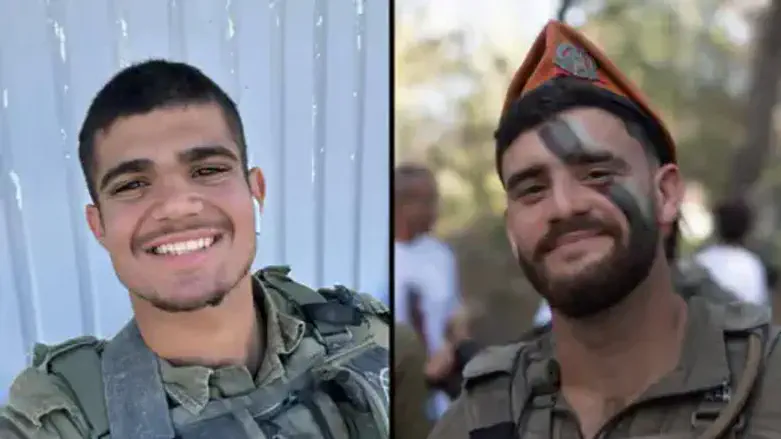 Israel National News2 days ago
Staff Sergeant Ron Yonatan Roytman and Sergeant Yuval Shai SvilemIDF Spokesperson
The IDF Spokesperson's Unit cleared for publication that Staff Sergeant Ron Yonatan Roytman, aged 23, from Ashkelon, a squad commander in the Ari Battalion (775), Search and Rescue Brigade, and Sergeant Yuval Shai Svilem, aged 20, from Hod Hasharon, a combat soldier in the battalion, fell in combat during the shooting attack on Friday morning at the Judea Junction.
Three additional soldiers from the battalion were lightly injured. The soldiers were evacuated to receive medical treatment at a hospital, and their families have been notified.
IDF forces engaged the two terrorists in a 20-minute gun battle before eliminating them. Magen David Adom (MDA) reported that the remaining victims of the deadly terrorist attack sustained light injuries and are receiving treatment at hospitals.
An initial investigation indicates that the two terrorists, 27-year-old Hamas-affiliated residents of Hebron, arrived armed with an M4 rifle and a handgun. After realizing they would not be able to reach their intended target on Highway 35, the two opened fire at the checkpoint.
During a situational assessment held following the attack, IDF Chief of Staff Lt. Gen. Eyal Zamir stated:
"This was a serious terrorist attack. The soldiers' swift actions prevented an even more severe attack and further harm to civilians and security forces. A large quantity of ammunition was found in the vehicle the terrorists used to reach the scene of the attack, which was intended to be used in a larger-scale attack."
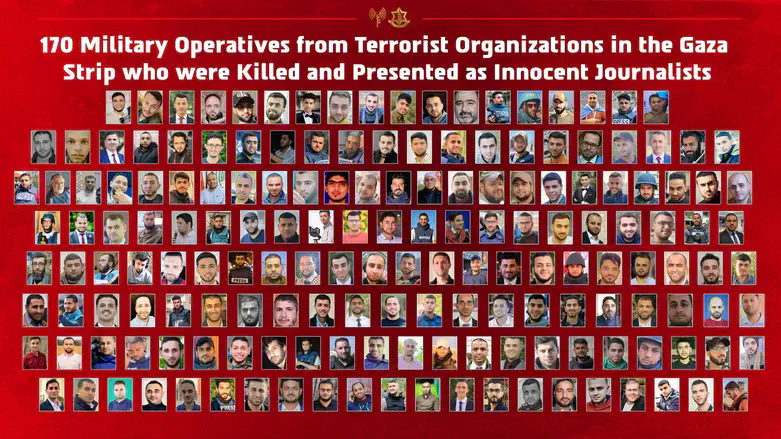 Israel National News2 days ago
Terrorists who were presented as journalistsIDF Spokesperson
Dr. Michael Wise is a founder and investor in numerous technology companies. He is a graduate of YU and holds a PhD .in Theoretical Physics from Brandeis U., is the author of Israel demography study (BESA) and has published numerous articles about Israel sovereignty and demographics in Judea and Samaria. [email protected]
There is one word thst best describe the enemies of Isrel, antisemites and anti-Zionists: It is the word: “EVIL". It describes the people who hate Israel and Jews, and it does so with the kind of blunt accuracy that most political slogans never manage to achieve.
There is no spin here. No euphemism. No diplomatic softening. The people who celebrate the murder of Jewish civilians, who deny Israel's right to exist, who spread ancient hatred dressed up in modern political language, are “EVIL". The slogan says so plainly. That is its strength.
This article explains why the word fits, how the posters can be adapted, and how supporters of Israel can put this slogan to work on every platform available to them.
Anti-Semitism Is “EVIL"
Anti-Semitism is one of the oldest and most persistent hatreds in human history. It has fueled pogroms, inquisitions, expulsions, and genocide. The Holocaust was not an isolated event. It was the logical endpoint of centuries of organized, institutionalized hatred of Jewish people. It is “EVIL".
Today, anti-Semitism has not disappeared. It has rebranded. It shows up in conspiracy theories about Jewish control of media, finance, and governments. It shows up in vandalism of synagogues. It shows up in physical attacks on Jewish people in cities across Europe and North America. It shows up on college campuses where Jewish students are told they are not welcome unless they renounce the existence of their ancestral homeland.
Calling this “EVIL" is not an overstatement. It is a precise description. Hatred of people because of their ethnicity and religion, hatred with a documented body count stretching across millennia, is “EVIL" by any moral standard. The slogan names it correctly.
Anti-Zionism Is “EVIL"
Anti-Zionism is frequently presented as a political position rather than a form of hatred. This framing does not hold up under examination. Zionism is, at its core, the belief that the Jewish people have the right to self-determination in their historical homeland. Opposing that right, and only that right, while supporting the national aspirations of every other people on earth, is a form of discrimination. It singles out Jews for a standard applied to no one else.
When anti-Zionists call for the elimination of Israel, they are calling for the displacement or destruction of the roughly ten million people who live there. They are arguing that the only majority-Jewish country on earth should cease to exist. This is not a policy disagreement. It is a call for the destruction of a nation and, by extension, a people. It is “EVIL".
The late Rabbi Jonathan Sacks, one of the most respected moral voices of the modern era, described the new anti-Semitism as anti-Zionism precisely because it redirects hatred from Jews as individuals onto Jews as a collective, expressed through their state. The slogan “EVIL" captures this reality without requiring a lengthy explanation.
Anti-Israel Hatred Is “EVIL"
Criticism of Israeli government policy is legitimate. Every democracy is subject to scrutiny and debate, including Israel. But what passes for anti-Israel sentiment in much of public discourse today goes far beyond policy criticism. It involves dehumanizing language, deliberate distortions of history, selective application of international law, and in many cases open celebration of terrorist violence against Israeli civilians. It is “EVIL".
After the Hamas attacks of October 7, 2023, crowds gathered in cities around the world not to mourn the dead but to celebrate the killers. This was not political protest. This was moral collapse. People marched in support of an organization that murdered children, burned families alive, and took elderly Holocaust survivors as hostages. Calling that response “EVIL" is accurate.
Israel is the only country in the Middle East where Arab citizens have full voting rights, where gay people can live openly, where women hold positions of political and judicial authority. The people who march against Israel while ignoring every actual authoritarian government in the region are not motivated by human rights. They are motivated by something much older and much uglier. It is “EVIL".
Presidents Ronald Reagan and George W. Bush used the slogan “EVIL"
The slogan “EVIL" does not only apply to hatred of Israel and Jewish people. It applies to the full moral profile of those who carry that hatred, and that profile is worth examining honestly.
President Ronald Reagan understood the power of calling “EVIL" by its name. In 1983, he stood before the National Association of Evangelicals and referred to the Soviet Union as "the “EVIL" empire." The political establishment recoiled. Diplomats winced. But Reagan insisted that clarity was not provocation. It was honesty. History proved him right. The word “EVIL" did not inflame the conflict. It defined it.
George W. Bush used the phrase"Axis of Evil" in his 2002 State of the Union address to describe Iran, Iraq, and North Korea. That same clarity is what the slogan “EVIL" brings to this fight today.
Many of the movements and governments most openly hostile to Israel are also among the most repressive on earth. Hamas governs Gaza as a theocratic dictatorship. It executes gay people. It restricts the movement of women. It uses civilian infrastructure, including schools and hospitals, to store weapons and launch attacks. The Iranian government, which funds and arms groups dedicated to Israel's destruction, hangs gay men from cranes and arrests and beats women for refusing to wear the hijab. Hezbollah operates as a state within a state in Lebanon, accountable to no one and violent toward everyone who challenges it.
On Western streets and campuses, the people who wave the flags of these organizations often include individuals who also promote racism in other forms, who engage in harassment and intimidation, and who have made Jewish students and community members feel physically unsafe. The behavior is consistent. The word that describes it is consistent too.
“EVIL" is not a slur. It is a moral category. Murder is “EVIL". Racism is “EVIL". Anti-LGBTQ persecution is “EVIL". Anti-Semitism is “EVIL". The slogan “EVIL" does not stretch to cover these things. It fits them all naturally, because they all belong to the same family of human cruelty.
The Posters: Adding a Word or Two
The “EVIL" posters work as a standalone statement. But adding a word or two can sharpen the message and speak to specific audiences. A few examples of how this can be done effectively:
The additions do not dilute the slogan. They focus it. Different posters can target different aspects of the same underlying reality, making the campaign flexible enough to respond to whatever conversation is happening at any given moment.
How to Spread “EVIL" Across Social Media
A slogan is only as effective as its reach. Here is how supporters of Israel can put “EVIL" to work on every major platform. Create an image of the word “EVIL" that looks like arabic. Create an image in GREEN. The Islamist colors.
Use It as a Hashtag
Post with #"EVIL" consistently. Attach it to posts about anti-Semitic incidents, pro-Hamas rallies, terrorist attacks, and any news story that illustrates the moral reality the slogan describes. Consistency builds recognition. Recognition builds reach.
Attach It to News Coverage
When news breaks about an anti-Semitic attack, a pro-Hamas march, or a government that calls for Israel's destruction, post the slogan alongside the coverage. Let the news story do the explaining. The slogan provides the moral summary.
Use the Poster Variations
Create shareable image posts using the different versions of the poster. "EVIL Terrorist" for one story. "EVIL Racist" for another. Clean, simple graphics travel further than long text posts on most platforms. Keep the design bold and easy to read at thumbnail size.
When someone posts anti-Israel content, a calm and direct response using the slogan can be more effective than a long argument. “EVIL". One word. No elaboration needed in many cases. It puts the moral frame on the table without getting drawn into a debate designed to waste your time and legitimize bad-faith arguments.
Build Community Around It
Encourage pro-Israel voices to adopt the slogan. A shared visual language and a shared hashtag create a recognizable movement. The more people use it, the more visible it becomes, and the harder it is to ignore.
Conclusion: Accuracy Matters
Use of the word “EVIL" in slogans works because it is accurate. It does not exaggerate. It does not name-call in the absence of evidence. It applies a moral word to a moral reality that has been extensively documented across history and in the news cycle of the present day.
Anti-Semitism is “EVIL". Anti-Zionism, when it means denying the Jewish people the right to a homeland and a state, is “EVIL". Celebrating the murder of civilians is “EVIL". Persecuting gay people and women is “EVIL". Supporting organizations that do these things is “EVIL".
Reagan and Bush were was right to use the word “EVIL". Theywere right because the word was earned. The same principle applies NOW. The word “EVIL" is earned.
The slogan names it. Please distribute to all potential users. We can win the SLOGAN WAR!
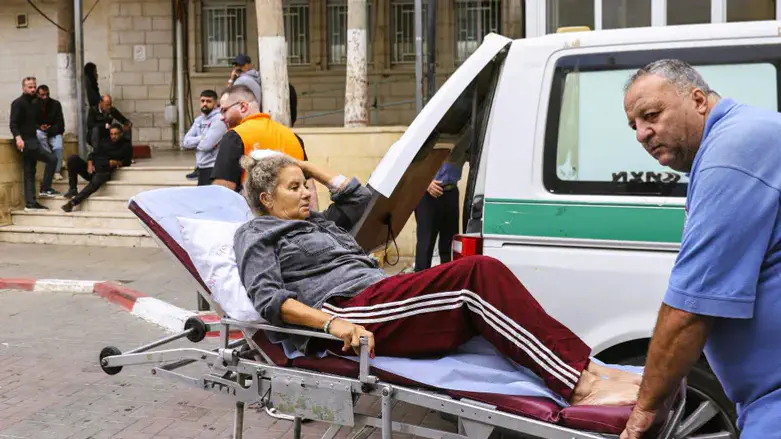 Israel National News2 days ago
Hedi LevineFlash 90
American photojournalist Heidi Levine receives medical treatment at a hospital in Ramallah after allegedly being injured in an attack by extremist Jewish settlers during the annual olive harvest in the village of Abu Falah near Ramallah, Oct. 16, 2026. Photo by Flash90.
Melanie Phillips, a British journalist, broadcaster and author, writes a weekly column for JNS. Currently a columnist for The Times of London, her new book, Fighting the Hate: A Handbook for Jews Under Siege, has just been published by Wicked Son. Her previous book, The Builder’s Stone: How Jews and Christians Built the West and Why Only They Can Save It, was published in 2025. Access her work at: melaniephillips.substack.com.
(JNS) The complexity of “settler violence" received dramatic illustration over the past week.
Washington Post photojournalist Heidi Levine was injured on Oct. 16 during a violent confrontation between Jewish residents and local Arabs near Ramallah.
It was reported that dozens of masked Israeli settlers had attacked local Arabs harvesting their olives, during which the settlers allegedly knocked Levine to the ground, kicked her repeatedly, and seized her camera and phone.
The following day, a European delegation visited the area near the Arab town of Taybeh without coordinating the trip in advance with the Israel Defense Forces as required. The diplomats allegedly came under attack by masked Jewish settlers.
These incidents have attracted worldwide media attention and political condemnation.
On Sunday, a group of social-media influencers and others touring these “West Bank" areas of Judea and Samaria came under attack near the village of Turnus Ayaa when Arabs hurled rocks at their vehicles.
The attack was captured on video. One member of the group, former deputy mayor of Jerusalem Fleur Hassan-Nahoum, who is standing for the People of Israel party in the Israeli general election on Oct. 27, was filmed talking to other occupants of her car when a rock shattered the window and lightly wounded a woman sitting in the back.
At the time of writing, no Western outlet has reported this attack.
Israel’s president, Isaac Herzog, apologized to Levine. Israeli Prime Minister Benjamin Netanyahu’s office, however, said the facts of that incident “remain unclear and are under investigation," with reports indicating that some 200 Arabs and far-left activists had confronted approximately 40 Israeli youths. “Footage shows masked individuals on both sides hurling objects amid reports of fireworks fired at Jewish youths," it said.
Levine, however, denounced her attackers as “Jewish terrorists" and “not even humans." Would she strip any other group of their very humanity?
As for the Europeans, Israeli TV’s Channel 14 reported claims from local Jewish residents that the diplomats had staged or faked the incident. Subsequently, the diplomats refused to co-operate with the Israeli investigation, failing to provide, as requested, detailed witness statements or video footage.
Yet Western media outlets have chosen not to report the doubts raised about these alleged “settler attacks" on Arabs and others, while also omitting to report the filmed attack by Arabs.
Even if the claims by Levine and the diplomats are true, the reporting of this “settler violence" issue is malevolently skewed.
No one denies there’s a problem, but it’s very small. There are about 500,000 Jewish residents of Judea and Samaria. Estimates of the number of young hoodlums carrying out unprovoked attacks on Arabs range from 95 to 300 youths.
The vast majority of “settlers" are law-abiding citizens. And they are under constant attack by local Arabs.
Dozens of such attacks-some clearly provoked, and filmed by foreign and Israeli activists-are being reported on social media almost every day.
On Monday, 10 Arabs and Israeli far-left activists ambushed a Jewish resident riding an ATV off-road and threw stones at him. When he dismounted, the attackers tried to run him over with a tractor.
On Tuesday, around 15 Israeli activists, photographers and Arabs blocked security roads with stones and boulders.
On Wednesday night, there were at least two Arab stone-throwing attacks on Israeli cars. On Thursday, Arabs and Israeli activists armed with clubs threw stones at Jewish shepherds.
Last Shabbat, multiple attacks were reported by the Judea and Samaria situation room. When a Jewish resident was out for a run, Arabs tried to hit him with their vehicle.
Two Arab attacks with Molotov cocktails were reported, and one with pipe bombs. Sheep were stolen (a regular event) from a Jewish farm. Jewish shepherds were wounded by Arab gunfire; two more Jewish locals were fired at; and there was another attempted attack on Jews with guns and clubs.
On the same day, a Jewish resident reported on X that Arabs began hurling stones at a Jewish shepherd while anarchist activists at their side documented the incident.
“The shepherd called for IDF forces, but they, too, were attacked," he wrote. “In footage from the event, masked Arabs are seen throwing stones at the soldiers and the shepherd, with anarchists spotted among them who ignore the Arab violence and wait with cameras for an opportune moment to capture a biased, one-sided image."
Every year, the olive harvest attracts activists to “help the Palestinian Arabs pick their olives," and every year there are confrontations.
Naomi Linder Kahn, director of the international division at the Judea and Samaria monitoring group Regavim, says some foreign-funded groups use the olive harvest to provoke confrontations.
“They don’t give activists buckets for harvesting olives," she said. “What they give them is video cameras, and they give them lessons in social media and … how to provoke a confrontation, how to present yourself when you’re trying to get into Israel, to misrepresent what you’re coming for and where you’re going to be."
Brad Lander, the Democratic nominee for a congressional seat in New York, was among a group of around 80 Americans and others detained for some hours by the IDF this week after the group arrived “to harvest olives" alongside Arab farmers without requesting Israeli permission.
“The plot in question requires only a small number of harvesters to collect its produce," an Israeli military official told JNS. “The security establishment views the arrival of dozens of activists as an act intended solely to provoke, which undermines the harvesting process."
Lander is Jewish, but he is no friend of Israel. He has accused the country of “genocide" and has called Israel’s presence on the 'West Bank' “a crime under international law." These claims are lies designed to demonize and delegitimize the Jewish state in the eyes of the world.
Earlier this week, Lander said he was visiting to help Arab farmers harvest olives “in the face of state-sanctioned settler terrorism" and to “shed a light on the reality of the occupation." If anyone thinks this group wasn’t there to foment trouble for the Israelis, I’ve got a bridge to sell you.
It’s difficult to discover what truly happens in many of these incidents, so an open mind is necessary. There is indeed a problem of Jewish attacks on Arabs that have not been stopped; they are disgraceful, and the Israelis need to shut them down. They are trying.
But there can be no justification for Western media and politicians failing to acknowledge this Arab terrorist war being waged against Jewish residents in Judea and Samaria. Such radically skewed reporting has turned half a million overwhelmingly upstanding and besieged Jews into enemies of humanity-just as Israel has been treated in its war against Iran.
However, in addition to failing to deal adequately with the problem of delinquent “hilltop youth" or the provocateurs, the Israelis themselves hardly ever mention this Arab onslaught in Judea and Samaria.
There are various possible reasons for this. First, the degree of truth in the “settler violence" claims puts them on the back foot.
Second, they are under huge pressure over this from the Trump administration and don’t want to irritate it further by introducing the inconvenient complexity of Jewish victimization.
Third, among the Israeli top brass, there are some who even now hanker for a “two-state solution" and view the settlers as the obstacle.
Last, but not least, the Israelis want to brush this issue away as of no real consequence. As ever, they dismiss Western public opinion as irredeemably hateful toward the Jewish people and so think, myopically, that trying to appease it is a waste of time.
They believe that they have more urgent issues to deal with, including the renewed threats from Iran, Gaza and Lebanon. They also fear that a third and even more terrible intifada is being plotted by the Arabs of Judea and Samaria, along with the Palestinian Authority’s force of 60,000 armed men.
If that fearsome threat were to be realized, the combination of Western malice toward the “settlers" and Israel’s negligence in how it presents itself to the world means that once again, the Jews of Israel would be blamed for their own destruction.
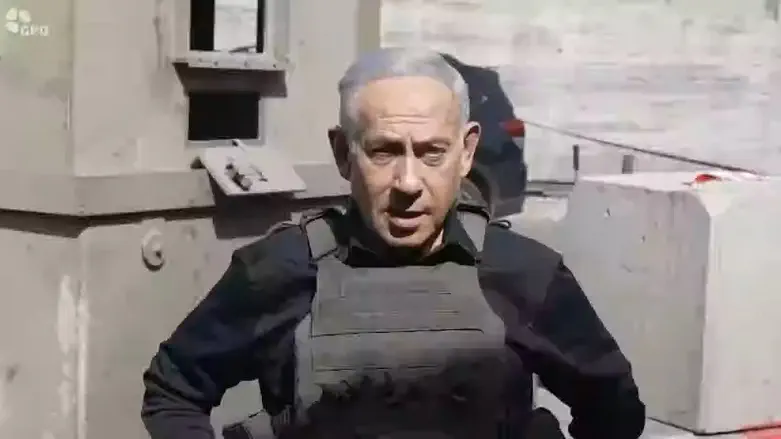 Israel National News2 days ago
נתניהו בזירת הפיגועעומר מירון/ לע״מ
Prime Minister Benjamin Netanyahu announced Friday afternoon, during a visit to the scene of the terrorist attack near Hebron, that the IDF will adopt a new operational strategy in the neighborhood from which the terrorists emerged. The plan includes evacuating residents, conducting house-to-house searches, locating weapons and demolishing terrorist infrastructure.
Netanyahu said the strategy would apply the military model used in refugee camps in Judea and Samaria and could later be expanded to additional cities.
“We are going to implement the successful and aggressive model we used in the refugee camps, which are essentially terrorist strongholds," Netanyahu said. “That is exactly what we will do here, in a neighborhood in Hebron from which the terrorists emerged. We will evacuate the residents, go from house to house, remove the weapons there, and address and demolish all terrorist infrastructure."
The Prime Minister also announced additional measures in the Hebron area.
“At the same time, we are imposing a siege on the cities of Hebron and Halhul. We will consider expanding this model to other cities as well," he said.
Netanyahu said Israel would also accelerate the removal of illegal structures along roads, which he claimed pose a threat to security forces.
“We will clear out the illegal structures along the roads at an accelerated pace. They pose a threat to our forces," he said.
Netanyahu addressed the incident in which IDF soldiers were wounded while stopping the terrorists, linking it to warnings issued in recent weeks about attempts to attack Israel ahead of the upcoming elections.
“We warned several weeks ago about attempts by our enemies to harm us, our civilians and our soldiers ahead of the elections. That is what they tried to do here," he said. “IDF soldiers stopped them with their own bodies and were also wounded. The soldiers not only stopped the terrorists, but also charged forward courageously and eliminated them."
Netanyahu subsequently revealed that the IDF was preparing for the possibility of an especially large-scale military operation in Judea and Samaria, although no date had yet been set.
“The Defense Minister and I have seen an IDF operation in Judea and Samaria on a very broad scale, unlike anything carried out since the Six-Day War," he said. “The IDF is ready to carry it out, and we will determine the timing, but it is coming."
Netanyahu did not detail the number of forces expected to participate, the areas in which the operation might take place or its possible timetable. He stressed that a decision on when to launch it would be made at a later stage.
Alongside his announcements on security measures, the Prime Minister also addressed continued construction and development in Jewish communities in Judea and Samaria.
“We are going to destroy terrorist infrastructure and build the infrastructure for Jewish communities," he said.
According to Netanyahu, the government is advancing plans for the construction and legalization of more than 100 new communities and more than 100 farms.
Addressing residents of the region, Netanyahu said: “You are standing firm on the front lines. You are an example to the people of Israel and to the State of Israel."
He concluded by pledging to continue both efforts simultaneously: “We will destroy terrorist infrastructure and establish more and more communities."
Defense Minister Israel Katz issued a separate statement confirming that the neighborhood in Hebron from which the terrorists emerged would be evacuated and all terrorist infrastructure there destroyed, following the operational model used in the Jenin refugee camp.
Katz warned that “the terrorists, their handlers, and those who provide them with protection and assistance will pay a very heavy price."
He also claimed that Iran and its proxies, together with the Muslim Brotherhood axis, were planning terrorist attacks aimed at influencing Israel's upcoming elections.
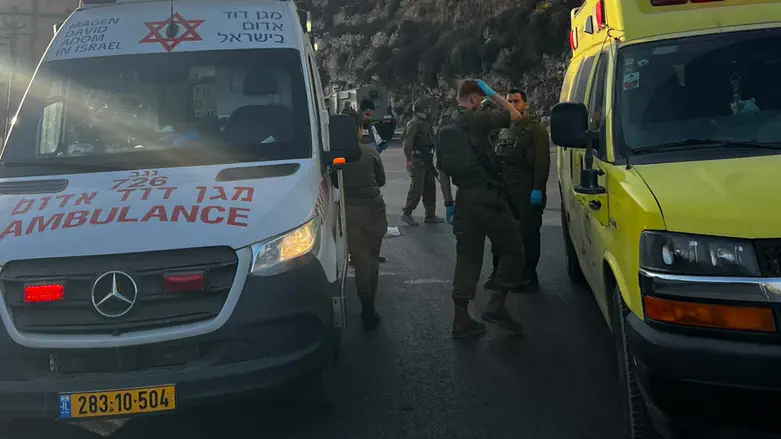 Israel National News2 days ago
תיעוד התקרית ממצלמת הקסדה של קצין הביטחון של המועצה המקומית קרית ארבע
Footage filmed on a camera mounted on the helmet of Moshe Botbiah, the security officer for the Kiryat Arba-Hebron Local Council, captures the pursuit of the terrorists who carried out the shooting attack in the area on Friday and the exchanges of gunfire with them.
Botbiah participated in the pursuit alongside the Judea Brigade Regional Defense Officer, and troops and commanders from the Home Front Command's Ari Battalion and the Paratroopers Brigade's 101st Battalion.
The attack at the Judea Junction on Friday morning wounded five Israelis, two critically.
An initial investigation indicates that the terrorists arrived at the scene in a vehicle with Israeli license plates and opened fire on Israelis at the junction. IDF forces stationed at the scene eliminated the two terrorists following a brief pursuit. The terrorists, who were armed with a handgun and an M-16 rifle, had attempted to flee. Roadblocks were established throughout the area.
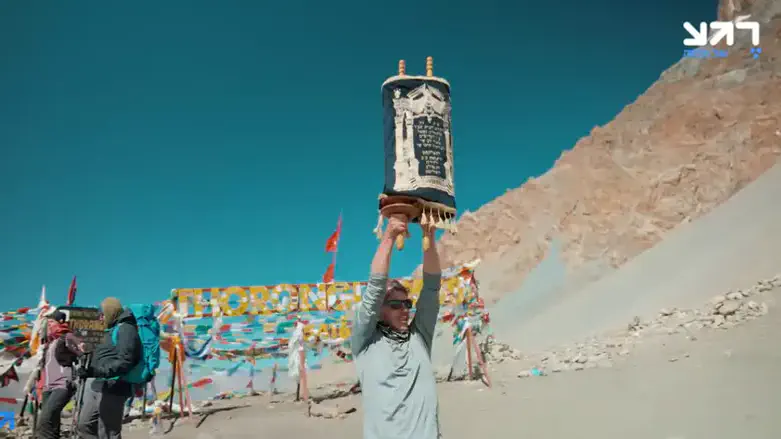 Israel National News2 days ago
ספר תורה על ההר הגבוהצילום: רגע TV
Our Parasha relates the events culminating in the Covenant Between the Halves that Hashem entered into with Avraham.
We read:(25;7-20):’He’ - Hashem - ‘said to Him’ ,to Abraham -‘I am Hashem who brought you out of Ur-kssdim to give you this land to Inherit it.
‘’Avraham said: My Lord Hashem, whereby shall i know that I am to inherit it?’.
‘And He said to him: ’Take for Me three heifers, three goats, three rams, a turtledove and a young dove.’ He took all those to Him; he cut them in the middle, and placed each piece opposite its counterpart. The bird however he did not cut up.
‘Birds of prey descended upon the carcasses, and Avraham chased them away.
‘And it happened, as the sun was about to set, a deep sleep fell upon Avraham, snd behold - a great dread great darkness fell upon him.
‘And He said to Avraham: ’Know with certsiny that your offspring shall be aliens in a land not their own - and they will serve them, and they will oppress them - four hundred years. But also those that they will serve, I shall judge, and afterwards they shall leave with great wealth.
‘As for you : you shall come to your ancestors in peace; you shall be buried in a good old age. And the fourth generation shall return here, for the iniquity of the Amorite shall not yet be full until then.’
‘So it happened: the sun set, and it was very dark. Behold - there was a smoky furnace and a torch of fire which passed between these pieces.
‘On that day Hashem made a covenant with Avraham, saying: ’To your descendants I have given this land, from the river of Egypt to the great river, the Euphrates River; the Kennite, the Kenizite and the Kadmonite; the Hittite, the Petzzile and the Rephaim; the Amonite, the Canaanite, the Girgashite and the Jebusite.’
Abarbanel favors us with his exposition as to events leading to the prophetic vision that befell Avraham.
He posits: ’The most correct in my eyes’ as to the command to Avraham to take the animals, and to cut them up - as is described in the parsha - ‘is that they are allusions to the three Avot, who are likened to the three types of pure animals, who proliferate in progeny - the Avot are likened to them, as they, too, proliferated in issue, and in nations that emanated from them.
‘It was proper that Avraham was likened to the heifer, as we read (Parashat Vayera 18:6)’And to the cattle ran Avraham, and he took a heifer.’
‘Yitzchak appropriately is represented by the ram, as it was offered up in his stead in the akeida, as we read there (27:9):’and he took the ram and offered it as an offering in place of his son’.
‘The goat properly alluded to Yaakov, as he disguised his hands as being hairy, by covering them with the skin of goats, when he took the brachot of Yitzchak, at the urging of his mother, who commanded him(27:17) ’Take for me from there two goats’.
‘Hashem further ordered Avraham to take a turtledove and a dove - they allude to two other leaders that will lead Israel later, the one after the other: Moshe and Joshua.
‘Regarding them He said: ’The birds do not cut up’ - they were to remain alive, as Moshe would start the conquest of the land, by conquering the lands of Sichon and Og, and Joshua after him conquered and divided up the land to Bnei Israel.
‘He completed the parable by the reference to the ‘bird of prey descended upon the carcasses’ - an allusion to death, that would befall Moshe and Joshua in the fullness of time.
‘As to the prophetic vision, the opinion of all the commentators is that Hashem here informed Avraham of the decree on his descendants - to be exiled in Egypt.
‘The commentators raise a query on this: if it was so decreed, those who subjugated them did not deserve to be punished.
‘Rambam answers : it was not decreed that any individual Egyptian was to subjugate them, but only on הכלל: the congregation, and therefore Hashem punished the individuals who subjugated and afflicted them - more so, because the Egyptians afflicted them more than had been decreed.
‘After having concluded that the exile in Egypt was by Divine Providence and Hashem’s decree, it must have been as a result of some transgression that had been committed OR for some other reason that the Divine Wisdom saw as necessary.
‘If we decide that the exile was due to some prior transgression, it is not worthy that it - heaven forfend - be ascribed to Avraham himself.
‘It is more apt to ascribe to the tribes, the sons of Yaakov, who were guilty of a grievous sin, in their hatred of Yosef, their brother - who conspired to be rid of him, and cast him into a well, before selling him to to be taken to Egypt.
‘And as they transgressed in this way, it was just that their punishment should be measure-for-measure, exile and subjugation in Egypt.
‘As to Avraham’s prophetic vision, the Torah relates that: ’as the sun was about to descend, a deep sleep fell upon Avraham, and behold - a dread! great darkness fell upon him’
‘This comes to teach, that Avrahan was greatly discomfited by Hashem’s command to take the animals, and to cut them in half, and to take the turtledove and the dove.
‘Therefore, after he awoke from his prophecy, he spent the whole day unsuccessfully trying to understand the matter, till the sun was about to set.
‘Then great darkness fell, as if foretelling that bad tidings were in the wind - and as he was so engaged, the word of Hashem came to him: ’Know with certainty that your offspring shall be aliens in a land not their own’ - as saying: the darkness and dread that you felt, were portents of the harsh subjugation that your seed will endure in a land not theirs, and this for four hundred years.
‘As this decree was due to the judgment on the tribes for their transgression, so too, will I judge their oppressors, for their cruelty and malevolence.
‘If we say that the exile in Egypt was for some other reason, that the Divine Wisdom deemed necessary, : that it was to purify them of their impurity, in the furnace of subjugation in Egypt, so that - like gold is extracted by purifed in fire - those who came out purified, merited to receive the Torah, and to cleave to Hashem, without the need for an intermediate.
‘As the Egyptians worshipped the heavenly horde, and each one of them engaged in sorcery - if the sons of Yaakov should remain in their faith, in this environment, and not be drawn to the idolatry of the Egyptians, then they would merit all the goodness that had been prepared for them.
‘But if they should be drawn to the ways of the Egyptians, and abandon the faith of their forefathers, they would remain in their exile there for eternity.
‘However, the Divine One - as most of the world was denying His being and saying that there was no god except the stars - the Divine Wisdom decided to bring Bnei Israel into exile in Egypt - the most venal and godless place of all - and to take them out of there - after they had been purified by their subjugation - by His mighty Hand, so that all would know who was the Only One who ruled the world.
‘This was the second objective of the exile of Bnei Israel to Egypt: that His G-dliness would be made known the means of Israel - and that they should remain His chosen people, and merit to receive the Torah and to inherit the promised Land.
‘Viewed in this manner, the exile as well as the redemption from it, were due to Divine chesed, as in its merit, they were chosen to be His nation.’
The Kli Yakar opens his commentary, by stating that:’Our sages say (Nedarim 32.) that because Avraham asked: ’By what will I know that I will inherit the land’’ - asking for a sign - ‘he was punished by being told: (15:13): ’Know with certainty’.
‘The mind refuses to accept this drasha - that his sons should suffer great punishment because he asked for a sign, whilst Avraham himself was not punished.
‘Therefore my heart tells me, that there were other reasons for the exile in Egypt, as to which the commentators differ - as Abarbanel brings.
‘Be the reason for the exile as it be, why did Hashem tell Avraham the sad tidings, to cause him anguish for no reason?
‘Therefore, the ba’al midrash answered that because he asked for a sign, something which he had no need to know, therefore he was punished by being told something that caused him anguish - measure-for-measure.
‘Regarding the sign for which Avraham asked, many wondered - why did he ask for a sign for the inheritance of the land, but not for the promise of numerous progeny?
‘And I ask another question: why didn’t he ask for a sign when Hashem first said to him (12:7): ’To your seed I will give this land’?
‘As to this, too, there are many answers proffered, and I say that the sign that Avraham sought, was not because he doubted the fulfillment of Hashem’s promise, except that he wanted that Hashem enter into a covenant with Him, to prevent any other claimants.
‘When Hashem said earlier:’to your seed i will give’, it sounded like a מתנה באלמא: a ‘bare’ gift, and for this Avraham did not ask a sign from Hashem, as the earth and all in it were His to give to whomever He chooses.
‘However, now, when Hashem told him: ’To give to you this land לרשתה: as an inheritance’, sounding as though the gift was by way of inheritance, recalling that Noach, when he divided the land between his sons, gave the land of Canaan to Shem and his seed, and now you come to claim it by way of inheritance.
‘So Avraham thought: Perhaps the descendants of Shem will object, as the descendants of Shem: ’The sons of Shem Eilam and Arpacshad Ashur Lod and Aram’ - and Avraham himself descended from Arpacshad’ - might not the other descendants of Shem make their claim.
‘Therefore he asked for a sign: ’By what will I know that I’ alone ‘will inherit it?’.
‘Came the answer: ’Take to Me three heifers..’- Hashem therleby entered into a covenant with Avraham, thereby removing any other claimants, the way of entering a covenant being to pass between the pieces.
‘As to the prophetic vision, many expositions have been offered - I will proffer mine, and will say: as we find in the promise of the land, that some times it mentions the Avot and some times their seed, and where do we find that the Avot have a share in the land? were they not all aliens in the land?.
‘We find it said: ’to you I will give it’, and it says: (Shemot 6;4) ’to give it to Avraham, Yitzchak and Yaakov’ - therefore our Sages learn, that from here a reference to תחיית המתים: the ressurection of the dead, as it says:’to give to them’, and not ‘to you’.
‘Clearly the Avot will not inherit in this world, but in the world-to-come, whilst their seed received their share in this world.
‘The Avot, on the other hand, after their death, will ‘inherit’ in the manner we shall expound - which is why He showed Avraham, in his vision, the heifer against him, as it says:to the cattle ran Avraham’, and kid against Yaakov who dressed its skin to deceive his father, and the ram against Yitzchak who offered it in his place.
‘The turtledove and the dove’ we find allude to Israel, an the first three animals he slaughtered in halves, alluding to the three Avot - who, after their death - will get their share in the Land, as the dead in the Land are resurrected first - but not in their lifetime.
‘’And the bird he did not halve’, because Israel which are likened to the bird, would come to the Land alive.’
The Gemara (Nedarim 32.) brings the teaching of Rav: ’Avraham ירק:’emptied his disciples from their Torah studies to go to battle to save Lot - said Rav Abahu said Rav Elazar: why was Avraham punished and his descendants subjugated in Egypt for two hundred and ten years? Because he sent his talmidei chachamim to battle, as it says ’and he ‘emptied’ his disciples’.
TheMaharal asks:’Why, in that case, was Avraham himself not exiled to Egypt, rather than his descendants?
Answers the sage: ’In fact, after his transgression it was indeed decreed that he go into exile, but for the reasons we shall bring, this was not executed.
‘The first reason was that Avraham engaged without stop in making Hashem’s Name and Being known in the world, and he influenced many to be converted - and Sarah likewise, brought many woman to convert.
‘Therefore, he was not exiled, so as not to prevent him from his holy work.
‘A second reason: the exile in Egypt could not commence until those who descended there numbered at least seventy souls - all the while that Bnei Israel were less than this number, the decree could not be effected.
‘In Avraham’s day, the number of Bnei Israel was less than this number - it was only reached in the days of Yaakov.
‘The Torah makes clear that though this number was reached in Yaakov’s day, his righteous sons were not deserving of exile in Egypt and were exempted from the decree of subjugation.
‘If you should now ask: though Avraham could not himself be punished for his transgression, why should his descendants, who did not transgress, be punished?
‘The answer is that Avraham was the root of the tree that was Israel, its branches being his descendants.
‘Any fault in the root - be it very small - is magnified in the branches, and must therefore be rectified - in our case, decreed the Divine Power, that this by the exile in Egypt.’
Rav Zalman Sorotzkin adds: ’Do not wonder why Hashem caused Avraham, His beloved, distress by telling him what awaited his seed.
‘Since Avraham asked:’By what will I know’, and asked Hashem to enter a covenant with him ( so that even if his seed transgress, they would inherit the land, because of the covenant with Avraham ), for the inheritance of the land, it was necessary to tell him the conditions of the covenant: that He would not give the land to his seed, until they had been purified by their subjugation and affliction.’
Rav Yitzchak Karo asks: ’What transgression did the descendants of Avraham commit, so as to deserve to be exiled to a land not theirs? They weren’t even in the world at this time.
‘If you should say that they were caught by the sin of Avraham asking for a sign, this cannot be - we find that Hashem gives signs to his favorites, as it says:(Yishayahu 7:12)’Ask for a sign from Hashem your G-d’, and so we find with Gideon.
‘If so, what was Avraham’s sin that there should be such a decree against him? The Ramban adduces that Abraham inadvertently committed a grave sin, when he brought his virtuous wife to Egypt and placed her at risk of transgression, out of fear for his life - he should have trusted in Hashem, that He would protect both himself and his wife.
‘Further , says Ramban, he sinned in leaving the promised land when there was a famine there, as he should have trusted that Hashem would save them from starvation - and because of this, he concludes, the decreed exile of his descendants to Egypt and the rule of Pharoah.
‘But I wonder - if the decree of exile was because of this, why, when he went to Grar, did he repeat this deed, saying: ’Sarah is my sister’, and Avimelech took her to his quarters - why did he add to his transgression after he had been punished for his earlier misdeeds?
‘If you should say that Hashem did not reveal his sin to him, why not- was not Avraham His beloved, and did Hashem not enter into a covenant with him, and we would expect that Hashem would inform him of his sin, so that he should not repeat it.
‘Further, why did Yitzchak also act in this way, and repeat the very transgression of his father.
‘If for this transgression the four hundred years exile was decreed, there should have been decreed a further four hundred years exile, for the reptition of the transgression, and so too, for Yitzchak transgressing in the very same sin!
‘As Avraham asked as to the inheritance of the land, Hashem told him to take to Him the three sets of animals, and entered into a covenant with him - snd behold: a flame of fire passed between the carcasses of the animals which had been slaughtered., this in place of Hashem - as if He passed between the pieces.
‘And He said:’to your seed I gave this land’.
‘Should you ask: why did Hashem take the land from its inhabitants and give it to another people - this can be understood if the inhabitants are wicked and the other people righteous.
‘Since at that time, the Canaanites were not wicked to the extent that they deserved to be taken from the land - it was clearly necessary that Bnei Israel would reside in a land not their own, despite the covenant with Hashem, until the wickedness of the Canaanites reached its full measure, to merit them being dispossessed.
‘The right of Israel also depend upon them being righteous, to merit being given the land.
‘This is why Hashem said to Avraham: ידוע תדע: ‘know you shall know’ - meaning: two things: one, your seed will be aliens in a land not theirs; and two: they will be subjugated and oppressed there for four hundred years.
‘Meaning: there is no other way than this; they being in an alien land, as they have no land of their own; but the Egyptians will not act in the manner that I want, that being that they will torment and oppress them for four hundred years - and Hashem returned to this second matter - for the torment, I will punish them: and as to the subjugation, they will leave with great possessions.
‘Hashem then returned to the first and said ‘the fourth generation would return here’ - because the wickedness of the Amorites had not yet reached its full level, and therefore it was not right to dispossess them of their land.
‘This explains why, out of necessity, Bnei Israel would sit in a land not theirs, as it was not right that the present inhabitants be dispossessed.
‘As to Bnei Israel, even if they be not righteous, He will give them the land, in the merit of the Avot - as it says:(Devarim 9;5) ’Not because of your righteousness and the straightness of your heart, do you come to inherit the land, but because of the wickedness of these goyim’, and as to the righteousness of Bnei Israel: ’And to establish that which I promised to the Avot.’
‘We see, therefore, that what Hashem said; ’And your seed will be aliens in a land not theirs’, was not because of a transgression of theirs, but because it was not possible to give them the land at that time.
‘By this elucidation we have provided an answer that has troubled all the commentators: what transgression did Bnei Israel commit, to merit the decree that they be exiles in an alien land: this was by necessity, because it was not yet time for the present inhabitants to be dispossessed, and for Bnei Israel to enter THEIR land- and also, that Hashem knew that they would be subjugated and tormented in a manner against the Will of Hashem.’
A parting gem from Rav Sorotzkin:’Sleep fell on Avraham’: Midrash haGadol: ‘so that he not pray that the decree against his seed not be pronounced’.
‘Why did Hashem not tell Avraham not to pray - as he told Moshe?
‘It appears to me, that just as Hashem put Adam haRishon to sleep, to spare him the pain of ‘the operation’ he underwent, when Chava was created - so too, ‘sleep fell on Avraham’ at the time that Hashem said:’and they will subjugate and afflict them four hundred yesrs’, to alleviate to some extent his pain, on hearing this decree on his seed.
‘This, whilst the local inhabitants sat in peace and tranquility, whilst Avraham, who had been promised, that ‘great would be his reward’, had to hear the awesome decree that was pronounced on his seed.
‘It is well known, that the greatest distress comes when something is first heard, as later we get ‘used’ to the bad news we heard.
‘There is also a similarity between the outcome of the two ‘sleeps’: the first brought into the world ‘the mother of all life’, and the second; ‘the nation of Hashem’, which is ‘the soul of all life’.’
לרפואת נועם עליזה בת זהבה רבקה ונחום אלימלך רפאל בן זהבה רבקה, ולרפואת נריה דוב בן חנה, בתוך שאר חולי עמנו.
 Israel National News2 days ago
Neshama candleistock
Baruch Asher (Boris Kochubievsky), one of the first Prisoners of Zion and a pioneer of the struggle to free Soviet Jews, has passed away at the age of 90. He was laid to rest at Yarkon Cemetery.
Kochubievsky was born in Kyiv in 1936. His father was murdered in the Babi Yar massacre in September 1941, when the Nazis killed 33,771 Jews in just two days. In 1968, during a memorial ceremony at the massacre site, he protested the Soviet authorities’ refusal to acknowledge the Jewish identity of the victims.
Later that year, he sent an open letter to Soviet leader Leonid Brezhnev, declaring: “I am a Jew. I want to live in Israel." Because of his Zionist activities, he was arrested by the KGB and sentenced to three years in a labor camp.
His arrest sparked international protests. His picture appeared on posters and pins across the United States, and he became one of the earliest symbols of the struggle for Soviet Jewry.
Alex Rif, founder and CEO of the Million Lobby organization, spoke about Kochubievsky’s legacy, describing him as “the first face of the struggle to free Soviet Jews." She emphasized his contribution to paving the way for approximately one million Jews and their family members to immigrate to Israel from the former Soviet Union.
In 1972, he immigrated to Israel and adopted the name Baruch Asher. He worked for Tadiran, lived in Jerusalem, raised three children, and led a modest life away from the spotlight.
A family obituary described him as a “Holocaust survivor, Prisoner of Zion and freedom fighter, who endured great suffering with pride and courage for the right to immigrate to the Land of Israel. A pillar of strength for his people and his family."
Baruch Asher is survived by his children, Itamar, Uri and Yael, and his grandchildren. The family is sitting shiva in Ramat Gan and Tekoa.
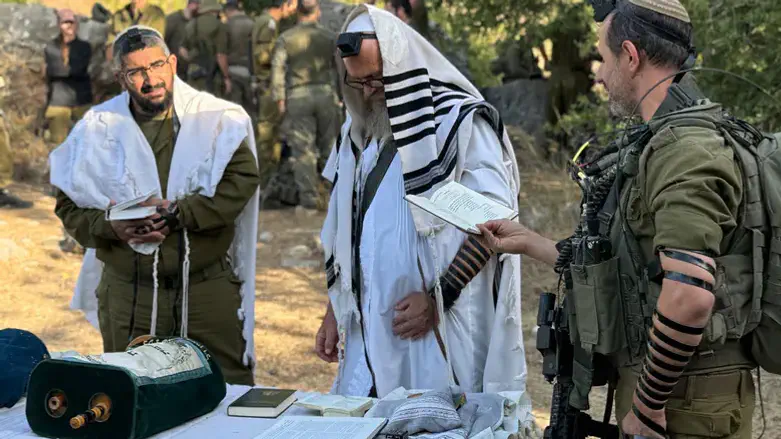 Israel National News2 days ago
Battalion Rabbi Elyashiv Hacohen reads from the TorahNone
A special and moving ceremony was held Friday morning on Mount Betarim on Mount Dov, near the Lebanese border, as commanders and soldiers from the IDF’s 21st Battalion of the Carmeli Brigade ascended the site traditionally identified as the location of the Covenant Between the Pieces, which God made with Abraham, as described in this week’s Torah portion, Lech Lecha.
The ascent marked the revival of an ancient Jewish tradition documented in historical sources dating back approximately 700 years. According to tradition, Jews from the Galilee would ascend the mountain every year on the eve of Shabbat Lech Lecha to pray and read the verses describing the Covenant Between the Pieces (Brit Bein Habetarim).
During the ceremony, one of the battalion’s company commanders read the biblical verses describing the covenant, including God’s promise to Abraham: “On that day, the Lord made a covenant with Abram, saying: ‘To your descendants I have given this land, from the river of Egypt to the great river, the Euphrates.’"
The battalion’s rabbi, Rabbi Elyashiv Hacohen, took part in the ceremony wearing a white kittel and blowing the shofar for victory in the war. The commanders and soldiers also prayed for the welfare of the State of Israel and the success of IDF soldiers.
Participants also recalled a tradition attributed to the late Rabbi Mordechai Eliyahu, according to which it is appropriate to pray at the site for rain.
The ascent took on special significance in light of the defensive missions carried out by IDF troops. The ceremony connected the ancient tradition and the promise made to Abraham with the soldiers defending the State of Israel today.
Battalion soldiers described the ascent as “a very special and moving mission," combining Jewish heritage, faith, prayer and a fighting spirit.
 Israel National News2 days ago
Long Island synagogueno credit
Nassau County Police on Long Island arrested Azam Khan, 29, on suspicion of attempting to set fire to the Young Israel synagogue in West Hempstead overnight Wednesday into Thursday.
The incident ended without injuries or damage to the building, and local security forces increased security around community institutions.
According to details of the incident, the suspect arrived at the premises at approximately 1:00 a.m. carrying a club and attempted to smash the glass doors at the building's entrance. When the glass doors withstood the blows and did not break, the suspect tore down a yard sign, set it on fire, and attempted to push the burning sign underneath the doors in an effort to start a fire inside the building.
When that attempt failed, Khan threw the sign toward nearby bushes. The flames that caught in the bushes extinguished themselves before spreading to the building.
Security footage provided to investigators shows Khan apparently speaking on his cellphone's speakerphone while carrying out the act and seemingly receiving instructions from another individual. At this stage, police have not officially confirmed whether a search is underway for another suspect who may have directed him remotely.
Khan's arrest was made possible by a chain of events that began at a nearby park, where a man was reported to have broken the mirror of a police patrol car. While officers were searching the area for the vandal, they received a report of a fire that had been started near the synagogue. Officers rushed to the scene, identified Khan, and arrested him without resistance.
Khan faces two counts of third-degree criminal mischief and two counts of arson. Law enforcement authorities noted that an official motive for the incident has not yet been established, and no decision has been made on whether to charge him with a hate crime.
The synagogue's security team provided the materials to investigators and circulated a warning to community members urging heightened vigilance.
Yisroel Szpigiel, vice president of the synagogue, commented on the incident, saying, "There is no place for hatred in our town, and no one should have to go through something like this. We will need to be here to protect one another."
Meanwhile, local legislator Olena Nicks said she had conducted a security assessment with the police commissioner and that security forces were increasing their presence around the community, although no additional active threat is currently known.
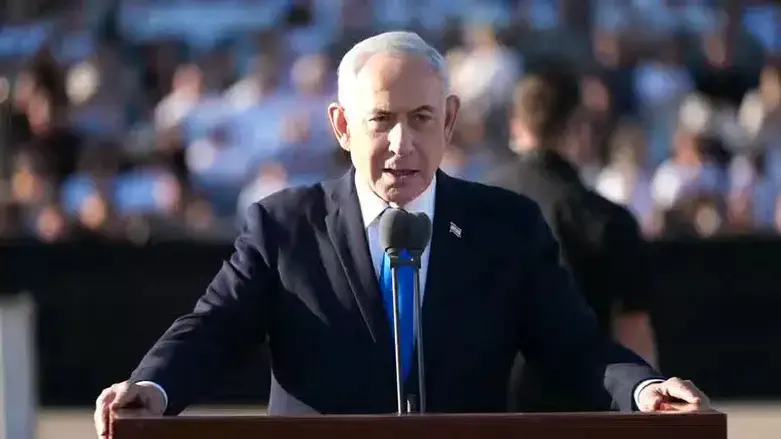 Israel National News2 days ago
NetanyahuIti Beit-On/GPO
Prime Minister Benjamin Netanyahu announced Friday that he had instructed the IDF and security forces to immediately cordon off the city of Hebron following the terrorist shooting attack at Yehuda Junction in which five Israelis were wounded, two critically, warning Hamas terrorists that Israel would pursue them wherever they are.
The Prime Minister made the announcement following a security assessment attended by Defense Minister Israel Katz, IDF Chief of Staff Lt. Gen. Eyal Zamir, the Director of the Shin Bet, the National Security Advisor, and the commander of the IDF Central Command.
"I have just concluded a security assessment with the Minister of Defense, the IDF Chief of Staff, the Director of the Shin Bet, the National Security Advisor, and the Commander of the IDF Central Command," Netanyahu stated.
According to the Prime Minister, evidence recovered following the attack indicates that the terrorists had been preparing to carry out a significantly larger attack against Israeli civilians.
"It appears that Hamas terrorists were planning a major attack aimed at murdering innocent civilians, as evidenced by the large quantities of weapons and ammunition discovered," Netanyahu said.
He praised the soldiers who confronted the terrorists and prevented the planned attack from causing additional casualties.
"Our brave soldiers thwarted this attack with courage and determination. I commend them for their actions and wish our wounded a speedy recovery."
The IDF subsequently released additional details about the attack, revealing that the two terrorists had apparently left Hebron with a large quantity of ammunition in their vehicle, intending to carry out a major terrorist attack.
According to the military's assessment, the terrorists were armed with an M4 automatic rifle and a handgun. A large ammunition container holding numerous additional rounds was discovered inside their vehicle.
The IDF believes the terrorists intended to drive onto Route 35, which connects Hebron to central Israel, but were stopped at a temporary checkpoint established by IDF Home Front Command forces near Yehuda Junction.
The terrorists exited their vehicle and opened fire in an attempt to harm the soldiers manning the checkpoint.
According to the military, the exchange of fire took place at close range and lasted more than 20 minutes.
Numerous security forces were dispatched to the area during the encounter, which ended with the elimination of both terrorists.
The IDF emphasized that the soldiers' actions prevented a far more serious terrorist attack against civilians inside Israel.
The soldiers who participated in eliminating the terrorists belong to the Home Front Command's Ari Battalion, a newly established battalion currently carrying out its first operational deployment in Judea and Samaria.
Following the attack, a complete closure was imposed on Hebron in an effort to prevent copycat terrorist attacks. Central Command chief Maj. Gen. Avi Bluth also instructed forces to expand the closure.
Netanyahu confirmed that he had ordered additional security measures to prevent further attacks originating from Judea and Samaria.
"I have instructed the IDF and security forces to immediately cordon off the city of Hebron and take additional security measures to prevent terrorist attacks originating from Judea and Samaria," he stated.
The Prime Minister added that Israeli security forces were operating with reinforcements and conducting extensive arrest operations as part of the effort to prevent further attacks.
"Our forces are operating with reinforcements to thwart terrorism and are carrying out extensive waves of arrests," he said.
Concluding his statement, Netanyahu issued a direct warning to Hamas terrorists and those responsible for directing attacks against Israelis.
"We will pursue Hamas terrorists and those who sent them, wherever they are and at all times."
"You have nowhere to hide."
 Israel National News2 days ago
השר בצלאל סמוטריץ'צילום: יונתן זינדל, פלאש 90
Rochel Sylvetsky is currently Senior Advisor and Op-ed and Judaism editor of Arutz Sheva’s English site. She served as chairperson of Emunah Israel from 1991 to 1996, CEO/director of Kfar Hanoar Hadati youth village, a member of the Emek Zevulun Regional Council and a member of the Religious Education Council of Israel’s Education Ministry. She also served as managing editor of Arutz Sheva before her partial retirement and is a member of the board at Orot Yisrael Teacher's College and the Knesset Channel. She holds degrees in mathematics and Jewish education.
One of my earliest memories is my father z"l telling me how he returned home after almost starving to death as a WWI POW (captured by the British, no less!) and discovered that in his hometown of Viseu, Romania nothing had changed and the only thing that mattered was that he was Jewish. He simply left for America, forever grateful for the welcoming statue lifting its “lamp beside the golden door" at the entrance to the land where equal opportunity was protected by law.
And so it was, for half a century after the Holocaust, a period in which the word “liberal" evoked the ideas of fair play, individual liberty, equality and sometimes - perhaps too often --fraternity. Antisemitism existed, but it was not considered in good taste to be obvious about it. And Jews deluded themselves into thinking that this was the way it would be forever. They flourished, contributed to their adopted country and its society, were at home from “sea to shining sea".
Until they weren’t, and those happy golden years (to paraphrase Laura Ingalls Wilder) morphed into the age of progressivism and identity politics. Jews, suddenly a group, all of them classified as white oppressors with the centuries of persecution they endured ignored -- not unlike my father in Romania -- found that all their loyalty, patriotism and contributions to society did not overcome their perceived collective identity. The freedom of belief and equality they had cherished was buried by overt hatred aimed at them for being Jewish, and Zionism was added to the resurfaced age-old antisemitic tropes.
The Heritage Foundation writes it as it is: Ultimately, identity politics poses a threat to republican self-government by corroding patriotic ties, fostering hatred, promoting cultural separatism, and demanding special treatment [for groups considered oppressed] rather than equality under the law.
American Jews are shocked at not being able to convince the haters to see them as individuals and judge them on their merits, it is as if European exclusion of Jews has made a comeback. Academics and writers are the most hard hit and some, especially the young, have opted to join the haters, victims of a self-hating Stockholm Syndrome that will eventually backfire as it always has.
Others are making their way to Israel, where being Jewish is supposed to be a unifying classification, only to discover that the Jewish State has its own identity politics, and is constantly dividing its Jewish citizens into groups (and sub-groups) that, in addition to economic demarcations, include those that are enlistment-based (Zionist and Religious Zionist vs. non-Zionist haredi), observance-based (secular vs. religious), ethnically-based (Mizrahi vs. Ashkenazi), geographically-defined (periphery vs. central vs. Judea and Samaria), or politically based (left vs. right). I may have omitted some.
After decades of living here, I am not sure Israelis can even judge individuals sans their group identity. And with those identity politics labels firmly in place in Israeli society, it is realistic to expect that the non Religious-Zionist voter puts the kippah on Bezalel Smotrich’s head and his “settler" grouping above his being one of the best Finance Ministers this country has ever had, this despite his extraordinary success (partly due to his knowing how to listen to various experts no matter what their grouping) in preserving economic growth during the longest war Israel has ever fought. Can these voters appreciate that the Finance Ministry, traditionally the burial ground for aspiring politicians, is thriving, although people predicted being at its head would be the end of him? Judging by what I read and hear, I am not convinced that the answer is in the affirmative.
What is, however, unconscionable is the efforts of those under the inclusive Religious Zionist umbrella with its shared goals, ideology and above all its accomplishments and love of Eretz Yisrael, Torat Yisrael and Am Yisrael to engage in small minded identity politics rather than lauding proven achievement and ability. That means their pitting “chardalim" vs. religious Zionists or city dwellers vs. “settlers" instead of finding common ground. Jason Willick (in 2023) was right when he wrote that identity politics is fundamentally illiberal because it imposes a group identity on individuals, and I add that it prevents us from looking objectively at the individual himself. Liberal individualism is the enemy of illiberal collectivism.
I was galvanized to write this article when respected journalist Ariel Schnabel wrote several weeks ago in Makor Rishon that the original, (since changed) Religious Zionist party list included too many candidates who live near route 60 (an allusion to Yehuda and Shomron). He was not the only one to make this offensive and shocking remark, but I wrote him a letter decrying it because of the publicity he receives. Did it mean that a religious Zionist voter in Givat Shmuel cannot rely on those candidates to represent his interests because of where they live? Have we become that divisive? Are we crazy? Do we each need a party that is exactly like ourselves so that we can identity-politicize ourselves to political death through a plethora of parties who will not pass the electoral threshold - this when we have one, although not above criticism, which has proven itself?
We tend to get used to good things and forget how hard it is to have achieved them. Consider the Religious Zionist party’s long-needed success in separating civil issues from security issues in Judea and Samaria. This opened the way to recognizing existing communities and establishing new ones, building the roads Merav Michaeli refused to allow (I bless them every time I visit my daughter in Gush Etzion) and more. The faction even found a way to help defray the high tuition fees for Ulpanas and Yeshiva high schools, among many other things it improved and we now take for granted.
And yes, despite the frustration and pressing need to see our sons’ IDF service augmented by haredi enlistment (and our sector lives with the trauma and loss every waking minute), I now realize that causing the coalition to fall in the middle of a war would have been disastrous. And that the problem will not be solved by laws forcing the drafting of unwilling and unmotivated non-Zionist haredi soldiers, even if it makes us feel better.
Let’s face it. Political accomplishments are a function of ability and skill, but also of how many hands your faction can raise when it wants something done. Avi Maoz’s record as a lone MK for the last four years is proof that a perfect platform is not enough. And when all the fiery pre and post- election rhetoric is put aside, accomplishments are the result of doing the jobs that need to be done with astute thinking and hard work, something inexperienced Ofer Winter did not seem to understand when he denigratingly rejected offers to head the projects he is pushing for and refused the chance to translate policy into action, not words. Those, like Smotrich, Strook and the entire Religious Zionist Knesset faction who were part of the pre-October 7 government but railed at its acceptance of the then prevailing “conceptzia" are to be admired for warnings, not brushed with a collective brush.
Religious Zionists tend to choose to elect principled leaders who share their ideology, but must at the same time choose those with proven accomplishments who know how the system works.
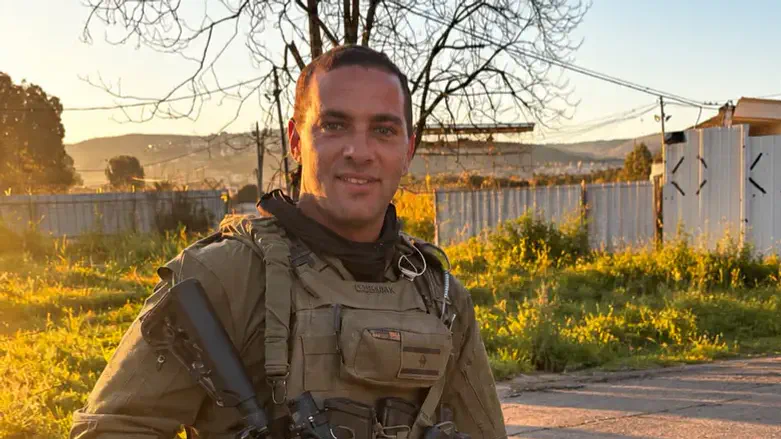 Israel National News2 days ago
[inchas RanHonenu
The Jerusalem District Attorney's Office filed an indictment Friday morning against Pinchas Shem Tov Ran, a security coordinator and resident of Itamar in his 30s, following a shooting incident involving a vehicle in the village of Aqraba in Judea and Samaria.
An 18-year-old Palestinian woman was seriously injured in the incident. The security official is charged with serious violent offenses and obstruction of justice. The prosecution has also requested that he remain in custody until the conclusion of the legal proceedings.
The indictment was filed following a joint investigation by the Israel Police's Judea and Samaria District Central Unit and the Israel Security Agency (Shin Bet), which examined suspicions of violent conduct involving actions beyond the authority and geographical areas of responsibility of those involved.
According to the indictment, Ran entered the Palestinian village of Aqraba, outside his area of responsibility, in a Ranger utility vehicle together with a career IDF soldier. He allegedly conducted identity checks without authorization and opened fire with an Arad assault rifle at a vehicle carrying a couple after the driver failed to comply with his instructions to stop.
Two bullets struck the woman in her upper body. She underwent surgery and required hospitalization for several days.
Ran's younger brother, Major Or Yosef (Orush) Ran, a soldier and commander in the Duvdevan Unit, fell in battle on October 7, 2023, while defending Kibbutz Kfar Aza, after fighting terrorists, saving lives, and helping evacuate residents of the kibbutz.
At the center of Ran's account is an incident that he claims began with an immediate threat to his life.
According to Ran, while traveling in a Ranger utility vehicle as part of his duties, together with another officer, a vehicle without license plates suddenly approached them near the village of Aqraba.
The two claim that the vehicle sped toward them in a manner that led them to fear an attempted ramming attack, forcing them to jump aside to avoid being struck.
According to his account, after escaping the danger, Ran fired warning shots into the air in an attempt to stop the vehicle. However, the vehicle continued driving and fled rapidly into the village.
Ran therefore maintains that the shooting followed an incident he perceived as a genuine threat to his life and that of the officer accompanying him, rather than an incident he had initiated.
Following the incident, he was arrested by the Shin Bet and brought before a court. Now, with the filing of the indictment, his account will be examined as part of the legal proceedings. The specific charges and the prosecution's full account were not included in the material provided.
Ran enters the legal proceedings after many years of combat service and assistance to the security forces.
He completed his mandatory military service as a combat soldier in the Paratroopers Brigade's 101st Battalion and subsequently served for years as a reservist in Battalion 697 of Brigade 551, the Fire Arrows Formation.
Since the outbreak of the Swords of Iron War, he has accumulated more than 600 days of reserve duty, according to the information provided.
During this period, he participated in combat operations in the Gaza Strip and southern Lebanon and continued volunteering for operational missions even when his fellow team members took breaks for rest and recuperation.
Among other roles, he served as an operational driver and assisted forces from the Golani Brigade and the Border Police's undercover unit in Judea and Samaria.
Throughout his service, he received certificates of excellence and appreciation. Last September, during Rosh Hashanah 5787, he was selected as an outstanding community security coordinator by the commander of the Samaria Brigade.
He also received a certificate of appreciation for his service alongside the Border Police's Judea and Samaria undercover unit.
Alongside his military service, Ran has also experienced the loss of a family member in battle.
His younger brother, Major Or Yosef (Orush) Ran, of blessed memory, fell on October 7 during the battle for Kibbutz Kfar Aza, after fighting terrorists and helping rescue and evacuate residents.
The Ran family has six sons, all of whom served as combat soldiers.
Even after his brother's death, Pinchas continued reporting for reserve duty and participating in operational missions.
This conduct features prominently in letters of support and recommendation submitted to the court by commanders and officers who served alongside him over the years.
One of the letters was written by Major Dr. Limon Adam, deputy commander of Battalion 697 and former commander of its support company, who fought alongside Ran in the Gaza Strip and Lebanon.
"Pinchas exemplifies professionalism, seriousness, personal responsibility, and humanity," he wrote.
"Pinchas fought shoulder to shoulder with me throughout all the periods of combat, during the ground maneuver in Beit Hanoun, and from there in the fighting in the Al-Atatra neighborhood, Beit Lahia, and the Rimal neighborhood, and afterward in the defensive battle in the north against Hezbollah."
Later in his letter, Adam also addressed one of the most difficult moments in Ran's life.
"When he learned that his brother, the late Or Ran, had fallen in battle in Kfar Aza, he refused to leave his fellow unit members."
Lieutenant Colonel (res.) Tzach Eckstein, former commander of Battalion 697 in Brigade 551, also submitted a letter to the court describing Ran's continued commitment to operational service, even after his family's loss.
"Pinchas continued volunteering for reserve duty and reporting for repeated rounds of combat in Lebanon and Gaza. Time and again, he chose to continue shouldering the burden and even volunteered beyond what was required," Eckstein wrote.
He asked the court to take these circumstances into account when considering Ran's case.
Another letter was submitted by Major (res.) Rotem Shaked Aharon, operations officer of the support company in Battalion 697, who has known and commanded Ran for 16 years.
Aharon emphasized Ran's operational experience and his conduct throughout their years of service together.
"Over the years, Pinchas demonstrated a deep commitment to the mission, personal responsibility, dedication, and fighting spirit, and participated in many of the unit's operational processes and successes," he wrote.
According to Aharon, his longstanding familiarity with Ran also enables him to testify to his character.
"Based on my longstanding acquaintance with Pinchas, both personally and at the command and professional levels, I believe he is a man of values, with a sense of responsibility and a deep commitment to service and society."
Additional testimony regarding Ran's operational performance was provided by Warrant Officer (res.) Amit Barak, the mobility officer of Battalion 697, who also served alongside Ran on missions outside the battalion's regular framework.
"Pinchas repeatedly chose to volunteer and assist, and even volunteered to help the Golani Reconnaissance Unit during the first ground maneuver in Lebanon, in the Maroun al-Ras sector," Barak wrote.
He noted that the two subsequently served together on missions assisting the undercover unit in Judea and Samaria.
Barak concluded his letter with a personal expression of appreciation.
"I would wish for everyone to have Pinchas by their side during a combat incident or any other complex situation. He always acted calmly, responsibly, and with sound judgment."
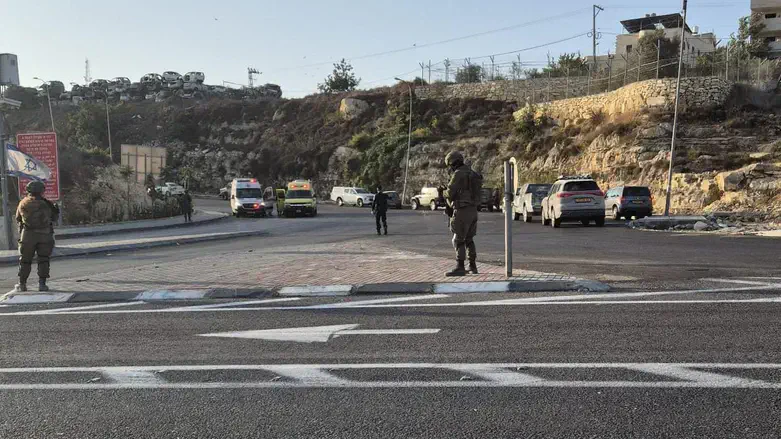 Israel National News2 days ago
scene of the shootingTPS
A soldier who participated in the exchange of fire with the terrorists who carried out the attack at Yehuda Junction on Friday morning recounted the moments when the terrorists opened fire on him and his fellow soldiers.
"When I raised myself up to return fire, I felt something hit my helmet. I lowered my head," the soldier recounted.
He also described the distress experienced by one of his fellow soldiers during the incident.
"The guy next to me started having a bit of a panic attack. I began calming him down while we continued firing."
Describing the beginning of the encounter, he said: "We heard several shots being fired in the area. We immediately took cover behind the concrete barrier."
According to the soldier, during the incident he attempted to summon additional forces using his personal cellphone.
"I started using my phone to call all the forces here. I started making calls."
The soldier went on to describe the exchange of fire and the arrival of additional forces at the scene.
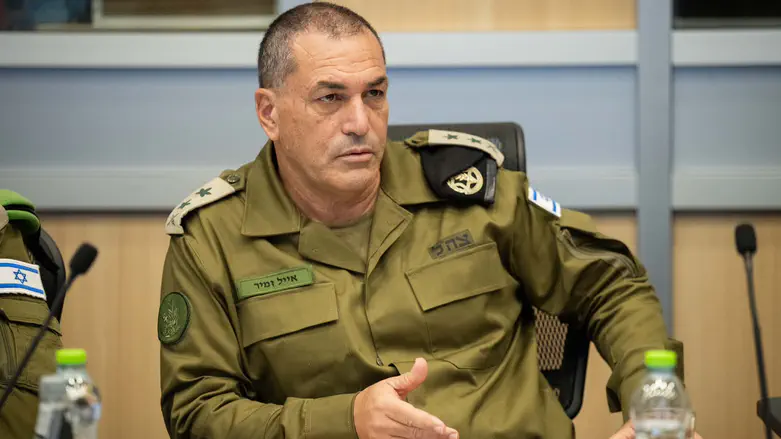 Israel National News2 days ago
תיעוד מזירת הפיגוע: "למעלה מ-20 דקות יש ירי פעיל של מחבל"צילום: דוברות הצלה יו"ש ללא גבולות
IDF Chief of Staff Lt. Gen. Eyal Zamir approved preparations to impose a complete closure on the city of Hebron and additional villages in the area following the shooting attack at Yehuda Junction.
Alongside preparations to restrict movement, a decision was made to intensify efforts to carry out additional arrests in the area.
During the discussion, details of the attack and the circumstances surrounding the elimination of the two terrorists were presented. At the same time, the Chief of Staff instructed the military to intensify arrest operations and intelligence efforts in the area and to prepare for the deployment of additional reinforcements to the Central Command as operational needs require.
According to the details presented, the two terrorists were eliminated by the deputy commander of the Home Front Command's Ari Battalion and a company commander, who were dispatched to the scene of the attack.
During the situational assessment, it was revealed that a large quantity of ammunition had been found in the vehicle used by the terrorists. According to the Chief of Staff, the discovery indicates that the terrorists had been preparing to carry out a larger-scale attack.
"This was a serious terrorist attack. The soldiers' swift actions prevented an even more severe attack and additional harm to civilians and security forces," Zamir emphasized.
The situational assessment was attended by the commander of the Central Command, the head of the Operations Directorate, the head of the Intelligence Directorate, and additional commanders.
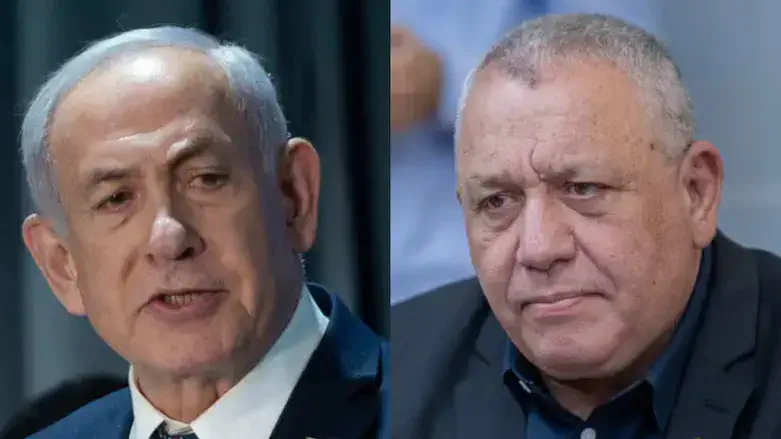 Israel National News2 days ago
Eisenkot and NetanyahuHaim Goldberg & Yonatan Sindel / Flash 90
The final Maariv election poll, published Friday morning, shows a six-seat gap between the political blocs, alongside a close race between the two largest parties.
According to the poll, conducted by the Lazar Research Institute, the Yashar party leads with 21 seats, just two ahead of Likud, which receives 19. However, the picture changes when the results are divided into political blocs: the anti-Netanyahu bloc, excluding the Arab parties, receives 54 seats, while the right-wing bloc receives 48.
One of the key findings of the poll concerns the Reservists and Economic Party, which manages to cross the electoral threshold and receives four seats. According to the data, its margin of support above the electoral threshold is narrow, meaning that even a relatively small change in its level of support could alter the distribution of seats in the Knesset.
According to the poll results, the third-largest party is Beyachad, with 15 seats. It is followed by the Democrats with ten seats, while the Joint List receives nine.
Yisrael Beytenu and Shas receive eight seats each. United Torah Judaism, Otzma Yehudit, and the Religious Zionism and Zehut list each receive seven seats. Ra'am stands at five seats, while the Reservists and Economic Party receives four, as noted.
Below the electoral threshold is the Amcha Yisrael party, which receives 3% of the vote in the poll. The Haredi Public Party receives 0.9% support, while Noam LeYisrael receives 0.5%.
Alongside the distribution of seats, the poll indicates a further increase in the public's willingness to participate in the elections. Of the Israelis surveyed, 81% said they were certain they would vote on Tuesday. This is higher than the voter turnout recorded in the 2022 Knesset elections, which stood at 71%.
Another question examined in the poll concerned the possibility that the elections would end without a clear victory for either bloc. In such a scenario, a majority of respondents prefer the formation of a unity government over holding another election.
A total of 60% of respondents support forming a unity government in the event of an inconclusive election. Of all respondents, 33% want a leader from the change bloc to head such a government, 19% prefer Netanyahu to serve as prime minister of the unity government, while 8% do not consider the identity of the prime minister important, provided that a unity government is formed.
Meanwhile, 23% of respondents prefer holding another election if no clear outcome is achieved.
 Israel National News2 days ago
Ambassador Mike WaltzREUTERS/Eduardo Munoz
US Ambassador to the UN Mike Waltz has accused UN Special Rapporteur Ben Saul of undermining America's fight against narcoterrorist organizations, criticizing his opposition to US military operations and President Donald Trump's Shield of the Americas initiative.
“This UN official is more concerned about the lives of narcoterrorists than the communities they destroy with drugs, crime, and illegal immigration," Waltz said Thursday.
He noted that the Shield of the Americas coalition brings together the US and 14 regional partners to combat 24 narcoterrorist organizations accused of murdering public officials and terrorizing communities.
Waltz also questioned Saul's independence, citing $150,000 in Chinese government funding earmarked for his UN mandate and his previous criticism of counterterrorism operations.
“Ben Saul, whose supposedly independent UN mandate received $150,000 from China and who condemned America's elimination of al-Qaeda's leader as a ‘revenge murder,’ now wants American military and civilian leaders investigated for confronting narcoterrorist cartels in our backyard," Waltz said.
He warned that the UN should not become “a pay-to-play laundromat for terrorists" or a platform for ideological campaigns.
Questions over Chinese funding and alleged bias
According to the US mission, UN financial disclosures for 2024 document $150,000 in Chinese government funding provided through the Office of the UN High Commissioner for Human Rights to support Saul's mandate.
Correspondence obtained through freedom-of-information requests reportedly also shows that Chinese Foreign Ministry officials communicated with Saul in 2023, before he assumed his UN position, praising his lectures in China and offering introductions to diplomats in Geneva.
In May 2026, Geneva-based watchdog UN Watch published a report examining alleged bias, conflicts of interest and external funding across 13 UN special rapporteur mandates. The investigation questioned Saul's independence and criticized what it described as his failure to condemn Beijing's persecution of Uyghur Muslims under the pretext of counterterrorism.
Previous criticism of counterterrorism operations
Saul has repeatedly challenged counterterrorism designations and military operations involving terrorist organizations.
In 2022, he criticized Australia's decision to designate Hamas in its entirety as a terrorist organization, calling the measure “broad and excessive." He also described the US operation that killed al-Qaeda leader Ayman al-Zawahiri as potentially an extrajudicial execution or “revenge murder."
In January 2024, Saul and another UN rapporteur condemned the Israeli strike that killed Hamas deputy leader Saleh al-Arouri in Lebanon, arguing that it could constitute an extrajudicial killing.
Following Israel's June 2024 rescue of four hostages from Hamas captivity in Gaza, Saul questioned the operation's legality and suggested that aspects of the mission could constitute war crimes.
In 2025, he criticized US sanctions against Palestinian organizations, including Addameer, which the Treasury Department sanctioned for acting on behalf of the Popular Front for the Liberation of Palestine, a US-designated terrorist organization.
Saul also challenged the UK's designation of Palestine Action as a terrorist organization. The group's proscription, imposed following destructive attacks on defense-industry facilities, was upheld by the UK's Court of Appeal in June 2026.
In December 2025, Saul called for President Trump and Secretary of War Pete Hegseth to be arrested and charged over US strikes against suspected drug-trafficking vessels, accusing them of ordering “mass murder."
 Israel National News2 days ago
"המחבל ממשיך לירות": תיעוד מהפיגוע סמוך לצומת יהודהדוברות הצלה יו"ש ללא גבולות
The IDF announced on Friday that Staff Sergeant Ron Yonatan Roytman and Sergeant Yuval Shai Svilem were killed in the shooting attack at the Judea Junction near Hebron.
Roytman, aged 23, from Ashkelon, was a squad commander in the Ari Battalion (775), Search and Rescue Brigade. Svilem, aged 20, from Hod Hasharon, was a soldier in the same battalion.
Three additional soldiers from the battalion were lightly injured.
The victims received medical treatment from Magen David Adom (MDA) teams.
The injured were evacuated to Hadassah Ein Kerem and Shaare Zedek hospitals in Jerusalem. The two moderately injured were treated at Shaare Zedek Medical Center, which said: "The condition of the injured is moderate; they are conscious and stable. After an initial assessment, they were transferred for imaging tests and further treatment."
An initial investigation indicates that the terrorists arrived at the scene in a vehicle with Israeli license plates and opened fire on Israelis at the junction. IDF forces stationed at the scene eliminated the two terrorists following a brief pursuit. The terrorists, who were armed with a handgun and an M-16 rifle, had attempted to flee. Roadblocks were established throughout the area.
In footage from the scene of the incident, one of the rescue workers can be heard shouting: "There has been active shooting by a terrorist for over 20 minutes."
תיעוד מזירת הפיגוע: "למעלה מ-20 דקות יש ירי פעיל של מחבל"צילום: דוברות הצלה יו"ש ללא גבולות
The IDF stated that the two terrorists were eliminated by soldiers from the Home Front Command's Ari Battalion, who were deployed in the area on a defensive mission and prevented harm to civilians.
Large numbers of IDF forces continue to operate at the scene under the command of the Judea Regional Brigade commander. The commander of the Central Command and the commander of the 98th Division are also at the scene. As part of the operation, several villages in the area have been placed under closure, while a full closure has been imposed on the city of Hebron.
The IDF is examining whether a photographer working for the French news agency AFP, who filmed the terrorists during the pursuit, had received advance information about the attack. At this stage, the matter remains under investigation, and there has been no determination that the photographer had prior knowledge of the attack.
Magen David Adom (MDA) EMTs and paramedics, together with an IDF medical team, provided medical treatment to the wounded and evacuated them to Shaare Zedek and Hadassah Ein Kerem hospitals. Shaare Zedek Medical Center stated: "Two of the wounded arrived at the medical center's trauma unit in moderate condition, conscious and stable. Following an initial assessment, they were transferred for imaging tests and further treatment."
MDA EMT Tzuriel Edri said: “We arrived at a difficult scene while gunfire was still ongoing. We entered the area in MDA’s bulletproof ambulance and immediately began assisting in evacuating the wounded. We loaded a man in his 20s, who was unconscious with gunshot wounds and in very serious condition, into the ambulance and provided him with medical treatment. We evacuated additional wounded people to MDA ambulances that had arrived at the scene and immediately began transporting them to hospitals. Another critically injured casualty was treated by IDF medical forces in a mobile intensive care unit."
MDA Paramedic Hanan Meir stated: “A man in his 20s was brought into our mobile intensive care unit, fully conscious, with gunshot wounds to his lower limbs. We provided medical treatment, including stopping the bleeding, and transported him to the hospital in mild and stable condition. Another mildly injured casualty was brought to us as well. He was also a man in his 20s with gunshot wounds to his lower limbs."
MDA EMT Avraham Eitan Stern added: “A man approximately 20 years old was brought to us, fully conscious, with minor facial injuries, apparently caused by bullet fragments. We transported him to the hospital in mild condition."
The two terrorists were neutralized by security forces at the scene.
Large numbers of IDF troops were dispatched to the scene and launched a manhunt for two terrorists who fled the area. The troops exchanged fire with the terrorists and ultimately eliminated both of them.
The IDF Spokesperson's Unit said, "Following the report of a shooting attack in the Judea Junction area, IDF soldiers eliminated two terrorists and continue searches in the area. A cordon was imposed in the area."
credit: איתן שלם, TPS
credit: איתן שלם, TPS
credit: איתן שלם, TPS
credit: איתן שלם, TPS
credit: איתן שלם, TPS
credit: איתן שלם, TPS
credit: דוברות מד"א
credit: דוברות מד"א
 Israel National News2 days ago
The International Criminal Court buildingReuters
The International Criminal Court (ICC) was named the recipient of the European Union's prestigious Sakharov Prize on Thursday, as the court faces sweeping sanctions imposed by US President Donald Trump's administration.
The European Parliament's decision represents a public show of support for the ICC amid growing tensions between Washington and European leaders over the court's activities, including its issuance of an arrest warrant for Israeli Prime Minister Benjamin Netanyahu.
"The European Union is built on respect for multilateralism and international institutions, and this prize recognises the important work of the court in upholding international law and justice," European Parliament President Roberta Metsola said in announcing the decision, according to AFP.
The ICC welcomed the recognition, thanking the European Parliament for presenting the award "at a time when the Court and its officials face unprecedented challenges".
ICC President Tomoko Akane emphasized the significance of the decision in light of the pressure facing the institution.
"Against this backdrop, the Sakharov Prize carries particular significance, reaffirming the importance of independent judicial institutions and of those who work to uphold international law," Akane said.
Earlier this month, Washington announced a new round of sanctions intended to severely disrupt the ICC's daily operations. The court prosecutes individuals accused of war crimes, crimes against humanity, and genocide.
The Trump administration has pledged to dismantle the institution "brick by brick", condemning its decision to issue an arrest warrant for Netanyahu over alleged crimes committed during the war in Gaza.
The sanctions, scheduled to take effect in six months, have prompted a strong response from the European Union, which has pledged to support the court and declared itself "ready to take any necessary measures" to ensure its continued operations.
The latest American measures build on a sanctions campaign launched shortly after President Donald Trump returned to office in January 2025.
In February of that year, Trump signed an executive order authorizing sanctions against the ICC.
The administration subsequently sanctioned four ICC judges in June 2025, citing what Washington characterized as the tribunal's “illegitimate actions" against Israel and the United States.
Washington broadened the sanctions in August 2025, targeting four senior ICC officials connected to proceedings involving American and Israeli figures.
Further restrictions were announced in December, when Secretary of State Marco Rubio imposed sanctions on two additional ICC judges over their involvement in cases concerning Israel.
Established in 1988 and named after Soviet dissident Andrei Sakharov, the Sakharov Prize is awarded annually by the European Parliament to individuals or organizations recognized for their contributions to human rights and democracy.
The ICC was selected from three finalists. The other nominees were Tanzanian opposition leader Tundu Lissu and Iranian twin sisters Taraneh and Romina Rahimi, who represented individuals prosecuted by Iran's government.
Candidates are nominated by political groups in the European Parliament, with the final selection made by senior lawmakers.
The official award ceremony is scheduled to take place in December.
 Israel National News2 days ago
Nuclear IraniStock
A senior Iranian lawmaker has urged the Islamic Republic's leadership to authorize the use of nuclear weapons in response to a possible American military attack, amid escalating threats from Tehran against the United States and Israel.
Mohammad-Saleh Jokar, chairman of the Iranian parliament's Internal Affairs Committee, made the remarks Thursday, according to Iran International, calling for stronger deterrence measures should Washington launch another military operation.
“I ask the Islamic Republic’s authorities, in defense of the country and for the purpose of deterrence, to permit the use of deterrent weapons, including nuclear weapons, in the event of a US attack on Iran," Jokar said.
The lawmaker also urged Iranian authorities to suspend cooperation under the Nuclear Non-Proliferation Treaty if the United States attacks the country.
He further warned that any country permitting American forces to use its territory or airspace to conduct strikes against Iran would face a “harsh response" and “pay a heavy price."
Jokar's statements are the latest in a series of threats issued by senior Iranian officials as the military confrontation with the United States continues and President Donald Trump considers the possibility of renewed strikes.
On Sunday, Iranian Foreign Minister Abbas Araghchi responded to Trump's suggestion that Washington might undertake additional military action to complete its objectives against Tehran.
"Last time you wanted to 'finish the job', Iran emerged even stronger. Want to try your luck again? Be our guest. But be careful; we have unfinished jobs too," Araghchi wrote on social media.
The Iranian foreign minister also accused Prime Minister Benjamin Netanyahu of attempting to draw the United States into another conflict with Iran for personal political reasons.
"Netanyahu is driving America into another war to stay out of jail, whatever the consequences for Israel-let alone POTUS," he added.
Araghchi's remarks followed Trump's endorsement of Netanyahu for another term as prime minister. In announcing his support, Trump highlighted their cooperation in confronting Iran and warned about the potential consequences of a change in Israel's leadership.
Later Sunday, Iran's Islamic Revolutionary Guard Corps (IRGC) issued another warning, threatening severe retaliation against Israel if Iranian energy facilities were targeted in renewed military operations.
IRGC spokesman Hossein Mohabbi published the threat on X, although the platform subsequently removed the post for violating its rules.
“Any attack on Iran’s energy infrastructure, although it will immediately be repaired by our young scientists, will turn the occupied territories into scorched earth forever and drive its usurpers into the Sinai Desert," Mohabbi wrote.
“The world will see what happens," he added.
Iran's new Defense Minister, Mehrdad Ahlaghki, has also warned Washington against resuming its military campaign, threatening American casualties if another confrontation takes place.
Among the scenarios he addressed was the possibility that the United States could deploy the powerful conventional bomb known as the “Mother of All Bombs" against Iranian targets.
Ahlaghki maintained that Iran had already prepared for such an operation.
“We have taken the necessary measures to deal with such an action, and we continue our work with confidence," he declared.
The defense minister then directed a warning at Trump concerning the potential consequences for American military personnel stationed in the region.
“If he drops one bomb, he should check how many of his forces he will have to remove from the region lying down," Ahlaghki said, suggesting that an American attack would result in US military fatalities.
 Israel National News2 days ago
AntisemitismiStock
The Jewish people's connection to Israel cannot be understood solely through religion, according to Jay Shapiro.
For millions of Jews, including those with little or no attachment to religious observance, Zionism has provided an enduring sense of belonging, linking them to a shared history, homeland and national future. But Shapiro believes that this connection has taken on renewed urgency amid rising hostility toward Israel, political developments in the United States and unrest in parts of Europe.
Speaking on his podcast, The Israeli Perspective, Shapiro devoted much of his commentary to the historical role of Zionism in preserving Jewish identity, before turning to what he described as the growing danger of antisemitism disguised as political criticism of Israel.
His central argument was that the establishment of the modern Jewish state represented more than the fulfillment of a political aspiration. It also provided a means of Jewish identification at a time when traditional religious attachments were weakening.
“There is only one Jewish homeland, and it is here in Eretz Israel," Shapiro said, emphasizing that the Jewish people's connection to the land had survived centuries of dispersion, cultural differences and changing religious commitments.
Throughout Jewish history, he noted, Jews lived in different countries, spoke different languages and participated in widely divergent cultures. Yet their historical and spiritual orientation remained fixed on the same homeland.
That attachment, he argued, does not necessarily depend on religious observance. Even Jews who have distanced themselves from traditional religious practice can retain a powerful connection to Israel and the Jewish people.
Shapiro traced this development to the transformation of European society during the nineteenth century, when the Enlightenment, scientific progress and the decline of traditional religious authority helped create an environment in which nationalism emerged as a dominant source of identity.
As Europeans increasingly identified themselves through nationality rather than religious affiliation, Jewish communities faced their own crisis of belonging.
The gradual emancipation of European Jews opened doors that had previously been closed. Jewish men and women entered universities, intellectual institutions and broader European society. Some maintained their religious traditions while participating in these new opportunities, but others moved away from Jewish religious life altogether.
For Shapiro, this development presented a profound historical challenge. As more Jews abandoned traditional observance, religious identity alone could no longer ensure their continuing connection to the Jewish people.
“Millions of Jews faced the threat of losing their Jewish identity and disappearing into the surrounding culture," he said.
The emergence of Zionism, in his interpretation, offered an alternative.
At a time when nationalism was reshaping European political and cultural life, Jewish nationalism provided an identity rooted in collective history, peoplehood and attachment to a homeland.
“Zionism offered Jews a way to identify with their land, with their people, and with their history," Shapiro said.
He stressed that the Zionist movement initially attracted only a minority of Jews, but its significance extended beyond its early following. It gave secular Jews a framework through which they could maintain a meaningful Jewish identity without returning to traditional religious practice.
Shapiro also offered a religious interpretation of secular Zionism, describing it as a possible expression of divine purpose.
“Secular Zionism could be considered, I think, a divine impulse," he said, suggesting that the ancient connection between Jews and their homeland had reawakened in a modern national form.
This interpretation, he explained, allows religious and secular expressions of Jewish identity to coexist rather than compete. For some Jews, belonging is expressed through religious observance and Torah study; for others, it is manifested through identification with Israel and commitment to its continued existence.
He also pointed to the revival and growth of Torah scholarship following the destruction of European Jewish communities during the Holocaust, noting that Israel had become a major center of Jewish religious study.
In his view, the survival of Jewish identity has depended on multiple pathways, rather than a single model of commitment.
The events of October 7 reinforced that conviction.
Shapiro described how the Hamas-led attacks and their aftermath demonstrated the central place Israel occupies in contemporary Jewish consciousness, including among Jews who have limited involvement in organized religious life.
He shared a personal example: distant relatives with whom he had never maintained meaningful contact reached out to him after the attacks to inquire about his safety and the well-being of his family.
“I myself have been contacted by distant members of my family who I only knew existed, but I had no contact with them, but they found me," he recalled.
The renewed family connections illustrated, for him, how developments in Israel can awaken bonds among Jews separated by geography, generations and differing personal identities.
The subsequent rise in anti-Israel sentiment, which Shapiro characterized as frequently overlapping with antisemitism, further reinforced his belief that Israel has become an indispensable element of Jewish collective identity.
He connected these concerns to recent unrest in France and Belgium, expressing anxiety about the social and political direction of European countries.
Recalling a visit to Paris approximately two decades earlier, Shapiro said he had encountered areas he regarded as unsafe and associated those experiences with tensions surrounding immigration and integration.
He suggested that worsening conditions in France could encourage more French Jews to consider immigration to Israel.
That prediction was presented as his personal assessment rather than as a conclusion based on migration figures.
The possibility of increased French aliyah led Shapiro back to one of his broader themes: Jewish connections to Israel are shaped by different circumstances.
Some Jews immigrate because of religious conviction. Others are motivated by national identity, family ties or a lifelong aspiration to live in Israel. Still others may decide to leave countries where they previously believed their future was secure.
“The roads leading to our homeland, here in Israel, are as varied as the Jewish people themselves," he said.
While Zionism occupied the first part of Shapiro's commentary, his discussion subsequently shifted toward the political use of accusations against Israel, particularly in the United States.
His immediate concern was the political activity of Abdul El-Sayed in Michigan, whom he described as a Democratic candidate for the US Senate.
Shapiro accused El-Sayed of contributing to anti-Israel hostility through statements alleging genocide in Gaza. He also attributed to the candidate a position suggesting that such accusations need not await the establishment of all relevant facts.
These were Shapiro's characterizations of El-Sayed's statements; the podcast did not include the complete remarks or the interview exchange from which they were drawn.
Nevertheless, Shapiro treated the controversy as an illustration of what he believes is a much wider problem: politically damaging accusations being repeated against Israel without sufficient attention to evidence or context.
He rejected the allegation that Israel had pursued a policy of genocide in Gaza, pointing to Israeli humanitarian assistance, vaccination efforts and warnings issued before military operations as evidence that, in his assessment, such an accusation is unfounded.
“People you want to annihilate you don't vaccinate and send food to," he argued.
Those examples formed part of Shapiro's defense of Israeli conduct; they do not, on their own, resolve the legal questions surrounding the Gaza war.
More broadly, Shapiro argued that the repeated use of highly charged language against Israel can shape international public opinion irrespective of the extent to which particular allegations have been substantiated.
He drew a parallel between contemporary accusations directed at the Jewish state and historical antisemitic libels that helped provoke persecution, violence and the expulsion of Jewish communities.
“Once it's repeated over and over again, disdain becomes permanent, regardless of its truthfulness," he said.
For Shapiro, the danger lies not merely in individual statements by politicians or commentators, but in the cumulative effect of accusations that become embedded in political discourse.
He also criticized several prominent American political figures, including Representatives Rashida Tlaib, Ilhan Omar and Alexandria Ocasio-Cortez, whom he associated with hostility toward Israel. He alleged that Ocasio-Cortez had been campaigning in Michigan in support of El-Sayed.
Shapiro's criticism extended beyond elected officials. He singled out conservative commentator Candace Owens, accusing her of promoting anti-Jewish narratives and benefiting from the attention they generate.
The remarks reflected his view that antagonism toward Jews and Israel is not confined to one political movement or ideological camp.
He further argued that campaigns against Israel have begun producing tangible diplomatic and cultural consequences.
Among the examples he cited were European countries declining to participate in the Eurovision Song Contest because of Israel's involvement, as well as the difficulties that Israeli officials and military personnel may face when traveling abroad amid allegations of war crimes.
He also referred to a statement attributed to the mayor of New York regarding the possible arrest of Israel's prime minister if he visited the city.
Shapiro presented these developments as evidence of a broader international effort to isolate Israel and damage its reputation.
He contrasted that criticism with Israel's achievements in science, technology and humanitarian assistance, arguing that those contributions have been overshadowed by hostile political campaigns.
His account of the international response was strongly critical of Israel's opponents, whom he accused of exploiting emotionally powerful allegations for political purposes. The podcast did not present responses from the politicians and commentators he criticized or examine the underlying legal allegations in detail.
Returning to Michigan, Shapiro expressed concern that the use of accusations against Israel had become an effective instrument in American electoral politics.
He viewed El-Sayed's candidacy as particularly significant because of the political influence of the US Senate and the possibility that similar rhetoric could gain traction in other states.
The election, he suggested, warranted close attention beyond Michigan itself.
“I'm keeping my eye on that election in Michigan because it could be a forerunner of things to come elsewhere in the United States," he said.
Shapiro acknowledged that his remarks painted a pessimistic picture, but maintained that the political consequences of antisemitism and hostility toward Israel required continued scrutiny.
His concern ultimately returned to the relationship between public opinion, the circulation of accusations and the vulnerability of Jewish communities.
“The bottom line is anti-Semitism doesn't need facts, but it can be used against the Jews," he said. “People don't spend much time checking facts, which is unfortunate."
 Israel National News2 days ago
Federal prosecutors detail charges against Utah man accused of making online threats to sy
A 22-year-old man from Ogden, Utah, has been indicted on multiple federal felony charges after allegedly threatening to bomb a synagogue, with investigators discovering six improvised explosive devices during a search of his residence, KUTV reported Thursday.
The US Attorney's Office for the District of Utah announced that the suspect faces charges including possession of an unregistered destructive device, making threats to kill or injure people and destroy property using explosives, and attempting to commit a hate crime.
According to federal prosecutors, the investigation began after the man published threatening messages online in December 2025.
One of the posts explicitly stated, "I want to blow up a synagogue," authorities said.
The FBI subsequently contacted the Ogden City Police Department, and federal and local investigators visited the suspect's residence.
After obtaining a search warrant, law enforcement officers discovered six improvised explosive pipe bombs and an additional insert device.
Investigators also recovered materials and components that could be used to manufacture additional explosive devices, along with a black Samsung cellphone, two rifles, magazines, and ammunition.
Authorities later secured a separate warrant to examine the suspect's phone.
A review of the device revealed that he had conducted an internet search for a nearby synagogue in November 2025, approximately one month before allegedly posting the threats.
A federal grand jury returned an indictment against the suspect on Wednesday. His initial court appearance is scheduled for Friday.
The case follows another incident involving a Utah resident accused of threatening Jewish houses of worship.
Last year, the New York Police Department arrested a 23-year-old man from Utah shortly before he could enter Manhattan, following social media threats to carry out a shooting at synagogues in the area.
Authorities subsequently revealed that the suspect had described himself as “Hitler reincarnated" and had threatened to murder Jews.
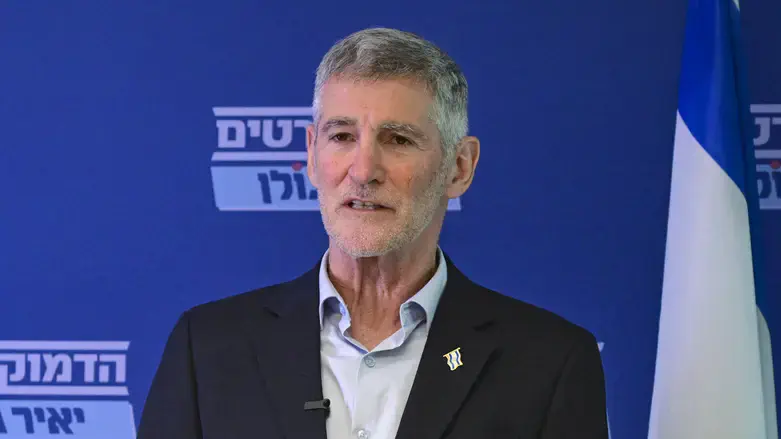 Israel National News2 days ago
Yair GolanAvshalom Sassoni/Flash 90
Democrats Party chairman Yair Golan has sharply criticized his political allies in the anti-Netanyahu bloc, arguing that some of them cannot be trusted.
In a recording from a meeting of his party's Knesset faction, revealed by Kan 11 News, Golan expressed concern about the positions of other parties in the bloc.
His remarks come amid recent reports questioning whether all parties in the anti-Netanyahu bloc are committed to repealing the laws associated with the judicial reform.
Golan warned that some parties could not be relied upon and might align themselves with the Kohelet Policy Forum.
"There are parties around us that are less trustworthy," he said. "If we want a genuine government of reform, we need a large, strong Democrats Party. Without that, we could end up heading in the direction of Kohelet or other directions that are not healthy for putting the State of Israel back on track."
Golan also strongly rejected the possibility of forming a national unity government with Likud.
"Our position is very clear. No compromises. We absolutely must form a government without the draft dodgers, without the extreme nationalists who are truly destroying our home, and of course without the corrupt politicians."
"As far as I'm concerned, it's not just Netanyahu. It's the entire Likud. Do we want to form a government with Yoav Kisch, who is destroying the education system? Do we want to form a government with Shlomo Karhi, who is destroying the Israeli media?"
"Do we want to form a government with the other Likud members, who are full partners in the abandonment, the ongoing abandonment, and the disaster that is still looming over us? Just in the past few days, we have seen the sheer absurdity of launching an attack on Iran for entirely political reasons," Golan added.
 Israel National News2 days ago
Jared MoskowitzAaron Schwartz/Sipa USA via Reuters Connect
A Florida man was arrested Thursday after allegedly making a death threat against Democratic Rep. Jared Moskowitz, who has faced repeated threats and heightened security concerns over his outspoken opposition to antisemitism, reported the South Florida Sun Sentinel.
Moskowitz, who represents a South Florida congressional district, announced the arrest in a social media post Thursday afternoon, saying the suspect lived near his home in Boca Raton.
“A constituent of mine has just been arrested in Boca, just a few miles from my house, for threatening my life. He is currently in the Palm Beach County jail. I’m grateful to @fdlepio and local law enforcement for acting quickly to keep myself and my family safe."
Speaking to the South Florida Sun Sentinel, Moskowitz said the suspect had left a threatening voicemail at his congressional office on Sample Road in Coral Springs earlier Thursday.
The congressman said “a gentleman left a message on our voicemail threatening me, saying he wanted to slit my throat."
Moskowitz turned the recording over to authorities, who subsequently traced the call and arrested the suspect.
The Florida Department of Law Enforcement did not immediately respond to requests for additional information about the investigation.
The arrest comes just two days after Moskowitz discussed the threats against him during a congressional debate at a Boca Raton synagogue.
The Democratic incumbent is seeking reelection in Florida's newly redrawn 25th Congressional District against Republican nominee Scott Singer, a former mayor of Boca Raton.
Both candidates are Jewish, and Tuesday's debate took place under extensive police protection.
Asked about their efforts to combat antisemitism, Moskowitz pointed to the threats he has received because of his advocacy for Israel and the Jewish community.
“Well, I’ll tell you, listen, you don’t have to listen to me on what I’ve done fighting antisemitism, standing up for Israel. Listen to the antisemites who are trying to kill me, right? My wife is here. We have police outside our house 24 hours a day now. The security that’s going on in here tonight is for me, and the mayor, and you all, but it’s a lot for me. I can’t go anywhere now without security because of the work I’ve done fighting antisemitism and the voice that I’ve had on the issue."
Singer also disclosed during the debate that he had previously received death threats.
Moskowitz told the Sun Sentinel on Thursday that police officers remain stationed at his residence around the clock and that security personnel accompany him to scheduled events.
Thursday's incident follows a series of threats against Moskowitz, including a case in November 2024 involving a Florida resident who possessed weapons and a list of potential Jewish targets.
Police discovered Moskowitz's name on a “hit list" while responding to a call at the Margate residence of John Lapinski Jr.
During a search of the property, officers found six firearms, a substantial quantity of ammunition, and a list identifying synagogues, Jewish-owned businesses, and the congressman.
Lapinski was subsequently prosecuted and sentenced last year to 25 years in federal prison.
Earlier this year, the congressman also reported receiving abusive messages containing antisemitic threats, including calls to "kill Jews" and warnings that he would be "going down."
Moskowitz is not the only Jewish member of Florida's congressional delegation to face recent threats.
Republican Rep. Randy Fine has also been the target of alleged threats against himself and his family.
Last month, a Massachusetts man received a federal prison sentence of nine years and 11 months after pleading guilty to threatening Fine and his young sons through a series of antisemitic social media posts.
In a separate case, federal authorities arrested a 26-year-old Ohio resident in August for allegedly threatening to kill Fine and members of his family while also calling for President Donald Trump's death.
Those incidents followed Fine's victory in the Republican congressional primary in mid-August, when he defeated social media personality and podcaster Dan Bilzerian.
Bilzerian's campaign featured anti-Jewish advertisements and attacks directed at Fine, including material invoking Adolf Hitler and antisemitic stereotypes. The rhetoric drew condemnation from lawmakers in both the Republican and Democratic parties.
 Israel National News2 days ago
From Noah to Abraham: God's Search for Man
So much of Torah knowledge beckons to be uncovered "between the lines." In Hashem's Divine wisdom and plan, the Written Torah was bequeathed by God to Israel together with a "living" Oral Torah, given to Moshe at Sinai and handed down faithfully by the wise men across the generations.
Around this vast body of knowledge grows the Midrashic literature, the Divinely inspired, wisdom-imbued commentary and insights of the Sages.
In this week's episode of the Jerusalem Lights podcast, Jim Long and Rabbi Chaim Richman discuss and explore the world of the Oral Torah and Midrash, and their illumination of the book of Genesis.
 Israel National News2 days ago
Donald TrumpWhite House Photo by Abe McNatt
US President Donald Trump is weighing a new military offensive against Iran that could begin shortly after the November 3 midterm elections, as frustration grows within his administration over Tehran's refusal to return to negotiations, The Atlantic reported Thursday.
According to officials familiar with the discussions, the proposed operation would involve several days of strikes against Iranian nuclear facilities, missile and drone capabilities, and energy infrastructure.
The potential escalation comes as Washington continues its campaign of economic pressure against the Islamic Republic, with some advisers arguing that additional military action could force Tehran to make concessions.
One outside adviser told The Atlantic that “the economic pressure is working, and we believe Iran is getting close to the edge."
Another round of attacks, the adviser suggested, “would push them over."
However, the report indicated that some officials believe renewed military action could prove counterproductive, even as Trump becomes increasingly impatient with the pace of his administration's economic strategy.
According to an administration official and another person familiar with the discussions, Trump had initially hoped that mounting economic pressure would bring Iran back to the negotiating table before the congressional elections.
That objective has not materialized, while persistently high energy prices have created additional political difficulties for Republicans heading into the midterms.
The Atlantic reported that the President had also considered launching another round of strikes before Election Day, an option supported by some officials in Washington who believe a military success could provide a last-minute political boost.
Prime Minister Benjamin Netanyahu has similarly urged Trump to authorize additional strikes before Israel's election next week, according to a White House official who spoke to the publication.
Nevertheless, Trump has so far declined to approve another operation before the American midterms.
Earlier this month, he wrote on Truth Social that the United States would not launch additional attacks before the election.
American officials emphasized that no final decision has been made regarding military action after November 3.
Some officials reportedly believe that maintaining uncertainty about Washington's intentions and the timing of any potential operation could itself increase pressure on Tehran.
At the same time, several recent developments have pointed to preparations for a possible escalation.
Earlier this week, Secretary of War Pete Hegseth visited Israel and met with Netanyahu for discussions focused on Iran.
On Wednesday, the State Department announced the evacuation of nonessential American personnel and their families from Saudi Arabia, citing an increase in attacks by the Iran-backed Houthi rebels in Yemen.
The White House did not immediately respond to The Atlantic's request for comment, while US Central Command, which oversees American military operations against Iran, declined to comment.
The report follows a separate account published Wednesday by The New York Times, which indicated that American and Israeli military planners had prepared detailed proposals for another round of strikes against the Islamic Republic.
According to that report, a renewed campaign could begin after the November 3 elections, although Trump has not yet authorized such an operation.
Trump himself raised the possibility of further military action Thursday while speaking to reporters outside the White House.
Defending his administration's decision to confront Iran militarily, the President acknowledged that the war had prompted mixed reactions but insisted that preventing Tehran from obtaining nuclear weapons remained a fundamental American objective.
"But we can't let Iran have a nuclear weapon. I mean, in one way, people probably don't love it. But many people, many great patriots really love it."
Trump also criticized previous administrations for failing to take decisive action against Iran and suggested that the American military campaign might not be finished.
"This should have been done a long time ago by other presidents, the Iran war. And we've knocked the hell out of them. And we may do it a little bit further."
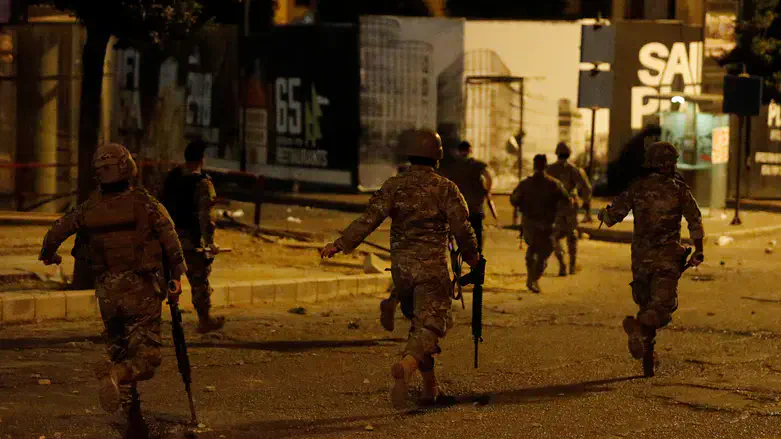 Israel National News2 days ago
Lebanese soldiers on the streets of BeirutReuters
Concerns are growing in Lebanon over the possibility of internal security unrest, particularly amid fears of renewed hostilities between Israel and the United States on one side and Iran on the other.
Kan 11 News reported that political factions opposed to Hezbollah fear the terrorist organization could exploit rising regional tensions to undermine the Lebanese government, potentially through assassinations and security incidents that could destabilize the country.
According to the report, officials in Beirut are preparing for the possibility that Hezbollah could join another military confrontation if fighting resumes between Israel and the United States and Iran, similar to its involvement during Operation Roaring Lion.
A source from the anti-Hezbollah political camp said recent statements by senior Hezbollah officials have raised particular concern.
According to the source, public threats made by Hezbollah members against the Lebanese government in recent days, along with warnings of potential action against it, may indicate that the organization is preparing a significant move on Lebanon's domestic front.
Tensions have been further heightened by the seizure of a truck carrying explosives belonging to Hezbollah.
According to the report, the incident has further strained the already tense relationship between the terrorist organization and Lebanon's leadership in Beirut, increasing fears of a serious internal security crisis.
 Israel National News2 days ago
תיעוד: בקבוק תבערה נזרק לעבר שיירת ראש הממשלהערוץ 7
The Prime Minister's convoy passed through Mahane Yehuda Market in Jerusalem shortly before midnight on Thursday evening, when a bottle was thrown toward the vehicles, according to footage from the scene.
Police officers and security personnel in the area immediately began searching for the person responsible.
National Security Minister Itamar Ben Gvir responded to the incident, saying: "This is a very serious incident. The incitement against the Prime Minister has effects and consequences. I say to those on the left: Be responsible. Words can kill."
 Israel National News2 days ago
US President Donald Trump once again on Thursday night reiterated that the war in Iran would end soon, vowing that gas prices would sharply go down once that happens.
Speaking at a rally in Iowa ahead of the November 3 midterm elections, the President stated, "We're gonna have Iran finished very soon. one way or the other. It's almost insignificant to me which way."
He then added, “It's going to be done very soon, and your gasoline prices and your oil is going to come tumbling down."
US President Donald Trump suggested Thursday that the United States could carry out additional military strikes against Iran, reiterating his determination to prevent the Islamic Republic from obtaining nuclear weapons.
Speaking to reporters outside the White House before departing for a campaign rally in Iowa ahead of the November 3 midterm elections, Trump defended his administration's military campaign against Tehran and argued that previous presidents should have confronted the Iranian nuclear threat.
He said he is "doing what should have been done by other presidents. There's a price to pay, which I knew immediately when I did it."
Trump acknowledged that his decision to launch the war had generated differing reactions but maintained that preventing Iran from acquiring nuclear weapons remained essential.
"But we can't let Iran have a nuclear weapon. I mean, in one way, people probably don't love it. But many people, many great patriots really love it."
The President then indicated that further military action remained a possibility.
"This should have been done a long time ago by other presidents, the Iran war. And we've knocked the hell out of them. And we may do it a little bit further."
Thursday's remarks followed Trump's statements at a campaign rally in South Carolina on Wednesday, where he expressed confidence that the conflict with Iran was nearing its conclusion.
However, the President suggested that Washington wanted to ensure that the results of its military operations would be lasting before bringing the campaign to an end.
The war, he stated, will "end very soon. We could leave now, but we want to make sure it lasts for a long time. Now, if you look at that, it's amazing what we did. Our military is unbelievable."
Trump's latest comments come amid continuing discussions within his administration over whether another round of military strikes would be necessary to achieve American objectives in Iran.
On Wednesday, The New York Times reported that American and Israeli military officials had developed detailed plans for renewed attacks against Iran.
According to the report, a new military campaign could begin after the November 3 congressional midterm elections, although Trump has not authorized an operation.
The preparations are reportedly part of the administration's broader deliberations over how to conclude the war while ensuring that Tehran cannot develop nuclear weapons.
Asked about the newspaper's findings, a White House official declined to confirm whether additional strikes were under consideration, saying the administration does not comment on military plans “that may or may not exist."
The official added that Trump continues to keep all options available as Washington seeks to prevent Iran from acquiring nuclear weapons.
 Israel National News2 days ago
Mike HuckabeeChaim Goldberg/Flash 90
US Ambassador to Israel Mike Huckabee has raised concerns that President Donald Trump's Gaza peace initiative may lack the personnel, funding, and logistical support necessary for its implementation, according to a diplomatic cable obtained by Politico.
The cable, sent Thursday from the US Embassy in Jerusalem to senior State Department officials and signed by Huckabee, questions whether the Board of Peace and American diplomatic personnel are adequately prepared to oversee plans for disarming Hamas and rebuilding the Gaza Strip.
According to the report, Huckabee's principal concern involves the International Gaza Support Center (IGSC), the American-led coordination hub based in Israel that is responsible for coordinating efforts among Washington, Jerusalem, and international partners.
The Pentagon intends to gradually reduce its staffing at the center over the coming year, with civilian personnel expected to assume responsibilities currently handled by military officials.
However, Huckabee warned that neither the embassy nor the Board of Peace currently has sufficient personnel to guarantee a successful transition.
“Embassy Jerusalem is not currently staffed to assume these roles, but can be if it has an idea of the human, financial and logistical resources that will be needed," Huckabee wrote.
“The BoP is working to increase staff but its ability to cover all functions at the IGSC remains unclear."
The Board of Peace was established by Trump and formally launched in February to oversee aspects of his Gaza peace initiative.
Operating under a United Nations mandate, the organization is responsible for coordinating reconstruction funding and supporting efforts to establish security and governance arrangements in the Gaza Strip.
Several European countries that declined to join the organization have nevertheless agreed to coordinate their activities with it.
The IGSC is expected to play a central role in supporting the International Stabilization Force that the Board of Peace intends to deploy in Gaza.
The coordination center was originally established last year by US Central Command under the name Civil-Military Coordination Center before being renamed.
According to Huckabee's cable, which was classified as “sensitive but unclassified," the center is currently undergoing organizational changes following the Board of Peace's assumption of financial responsibility on October 11.
The ambassador expressed particular concern that replacing military personnel with civilians “could complicate the coordination dynamic" with the IDF, “especially on the intelligence-sharing front."
He requested clarification from Washington regarding the division of responsibilities once the Pentagon begins withdrawing personnel.
“How will roles and responsibilities shift to State and the BoP as DoW reduces its presence?" Huckabee asked.
“How will we keep critical IGSC workstreams running and what conditions should be met before this transition begins?"
The Board of Peace did not confirm the reported reorganization.
Responding to Politico, the Board of Peace said it was unfamiliar with the diplomatic cable but maintained that preparations for implementing the Gaza initiative were well advanced.
The organization said it was “confident in the highly detailed plans that have been developed for improved humanitarian assistance, security, governance, the rule of law, infrastructure development, and reconstruction in Gaza. Our capacities and systems in place are strong and ready for implementation."
The Pentagon directed questions about the report to the State Department, which declined to comment.
 Israel National NewsIsrael National News2 days ago
Rabbi Yaakov ArielArutz Sheva
Approximately 150 Religious Zionist rabbis, including municipal chief rabbis, yeshiva heads, and community rabbis, have signed an emergency letter published just days before the Knesset elections, calling on the public to refrain from voting for parties that are not certain to cross the electoral threshold.
In the letter, published on behalf of the Torat Haaretz Hatova rabbinical association, the signatories warn against the loss of votes within the right-wing camp and portray the decision at the ballot box as having decisive consequences for the future of the State of Israel.
At the heart of the letter is an explicit call not to vote for electoral lists whose ability to enter the Knesset is in doubt. The rabbis present their position as an obligation arising from the importance of the elections, rather than merely a political recommendation.
"It is clear that one must vote only for parties that will, without any doubt, cross the electoral threshold," the document states.
The letter is signed by several of the most senior figures in the Religious Zionist rabbinical leadership, including the presidents of the Torat Haaretz Hatova association, Rabbi Yaakov Ariel, Rabbi Isser Klonsky, and Rabbi David Hai Hacohen.
Other signatories include Rabbi Zalman Baruch Melamed, Rabbi Shmuel Eliyahu, Rabbi Eliezer Igra, and Rabbi Yaakov Shapira, along with dozens of additional rabbis representing various streams and communities within the Religious Zionist public.
The joint appeal seeks to establish a unified position on voting for smaller parties, amid concerns that votes cast for lists that fail to cross the electoral threshold will not translate into seats in the Knesset.
The letter does not name any specific parties, but it addresses the issue of right-wing electoral lists whose prospects of crossing the electoral threshold remain uncertain.
According to the rabbis, the country faces a "fateful decision" that will influence its future direction and character. The letter states that the election results will determine "whether the State of Israel's loyalty to the people, the Torah, and the Land will continue, or whether, God forbid, it may be severely harmed."
Based on this view, the rabbis urge the public to consider not only the identity of their preferred party, but also the possibility that their votes may fail to secure that party representation in the Knesset.
Toward the end of the letter, the rabbis once again emphasize the seriousness of the issue in their eyes. They go beyond warning about wasted votes, describing the decision at the ballot box as one of profound national significance.
"This is a matter of life and death for the entire nation."
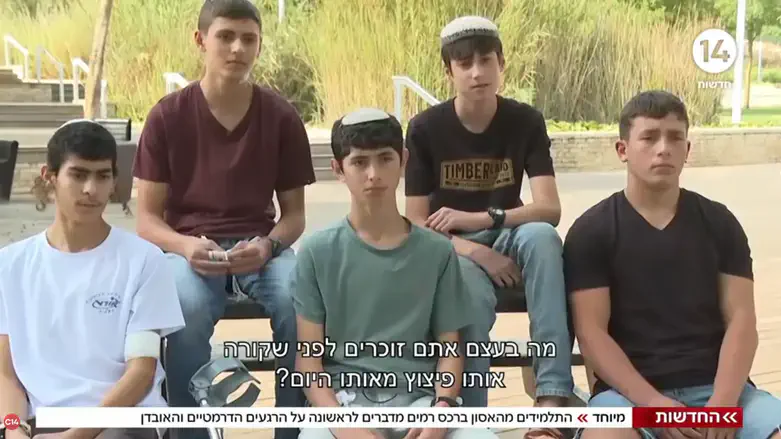 Israel National News2 days ago
The students from the hikeChannel 14
Fifteen-year-old students who witnessed a deadly explosion during a school trip in northern Israel have spoken publicly for the first time about the terrifying moments they treated wounded classmates and tried to save lives.
What was supposed to be a routine annual outing for ninth-grade students from ORT Ma’alot Yeshiva turned into a tragedy when a powerful explosion struck the Ramim Ridge area. Their classmate, Elazar Yair Vilensky, was killed, and 25 people were injured. In a report broadcast by Channel 14, the students recounted the events leading up to the blast, their desperate efforts to help the wounded, and the difficult days that followed their friend's death.
The students said that earlier in the hike, Elazar had found and picked up an object. They did not initially consider it dangerous, explaining that they were accustomed to finding missile debris in the Ma’alot area following the war. “We’re used to it in Ma’alot. We’ve been collecting all kinds of fragments since the war," one student recalled.
According to the students, Elazar continued handling the object as they walked. They did not connect it with any potential danger at the time, only revisiting the incident in their minds after the explosion. The blast occurred as the group was preparing to pray the afternoon service. The students described an explosion unlike anything they had heard before, followed by chaos as some people ran while others collapsed to the ground.
“I’ve never heard explosions like that in my life," one student said. Another initially believed that a terrorist attack had taken place, without realizing that the object Elazar had picked up earlier might have been connected to the explosion.
One student who was standing particularly close to the blast's epicenter recalled that his ears rang for approximately two minutes afterward. Around him, injured students lay on the ground as others tried to flee. Those who remained standing struggled to understand what had happened and how they could help their wounded friends. The students estimated that approximately 15 minutes passed before emergency responders arrived. During that time, they attempted to treat the injured with whatever supplies they could find.
One student called his father, a combat medic, described the situation and received instructions to focus on stopping the bleeding. He then began moving between the casualties, including a teacher who had been seriously wounded and was struggling to speak. To determine whether the teacher was conscious and able to respond, the student asked him to signal with his hand.
“Rabbi, give me a like," he told the teacher. When the teacher managed to respond, the student asked him to squeeze his hand as well, confirming that he was conscious before continuing to help others.
In another case, the student needed to stop a classmate's bleeding but lacked the necessary medical equipment. He used a belt to improvise a tourniquet, while other students also removed their belts to help treat the wounded.
Several of the teenagers had themselves been injured in the explosion. One described shrapnel striking him near his neck and shoulder. Another suffered two shrapnel wounds to his leg and an additional injury to his hand. A third was wounded in the chest and head, with blood running from his head. Despite their own injuries and the shock of the incident, the students worked together to help their classmates.
“Everyone was a hero," one of them said, describing how the teenagers kept their composure and took on whatever tasks were needed, despite having no experience dealing with a disaster of that scale.
Yet alongside their accounts of courage and quick thinking, the students also spoke about the loss of Elazar, the friend who never returned from the trip.
“He was a very happy boy, very funny, very curious," one classmate recalled. “Whenever we wanted to do things with friends, whenever we wanted to have fun, we knew we had to call him."
 Israel National News2 days ago
Police officers in FranceiStock
France is in chaos and the government imposed a curfew in certain areas, after Interior Minister Laurent Nuñez resigned: “In some cities we have lost control".
Pascal Bruckner speaks of a “silent coup d’état" in Le Figaro:
“What is striking is the good humor of the participants who shout ‘Wallah, Wallah!’. They are cheerful, they are the masters. Everywhere the same slogan on the walls and shop windows: ‘Bismillah the darkness’: the promise of a dark period of looting and violence, the consequence of a long series of abandonments that some of us have been denouncing for twenty years, from the tolerance of internal rot to the eruptions of violence in the banlieues explained by ‘racism.’ A silent coup d’état."
To understand the intensity and scale of what is happening one must not look at Paris, but at Marseille.
The population of Marseille is 886,040 inhabitants.
According to the authorities, about 30,000 residents of Marseille took part in the lootings on 17 October.
30,000 people are 3.4 percent of the total population of Marseille. Three inhabitants out of a hundred who took part in the devastation of their own city.
This is why Pierre-Henri Tavoillot, president of the Collège de philosophie at the Sorbonne, no longer hesitates to evoke the term “civil war."
And yet Emmanuel Macron, in his ridiculous address to the nation, blamed the “French."
The last time I was in Marseille two years ago, after a few hours I already felt the physical need to leave.
A city is not an aggregate of inhabitants. It is an order, fragile and continuously renegotiated, in which the majority recognizes certain rules as its own and enforces them. When a significant portion of the population-3 percent according to the authorities themselves-participates in organized looting, when the addresses of shops belonging to a specific community are known in advance, and when the damage is concentrated on those targets while others remain intact, we are not facing “disturbances," but an act of war that distinguishes between “us" and “them."
Let’s start then with this article from Algérie Matin. A little dialogue between friends, reported by the journalist. “How many Algerians are there in Marseille? 200,000. Marseille has 800,000 inhabitants; that means one inhabitant out of four is Algerian." No, there are not 200,000 but 300,000, says the journalist, before getting excited about the fact that one inhabitant out of three is “DZ" (the name given to Algeria on license plates).
And the rest of the Maghreb, Moroccans and Tunisians? The latter number 60,000. Who says so? Radio France. For Moroccans, the figure is 40,000. The total reaches 400,000, a figure that does not take into account the proliferation of illegals. But there are also the Comorians, right? From 50,000 to 80,000, not counting the Senegalese, Malians, etc.
Therefore, over 50 percent of the Marseille population is African.
The president of the Jewish community of Marseille, Zvi Ammar, has asked his co-religionists not to wear Jewish symbols. Too dangerous. The Jews of Marseille go to synagogue in groups of ten, for security. Many mothers, when they go to kosher shops, leave their children in the car with someone else. Parents have organized patrols around the schools. One synagogue has been bought by Muslims to turn it into a mosque.
In some neighborhoods of Marseille the insecurity is such that (from Le Figaro) postal services have been interrupted. Journalist Philippe Pujol writes that “there are more Kalashnikovs in Marseille than in Kabul."
Marseille illustrates what happens when a society stops defending the material and symbolic conditions of its own continuity. The city empties of meaning, street by street, and those who have lived there for generations no longer recognize it.
A group of tourists taking a boat trip on the Seine found themselves filming images of fires and devastations.
We are not even noticing that the European Titanic is sinking.
 Israel National News2 days ago
Sivan Rahav-Meirצילום: PR
* Translated by Janine Muller Sherr
The mother of an entire nation. Today, the 11thof Cheshvan, we mark the yahrzeit of our matriarch Rachel. Although she was the biological mother of only Yosef and Binyamin, for generations she has been lovingly referred to as “Rachel Imeinu," our mother Rachel, who worries about her children when they are facing anychallenge or hardship.
A love that transformed years into days. Yaakov worked seven years to win the hand of Rachel in marriage. Regarding this love story, the Torah uses a famous but unusual phrase, a tribute to the power of love: “…but they (the seven years) appeared to him like a few days because of his love for her."
Protected her sister’s honor. When Rachel saw that her father was going to give her sister Leah to Yaakov-in her place-she didn’t shame her, butagreed to give him up. Precisely at the moment when her dreams were shattered, she decided to protect her sister’s honor. For this reason, Rachel has come to symbolize caring for others, and the willingness to sacrifice something precious to you for another person.
How do we commemorate this day? Today many people will visit her grave, Kever Rachel, near the town of Beit Lechem. But wherever you are in the world, you can light a candle in her memory, learn about her, connect with her special personality, and pray.
The tears that will end soon, with God’s help. The prophet Yirmiyahu describes Rachel as weeping for her exiled children and records God’s moving response to her tears:
“Refrain your voice from weeping and your eyes from tears, for there is reward for your work...there is hope for the future…and the children shall return to their own border."
For thousands of years, our mother Rachel has accompanied us through our trials and suffering, but ultimately, there is hope that the weeping will come to an end. God promises that her children will return home, the Jewish people will achieve its mission, and the redemption will come. May we merit the fulfillment of this prophecy speedily in our day, and may the memory of Rachel Imeinu be for a blessing.
 Israel National News2 days ago
scene of the incident in YitzharMDA
Ruth Teller, a 12-year-old girl from Yitzhar, was critically injured Thursday afternoon while riding an electric bicycle in the community of Yitzhar in Samaria and later succumbed to her injuries.
Magen David Adom (MDA) EMTs and paramedics, together with an IDF medical team, arrived at the scene and found her unconscious, with no pulse and not breathing.
Medical teams immediately began advanced resuscitation efforts, including chest compressions, assisted ventilation, and the administration of medications. She was subsequently evacuated by helicopter to Beilinson Hospital, with resuscitation efforts continuing throughout the evacuation. At the hospital, doctors fought to save her life but were ultimately forced to pronounce her dead.
According to police, the incident was a single-vehicle accident. Officers from the Ariel Police Station and traffic accident investigators from the Judea and Samaria District are at the scene, working to determine the circumstances as part of an investigation.
MDA emergency medical technicians Chaim Shlomo Meir and Chen Amia Binyamin described what they encountered at the scene:
"When we arrived, we saw the girl lying on the ground after being injured while riding. She was unconscious, had no pulse, was not breathing, and had suffered a severe head injury."
They added: "We immediately began resuscitation efforts, including chest compressions, assisted ventilation, and administering medications. We evacuated her by helicopter to the hospital in critical condition, while continuing resuscitation efforts."
 Israel National News2 days ago
During the visitNachala
The mayor of Sderot, Alon Davidi, paid a solidarity visit to the temporary encampment "Halutzei Aza" (Pioneers of Gaza), established near the northern perimeter under the leadership of the Nachala Movement.
During the gathering, Lital Slonim, of the Nachala movement management, emphasized the stance of the families settled at the site: "Many families left everything behind and moved here with a clear demand from the government: let us be the pioneers who restore settlement in Gaza. This is the only way to ensure the country's security, and it is the true answer to what we endured on October 7."
Davidi voiced support for the pioneers and the movement's leadership, headed by Daniella Weiss, calling them "the heroes of this story."
Referring to the IDF's operations and the future of Gaza, he added: "We must keep going, crush, and destroy Hamas, but beyond that, we must return to the place from which we departed. From this vantage point, you can see the destruction in Beit Lahia and Beit Hanoun. I told the Prime Minister when he visited us in Sderot: "Give me the approval to build a new neighborhood of Sderot there."
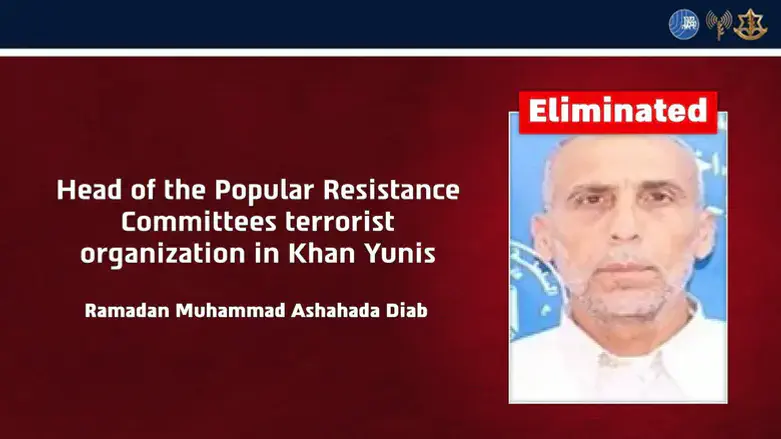 Israel National News2 days ago
Ramadan Muhammad Ashahada DiabIDF Spokesperson
The IDF and Israel Security Agency (Shin Bet) announced Thursday that they eliminated Ramadan Muhammad Ashahada Diab, the head of the Popular Resistance Committees terrorist organization in the Khan Yunis area of the Gaza Strip.
According to a joint statement, Diab was killed in an airstrike carried out Wednesday in the Khan Yunis area.
The Popular Resistance Committees, established in 2000, was previously affiliated with Fatah but is now linked to the Hamas and Hezbollah terrorist organizations, as well as Iran's Islamic Revolutionary Guard Corps (IRGC).
Members of the organization participated in the October 7, 2023, massacre, infiltrating Israeli territory, murdering civilians and soldiers, and abducting Israelis into the Gaza Strip.
Throughout the war, the organization carried out numerous terrorist attacks against IDF troops in cooperation with Hamas.
According to the IDF and Shin Bet, Diab was involved in advancing terrorist attacks against Israeli soldiers and civilians throughout the war, including in recent months.
He also worked to rebuild Hamas' military capabilities, in what the security agencies described as a systematic violation of the ceasefire agreement.
The IDF said the airstrike was carried out to eliminate the threat posed by Diab.
Prior to the strike, the military took measures to minimize the risk of civilian casualties, including the use of precision munitions and aerial surveillance.
The IDF added that Israeli forces under the Southern Command remain deployed in the area in accordance with the existing agreement.
The military emphasized that its forces will continue operating to eliminate threats to Israeli troops and civilians.
 Israel National News2 days ago
קבר רחלצילום: Yossi Zamir/Flash90
Cheshvan 11, which falls on Octobr 22 this year, is the yahrzeit of Rachel Imenu, Rachel the Matriarch, or as she is called in Yiddish, Mameh Rochel. One that day, many thousands visit her tomb in Bethlehem while shiurim and musical events for women take place in her memory.
Why do so many people, especially women, find comfort in visitng Rachel Imenu's tomb?
Why does Rachel Imenu have such a unique place in the Jewish People’s collective consciousness?
Why do so many women come to pray, weep, and perform the mitzva of 'taking' challah at her grave?
Why was the wedding gown of Nava Applebaum HY"D, murdered by terrorists the night before her wedding, hung there?
Perhaps it is because women feel that Rachel Imenu mirrors the essence of a woman's life. Rachel's life was filled with the sacrifices and sorrows that women understand: Jacob fell in love with her, yet she gave up her beloved for her sister Leah's sake and made sure that Leah was not humiliated, she was chiildless and then died in childbirth so that she did not raise the two sons for whose birth she prayed and begged. She was buried at the wayside and not in Hebron as the other Matriarchs were.
And that is why the midrash says that G-d listened only to her when she prayed to Him at the time of the Temple's destruction. Mameh Rachel, the Midrash says, reminded Him of her sacrifices.
…רָחֵל מְבַכָּה עַל בָּנֶיהָ מֵאֲנָה לְהִנָּחֵם עַל בָּנֶיהָ כִּי אֵינֶנּוּ
"…Rachel weeps for her children. She refuses to be comforted over her children, who are gone." (Jeremiah 19)
Her suffering, her willingness to sacrifice, her selfless love are the reasons she alone among the Matriarchs and Patriarchs succeeds in pleading with God to restore the Jewish People to the Land of Israel and have her prayers responded to.
וְיֵשׁ תִּקְוָה לְאַחֲרִיתֵךְ נְאֻם ה’ וְשָׁבוּ בָנִים לִגְבוּלָם
"And there is hope for your future -declares Hashem:
And your children shall return to their country."
Those who long to visit Mame Rochel's tomb but cannot, can light a candle in her memory on the night of her yahrzeit and pray for their children, families, the wellbeing and success of our soldiers and of the Jewish people wherever they may be.
Mameh Rochel was promised that her sons would return.
May that promise, fulfilled when the Jews returned to build the Second Temple and once again, when they returned to establish a state, be fulfilled once more when we see our soldiers return from battle safe and sound, and watch Diaspora Jewry make aliyah to the Eretz Yisrael, with G-d's help.
Light a candle for Mameh Rochel's yahrzeit and pray for her children.
---------------
Many songs have been written about Rachel, her weeping for her people, and the promise she was given. One of them, written after the Six Day War when Bethlehem returned to the Jewish people, tells her that we have returned, and will never leave her again.
It was written in Hebrew by Shmuel Rosen and is translated here.
We Will Not Leave Again
See the road dust rising from the City of Shalem
And the iron chariots charging in front of your city
And the whole nation, looking at you as if dreaming
Steel wings circling, circling above your tomb.
Behold Rachel, behold,
Behold, Ruler of the World,
Behold Rachel, behold,
They have returned to their borders.
See the winds of Iyar bearing columns of steel,
Benjamin is with us here, and Joseph as well,
The star over Beth Lekhem tremblingly gleams,
Both the vanguard is with us and the rear.
Restrain your voice, Rachel, hold back your voice from crying,
All of us are here, Rachel, with our backpack on our shoulders.
We won’t leave you again, Rachel, and you will not leave us again,
We won’t leave again, Rachel, from the fields of Beth Lekhem
Arik Lavie's rendering of the song is the classic one here. (There is an English recording,but it is not him singing)
 Israel National News2 days ago
Yariv LevinArutz Sheva
Justice Minister Yariv Levin says Israel has a historic opportunity to advance judicial reform and extend sovereignty over parts of Judea and Samaria, arguing that the next government must take advantage of the remaining two years of US President Donald Trump's term.
In an interview with Arutz Sheva - Israel National News ahead of the upcoming Knesset elections, Levin discussed his efforts to reshape Israel's judicial system, his contentious relationship with Supreme Court justices, the divisions within the right-wing political camp and the future of Israeli communities in Judea and Samaria.
Levin insisted that years of protests and political pressure had not weakened his determination to complete the judicial reforms he initiated. Asked whether demonstrations outside his home in Modi'in, protests during the traditional mourning period following his father's death or demonstrations against him at Bloomfield Stadium had ever made him consider giving up, he answered emphatically.
“Absolutely not," Levin said. “Anyone who wants to hold leadership positions and has to deal with very difficult events and very difficult decisions needs resilience, and must not break or fall apart over everything. It's mainly difficult for the family, which didn't choose this. I, at least, made the choice I made."
Levin said attacks from political opponents had not deterred him, but criticism from within his own political camp had been more painful.
“I have no expectations from the other side," he said. “They won't deter me in any way from doing what I believe in."
He accused some of his critics of creating unrealistic expectations about how quickly the judicial system could be transformed. According to Levin, commentators and politicians had presented seemingly simple solutions to complex legal problems, then attacked him when the promised results did not materialize immediately.
He also revisited the government's decision to suspend judicial reform legislation in March 2023, a move he said he had opposed. Levin maintained that he had warned coalition leaders that halting the process would not bring about an agreement with opponents of the reform but would instead be interpreted as weakness and invite further pressure.
“I did not receive the necessary backing, not from some of the party leaders, and certainly not from some members of Knesset from various coalition factions," he said.
Levin described the suspension of the legislation as “a demonstration of weakness that cost us dearly." He argued that a government elected to implement a particular policy should not abandon it because of protests and public pressure.
Nevertheless, he rejected the claim that judicial reform had failed. He listed several measures he presented as achievements of his tenure, including changes to the Judicial Selection Committee that are due to take effect in the next Knesset, the appointment of numerous lower-court judges, the appointment of a commissioner for complaints against judges and changes to contract interpretation law.
Levin also cited a requirement for defense counsel to be present during interrogations of minors and people with disabilities. He claimed that more than 150 judges appointed or promoted during his tenure would not previously have advanced through the judicial system, adding that approximately one-third of Israel's judges had been appointed or promoted during his time in office.
His principal unfinished objective, however, remains changing the composition of the Supreme Court.
Levin said he expects 10 positions on the Supreme Court to become vacant during the next Knesset's term, creating what he described as an exceptional opportunity to reshape the court. He argued that the justices would eventually find it more difficult to block his preferred candidates as the number of serving judges declines.
In discussing the dispute over judicial appointments, Levin revealed what he said were messages conveyed to him by Supreme Court justices during negotiations over candidates.
According to Levin, the justices indicated that they would accept appointments that could be presented publicly as conservative victories, provided the candidates were acceptable to them. He claimed they were unwilling to approve the appointments of legal scholars such as Dr. Aviad Bakshi and Dr. Biton.
Levin described the arrangement he said had been proposed: the justices would initially oppose certain candidates and later agree to appointments that would allow him to claim a political achievement, without fundamentally changing the court's character.
“You take the political credit, and we will protect our Supreme Court," Levin said, recounting the message he said he received.
He added that when he insisted on appointing candidates the justices opposed, they made clear that they were prepared to exercise their veto power and wait for a different justice minister to take office.
“We are on the verge of completing this enormous undertaking," Levin said.
The justice minister also warned that divisions among right-wing parties could undermine the chances of forming a government capable of continuing his judicial reforms. He criticized smaller parties running independently of Likud and other coalition factions, arguing that they risked wasting votes by failing to cross the electoral threshold.
“I don't know of any trick like that, where you strengthen someone by voting for somebody else," Levin said in response to arguments that voting for smaller parties could help Prime Minister Benjamin Netanyahu. “If you want to strengthen Netanyahu, vote for Likud." He also criticized the approach of new political contenders who present themselves as capable of replacing existing leadership and solving longstanding problems on their own.
Levin contrasted that approach with the political alliance between Religious Zionist Party chairman Bezalel Smotrich and Moshe Feiglin, which he praised as an example of politicians overcoming differences to prevent votes from being lost.
Turning to the broader political agenda, Levin said the next government would need to engage in significant diplomatic discussions with Trump. He argued that Netanyahu's political strength would affect his ability to advance Israel's objectives in Washington.
Levin identified three issues that he believes make the upcoming elections particularly consequential: the Iranian threat, the future of Israeli communities in Judea and Samaria, and the composition of the Supreme Court.
On Iran, he said cooperation between Netanyahu and Trump could help Israel confront the Iranian nuclear threat. He also raised the possibility of a strategic shift in relations with Iran if its regime were to change, presenting this as a potential future development rather than an accomplished fact.
Regarding Judea and Samaria, Levin cited what he described as substantial achievements in expanding Israeli communities, including the establishment of 104 new communities, alongside infrastructure development and the strengthening of existing towns.
He said the remaining two years of Trump's presidency presented an opportunity to advance further measures, including extending Israeli sovereignty over at least some parts of Judea and Samaria.
“I think there is definitely a possibility that toward the end of President Trump's term, we will be able to advance the application of sovereignty," Levin said.
He warned that losing this opportunity because of a change of government in Israel would be a serious mistake. Levin also criticized the previous government's policies toward construction in Judea and Samaria, warning against a return to restrictions on building and community expansion.
Levin also launched a sharp attack on law enforcement authorities over the ongoing criminal trial of Netanyahu. He called for the proceedings to be canceled and for a government-appointed commission of inquiry to investigate the conduct of investigators, prosecutors and other officials involved in the cases.
“This trial must end. It must be canceled," Levin said.
He claimed that testimony presented in court had revealed serious misconduct by law enforcement officials and criticized the judges overseeing the proceedings for what he described as their failure to respond adequately to the allegations. Levin argued that a commission of inquiry would provide a way to examine the conduct of those involved in the investigations and indictments.
He maintained that the extensive powers held by law enforcement authorities required transparency, restraint and integrity, warning that their improper use undermines democratic institutions.
Despite the political and personal pressures he described, Levin said he continued to receive encouragement from members of the public who supported his efforts. He said that support reinforced his determination to return to the Justice Ministry and complete the changes he had begun.
“I am very determined to complete this mission," he said.
Levin concluded by urging voters to participate in the elections and support parties that would continue the policies he advocates.
“This is the time for responsibility. This is the time to go out and vote," he said.
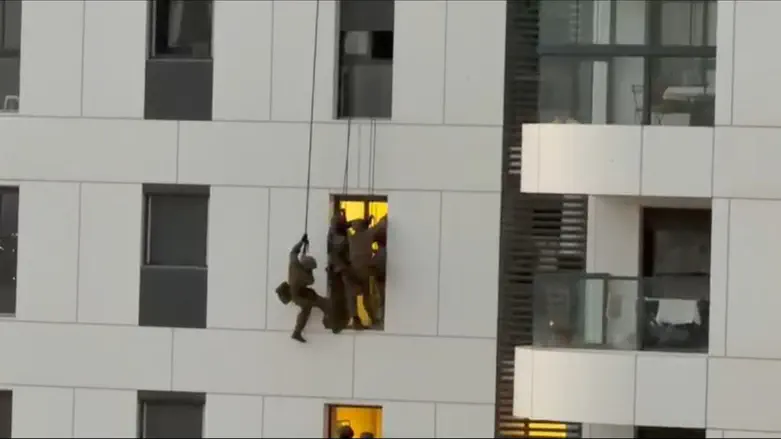 Israel National News2 days ago
לוחמי הימ"מ בגלישה מהגגדוברות המשטרה
A dramatic rescue operation by officers of the Yamam counterterrorism unit ended successfully after a woman who had barricaded herself inside her 11th-floor apartment in a residential building and threatened to jump from her window was rescued by officers who rappelled down from the building's roof.
According to a police statement, Yamam officers from Israel's national counterterrorism unit were dispatched to the scene following the report, alongside members of the police negotiation unit and additional police forces.
Upon arrival, members of Yamam's specialized "Monkeys" team prepared to carry out a complex rescue operation aimed at preventing danger to the woman's life and bringing her to safety.
During the operation, the officers rappelled from the building's roof to the 11th-floor apartment window, swiftly took control of the situation, and safely rescued the woman.
Police noted that the incident ended without injuries and that the circumstances are under investigation. Footage released by police shows the rescue operation carried out by the officers.
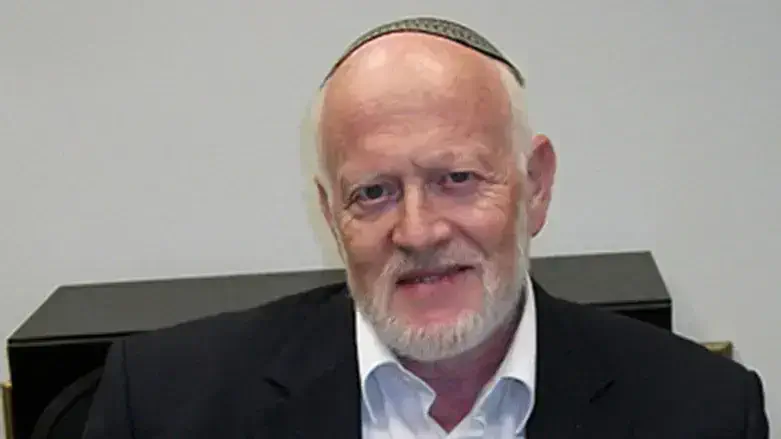 Israel National News2 days ago
Rabbi Shalom WasserteilRabbi Shalom Wasserteil
“And the Lord said to Abram, ‘Go forth from your land, from your birthplace, and from your father’s house, to the land that I will show you. And I will make you into a great nation, and I will bless you, and make your name great, and you shall be a blessing. I will bless those who bless you, and those who curse you I will curse, and all the families of the earth shall be blessed through you.’"
At first glance, these three verses describe God appearing to Abram in a dream and commanding him to leave his present home and travel to an unknown destination, promising that he will be blessed by becoming the father of a great and blessed nation.
Although Abram had previously been saved miraculously when he was cast into a fiery furnace, upon awakening from this dream - the first revelation of the Creator to him - he must first convince himself that it was not merely a dream or an illusion, and that this was indeed the will of the Creator. After all, he was already a respected spiritual leader, heading a great yeshiva in Haran, while his wife Sarai headed a large women’s study center, together educating all the people they had gathered there.
Abram must become convinced of the dream’s authenticity and, no less importantly, persuade his wife Sarai, his family, and all their male and female students that it is genuine. He must then lead them all on a journey into the unknown, “to the land that I will show you."
Indeed, the Torah tells us: “And Abram took Sarai his wife, and Lot his brother’s son … and all the souls they had made in Haran." The expression “took" implies that he won them over through his words.
First, he persuades his wife Sarai to accompany him, even though ten years have passed without their having children, meaning that, from a halachic standpoint, he could have left her behind in Haran. Abram then persuades his relative, his nephew Lot, to join him rather than remain among idol worshippers. Only afterward does he approach his own students and Sarai’s female students.
He must persuade them not only that God has truly spoken to him, but also that they are being asked to join him in this adventure and set out immediately. In addition, he packs and takes all their possessions, making it clear to everyone that this is a one-way journey, with no return - for him or for those accompanying him.
Yet a deeper look reveals that these three verses embody and illuminate the foundations and destiny of the Jewish nation, whose story begins here with the father of the nation.
Unlike the angels, who are described as standing, Abraham, the chosen of the patriarchs, is commanded at the age of 75 to leave behind his established life and accomplishments in Haran and move on to the next stage. As the prophet Zechariah says, “I will grant you passage among these who stand here." The angels are those who “stand," whereas human beings - and Abraham in particular - are called upon to be those who move forward. “Go forth." Abraham, My beloved, you must not remain where you are, continuing to preside over your spiritual kingdom in Haran. You must rise and proceed toward the great destiny for which humanity has been refined over twenty generations, from Adam to Noah and from Noah to Abraham.
He must journey toward the great purpose that will culminate in the realization of the Creator’s most distinguished creation: “This people I formed for Myself; they shall declare My praise." The destiny of the Jewish people is to proclaim God’s praises throughout the world.
The famous words of American astronaut Neil Armstrong, commander of Apollo 11, when he became the first human being to walk on the moon on the 5th of Av, 5729 (July 21, 1969), are well known: “That’s one small step for man, one giant leap for mankind."
In my opinion, Abraham’s first steps toward the Land of Israel, and toward the birth of the Jewish nation as it embarked on the fulfillment of its exalted mission, deserve at least as much - and far greater - significance.
It is fitting that the Children of Israel proclaim God’s praise from the Land of Israel, and specifically from there to all humanity. The Land of Israel is the land of which God told Abram: “Lift up your eyes and look from the place where you are, northward and southward, eastward and westward" (Genesis 13:14).
The Holy Land is where the world was created, and from which the earth’s boundaries were established. As the Talmud states in Yoma 54b regarding the Foundation Stone, from which the world was established: “The world was created from Zion."
This is why the Meshech Chochmah explains that Abraham was given “the center of creation and the purpose of all that was created."
The Land of Israel is holier than all other lands and is under the direct providence of the Almighty. Even when it falls into the hands of foreigners, its sanctity is never nullified. Indeed, not only does its holiness endure, but the land itself seems to withhold its produce until its children return.
This principle is reflected in our parasha. God gives the land to Abram even though “the Canaanite was then in the land." Later, Abraham must purchase the field containing the Cave of Machpelah, despite the fact that the land has already been promised to him and is imbued with God’s holiness.
The Ramban explains that we should not be surprised that the Canaanites continue to possess and conquer the land; their hold on it is temporary. Had the land been in the hands of the descendants of Shem, Abraham’s descendants, who also belong to Shem’s lineage, would not have been entitled to take it from them. But since it was in the hands of the descendants of the cursed Canaan, Abraham’s descendants would justly take possession of it. As the Torah states: “Blessed be the Lord, the God of Shem; and may Canaan be a slave to them" (Genesis 9:26).
The Meshech Chochmah explains that God was telling Abram: Although, on the earthly level, you see no evidence that the land belongs to you - since the Canaanite is still there, clinging to it like a dog and drawing sustenance from it - you must nevertheless lift your eyes heavenward and contemplate the spiritual dimension of divine providence and governance. “See, I have given you the whole land." The land is yours as well, sanctified with the holiness befitting you and your descendants. He develops this idea on the basis of the holy Zohar.
The world was founded upon the Foundation Stone. Adam, the first man, was created here, and from this place the Jewish people would become a light unto the nations.
Abraham’s journey is therefore not merely geographical. It is an ascent in spiritual stature: “to the land that I will show you."
In this land, our father Abraham would rise to a new level - not merely through his belief in one God, nor merely through a dream in which he encountered the Creator, but through a level of vision.
Indeed, when he arrived in Canaan, the Land of Israel, and received the promises concerning both his descendants and the land, the Torah tells us: “He built an altar there to the Lord, who had appeared to him" (Genesis 12:7). This is the spiritual dimension of the verse, “From my flesh I behold God" (Job 19:26).
At the beginning of Abraham’s journey, the Torah uses the language of speech: “And the Lord said to Abram." But upon his arrival in Canaan, he attained the level of vision.
The Meshech Chochmah continues by explaining that Abraham rejoiced greatly over both promises - the promise of descendants and the promise of the Land of Israel, as Rashi and Bereishit Rabbah (39:16) note. Yet he rejoiced even more over having attained the level of vision in his relationship with the Almighty. That is why he built an altar: “He built an altar there to the Lord, who had appeared to him."
In the words of the Ramban, Abraham “gave thanks to the exalted Lord and offered Him a thanksgiving sacrifice because He had appeared to him. Until then, He had not appeared to him, either in a vision or in a prophetic revelation. For ‘Go forth from your land’ had been spoken in a dream at night."
The Ramban concludes that the discerning reader will understand that “the Lord appeared to Abram" describes a higher level of prophecy than any of the earlier instances in which the Torah says, “The Lord said to Abram." The expression “appeared" denotes full prophetic revelation.
The holy Or HaChaim expresses a similar idea. He writes that the verse reveals “the extraordinary love Abraham had for his Creator." Although God had indeed appeared to him and blessed him with descendants and the gift of the land, Abraham did not consider either of these great blessings worthy of comparison with the joy he felt at the revelation of the Divine Presence.
The Torah, the Or HaChaim explains, tells us the reason for Abraham’s joy, which led him to build the altar: God Himself had appeared to him.
The Kli Yakar adds that God did not appear to Abraham immediately when He commanded him, “Go forth," because Abraham was still outside the Land of Israel, following the view of Ibn Ezra that the Divine Presence does not reveal itself in the same way outside the Land. He cites the prophet Jonah as evidence, based on the Mekhilta (Bo 12:4).
Consequently, God did not appear to Abraham in a vision at that stage. Abraham heard words alone, and for this reason he did not build an altar there, in a place where the Divine Presence does not dwell in the same manner.
What, then, is this level of vision?
Rabbi Meir Simcha of Dvinsk offers a profound explanation. Attaining an awareness of the existence and glory of the Almighty is difficult because the soul is concealed within the coarse materiality of the human body, which separates it from our Father in Heaven.
We therefore need the Torah, which serves as an instrument of vision - in his metaphor, a microscope - to refine our material nature and remove its impure coverings until we return to the state in which we existed before birth, resembling Adam before the sin.
When the Temple was destroyed, an iron barrier arose between Israel and their Father in Heaven: the barrier of materiality, which obstructs the radiance of divine providence as it might otherwise be perceived by Israel through a clear and luminous lens.
The Torah is therefore an instrument of vision, a kind of microscope that magnifies our capacity to perceive the Divine a thousandfold beyond our present condition. The perfect, divine power can refine physical existence until it becomes clear and polished enough to serve as a lens through which the Divine can be perceived.
This is the meaning of the verse, “From my flesh I behold God." Through the flesh-the coarse material of the body, with its physical eyes-I can perceive an enlarged vision of the Divine.
Adam, who was created on Mount Moriah-the name Moriah being associated with both vision and instruction-originally stood on this exalted spiritual level. It was there, on the Temple Mount, that he offered his sacrifice.
Before his sin, Adam’s physical nature was pure, clear and refined. Nothing obstructed his perception of the glory of God, which is why he walked naked. As the Meshech Chochmah explains, a spiritually discerning person has no need to cover his nakedness; it is no more significant to him than the place where the tefillin are worn.
But when Adam ate from the Tree of Knowledge, his nature became coarse and material, abruptly separating him from a true apprehension of God and from closeness to Him.
The material dimension of his being, together with the negative forces within it, gave rise to desire, destructive character traits such as anger and vengeance, and false imaginings. Adam and Eve therefore became aware that they were naked and felt ashamed.
As a result, Adam and Eve could only hear God's voice in the Garden. They heard, but did not see, His glory. “I heard Your voice," Adam tells the Almighty, but he did not see His glory. What, then, did he see? “I was afraid because I was naked." He recognized that a barrier had arisen between himself and his Father in Heaven.
Indeed, from the time of Adam’s sin onward, the Torah records only the expression “the Lord said"-speech alone. Only when Abraham arrived in the Land of Israel was his material nature sufficiently refined for him to attain the spiritual level of Adam before the sin.
This is the meaning of the verse: “The Lord appeared to Abram and said…" Abraham had attained a level of perception unimpeded by materiality. That is why he “built an altar there to the Lord, who had appeared to him."
The Almighty uses similar language when speaking of the holy patriarchs: “I appeared to Abraham, to Isaac, and to Jacob." He revealed Himself to them at the height of their spiritual attainment.
A similar spiritual dimension is present in Moses’ vision of the Land of Israel, even though he was not permitted to enter it. His was a spiritual vision.
We learn, then, that through the two powerful words “Lech Lecha"-“Go forth"-and the three opening verses of our parasha, the Creator reveals to our father Abraham, whom He calls “Abraham, My beloved," the exalted role he is to play in laying the foundations of the Jewish nation in the Land of Israel.
For this purpose, Abraham receives five promises and revelations.
First, he is promised descendants: the continuity through which God’s creation of the Jewish nation will come into being.
Second, the Land of Israel is given to him and his descendants forever.
Third, the Land of Israel is the home of Abraham and of his descendants after him-Isaac, Jacob and the Children of Israel-from which they will proclaim the glory and wonders of God’s name to the world.
Fourth, specifically in the Land of Israel, where the Divine Presence dwells, Abraham-and those who follow him, Isaac and Jacob-will merit the removal of the material barrier separating humanity from God. They will thereby attain the highest level of closeness to the Almighty, comparable to that enjoyed by Adam before the sin. As the Psalmist declares: “But as for me, the nearness of God is my good" (Psalms 73:28).
And fifth, the good of Israel is the good of the entire world. On the one hand, God promises, “I will bless those who bless you"; on the other, “those who curse you I will curse." Through the recognition of this divine providence, “all the families of the earth shall be blessed through you."
 Israel National News2 days ago
Ohad TalArutz Sheva
Religious Zionist Party MK Ohad Tal says Israel has a historic opportunity to extend sovereignty over Judea and Samaria and establish Jewish communities in Gaza, arguing that the country must complete its military objectives and ensure that the October 7 massacre comes at a price for Hamas. In an interview with Arutz Sheva - Israel National News, Tal described the upcoming elections as critical for Israel's future, saying they would determine whether the country remains a Jewish state and whether it pursues what he called decisive victory on all fronts.
“Every election, they're saying that this is the most critical election in the history of this country. But I think that this time it's actually true," Tal said. “It is really critical for the future of this country. We haven't finished the job, not in Lebanon, not in Gaza, definitely not in Iran, and we have to complete the mission."
Asked how he responds to voters who question why Israel has not achieved victory after nearly three years of war, Tal argued that dismantling the regional network of threats built up around Israel over decades takes time.
“Breaking this ring of fire that surrounded us and was built in decades, with so much investment and money, doesn't take a short time to solve," he said. “Thank God, I think we have massive achievements."
Tal pointed to what he described as significant military gains, including Israel's control of more than 60% of the Gaza Strip, approximately 600 square kilometers in Lebanon and 400 square kilometers in Syria. He also highlighted the Israeli Air Force's ability to strike targets thousands of kilometers away.
“We are seeing so many countries from this area, from the Middle East and from other places in the world, who are coming to us and begging us to support them, to help them with intelligence," he said. “I think Israel is becoming a global superpower, and we still have missions to accomplish."
Tal also expressed optimism about the possibility of extending Israeli sovereignty over Judea and Samaria, describing the next two years as a historic opportunity to advance the move. “There's definitely a huge historic opportunity that awaits us in these two years," he said.
Tal said he believed the Trump administration could play a significant role in advancing sovereignty, citing his understanding of discussions involving people close to the US president.
“I know it from the people who are the closest people to President Trump, that he tells them that he wants to leave behind something significant that he will do. After these two years of President Trump, we should expect a president who will be much less friendly to Israel," he said. “He'll push Israel for concessions and, if it will be a Democratic president, for sure he'll push us to go for negotiations with the Palestinians for a two-state solution."
Asked about the possibility of an Iranian attack or other developments that could disrupt the elections, Tal said he hoped such a scenario would not materialize. However, as a member of the Knesset's Foreign Affairs and Defense Committee, he said he had participated in discussions about Iranian efforts to interfere with the vote.
“We had long discussions only in the last week, the last couple of days, about Iran's attempts to destroy or interfere with our elections," he said. "We are not just waiting for that to happen to respond to that. We are working behind the scenes to try and ruin their plans."
On the war in Gaza, Tal said Israel's first priority must be the complete eradication of Hamas, arguing that Israel cannot rely on an international force to accomplish the mission on its behalf. “First of all, we have to eradicate Hamas. That's number one," he said. “We promised our people that after what happened on October 7, we have to eradicate Hamas. After October 7, this war has to come up with some kind of a price."
He cited Egypt's military buildup as an example of why Israel must consider the long-term implications of its decisions. “If they understand the message that you can initiate a war, and if you won, you won, and if you lost, nothing happened because Israelis will always withdraw back and you pay no price, then there has to be a price," he said. “These 60% that we are now holding in Gaza should be kept in our hands," he said. “We should apply sovereignty over that area, and we should establish Jewish communities there. That's the only solution that will secure our future in that region."
Tal also discussed the importance of reaching English-speaking voters during the campaign. He said the increase in immigration to Israel in recent years had brought many newcomers who were familiar with Netanyahu but less knowledgeable about the country's other political leaders and its multiparty system. “Thank God, a lot of people came back home, and they don't know so much about what is happening here in the political sphere. They know Netanyahu. They don't know many of the other leaders of the parties. Those coming from America know only two parties. They don't understand why you need all these small parties."
Nevertheless, he said he sees considerable interest among English-speaking voters, many of whom come from religious or traditional backgrounds and identify strongly with Zionism. “I think there's a lot of curiosity," Tal said. “Many of the new immigrants are religious in background or traditional, and also very Zionist."
