The stories gaining the most momentum right now.

 Matzav3 hours ago
An extraordinary scene unfolded at the Shamgar Funeral Home in Yerushalayim when relatives preparing to bury a family member suddenly became convinced that the niftar was showing signs of life, prompting an emergency response from Magen David Adom.
The incident occurred during funeral proceedings after members of the family reportedly noticed what appeared to be movement from the deceased. Alarmed by the possibility that the man might still be alive, they immediately contacted emergency medical personnel and requested an urgent examination.
According to journalist Moshe Weisberg, Magen David Adom dispatched a mobile intensive care unit to the funeral home to investigate the family’s concerns and establish whether the man was indeed deceased.
The arrival of the emergency medical team brought the funeral proceedings to a temporary halt as paramedics examined the niftar to determine whether there was any indication of life.
Although the relatives maintained that they had observed movement, the medical personnel found no signs of life and confirmed that the man had indeed passed away.
Additional reporting identified the niftar as a 60-year-old man and indicated that the concern arose during the hespedim, when a relative believed he had moved and was breathing beneath the burial shrouds. The family requested that the proceedings be stopped until his condition could be checked again.
Following the medical examination, the team reconfirmed that the man had no pulse. The levayah was subsequently allowed to continue, and the niftar was brought to kevurah.
What began as a moment of extraordinary hope for the grieving relatives ultimately ended with confirmation of the original determination of death.
{Matzav.com}

 The Lakewood Scoop2 hours ago
TLS AUDIO
Press play to listen
There is a very good opportunity in front of the Lakewood community, and I believe we should be taking it seriously: building a new קהילה much farther out, or even in another state entirely.
The idea is not to keep moving a few minutes farther down the same road. It is to think bigger. Instead of waiting for another neighborhood to become available nearby, why not identify a place where an entire community can be planned from the beginning?
Look at Lakefront Estates & Villas, the development being built in Glades County near Lake Okeechobee, Florida. Its plans bring homes together with the things a growing קהילה needs: schools, a בית מדרש, a מקוה, shopping and other community services. The project is still being developed, but the thinking behind it is worth learning from.
The people behind it did not limit their search to the next block beside an existing community. They looked farther away and began planning a place around the needs of the families who would live there.
Why shouldn’t people in the Lakewood area do the same?
When we discuss our future, we should not assume that every answer has to be within a short drive of where we live today. If we want room for a growing community, we should be willing to look where there is room to build one. That could mean a much more distant part of New Jersey. It could mean another state.
A new development should be about more than putting up houses and hoping everything else follows. The goal should be a functioning קהילה, with schools, places to learn and daven, a מקוה, stores and a realistic plan for earning a living. Those needs should be part of the discussion before families are asked to move.
That is also what makes this a real opportunity for developers and investors. There is a difference between selling a house and giving a family a reason to make a new place home. A well-planned community can offer something that scattered construction cannot: a clear picture of daily life.
Of course, the numbers have to work. Buying land farther away does not automatically make the finished homes affordable. Roads, utilities, taxes, schools and the other costs all need to be examined honestly. The opportunity is to find a place where the complete plan works for families, not simply a property that looks inexpensive on paper.
The next step should be practical. Bring together developers, investors, רבנים, עסקנים and families who would seriously consider such a move. Look at several locations. Speak with the local officials. Check zoning, infrastructure and the full cost of building. Find out what size group would be needed to open with the basic services in place.
No one needs to promise a new town tomorrow. But someone does need to begin doing the work.
This is not a call for everyone to leave Lakewood. It is a call to create another good option. A family that wants to remain here can remain here. A family willing to start somewhere new should have a serious, organized possibility to consider.
The lesson from the Lakefront project is that a growing קהילה does not have to limit its imagination to the boundaries of its existing neighborhoods.
We should be looking much farther out. We should be considering other states. And we should see this as a very good opportunity to build for the next generation, rather than waiting until the need becomes harder to answer.
 The Lakewood Scoop1 hour ago
A bilingual “Private Property, No Trespassing” sign has been posted on the door of a local shul, in response to last week’s incident.
The sign, printed in English and Spanish, states that entry is restricted to members only and authorized visitors. It says no consent is given to entry or searches without a judicial warrant or other lawful authority.
It adds that only the Rabbi is authorized to grant permission for any entry or to provide consent for any access.
As TLS reported last week, ICE agents followed a pedestrian into an area shul and made arrests. A mispallel there said the agents sought permission to search the premises from an individual who was not authorized to grant it, and urged those responsible for communal buildings to understand who may make decisions about access.
Weather: today Sunny in the 60's , tonight Partly cloudy skies this evening. Increasing clouds with periods of showers late. Low 57F. Chance of rain 50%.
Severe thunderstorms with winds up to 40 mph are possible Friday as a cold front sweeps across New Jersey, bringing the chance for widespread frost this weekend.
- Noribar sushi store opening location in Lakewood at former Dips location Chestnut and Rt 9(Feder status)
- Donald Trump’s grandson Joseph Kushner had his 13th birthday dinner (Bar Mitzva) in the Red Room of the White House.
- BMG adds temporary parking for talmodim at a construction area off 9th st and Private way.
- End of an Era. After nearly 60 years of serving breakfast and lunch in Boro Park on the corner of 16th Avenue and 48th Street, Lieberman’s Luncheonette is heading toward its final chapter, with plans to close once its building is sold. BP24
- Joseph's Dream Burger will be open motzei shabbos starting this week Saturday night this week! One hour after Shabbos ends until 1 AM!
- LSTA Bus Stop Changes: Parents Must Attend In-Person Appointments.
LSTA’s new bus stop change process will inconvenience parents, requiring them to book an in-person appointment just to request a change. For working parents and families with young children, this means taking time off or arranging babysitters just to attend an appointment, rather than being able to submit a request by phone, email, or text. LSTA says routes are especially tight this year and changes will be very limited. Convenience requests will not be accommodated. All requests will be reviewed based on route timing, geography, and bus capacity, and approval is not guaranteed. Requests with missing or invalid documents will not be reviewed. Appointments are available October 26–28, from 6:30–8:30 PM, and must be booked online Here or by calling 732-655-6333.
- The Kibitz Room, a 'Jewish" deli in Cherry Hill,NJ known for massive pastrami sandwiches and an extensive pickle bar, has been fined $1,000 by the state for failing to properly display that it isn’t a kosher establishment. Per NJ.
- The Lakewood Township Municipal Utilities Authority (MUA) recently closed on a $4.9 million loan with the New Jersey Water Bank to construct a public sanitary sewer conveyance system in the Old Pine Acres neighborhood of Lakewood Township.The project will allow existing homeowners in the neighborhood to connect to the public sanitary sewer system and eliminate reliance on individual septic systems and septic fields.
- This Sunday October 18th! At the John F. Patrick Sports Center at 111 Vine street in Lakewood, NJ This free, family-friendly community event will feature a petting zoo, pony rides, craft activities, garden tours, demonstrations, games, and lots of exciting vendors. It is open to all members of the public at no cost, though refreshments will be available for purchase.
- The FBI, U.S. Postal Inspection Service and U.S. Capitol Police have launched a multi-agency investigation after several letters containing an unknown white powder were sent to state election officials, including several Secretaries of State, and to offices on Capitol Hill.
- WhatsApp now lets people join voice and video calls without having a WhatsApp account. Hosts can share a call link, approve guests before they join, and hold free, end-to-end encrypted calls with up to 32 participants and no time limits.
- Elon Musk has publicly called for Ukrainian President Volodymyr Zelensky to leave office.
- Elon Musk Weighs Amazon Rival After Grok Bot Blocks Amazon has restricted third party AI shopping agents from accessing its platform, including bots powered by Grok. Users attempting to place orders through these agents report blocks citing violations of the site’s conditions of use. The policy aims to protect customer data, limit fraud risks, and preserve revenue from sponsored product placements that depend on human browsing.
- Jackson: Brewer's Bridge Road will be repaved in its entirety, aftwr NJ Gas installs new pipes in the road.
- Lakewood, New Jersey had the highest childbearing rate in the country, with 155.6 women per 1,000 women ages 15-44 in Lakewood giving birth in the previous 12 months, ranking first among geographic areas studied nationwide. The data was compiled by the People’s Policy Project using the U.S. Census Bureau’s American Community Survey five-year Public Use Microdata Sample.(OneJerseyschorr)
- President Trump canceled the planned livestream of Nidal Hasan’s firing squad but said the immediate families of the victims can attend in person if they choose. He wrote that streaming the execution might have served as a deterrent but that many people preferred not to watch. Trump said Hasan will still be executed by firing squad on the scheduled date and that the families deserve to witness it. Hasan killed more than a dozen people at Fort Hood in 2009 while shouting “Allahu Akbar.”
- President Donald Trump has reportedly been privately discussing replacing White House Chief of Staff Susie Wiles, one of his closest and longest-serving advisers. According to Politico, citing four sources familiar with the conversations, Trump has asked allies whether it is time for a leadership change and has floated several potential replacements.
- A Likud and Gadi Eisenkot unity government is what the Trump administration is reportedly pushing for in Israel, with Netanyahu remaining prime minister for up to two years before retiring from politics. The coalition's stated goals: ending the regional wars and securing peace agreements, Saudi Arabia above all.Eisenkot's bloc would demand Netanyahu's retirement be guaranteed, the judicial reforms reversed, and an inquiry opened into October 7. Israel Hayom. Ambassador Mike Huckabee denies this.
- Satmar spokesman Rabbi Moishe Indig: Hasidic Jews, like every other American, do NOT need permission from antisemites like Jake Lang or YouTuber Tyler Oliveira to build communities in Okeechobee, Florida, New York, or anywhere in America. Jewish growth is NOT up for debate. We will build, we will grow, and we will thrive. And those who are mad about it? Stay mad.
- Jackson Police Chief Mary Nelson, who rose through the ranks to become the township’s first female chief, is stepping down after only eight months.
- Coming Soon from Artscroll "At the Heart of Lakewood - Rabbi Yisroel Schenkolewski"The Quiet Force Behind America's Torah Capital
- Ami Magazine will not be sold in Crown Heights stores this week following the magazine’s front-cover feature of Rav Lazer Shach zatzal on his 25th yartzeit. Crown Heights stores have reportedly united in a decision not to carry this week’s issue. (Shechuna news)
- Jackson councilman Chris Pollack called out a Lakewood based news site as fake news in reporting on what went on in the council meeting. He said those who spoke out were not protesters but residents who spoke regarding the case of a missing person since last year.
- Israeli elections there's reports of certain charedi factions and chasidus that are currently not endorsing or instructing their followers to vote for UTJ in the elections as many may just sit it out or vote for other parties. Negotiations continue.
 Matzav4 hours ago
Israeli Prime Minister Binyamin Netanyahu reportedly delivered a blunt ultimatum to Syrian President Ahmed al-Sharaa during the July 2025 massacre of Druze civilians in southern Syria, demanding that Syrian forces withdraw from the city of Sweida by 10 p.m. or face intensified Israeli military strikes. The warning came during an extraordinary telephone conversation between the two leaders, details of which emerged Thursday evening.
According to a report by Naveh Dromi on i24NEWS, the conversation occurred on July 16, 2025, at approximately 1:30 p.m., as violence against the Druze population in the Sweida region prompted Israel to intervene militarily. Netanyahu reportedly rejected a request by al-Sharaa for an additional 48 hours to bring the situation under control, insisting that Syrian forces leave the area before any further discussions could take place.
“I want to be brief. Apparently, the message conveyed through the mediators was not properly understood. A genocide is being committed against the Druze. Your forces must withdraw from Suwayda by 10:00 p.m.,” Netanyahu reportedly told the Syrian President.
The Syrian leader, apparently taken aback by the tone and substance of the demand, responded, “I had hoped the conversation would go differently.”
Netanyahu reportedly made clear that Israel was prepared to expand its military operations against Syrian government targets if Damascus failed to comply with the deadline.
Within hours of the conversation, Israeli aircraft struck prominent Syrian government and military installations in Damascus. Among the targets were the presidential palace compound and the headquarters of the Syrian military’s chief of staff, in an escalation intended to pressure the Syrian leadership to halt the violence against the Druze.
The disclosure followed remarks Netanyahu delivered earlier Thursday at an election gathering attended by members of Israel’s Druze community. During the event, the prime minister publicly acknowledged having spoken directly with al-Sharaa and described the conversation as a decisive element in Israel’s efforts to stop the killings.
“We took down the Defense Ministry in Damascus, just like that, it went. We took out a target in the palace complex. And I picked up a phone and called al-Sharaa; it was a very short call, very sharp, and the massacre stopped,” Netanyahu stated.
Netanyahu also pledged that Israel would continue acting to safeguard the Druze population in Syria, stressing that the responsibility extended beyond stopping the immediate bloodshed to ensuring that displaced residents could return to their communities.
“I will do anything I need to protect our brothers, your brothers and our brothers. We will not allow a massacre; they have to also return to their homes. There is more work to do; I can’t talk about it all. But this commitment comes from the depth of our soul,” he declared.
The reported exchange offers new insight into the direct pressure Israel exerted on the Syrian leadership during one of the most serious episodes of violence in southern Syria following the collapse of Bashar al-Assad’s regime. The Israeli intervention included strikes in the Syrian capital, underscoring Jerusalem’s willingness to use military force to deter further attacks against the Druze.
The unrest in Sweida began with clashes involving Druze armed groups and Bedouin fighters, before Syrian government forces entered the region and became involved in the fighting. Reports of killings, looting, and abuses against Druze civilians intensified calls from Israel’s Druze community for Jerusalem to intervene.
Israeli strikes on July 16 targeted Syria’s Defense Ministry and military headquarters in Damascus, as well as a site near the presidential palace. Syrian authorities subsequently began withdrawing forces from Sweida amid international diplomatic efforts to secure a ceasefire.
The newly disclosed details are reportedly contained in a collection of approximately 1,000 documents held by Israel’s State Comptroller, encompassing sensitive diplomatic and security discussions conducted over the past three years.
According to i24NEWS, the full transcript of the Netanyahu–al-Sharaa conversation is expected to be presented Friday on the network’s “Friday Cabinet” program, together with additional disclosures from the documents.
{Matzav.com}

 JBizNews1 hour ago
WASHINGTON | FEDERAL INVESTIGATION | OCTOBER 15, 2026
WASHINGTON — Rep. Ilhan Omar has not been seen publicly since federal agents searched her Washington residence Monday as part of an immigration-fraud investigation, fueling questions about her whereabouts after her husband declined to directly answer a reporter asking whether the Minnesota Democrat had left the United States.
Omar’s husband, political consultant Tim Mynett, was approached Wednesday outside the couple’s Washington rental home by a Fox News Digital reporter who asked whether rumors that the congresswoman had left the country were true.
Rather than confirm or deny the report, Mynett complained that journalists were disturbing the neighborhood.
His response left the central question unanswered: Where is the congresswoman, and has she remained in the United States since federal authorities searched her home?
There is no independently verified evidence that Omar has fled the country, and her absence from public view does not establish that she has left the United States.
Agents with Homeland Security Investigations executed a court-authorized search warrant at Omar’s Washington residence on October 12, according to the Justice Department.
The search is part of an ongoing investigation into potential irregularities in immigration documentation associated with Omar’s family.
Investigators are reportedly examining records submitted by her late father when the family immigrated to the United States from Somalia, including questions surrounding Omar’s reported date of birth and the circumstances under which she acquired American citizenship.
Federal authorities reportedly seized Omar’s passport, cellphone and other materials during the search. More than a dozen grand-jury subpoenas have also been issued, including subpoenas involving relatives of the congresswoman.
The Justice Department has not publicly announced criminal charges against Omar.
While Omar has not appeared publicly since Monday’s search, Mynett has been photographed outside their residence on multiple occasions.
Fox News reported that he was seen Wednesday walking the family’s dog, taking out the trash and accompanying a member of Omar’s staff.
A congressional staffer was also seen entering the residence with food.
When questioned about the investigation earlier in the week, Mynett said he had no concerns about what federal investigators would uncover.
But Wednesday’s questioning focused on Omar’s whereabouts rather than the underlying allegations.
His refusal to directly address whether she had left the country has added to speculation, although no travel records, official statements or other independently verified information have established that she departed the United States.
Omar’s citizenship history is a central focus of the investigation.
She arrived in the United States as a refugee from Somalia and obtained citizenship through her father’s naturalization in 2000.
Investigators are reportedly examining whether discrepancies in her documented birth year could have affected her eligibility to acquire citizenship as a minor.
The distinction is potentially significant under immigration law, although any attempt to revoke citizenship would face substantial legal requirements and judicial review.
Omar has denied wrongdoing. Her office has described the investigation as politically motivated, accusing the Trump administration of targeting one of the president’s most outspoken congressional critics.
The investigation remains ongoing, and the allegations have not been proven in court.
Omar is also facing scrutiny over congressional financial disclosures involving business interests associated with Mynett.
On Tuesday, U.S. Attorney Jeanine Pirro confirmed that her office was investigating the congresswoman’s financial reporting.
Earlier disclosures had listed ownership interests in a winery and venture-capital business with combined estimated values reaching $30 million.
Omar’s office subsequently amended the filings, explaining that the earlier numbers reflected overall business valuations rather than Mynett’s actual ownership interests and failed to account properly for liabilities.
Officials have indicated that the financial inquiry is separate from the immigration investigation that prompted the residential search.
The unanswered question surrounding Omar’s whereabouts has emerged just weeks before the November 3 midterm elections, in which she is seeking another term representing Minnesota’s Fifth Congressional District.
The federal search, seizure of personal records and expanding investigations have placed the congresswoman under intense scrutiny.
Yet the reported absence from public appearances and her husband’s unwillingness to answer a direct question are not, by themselves, evidence that she fled the United States or attempted to evade investigators.
As of Thursday evening, no verified public account had established that Omar had left the country.
For now, the federal investigation is confirmed, her husband’s exchange with reporters is documented, and the question of her whereabouts remains unanswered.
JBizNews Desk | Washington, D.C.
© 2026 JBizNews. All Rights Reserved.

 Vos Iz Neias6 hours ago
MIAMI (VINnews) – Two women filed a federal civil lawsuit Monday accusing former Florida Republican U.S. Rep. Matt Gaetz and two associates of participating in a scheme that recruited young women, supplied them with drugs and facilitated paid sexual encounters, including travel across state lines.
The 33- to 38-page complaint, filed in the Middle District of Florida by attorney Spencer Kuvin, names Gaetz, former Seminole County Tax Collector Joel Greenberg and former Florida state lawmaker Christopher Dorworth as defendants. It also names dental companies affiliated with Greenberg’s family. The alleged conduct spanned 2017 to January 2019, according to the suit and contemporaneous reporting.
The plaintiffs, identified as Jane Doe 1 and Jane Doe 2, were 20 and 22 when introduced to Gaetz in the summer of 2017, the complaint states. Both said they lacked stable income at the time. Greenberg, who is serving an 11-year federal prison sentence after pleading guilty in 2021 to sex trafficking of a minor and other charges, allegedly recruited them through SeekingArrangement.com and introduced them to a circle that included Gaetz and Dorworth. Controlled substances were provided at parties and private homes to facilitate the encounters, the suit alleges.
Jane Doe 1 claims she received more than $6,000 from Gaetz; Jane Doe 2 claims she received more than $4,000. Payment descriptions included phrases such as “Being my friend,” “car deductible” and “Love you,” according to the complaint. Jane Doe 1 also alleges she witnessed Gaetz having sex with a 17-year-old girl identified in the suit as “Victim A,” who is not a plaintiff. The defendants arranged and funded travel for the women and others to locations including Miami, Las Vegas, the Florida Keys and New York City, the suit says.
Gaetz, now 44, rejected the claims. “I look forward to taking the plaintiffs’ depositions because much of the conduct alleged against me is false,” he said in a statement. “The lawsuit relies almost exclusively on a Congressional Committee report that didn’t allow me to confront my accusers. Now I will finally have that chance.”
The case revives a scandal that derailed Gaetz’s nomination by President Donald Trump as U.S. attorney general and contributed to his resignation from Congress in 2024. A bipartisan House Ethics Committee investigation, whose findings were later made public, concluded there was “substantial evidence” that Gaetz violated House rules and laws by paying for sex (including with a minor), using and possessing illegal drugs such as cocaine and Ecstasy, accepting impermissible gifts, and obstructing the probe. The committee did not find sufficient evidence of a federal sex-trafficking violation. Gaetz has long denied wrongdoing.
Kuvin, the plaintiffs’ attorney, said he looks forward to deposing Gaetz under oath. Efforts to reach Dorworth were unsuccessful, according to the Miami Herald, which first reported the filing.
Gaetz now hosts “The Matt Gaetz Show” on the One America News Network. In June 2026, Florida House Speaker Daniel Perez appointed him to the Triumph Gulf Coast Board, which distributes settlement funds from the 2010 BP oil spill for economic development in Northwest Florida Panhandle counties. Gaetz described the role as a return to public service.
The allegations in the civil complaint have not been proven in court. Greenberg’s prior criminal conviction is separate from this lawsuit.
 Matzav1 hour ago
Western intelligence agencies have detected unusual military activity inside Iran in recent days, prompting heightened monitoring by Israeli and American security officials and renewed consultations between Prime Minister Binyamin Netanyahu and President Donald Trump over the possibility of another military confrontation with Tehran.
According to a report Thursday evening by Israel’s Channel 12, intelligence officials in both countries are closely examining developments inside Iran, where the regime is reportedly taking extraordinary military measures amid mounting pressure and concerns about renewed fighting with Israel and the United States.
The activity is taking place under the leadership of Mojtaba Khamenei, as Tehran continues dealing with the consequences of the previous war and the damage inflicted on its military capabilities. Western intelligence assessments suggest that at least some of the unusual movements may be connected to the regime’s efforts to respond to its weakened strategic position and growing internal pressures.
Netanyahu has reportedly shared intelligence updates with Trump, presenting information gathered by Israeli security agencies about Iran’s recent activities and the potential implications for regional security.
Despite the concerning developments, officials in both Yerushalayim and Washington reportedly believe that the available intelligence does not currently indicate an immediate threat requiring urgent military action. Trump has also not made a decision to resume a large-scale American military campaign against Iran.
The latest intelligence findings follow reports earlier this week that Iran conducted several ballistic missile tests as part of an effort to rebuild its missile arsenal following the damage sustained during the war.
Israeli defense officials assessed that Tehran was engaged in a gradual and limited effort to restore its missile capabilities. Although the activity was being monitored closely, officials did not believe it represented a sufficient change in the threat level to justify an immediate military operation.
Meanwhile, the United States military is continuing to develop operational plans for possible future strikes against Iranian targets, including nuclear facilities and critical infrastructure.
According to a CNN report published Thursday and subsequently cited by Reuters, American military planners are examining scenarios that could involve the use of the GBU-43/B massive ordnance air blast bomb, commonly known as the “Mother of All Bombs,” against targets inside Iran.
The weapon is among the largest conventional bombs in the American arsenal. The reported planning includes potential attacks against Iranian nuclear installations and energy infrastructure should Trump authorize a renewed military campaign.
However, no decision has been made to employ the weapon, and Reuters emphasized that it had not independently verified the details of the CNN report.
The latest disclosures come amid continuing discussions between Netanyahu and Trump about how to respond to Iran’s attempts to restore its military and nuclear capabilities.
Earlier this week, Axios reported that the two leaders had discussed the possibility of launching a joint Israeli-American military operation against Iran before Israel’s October 27 elections and the American midterm elections in early November.
According to that account, Netanyahu raised concerns about Iranian efforts to rebuild its nuclear program, while American officials indicated that Trump had considered the possibility of additional military action before expressing reservations about launching an operation ahead of the elections.
The White House disputed the report’s characterization of the discussions, denying that Trump and Netanyahu had considered restarting the war in the manner described. Netanyahu’s office declined to comment on the substance of the conversations.
In an interview Wednesday with Galei Tzahal, Netanyahu said he did not favor initiating a military strike against Iran before the Israeli elections. He nevertheless emphasized that Israel would respond with substantial force if Iran launched an attack.
Iranian officials, meanwhile, have been issuing warnings of their own while indicating that diplomatic negotiations remain a possibility.
Iranian Parliament Speaker Mohammad Bagher Ghalibaf said in remarks broadcast on state television that the country must strengthen its military readiness even as it continues pursuing diplomatic channels.
Reports from recent days have also described efforts to reinforce defenses around sensitive Iranian installations and restore military systems damaged during earlier fighting.
It remains unclear whether the unusual activity now being monitored by Western intelligence agencies represents preparations for an Iranian offensive, defensive measures intended to protect against another Israeli-American attack, or a calculated show of force designed to strengthen Tehran’s negotiating position.
The strategic considerations facing Washington have also been complicated by Iran’s demonstrated ability to strike critical infrastructure elsewhere in the region. A Reuters investigation published Thursday documented extensive Iranian missile and drone attacks against energy facilities, airports, pipelines, and other strategic installations across Gulf countries during the conflict earlier this year.
The investigation identified at least 135 precision attacks against 84 infrastructure sites in countries including Saudi Arabia, the United Arab Emirates, Qatar, Kuwait, Oman, Bahrain, and Iraq. The damage has illustrated the potential economic and regional consequences of another major confrontation with Iran.
Within the Trump administration, officials have reportedly differed over the appropriate next steps. Defense Secretary Pete Hegseth and senior U.S. Central Command officials have been described as favoring renewed military action, while other presidential advisers have argued for continuing economic sanctions and diplomatic pressure.
American officials have also indicated that indirect diplomatic efforts remain underway, with Qatari mediators awaiting an Iranian response to proposals involving restrictions on Tehran’s nuclear activities.
For now, Israel’s security establishment continues to assess the Iranian threat as a broader strategic challenge involving the regime’s nuclear ambitions, ballistic missile arsenal, and regional military capabilities. Officials believe that any decision to resume major operations would have to address those interconnected threats rather than focus exclusively on one component of Iran’s military program.
Despite the heightened intelligence monitoring, continued American operational preparations, and discussions between Netanyahu and Trump, Israeli and American officials have not identified an immediate danger requiring a new military offensive.
The coming days will determine whether Tehran’s latest military movements remain part of its efforts to rebuild damaged capabilities and deter further attacks, or whether additional intelligence points to a more serious escalation requiring a reassessment in Yerushalayim and Washington.
 Vos Iz Neias4 hours ago
MIAMI (VINnews) – Jewish former NBA superstar Amar’e Stoudemire is beginning a new chapter in his life, graduating from a Miami police academy as he prepares to serve with the Miami-Dade Schools Police Department.
https://x.com/MDCollege/status/2110537498002694176
Stoudemire, who embraced Judaism during his post-basketball career and received Israeli citizenship in 2019, graduated Wednesday from Miami Dade College’s School of Justice Basic Law Enforcement Academy after months of intensive training. He is also known by his Hebrew name, Yahoshafat Ben Avraham.
The six-time NBA All-Star and Naismith Memorial Basketball Hall of Fame inductee has spoken about his childhood dream of becoming a police officer. His family also includes several members who served in law enforcement.
“It’s something I always wanted to do since I was a kid,” Stoudemire told Sports Illustrated.
Stoudemire, 43, rose to prominence as a star forward with the Phoenix Suns and later played for the New York Knicks, Dallas Mavericks and Miami Heat. He averaged 18.9 points and 7.8 rebounds over 846 regular-season NBA games and was named the NBA Rookie of the Year in 2003.
His connection to Israel deepened after his playing career brought him to the country, where he played professional basketball and became increasingly involved in Jewish life.
Stoudemire also received the Harry “Coach” Everett Award in recognition of his contributions to the police academy program.
His transition from professional basketball to law enforcement marks a significant career change, with a focus on public service, community engagement and mentoring young people.

 Yeshiva World News31 minutes ago
Egyptian President Abdel Fattah el-Sisi said Wednesday that Cairo has no intention of launching a war against Israel, responding to Finance Minister Bezalel Smotrich’s warning that “if Egypt attacks us, there will be no Sinai.”
Speaking at an event marking 53 years since the Yom Kippur War, Sisi denied that Egypt harbors offensive intentions or territorial ambitions toward Israel.
“Who told you that we want to fight?” Sisi asked. “We have no ambitions toward anyone. Our land is in our hands. We fought to recover it, and that is over.”
The Egyptian president also rejected suggestions that Cairo has undisclosed plans, saying, “We have no secret agenda.”
Sisi sought to address Israeli concerns by questioning whether fears rooted in decades of conflict continued to shape perceptions of Egypt’s intentions.
“Are you still holding on to the fears of the past 60 years? Do you still think I have ambitions toward something you possess? No,” he said.
“I have only one ambition: to protect my country, its borders, and its land.”
(YWN World Headquarters – NYC)
 Matzav6 hours ago
Rav Yitzchak Yosef delivered a blistering attack on Finance Minister Bezalel Smotrich and National Security Minister Itamar Ben-Gvir at a Shas election gathering in Ashdod, revealing that he had personally hung up the telephone on Smotrich during his years as Israel’s chief rabbi because of the minister’s disrespectful conduct. He also accused Ben-Gvir of failing to help the Torah community, disregarding the rulings of leading rabbonim concerning Har Habayis, and allowing police to mistreat chareidi demonstrators.
Speaking ahead of Israel’s upcoming elections, Rav Yosef urged chareidi voters not to support either politician, arguing that their conduct and political records made them unworthy of the community’s backing.
Rav Yosef began by recounting a recent encounter with a man who told him that for 42 years, he had felt he had no political party to support but was now considering voting for Smotrich.
“He was chareidi, not someone who wears a knitted yarmulka,” Rav Yosef said, emphasizing that the man was a member of the chareidi community.
Rav Yosef said he was astonished by the suggestion, particularly in light of Smotrich’s recent remarks concerning Rav Dov Landau.
“Who is Smotrich? The one who said that Rav Dov Landau should do teshuvah?” he asked.
He then shared his own experiences with Smotrich, describing telephone conversations during his tenure as chief rabbi in which the minister had contacted him seeking assistance.
“When I was serving as chief rabbi, there were several times when he needed things from me,” Rav Yosef related. “He would call me and speak insolently on the telephone. More than once, more than twice, I hung up on him in the middle of the conversation.”
Rav Yosef made clear that Smotrich’s government position had not influenced his response to what he regarded as unacceptable behavior.
“He was a senior minister. I don’t know what kind of senior minister, and I don’t care,” Rav Yosef said. “He is an arrogant person who disgraces Torah scholars. How can anyone support him? How?”
Turning to Ben-Gvir, Rav Yosef challenged the national security minister’s record of assistance to chareidi educational institutions and the Sephardic Torah community.
“And Itamar Ben-Gvir? Why?” he asked. “Has he established even one Talmud Torah anywhere in the country? There are eight million Jews in Israel. Has he established one Talmud Torah? Has he established one school for girls? Has he helped the holy yeshivos? Has he said anything about the drafting of yeshiva students?”
Rav Yosef then directed his criticism toward the conduct of Israeli police during demonstrations against the military draft, arguing that Ben-Gvir bore responsibility as the minister overseeing the police.
“He is the minister in charge of the police,” Rav Yosef said. “How do the police treat chareidim at demonstrations? With such cruelty, with such deep-seated hatred. Has he ever said anything? Has he ever protested against it? He’s pleased with it.”
The remarks came amid continuing tensions over the arrests of bnei yeshivos who have not reported for military service, with demonstrations frequently resulting in confrontations between protesters and police.
Rav Yosef devoted another portion of his speech to Ben-Gvir’s visits to Har Habayis, which he condemned as a direct affront to the rulings of leading poskim.
“I spoke against ascending Har Habayis,” Rav Yosef said. “I spoke on Motzoei Shabbos, and I said that all the gedolei hador prohibited it. Rav Feinstein, Rav Elyashiv, Maran, Rav Ezra Attiya, even their own rabbonim, Rav Kook, the father and the son, all prohibited it.”
Rav Yosef recalled that despite his public remarks, Ben-Gvir visited Har Habayis the following morning.
“I spoke about it, and the next morning he goes up demonstratively, as though deliberately acting in opposition, disregarding the rabbonim, and ascending Har Habayis,” he said.
Rav Yosef also questioned the religious character of some candidates on Ben-Gvir’s Otzma Yehudit electoral list and accused the party of failing to address the needs of Sephardic families and Torah institutions.
“He has people on his list who are not sufficiently religious,” Rav Yosef said. “How can anyone support such a list, which has done nothing for Sephardim? Just guns, guns, guns. What has he done for Sephardim? Nothing.”
Addressing the activists gathered in Ashdod, Rav Yosef expressed particular concern about younger chareidi voters who have become enthusiastic supporters of Ben-Gvir.
“Unfortunately, there are young people, not you, but young people who don’t understand this and get excited,” he said. “Speak to them. Explain it to them. They will vote, and they will be punished for it.”
Rav Yosef urged those present to explain to younger voters the importance of considering a candidate’s attitude toward Torah leadership, his record of supporting Torah institutions, and his conduct toward the chareidi community.
As he concluded his remarks, Rav Yosef returned to Ben-Gvir’s visits to Har Habayis and his criticism of police conduct during chareidi demonstrations.
“All this wrongdoing of his, ascending Har Habayis, and all his wrongdoing in having the police persecute chareidim, it’s terrible,” Rav Yosef declared. “Such deep-seated hatred. All of this is because of him. He is responsible. How can anyone give power to such a person?”
{Matzav.com}
 Matzav2 hours ago
The Obama Presidential Center in Chicago has reached a staggering projected construction cost of approximately $1 billion, nearly three times its original estimated price and making it the most expensive completed presidential center in American history.
The massive price tag was disclosed Wednesday by the Obama Foundation, nearly four months after the sprawling complex opened to the public on June 19. The announcement marks another significant increase in the cost of a project that has experienced years of delays, legal disputes, and repeated budget revisions.
Emily Bittner, the foundation’s vice president of communications, confirmed the latest estimate while emphasizing that the construction expenses have been covered through private fundraising.
“While we continue to reconcile costs and plan ahead for additional capital improvements, we anticipate our total cost for constructing the campus is approximately $1 billion — again, all raised in private contributions,” Bittner said.
“This includes investments in additional public art, insurance, scope changes in our Home Court, project management and exhibit installation, among other categories.”
The latest figure represents a dramatic departure from the project’s earliest financial projections. Initial estimates placed the cost between $300 million and $350 million, but that amount climbed to $500 million by 2017, when the architectural plans were unveiled.
By August 2021, internal Obama Foundation documents estimated construction expenses at $700 million. The figure continued rising, reaching $850 million in September 2025.
Last month, the Chicago Sun-Times reported that the price had increased to $909 million, with Obama Foundation CEO Valerie Jarrett attributing the additional expenses to new amenities and features incorporated into the campus.
The foundation’s newly disclosed $1 billion estimate adds approximately $91 million to that figure in a matter of weeks.
Although foundation officials maintain that the construction itself has been financed entirely through private donations, the reported total does not include another $123 million in taxpayer-funded infrastructure improvements surrounding the property.
That distinction means the overall public and private investment associated with the development exceeds $1.1 billion when the surrounding government-financed work is included.
Obama selected Jackson Park, on Chicago’s South Side, as the location for his presidential center in 2016. The project was originally expected to begin construction in 2018 and welcome visitors in 2021.
Those plans were disrupted by federal reviews and litigation challenging the use of historic public parkland for the development. Construction ultimately did not begin until 2021, several years behind the original schedule.
The completed campus covers nearly 20 acres and features a presidential museum, a branch of the Chicago Public Library, athletic and recreational facilities, and spaces intended for public gatherings and community activities.
The Obama Foundation has promoted the project as a major investment in Chicago’s South Side, arguing that the center will attract tourism, create employment opportunities, and stimulate economic activity in surrounding neighborhoods.
In a report released September 26 marking the center’s first 100 days, the foundation announced that 175,469 people had attended the museum and other ticketed attractions. Those visitors came from all 50 states and 39 countries, according to the organization.
The campus’s Chicago Public Library branch recorded another 206,684 visits during that period, with 3,382 new library accounts established.
The foundation also reported hosting 24 free community events, providing after-school programming for 996 neighborhood children, and welcoming 997 students through 17 organized school field trips.
Unlike traditional presidential libraries administered by the federal government, the Obama Presidential Center does not maintain custody of Obama’s original presidential records. Those materials remain under the supervision of the National Archives and Records Administration, which makes released documents available online and lends selected artifacts for exhibitions.
The cost of Obama’s center far exceeds that of other presidential facilities. The George W. Bush Presidential Center in Dallas, for example, cost approximately $327 million to construct when adjusted to 2023 dollars, according to the Texas comptroller. That project was also financed through private contributions.
Additional reporting Thursday raised questions about the Obama Foundation’s long-term financial obligations, including its ability to fund maintenance and operations at the sprawling campus.
The foundation had previously proposed establishing a $470 million endowment to support the center’s future expenses. Financial statements indicate that the organization’s overall endowment stood at approximately $14.2 million at the end of 2025, although the portion specifically designated for the presidential center remains unclear.
Foundation officials have maintained that their agreement with Chicago required the establishment of an endowment rather than full funding before the center opened. They say additional contributions to the fund are planned.
The foundation’s financial disclosures also show that liabilities increased to approximately $103.5 million in 2025, compared with $35 million the previous year. Borrowing associated with short-term construction expenses reportedly climbed from $15 million at the end of 2025 to roughly $63.5 million by July 2026.
Despite those figures, the organization retains substantial assets, and foundation officials have defended the project’s financial position and long-term prospects.
The foundation estimated in 2020 that construction and the center’s first decade of operation would generate approximately $3.1 billion in economic activity for the Chicago region.
Further expenditures are already being considered. Jarrett disclosed last month that the foundation’s board had agreed to develop a separate capital budget to cover future maintenance and improvements, with formal approval anticipated before the end of the year.
 Matzav7 hours ago
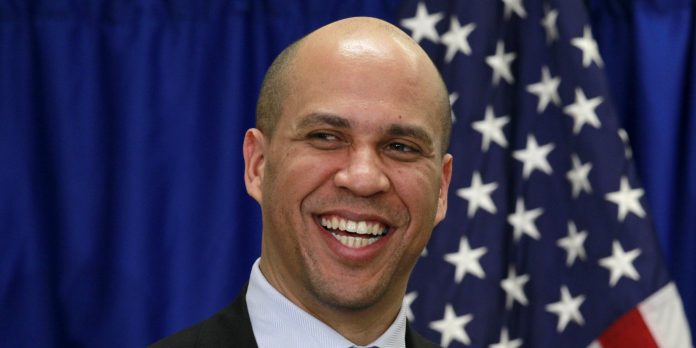
The Lakewood Vaad of Lakewood, NJ has released its endorsements for the November 3 general election, backing candidates from both political parties while urging residents to vote against a school board ballot question and highlighting the mounting financial, transportation and infrastructure challenges facing the township.
In a letter to the community, the Vaad endorsed Democratic U.S. Senator Cory Booker and Republican Congressman Chris Smith, continuing its longstanding practice of supporting candidates based on their relationships with Lakewood and their willingness to address the community’s needs rather than their political affiliations.
The Vaad’s recommendations come as Lakewood residents confront a series of pressing concerns, including the ongoing school transportation crisis, rising property taxes, increasing traffic congestion and financial pressures affecting local families and mosdos.
The organization acknowledged that the township is dealing with significant fiscal difficulties, including a financial shortfall, reductions in state aid and extraordinary expenses associated with severe winter weather. It also pointed to complications arising from state oversight of the Lakewood school district.
In the U.S. Senate race, the Vaad endorsed Booker, citing his longstanding relationship with community leaders and the assistance his office has provided on matters affecting Lakewood residents.
For the U.S. House of Representatives, the Vaad backed Smith, recognizing his decades of service to the district, his advocacy on religious freedom and family values, and his responsiveness to the concerns of the Orthodox Jewish community.
The Vaad also endorsed Republican Frank Sadeghi for another term as Ocean County commissioner, pointing to his accessibility and willingness to work with community representatives on the challenges associated with Lakewood’s continued growth.
At the township level, the Vaad endorsed Democratic Mayor Ray Coles and Republican Committeewoman Deborah Fuentes for reelection.
Both officials were praised for maintaining working relationships with community leadership and for their service during a period of significant municipal challenges.
Coles and Fuentes are competing for two seats on the five-member Township Committee against Republican Moshe Raitzik and Democrat Samantha Stokes.
In the Lakewood Board of Education election, the Vaad endorsed incumbents Samuel Melnik and Harriet Goldberg, along with Abraham D. Reich, who is seeking reelection through a write-in campaign because his name will not appear on the ballot.
The Vaad separately instructed voters to cast a no vote on the school board public question.
For the Board of Fire Commissioners, the organization endorsed incumbents Dovid Bender and Harrison Pfeffer.
The letter stressed that endorsing an elected official does not necessarily indicate agreement with every decision that official has made. Rather, the recommendations reflect the importance the Vaad places on accessibility, cooperation, communication and the ability to work constructively on behalf of Lakewood residents.
The endorsements are particularly significant in a township whose electorate has demonstrated overwhelming support for Republican candidates in major statewide and national races while continuing to elect Democrats to important local offices.
Early voting is scheduled from October 24 through November 1 at the Lakewood Municipal Building, located at 231 Third Street. Voting hours will be 10 a.m. to 8 p.m. Monday through Saturday and 10 a.m. to 6 p.m. on Sundays.
Election Day is Tuesday, November 3, with polling locations open from 6 a.m. until 8 p.m.
 Matzav1 hour ago
Yair Golan, chairman of Israel’s left-wing Democrats party, has declared that separating religion from the state and removing religious influence from public life will be central priorities of his political agenda, explicitly calling for public transportation on Shabbos and the introduction of civil marriage in Israel.
In remarks publicized Thursday, Golan outlined his vision for changing the relationship between religion and government, identifying two major reforms that he intends to pursue as part of his party’s platform.
“א clear separation between religion and state, beginning first and foremost with removing religion from the public sphere. There will be public transportation on Shabbos, and it will be possible to enter into civil marriages in Israel. I am presenting these as two central priorities,” Golan said, according to a translation of his Hebrew remarks.
The comments reflect Golan’s longstanding support for changes to Israel’s religious status quo, particularly in areas where religious law and institutions currently influence government policy and public services.
His latest statement, however, went beyond advocating specific changes to transportation and marriage laws. Golan explicitly spoke of removing religion from the public sphere, language that raises broader questions about the extent of the changes he envisions.
Golan made the remarks during a meeting with party activists living abroad, in comments publicized by Israel’s Channel 14 ahead of the October 27 Knesset elections.
His proposals are consistent with the Democrats party’s published platform, which calls for the establishment of a civil marriage system alongside the Chief Rabbinate and the introduction of public transportation on Shabbos.
Under the party’s more detailed policy document, local authorities would be empowered to determine the extent of Shabbos transportation in their communities. The proposal envisions limited service in secular and mixed areas while preserving the character of Shabbos in religious neighborhoods.
Golan’s latest language has nevertheless drawn particular attention because of his use of the phrase “removing religion from the public sphere,” which goes beyond the specific proposals concerning transportation and marriage.
The Democrats chairman did not explain precisely what additional measures he envisions under that description, leaving unclear whether he intends primarily to reduce the authority of religious institutions over government services or pursue more extensive changes to the country’s public character.
The remarks prompted a sharp response from Shas chairman Aryeh Deri, who accused Golan and the political left of threatening Israel’s Jewish identity.
“Yair Golan is openly saying what a left-wing government intends to do: erase the Jewish identity of the State of Israel,” Deri said in a statement Thursday.
“We are facing a real danger. The choice is now clearer than ever: Shas and a Jewish state, or the left and a state like all other nations.”
 Matzav3 hours ago
Ukrainian President Volodymyr Zelensky announced Thursday that his country would resume attacks on Russian oil refineries, openly rejecting President Donald Trump’s proposed suspension of strikes on energy facilities after accusing Moscow of continuing its bombardment of Ukrainian infrastructure and Washington of threatening vital military intelligence support.
“The block is out. We’re done,” Zelensky declared during an interview with the Financial Times while visiting London.
The announcement marked a dramatic escalation in tensions between Kyiv and Washington over Trump’s efforts to negotiate an end to the war. Zelensky maintained that Ukraine had observed the temporary suspension of attacks for three days, while Russia continued striking Ukrainian energy installations more than 100 times over the preceding week.
The Ukrainian leader argued that his country could no longer be expected to refrain from attacking Russian oil facilities while Moscow continued targeting Ukrainian power supplies.
Shortly after Zelensky announced the resumption of strikes, Pavel Malkov, governor of Russia’s Ryazan region, reported that Ukrainian drones had struck a state-owned oil facility and ignited a fire.
Ukraine has repeatedly targeted Russian refineries and other petroleum installations, arguing that the facilities generate revenue for Moscow’s military operations and that the attacks are a legitimate response to Russia’s ongoing destruction of Ukrainian energy infrastructure.
Trump had sought to halt such attacks as part of a broader diplomatic initiative that included an agreement announced Friday for the United States to purchase more than 2.25 million barrels of Russian diesel fuel. The administration presented the arrangement as a way to ease a global fuel shortage and encourage Moscow to return to peace negotiations.
Zelensky immediately criticized the agreement, telling Axios that it “looks like a happy birthday present” for Russian President Vladimir Putin.
The dispute intensified when Zelensky accused American military officials of threatening to suspend intelligence assistance unless Ukraine stopped attacking Russian energy facilities.
According to the Ukrainian president, US officials warned Kyiv, “if you will not stop [the energy strikes], we will block intelligence,” a claim that the Trump administration has disputed.
White House officials offered a different account of the proposed ceasefire, saying Putin understood that the arrangement applied specifically to oil refineries and did not prohibit Russian attacks on Ukrainian electrical infrastructure.
Administration sources suggested that Zelensky was deliberately interpreting the agreement more broadly than its actual terms, allowing him to accuse Moscow of violating the understanding and justify abandoning the restrictions imposed by Trump.
Trump has denied that Washington suspended intelligence sharing with Ukraine, but the disagreement grew more serious Tuesday when Ukrainian forces experienced a disruption in access to Starshield, the secure military satellite communications network developed by SpaceX.
Starshield, a military-focused counterpart to the company’s Starlink system, provides communications capabilities that support Ukrainian battlefield operations, including the tracking of incoming threats and the coordination of long-range strikes against Russian targets.
The interruption reportedly interfered with Ukraine’s ability to deploy interceptor drones against incoming Russian attacks, raising concerns among Ukrainian officials about the timing and possible cause of the disruption.
The precise reason for the outage remained uncertain. SpaceX chief executive Elon Musk indicated Wednesday that responsibility lay with the Pentagon and White House, although a senior American official denied Thursday that Trump had ordered any restriction on Ukrainian access. The Pentagon had not publicly addressed the allegation.
By Thursday morning, Ukrainian representatives reported that Starshield service was recovering, although questions persisted over what had caused the interruption.
“Starshield speeds have been improved, at the moment,” Denys Sienik, a senior diplomat at Ukraine’s embassy in Washington, told the New York Post. “We hope all will be resumed to the previous level.
“Speed is critical for logistics, and for intercepting the jet-powered Shahed drones, especially when Russia constantly uses them to attack our cities and commit war crimes,” he added.
“Yesterday saw one of the most massive Shahed [drone] attacks, occurring precisely when our defense system’s speed was being throttled, and the circumstances behind this are deeply concerning.”
Zelensky also used his London interview to criticize Trump’s approach toward Putin, accusing the American president of showing admiration for powerful authoritarian leaders.
“He [Trump] speaks about it openly and loudly that he loves such people and he respects such people,” Zelensky told the Financial Times. “Because for him people who can be leaders 20 years, 30 years, 40 years, it means they can be very strong.”
The Ukrainian president urged Washington to abandon efforts to expand commercial dealings with Moscow while Russian forces continued their invasion. He argued that American pressure should be directed toward compelling Putin to end the war rather than restricting Ukraine’s ability to strike Russian targets.
Nevertheless, Zelensky acknowledged that American military assistance remains essential to Ukraine’s defense, conceding that resisting Russia without US support would be “very difficult.”
The Trump administration has defended its diplomatic strategy, maintaining that economic incentives, including the Russian diesel agreement, could persuade Putin to resume serious negotiations and eventually accept a peace settlement.
Administration officials believe the fuel arrangement could also ease pressure on American consumers facing rising diesel and gasoline prices. Energy analysts, however, have warned that the conflict involving Iran has been a major factor behind the recent increase in global fuel costs.
Officials have also suggested that renewed economic cooperation between Washington and Moscow could become part of a broader postwar relationship if an agreement ending the fighting can be reached.
Skeptics of the administration’s approach argue that offering Russia economic benefits while limiting Ukrainian military operations risks strengthening Putin’s negotiating position.
“For Trump, it’s a two-fer: try to lower diesel prices to save his own skin before the midterms, and use more Ukrainian deaths to strong-arm Zelensky to accept a surrender agreement with Russia so Trump can claim to have ended the war,” a former National Security Council official told the New York Post. “Neither will work.”
Fred Fleitz, who served as chief of staff of the National Security Council during Trump’s first administration, argued that securing a lasting agreement would ultimately require convincing Putin that continued military operations could not produce victory.
“Ultimately, I believe the tipping point for a peace deal will come when Putin finally accepts that the war is unwinnable and his only chance for an honorable exit is through a deal with Trump,” Fleitz said. “This should be the central theme of any Witkoff-Kushner negotiations with Putin.”
The Kremlin, meanwhile, rejected Ukraine’s account of the ceasefire, maintaining that Kyiv had failed to observe the proposed restrictions. Putin also played down the impact of Ukrainian attacks on Russian oil installations, saying they had caused “nothing particularly significant.”
British officials have sought to prevent the dispute from causing a lasting rupture between Washington and Kyiv. UK Defense Minister Wes Streeting said London was working to bring “friends back together again” as European governments continued pressing for sustained American involvement in Ukraine’s defense.
“We need President Trump engaged on Ukraine,” Streeting said during an appearance on Fox News.
“He has been, and the diplomatic track is as important in making sure Ukraine has the weapons it needs to see off Russian aggression.”
Ukraine’s renewed refinery campaign comes amid continuing Russian missile and drone attacks that have damaged electrical infrastructure and left hundreds of thousands of Ukrainian residents without power. Zelensky has also been seeking stronger European financial and military assistance as uncertainty grows over Washington’s future role in the conflict.
{Matzav.com}
 Matzav2 hours ago
Changes have been announced to the schedule of the Vizhnitzer Rebbe of Bnei Brak, Rav Yisroel Hager, after the Rebbe experienced weakness associated with an inflammation, prompting his household to cancel his planned return to Bnei Brak for Shabbos Parshas Noach and arrange for him to remain at his residence in Moshav Ora, near Yerushalayim, to rest and regain his strength.
The decision has also resulted in changes to two upcoming family simchos, including the postponement of a grandson’s bar mitzvah celebration and the relocation of a great-grandson’s bris from Kiryas Vizhnitz in Bnei Brak to Moshav Ora.
The Rebbe had spent the month of Tishrei at his residence in Bnei Brak, where he participated in nearly all the Yom Tov tefillos and communal gatherings attended by large numbers of chassidim.
Following the conclusion of the Yomim Tovim, the Rebbe traveled to his resting residence in Moshav Ora for a period of recuperation following the demanding Tishrei schedule.
Earlier this week, Vizhnitz officials announced that the Rebbe was expected to return to his home in Kiryas Vizhnitz in Bnei Brak in time for Shabbos Parshas Noach.
However, the Rebbe’s household subsequently issued an updated announcement explaining that, because he was experiencing weakness resulting from an inflammation, he would remain in Ora for Shabbos rather than undertake the planned trip.
As a result, the bar mitzvah celebration of the Rebbe’s grandson, habochur Moshe Yehoshua Hager, which had been scheduled for Motzoei Shabbos, has been postponed to a later date.
The bar mitzvah bochur is a son of Rav Menachem Mendel Hager, a son-in-law of the Vizhnitzer Rebbe and a son of the late rav of Seret Vizhnitz in Yerushalayim.
A second change involves the bris of the Rebbe’s great-grandson, a son of Rav Yissachar Ber Hager, whose father is Rav Menachem Mendel Hager and whose father-in-law is Rav Avrohom Shimon Marilus.
The bris had originally been scheduled to take place Sunday in Kiryas Vizhnitz in Bnei Brak. Under the revised arrangements, the simcha will instead be held in Moshav Ora, near the Rebbe’s residence.
The adjustments will allow the family simcha to take place in proximity to the Rebbe without requiring him to travel back to Bnei Brak while he is recuperating.
Vizhnitzer chassidim are following the developments with concern and continue to daven for the Rebbe’s complete and speedy recovery.
The public is asked to daven for Rav Yisroel ben Leah Esther, l’refuah sheleimah b’soch she’ar cholei Yisroel.
{Matzav.com}
 Matzav4 hours ago
A Delta Air Lines passenger jet was forced to abandon its landing at New York’s LaGuardia Airport after a private aircraft took off without authorization, creating a dangerous situation in which the two planes reportedly came within approximately 1,000 feet of one another.
The incident occurred on October 7 but only became publicly known this week, prompting an investigation by the Federal Aviation Administration into how a private jet was able to depart without receiving the required clearance from air traffic controllers.
According to reports and air traffic control recordings, the incident involved a NetJets Embraer Phenom 300 business jet that had been instructed to enter Runway 13 and wait for further authorization before taking off.
Instead, the private aircraft began its takeoff while a Delta passenger jet was approaching LaGuardia for landing on a nearby runway.
The Delta pilots responded by discontinuing their approach and climbing away from the airport, a maneuver known as a go-around, to avoid a potentially dangerous conflict with the departing aircraft.
Flight-tracking information indicated that the planes were separated by approximately 300 meters, or 1,000 feet, as the Delta aircraft began climbing.
The Delta aircraft was identified as Flight 5415, a Bombardier CRJ900 operated by Endeavor Air under the Delta Connection brand. The flight had departed Omaha, Nebraska, and was approaching LaGuardia shortly before 4 p.m. when the incident unfolded.
The private aircraft, a NetJets Embraer Phenom 300 operating as ExecJet Flight 398, was departing from Runway 13. Flight records indicate that the jet was headed to Teterboro Airport in New Jersey.
Air traffic control recordings captured a disagreement between the private jet’s pilots and the tower over whether permission to take off had actually been issued.
“I believe you were never cleared for takeoff, sir. You were cleared to line up and wait,” the controller told the crew after the aircraft had departed.
The pilot disputed that account, responding, “No, I believe we were cleared for takeoff. We were told that the United was ahead, wake turbulence and everything.”
The controller rejected the explanation, replying, “Uh, negative. I never even said anything about wake turbulence.”
Under standard aviation procedures, an instruction to line up and wait authorizes an aircraft to enter a runway and hold its position. It does not permit the pilots to begin their takeoff roll. A separate clearance is required before an aircraft may depart.
The FAA subsequently confirmed that the private jet had departed without authorization and announced that it was investigating the circumstances surrounding the incident.
“The crew of Endeavor Air Flight 5415 performed a go-around at LaGuardia Airport after ExecJet Flight 398 departed on an intersecting runway without air traffic control authorization,” the agency stated.
Delta also confirmed that its pilots discontinued their landing to maintain separation from the other aircraft.
“The crew initiated a go-around to ensure safe spacing with a departing aircraft on a nearby runway,” the airline said.
The Delta flight subsequently landed safely at LaGuardia approximately 12 minutes later. No injuries were reported.
The incident has drawn renewed attention to aviation safety at LaGuardia, one of the busiest airports in the New York metropolitan area, particularly because it follows a fatal runway collision at the same airport earlier this year.
In March, an Air Canada Express regional jet collided with an airport firefighting vehicle while landing. Both pilots were killed, and dozens of passengers and crew members were injured.
Investigators determined that the emergency vehicle had been cleared to cross the runway while the aircraft was approaching, resulting in the deadly collision. The National Transportation Safety Board’s investigation into that accident remains ongoing.
The October 7 incident raises a different set of questions, particularly regarding communication between pilots and air traffic controllers and the procedures intended to prevent aircraft from entering or departing runways without proper authorization.
Federal investigators have not yet released a final determination explaining why the NetJets crew believed it had permission to take off or whether the incident resulted from a misunderstood instruction or another communication failure.
{Matzav.com}
 JBizNews5 hours ago
Israel was “very close” to creating conditions for regime change in Iran, Prime Minister Benjamin Netanyahu’s foreign policy adviser Ophir Falk told The Jerusalem Post in a studio interview, while stressing that the Iranian people would have to determine their country’s future.
“I think we’re very close to creating those conditions,” Falk said when asked how close pressure on Tehran had brought the prospect of regime change. “Those conditions are being created as we speak right now.”
Speaking with Post Editor-in-Chief Zvika Klein and diplomatic correspondent Amichai Stein, Falk said Israel’s actions were creating conditions that would allow Iranians to challenge their rulers.
“Regime change in Iran is up to the Iranian people,” he said.
Falk described the US-led economic blockade as successful, while noting that economic pressure needed time to produce results. He argued that Iran and its regional proxies had been severely weakened by the war, citing strikes on senior figures, nuclear scientists, missiles, launchers and production capabilities.
Stein asked whether Israel and the US had done enough to provide the Iranian people with the means to challenge their rulers. Falk described Operations Rising Lion and Roaring Lion as “two of the most successful military operations in recent history,” saying their achievements had been “incredible” while acknowledging that no military operation could be perfect.
He also acknowledged the danger facing Iranians who took to the streets, citing the regime’s violent repression of protesters.
“I can appreciate the concerns of people,” he said when the discussion turned to their fear of demonstrating.
Falk did not offer a timetable for political change in Tehran or detail what further assistance might be provided to Iranians seeking it.
Turning to Gaza, Falk said Hamas could disarm “in an afternoon” if it wanted to, and that Israel would not redeploy before the terrorist group was fully disarmed. Reconstruction, he said, would have to wait for demilitarization.
“If Hamas wanted to disarm, they could do that in an afternoon,” he said. “And that’s what we expect.”
Falk outlined three requirements for Gaza: disarming Hamas, demilitarizing the territory and deradicalizing its population. He presented those goals as consistent with US President Donald Trump’s 20-point plan.
“That means zero weapons,” he said of demilitarization.
The Trump-led Board of Peace was established to oversee implementation of the plan, including Gaza’s reconstruction and transition to a new governing framework.
Stein pressed Falk on why Israel would not agree to a two-week pause in targeted killings and other military activity to allow an attempt at securing Hamas’s disarmament. The question followed Klein’s description of frustration among figures in the Trump administration over Israel’s approach to the board’s work.
Falk said he was unfamiliar with the 14-day proposal. He reiterated that Hamas and all other terrorist organizations in Gaza had to disarm, and that Israel would not redeploy before Hamas was fully disarmed throughout the territory.
“We’re not going to settle for anything less,” he said.
When Klein pointed out that changing attitudes among Gaza’s population could not be accomplished in an afternoon, Falk agreed that deradicalization would take time. He reiterated that Hamas could disarm in an afternoon if it wanted to.
Falk’s assessment of Israel’s diplomatic position was consistently upbeat. He pointed to relations with the US, India, South American countries and European partners as evidence that Israel’s military strength had reinforced its international standing.
Klein challenged that assessment, asking about hostility toward Israel among Democrats and signs of erosion within the Republican Party. Stein raised statements marking October 7 in which US political figures devoted substantial attention to Palestinian suffering and criticism of Israel.
Falk acknowledged a problem in the public arena.
“We’ve been fighting a seven-front war, and on the eighth front, the information warfare, we have not been as successful as we have been on the battlefield,” he said. “And we will need to address that as well.”
He nevertheless maintained that the strategic relationship with Washington remained exceptionally close, citing joint military activity, planning and frequent conversations between Netanyahu and Trump.
Asked how many times the two leaders had spoken over the preceding week or two, Falk said they spoke often but could not recall the precise timing.
“I haven’t seen daylight between the president and the prime minister on the big issues,” he said when asked about differences over Iran.
Pressed on whether American requests had constrained Israeli military decisions, Falk said Netanyahu’s approach was to agree when possible and refuse when Israel’s security required it. He added that Netanyahu had said no on a number of occasions.
‘We’re going to get them all out’: Falk on the hostage negotiations
Falk said Netanyahu rejected an early working assumption held by some that Hamas would kill all the hostages and insisted that bringing every hostage home become a formal war objective.
“The prime minister did not accept that,” Falk said. “He said we’re going to get them all out, and we’re going to put it as a war objective to get them all out.”
Falk maintained that military pressure, diplomatic pressure and a united Israeli-American position were the combination that produced hostage releases. He said perceived differences between Jerusalem and Washington encouraged Hamas to retreat from negotiations.
Falk also credited Netanyahu with pressing then-president Joe Biden to increase pressure on Qatar to secure additional releases during the first agreement in November 2023.
One of the most pointed exchanges concerned whether Israel could have secured an additional hostage agreement between the November 2023 releases and the January 2025 deal.
Stein asked whether any agreement had been possible during that period, distinguishing between the availability of a deal and whether it would have been a good deal for Israel.
“No, there was no deal on the table,” Falk initially replied.
When pressed, he defined that answer in terms of the government’s war objectives: dismantling Hamas’s military and governing capabilities, freeing all the hostages and ensuring Gaza could no longer threaten Israel.
“There was no deal that could enable Israel to achieve its war objectives,” he said.
Falk argued that an arrangement requiring Israel to release large numbers of Palestinian prisoners, withdraw and leave the prewar threat intact would have contradicted the goals approved by the cabinet. He cited an Israeli proposal that then-US secretary of state Antony Blinken described in April 2024 as “extraordinarily generous,” saying Hamas had rejected it.
His account addressed a dispute that has resurfaced around former White House Middle East coordinator Brett McGurk’s book, Brink: Inside the Race to Free the October 7th Hostages, and McGurk’s recent interview with the Post.
In a separate interview on Dan Senor’s Call Me Back podcast, McGurk called the suggestion that Hamas had been ready to release all the hostages in the days after October 7 “complete bullshit.” He said Hamas had demanded the release of all Palestinian prisoners, continued Hamas rule and a return to the prewar status quo.
Phil Gordon, who served as national security adviser to then-vice president Kamala Harris, challenged claims that McGurk’s account vindicated Netanyahu. Gordon alleged that Netanyahu introduced additional conditions in July 2024 after Hamas accepted the basic framework, delaying an agreement by six months.
Asked about McGurk’s impression that members of Israel’s negotiating team had sometimes gone beyond Netanyahu’s position, Falk declined to dispute the former US official’s personal assessment.
“I don’t want to argue with Brett’s feelings,” he said. He added that Netanyahu and the cabinet would not approve an agreement that jeopardized Israel or its war objectives.
Falk praised Trump’s approach, while declining to speculate about whether Israel would have reached the same position had Kamala Harris won the 2024 presidential election or Biden served another term.
He accused the Biden administration of imposing a “de facto embargo” on some weapons Israel needed before the Rafah operation. The Biden administration paused a shipment of heavy bombs in May 2024 over concerns about civilian casualties, while other US weapons continued to flow to Israel.
Falk also described his own morning on October 7, 2023, saying he was asleep when the attack began and was called shortly afterward to the Kirya, Israel’s military headquarters in Tel Aviv.
Before leaving, he woke his children, who were serving in the military, and told them to report to their units.
He described Netanyahu as focused while receiving updates on the unfolding attack.
“He told me it’s going to be a long war,” Falk recalled, saying the remark came on the way to an initial briefing from the security chiefs.
According to Falk, Netanyahu’s immediate instructions included reinforcing the northern front to deter Hezbollah from joining the fighting, enabling the military to concentrate on the south, preventing the terrorists who had entered Israel from returning to Gaza and calling up as many reservists as needed.
Falk said that, to the best of his recollection, French President Emmanuel Macron was the first foreign leader to call Netanyahu that day. He recalled Macron offering to mediate on the day of the massacre and Netanyahu rejecting the approach.
According to Falk, Netanyahu compared Hamas to ISIS and warned that Macron would face the group in Paris if Israel did not dismantle it in Gaza. Falk said Netanyahu also told Macron not to convey messages on his behalf, adding that Hamas would soon receive a message from Israel.
He also denied reports raised by Klein that UAE President Sheikh Mohammed bin Zayed Al Nahyan had telephoned Netanyahu before October 7 to warn him of an impending attack.
“There was no such call,” Falk said.
Klein distinguished that allegation from possible communications between the countries’ intelligence agencies. Falk said he was unaware of any warning or caution, while reiterating his denial of a warning call between the leaders.
On regional diplomacy, Falk praised the United Arab Emirates and said economic relations under the Abraham Accords, the US-brokered normalization agreements launched in 2020, had continued to develop through the war.
Asked why the UAE had publicly acknowledged Netanyahu’s visit, Falk said doing so served both countries’ national interests. He described the visit as “fantastic.”
He expressed support for normalization with Saudi Arabia but gave no details of negotiations or conditions for an agreement.
The discussion also touched on the flydubai passengers diverted to Saudi Arabia. Asked about the refusal to allow an Israeli civilian aircraft to collect them, Falk emphasized reports that they had been treated well and had reached Israel safely. He said a joint investigation into the incident was underway.
On the Houthis, the Iranian-backed movement in Yemen, Falk condemned attacks on civilians and said Israel would act to defend its security and national interests. He did not specify whether Israel was assisting Saudi Arabia against the group.
Asked what needed to happen for additional countries to establish relations with Israel, Falk initially said Israel had to win the war and then secure peace. When pressed on whether normalization would therefore have to wait, he said agreements could come whenever prospective partners were ready.
“I think that can happen and will happen much quicker than you think,” he said.
 Matzav26 minutes ago
Rav Shlomo Alfa zt”l, a longtime Bnei Brak resident who was a grandson of Rav Meir Karelitz zt”l, a close confidant of the Chazon Ish zt”l, and an accountant who devoted decades to serving Torah institutions, was niftar Thursday evening at the age of 95.
Rav Alfa passed away at Mayanei HaYeshua Medical Center in Bnei Brak following resuscitation efforts. His petirah brings to a close the life of a man who maintained close connections with some of the greatest Torah figures of the previous generation while quietly dedicating himself to the needs of mosdos haTorah.
The levayah was scheduled for Thursday evening at 10 p.m., departing from his home at 64 Rav Kahaneman Street in Bnei Brak. The procession was to pass the Nachlas Moshe shul at 36 Rav Meltzer Street before proceeding to the Shomrei Shabbos–Zichron Meir Cemetery, where he was to be laid to rest.
Rav Alfa was born on 13 Av 5691 (1931) to Rav Eliezer Alfa zt”l, who served as the rav of the Karmia neighborhood in Haifa, and his wife, Mrs. Shulamis Alfa a”h.
His father was a distinguished talmid chacham who, during his younger years in the Novardok yeshivah, had learned b’chavrusa with the Steipler Gaon, Rav Yaakov Yisroel Kanievsky zt”l, author of the Kehillos Yaakov.
His mother was a daughter of Rav Meir Karelitz zt”l, the rav of Lachovitch and an influential figure in the Torah world of Poland and Eretz Yisroel. Rav Meir was among the leaders of the Vaad HaYeshivos in both countries, helped establish the Chinuch Atzmai educational network, and served as a member of the Moetzes Gedolei HaTorah.
Rav Meir Karelitz was also the older brother of the Chazon Ish, making Rav Shlomo Alfa a great-nephew of the Chazon Ish and part of a family deeply connected to the development of Torah life in Eretz Yisroel.
The Alfa home in Haifa was known as a gathering place for prominent talmidei chachamim and gedolei Yisroel who visited the city. Among the distinguished visitors was the Brisker Rav, Rav Yitzchok Zev Soloveitchik zt”l.
As a young bochur, Rav Shlomo studied at Yeshivas Tiferes Tzion in Bnei Brak. During that period, he developed a close relationship with the Chazon Ish and eventually lived in his home, an experience that gave him extraordinary personal exposure to one of the leading Torah authorities of the generation.
When he reached marriageable age, Rav Shlomo married Mrs. Sarah Alfa. Their wedding took place in Haifa and was attended by the Chazon Ish himself.
In later years, Rav Alfa and his family settled in Bnei Brak, where he established himself as an accountant whose services were sought by numerous Torah institutions. His professional work became an important part of his contribution to the continued operation of yeshivos, kollelim, and other communal organizations.
Alongside his demanding professional responsibilities, he was deeply devoted to his own Torah learning, maintaining regular sedorim with exceptional dedication.
Among the institutions that benefited from his generosity was the Nachlas Moshe network of kollelim, headed by his son-in-law, Rav Avrohom Rubinstein. Rav Alfa handled the network’s accounting needs entirely on a volunteer basis, providing his professional expertise without compensation.
Additional accounts of his life describe him as a respected moreh horaah who spent many years in Yerushalayim and became known for his extensive firsthand knowledge of the Chazon Ish. He was frequently invited to speak at Torah gatherings, where he shared personal recollections of the Chazon Ish’s conduct, teachings, and daily life.
Those who knew him recalled his humility, warmth, and willingness to share the memories he had accumulated during his years in the Chazon Ish’s presence. His recollections provided later generations with a personal perspective on the life of the Chazon Ish.
In his later years, as his strength declined, Rav Alfa resided with his daughter in Bnei Brak, where family members cared for him devotedly.
On Thursday afternoon, emergency responders were summoned to a residence on Rav Kahaneman Street after Rav Alfa suddenly collapsed. Medical personnel performed advanced resuscitation procedures and transported him to Mayanei HaYeshua Medical Center in critical condition, continuing their efforts to save his life. Despite those efforts, he was niftar at the hospital.
Rav Alfa leaves behind a distinguished family of children, grandchildren, and further descendants who continue in his path.
Among his sons-in-law is Rav Avrohom Rubinstein, the former mayor of Bnei Brak, who currently serves as secretary of the Moetzes Gedolei HaTorah of Degel HaTorah.
Yehi zichro boruch.
{Matzav.com}
 Yeshiva World News26 minutes ago
Khan could overtake Smith as the most common surname among babies born in England and Wales by 2027, according to a projection based on recent birth-registration trends.
The figures show that 4,120 babies born in 2025 were registered with the surname Smith, compared with 3,772 with the surname Khan, placing the names first and second, respectively.
Smith’s frequency among newborns has reportedly been declining by an average of 4% annually, while Khan’s has been increasing by approximately 1.9% a year. If those trends continue, Khan would move into first place in 2027.
Smith has historically been England’s most common surname, but its prevalence among newborns has fallen over the past three decades. Khan’s frequency has reportedly more than doubled in recent years.
The projected change concerns surnames registered at birth, rather than the most common surname across the entire population.
The findings come amid wider attention to changing naming patterns, including Muhammad’s rise in popularity among baby boys.
(YWN World Headquarters – NYC)
 Yeshiva World News4 hours ago
A 24-year-old Spring Valley man was arrested Thursday following an incident in which a 9-year-old boy was struck by a projectile believed to have been fired from a BB gun while walking along Hoyt Street in Spring Valley.
According to the Spring Valley Police Department, officers responded Wednesday, October 14, to the area of Hoffman Street and Hoyt Street after receiving a report of a suspicious incident involving a child.
Police said the boy was walking past an occupied vehicle on Hoyt Street when he heard a loud noise and suddenly felt pain near his left hip.
The child returned home and informed his parents, who contacted Chaverim of Rockland for assistance. Upon learning the circumstances of the incident, Chaverim immediately notified the Spring Valley Police Department.
Hatzoloh EMS responded to evaluate the boy and determined that his injuries were not life-threatening.
Spring Valley Police detectives launched an investigation, working with Chaverim of Rockland to identify and locate the vehicle involved.
On Thursday, October 15, the suspect vehicle and all individuals who had been inside at the time of the incident were located with assistance from Chaverim volunteers. All occupants were transported to Spring Valley Police headquarters for further questioning.
Following the investigation, police arrested Marco J. Guanoquiza-Caillagua, 24, of Spring Valley.
He was charged with second-degree assault, two counts of fourth-degree criminal possession of a weapon, and endangering the welfare of a child.
The Spring Valley Police Department publicly thanked Chaverim of Rockland for their assistance in the investigation.
Authorities are asking anyone with additional information to contact Spring Valley Police at 845-356-7400 or email [email protected].
(YWN World Headquarters – NYC)
 Matzav2 hours ago
A federal judge on Thursday dismissed an effort by former CIA Director John Brennan to compel the Justice Department to preserve investigative materials that he hoped to use in challenging any future criminal prosecution, ruling that his claims of political retaliation by the Trump administration were too speculative to justify court intervention.
U.S. District Judge Jia Cobb rejected Brennan’s request for a preservation order, finding that he had failed to establish that federal prosecutors were improperly destroying or neglecting evidence that might become relevant if criminal charges were eventually brought against him.
Brennan, who served as CIA director under President Barack Obama, has been under investigation by the Justice Department for months but has not been charged with a crime. His attorneys contend that the investigations are politically motivated and designed to punish him for his longstanding criticism of President Donald Trump.
The lawsuit sought to ensure that Justice Department communications and other investigative records would remain available to support a potential defense alleging vindictive or selective prosecution. Brennan’s legal team argued that the administration’s handling of records in other matters raised concerns that potentially important evidence could disappear.
During a hearing last month, Brennan’s attorney acknowledged that seeking such a court order before any indictment had been filed was an unusual legal maneuver. Nevertheless, he maintained that the circumstances warranted extraordinary intervention because of what he characterized as a pattern of retaliation by federal authorities.
Cobb, however, concluded that Brennan had not demonstrated a sufficiently concrete injury or established a direct connection between his concerns and any actual failure by the government to preserve relevant evidence.
In her ruling, the judge acknowledged the seriousness of Brennan’s accusations while emphasizing that allegations alone could not establish the legal basis for the relief he was seeking.
“Brennan’s allegations — that he is being targeted by the Trump Administration not because of his conduct, but because he has opposed the current president — are deeply concerning,” Cobb wrote.
“If he was eventually able to prove those allegations true, that would certainly suggest that his potential prosecution is vindictive. But even taking all of Brennan’s allegations to be truthful at this stage, the injury he alleges is simply too attenuated from the actions he seeks to enjoin to warrant a finding of standing here.”
The legal dispute arises from multiple investigations examining Brennan’s activities during and after his tenure at the CIA, particularly his involvement in intelligence assessments concerning Russia’s interference in the 2016 presidential election.
Brennan played a prominent role in the intelligence community’s conclusion that Moscow conducted an extensive effort to influence the election in Trump’s favor. The assessment became a major source of controversy during Trump’s first administration, as federal investigators examined allegations of coordination between his presidential campaign and Russian operatives.
Trump has repeatedly challenged the intelligence community’s handling of the Russia investigation, which overshadowed much of his first term and fueled years of political and legal disputes.
More recently, federal prosecutors have examined whether Brennan provided false testimony during a 2023 appearance before the House Judiciary Committee. That investigation is separate from a broader inquiry based in Florida into allegations that Brennan and other former intelligence and law enforcement officials participated in a conspiracy intended to prevent Trump from obtaining or exercising presidential power.
Brennan has received a subpoena to appear before a grand jury in connection with the broader investigation, although his scheduled testimony has been postponed. His attorneys have also said prosecutors informed them that he remains a target of the separate investigation concerning his congressional testimony.
The former CIA director has denied engaging in any criminal misconduct, and his lawyers have strongly disputed the premise of the government’s investigations.
At a court hearing last month, Brennan’s attorney, Ken Wainstein, a former senior Justice Department official, argued that the investigations were based on allegations that had no legitimate foundation.
Wainstein described the theory of a sweeping conspiracy against Trump as “fiction,” accusing federal authorities of attempting to construct a criminal case against his client for political reasons.
“I’ve spent decades in and around the Justice Department. I’ve never even conceived of a situation like this” in which the Justice Department is “blatantly trying to frame somebody for a crime that is complete fiction,” Wainstein said.
Brennan’s attorneys initiated the lawsuit in July, before any criminal charges had been filed, seeking to preserve government records that they believe could reveal improper political influence over prosecutorial decisions. They argued that such material could prove essential if Brennan were indicted and subsequently sought dismissal of the charges on constitutional grounds.
The preservation request covered records potentially documenting communications among Justice Department officials, White House personnel, and investigators involved in the inquiries. Brennan’s legal team maintained that the materials could help establish whether decisions concerning his prosecution were driven by legitimate evidence or political considerations.
Federal government attorneys opposed the request, arguing that Brennan was attempting to obtain extraordinary judicial intervention in investigations that had not resulted in an indictment. They maintained that his concerns about possible future prosecution and missing evidence did not justify the court’s involvement.
The broader Florida investigation has also experienced changes in prosecutorial leadership. Joseph diGenova, who had been overseeing the inquiry, departed the effort in September, although Justice Department officials indicated that the investigation would continue.
Thursday’s ruling represents a setback for Brennan’s attempt to secure court-ordered preservation of investigative records, but it does not resolve the underlying criminal investigations or determine whether prosecutors have sufficient evidence to bring charges.
Cobb, who was nominated to the federal bench by President Joe Biden in 2021, confined her decision to whether Brennan had established the legal standing necessary to obtain the requested order.
The question of whether Brennan will ultimately face criminal charges remains unresolved.
{Matzav.com}
 Matzav10 minutes ago
Anger and frustration are mounting at Yeshivas Kol Torah in Yerushalayim following reports that its rosh yeshiva, Rav Moshe Yehuda Schlesinger, a senior member of the Moetzes Gedolei HaTorah of Degel HaTorah, was not invited to the party’s major election gathering Thursday evening in the capital.
Rav Schlesinger’s name was omitted from the invitation list, leaving the rosh yeshiva unaware that the event was even taking place. The reported exclusion has provoked considerable resentment among his talmidim and associates, who say it follows an earlier incident in which the rosh yeshiva was embarrassed at another gathering attended by leading rabbonim.
The controversy comes as Degel HaTorah prepares for the upcoming Knesset elections, with the party seeking to mobilize its supporters through a series of public gatherings featuring prominent Torah leaders.
Those close to Rav Schlesinger maintain that the latest incident cannot be dismissed as a simple organizational oversight. They point to what they describe as a pattern of disrespect toward the rosh yeshiva, who is regarded as the eldest current member of the Moetzes Gedolei HaTorah.
According to sources, an earlier incident occurred when Rav Schlesinger was invited to a special gathering of gedolei Yisroel but discovered upon arriving that no seat had been prepared for him at the dais alongside the other members of the Moetzes.
With no place designated for him among the participating rabbonim, Rav Schlesinger reportedly left the gathering and returned home.
Following that incident, Degel HaTorah officials dispatched representatives to the rosh yeshiva’s residence to personally apologize for what had occurred. The representatives reportedly assured him that such an incident would not happen again.
However, associates of the rosh yeshiva say the failure to invite him to Thursday evening’s gathering has renewed their concerns and deepened their frustration.
One of the rosh yeshiva’s close talmidim expressed the frustration felt by many at Kol Torah.
“I know that for quite some time, the rosh yeshiva has been very surprised by the way he has been treated,” the bochur told Emess. “But now it has reached a new low, where they simply do not invite him. This is a serious display of disrespect toward someone who is today the oldest member of the Moetzes Gedolei HaTorah.”
According to once source, one of Rav Schlesinger’s close talmidim approached him Thursday morning and asked whether he intended to attend the election gathering that evening.
The rosh yeshiva reportedly replied that he had neither heard about the gathering nor been informed that it was taking place.
A separate report by Chareidim Yerushalayim indicated that Rav Schlesinger’s son, Rav Shlomo Schlesinger, who also serves as a rosh yeshiva at Kol Torah, had not received an invitation.
The gathering was scheduled to take place at the Succas Dovid hall in Yerushalayim, with the participation of community leaders, shul gabbaim, political activists, and party representatives.
Associates of the rosh yeshiva also alleged that senior Degel HaTorah representatives had recently visited other members of the Moetzes Gedolei HaTorah to discuss election preparations but had not made a comparable visit to Rav Schlesinger.
The controversy has also revived discussion of the recent removal of longtime Knesset member Uri Maklev from Degel HaTorah’s electoral slate. Maklev has maintained a close relationship with Rav Schlesinger for many years and has regularly consulted him on communal and political matters.
Some talmidim have suggested that the strained relationship between the rosh yeshiva’s household and party officials may be connected to the dispute surrounding Maklev’s removal. However, no evidence has emerged establishing a connection between that disagreement and the failure to invite Rav Schlesinger.
The tension has reportedly begun affecting attitudes toward the upcoming elections among some of the yeshiva’s talmidim.
Similar sentiments were reported among some alumni of the yeshiva, although the extent of the dissatisfaction and whether it will translate into actual voting decisions remain unclear.
The latest dispute comes as Degel HaTorah prepares for another significant gathering, with its Moetzes Gedolei HaTorah expected to convene in Bnei Brak on Motzoei Shabbos for the first time in approximately four years.
According to the additional report, those close to Rav Schlesinger were also unaware of an invitation having been extended to him or his son for that meeting.
{Matzav.com}
 Vos Iz Neias6 hours ago
NEW YORK (VINnews) – Michigan’s high-stakes U.S. Senate race is drawing national attention as Democratic candidate Abdul El-Sayed faces growing scrutiny over allegations involving his family’s Muslim Brotherhood connections, his relationship with controversial commentator Hasan Piker, and his positions on Israel.
In an interview for Rabbi for America, Rabbi Daniel Schonbuch examines these controversies with Robert Spencer, author and expert on Islamic extremism, focusing on the ideological movements influencing American politics.
One of the most explosive controversies involves El-Sayed’s family. His half-sister, University of Chicago professor Eman Abdelhadi, wrote in a 2012 social media post about their mother’s activism in the Muslim Brotherhood during the 1970s. Other posts reportedly described a longer family association with the organization.
El-Sayed has denied having personal or family ties to the Muslim Brotherhood, dismissing his half-sister’s statements as hearsay. The allegations have not established that El-Sayed himself belongs to or supports the organization.
The controversy has intensified questions about the Muslim Brotherhood’s history, its ideological relationship with Hamas, and the broader influence of political Islam in Western democracies.
Another major concern is El-Sayed’s decision to campaign alongside Hasan Piker, the far-left commentator who notoriously declared that “America deserved 9/11.” Piker has also made inflammatory statements about Hamas, Hezbollah, Israel and Jewish Americans, including calling Israel “Jewish ISIS” and Orthodox Jews “inbred.” Although El-Sayed has since distanced himself from Piker, critics continue to question his original decision to embrace the controversial streamer.
El-Sayed has also called for ending both offensive and defensive American military assistance to Israel, a position critics argue could undermine Israel’s security, embolden Iran and Hezbollah, and weaken an important American ally in the Middle East.
His response to the March 2026 attack on Temple Israel in Michigan has generated further controversy. An armed attacker drove into the synagogue while approximately 140 children were inside. Although El-Sayed condemned the attack and antisemitism, his subsequent use of the phrase “hurt people hurt people” and discussion of the attacker’s personal circumstances drew criticism from those who believed his remarks unnecessarily contextualized an act of antisemitic violence.
For Schonbuch, these controversies raise broader questions about extremism, antisemitism, national security and the direction of American politics.
The discussion with Spencer examines the Muslim Brotherhood’s long-term ideological objectives, the distinction between religious identity and political extremism, and the implications of El-Sayed’s publicly stated policies.
With control of the United States Senate potentially at stake in Michigan, the controversy surrounding Abdul El-Sayed has become part of a much larger national debate over America’s political future.
About Rabbi Daniel Schonbuch
Rabbi Daniel Schonbuch, LMFT, is a psychotherapist, author, and host of Rabbi for America, a YouTube channel. Through his interviews with leading political commentators, authors, and public figures, Rabbi Schonbuch addresses antisemitism, Islamic extremism, American politics, and the growing threats facing Israel and the United States.
Watch the full interview and subscribe to Rabbi for America:
 Matzav3 hours ago
President Donald Trump announced Thursday that he wants criminals who murder police officers or firefighters in the line of duty to face the death penalty, directing the Justice Department to pursue the harshest punishment available under federal law for those who deliberately kill first responders.
The president delivered the message during a White House Rose Garden luncheon honoring firefighters, law enforcement personnel, and other emergency responders, expanding his administration’s longstanding push for capital punishment in cases involving the murder of police officers to include firefighters as well.
“We’re bringing the death penalty back for anybody that kills a police officer, by the way, or anybody in law enforcement,” Trump declared.
Trump went on to emphasize that firefighters who place themselves in danger while responding to emergencies should receive the same protection, saying he had instructed the Justice Department to seek capital punishment for “anybody that murders a firefighter going up a ladder.”
The announcement reflects the administration’s broader effort to strengthen criminal penalties for attacks against emergency personnel, whom Trump has repeatedly praised for risking their lives to protect the public.
The president’s position on capital punishment for those who murder law enforcement officers predates Thursday’s remarks. On January 20, 2025, his first day back in office, Trump signed an executive order instructing federal authorities to pursue the death penalty in eligible cases involving the murder of police officers.
That directive called on the attorney general to seek federal prosecution and capital punishment whenever the circumstances of a case and applicable law permit such action.
Trump has consistently maintained that imposing the most severe penalties on violent criminals is necessary both to deliver justice to victims and their families and to discourage future attacks against law enforcement personnel.
Thursday’s White House event brought together representatives of prominent organizations representing firefighters, police officers, sheriffs, and other first responders, with the administration using the occasion to highlight its support for those serving in dangerous public safety positions.
Organizations expected to participate included the International Association of Fire Fighters, the National Volunteer Fire Council, the Fraternal Order of Police, the National Sheriffs’ Association, the International Association of Chiefs of Police, and the National Border Patrol Council.
Ahead of the gathering, White House spokeswoman Lauren Bis emphasized the administration’s support for first responders, contrasting Trump’s approach with Democratic calls in recent years to reduce police funding.
“Unlike Defund-the-Police Democrats, President Trump will always stand with the heroes in law enforcement, fire fighters, and first responders who put their lives on the line to deliver safer American neighborhoods and save American lives,” Bis told the Daily Caller.
The administration has also undertaken broader measures to increase the use of the federal death penalty. In April, the Justice Department revised its execution procedures, reinstating lethal injection protocols used during Trump’s first administration while expanding the available methods to include firing squads. Internal procedures for reviewing and pursuing capital cases were also streamlined.
Justice Department officials said the revisions were designed to ensure that legally imposed death sentences could be carried out, provide justice to victims’ families, and strengthen the government’s response to particularly serious violent crimes.
The president has separately pushed for more aggressive use of capital punishment in Washington, D.C. In September 2025, he instructed federal prosecutors in the nation’s capital to seek death sentences in appropriate cases and pursue federal jurisdiction whenever legally possible.
Despite Trump’s forceful language, his directives do not automatically make every killing of a police officer or firefighter a capital offense. Federal prosecutors must establish jurisdiction and proceed under statutes that authorize the death penalty. Defendants also retain their constitutional protections, and sentencing decisions remain subject to the courts and, where applicable, juries.
Trump has previously called on Congress to strengthen federal laws protecting police officers and establish a lasting statutory basis for his capital punishment priorities.
During National Police Week in 2025, the president urged lawmakers to adopt legislation reinforcing protections for law enforcement personnel and making his administration’s death penalty policy permanent.
Thursday’s announcement extends that effort by explicitly including firefighters among the emergency responders for whom Trump wants federal prosecutors to seek the maximum available punishment when they are deliberately murdered in the line of duty.
{Matzav.com}
 JBizNews3 hours ago
WASHINGTON | October 15, 2026
President Donald Trump’s longtime friend Paolo Zampolli has been removed from his position as U.S. special envoy for global partnerships following months of internal disputes with Deputy Secretary of State Christopher Landau.
A U.S. official confirmed Thursday that Zampolli had been notified his appointment was terminated and that he was no longer a government employee.
The dismissal came hours after Politico published details of a nearly yearlong confrontation between the two officials, including heated email exchanges over Zampolli’s authority to conduct diplomatic and economic activities on behalf of the United States.
Zampolli, an Italian-born businessman and former modeling executive, has maintained a close personal relationship with Trump for decades. He is also credited with introducing Trump to Melania Knauss, who later became the first lady.
According to emails obtained by Politico, Landau repeatedly instructed Zampolli to limit his activities to cultural diplomacy, warning him against conducting broader foreign-policy initiatives without authorization.
The dispute intensified after Zampolli engaged with foreign officials, including meetings in the Balkans that raised concerns within the State Department about the scope of his authority.
Landau maintained that Zampolli remained subject to the department’s leadership structure, while Zampolli argued that his appointment came directly from the president.
The exchanges reportedly included allegations of information leaks, threats of legal action and repeated disagreements over the chain of command.
Trump appointed Zampolli to the diplomatic position in March 2025, citing his international business relationships and experience with global institutions.
Zampolli had promoted his role as an opportunity to strengthen American commercial relationships abroad, using his international network to encourage business partnerships and investment.
He previously pointed to major international transactions, including Uzbekistan Airways’ agreement to acquire 22 Boeing aircraft, as examples of the economic opportunities associated with international engagement.
His departure raises questions about the limits of special-envoy authority when privately connected presidential appointees pursue commercial diplomacy alongside the State Department’s established leadership.
The administration has not publicly established whether the dispute with Landau directly caused his removal.
Following the announcement, Zampolli expressed appreciation to Trump and Secretary of State Marco Rubio, presenting his departure as an opportunity to return to private business.
In a statement posted on X, he said his appointment had been extended beyond its original term and described serving the United States as the greatest honor of his life.
He also recounted a recent conversation in which Trump encouraged him to return to making business deals.
Zampolli told Italy’s Corriere della Sera that Trump had personally called him Thursday afternoon.
His removal marks the end of a diplomatic appointment that combined longstanding presidential access, international business relationships and growing disagreements within the administration over who has authority to represent American interests abroad.
JBizNews Desk | Washington, D.C.
© 2026 JBizNews. All Rights Reserved.
JBizNews editorial image
 Matzav5 hours ago
The Israeli military has released a disturbing letter written by the young son of slain Hamas leader Yahya Sinwar, in which the boy expresses his longing to reunite with his father while declaring his desire to take up an assault rifle and kill Jews.
The letter, written by Sinwar’s son Ibrahim when he was just 10 years old, was made public Thursday to mark the second anniversary of the Hamas leader’s elimination by Israeli forces. According to the IDF, soldiers discovered the document during operations in the Gaza Strip in 2024, after it had been written during the early stages of the war.
Addressed directly to his father, the handwritten message combines the ordinary emotions of a child missing a parent with expressions of violent hatred toward Jews. Ibrahim describes spending his free time constructing miniature weapons from household materials and tells his father that he hopes to join in the violence against Israel.
The boy writes that he “makes pistols, tanks, and Kalashnikovs out of paper and cardboard,” before expressing his wish “to hold a Kalashnikov and shoot Jews.”
The military also released drawings found with the letter. The illustrations reportedly show various weapons, armored vehicles positioned near the security fence separating Gaza from Israel, and rockets being fired in Israel’s direction.
Israeli military officials pointed to the documents as evidence of the extent to which Hamas’s violent ideology has influenced children growing up under the terrorist organization’s rule in Gaza.
“The letter and drawings illustrate how Sinwar’s murderous ideology is reflected in the upbringing of his children, revealing the impact of Hamas’ values of hatred and violence on the younger generation in the Gaza Strip,” the IDF stated.
The complete English translation of Ibrahim’s letter, as released by the IDF, reads:
“I, Ibrahim
In the name of Allah, the Most Gracious, the Most Merciful
Beloved father, I miss you very much! I want to hug you and see you victorious, and I want to proclaim ‘Allah is the greatest,’ hold a Kalashnikov, and shoot Jews. When will you come back and sleep with your arms around me? I am constantly making pistols, tanks, and Kalashnikovs out of paper and cardboard. My Lord, I wish the war would end and that I see you well. May Allah protect you, father. I want you to pray for me. Peace be upon you, and the mercy of Allah and His blessings.”
The letter offers a particularly stark glimpse into the environment in which Sinwar’s own children were raised. Even as Ibrahim pleaded for his father’s return and expressed his wish for the fighting to end, he described killing Jews as something he hoped to do alongside him.
The document’s release comes almost exactly two years after Sinwar was killed by Israeli troops in Rafah on October 16, 2024. Sinwar was a principal architect of the October 7, 2023, Hamas massacre in southern Israel, in which approximately 1,200 people were murdered and roughly 250 were abducted into Gaza.
The newly publicized letter and accompanying drawings provide another indication of how deeply the conflict and Hamas’s ideology had penetrated the household of the terrorist leader himself.
{Matzav.com}
 Matzav1 hour ago
Chareidi political parties in Israel are developing new election-day strategies following a ruling by Supreme Court Justice Noam Sohlberg prohibiting real-time reporting from polling stations, a decision that threatens to disrupt the voter-tracking systems traditionally used by party campaign headquarters.
Degel HaTorah is considering recruiting hundreds of seminary students to operate telephone banks, while Shlomei Emunim is preparing to establish special reporting stations outside polling locations where voters will be able to voluntarily confirm that they have cast their ballots.
The proposed arrangements are intended to allow party officials to continue monitoring voter participation and identifying supporters who have not yet voted, without relying on information collected from inside polling stations.
According to information obtained by Emess, Degel HaTorah is examining a plan to enlist students from the 13th and 14th grades of seminaries in major chareidi cities to staff a large-scale telephone operation on Election Day.
Under the proposal, the students would contact voters identified as party supporters, encourage them to exercise their voting rights, and ask whether they had already visited the polls.
The information gathered through those conversations would allow campaign headquarters to assess participation among their supporters and determine where additional voter outreach may be necessary.
The proposal has not yet received final approval. Party officials are expected to present the plan to the rabbonim, who will make the ultimate decision on whether the seminary students may participate.
In addition to the proposed telephone campaign, Degel HaTorah is working on a separate voter-monitoring arrangement built around the organizational structure of its local communities.
Under that system, supporters would be divided according to their respective kehillos, with each community’s gabbai responsible for maintaining contact with members and reporting to the party’s central election headquarters which individuals have voted and which have not yet done so.
Party officials hope that this decentralized approach will provide a continually updated picture of voter participation, allowing them to identify communities where turnout is lagging.
Shlomei Emunim, meanwhile, is pursuing a different arrangement that would place specially designated reporting stations near polling locations.
The stations, which party officials are calling election command posts, would be positioned outside the actual voting areas. Supporters would be able to approach the stations voluntarily and inform party representatives that they had already cast their ballots.
The system would enable Shlomei Emunim to gather information directly from voters rather than relying on polling-station personnel to transmit details about who had voted.
The restrictions stem from a legal battle that began in August, when Justice Sohlberg, chairman of the Central Elections Committee, ruled that party representatives stationed inside polling places could not provide campaign headquarters with real-time information identifying voters who had already cast ballots.
Sohlberg determined that information about whether and when a person votes is protected under Israeli privacy law and that election officials are not authorized to disclose it for partisan campaign purposes.
The ruling encountered strong opposition from several political parties, including Likud, Shas, and United Torah Judaism, which maintained that the longstanding practice was lawful.
On September 6, the full Central Elections Committee voted 19–11, with three abstentions, to overturn Sohlberg’s restriction and permit the reporting system to continue. The matter subsequently returned to the High Court, which struck down the committee’s decision, leaving the prohibition in place ahead of the October 27 Knesset elections.
The court’s decision has created a significant logistical challenge for parties that have traditionally relied on detailed voter databases and election-day reporting systems to track participation.
Other alternatives reportedly under consideration within United Torah Judaism include telephone hotlines through which voters could report that they have voted and assigning campaign workers responsibility for maintaining contact with small groups of supporters.
{Matzav.com}
 Matzav1 day ago
A recording from a private meeting between Republican New York gubernatorial candidate Bruce Blakeman and prominent chassidic community leaders in Williamsburg has ignited a political controversy after Blakeman warned that violent rioters could target yeshivos, shuls and Jewish homes, while questioning whether New York City Mayor Zohran Mamdani would intervene to protect the community.
Blakeman, the Nassau County executive who is challenging Democratic Governor Kathy Hochul in November’s election, made the remarks during a closed-door gathering aimed at securing support from Brooklyn’s chassidic communities.
In the recording, Blakeman described a hypothetical outbreak of anti-Jewish violence in New York City, raising the possibility of widespread destruction and attacks against Jewish institutions and residents.
“If there are riots here, if they burn down your yeshivos and shuls, burn down your homes, do you think Zohran Mamdani will stop them?” Blakeman asked those assembled.
The Republican candidate argued that Mamdani could not be relied upon to respond forcefully to such violence, pointing to the mayor’s political positions and statements concerning Israel and the Israeli-Palestinian conflict.
Blakeman also invoked the 1991 Crown Heights riots, during which Yankel Rosenbaum, a Jewish student visiting from Australia, was fatally stabbed amid several days of violent unrest in Brooklyn.
The candidate suggested that a future outbreak of anti-Jewish violence could be even more severe than the Crown Heights disturbances, a comparison that immediately drew criticism from several Jewish community figures.
The meeting was part of Blakeman’s efforts to expand his support among Orthodox Jewish voters, a constituency that has played an important role in New York elections and whose political backing is actively sought by candidates from both parties.
Blakeman faces a difficult statewide contest against Hochul, with polling cited in the report placing the incumbent governor ahead by approximately nine to 19 percentage points.
The release of the recording brought renewed attention to Blakeman’s criticism of Mamdani, who has faced sustained scrutiny from Jewish organizations and political opponents over his positions on Israel and his responses to rhetoric associated with anti-Israel demonstrations.
Blakeman did not dispute the authenticity of the recording or retreat from the substance of his remarks. Instead, he defended his warning by pointing to what he described as Mamdani’s refusal to condemn slogans associated with terrorist organizations.
Mr. Moshe Indig, a prominent Satmar community figure who is a major supporter of the anti-Semitic Mamdani, rejected Blakeman’s comments, characterizing them as irresponsible political fearmongering rather than a realistic assessment of the city’s security situation.
New York City Comptroller Mark Levine likewise criticized the remarks, disputing the suggestion that the city would fail to protect Jewish residents and pointing to the work of municipal authorities and law enforcement agencies in addressing antisemitic threats and hate crimes.
Both argued that inflammatory predictions about attacks on Jewish institutions risk generating unnecessary anxiety within communities already concerned about antisemitism.
Other Jewish leaders defended Blakeman’s concerns.
Dovid Katz of the Israel Heritage Foundation expressed support for the Republican candidate, arguing that Mamdani’s positions toward Israel have created legitimate apprehension among Jewish New Yorkers about the city’s political climate and the protection of their communities.
Mamdani’s representatives rejected Blakeman’s accusations, accusing the gubernatorial candidate of exploiting fears about antisemitism for political purposes and encouraging hostility toward Muslims.
The controversy spilled into Tuesday night’s only scheduled gubernatorial debate, when Blakeman was directly questioned about his recorded remarks. He defended his warning and clarified that he was referring to anti-Israel demonstrators who had participated in disruptive protests at universities and elsewhere in New York.
“They are the professional protesters that took over Columbia University, that blocked our bridges and our roadways, and the lawlessness that took place while Kathy Hochul wouldn’t protect Jewish students,” Blakeman said.
He also returned to the 1991 Crown Heights riots, accusing the administration of then-Mayor David Dinkins of failing to intervene quickly enough to halt the violence.
Blakeman argued that elected officials could undermine public safety when they interfere with law enforcement decisions, and he maintained that his concerns about Mamdani stemmed from the mayor’s political positions and his handling of anti-Israel activism.
During the debate, Blakeman explicitly accused Mamdani of antisemitism and anti-Christian bias, accusations that the mayor and his supporters reject.
Hochul challenged Blakeman’s suggestion that Jewish neighborhoods might be left unprotected, arguing that his remarks unfairly questioned the commitment of New York City police officers and Police Commissioner Jessica Tisch.
“He had a secret meeting where he basically said that NYPD, under the leadership of Jessica Tisch, would not respond to this neighborhood if there are women being raped and people being murdered and riots in the street,” Hochul said.
“He would not trust them to show up. I stand with the men and women in blue every day of the week. I know how hard they work. They put their lives on the line. And I support the leadership of Jessica Tisch.”
Blakeman responded that he had confidence in Tisch and praised Mamdani for retaining her as police commissioner despite pressure from some progressive activists to replace her.
“I have a lot of confidence in Jessica Tisch — matter of fact, if there’s a compliment I could give to Zohran Mamdani, it’s in keeping her as the police commissioner,” he said.
The private Williamsburg meeting took place Sunday at the home of prominent Satmar philanthropist Yoely Landau. It was arranged with the involvement of Rav Dovid Katz, executive director of the Israel Heritage Foundation.
Blakeman’s campaign had initially described the gathering as an opportunity to discuss issues affecting Williamsburg families, including housing affordability, the preservation of yeshiva education, school choice and neighborhood safety.
Landau, a well-known supporter of communal institutions and charitable initiatives, has reportedly pledged his support to Blakeman’s gubernatorial campaign.
Mamdani’s administration, meanwhile, has pointed to its own efforts to combat antisemitism, including funding for hate-crime prevention. His supporters argue that political disagreements over Israel should not be treated as evidence that the mayor would tolerate violence against Jewish residents.
The dispute comes shortly after Mamdani faced criticism from Jewish leaders over his statement marking the third anniversary of the October 7 Hamas massacre. Although the mayor condemned Hamas’s atrocities, his decision to also accuse Israel of genocide in Gaza drew objections from Jewish organizations and elected officials who believed the statement diminished the significance of the anniversary.
Blakeman has repeatedly made Mamdani’s relationship with Hochul a central issue in his campaign, arguing that the governor’s political alliance with the mayor reflects broader disagreements over public safety and the handling of antisemitism.
Hochul has defended her administration’s record on protecting Jewish communities, while maintaining that political differences over Israel do not justify questioning the city’s commitment to enforcing the law.
With the November 3 election approaching, the dispute has placed divisions within New York’s Jewish leadership into sharp focus, particularly over how best to address antisemitism and public safety concerns while navigating the state’s increasingly contentious political environment.
 Matzav3 hours ago
A large-scale military operation targeting yeshiva bochurim classified as draft avoiders and deserters, which had been scheduled to begin next week and continue for several days, has been canceled at the last minute following a bitter confrontation between the IDF and Israel Police over responsibility for securing the arrests.
The planned operation, which would have involved military police conducting numerous arrests, was called off after the two agencies failed to reach an agreement on how to handle the widespread protests and disturbances expected to accompany attempts to arrest yeshiva bochurim.
According to a report by Ynet, police officials informed the military on Wednesday that the operation would not be permitted to proceed under the existing arrangements, effectively forcing the IDF to abandon its plans.
At the center of the dispute is the question of which agency must provide the personnel necessary to maintain public order when military police enter chareidi neighborhoods to arrest bochurim whose military status is unresolved.
Military officials maintain that Israel Police demanded that the IDF supply approximately 300 military police officers to deal with anticipated demonstrations and disturbances during the operation.
The army rejected that demand, arguing that maintaining public order in civilian areas is the responsibility of Israel Police and falls outside the military’s jurisdiction.
Police officials, however, disputed the army’s characterization of the disagreement, insisting that the operation is fundamentally a military enforcement mission and that the IDF must provide sufficient manpower to carry out the arrests safely.
The disagreement has left the planned operation without the security arrangements necessary to proceed, with each agency maintaining that the other bears responsibility for providing the required resources.
The cancellation comes after the IDF previously acknowledged that it had refrained from carrying out major arrest operations against chareidi draft avoiders during the Yom Tov period because of the sensitivity surrounding such enforcement activities.
Attorney General Gali Baharav-Miara has repeatedly pressed the military in recent months to resume enforcement measures, including arrests, against individuals who have failed to comply with military draft requirements.
Despite those directives, the recurring disagreement over responsibility for security during arrest operations has repeatedly complicated coordination between the military and police.
The difficulties extend beyond planned operations. Newly disclosed police figures indicate that coordination has also repeatedly broken down when officers encounter individuals with unresolved military status during routine police activity.
Under the existing procedures, when civilian police officers identify someone wanted by the military for failing to report for service, military police are supposed to arrive within 30 minutes to take custody of the individual.
However, since July, there have been 144 incidents in which military police failed to arrive within the required time. In those cases, civilian officers released the individuals after issuing summonses directing them to report to the IDF induction center.
Only 14 such encounters resulted in military police arriving and completing an arrest. Most of those arrested were reportedly not from the chareidi community.
The controversy comes shortly after a failed arrest operation in Modi’in on October 6, when military police attempted to detain a yeshiva bochur but encountered a rapidly growing crowd of protesters.
An initial military investigation found that approximately 700 people gathered near the location within about ten minutes after an alert was circulated through an emergency notification network used by opponents of the arrests.
The military police team, consisting of seven investigators, was unable to complete the arrest. Civilian police were subsequently called to restore order and assist the soldiers in leaving the area.
That incident intensified concerns within the security establishment about the manpower required for future operations and the possibility that arrest attempts could trigger major disturbances.
In its response to the latest cancellation, the IDF insisted that the division of responsibilities between the two agencies had already been established.
“Under the division of responsibilities between the IDF and Israel Police regarding the arrests of deserters and draft avoiders, the IDF is responsible for carrying out the arrest, while the police are responsible for maintaining public order and dispersing disturbances. The deputy attorney general clarified during a meeting that this responsibility rests with Israel Police,” the military stated.
The IDF also maintained that enforcement activities have continued in recent weeks despite the cancellation of the larger operation.
“Over the past several weeks, dozens of draft avoiders and deserters have been arrested in planned operations and at border crossings carried out by the military police, in addition to arrests conducted together with Israel Police,” the army said.
Israel Police presented a sharply different interpretation of the arrangement, maintaining that the military must provide adequate personnel before requesting assistance from civilian police.
“This is an operation under the responsibility and leadership of the military police, with Israel Police serving as an assisting body, and the handling of the matter remains unchanged. Based on lessons learned from previous incidents and in order to accomplish the mission, the IDF is required to deploy sufficient forces for a planned operation to provide an appropriate operational response for carrying out the arrests,” police officials said.
The police added that their participation would depend on the military satisfying those operational requirements.
“If the IDF meets the operational requirements, Israel Police will join the mission and provide a response to the tasks and challenges that fall under its responsibility,” the statement said.
The dispute comes as the government faces continued legal pressure over enforcement of the draft law. The state has also requested additional time to submit its response to the High Court regarding implementation of the military service requirements.
With next week’s operation now canceled, no replacement date has been announced for the planned arrests of yeshiva bochurim.
{Matzav.com}
 Matzav1 day ago
New York Gov. Kathy Hochul appeared uncomfortable, defensive and at times visibly caught off guard during Tuesday night’s gubernatorial debate against Republican challenger Bruce Blakeman, according to a body language expert who analyzed the candidates’ performances in their only scheduled face-to-face confrontation before the November 3 election.
Dr. Lillian Glass, a specialist in human behavior and nonverbal communication, told the New York Post that Hochul struggled to project confidence as Blakeman, the Nassau County executive, repeatedly challenged her record on taxes, energy costs, antisemitism and other issues confronting New Yorkers.
Glass, who holds doctorates in counseling psychology and communication disorders and has served as an expert witness in court proceedings, described Hochul at one point as resembling “a deer in headlights,” while characterizing Blakeman’s performance as aggressive and confrontational.
The hour-long debate offered voters a rare opportunity to watch the two candidates confront each other directly as Blakeman seeks to overcome Hochul’s polling advantage in a state where registered Democrats substantially outnumber Republicans.
According to Glass, Hochul’s difficulties became apparent almost immediately, when the governor stumbled over her words during her opening remarks.
“And you’re going to hear a lot of… lot of… different opinions here this evening,” Hochul said, hesitating as she began her presentation.
Glass interpreted the moment as an early indication that the governor was uneasy and insufficiently prepared for the confrontation.
“It did not come off well, especially for somebody who is an incumbent governor,” Glass said, arguing that the hesitation suggested a lack of preparation.
“Not good. Not a good look,” she added.
Throughout the debate, Hochul repeatedly invoked President Donald Trump, mentioning him nearly 20 times as she attempted to associate Blakeman with the president and his political agenda.
Blakeman, meanwhile, concentrated much of his criticism on Hochul’s performance as governor, attacking the state’s high cost of living and accusing her administration of failing to adequately address problems affecting New Yorkers.
Glass said she observed a striking difference in how the candidates handled questions and responded to criticism.
Hochul frequently paused before answering, looked down toward her podium and smiled while Blakeman spoke, behaviors that Glass interpreted as signs of discomfort rather than confidence.
“There was also a lot of pause time where she had to take her time to manufacture an answer. Whereas Blakeman just went right to it and had answers right back to her and had accusations that were very, very straightforward towards her,” Glass said.
The expert also pointed to Hochul’s repeated blinking and facial expressions, suggesting that the governor appeared embarrassed by some of the exchanges.
“What’s happening is you’re seeing Kathy Hochul really embarrassed. She’s blinking a lot and she’s looking down, smiling. She’s not handling this well,” Glass said.
Glass was also critical of Hochul’s vocal delivery, arguing that the governor’s speaking style made some of her responses less effective.
“There’s a closing off of her throat, there’s a nasality that’s very difficult to listen to,” she said.
One of the debate’s most contentious moments came during an exchange about allegations involving a 2024 gang rape case at Cornell University and the response of university and state officials.
Blakeman criticized Hochul for what he portrayed as her failure to demand a more aggressive investigation, citing both her position as governor and her emeritus status on Cornell’s board.
“As a trustee and as governor, you didn’t call for an independent investigation when you found out that the district attorney was dropping the case. Shame on you,” Blakeman charged.
Hochul responded by acknowledging the university’s failures in its handling of the matter.
“The university failed that young woman,” she said, looking directly toward the camera.
Glass described Hochul’s expression during the exchange as particularly revealing, suggesting that the governor had been placed in an uncomfortable position by Blakeman’s criticism.
“She was like a deer in the headlights,” Glass said.
“That is a person losing a lot of points and a lot of people having respect for her,” the expert added.
Blakeman also displayed noticeable physical reactions during the debate, including frequent blinking and pronounced jaw movements.
Glass said those behaviors should not necessarily be interpreted as nervousness, arguing instead that they reflected frustration and anger, particularly when Hochul repeatedly attempted to connect him to Trump.
“That you’re seeing the jaw movement and the eye blinking is not insecurity. It’s anger at what she’s saying,” Glass said.
“He’s angry, and he wants to tell the truth, and wants to fight back,” she added.
The debate also included heated exchanges over immigration enforcement, New York’s energy policies and public safety. Blakeman accused Hochul of allowing excessive government spending and maintaining policies that have made the state increasingly expensive, while Hochul defended her administration’s record and challenged her opponent’s positions on immigration and health care.
Antisemitism also emerged as a significant issue. Blakeman criticized New York City Mayor Zohran Mamdani’s views and questioned whether Jewish communities could depend on the city’s leadership during periods of unrest. Hochul responded by defending the NYPD and Police Commissioner Jessica Tisch, rejecting suggestions that officers would fail to protect residents.
The candidates also disagreed over the Cornell case, with Hochul defending her decision to involve Attorney General Letitia James as a special prosecutor after losing confidence in the local district attorney’s handling of the allegations.
The political stakes are considerable. Although several recent surveys have shown Hochul holding a lead of approximately 9 to 12 percentage points, a Pollfinity survey conducted October 8–12 among 499 New Yorkers placed the governor at 47% and Blakeman at 44%, with 6% undecided and 3% supporting other candidates.
Hochul, who became governor in 2021 following Andrew Cuomo’s resignation, is seeking another term in a state that has not elected a Republican governor since George Pataki won reelection in 2002.
Early voting begins October 24, with Election Day scheduled for November 3.
 Vos Iz Neias13 hours ago
JERUSALEM (VINnews) — A civil lawsuit seeking more than NIS 2.5 million in damages was filed on Wednesday at the Central District Court in Lod against Meir Leifer, the son of former school principal Malka Leifer, who was extradited from Israel to Australia and later convicted of abusing students.
Meir Leifer was himself convicted of committing an indecent act against a 10-year-old boy. He was sentenced to eight months of community service, a suspended prison sentence and compensation of NIS 45,000.
The new lawsuit alleges that the abuse caused severe and lasting psychological harm to the victim, who is now 13, affecting his education, social relationships and daily functioning. “The plaintiff’s soul remains wounded, and he has become a sad and withdrawn person,” the lawsuit states, describing anxiety, sleep disturbances, difficulty concentrating and significant social and academic problems.
According to the claim, the boy may require long-term psychological treatment and assistance, while his future earning capacity could also be affected. The lawsuit seeks compensation for medical and therapeutic expenses, emotional suffering, future loss of earnings, pension losses and ongoing care. It also requests damages under Israel’s Prevention of Harassment Law.
The plaintiff argues that the amended indictment to which Leifer pleaded guilty described three separate indecent acts, justifying statutory compensation of NIS 120,000 for each act without requiring proof of financial damage. The court has also been asked to appoint an independent psychiatric expert, at Leifer’s expense, to assess the boy’s alleged psychological disability.
A statement of defense has not yet been filed.
According to the amended indictment, which Leifer admitted as part of a plea agreement, he visited the family’s home several times seeking food, despite having no previous relationship with them. During a subsequent visit, the boy invited him to play a computer game. While they were together in the child’s bedroom, Leifer engaged in unwanted physical contact, including kissing the boy and touching him inappropriately over his clothing.
The child subsequently left the room. When Leifer returned the following day, the boy expressed fear and asked his mother not to let him enter. She instructed Leifer to leave.
Leifer pleaded guilty to committing an indecent act against a minor under 16 without consent. In addition to eight months of community service, the court imposed a seven-month suspended prison sentence, an 18-month probation order and NIS 45,000 in compensation.
In sentencing, the court considered his guilty plea, acceptance of responsibility, participation in treatment and difficult family circumstances. It also noted that he had previously spent approximately three weeks in custody and an extended period under electronic monitoring and house arrest.
Meir Leifer’s mother, Malka Leifer, was the principal of Adass Israel School, an ultra-Orthodox girls’ school in Melbourne, Australia.
She fled to Israel in 2008 after allegations emerged that she had abused students. Australian authorities subsequently sought her extradition to face criminal charges, leading to a prolonged legal battle in Israel.
Following years of proceedings concerning her fitness to stand trial and repeated extradition hearings, Israel’s Supreme Court cleared the way for her extradition. She was returned to Australia in January 2021.
In 2023, an Australian court convicted her of abusing two former students and sentenced her to 15 years in prison, with a non-parole period of 11 years and six months.
Attorney Keren Barak, representing the boy, said the case highlighted the need for stronger enforcement, sentencing and supervision of offenders.
“When criminal justice does not fully address the pain and damage caused, civil justice can provide victims with recognition, compensation and a sense of justice,” she said.
Barak pledged to pursue substantial compensation for the boy and his family, emphasizing that protecting children from abuse was both a legal and public responsibility.
 Matzav5 hours ago
Israel’s Ambassador to the United Nations, Danny Danon, delivered a stern warning to Iran, Hezbollah, and other hostile forces on Thursday, declaring that any attempt to exploit Israel’s upcoming elections to carry out attacks or destabilize the country would be met with a devastating Israeli response.
Speaking at the United Nations, Danon addressed concerns that Israel’s enemies could view the election period as an opportunity to launch military provocations, cyberattacks, or other operations intended to undermine the country’s security.
“Do not attempt to exploit Israel’s election period,” Danon warned, directing his message at Hezbollah and Iran.
The ambassador noted that Israelis are preparing to head to the polls in less than two weeks, emphasizing that the democratic process would continue despite threats from hostile actors in the region.
“In 12 days, over seven million voters will cast their ballots in Israel’s elections. This morning, even I cast my ballot at our mission, only a few minutes ago. But today, we must address an alarming reality,” he added.
Danon said Israel was closely following reports suggesting that Iran and its regional allies were considering efforts to take advantage of the political calendar. He made clear that Israel viewed potential threats as extending beyond conventional military attacks to include cyberwarfare and attempts to manipulate public opinion.
“We have seen the reports that Iran, Hezbollah and other extremists in our region are conspiring to take advantage of the election period in Israel. It doesn’t matter if it’s a provocative ballistic missile exercise, a cyber attack or a disinformation campaign.”
The warning comes amid heightened regional tensions, with Israeli officials concerned that Tehran or its allies could attempt to test Israel’s defenses while the country is focused on its national elections, scheduled for October 27.
Prime Minister Binyamin Netanyahu issued a similar warning on Wednesday, saying that although he did not favor launching a preemptive strike against Iran before the elections, Israel would respond forcefully to any Iranian attack. Defense Minister Yisroel Katz has also warned Hezbollah that renewed aggression could bring severe Israeli retaliation, including further territorial losses in southern Lebanon.
Danon’s remarks coincided with the start of early voting for Israeli diplomatic personnel stationed overseas. Approximately 4,800 eligible voters at 99 Israeli diplomatic missions worldwide are able to cast their ballots ahead of the general election, including diplomats, other authorized government representatives, and their spouses.
The ambassador himself voted Thursday at Israel’s mission to the United Nations in New York, using the occasion to emphasize that Israel’s democratic process would proceed regardless of threats from its adversaries.
Concluding his remarks, Danon delivered an unequivocal message to Iran, Hezbollah, and any other organization considering action against Israel during the election period.
“We are issuing a clear warning. Anyone who attempts to threaten or attack Israel will face devastating consequences,” Danon concluded.
 The Lakewood Scoop5 hours ago
The New Jersey Senate State Government, Wagering, Tourism and Historic Preservation Committee approved a bill today which would make daylight saving time permanent, keeping the state on Eastern Daylight Time (EDT) year-round and eliminating the need to change clocks twice a year.
Currently, New Jersey observes Eastern Standard Time (EST) for four months, from November to March, and Eastern Daylight Time (EDT) for the remaining eight months.
Shlomo Schorr, director of legislative affairs for Agudath Israel of America’s New Jersey office, testified against the legislation, citing its potential impact on Orthodox Jewish communities across the state, including approximately 75,000 students attending 200 Jewish day schools.
Schorr acknowledged that many New Jersey residents are frustrated by the twice-yearly clock changes but argued that making daylight saving time permanent would create significant challenges for members of the Orthodox Jewish community.
He explained that Jewish morning prayers are governed by specific time requirements, with some prayers permitted only after sunrise. Under permanent daylight saving time, winter sunrise would occur later in the morning, potentially preventing Shachris from beginning before 8 a.m. on some days, forcing observant Jews to make a difficult choice between fulfilling their religious obligations and arriving at work on time.
He also raised concerns about children’s safety, noting that permanent daylight saving time would mean many students would have to leave home and wait at school bus stops in darkness during the winter months.
Young children could be less visible to motorists, Schorr argued, potentially increasing the dangers they face while traveling to school, noting they may be less visible to drowsy or distracted motorists and more vulnerable to traffic-related dangers during the early morning hours.
“We should not have to choose between eliminating the inconvenience of changing our clocks and maintaining safe conditions for our children as they travel to school,” Schorr said in his testimony.
Under federal law, however, states are not permitted to remain on daylight saving time throughout the year.
The bill would therefore only take effect if Congress amends the federal “Uniform Time Act of 1966” to authorize states to adopt permanent daylight saving time. That effort has passed overwhelmingly in the U.S. House of Representatives and is now awaiting a vote in the U.S. Senate.
Agudath Israel is opposed to that bill as well.
While the bill has been introduced several times in the past, it has not made much progress.
However, Senate President Nick Scutari recently added his name as a co-sponsor to the bill, which may signal some traction in the Legislature.
Once such authorization is granted, New Jersey would move to EDT year-round beginning on the first Sunday in November following that change.
 Matzav22 hours ago
The Vaad Hayeshivos in Eretz Yisroel has issued an extensive set of instructions to yeshiva bochurim and kollel yungeleit as the winter zeman begins, warning of serious legal complications involving military authorities and border crossings amid the ongoing controversy over the draft status of Torah learners.
The advisory, distributed to yeshivos and kollelim throughout Israel, emphasizes the need for extreme caution when dealing with military and security authorities. It also contains specific instructions for students arriving from overseas, particularly those who hold Israeli citizenship and may be subject to military service requirements.
The letter opens with warm brachos for the thousands of bochurim and yungeleit beginning another zeman of dedicated Torah learning. The Vaad praises their commitment to Torah study and expresses the hope that the sound of Torah learning will continue to grow and flourish without interruption.
However, the letter quickly turns to the increasingly complicated legal situation facing yeshiva students, cautioning that seemingly routine interactions with government authorities could result in unexpected difficulties.
The Vaad strongly warns students against approaching border crossings or military authorities without first obtaining appropriate guidance. Anyone planning to leave Israel or needing to clarify his military status is instructed to contact the Vaad Hayeshivos offices in advance to receive specific instructions regarding his circumstances.
The advisory further cautions that independently submitting documents to military authorities does not necessarily protect a student from legal proceedings or resolve outstanding issues concerning his military status.
Particular attention is devoted to yeshiva bochurim from abroad who possess Israeli citizenship, including children of Israeli emigrants living overseas.
According to the Vaad, these students must ensure that their legal status is properly arranged through the Israeli consulates in their countries of residence before traveling to Israel, or immediately upon arrival if the matter has not yet been addressed.
The organization explains that numerous students have encountered serious complications because they were unaware of the requirements applicable to their citizenship and military status.
In some cases, students arriving in Israel to learn in yeshiva have discovered that their circumstances require additional documentation or formal arrangements with the relevant authorities.
To prevent such situations, the Vaad is urging both yeshiva administrators and individual students to seek assistance as early as possible rather than waiting until a problem develops.
The organization says its offices are available to provide guidance, assistance and ongoing support to students navigating the necessary procedures, with the goal of ensuring that their status is properly regulated and that they can continue learning without unnecessary legal complications.
{Matzav.com}
 Yeshiva World News2 hours ago
A second worker has died from injuries sustained in an explosion at Intel’s manufacturing facility in Kiryat Gat, southern Israel, bringing the death toll from Wednesday’s industrial accident to two. Soroka Medical Center announced Thursday that a 49-year-old worker succumbed to his injuries after being hospitalized in serious condition.
The explosion occurred during an operation involving gas cylinders at the semiconductor manufacturing complex. Police suspect that a gas cylinder exploded, sparking a fire and leaving three workers with severe burns.
One worker died from his injuries on Wednesday, several hours after the explosion. A third worker, a man in his 20s, remains hospitalized in serious condition at Soroka Medical Center in Beersheba. Hospital officials said he was sedated and receiving assistance from a ventilator.
Intel expressed condolences to the families of the deceased workers and said it was cooperating with authorities investigating the explosion. The company also said it was providing support to affected families and employees while investigators worked to determine the circumstances surrounding the accident.
(YWN World Headquarters – NYC)
 Yeshiva World News10 hours ago
Police said Thursday that an explosion that killed nine-year-old Eliyahu Azriel, z”l, in Beitar Illit was apparently caused by a fire inside a recycling container, ruling out a deliberately planted explosive device or a criminal or terrorist motive.
Investigators worked through the night to establish the circumstances of the tragedy. The investigation involved officers from the Yehuda and Shomron Police District, bomb disposal experts, forensic specialists, and Fire and Rescue Service investigators.
The findings raised strong suspicions that the blast was connected to a dangerous practice in which children and teenagers set garbage containers on fire and remain nearby to watch emergency crews arrive.
According to investigators, the fire inside the recycling container created pressure that triggered an internal explosion while dozens of children were standing close by.
A fragment propelled by the blast struck Eliyahu, causing fatal injuries. Emergency medical personnel fought to save his life, but he was pronounced dead at the hospital.
Police did not indicate that Eliyahu had been involved in starting the fire.
Eliyahu, the eighth of ten children in his family, was brought to kevurah Wednesday night. His levayah took place at 11:30 p.m. at the Sephardic funeral home at Har Hamenuchos in Yerushalayim.
Following the findings, Etzion Police Station commander Chief Superintendent Rafi Vaknin held an urgent meeting Wednesday night with Beitar Illit’s mayor.
They agreed to immediately launch an educational and deterrence campaign in the city’s schools to stop the dangerous practice before it claims additional lives.
(YWN World Headquarters – NYC)
 Yeshiva World News1 hour ago
Shin Bet agents and officers from the Yamam counterterrorism unit arrested a 15-year-old Palestinian on Tuesday on suspicion that he was preparing to carry out an imminent terrorist attack in central Israel.
The suspect, who was in Israel illegally, was detained after the Shin Bet received intelligence indicating that he intended to launch an attack in the immediate future.
The intelligence prompted the deployment of a joint Shin Bet–Yamam “Tequila” team to apprehend him.
Security forces arrested the teenager in the middle of a road alongside two other Palestinians who were also in Israel illegally. A search found no weapons in their possession.
All three were transferred to the Shin Bet for questioning.
(YWN World Headquarters – NYC)
 JBizNews1 hour ago
AUTOMOTIVE | LUXURY MARKETS | OCTOBER 15, 2026
NEW YORK — Porsche is moving deeper into the ultra-luxury sports car market, unveiling its new Mission S concept on Thursday as the German automaker prepares to challenge Ferrari with a higher-priced, more exclusive vehicle positioned above its iconic 911.
The move is part of a broader effort to revive profitability by selling more expensive vehicles rather than relying on higher production volumes.
The Mission S, unveiled in Queens, New York, introduces a mid-engine supercar platform intended to become a permanent part of Porsche’s lineup, rather than a limited-production specialty vehicle.
Porsche CEO Michael Leiters said the new model will sit above the 911, opening a higher tier of the company’s sports car business.
Competing for Ferrari’s Customers
Porsche’s ambitions put it in more direct competition with Ferrari and McLaren, whose high-performance vehicles attract wealthy buyers willing to pay substantial premiums for exclusivity, engineering and customization.
The Mission S draws on Porsche’s historic racing designs, including the 917, 959 and 911 GT1, while introducing a new design direction under styling chief Tobias Sühlmann.
Unlike the technology-heavy interiors increasingly common in luxury vehicles, Porsche has eliminated the permanently installed center display in favor of a retractable smartphone system, physical controls and a more traditional driving experience.
Final performance specifications, pricing and production timing have not been officially confirmed.
Porsche Needs Higher Profits
The launch comes as Porsche faces pressure from declining sales and weaker demand in China.
Global vehicle deliveries fell 16% during the first nine months of 2026, underscoring the challenges facing the German luxury brand.
Porsche’s response is to push further into high-margin sports cars, expand personalization options and prioritize profitability over sales volume.
Its long-term strategy, known as Sportwagenschmiede ’35, calls for more exclusive products and stronger positioning in premium vehicle segments.
What It Means for the Luxury Car Market
The Mission S reflects a significant shift in Porsche’s business model.
Rather than compete primarily through additional vehicle sales, Porsche is seeking to generate greater revenue and profit from each high-end vehicle it produces.
The approach could strengthen the company’s competitive position against Ferrari while reducing its dependence on more price-sensitive customers.
For Porsche, the Mission S is more than a new sports car. It represents a bet that exclusivity, brand prestige and higher prices can help restore earnings after a difficult period for the luxury automaker.
JBizNews Desk | New York
© 2026 JBizNews. All Rights Reserved.
 Yeshiva World News6 hours ago
Israel’s Civil Service Commission has instructed government ministries to strictly enforce regulations barring individuals who have not resolved their military conscription status from obtaining government employment, in the latest measure affecting Chareidi men amid the ongoing battle over the drafting of yeshiva bochurim.
According to a report published Thursday by Channel 12 News, the commission distributed a directive this week clarifying that candidates legally required to enlist in the IDF cannot be hired for civil service positions unless their military status has been properly arranged.
The directive follows instructions issued by Attorney General Gali Baharav-Miara concerning sanctions against Chareidi draft evaders and comes after existing civil service regulations on the matter were reportedly not consistently enforced.
The letter was signed by Nissim Mizrahi, a senior Civil Service Commission official responsible for government ministries and auxiliary units and head of the commission’s senior personnel administration.
It was distributed to human resources directors across government ministries, including those overseeing the health, defense, and foreign affairs sectors.
Mizrahi emphasized that the directive does not introduce a new employment restriction but instead requires strict enforcement of an existing regulation.
“This is not a change to the Civil Service Regulations or the creation of a new condition,” he wrote, describing the measure as “enforcement and clarification of an existing provision.”
Under the updated enforcement procedures, the government’s computerized recruitment system will automatically cross-reference applicants’ military status with IDF records.
Candidates who have not regularized their status with the military will be prevented from completing the hiring process.
“From now on, the recruitment system will permit completion of the hiring process only for candidates who have regularized their status with the IDF,” the directive states.
Applicants will also be informed when submitting their applications that employment is conditional upon resolving any outstanding military service requirements.
If a candidate is selected for a government position but has not properly arranged his military status, he will be summoned to a written hearing and given five days to resolve the matter or submit documentation establishing his eligibility.
Failure to meet that deadline could result in the cancellation of the job offer.
The measure is expected to affect Chareidi men whose military deferments are no longer recognized under current conscription arrangements, potentially preventing them from securing employment in government ministries and other public-sector positions covered by civil service regulations.
(YWN World Headquarters – NYC)
 The Lakewood Scoop1 day ago
For decades, we’ve talked about the enormous cost of seminary – and rightfully so.
Families are spending tens of thousands of dollars for a year, and many parents are going into debt just to keep up with the expectations.
But if we’re going to have this conversation, we also need to talk about the cost of Beis Medrash.
We’ve created a system where boys can spend 5 or more years in Beis Medrash, sometimes including multiple years in Israel.
Let’s do the math.
If the total cost of tuition, room and board, and other expenses comes to approximately $20,000 per year, then:
1 year = $20,000
2 years = $40,000
3 years = $60,000
4 years = $80,000
5 years = $100,000
And that’s for one child.
If a family has two sons going through the same system, we’re talking about approximately $200,000.
Three sons? $300,000.
And this is before we even talk about the enormous costs of weddings, housing, supporting young couples, and raising the next generation.
So why do we act as if the seminary conversation is only a girls’ issue?
This is a family affordability issue.
Torah learning is incredibly valuable. Nobody is questioning that.
But does every boy really need the exact same number of years in Beis Medrash?
Could some boys marry younger, continue learning, and eventually enter the workforce?
Could we create different paths instead of assuming that every boy needs five, six or seven years before marriage?
We need to stop telling parents, “This is the system,” while simultaneously telling them not to go into debt.
Maybe it’s time to rethink the system.
Let boys learn, marry younger, build a home, and become financially independent when they are ready.
The goal should be to build strong Jewish homes—not to leave parents with six-figure bills for years of education.
If we’re willing to question the cost of seminary, we should be willing to question the cost of Beis Medrash too.
Torah is important.
But that doesn’t mean the system has to be financially unsustainable.
Click here to join the official TLS Community:
 Matzav23 hours ago
Kamala Harris is pushing back against years of public criticism and online ridicule of her distinctive laugh, declaring in a new podcast interview that she refuses to allow her detractors to rob her of her happiness or change her personality.
The former vice president and unsuccessful 2024 Democratic presidential nominee addressed the subject during an appearance on the “Baby, This Is Keke Palmer” podcast, where host Keke Palmer asked how Harris manages the tension between her personal identity and the public expectations associated with holding high political office.
Harris acknowledged that maintaining that balance can be challenging, particularly when personal characteristics become the subject of widespread commentary and internet memes. She explained that her manner of laughing reflects the influence of the strong women who surrounded her during her upbringing.
Kamala Harris: I'm aware of memes about my laugh. I was raised in a family that included very powerful women who laughed from their bellies. They would sit around the kitchen table with their coffee, laughing loud laughs. And that's how I laugh–and the people that I respected. https://t.co/jhn5KUsRsD pic.twitter.com/MnAAQXppbP
— Ezydu (@ezradulis) October 13, 2026
“It can be difficult. It can be very difficult, Keke. I’m aware of the, whatever the memes are about my laugh,” Harris said. “Well, look. I was raised in a family that included very powerful women, who laughed from their bellies. And, powerful I mean, they were powerful in their space. They were powerful in their family, in their community. Not necessarily titles and money.”
Recalling her childhood, Harris described family gatherings in which the women would sit together over coffee, speaking and laughing without restraint. She said those experiences shaped her understanding of confidence and personal strength.
The former vice president said she views efforts to ridicule her laughter as attempts to undermine her confidence, adding that she has no intention of allowing such criticism to succeed.
“Those who try to take your joy are trying to make you weak, and that’s where my fight comes in,” Harris continued. “I know what you’re trying to do, you’re not going to take my joy. There is nothing you can do to me that will take my joy, you are not that powerful.”
Harris’s laughter became a recurring subject of political commentary during her vice presidency and subsequent presidential campaign. Videos of her laughing during speeches, interviews and exchanges with reporters circulated widely online, with critics questioning the timing of some of those moments and supporters arguing that the attention reflected unfair scrutiny of her personality.
One incident that drew attention occurred in August 2021, when Harris was speaking at a community health center about the Biden administration’s domestic policy agenda, including proposals to expand Medicaid and provide additional health benefits.
During that appearance, Harris encouraged additional states to broaden Medicaid eligibility while discussing the administration’s proposals to extend coverage for dental, vision and hearing services.
“We also must work together to call on Congress to advance other components of our Build Back agenda. To expand Medicaid in every state … people live in every state.”
Harris then repeated the observation, laughing as she emphasized her point.
“People live in every state. That’s the logic,” she said.
Another widely circulated exchange took place later that month, when journalists approached Harris with questions about the deteriorating situation in Afghanistan as the United States completed its military withdrawal.
Before addressing the reporters’ questions, Harris laughed and asked them to “hold on,” a moment that subsequently attracted criticism over the seriousness of the subject being discussed.
The new podcast appearance also addressed Harris’s political future. Asked whether she intends to seek the presidency again in 2028, Harris said she has not yet made a decision, instead emphasizing the importance of the upcoming congressional midterm elections.
“I haven’t decided yet. There are things that are not only about what will be helpful but also about stopping what is harmful that we can do right away with these midterm elections,” Harris said.
Harris also discussed the financial pressures facing American families, including the cost of groceries, gasoline, housing, child care and medical coverage. She argued that economic hardship can make it more difficult for voters to focus on government accountability and broader political issues.
The interview comes as Harris remains active in Democratic politics following her defeat by President Trump in 2024. Although she has left open the possibility of another presidential campaign, she has not formally announced a candidacy for 2028.
{Matzav.com}
 Yeshiva World News2 hours ago
Prime Minister Binyamin Netanyahu sparked a confrontation with Otzma Yehudit after declaring at a campaign event in Akko that Likud would control the National Security and Education ministries in the next government.
The announcement directly challenges Itamar Ben Gvir’s hold on the National Security Ministry and drew an angry response from his party, which claimed Netanyahu intends to exclude it from a future coalition.
“We will ensure the security and education of every boy and girl in Israel, Jews and non-Jews alike,” Netanyahu told the gathering.
Otzma Yehudit responded with the Hebrew expression “The cat is out of the bag,” arguing that Netanyahu’s remarks exposed his intentions for the next government.
The party said his statements about keeping the Defense, National Security, and Justice portfolios in Likud’s hands reinforced its conclusion that a decision had been made to leave Ben Gvir and Otzma Yehudit outside the coalition and bring in Gadi Eisenkot instead.
Otzma Yehudit further accused Netanyahu of preparing to transfer those portfolios to the left. That assertion reflected the party’s interpretation of his remarks; Netanyahu’s quoted comments did not announce an agreement with Eisenkot or explicitly rule out Ben Gvir as a coalition partner.
The party concluded its response with a direct message to Netanyahu: “Dear Prime Minister, only the people will decide. A strong Ben Gvir means a strong Israel!”
(YWN World Headquarters – NYC)
 Vos Iz NeiasVos Iz Neias8 hours ago
(VINnews) – Amazon introduced two artificial intelligence wearable devices Thursday designed to help users remember conversations, organize tasks and manage their schedules.
The devices, developed by Bee, an AI wearable company Amazon acquired in 2025, can transcribe conversations, generate summaries, create reminders and help users follow up on discussions, CBS News reported.
Excited about our new Bee devices launching today. They turn your conversations into summaries, to-dos, and reminders, so the details are there when you need them.
Bee Frontier goes on your wrist or clips to your clothing, and Bee Eclipse snaps to the back of your phone to catch what you’d otherwise forget throughout your day, whether it’s notes from a class you’re taking, the details of a trip you’re planning, or an idea that comes to you in the car.
They connect to Alexa+ and https://t.co/Z6kkwemkMT, so the things you mention are easy to find later. And you’re always in control…one button turns it on or off, a light shows when it’s on, audio is never stored, and only you can see your data.
Think folks are gonna find this really handy. https://t.co/miymqkFzPS
— Andy Jassy (@ajassy) October 15, 2026
The Bee Frontier, priced at $74.99, is a silicone wristband that can also be clipped to clothing. It features two microphones, water resistance and up to seven days of battery life.
The Bee Eclipse, priced at $99.99, is a credit-card-sized device that attaches magnetically to the back of a smartphone. Amazon says it offers more than 21 days of battery life and will be available soon.
Both devices can turn conversations into summaries, to-do lists and reminders. They also integrate with services including Gmail, Google Calendar and Microsoft Outlook, allowing users to draft follow-up emails and create calendar invitations.
Basic features, including conversation summaries and 14 days of memory, are available for free. A Bee Pro subscription costs $11.99 a month and provides expanded app integrations, suggested tasks and additional memory features.
Privacy remains a key consideration for devices designed to capture conversations. Amazon says audio is processed in real time and deleted after transcription, while transcripts are encrypted and remain under the user’s control. The devices include an indicator light when recording is active and a button to turn recording on or off.
The launch comes as technology companies explore AI-powered devices that offer hands-free assistance beyond traditional smartphones.
 Yeshiva World News4 hours ago
A new Israeli election poll published Thursday shows former IDF Chief of Staff Gadi Eisenkot’s Yashar! party climbing to a record 26 Knesset seats, while Prime Minister Binyamin Netanyahu’s coalition parties have fallen to a combined 49 seats, less than two weeks before Israelis head to the polls.
The survey, conducted October 14–15 by Tatika Research and Media in cooperation with the Adgenda polling panel for Zman Yisrael, indicates significant movement among parties opposed to Netanyahu, although much of Eisenkot’s gains appear to be coming at the expense of other parties in the same political camp.
Eisenkot’s Yashar! party gained two seats compared with the previous week’s poll, reaching 26 mandates. Former Prime Minister Naftali Bennett’s Beyachad party dropped to 11 seats, while Avigdor Lieberman’s Yisrael Beiteinu fell to nine. The Democrats remained unchanged at eight seats.
On the Netanyahu side, Likud received 20 seats, Shas eight, United Torah Judaism eight, Otzma Yehudit seven, and Religious Zionism six, bringing the bloc to 49 mandates.
One significant factor was the failure of former IDF Brigadier General Ofer Winter’s Amcha Yisrael party to cross the electoral threshold. Winter’s party received just 2.8% of the vote, leaving it without Knesset representation in the survey.
Meanwhile, the Reservists–Economic party, headed by Yoaz Hendel and Yaron Zelekha, crossed the electoral threshold with four seats.
The Arab parties received a combined 13 seats, with the Joint List winning eight and Ra’am five.
According to the poll’s bloc calculations, parties opposed to Netanyahu, including the Reservists and Ra’am, received 67 seats, compared with 49 for the Netanyahu-aligned parties. The narrower change bloc was credited with 54 seats.
The survey included 500 Jewish and Arab respondents and had a reported maximum sampling error of 4.4 percentage points.
EISENKOT PROMISES TO END HAMAS RULE IN GAZA
Against the backdrop of his party’s rising poll numbers, Eisenkot delivered a security statement Thursday near the Gaza border, pledging to end Hamas rule in the Gaza Strip within 18 months of taking office.
“I pledge: Within 18 months of entering the Prime Minister’s Office, Hamas will no longer rule the Gaza Strip. We will bring about the destruction of Hamas’s military wing,” Eisenkot declared.
He said the objective would be achieved either through implementation of President Donald Trump’s framework, which was accepted by the Netanyahu government, or through military and operational measures.
Eisenkot sharply criticized Netanyahu’s handling of the war.
“As long as Benjamin Netanyahu remains in power, Hamas will remain in power,” he charged. “The man who hangs signs saying ‘We Will Not Surrender’ is the first to surrender: to draft evaders, to his coalition partners, and to Hamas.”
The former IDF chief added that no Israeli government had ever received so much public and international freedom of action while experiencing what he described as such a profound strategic failure.
“Three years after the October 7 massacre, Hamas remains the sovereign in the Gaza Strip, armed, rearming, and rebuilding its military capabilities,” Eisenkot said.
Likud responded with a brief statement questioning how Eisenkot could carry out his promises without the approval of Arab political leaders Mansour Abbas and Ahmad Tibi.
HAGAON HARAV DOV LANDAU: EVERY VOTE IS CRITICAL
As Election Day approaches, Gedolei Yisroel are issuing urgent calls for the Chareidi community to participate in the election.
HaGaon HaRav Dov Landau, Rosh Yeshivas Slabodka, instructed shochtim employed by kashrus organizations not to travel abroad for shechitah assignments if doing so would prevent them from returning to Eretz Yisroel in time to vote.
The question was presented to the Rosh Yeshiva by HaRav Rafael Menat, Rav of the Osem-Nestlé corporation and a close confidant of HaRav Landau.
Some shochtim were scheduled to travel to distant countries, including South American destinations, and would be unable to return before the election. Remaining in Israel would mean sacrificing significant income.
HaRav Landau was unequivocal.
“Elections are a greater communal necessity. Every vote, every single vote, is extremely, extremely important for Klal Yisroel,” he said.
HAGAON HARAV MOSHE HILLEL HIRSCH WARNS OF THREATS TO CHAREIDI EDUCATION
HaGaon HaRav Moshe Hillel Hirsch, Rosh Yeshivas Slabodka, also addressed the upcoming election during a meeting with rabbonim from Rechasim, warning that the challenges facing the Chareidi community extend far beyond the military draft.
The Rosh Yeshiva described increasing government pressure on Chinuch Atzmai schools, chedarim, seminaries, and other Chareidi educational institutions.
He said measures that had not been enforced in previous years were now being used to create difficulties for Chareidi institutions across numerous areas.
HaRav Hirsch attributed the pressure to concerns among secular policymakers about demographic changes that could eventually make the Chareidi population a much larger share of Israel’s population.
He urged every eligible Chareidi voter to cast a ballot for a Chareidi party, describing electoral participation as an essential means of protecting Torah institutions and the community’s future.
(YWN World Headquarters – NYC)
 Matzav7 hours ago
Shas chairman Aryeh Deri has revealed previously undisclosed details of an emotional private meeting with Maran Rav Ovadia Yosef zt”l, during which the revered Sephardic Torah leader tearfully asked him to accept the second position on the Shas Knesset list, behind Eli Yishai, who had once served as Deri’s own assistant.
In an exclusive interview with journalist Yishai Cohen of Kikar Hashabbat, Deri described the extraordinary encounter, which took place on the morning before Shas was scheduled to submit its Knesset candidate list, as he prepared to return to political life after years away from the party’s leadership.
Deri recalled that Rav Ovadia summoned him into his private bedroom, closed the door, and sat him down on his bed before making a request that would require him to surrender the leadership position he had previously held.
“I will never forget that moment,” Deri said. “You ask me about it today? I myself cannot believe that I managed to withstand it. It was the morning before the candidate lists were submitted. Maran called me into his bedroom alone, closed the door, sat me down on his bed, took my hand, and embraced me.”
According to Deri, Rav Ovadia began by expressing his deep personal affection for him and asking for a promise that he would not refuse what he was about to request.
“‘Rav Aryeh, you are like my son, more than my son. I am going to ask you for something. Do not refuse me. Do you promise me?'” Deri recalled Rav Ovadia saying.
Deri responded, “‘Rav, have I ever refused you anything until today?'”
Only then did Rav Ovadia explain what he wanted: Deri would return to the Shas Knesset list, but Eli Yishai would remain in the first position, with Deri serving beneath him.
“‘This is a very difficult test,'” Rav Ovadia told him, according to Deri. “‘I am asking you not to be number one on the list. I know that Eli Yishai was your assistant, that you are older than him, and that you were always the leader of the movement. But I am asking you: Be number two on the list.'”
The request placed Deri in an extraordinarily difficult position. Having previously led Shas and played a central role in building the party into a major force in Israeli politics, he was now being asked to return in a subordinate position to a man who had once worked under him.
Deri said that seeing Rav Ovadia’s tears immediately settled the matter for him.
“I immediately bent down and kissed his hand,” Deri recalled. “Maran had tears in his eyes as he made the request, and I had tears in my eyes as I answered him affirmatively, kissed his hand, and said: ‘Kavod Harav, whatever you say will be.'”
After Deri agreed, Rav Ovadia offered him words of encouragement, invoking the well-known account in Chazal involving Hashem and Yeravam ben Nevat, in which Yeravam’s concern over who would occupy the leading position prevented him from accepting an extraordinary opportunity.
“Maran told me the story of HaKadosh Baruch Hu and Yeravam ben Nevat — ‘Who will be first?’ He kissed me and said: ‘You passed this test. Hashem will reward you.'”
Deri said that when he emerged from the bedroom and informed his family members and close associates of the decision, they were stunned.
For those who had worked alongside him during his earlier years as Shas chairman, the idea that he would willingly accept the second position behind Eli Yishai seemed almost inconceivable.
“When I came out and told my family and friends, nobody believed me,” Deri recalled. “They said to me: ‘Are you crazy? You’re going to be number two?! This is outrageous.'”
Deri said he refused to entertain their objections, insisting that Rav Ovadia’s request had ended any discussion about his position on the list.
“I answered them firmly: Maran asked — that’s it, end of discussion. I agreed to be number two. We submitted the Knesset list with me in second place, with Eli Yishai at the top and me beneath him.”
The episode occurred during Deri’s political comeback ahead of the 2013 Knesset elections, when Shas was navigating the sensitive question of how to reintegrate its former chairman while Eli Yishai continued to lead the party.
 The Lakewood Scoop6 hours ago
A man formerly of Gwinnett County, Georgia, and currently residing in Chicago, Illinois, admitted to furnishing false U.S. passport cards through the mail, U.S. Attorney Robert Frazer announced.
Juma Wajid, also known as “Jay Khan” and “Jamal Anthony,” 38, of Chicago, pleaded guilty before U.S. District Court Judge Susan D. Wigenton in Newark federal court to an Information charging him with furnishing a false, forged and counterfeit passport.
According to documents filed in the case and statements made in court, Wajid used an online account to send mailings that contained six or more fake U.S. passport cards and other identification documents that he created.
In August 2024, law enforcement purchased five false U.S. passport cards, as well as additional documents, from Wajid, who believed the documents would be used to commit bank fraud. Wajid created the documents and mailed them to an address in New Jersey in exchange for payment in cryptocurrency.
The charge of furnishing a false passport to another person carries a maximum penalty of 10 years in prison and a fine of $250,000, or twice the amount of money involved in the offense, whichever is greater.

 Belaaz5 hours ago
In an interview with Belaaz, Rabbi Mendy Uminer, rabbi of Chabad at Chestnut Hill, spoke about the Kraft family’s $5 million gift toward the community’s new home outside Boston. The building will be named the Kraft Family Chabad at Chestnut Hill.
He announced the gift on Wednesday with his wife, Grunie, who co-leads the community, and building chair David Frankel.
In a video message released with the announcement, Robert Kraft, the billionaire owner of the New England Patriots and a longtime philanthropist, said Chestnut Hill is “where I raised my family,” and that having “a vibrant Chabad center right here in my hometown means a great deal to me and the Kraft family.”
“Spirituality and ruach are in such short supply in today’s world, and you all provide so much of it through your work, inspiration, warmth, and commitment to Jewish lives,” Kraft said. “We hope others will join us in this mission.”
Video: Courtesy of Rabbi Mendy Uminer
Photo: Courtesy of Rabbi Mendy Uminer
The 23,000-square-foot building is under construction. Rabbi Uminer told Belaaz it will house a preschool, a social hall, a teen center and a mikvah. Rabbi Uminer said about 150 people attend on Shabbos and the summer camp serves about 350 children. For the Yamim Noraim (High Holidays), he said, the community has had to rent venues because it only had a small space, and having its own place that everyone can call home is very special.
The campaign website lists a $25 million total goal and pairs the Kraft gift with a challenge for the community to raise $5 million of its own.
Rabbi Uminer told Belaaz the Kraft family has been close to the community for many years, and that over the last six or seven years Kraft’s children and grandchildren have become more involved.
Photo: Courtesy of Rabbi Mendy Uminer
Rabbi Uminer officiated at the wedding of Kraft’s granddaughter and at the brisim of his first two great-grandsons, and led the baby naming of his first great-granddaughter at the shul. Kraft was at each of those events.
Rabbi Uminer described Kraft as “the proudest Jew” who “wears his Judaism on his sleeve.” He said the community honored Kraft at its dinner, and that Kraft called a week later to say the family wanted to be a bigger part of its work.
Rabbi Uminer told Belaaz what moved him most was the way the family gave, and the response the announcement has drawn from around the world. He said he hopes it inspires other leaders to give to Jewish causes.
Construction is ongoing, he said. The community is working to get the roof wrapped to protect the building through the winter. Kraft comes to see the building often, Rabbi Uminer told Belaaz, and visited again this week.
Rendering: Courtesy of Chabad at Chestnut Hill
Rendering: Courtesy of Chabad at Chestnut Hill
“We look forward to sharing many simchas in this incredible new building,” Kraft said in his announcement video.
 Yeshiva World News2 hours ago
Israel has reportedly withheld permission for contractors and construction equipment to enter Gaza to build an outpost for an international stabilization force under President Donald Trump’s Board of Peace initiative.
The delay could hold up the deployment of international troops and broader reconstruction efforts. However, the peace framework calls for Hamas to surrender its weapons before subsequent stages proceed, a condition the terrorist organization has consistently rejected.
According to a source with direct knowledge of the project, the Board of Peace awarded the construction contract in early August to Louisiana-based Arkel International. More than two months later, work has not begun because the company has not received Israeli authorization to bring personnel and equipment into Gaza.
The planned fortified installation would accommodate approximately 150 heavily armed international troops at a time, rotating from a larger contingent of 500 personnel dispatched from Morocco and Kosovo.
Described as a temporary mission support outpost, the base would cover approximately 100 by 100 meters. The proposed site was previously associated with the Gaza Humanitarian Foundation, the now-defunct U.S.-backed aid initiative that operated in Gaza between May and October 2025.
The source argued that deploying the stabilization force was necessary before reconstruction teams could safely deliver equipment, install utilities, or establish basic facilities.
Representatives of the Board of Peace declined to address the report. The Israeli government and the IDF also declined to comment.
The Trump-chaired body, authorized by the United Nations in 2025, was established following the October 2025 Gaza ceasefire. Twenty-eight countries joined as founding members earlier this year, although numerous Western democracies declined to participate.
On September 23, the board announced a proposed six-month reconstruction program valued at $2.45 billion. That initiative was presented as the first phase of a broader redevelopment effort projected to cost approximately $71 billion over a decade.
Separately, Israel reportedly approved the upcoming entry of an American company working for the board to identify and map locations where Hamas members could surrender weapons for destruction.
Under the framework, Hamas’s disarmament is supposed to precede further steps, including a gradual Israeli withdrawal. Israel would withdraw only from areas cleared of terrorists, which would then be transferred to a technocratic administration.
Hamas has continued to refuse to relinquish its weapons.
(YWN World Headquarters – NYC)
 The Lakewood Scoop1 day ago
Tensions escalated at Tuesday night’s Jackson Township Council meeting, when individuals reportedly associated with the “Fight for Jackson” movement continued their protests and a confrontation required intervention by the Jackson Township Police Department.
During the meeting, protesters directed accusations at Council President Mordechai Burnstein, calling him a “fascist” and accusing him of supporting genocide.
The situation escalated when an individual approached Burnstein in what was described as a confrontational manner, prompting police officers to step in.
The incident is the latest in a series of disruptions at Township Council meetings. While residents have the right to express their opinions and challenge elected officials, the repeated disruptions and confrontational behavior have raised questions about the Council’s ability to conduct township business.
Click here to join the official TLS Community:

 Boropark246 hours ago
By Y.M. Lowy
Martin Marks, Special Assistant to the President and White House Director of Jewish Engagement, arranged for a letter of congratulations to be issued to Rabbi Yoel Rosenfeld, a prominent Bobover askan and community leader, ahead of his son’s wedding taking place tonight at Oholei Freida in Boro Park.
The letter extends warm wishes to Rabbi Rosenfeld and his family on the joyous occasion.
President Donald Trump recently met with Rabbi Rosenfeld during the historic White House meeting, and the administration has remained in consistent contact with him on issues affecting the community.
 Boropark247 hours ago
YS GOLD
We regret to inform you of the passing of Rebbetzin Chava Etia Paneth of Dej, a longtime Boro Park resident who was renowned for her refinement and character, and for his inspiring words that she constantly shared.
The Rebbetzin was the daughter of Rav Menachem Mendel Rutner, ABD Shamkut, who raised her toward a lifetime of Torah and yiras Shamayim.
She married Rav Nachum Meir Paneth, the Dejer Rebbe of Boro Park, and together they established a beautiful Torah family, with sons and sons-in-law who continue in their ways.
The Rebbetzin was a renowned mechaneches, and spoke frequently at large gatherings for women., where she shared timeless words of inspiration with brilliance and heart.
The levaya is taking place at the Dejer Beis Medrash on 16th Avenue at 2:00 this afternoon.
Yehi zichra baruch.
 Vos Iz Neias1 day ago
NASHVILLE (VINnews) — Conservative commentator Ben Shapiro on Wednesday sharply rebuked Tucker Carlson, accusing the former Fox News host of falsely claiming that Shapiro wants to kill Christians because of the Noahide laws and labeling the allegation “psychotic.”
In a post on X that included video clips, Shapiro wrote that Carlson “is apparently out there saying I want to kill Christians because of the Noahide laws or something. This is psychotic.” He continued that he would “expect nothing less from an addled nicotine salesman who spends all of his time rallying for Islamists like Abdul El-Sayed and Zohran Mamdani while making excuses for Hitler,” adding, “Tucker wants conservatives to lose. It’s that simple.”
The exchange stems from comments Shapiro made Oct. 7 at a Turning Point USA event at the University of Iowa. Responding to a student in a “Jesus is King” shirt who asked about faith, Shapiro explained the traditional Jewish view that non-Jews need not convert to Judaism to have a share in the world to come. Instead, he said, they are expected to observe seven basic moral principles known as the Noahide laws: prohibitions against idolatry, blasphemy, murder, sexual immorality, theft and eating flesh from a living animal, along with the establishment of courts of justice.
Shapiro has said the full exchange included praise for the student’s Christian belief. In a subsequent post, he quoted his own remarks: “I think you’re doing a great job by believing in Jesus. I think that’s great. I think you should continue to go to church, I think you should continue to speak out about your faith, I think that Christianity in America needs a resurgence, and that’s the greatest factor that will lead to a revitalized America.”
Short clips of the event circulated widely online, with some accounts framing Shapiro’s mention of the Noahide laws as an attempt to impose Jewish religious rules on Christians. Certain critics have cited historical rabbinic discussions of penalties for violations of the laws — including capital punishment in certain contexts under ancient or theoretical Jewish jurisprudence — to allege that Shapiro endorsed harm to Christians. Shapiro and others have described these interpretations as distortions and antisemitic conspiracy theories.
The Noahide laws, referenced in the Talmud, are understood in traditional Judaism as the fundamental ethical obligations applicable to all people, not as a program for enforcing Jewish religious practice on non-Jews today. They have long been a staple of antisemitic literature that claims a secret Jewish plot to subjugate non-Jews under severe penalties.
Carlson’s specific remarks prompting Shapiro’s response appear tied to recent media appearances, including discussion on the Jimmy Dore show. The dispute reflects broader friction on the right between Shapiro, co-founder of The Daily Wire and a frequent defender of traditional Jewish and pro-Israel positions, and Carlson, who has drawn criticism from some Jewish and conservative voices over his commentary on Israel, Jewish influence and related topics.
 Yeshiva World News3 hours ago
Approximately NIS 127 million has been spent on security projects at Prime Minister Binyamin Netanyahu’s residences since 2023, according to figures disclosed following a court petition. A legal battle is now underway over whether the government must reveal how much was spent at each property.
The figures show spending rose from NIS 10.9 million in 2023 to NIS 27.8 million in 2024, before reaching NIS 72.5 million in 2025. Another NIS 16.2 million was spent from the beginning of 2026 through October.
The Prime Minister’s Office attributed the increased spending to heightened security threats and the need to strengthen protective measures, including following the 2024 drone strike on Netanyahu’s private home in Caesarea.
The Givat Mordechai community association, which filed the petition, is seeking separate spending figures for the official residence in Jerusalem, the alternate residence on Gaza Street, and the private Caesarea home.
The Prime Minister’s Office opposes releasing that breakdown, arguing that hostile actors could use the information to identify differences in security protection between the properties.
During a court hearing, Alon Haliva, the office’s deputy director-general for security, warned that combining expenditure figures with information from other sources could allow adversaries to draw sensitive conclusions about the residences’ defenses.
Association chairman Kobi Eisen rejected that argument, saying the public is entitled to know how its money was spent.
The dispute has also renewed attention to Netanyahu’s past criticism of security-related spending at former prime minister Naftali Bennett’s private home in Ra’anana. Netanyahu previously accused Bennett of renovating his home at a cost of NIS 50 million to taxpayers.
Judge Arnon Dראל ordered the Prime Minister’s Office to provide additional information, including a breakdown between private and public residences by period or administration.
The next hearing is scheduled for Sunday, when the court is expected to consider whether the more detailed figures must be disclosed.
(YWN World Headquarters – NYC)
 JBizNews1 day ago
WASHINGTON — With fewer than three weeks until the November 3 midterm elections, the Trump administration is facing two high-profile personnel controversies that are raising questions about the qualifications, vetting and judgment behind key appointments.
On Tuesday, Kimberly Guilfoyle resigned as U.S. ambassador to Greece after the White House requested her departure amid allegations of improper conduct. That same morning, newly appointed White House press secretary Katie Zacharia delivered a troubled 14-minute debut that immediately drew scrutiny over her preparation and professional credentials.
The timing places two separate personnel decisions under a national spotlight at a particularly sensitive moment for the administration.
Guilfoyle, a former Fox News personality and California prosecutor who was previously engaged to Donald Trump Jr., was asked to resign following allegations involving improper gifts, financial requests and possible misuse of diplomatic influence.
Among the allegations was a reported request for $100,000 from a political donor to help cover a personal American Express bill.
Guilfoyle denies wrongdoing. The State Department’s inspector general has reportedly begun examining the allegations.
The controversy nevertheless raises questions about how personal relationships, political loyalty and professional qualifications are weighed when filling senior diplomatic positions.
Hours after Guilfoyle’s departure became public, Zacharia’s first White House briefing created another round of unfavorable headlines.
The new press secretary relied heavily on written remarks, answered questions from only three media outlets and ended the briefing after approximately 14 minutes.
Her appearance also brought attention to her legal credentials. Although President Trump had described Zacharia as an attorney, reporting found no confirmed record of her admission to practice law in the United States.
Zacharia holds a law degree from Pepperdine University and has worked in communications and conservative media. The White House praised her first briefing, and Trump defended her performance.
But questions about her preparation were compounded by reports that she had been given less than 24 hours to prepare.
The Guilfoyle and Zacharia controversies involve different circumstances and should not be treated as equivalent. One concerns allegations of misconduct during a diplomatic appointment; the other concerns the preparation and credentials of a newly appointed spokesperson.
Yet both have placed the administration’s selection process under scrutiny.
Were candidates chosen primarily for their demonstrated ability to perform demanding public responsibilities, or did personal relationships and political loyalty receive greater weight?
Neither controversy, by itself, establishes favoritism as the reason for an appointment. But the simultaneous questions about credentials, preparation and conduct create an opening for broader examination of White House personnel decisions.
With the midterms approaching, the administration faces serious domestic and international issues requiring experienced leadership and clear communication.
Instead, two senior appointments have become subjects of controversy within the same news cycle.
The political consequences remain uncertain. But the personnel questions are immediate: How thoroughly were these appointments vetted, what standards were applied, and who was responsible for ensuring the appointees were prepared for their responsibilities?
Those are questions the White House will need to address as scrutiny intensifies ahead of November 3.
JBizNews Desk | Washington, D.C.
© 2026 JBizNews. All Rights Reserved.
 Matzav22 hours ago
[Video below.] United Torah Judaism’s newly released election campaign video, featuring singers Naftali Kempeh and Shmueli Ungar, which can be watched below, is drawing criticism for focusing on music and party representatives while leaving out the images of the gedolei Yisroel who have traditionally occupied a central place in the party’s election campaigns.
In a commentary published by Emess, Eliezer Chassid questioned the direction of the party’s latest campaign, arguing that its polished musical presentation lacks the connection to Torah leadership that has characterized previous efforts to mobilize chareidi voters.
The campaign was launched considerably later than those of competing parties ahead of Israel’s 26th Knesset elections. Shortly before Sukkos, United Torah Judaism introduced its slogan, “The Privilege of Being Chareidi,” but the accompanying musical video did not appear until approximately two weeks before Election Day.
The video brings together several familiar melodies from the contemporary Jewish music world, including the Pittsburgh tune for the Shabbos zemirah “Tzamah Nafshi LeElokim,” the Belzer “Ule’orer Libi,” the Skulener “Al Ta’azveinu,” and the energetic “Ratevet,” composed by Hershy Weinberger and originally performed with Shmueli Ungar.
Kempeh and Ungar deliver the medley with considerable energy and emotion, accompanied by the Malchus Choir under the direction of Pinchos Bichler. Chassid praised the musical arrangement, lyrics and performances, making clear that his criticism was directed at the campaign’s messaging rather than its production.
The central issue, he argued, is the absence of the gedolei Yisroel from a campaign representing a party whose voters have historically been encouraged to follow the guidance of their rabbonim.
For decades, the words “Ve’asisa kechol asher yorucha” — the Torah’s instruction to follow the rulings of Torah authorities — have been closely associated with chareidi election campaigns.
Chassid suggested that archival footage of Rav Yosef Shalom Elyashiv and Rav Chaim Kanievsky casting their ballots for United Torah Judaism, together with images of the Yeshuos Moshe of Vizhnitz, the Pnei Menachem of Ger and the Biala Rebbe, would have provided a connection to the party’s spiritual heritage.
Instead, the new video features United Torah Judaism’s candidates for the next Knesset sitting together in the sukkah of party chairman Yaakov Asher.
Another point raised in the commentary concerns the decision to feature Shmueli Ungar, an American Bobover chossid who does not reside in Israel and cannot vote in the upcoming election.
While acknowledging Ungar’s considerable musical talent, Chassid questioned why the campaign did not choose an Israeli performer who would share the electoral experience of the audience being addressed.
He suggested that an Israeli singer could have brought an additional dimension to the presentation through his own participation in the election.
At the same time, Chassid acknowledged the apparent intention behind the production’s musical choices. The combination of Kempeh and Ungar appears designed to represent both Litvishe and chassidishe audiences, with the Malchus Choir adding another element to the arrangement.
The commentary also drew a comparison with Shas, whose election materials prominently feature images of Rav Ovadia Yosef zt”l. Chassid noted that some polls have shown Shas recovering from six seats to eight, although the commentary did not establish that the campaign’s use of Rav Ovadia’s image was responsible for the reported improvement.
By contrast, United Torah Judaism’s video includes scenes of chareidi demonstrations and yeshiva learning, but does not prominently feature the rabbinic figures traditionally associated with the party’s political direction.
Chassid concluded that while the slogan “The Privilege of Being Chareidi” may resonate with the party’s supporters, the campaign’s emphasis on music, communal identity and political representatives differs from the appeals to rabbinic authority that have defined many of its previous election efforts.
WATCH:
{Matzav.com}
 Yeshiva World News6 hours ago
An investigation has found that Iran and its allied forces carried out at least 135 missile and drone strikes against 84 infrastructure facilities across seven Gulf countries since the war began on February 28, targeting equipment at airports, oil terminals, gas facilities and pipelines, according to Reuters.
The investigation examined satellite imagery, video evidence, official records and information from people familiar with the attacks. It found that Iranian forces repeatedly struck specialized equipment, sometimes measuring only a few meters across, whose destruction could prevent entire facilities from operating.
Among the facilities targeted was the Fujairah oil port in the United Arab Emirates, which was struck at least 19 times. Iranian strikes also damaged cooling equipment at Qatar’s Ras Laffan liquefied natural gas complex and pumping stations along Saudi Arabia’s East-West Pipeline, disrupting alternative routes for energy exports around the Strait of Hormuz.
The investigation also found that Gulf governments frequently attributed damage to debris from intercepted missiles and drones, despite evidence suggesting direct strikes against sensitive equipment. Some facilities face lengthy repair operations, with several major industrial sites expected to require a year or longer before full restoration.
(YWN World Headquarters – NYC)
 Yeshiva World News5 hours ago
Hezbollah has reportedly resumed sending surveillance drones into the security zone in southern Lebanon to gather intelligence on IDF operations, with two of three confirmed Hezbollah aircraft evading Israeli interception attempts.
The activity has increased since late September and comes amid an unusual incident near the Lebanese border involving what was described as an “unidentified flying object.”
At least five incidents have been recorded in recent weeks in which the Israeli Air Force launched interceptors toward suspected aerial targets over southern Lebanon.
In three cases, the aircraft were subsequently confirmed to belong to Hezbollah. Only one was successfully intercepted, while attempts to intercept the other two failed.
In a fourth incident, an IDF aircraft was mistakenly identified as hostile. In another, the identity of the aerial target could not be conclusively determined.
The interceptor launches were visible to residents of northern Israel, and the military issued statements describing engagements with “suspicious targets.” However, it reportedly did not subsequently inform the public that three of the incidents involved confirmed Hezbollah aircraft.
The disclosures also drew attention to two incidents in late July, when three drones were intercepted near the Jordanian border. The IDF announced those interceptions but did not identify where the drones had been launched.
Nearly three months later, the military continues to withhold their launch locations, citing information security considerations.
Responding to the report, the IDF said its detection and air defense systems operate with heightened sensitivity to protect Israeli civilians against a range of threats.
“The IDF Spokesperson’s Unit operates in accordance with the findings in order to convey information to the public,” the military added.
(YWN World Headquarters – NYC)

 Yeshiva World News2 days ago
Senior Hamas terrorist Ali al-Amoudi, the acting head of the organization’s political bureau in Gaza, reportedly survived an attempted elimination earlier this month after leaving the building where he was staying approximately three hours before it was struck and destroyed.
According to Hamas sources, his departure followed a warning from members of the terrorist organization’s military wing who had observed unusual Israeli drone activity over western Gaza City.
Two operatives in Hamas’s aerial unit reportedly spotted two drones circling above the building and the nearby harbor area. The sources claimed the aircraft were models known to Hamas for their advanced intelligence-gathering capabilities, including artificial intelligence used to identify targets.
After monitoring the drones for several hours, the operatives concluded that their movements could indicate preparations for an imminent strike against a senior figure in the area.
They relayed their assessment to Hamas personnel responsible for protecting the organization’s leadership, including al-Amoudi’s security team.
His security chief then informed him of the warning. Although they reportedly had no verified information confirming that al-Amoudi himself was the intended target, he took the alert seriously and immediately left the apartment for another location.
The building was bombed roughly three hours later, according to the Hamas sources, who attributed his survival to the warning and his decision to relocate.
(YWN World Headquarters – NYC)
 JBizNews3 hours ago
Run your finger down the key races in the Real Clear Politics average. What you see is seven toss-up races, well within the polling error margin. One tie in Kansas. One big GOP win in Florida. And one Democrat win in Georgia.
Again, the toss-ups are well inside the error margin. This does not spell a Democratic blue wave in the Senate. I first heard this argument about 10 days ago listening to Ben Shapiro’s Daily Wire podcast, where he made this point. As Mr. Shapiro put it, if you listen to the mainstream press, the Dems are going to take the Senate 100 to 0. But that isn’t going to happen.
A couple of days ago, the Real Clear Politics polling analyst made a similar point: “the grim headlines for Republicans overlook how thin the margins are in most toss-up races, leaving the GOP a real path to keeping the Senate.” Real Clear Politics’ Senate map features eight “toss-up states, and Republicans need to win only four of them to keep control of the chamber.”
And I’m here to tell you that Senator Roger Marshall is going to hold his seat in Kansas. And Congresswoman Ashley Hinson will hold the Republican seat in Iowa. Whether he deserves it or not, the Lone Star State’s attorney general, Ken Paxton, is going to beat James Talarico, because Texas doesn’t believe in crazy people.
And the incumbent senator, Jon Husted, is going to keep Ohio in the red. Senator Susan Collins is going to win in Maine because she always does. And I refuse to believe Michigan is going to vote for Abdul El-Sayed, whose biggest sin is not just that he is a card-carrying socialist, or that he hangs out with Hasan Piker, though all that’s bad enough.
To be sure, though, he is going to push with other socialists for Medicare for All. And what that means is quite simply, if you like your health care plan now, and over half of Michiganders have employer-based health care, the socialists will not let you keep it. And it will cost the country more than $50 trillion. And they will attempt to raise taxes by some considerable proportion of that $50 trillion.
And that’s true for Mr. Talarico, and for Maine senate challenger, Troy Jackson. And oh yes, Peggy Flanagan, who is the deputy in Minnesota of Governor Tim Walz, the socialist fraudster, is going to lose to the GOP senate candidate, Michele Tafoya. Now, I’m the first to admit that not all these predictions are going to come true, but I believe Republicans are going to keep the Senate easily.
The House is a different story. And sure, I wished the GOP had communicated another big tax cut and large scale spending and anti-fraud budget reforms. Yet when the Democrats talk about affordability, that’s when I start giggling. They have no plan to reduce inflation, except President Biden’s 21 percent cumulative big-government socialism inflation.
And they will promise free this, free that, tax the rich, tax the middle, and at least $50 trillion for Medicare for all. And lord knows how much they’ll spend for their socialist, Green New Deal, climate change, open borders, and woke DEI policies. Let Mr. Trump and the GOP stay on message for the next 19 days, and they can yet do very well in the midterms.
 JBizNews3 hours ago
A new investigation reports that former White House crypto adviser Bo Hines helped shape a stablecoin law while, at the same time, a consulting firm he co-owned received millions of dollars from Tether, the industry’s biggest player. Hines then joined Tether’s new U.S. division shortly after leaving the government.
The investigation, conducted by the Wall Street Journal, found that Nxum, a consulting firm Hines cofounded in 2022, earned $6.3 million under a deal to develop a “strategic brand and public affairs plan” for El Salvador-based Tether. Payments began while Hines, then 29, was leading the White House push for the GENIUS Act, a law regulating stablecoins, or dollar-pegged cryptocurrencies. He reportedly stepped back from managing the firm when he joined the administration but kept his one-third ownership stake.
Hines left the White House weeks after President Donald Trump signed the bill into law in July 2025. Tether hired him the following month to lead its new U.S. division, as the company continued paying millions to Nxum, according to the Journal.
The controversy surrounding Hines adds to scrutiny of potential conflicts of interest between the Trump administration’s crypto policies and the private business interests of the president and his advisers. Trump has championed the industry and pushed Congress to pass crypto legislation while his family has launched ventures including his namesake memecoin and World Liberty Financial, a decentralized finance platform. His latest financial disclosure revealed $1.4 billion in crypto-related wealth, largely tied to those two ventures, Fortune reported in July.
Hines cofounded Nxum in 2022 with his father, Todd Hines, and marketing executive Gary Dennis, with each partner holding equal ownership stakes. The small firm presented its business as spanning media, consulting and investments. Beyond the three founders, its website reportedly listed just one employee: chief investment officer Nav Singh, who was sentenced to 21 months in prison in 2018 after pleading guilty to fraud in a bribery case involving New York’s state pension fund.
Nxum’s work ahead of the 2024 election included helping create Restore the Republic, a Trump-themed memecoin. It also contributed $1 million in billboard ads to MAGA Inc., a super PAC supporting Trump.
A potential Tether deal took shape in April 2025, when Peter Vincer, a marketing entrepreneur who had worked with Nxum on previous business deals, arranged for Todd Hines and Dennis to meet Tether CEO Paolo Ardoino near Central Park in New York, per the Journal. Bo Hines was then working to advance the GENIUS Act from inside the White House.
Vincer reportedly followed up with a draft “Tether Comprehensive Brand Plan” proposing that Nxum oversee “strategic lobbying and a full scale public relations and media awareness campaign” for the stablecoin issuer.
The final agreement omitted references to lobbying, with Vincer’s agency, Notorious, signing the contract with Tether as an intermediary for Nxum. But Nxum was expected to perform the work: a planning document stated that “Nxum will engage all necessary parties and lead the entire process,” the Journal reported.
This story was originally featured on Fortune.com
 Yeshiva World News14 hours ago
Former President Barack Obama is facing criticism over remarks about the Israeli-Palestinian conflict during an interview in Belfast, Northern Ireland, while on a speaking tour in Britain.
Obama said that Jewish efforts to find refuge were understandable after the persecution Jews faced in Europe, but added that “it is undeniable that they took land from people and acted excessively.”
He called on Israel to find a “just, ethical and moral way” to defend itself rather than “walling itself off,” arguing that the government’s reliance on military force without making concessions is costing Israel its moral standing. Obama also urged Palestinians to abandon violent strategies, saying Hamas’s October 7 attack proved futile. He listed easing suffering, ending the violence, halting expansion in the West Bank and rebuilding Gaza as immediate goals.
The remarks drew sharp criticism from pro-Israel voices. The Daily Wire and HonestReporting accused Obama of historical revisionism, arguing that he portrayed Israel’s founding solely as a response to the Holocaust while ignoring the Jewish people’s thousands-of-years connection to the land. Critics also said he omitted the extensive legal land purchases made by Jews in Eretz Yisroel before the establishment of the state.
(YWN Israel Desk – Jerusalem)
 The Lakewood Scoop12 hours ago
Hey Jew, they hate you.
Not everyone. Not even close. Most of our neighbors are good people who want the same things we do. But there’s a vocal minority that seems to have a problem with just about everything we do, and somehow, they always find a way to make it sound like something else.
They’ll call it overdevelopment, zoning, taxes, traffic, buses, or protecting the character of the neighborhood.
And those are all legitimate concerns. But sometimes, behind those concerns, there’s something else.
They’ll say we don’t pay taxes, even though our property tax bills arrive in the same mail as theirs.
They’ll say we’re destroying the public schools, even though we pay school taxes and then pay again to educate our own children.
They’ll say we refuse to assimilate, but when we move into their neighborhoods, suddenly we’re taking over.
They’ll complain about our shuls, our eruv, our sukkahs, our black hats, our beards, our children, and sometimes even the way we dress.
And some will tell you they have nothing against Jewish people, only the Orthodox ones, as though adding the word Orthodox somehow makes prejudice acceptable.
Ever notice how quickly a conversation about traffic can turn into a conversation about Jews?
How a discussion about zoning suddenly becomes a discussion about our religion?
How a complaint about school buses becomes an accusation that we’re stealing from taxpayers?
And how someone concerned about preserving their neighborhood suddenly has an opinion about how many children Jewish families should have?
That’s when you begin to wonder whether the conversation was ever really about traffic.
Now let’s be clear. Traffic is real. Parking is real. Overdevelopment is real, taxes are real. And every resident of Ocean County, Jewish or not, has every right to question what happens in their neighborhood.
But there’s a difference between opposing a development and opposing the people who might live there.
There’s a difference between asking whether a Shul has enough parking and saying you don’t want another Shul in your town.
There’s a difference between criticizing a school budget and blaming Jewish children for its problems.
And there’s a difference between loving your neighborhood and believing certain people don’t belong in it.
They’ll tell us to go somewhere else.
But where exactly are we supposed to go?
We’re Americans. We live here. We work here. We pay taxes here. We raise our children here. We volunteer here. We help our neighbors here.
And when someone needs an ambulance, a firefighter, or help on the side of the road, our volunteers don’t stop to ask what religion that person practices.
They’ll say Orthodox Jews only care about themselves.
But when we volunteer, participate in local government, attend public meetings, or organize to help our communities, somehow that’s suspicious too.
And when we vote?
Suddenly, we’re a voting bloc.
So which is it?
Do you want us involved in the community, or do you want us invisible?
The human mind is a fascinating thing. When someone already dislikes a group of people, almost anything that group does can become evidence against them.
If we stay quiet, we’re secretive.
If we speak up, we’re aggressive.
If we vote, we’re taking over.
If we don’t vote, we don’t care.
If we build, we’re overdeveloping.
If we buy an existing home, we’re changing the neighborhood.
If we keep to ourselves, we refuse to integrate.
If we move next door, we’re invading.
If we explain our traditions, we’re making excuses.
And if we defend ourselves, we’re playing the victim.
At some point, you realize that you cannot win an argument with someone who has already decided you’re guilty.
But here’s something else I’ve learned.
The loudest people on Facebook aren’t necessarily the majority. Sometimes they’re just the loudest.
I’ve sat down with neighbors who had concerns about Orthodox Jews, and after some conversation, we discovered that we had far more in common than either of us realized.
Because most people aren’t looking for a fight. They’re looking for answers.
And that’s exactly why I started the orthodox 101.
Not to force anyone to like us. Not to convince anyone to agree with our religious beliefs. But to explain who we are, why we do what we do, and hopefully open a conversation with the overwhelming majority of good people who simply don’t understand our way of life.
And now I want to say something to every Orthodox Jew living in Ocean County.
Don’t hide who you are.
Don’t be embarrassed by your yarmulke, your payos, your beard, your black hat, or your traditions.
Don’t apologize for having a family, sending your children to yeshiva, walking to shul on Shabbos, or wanting to live near people who share your religious practices.
Don’t allow a Facebook comment section to convince you that an entire county hates you.
Because it doesn’t.
There are wonderful people throughout Ocean County who welcome us, respect us, work alongside us, and treat us like the neighbors we are.
And those are the people we should be connecting with.
We don’t need everyone to agree with us. We don’t need everyone to understand every tradition. And we certainly don’t expect everyone to become Orthodox.
We just want people to understand that being different doesn’t make someone dangerous, and practicing our religion doesn’t make us any less American.
So be proud of who you are.
Be a good neighbor. Say hello. Start a conversation. Invite someone for coffee. Help someone who needs it.
And when someone tells you that you don’t belong here, remember something.
We’re not visitors. We’re not outsiders. We’re not guests waiting for permission to stay.
We’re residents. We’re taxpayers. We’re volunteers. We’re parents. We’re Americans.
And we’re Jews.
We belong in Ocean County just as much as anyone else.
And to our neighbors who have stood beside us, welcomed us, defended us, and treated us with respect, thank you.
Because the loudest voices don’t represent an entire community.
And hatred doesn’t get to decide who belongs here.
TLS welcomes your letters by submitting them to us via Whatsapp or via email [email protected]
 JBizNews5 hours ago
October 15, 2026 | Technology & Business
CUPERTINO, Calif. — Apple and Meta, two of Silicon Valley’s fiercest competitors, are joining forces to bring advanced artificial intelligence directly to desktop computers, giving developers a way to operate sophisticated AI models without relying on expensive cloud computing services.
The collaboration, announced Thursday, centers on Meta’s new Muse Spark Open, an artificial intelligence model designed for complex software development, coding and automated tasks.
The model has 816 billion parameters, making it one of the largest publicly available American-developed AI systems. It has been optimized to operate on Apple’s powerful Mac Studio computers equipped with its latest M5 Ultra processors.
For businesses and software developers, the development could offer an alternative to renting processing capacity from major cloud providers, shifting some AI infrastructure spending toward equipment businesses can own and control.
Apple and Meta have spent years battling over consumer privacy, digital advertising and control of the mobile technology marketplace.
Apple’s privacy restrictions on iPhones disrupted Meta’s advertising operations, creating tensions between the companies and their leadership.
Their cooperation reflects the growing economic importance of artificial intelligence and the enormous computing resources needed to compete in the industry.
Meta CEO Mark Zuckerberg and Apple CEO John Ternus publicly acknowledged the collaboration, which involved months of technical work.
For Apple, the partnership demonstrates the ability of its hardware to operate increasingly sophisticated AI systems. For Meta, it creates another distribution channel for its AI technology.
One of the most significant features of Muse Spark Open is its ability to operate locally rather than requiring a connection to large remote data centers.
Using Apple’s MLX software framework, developers can run the model across two high-memory Mac Studio computers, which together provide approximately one terabyte of unified memory.
Apple also reported that a four-machine configuration can generate more than 36 tokens per second.
The arrangement could allow companies to keep sensitive information within their own infrastructure while reducing ongoing cloud-computing charges.
However, the technology comes with a substantial upfront investment. The high-memory machines required to operate the complete model can cost tens of thousands of dollars, limiting its immediate appeal to developers, research institutions and businesses with demanding AI workloads.
The partnership comes as American technology companies face increasing pressure from Chinese developers releasing powerful AI models at competitive costs.
Meta is positioning Muse Spark Open as a domestic alternative that developers can download, customize and operate independently, subject to its licensing restrictions.
Unlike proprietary AI systems accessible primarily through paid online services, open-weight models provide developers access to the underlying model parameters.
That flexibility allows businesses to modify their systems, build specialized applications and exercise greater control over computing costs.
Muse Spark Open is also available through several cloud platforms, giving developers the option of operating it remotely without purchasing Apple’s high-end hardware.
The financial implications extend beyond Meta and Apple.
Cloud-computing providers have benefited from enormous demand for AI processing power, driving investment in data centers, specialized processors and electricity infrastructure.
Making advanced models practical on locally owned computers could give businesses another option for deploying AI and managing long-term operating expenses.
The development will not eliminate demand for large data centers, particularly for training sophisticated AI systems. But it could change how some companies deploy AI for software engineering, internal automation and sensitive business operations.
For Apple, the opportunity is equally significant: selling premium computers as AI infrastructure rather than simply productivity equipment.
For Meta, the partnership expands the reach of its technology and strengthens its position in the increasingly competitive market for advanced AI models.
The broader significance is that two longtime rivals now see enough commercial opportunity in artificial intelligence to work together.
JBizNews Desk | Cupertino, California
© 2026 JBizNews. All Rights Reserved.
 Yeshiva World News23 hours ago
Former White House chief strategist Steve Bannon engaged in a heated confrontation with NewsNation host Chris Cuomo during a televised town hall Tuesday night, repeatedly declining to commit to accepting the results of the upcoming midterm elections if Republicans suffer significant losses.
The exchange unfolded during NewsNation’s “Decision Desk 2026 Have Your Say” town hall, co-hosted by Cuomo and Stephen A. Smith, as the discussion turned to election integrity, President Donald Trump’s 2020 defeat, and the possibility of federal immigration agents being stationed at polling locations.
Cuomo pressed Bannon to state unequivocally whether he would recognize Republican defeats in states where election officials certify the results.
“I heard you say something the other day, and it made you very popular with people who don’t believe that MAGA will accept losing the election. And I want to ask you straight, here on the record, if you lose in the state of Texas, the state of North Carolina, wherever you lose certifies that you lose, will you accept the results of the election?” Cuomo asked.
“We have to, first off, let’s have the election first,” Bannon responded.
“No, no, no. You don’t have to have it first,” Cuomo shot back.
The discussion quickly escalated, with both men speaking over one another as Bannon accused Cuomo of playing word games rather than focusing on the upcoming election.
Bannon then revisited his longstanding contention that the 2020 presidential election had been improperly decided.
“They certified an illegitimate election in 2020,” Bannon declared, drawing boos from members of the audience.
“Says who?” Cuomo demanded.
“I went to prison for that. I’m proud I went to prison for that,” Bannon responded.
Bannon served four months in federal prison in 2024 after being convicted of contempt of Congress for refusing to comply with a subpoena issued by the House committee investigating the January 6, 2021, Capitol riot.
During the town hall, Bannon characterized his imprisonment as a consequence of refusing to submit to former House Speaker Nancy Pelosi.
“You wouldn’t bend the knee to democracy,” Cuomo countered.
Despite repeated questioning, Bannon refused to provide the commitment Cuomo was seeking, insisting that Republicans should concentrate on winning the November elections rather than discussing potential defeats.
“Chris, you can play all the word games you want,” Bannon said.
The confrontation also turned to immigration enforcement and election security after Bannon expressed support for deploying Immigration and Customs Enforcement agents to polling locations to ensure that only American citizens cast ballots.
Cuomo challenged that position, arguing that aggressive immigration enforcement practices had already generated fear among some Americans.
“If you guys grabbed the right people at ICE the right way on a regular basis You wouldn’t have the American people afraid if you’d be in there in the first place,” Cuomo said.
The exchange comes as lawmakers from both parties are expressing concerns about potential disputes over the certification and seating of winners following the November elections.
A bipartisan initiative led by Republican Rep. Don Bacon of Nebraska and Democratic Rep. Josh Gottheimer of New Jersey is seeking commitments from members of Congress to recognize certified election outcomes and oppose efforts to prevent duly elected lawmakers from taking office.
Bannon, who remains an influential voice in Trump’s political movement, has repeatedly emphasized the importance of Republicans retaining control of Congress.
In a separate CBS News interview published Sunday, Bannon warned that losing the House would expose Trump administration officials to investigations, subpoenas, and potential impeachment proceedings.
The former Trump adviser has also continued to dispute the legitimacy of the 2020 presidential election, despite Joe Biden’s certified victory and the absence of evidence establishing widespread fraud sufficient to change the outcome.
(YWN World Headquarters – NYC)
 Vos Iz Neias5 hours ago
(AP) – Six propellers whir to life, lifting a drone above a field somewhere in Ukraine. A weighted stretcher secured to its frame simulates a wounded soldier in body armor.
Far from the front line, the demonstration offers a glimpse of a far more dangerous mission: flying into a battlefield where enemy drones and artillery can leave wounded troops stranded for weeks or months, then carrying them to safety without an evacuation crew.
The Associated Press was granted exclusive access to a field demonstration of the drone. This week, StarGate was handed over to a combat brigade for evaluation under front-line conditions.
The aerial medical evacuation drone was developed over the past year by Ukrainian defense technology company SkyFall. If it proves reliable in combat, it could transform battlefield evacuations, reaching soldiers in places that ground vehicles cannot access and potentially saving those so severely wounded that hours of waiting could cost them their lives.
“The idea came directly from the front line, from the trenches,” said SkyFall’s spokesperson, who asked not to be named because of the security risks facing Ukrainian military technology personnel. He spoke to AP wearing a balaclava. The AP was not permitted to disclose the testing location.
In some sectors, the so-called kill zone — the area under constant threat from drones and artillery — stretches 10 to 15 kilometers (6 to 9 miles) or farther. StarGate has a one-way range of 15 kilometers, potentially allowing it to reach critically wounded soldiers trapped deep inside the kill zone.
A representative of the SkyFall drone company climbs into a medical module of the SkyGate drone before a demonstration flight at an undisclosed location in Ukraine, Wednesday, Oct. 14, 2026. (AP Photo/Evgeniy Maloletka)
A request from a military commander
The idea grew out of a military request, the spokesperson said. Last year, Flint, commander of the 475th Separate Assault Regiment, known as Code 9.2, approached SkyFall’s founder about developing a safer way to evacuate wounded soldiers from hard-to-reach positions.
For troops in Code 9.2, reaching a front-line position to retrieve the wounded can mean traveling on foot through areas where vehicles are vulnerable to drones. Unmanned ground vehicles have taken on a growing role in evacuating casualties and delivering supplies, but they struggle through mud, craters and shattered roads. Rivers, mines and drones can stop them altogether.
Ground robots typically take two to three hours to reach a position, depending on distance, road conditions and the threat from above, said KVN, a commander with Code 9.2.
“Covering 10 kilometers in minutes would be a drastic change on the front line,” he said.
Evacuations continue regularly in his unit’s area, he said, but it is not always possible to retrieve a wounded soldier on the same day. For someone with severe injuries, the wait can be critical.
Both Flint and KVN were identified only by their call signs in line with Ukrainian military protocol.
SkyFall emerged after Russia’s full-scale invasion in 2022, and has grown into a Ukrainian drone manufacturer. Its Vampire heavy-lift drone, known to Russian forces as “Baba Yaga,” is used by Ukrainian troops for battlefield missions. The company also makes Shrike first-person-view drones and has developed the P1-SUN aerial interceptor.
Named after the science-fiction franchise in which portals connect distant worlds, StarGate can carry a payload of up to 150 kilograms (330 pounds), according to the company – enough for a wounded soldier wearing body armor and carrying combat equipment. Its medical evacuation cabin is built around a stretcher.
The drone cruises at 65 kph (40 mph) and can reach speeds of up to 105 kph (65 mph). SkyFall says it can be prepared for flight in about 10 minutes.
The SkyGate drone, made by the SkyFall drone company and equipped with a medical module, flies during a demonstration at an undisclosed location in Ukraine, Wednesday, Oct. 14, 2026. (AP Photo/Evgeniy Maloletka)
Dueling drone tests
At the test field, StarGate lifts off as first-person-view drones buzz toward it, simulating the aerial threats that dominate Ukraine’s front line. Electronic jamming is activated. As one attacking drone closes in, a net shoots out, ensnaring it and sending it off course.
The encounter resembles a futuristic duel fought by machines. But carrying a wounded soldier raises the stakes.
One of SkyFall’s biggest challenges was ensuring the drone could navigate when electronic warfare disrupts communications or interferes with GPS signals. StarGate uses two communication channels — Starlink and the company’s proprietary L-Link system — alongside an artificial intelligence-based system to help it maintain control when satellite navigation is unavailable.
The drone is operated manually, but has several AI functions that allow it to operate in GPS-denied environments or when signals are spoofed or frequencies are jammed, the spokesperson said.
If communication is lost entirely, SkyFall says, the drone can plot a route back to a safe area. It is designed to operate in rain and snow, with thermal-imaging cameras for nighttime missions.
SkyFall also says it has demonstrated the drone’s ability to continue flying after losing one of its arms. The company has not provided data showing how reliably it can withstand damage under combat conditions. The drone began front-line tests this week.
From prototype to combat ready drone
StarGate has undergone multiple design changes, including detachable arms for easier transport, a medical-grade stretcher and improved software and defenses.
The company estimates each system will cost at least $50,000, depending on configuration, and aims to produce up to 1,000 a month by the end of 2026.
For KVN, however, it is too early to judge. His unit needs at least a month of experience with the drone before it can provide meaningful statistics on its success rate.
“It’s a completely new method of evacuation,” he said. “It’s difficult to talk in depth about the pros and cons right now. We need to work with it more.”
SkyFall confirmed the unit is evaluating StarGate but declined to disclose the results.
 Boropark245 hours ago
Yisroel R.
The New York City Department of Buildings is coming directly to Boro Park this Sunday, with the BPJCC hosting a full day of one-on-one services aimed at helping local property owners resolve a wide range of building-related issues.
The special event will take place Sunday, October 18, from 9:30 a.m. to 4:30 p.m. at the BPJCC Community Center, located at 5102 13th Avenue. Owners of one- to four-family properties will have the opportunity to sit down individually with DOB staff and receive assistance with their specific cases.
Residents will be able to address property violations, outstanding job applications, permit requests, Stop Work Orders, Certificates of Correction, fee estimates, civil penalties, and other DOB matters. Same-day processing will be available for eligible concerns, allowing some issues to be handled on the spot.
DOB staff will also review Stop Work Orders and process eligible requests to have them lifted, accept inspection requests involving Full or Partial Vacate Orders, and review Certificates of Correction. Senior DOB representatives from various units will also be available to answer questions and assist property owners with Building Code compliance matters.
By hosting the DOB directly in the neighborhood, the BPJCC is giving Boro Park property owners a convenient opportunity to receive personalized assistance without having to navigate these issues on their own. The event is free, and advance registration is requested.
 Vos Iz Neias3 hours ago
(AP)- With prices ballooning everywhere, finding a large family vehicle that fits your budget has become harder than ever. That’s why the Hyundai Santa Fe and Nissan Pathfinder are appealing. These two three-row SUVs are priced to undercut most competitors by thousands of dollars, at both the top and bottom ends of their lineups. The Santa Fe and Pathfinder are considerably different, however, and those differences result in advantages for both. The auto experts at Edmunds tested them to find out which one is the better buy.
Passenger and cargo space
The Hyundai Santa Fe is smaller than most other three-row crossover SUVs, including the Pathfinder. Its boxy shape makes up for this size disadvantage in some ways — third-row headroom and cargo space behind the third row are better than expected, for example — but there’s simply less space than in the Pathfinder. On the upside, the Santa Fe’s smaller size makes it easier to park, and its cabin space may be all that your family realistically needs.
You’ll like the Pathfinder if a roomy cabin is a top priority. Bigger kids or even adults will be more comfortable in its third row, and its extra 1.5 inches of middle-row shoulder room makes it easier to comfortably fit three people across or install bulky child safety seats. The Pathfinder can also hold more stuff in the back. It has 45 cubic feet of cargo space behind its second-row seating, compared to the Santa Fe’s 40.5 cubes. That’s not a huge difference but enough perhaps to fit an extra suitcase or two.
Advantage: Nissan Pathfinder
Driving and fuel economy
The Pathfinder is powered by a V6 engine that produces 284 horsepower. At the Edmunds test track, it accelerated from zero to 60 mph in 7.6 seconds, which is an average result for a midsize three-row SUV. In routine driving, the Pathfinder has pleasing power, but the transmission can be hesitant to downshift when you’re going uphill. According to the EPA, you can expect to get up to 23 mpg in combined city/highway driving.
The Santa Fe comes standard with a turbocharged four-cylinder engine producing 271 horsepower, and in Edmunds’ testing, it reached 60 mph in 7.2 seconds. Its transmission also responds more quickly when you need a prompt downshift. Fuel economy is nearly the same, with up to an EPA-estimated 24 mpg combined.
This category could be a draw, but the Santa Fe has one notable advantage: It’s also available with a hybrid powertrain. The hybrid Santa Fe makes 231 horsepower, so it’s not quite as quick, but it gets an EPA-estimated 36 mpg combined. Over time, the savings at the pump can really add up. Nissan does not currently offer a hybrid powertrain for the Pathfinder.
Advantage: Hyundai Santa Fe
Value and features
The Pathfinder starts at just over $41,500, with the destination charge. The Santa Fe starts at just under $37,000, or just over $38,000 for the hybrid. The base feature content is quite strong for both, though the Nissan has a few extra items like three-zone climate control and heated power front seats. However, if you add those and other items to the Hyundai by way of the midgrade SEL trim, the price is still well south of the Pathfinder. This price discrepancy continues as you go up the trim level ladder, including for the Santa Fe XRT and the Pathfinder Rock Creek off-road-oriented trims. Hyundai also has a longer warranty, giving you a five-year bumper-to-bumper warranty compared to Nissan’s three-year coverage.
Advantage: Hyundai Santa Fe
Technology
This is a big win for the Santa Fe. Never mind comparisons to the Pathfinder; it’s a technology leader, period, when it comes to device integration features and ease of use. Whether you’re a techie or tech-hesitant, Hyundai’s system should please you. The various driver assistance technologies are also abundant in number and worked well in Edmunds’ testing.
The Pathfinder comes up a little short. Its infotainment tech scores well, and Edmunds’ editors like the available cooled wireless charging pad that helps keep your phone from overheating. But the driver assistance tech isn’t as good. In Edmunds’ testing, they found that the lane keeping system can sometimes struggle to keep the vehicle steady in its lane, and the adaptive cruise control system doesn’t operate as smoothly as the Santa Fe’s.
Advantage: Hyundai Santa Fe
EDMUNDS SAYS
If you need to routinely use the third row, the Nissan Pathfinder is the better call, and it’s still a strong value option when compared to other three-row crossover SUVs. Otherwise, Edmunds recommends getting the Santa Fe. It’s less expensive, has more useful technology features, and offers an available hybrid powertrain.
 Vos Iz Neias8 hours ago
LONDON (AP) — British booksellers are caught up in a battle over terrorism and free speech after Irish novelist Sally Rooney said her books can no longer be sold in the U.K. because she financially supports the banned group Palestine Action.
The announcement by Rooney’s British publisher that it will no longer distribute her books has reignited debate over the U.K. government’s decision last year to outlaw the direct-action protest group as a terrorist organization. The ban makes membership in or support for Palestine Action a crime punishable by up to 14 years in prison.
Rooney is a best-seller and a supporter of the Palestinians
Rooney, 35, is the critically praised author of four novels: “Conversations with Friends,” “Normal People,” “Beautiful World, Where are You” and “Intermezzo.” Her books have sold millions of copies, and both “Conversations with Friends” and “Normal People” were adapted for television by the BBC.
She supports the Palestinian-led Boycott, Divestment and Sanctions movement, which calls for boycotts of Israeli businesses, universities and cultural institutions over Israel’s treatment of the Palestinians. Israel views the movement as an attack on the legitimacy of the Jewish state.
FILE – From left, Paul Mescal, Sally Rooney and Ed Guiney participate in Hulu’s “Normal People” panel during the Winter 2020 Television Critics Association Press Tour on Jan. 17, 2020, in Pasadena, Calif. (Photo by Richard Shotwell/Invision/AP, File)
After the U.K. banned Palestine Action in July 2025, Rooney said she would use proceeds from her books and their TV adaptations to support the group. On Wednesday her U.K. publisher, Faber, said that paying her royalties could violate the terror ban and it had “taken the decision that we can no longer supply her works in the U.K. in any format.”
It said the decision had been made with Rooney’s agreement.
“I have made every effort to be honest with the public about my beliefs and intentions, and I am wholly prepared to accept the consequences,” the writer said in a statement.
Bookshops are hit by the fallout
Faber’s announcement left British bookstores scrambling to understand whether they were breaking the law by selling Rooney’s books.
The Booksellers Association later said it had “confirmed with Faber that whilst those titles are no longer available to U.K. bookshops to order, they can continue to sell their existing stock within the U.K. market.”
Some stores rushed to stock up on Rooney’s novels, but found distributors had already run out.
“We were thinking, we’ll just get a whole bunch before we stop being able to,” said Lucy Burke, a bookseller at London’s Camden Town Bookshop. “Because she’s a hugely popular seller here, and quite evergreen. But now it seems like what we have is all we’re going to have.”
Burke described the situation as “absolutely ridiculous” and said it amounted to censorship of “one of our most prominent writers.”
UK says Palestine Action backs violence
Palestine Action, founded in 2020, aims to stop U.K. military support for Israel, which it says is committing genocide against the Palestinians – a claim Israel strongly denies.
The group says it aims to stop genocide by disrupting “corporate enablers of the Israeli military-industrial complex.”
In 2024 its activists broke into a factory owned by Israeli weapons manufacturer Elbit Systems UK, smashing equipment with sledgehammers and crowbars. The next year, activists broke into a Royal Air Force base in June 2025, sprayed red paint into the engines of two tanker planes and caused further damage with crowbars.
The group says it does not advocate violence against people, but a police officer suffered a fractured spine when she was hit with a sledgehammer during the factory break-in.
The British government says Palestine Action has “carried out acts of terrorism, celebrated those who took part in them and promoted the use of violence.”
“The proscription of Palestine Action does not affect lawful protest in support of the Palestinian cause, which remains a fundamental democratic right,” the Home Office said in a statement.
The battle over the ban is heading to the UK’s top court
Civil liberties groups say the ban unjustifiably restricts the rights to protest and free speech. In response to the government’s decision, thousands of people have tested the law by silently holding signs reading “I support Palestine Action.”
More than 3,000 people have been arrested, and more than 1,200 have been charged under the Terrorism Act, though no one has yet been convicted.
The scale of the arrests, and the profile of those detained – including retirees in their 80s and 90s – has put Britain’s Labour Party government under pressure.
The center-left government has tried to rebuild bridges with pro-Palestinian supporters since Prime Minister Andy Burnham replaced Keir Starmer in July.
Last month the U.K. formally recognized a Palestinian state and banned goods from Israeli settlements in the occupied West Bank. Foreign Secretary Ed Miliband said his message to people “moved and outraged by the plight of the Palestinian people” is “We hear you. You were right.”
The government has not lifted the ban on Palestine Action, however, and the group continues to challenge its proscription in court.
The High Court ruled in February that classing Palestine Action as a terror group alongside the likes of al-Qaida and Hamas was disproportionate and unlawful. The Court of Appeal overturned that decision in June, saying outlawing the group was “justified and proportionate.”
Next month the group’s lawyers will ask the country’s top court, the U.K. Supreme Court, to quash the ban.
John Clegg, a bookseller at the London Review Bookshop, told The Guardian that Rooney’s stance could help in changing the law.
“Good on her for taking a stand, it seems a ridiculous law. If this thing convinces the Home Office to move faster to get rid of it, I’m all for it.”
 Matzav6 hours ago
The Israeli government has approved an extension of the nationwide special home-front emergency declaration through November 3, citing intelligence and security assessments warning of a continued high likelihood of attacks against Israeli civilians amid uncertainty involving Iran and Lebanon.
The decision, adopted Thursday at the request of Defense Minister Yisrael Katz, extends the emergency designation beyond the October 27 Knesset elections, underscoring the government’s concern that the country could face renewed hostilities during a politically sensitive period.
According to the recommendation submitted to ministers, Israeli defense officials believe the danger to the civilian population remains sufficiently serious to justify maintaining the extraordinary legal framework throughout the country.
The security assessment specifically pointed to uncertainty surrounding developments involving Iran and Lebanon, where the possibility of further military confrontation continues to concern Israeli authorities.
The document warned that security officials continue to assess a high probability of an attack against the civilian population.
The extension applies to the entire country and will remain in effect until November 3 unless the government subsequently changes the designation. Officials are expected to reassess the need for a further extension as that date approaches.
The nationwide emergency declaration was initially imposed on February 28, 2026, and has been extended repeatedly in response to continuing security threats.
The previous government decision, adopted October 6, had extended the declaration through October 20. Thursday’s action adds another two weeks, carrying the designation beyond Election Day.
Under Israeli law, a special home-front emergency declaration provides authorities with the legal framework to issue binding civilian protection instructions when security circumstances warrant them.
The designation allows the Home Front Command to impose restrictions or protective requirements in response to military threats, including limitations on gatherings, educational activities and other aspects of daily life when necessary.
However, the extension itself does not mean that new restrictions have been imposed or that schools, businesses or public gatherings must immediately cease operating.
Any specific changes to civilian activity would depend on separate instructions issued by the relevant security authorities.
The government’s decision must also be submitted to the Knesset Foreign Affairs and Defense Committee for approval, as required by the Civil Defense Law.
The government directed that the extension be publicized through official channels, including radio, television and the required legal publications.
The timing is particularly significant because Israel is preparing for national elections on October 27, with political parties conducting their final campaigns amid continuing uncertainty about the security situation.
A renewed military confrontation during the election period could affect campaign events, public gatherings and the logistics of voting, depending on the nature and location of any attacks and the instructions issued by the Home Front Command.
Israeli authorities have not announced that Election Day will be postponed or that voting arrangements have been changed.
The decision follows months of heightened tensions involving Iran and Hezbollah, with Israeli defense officials continuing to monitor the possibility of additional attacks against the home front.
For residents throughout Eretz Yisroel, including the large chareidi communities of Yerushalayim, Bnei Brak, Beit Shemesh and other cities, the extension means that the existing emergency legal framework will remain in place during the election period.
The government said the need for maintaining the declaration will be reviewed again before its November 3 expiration, with any further extension dependent on the security situation at that time.
{Matzav.com}
 JBizNews1 day ago
Travis Kelce’s investment in Six Flags was already caught up in a fight over the struggling theme-park operator’s future. Now, a fatal roller-coaster accident has added a safety crisis to the financial troubles fueling an activist push to sell the company.
The NFL star teamed up with activist hedge fund Jana Partners and other investors last October to acquire a roughly 9% stake in Six Flags. Last month, Jana urged the company to explore a sale after disappointing financial results. Then, on Monday, a passenger was ejected from the Goliath roller coaster at Six Flags Over Georgia and died, according to police. Six Flags temporarily closed nine similar coasters across six parks.
The death of Hassan Jihad Ibn Kariem, a 42-year-old Atlanta educator, sent the company’s shares tumbling roughly 14% Tuesday. It also introduced another layer of uncertainty for a business struggling with losses, falling attendance, and the aftermath of its 2024 merger with Cedar Fair.
The accident has not by this point increased the likelihood of a sale, nor has it been established that Six Flags’ financial problems contributed to the death. But it raises the stakes of the dispute over the company’s future: Management must now respond to a fatality investigation and reassure customers while a major shareholder is already pressing the board to consider new ownership.
Kelce initially described his investment in personal terms.
“As a lifelong Six Flags fan, I grew up going to these parks with my family and friends,” he said when he announced the investment. Six Flags named him a brand ambassador in March, giving the company a celebrity advocate who was also financially invested in its recovery.
Jana’s campaign has since moved toward a more consequential demand. In September, the hedge fund urged Six Flags to promptly hire an investment bank to explore a sale, citing disappointment with its second-quarter results.
Six Flags reported a second-quarter net loss of approximately $203 million, more than double its year-earlier loss. Citi analysts estimated that park foot traffic fell 15% year over year during the April-to-June period. The company also sold seven parks for $331 million earlier this year.
Six Flags has not recorded a profitable quarter since the summer of 2024, following the completion of its $8 billion merger with Cedar Fair. Its shares had lost more than 80% of their value since that merger, CNN reported Tuesday.
The accident therefore did not derail an otherwise smooth recovery. It hit a company whose performance had already prompted an influential investor to question whether it should remain independent.
Police said preliminary information from witnesses and employee interviews indicated that Kariem was ejected from Goliath, struck other patrons, and fell beneath the ride. The circumstances evoke the roller-coaster nightmare associated with the Final Destination franchise, and investigators are still determining the real-world cause.
Georgia’s Office of the Commissioner of Insurance and Safety Fire has opened an investigation alongside police. Six Flags said it was “deeply saddened” and was cooperating with authorities. Goliath will remain temporarily closed when the Georgia park reopens Friday. The company also halted nine other roller coasters as it investigates what happened.
Investigators have not publicly established why Kariem flew out of his seat. There is no established finding that maintenance failures, financial pressures, or operator distraction caused his death.
The tragedy raises questions beyond when the affected rides can reopen. Six Flags must contend with potential legal exposure and the possibility that safety concerns could complicate its efforts to bring customers back. The company has previously warned that its liability insurance might not cover all potential liabilities and that future coverage might not be available at commercially reasonable rates. The financial cost of this incident remains unknown.
It also comes amid separate lawsuits alleging serious injuries on X2 at Six Flags Magic Mountain in California, which the company announced last month it would retire. Six Flags has maintained that X2 passed required safety tests. Those allegations do not establish a connection to the Georgia death, but they add another legal issue to the company’s turnaround challenges.
For Jana and its fellow investors, greater pressure on Six Flags does not necessarily translate into an easier sale. A prospective buyer would have to assess the existing operating problems alongside an unresolved fatality investigation and its possible consequences. The accident may sharpen the debate over ownership without resolving what the business is worth.
This story was originally featured on Fortune.com
 The Lakewood Scoop4 hours ago
TLS AUDIO
Press play to listen
Saturday, October 17 is National Move Over Day, and AAA is reminding drivers to protect the first responders, roadside workers and stranded motorists who work just feet from fast-moving traffic.
New Jersey’s Move Over Law, expanded in 2024, requires drivers approaching stationary emergency vehicles, service trucks and highway safety vehicles displaying red, blue or amber flashing lights to move over one lane or, if moving over is not safe, to slow down below the posted speed limit. The law also covers people in or near disabled vehicles displaying two of the following: hazard lights, warning signs or flares.
The reminder comes as the days grow shorter and darkness arrives earlier. A recent crash analysis by the AAA Foundation for Traffic Safety found that more than 75% of all roadside deaths occur after dark.
The numbers behind the campaign are stark. From 2019 to 2023, more than 2,100 people nationwide were struck and killed while stranded or working on the roadside, and about 300 people are killed each year while leaving, working on or returning to a stopped vehicle along the road, a figure that has risen 25% since 2014. In 2025, AAA responded to more than 30 million roadside events near active traffic, and 15 roadside service providers were killed in Slow Down, Move Over-related incidents. Six of those cases involved hit-and-run drivers, and five involved impaired drivers.
“The roadside is one of the most dangerous places our crews and stranded motorists can be, particularly with vehicles passing by at highway speeds,” said Tracy Noble, spokesperson for AAA Club Alliance. “New Jersey’s Move Over law gives every driver a simple responsibility: move over when it is safe, or slow down and pass with caution. Those few seconds of care can prevent a tragedy and help ensure everyone makes it home safely.”
A new AAA Foundation survey released ahead of the day shows a gap between what drivers say and what they do. More than 90% of drivers reported moving over or slowing down the last time they passed a disabled vehicle, tow truck or police car on the shoulder, but earlier observational research found that only 64% of vehicles actually changed lanes or reduced speed, while 36% did neither. Only 66% of drivers believed their state law required special action near a stopped police car, though 90% said they supported Move Over laws once the laws were explained.
“Many drivers know slowing down or moving over is the right thing to do,” said Dr. David Yang, President and Executive Director of the AAA Foundation for Traffic Safety. “But awareness is not enough. When drivers encounter a vehicle stopped along the roadside, they need to respond right away, because failing to slow down or move over can turn a standard stop into a preventable tragedy.”
AAA urges drivers to stay focused and drive impairment-free, ease off the accelerator as soon as they see flashing lights, hazard lights or a stopped vehicle, and move over when it is safe. Drivers who cannot move over should slow to a safe speed, generally 10 to 20 mph below the posted limit, and pass with caution unless directed otherwise by emergency personnel.
 JBizNews1 day ago
A police lieutenant in a Cincinnati suburb has been indicted on a felony charge for allegedly using his department’s Flock license plate reader cameras to track someone he knew.
Walter Cordes, 48, a lieutenant with the Sharonville Police Department, searched the Flock system 29 times between Dec. 19, 2024, and April 20, 2026, to find the person’s whereabouts for personal reasons unrelated to police work, according to the Hamilton County Prosecutor’s Office.
A grand jury indicted him Oct. 13 on one count of unauthorized use of a computer, cable or telecommunication property. The charge is a fifth-degree felony that carries up to 12 months in prison under Ohio law. Prosecutors have not identified the person Cordes allegedly tracked or said why he searched for them.
The searches came to light in June when Cordes self-reported during a department audit of the system, then admitted to them in an interview, prompting an investigation by the Hamilton County Sheriff’s Office. Sharonville Police Chief Jim Nesbit told WKRC the audit turned up other improper use, which the department addressed, and that “Lt. Cordes came forward to share that he too had misused the system.” Sharonville leases 24 Flock cameras, and the department said Cordes has been placed on administrative leave while it finishes its own investigation.
“When technology is misused, it undermines public trust,” Hamilton County Prosecutor Connie Pillich said in a statement. Pillich said Cordes is the first law enforcement official her office has charged with misusing the technology since she took office.
Rich Krummen, president of Fraternal Order of Police Lodge 74, told FOX19 that people he’d spoken with were shocked, but added, “that’s why we have checks and balances.”
The case is one of several in recent weeks. In September, prosecutors in Marion County, Indiana, charged five Indianapolis police officers with misusing their access to Flock cameras. One officer allegedly looked up the location of his ex-wife’s car more than 950 times over six months. On Oct. 7, a former Joliet, Illinois, police lieutenant, Jeremy Harrison, was charged with computer tampering and official misconduct over his use of the city’s Flock system, according to FOX 32.
The charges add to pressure on Flock, an $8 billion startup backed by a16z and Tiger Global whose cameras let any police department with a contract reconstruct where a car has been. Flock told Fortune it has raised $500 million at an $8.3 billion valuation and has argued it is adding customers far faster than it loses them.
In August, two Arizona cities, Tempe and Cave Creek, ended their Flock contracts on the same day, with Cave Creek citing privacy concerns and cases of misuse. A Flock spokesperson said then that every search is logged and reviewed through the company’s Audit Assistance tool, which flags unusual activity for administrators.
Closer to Sharonville, many jurisdictions in Greater Cincinnati have halted or canceled their Flock contracts over misuse concerns, WVXU reported, including the Hamilton County Sheriff’s Office, which investigated Cordes.
Flock declined to comment. An attorney for Cordes could not be reached.
This story was originally featured on Fortune.com
 JBizNews9 hours ago
If the exclusivity of Miami’s “Billionaire Bunker” isn’t enough for some of the world’s wealthiest buyers, a record-breaking oceanfront home nearby could be the next addition to their real estate portfolios.
In September, the 17,500-square-foot estate at 255 Ocean Boulevard in Golden Beach sold for $69.5 million, breaking a local sales record. Property records reviewed by Fox News Digital show the home was purchased by Delaware-based Meridian Coast LLC, which sources familiar with the transaction told The Real Deal is tied to Amazon founder Jeff Bezos.
“I can’t speak to whether Jeff Bezos is involved in this particular transaction, but from a real estate perspective, the acquisition would make sense for someone with an existing footprint on Indian Creek. The two properties would serve entirely different purposes,” Devin Kay of The Exclusive Group at Douglas Elliman told Fox News Digital.
“It’s about lifestyle diversification,” Miami’s No. 9 agent by sales, Jordan Karp, also told Fox News Digital. “Golden Beach is the only neighborhood in Miami offering true, oceanfront homes sitting directly on the beach with absolute privacy. For ultra-high-net-worth buyers, it’s not an ‘either-or’ decision. They can have a property to live, a property to entertain and house staff, or a beach home they may only visit a few times a year.”
“That said, I think there’s a tendency to attach recognizable names to extraordinary transactions, particularly when the buyer’s identity is protected,” Kay added. “The reality is that South Florida’s billionaire buyer pool has expanded considerably. There are international business owners, hedge fund executives, technology founders and multi-generational families quietly acquiring some of the most valuable real estate in the region.”
If Bezos is confirmed as the buyer, the Golden Beach acquisition would add to his existing $234 million real estate portfolio on the heavily guarded Indian Creek Island. According to Kay, ultra-high-net-worth buyers are curating portfolios of local properties that serve distinct lifestyle functions, with Golden Beach offering direct access to sandy Atlantic Ocean beaches.
“I would look at a Golden Beach property as the ultimate private beach house. There’s a significant difference between owning a waterfront estate on Biscayne Bay and having direct frontage on the Atlantic Ocean. Golden Beach offers something that’s increasingly difficult to replicate in South Florida,” Kay reflected.
“We’re seeing ultra-high-net-worth buyers place a significant premium on that flexibility, particularly when it comes to privacy, security and convenience,” he further explained. “What makes Golden Beach especially compelling is the scarcity. There is a finite number of single-family oceanfront parcels, and opportunities to acquire substantial beachfront estates are extremely limited. For buyers who can afford virtually anything, the real value is often in owning something that simply cannot be recreated.”
“Oceanfront single-family land in Miami-Dade County is virtually extinct,” Karp — who sold a home in Golden Beach to rapper French Montana, said. “Golden Beach is the only neighborhood where homes sit directly on the sand. There is significant demand and limited inventory, especially on the ocean, with about 60 homes total on the strip… Buyers are paying a scarcity premium for irreplaceable land, and that inventory is shrinking even further as buyers buy two or three adjacent lots to build massive compounds.”
Historically, Golden Beach has been known as a quieter, family-oriented enclave with its own municipal police force and zoning restrictions that prohibit high-rise developments, a stark contrast to the flashy culture of Miami Beach or the established old money of Palm Beach.
“The emergence of transactions in the $50 million to nearly $70 million range is changing how the market values Golden Beach. It’s no longer simply viewed as a quiet beachfront neighborhood. It’s increasingly being recognized as one of the most exclusive oceanfront residential markets in the country,” Kay said.
“What’s important to understand is that the fundamentals haven’t changed. The community hasn’t suddenly become more desirable because billionaires are buying there. The land was always exceptional. What’s changed is the concentration of wealth in South Florida and the number of buyers who recognize the scarcity of these properties.”
“Another important distinction is that these buyers aren’t necessarily negotiating based on the same considerations as the broader market. Price matters, but certainty of execution, confidentiality, timing and the ability to structure a clean transaction can be equally important,” Kay expanded. “A seller at this level may place tremendous value on knowing that a buyer can close discreetly and without complications. The broker’s role has evolved considerably. It’s not simply about finding someone who can afford the property. It’s about having access to a very specific buyer pool, understanding how those individuals operate and being able to manage an extremely sensitive transaction from beginning to end.”
“The type of wealth moving into South Florida has completely raised the bar for how real estate deals are negotiated, marketed and closed. At this price point, deals are negotiated through family offices, wealth managers, and specialized attorneys under strict NDAs,” Karp noted. “Before a buyer even steps foot on a property, it is vetted by a team and often even the real estate agents are not allowed to attend the showings when the client does the final walkthrough. Discretion at this level is a mandatory business proposal and can kill a deal if it gets out.”
Douglas Elliman’s Dina Goldentayer represented the seller at 255 Ocean Boulevard, while Jill Eber and Hillary Hertzberg of The Jills Zeder Group at Coldwell Banker Realty represented the buyer.
Goldentayer declined Fox News Digital’s request for comment, while The Jills Zeder Group did not immediately respond to a request for comment.
 Boropark241 day ago
By BoroPark24 Staff
A recently launched initiative in Bobov aimed at easing the increasingly demanding weekday Sheva Brachos schedule is quickly gaining traction, with dozens of families already participating and other kehillos exploring similar programs.
Introduced several months ago by Bobov’s Chaim Shel Shalom organization, the initiative encourages families to eliminate two weekday Sheva Brachos celebrations. To help get the initiative off the ground, participating mechutanim are offered a $2,000 incentive, giving families added encouragement to take a step that many have long supported in principle but found difficult to implement individually.
The concept immediately generated significant interest. For years, families have spoken about the financial and practical demands of a full week of nightly Sheva Brachos, with parents, grandparents, siblings and other relatives expected to attend night after night. Rather than leaving individual families to break with an established expectation on their own, Chaim Shel Shalom is seeking to normalize a shorter schedule through a collective approach. That effort is already showing results, with more than 20 sets of mechutanim committed to the new arrangement, according to the organization.
Chaim Shel Shalom has now launched a new advertising campaign under the banner “Hakol Modim,” highlighting the everyday realities behind the issue. Each additional evening can mean arranging numerous babysitters, interrupting regular learning schedules, spending significant sums of money, disrupting family routines and adding another night of obligations for relatives and guests. The campaign also highlights another challenge organizers say they have repeatedly heard from families: as families grow and grandparents can no longer host an additional Sheva Brachos for every grandchild, that “extra night” often falls to one of the mechutanim, leaving them responsible for hosting another Sheva Brachos in addition to the one they would traditionally arrange.
The initiative is also gaining attention well beyond Bobov, with several kehillos exploring similar arrangements and many reaching out for details. With numerous families already putting the idea into practice, supporters hope the growing participation will provide the collective momentum needed to turn a long-discussed idea into an accepted new norm across the broader heimishe community.
 Vos Iz Neias7 hours ago
JERUSALEM — October 15, 2026
A newly obtained audio recording reveals a serious irregularity in an automated election polling system, raising questions about the accuracy of these polls ahead of Israel’s October 27 Knesset elections.
The recording, published alongside this article, captures a respondent attempting to select HaTzibur HaCharedi, the new political party headed by Moti Leitner, only to discover that the automated polling system will not accept the selection. The recording provides direct evidence of a polling system failing to register a respondent’s stated political preference.
The incident raises serious concerns about the reliability of election surveys and the possibility that support for HaTzibur HaCharedi is being grossly underrepresented in published polling results. If the problem documented in the recording extends to other respondents, as is likely (since it is rare that a system only glitches with one specific respondents phone number), it could result in polling figures that fail to accurately reflect the party’s actual support.
If respondents who intended to choose HaTzibur HaCharedi were systematically unable to do so, the party’s actual support would be substantially higher than published polls indicate, particularly since Haredi voters are reached mainly through this kind of survey and would have been the ones most affected by the “glitch”.
A telephone poll is, in practice, a poll aimed at Haredi voters. That the one party built to compete for those voters could not be selected in such a poll makes it difficult to attribute the omission to an oversight. It suggests that a survey directed at the Haredi community was constructed without the option of HaTzibur HaCharedi at all. The central question is whether this was an isolated technical malfunction or, is it evidence of a broader problem affecting how support for HaTzibur HaCharedi is measured?
The recording establishes that a respondent was unable to register their intended preference. However the extent of the issue, its cause, and whether published polling results were affected remain to be determined.
With less than two weeks until Election Day, the incident raises urgent questions about the transparency and accuracy of election polling, and warrants an immediate explanation from the polling company responsible.
The audio recording is available below.
 Vos Iz Neias14 hours ago
JERUSALEM (VINnews) — A newborn baby was rushed to the hospital in serious condition Wednesday night after being found without a pulse or breathing following a home birth in Jerusalem’s Givat Shaul neighborhood. United Hatzalah emergency medical personnel performed advanced resuscitation and successfully restored the infant’s heartbeat before transporting the baby to Shaare Zedek Medical Center for further treatment.
The incident has raised suspicions that the apartment was being used as an unauthorized birthing facility operating outside the hospital system. According to witness accounts, at least three deliveries at the location have reportedly involved complications requiring resuscitation of the newborns. Police detained the doula who accompanied the latest delivery for questioning as part of an investigation into the circumstances of the incident.
United Hatzalah said its emergency dispatch center initially received a call reporting a woman in labor. By the time emergency personnel arrived at the apartment, the baby had already been delivered and was being held by the mother. An initial medical examination revealed that the newborn was unconscious, not breathing, and had no detectable pulse.
Professor Jeffrey Kashuk and Dr. Aryeh Yaffe, both volunteer physicians with United Hatzalah, joined paramedic Shuki Becker and EMT Dudi Rosenwald from the organization’s intensive care ambulance team in providing emergency treatment. The medical team immediately began advanced neonatal resuscitation. After successfully restoring the infant’s heartbeat, they transported the baby in the intensive care ambulance to Shaare Zedek Medical Center in serious condition.
The investigation is expected to examine whether the apartment was being used regularly for deliveries, whether appropriate medical supervision and emergency equipment were available, and whether those involved were authorized to provide the services offered..
Under Israeli Health Ministry regulations, home births are permitted under specified medical and safety conditions. They must be attended by an appropriately qualified midwife or obstetrician, with suitable emergency equipment and arrangements for rapid transfer to a hospital if complications arise.
The ministry requires professionals attending home births to have neonatal resuscitation training and recommends that deliveries take place within approximately 30 minutes of a hospital maternity ward. It also states that licensed hospital delivery rooms are generally safer for mothers and newborns.
The Jerusalem incident highlights the importance of these safeguards, particularly when a newborn requires immediate emergency intervention. It remains unclear whether the location met the Health Ministry’s requirements for home births or whether the doula was working alongside a licensed medical professional.
 Matzav10 hours ago
Sen. Ted Cruz is warning that the election of Michigan Democratic Senate candidate Abdul El-Sayed could create an extraordinary national security threat, alleging that the candidate’s family connections to the Muslim Brotherhood raise serious questions about whether he should be entrusted with classified American intelligence.
The Texas Republican delivered the warning Wednesday during an episode of his “Verdict” podcast, where he argued that El-Sayed’s election could potentially give him access to highly sensitive information concerning American military operations, intelligence activities, and national security planning.
“If he wins, I believe that poses an unprecedented national security risk,” Cruz told podcast co-host Ben Ferguson.
Cruz said his concerns stem in part from the possibility that El-Sayed could eventually serve on the Senate Intelligence Committee or Armed Services Committee, both of which receive sensitive briefings and oversee matters involving the military and intelligence community.
“I believe if Abdul El-Sayed has access to that classified material, that it will endanger the lives of service men and women,” Cruz said.
The senator emphasized that members of Congress do not undergo the same executive-branch security clearance procedures required of many government employees before obtaining access to classified information. Congressional access to such material is nevertheless governed by separate institutional rules and restrictions.
Much of Cruz’s criticism centered on El-Sayed’s recent appearance on NBC’s “Meet the Press,” during which moderator Kristen Welker questioned him about possible connections between himself, his family, and the Muslim Brotherhood.
El-Sayed answered the question with a categorical “No.”
Cruz challenged that response by pointing to statements published years earlier by El-Sayed’s half-sister, Eman Abdelhadi, on social media.
In a 2012 post, Abdelhadi wrote, “My family has long been MB,” using an abbreviation commonly associated with the Muslim Brotherhood.
In the same message, she said she “always felt” that the organization “has navigated the political sphere poorly/destructively.”
Cruz also referenced a separate social media post from 2013 in which Abdelhadi expressed concern about relatives in Egypt who supported the Muslim Brotherhood.
The posts, Cruz argued, contradicted El-Sayed’s public denial of family connections to the organization.
However, the statements attributed to his half-sister do not, by themselves, establish that El-Sayed is a member of the Muslim Brotherhood, has participated in its activities, or has engaged in conduct that would compromise American national security.
Cruz also cited an opinion article El-Sayed published in the Huffington Post in 2011, during the political upheaval that eventually brought the Muslim Brotherhood to power in Egypt.
In the commentary, El-Sayed argued that a government led by the organization would look “nothing like Iran.”
Cruz portrayed the article as evidence that El-Sayed had long held a sympathetic view of the Islamist movement, which subsequently governed Egypt under President Mohamed Morsi before being removed from power by the Egyptian military in 2013.
The senator also raised questions about financial support for El-Sayed’s Senate campaign, citing a reported $300,000 contribution from the candidate’s father-in-law, Tayeb Jukaku, to a super PAC supporting his election.
Cruz highlighted Jukaku’s association with the Islamic Society of North America, an organization that federal prosecutors identified as an unindicted co-conspirator during the Holy Land Foundation terrorism-financing prosecution.
That designation did not constitute a criminal conviction, and the association does not establish wrongdoing by Jukaku or El-Sayed. Cruz nevertheless argued that the combination of family connections, political positions, and financial relationships warranted greater scrutiny.
El-Sayed’s positions concerning Israel have also become a major source of controversy in the closely contested Michigan race.
The Democratic candidate has accused Israel of committing genocide during its military campaign against Hamas in Gaza and has advocated ending American military assistance to the Jewish state.
He also drew criticism after declining to directly affirm Israel’s right to exist during a CNN interview.
“Israel exists,” El-Sayed responded when questioned on the issue, dismissing the formulation as a political “gotcha game.”
El-Sayed has maintained that opposition to Israeli government policies should not automatically be treated as hostility toward Jews.
“To be anti-Israel is not the same as to be anti-Jewish,” he declared.
The controversy has intensified as El-Sayed competes against Republican Mike Rogers in one of the country’s most closely watched Senate contests, a race that could help determine which party controls the chamber following the November elections.
Recent polling has shown El-Sayed holding a narrow advantage over Rogers, although the contest remains competitive. A Washington Post-Schar School survey released in September placed El-Sayed at 48 percent and Rogers at 45 percent among likely voters, a difference within the poll’s margin of error.
The race has also attracted significant outside spending. A political action committee affiliated with the American Israel Public Affairs Committee has recently begun financing campaign materials opposing El-Sayed, reflecting concern among pro-Israel activists about the possibility of his election.
Republicans have increasingly focused attention on El-Sayed’s background and views, while the Democratic candidate has accused his opponents of using allegations about his religion and family to divert attention from economic and healthcare issues.
His campaign previously characterized allegations connecting him and his relatives to the Muslim Brotherhood as “racist” and “untrue.”
Cruz, however, insisted that the controversy should be viewed as a matter of national security rather than an ordinary political disagreement.
“This is a profound danger,” Cruz said.
The senator urged Michigan voters to reject El-Sayed, warning that the consequences of the election could extend well beyond the state’s representation in Washington.
 Vos Iz Neias1 day ago
WASHINGTON D.C (VINnews) — Advisers to President Donald Trump worked behind the scenes to protect Kimberly Guilfoyle’s job as U.S. ambassador to Greece before she was asked to resign this week amid allegations of improper conduct, according to sources who spoke to the Daily Mail.
Those sources said some close to the president feared that removing the longtime Trump ally could lead her to disclose personal and political details about the first family. They described Guilfoyle as having maintained a private journal or “burn book” documenting conversations and relationships from her years inside the Trump circle, which some have nicknamed “The Devil Wears MAGA.”
Guilfoyle, 57, a former Fox News co-host and onetime fiancée of Donald Trump Jr., was confirmed as ambassador in 2025 after the couple’s engagement ended in 2024. She served roughly 11 months in Athens. The White House confirmed Tuesday that she had been asked to resign following reports of an Office of Inspector General inquiry into her tenure.
In a lengthy statement posted on X, Guilfoyle denied the allegations and said she would “vigorously defend my name, my reputation, and my integrity.” She called the ambassadorship “the honor of a lifetime,” thanked Trump and Secretary of State Marco Rubio, and reaffirmed her support for the America First agenda. She highlighted work on energy agreements and defense cooperation with Greece, a NATO ally.
“While my time as Ambassador may be coming to an end, my commitment to President Trump, the America First movement, and the country I love will never end,” she wrote.
The Daily Mail reported that some Trump allies viewed the Greece post in part as a way to distance Guilfoyle after her relationship with Trump Jr. ended. Trump Jr. later married Palm Beach socialite Bettina Anderson. One source told the outlet that Guilfoyle “knows where the bodies are buried” regarding family and political matters and that “nobody wants an angry Kimberly back home with nothing to lose.”
Allegations under review, according to multiple reports including the Wall Street Journal and Daily Mail, have included claims involving private aircraft, gifts, relationships with a Greek energy and construction firm, and a request to a donor to cover a large credit-card bill before her confirmation. Guilfoyle’s attorneys have rejected wrongdoing, saying any payments sought related to prior speaking engagements and that she followed State Department rules on travel. She has called the accusations false.
Trump told reporters this week that he “didn’t like what I read” about the matter and confirmed she would not remain in the post. White House press secretary Katie Zacharia said Guilfoyle had been “a wonderful asset to the team” and wished her well.
Guilfoyle has not publicly addressed claims of any private journal. The Daily Mail’s reporting relies on unnamed sources familiar with internal discussions.

 Jewish Breaking News1 day ago
Gabby El-Baba, a Palestinian American who lives in Houston, Texas, posted a video of herself in a Jewish market making derogatory and antisemitic comments about Orthodox Jews.
JBN has tentatively identified the market as Harova Market.
El-Baba self-published two books of poetry and, according to her LinkedIn profile, works as a quality/recovery manager for the homeless in Houston and is a social media content creator. StopAntisemitism, which posted the video, said that she is employed by Curtis and Associates Counseling Services.
LANGUAGE WARNING
In her Amazon author biography, El-Baba describes her struggles trying to reconcile her queerness with her Palestinian roots, ultimately “embracing her sexuality and love for her culture.”
In her video, which she titled “My Palestinian A— accidentally walking into a Jewish market,” the woman said sarcastically, “They’re not all the same,” adding, “Shut the f— up. Yes, they are.” Finding hummus being sold in the store, she accused Jews of cultural appropriation.
“You see, they stole all our food. Nazareth, real hummus. Jerusalem, classic hummus. Holy hummus. I have to get out of here, otherwise I’m gonna end up in jail,” she said.
Harova Market in Houston, Texas, where the video was likely recorded.
Then she described an exchange in which someone she described as the owner asked her if she had seen anyone shoplifting, and she fired back, “Karma’s a b—.”
She concluded the video by shouting at the store after she exited, “F— Israel.”
Since this took place apparently in Houston and the customers in the store are Jewish, not necessarily Israeli, critics say that this proves that the anti-Israel movement isn’t about hating Israel; it’s about hating Jews.
 The Lakewood Scoop9 hours ago
The SPOT is hosting an evening for single girls 25+ on October 19th in Lakewood, featuring guest speaker Mrs. Dina Brainy Smith.
The event begins at 7:45pm, with doors opening at 7:00pm for cocktails and more.
Those interested are asked to RSVP to [email protected] for the location.
 Matzav14 hours ago
Four Jewish schools across the United States were targeted by bomb threats within days of one another, forcing the evacuation of hundreds of students and staff members in Brooklyn and Florida and triggering a frightening lockdown at a Jewish school in Los Angeles. Authorities have since determined that all four threats were hoaxes, although investigations into the incidents remain underway.
The incidents, which occurred between October 9 and October 12, targeted two Brooklyn yeshivos, a Jewish preschool in Boca Raton, Florida, and a Jewish middle and high school in Los Angeles. The threats prompted significant police responses, including searches by specialized emergency units and bomb-sniffing dogs, and renewed concerns about the security of Jewish educational institutions.
The first two threats were reported Friday morning, October 9, when the Yeshivah of Flatbush Joel Braverman High School and the United Talmudical Academy of Williamsburg received threatening telephone calls just minutes apart.
According to the NYPD, the initial call came into the Yeshivah of Flatbush, located at 1609 Avenue J, at approximately 9:54 a.m. Six minutes later, a similar threat was received at the United Talmudical Academy, located at 590 Bedford Avenue in Williamsburg.
Both schools immediately implemented emergency procedures, evacuating students and faculty while police officers secured the surrounding areas.
NYPD Emergency Service Unit personnel and K-9 teams were dispatched to the buildings to conduct searches for possible explosive devices. Police vehicles and fire trucks surrounded the affected locations, and nearby streets were temporarily restricted as authorities investigated.
Video footage from Flatbush showed students gathered outside near school buses while officers examined the premises. In Williamsburg, emergency vehicles lined the street as police secured the area around the yeshiva.
After completing their searches, authorities determined that neither threat was credible. No explosive devices were discovered, and students and staff were permitted to return to their classrooms.
The NYPD confirmed that no injuries had been reported and that no arrests had been made in connection with the incidents.
The Yeshivah of Flatbush sent a message to parents during the emergency, advising them not to come to the school while police and security personnel handled the situation.
The threats came just two days after the third anniversary of the October 7 Hamas massacre in Israel, a period of heightened concern among Jewish communities over possible antisemitic incidents.
Three days after the Brooklyn incidents, another Jewish educational institution was forced to evacuate when a bomb threat was received at the Donna Klein Jewish Academy preschool in Boca Raton, Florida.
The threat, reported Monday afternoon, October 12, prompted an emergency response at the Jewish Federation of South Palm Beach County’s campus, which houses several Jewish educational and communal organizations.
The affected preschool is located on the Toby and Leon Cooperman Campus, a large Jewish communal complex that also accommodates the Adolph and Rose Levis Jewish Community Center and other institutions.
Palm Beach County Sheriff’s Office deputies responded to the scene and searched the affected facilities while students and staff were evacuated as a precaution.
The incident caused traffic disruptions in the surrounding area, including difficulties for parents attempting to reach nearby schools during dismissal.
A student at the nearby Katz Yeshiva High School described the disruption, explaining that students were informed of the emergency through a school announcement.
“I was in my classroom during English and we just had an announcement on the loudspeaker that there was a bomb threat at the school next door to us. Traffic was blocked, because they weren’t letting any vans or cars in for carpool.”
“They told us we needed to stay inside for a while, and they’d tell us when it was time to come out,” the student added.
Authorities eventually determined that the threat was unfounded, and the Jewish Federation confirmed that the threatening call had been fraudulent.
All students and staff members were reported safe, and children were reunited with their families following the police investigation.
Rep. Jared Moskowitz, a Jewish Democrat representing a Florida congressional district, condemned the incident and expressed relief that no one had been harmed.
“Let’s be clear: there is no cause in the world that’s served by scaring children. If your grievance leads you to a K–12 school, you’re the problem,” Moskowitz wrote on social media.
A similar emergency unfolded Monday at Milken Community School, a private Jewish middle and high school in the Los Angeles area.
Police initially responded to a report of an active shooter at the school, but authorities subsequently clarified that the emergency involved a bomb threat.
The school was placed on lockdown as officers investigated the report, with students instructed to follow emergency security procedures inside their classrooms.
One parent described the frightening experience of a child who was attending class when the threat was received.
“My son was in math class when the bomb threat was called in,” the parent said.
“They had to pull down the shades on the classroom door and windows, lock the door, turn off the lights, and sit under their desks,” the parent explained.
“It sounds pretty intense to have to prepare the classroom like that. He was scared and nervous.”
The Los Angeles Police Department later confirmed that the threat was a hoax and that no actual danger had been discovered at the school. An investigation into the source of the call remains ongoing.
Despite the frightening experience, the parent said the family’s confidence in the school’s security arrangements had not been shaken.
“Jewish schools tend to have higher-caliber security than at non-Jewish schools, so I’m not worried,” the parent said. “I don’t feel like it’s unsafe for my son to go there. He had no problem going to school yesterday or today.”
The series of incidents has renewed attention to the disruption caused by fraudulent emergency threats, which can force schools to suspend classes, evacuate buildings, and mobilize substantial police resources even when no actual explosive device exists.
Security professionals warn that such threats should not be dismissed merely because they are ultimately determined to be false.
Richard Priem, chief executive officer of Community Security Service, said the incidents must be considered against the broader backdrop of threats and attacks targeting Jewish communities in the United States and abroad.
“We should not look at these incidents in isolation and base our assessment on that,” Priem said.
“We’re living in an era where, over the last 18 months, we’ve had a number of serious attacks on the Jewish community in the United States and abroad. That should warrant all of us working and thinking about this to take the threats against our community seriously.”
Priem explained that bomb threats can serve as a means of intimidation even when those responsible have no intention or ability to carry out an actual attack.
“It’s very easy to make a bomb threat, and they don’t necessarily indicate advance preparation,” he said.
“We have seen a lot of bomb threats over the years that were meant to intimidate, harm and dissuade Jewish community members from participating in Jewish life.”
Michael Masters, national director and chief executive officer of the Secure Community Network, similarly emphasized the importance of advance preparation and coordinated emergency procedures.
“We tend to see these bomb threats come in waves,” Masters said.
“The difference in how these threats are responded to usually comes down to the training, the preparation and the plan that the institution puts in place. It’s so important for institutions to have a plan, to review it, and to implement it prior to these calls coming in.”
Masters drew a parallel between school security preparations and the Torah account of Noach, emphasizing the importance of taking precautions before an emergency develops.
“It’s absolutely vital that we work to be prepared,” he said. “This week, we read the parsha of the story of Noah. When did Noah build the ark? Before it began to rain.”
The latest threats recall a widespread campaign of bomb hoaxes targeting Jewish institutions in 2017, when numerous Jewish community centers and schools across the United States and other countries received threatening calls.
That investigation eventually led Israeli authorities to arrest an Israeli-American teenager, who was subsequently sentenced to prison for his involvement in the threats.
Authorities have not established whether the four latest incidents were coordinated or carried out by the same individual or group. Investigations into the threatening calls are continuing.
 JBizNews6 hours ago
The US midterm elections on November 3 will determine the balance of power in Congress during the final two years of President Donald Trump’s term. Historically, the president’s party tends to lose seats in midterm elections, and Trump’s declining approval ratings, particularly on the economy, leave Republicans facing a challenging political environment.
For Israel, however, the stakes extend well beyond whether Democrats regain control of the House or Senate. The elections will also offer an indication of how far criticism of Israel has spread from the Democratic Party’s progressive wing into its political mainstream – and whether candidates who oppose US military assistance to Israel can translate that message into electoral success.
The war with Iran has further complicated the administration’s political position. Rising energy costs have made the conflict harder to defend to voters already concerned about their household finances, who tend to judge presidents by the prices they encounter at the gas pump and in the supermarket rather than by broader economic indicators. Trump has promised that oil prices will fall, telling supporters: “I will be out of there soon, and you watch those oil prices come down like a rock, and watch everything, everything else come down.”
This environment gives Democrats an opportunity to campaign on affordability and lets candidates link foreign policy to economic concerns, arguing that America should not spend resources on overseas commitments while households face financial pressure.
One of the clearest examples came during a debate in Georgia between Democratic Sen. Jon Ossoff and Republican Rep. Mike Collins, who are competing for the state’s Senate seat. Although the economy remains a central concern for many Georgians, Ossoff, a Jewish American seeking reelection and a potential contender in the 2028 Democratic presidential primaries, was asked directly about the widening divide within his party over Israel’s conduct of the war in Gaza.
“Israel’s response has led to a major divide in your party, with many prominent Democrats accusing Israel of committing genocide,” the moderator said. “You yourself voted to block a shipment of arms to Israel, seen by many in Atlanta’s Jewish community as a betrayal. Do you believe Israel is guilty of committing genocide?”
Ossoff responded by focusing on the conduct of the Israeli military. “There is no doubt in my mind that Israeli forces prosecuting the war in Gaza violated the law of armed conflict and international humanitarian law,” he said. The exchange illustrated the increasingly difficult position facing Democrats who support maintaining the US-Israel relationship while confronting pressure from voters demanding a tougher approach toward the Israeli government.
The Senate race in Michigan offers another example of how Israel has become entangled in debates about American identity, foreign influence, and national priorities. Republican Mike Rogers is competing against Abdul El-Sayed, a Democratic candidate whose campaign has sharply criticized Israeli policy and US military assistance to Israel. During a debate, El-Sayed was asked a direct question: “Who do you think is a bigger threat to the United States, Israel or Iran?” Rather than choosing between the two, he rejected the premise. “That’s a ridiculous hypothetical,” El-Sayed said. His response reflects a broader argument advanced by some progressive candidates: that the United States should not automatically treat Israel as a strategic partner whose policies warrant continued American support, regardless of the circumstances.
Yiftach Dayan, a US political analyst, said El-Sayed had used media appearances and campaign messaging to portray Israel and the American Israel Public Affairs Committee (AIPAC) as outside forces exerting undue influence over US policymaking. “He managed, through a number of smart moves in the media and in his appearances, to brand AIPAC and Israel as foreign money, as a foreign actor pushing American policy in a direction that does not serve the interests of the American citizen,” Dayan said. “That has been his case from the moment he entered the race, and it is working for him, certainly in the primaries.” Dayan added that the argument could resonate beyond the Democratic Party’s progressive wing, including among some conservative voters who are skeptical of overseas commitments and foreign lobbying.
The shift is also visible in New York, where progressive politics and opposition to Israeli military assistance have become increasingly prominent in Democratic contests.
The rise of Zohran Mamdani has shown the electoral appeal of a message that combines affordability, expansive social programs, and sharp criticism of Israel. His success has encouraged other candidates to test similar arguments, including Brad Lander, a Jewish American Democratic candidate for the US House of Representatives in New York. Lander has taken an unequivocal position against additional US military assistance to Israel, including defensive aid. “I will not vote for any additional US military aid to Israel, offensive or defensive, as long as Israel is violating international law and Palestinian human rights,” he said when asked about his position.
For Yaki Dayan, a former Israeli consul in Los Angeles, the broader trend is unmistakable. “Israel, as we are seeing in these midterm elections, has increasingly become a tool for political gain, particularly for the progressive wing of the Democratic Party,” he said. He pointed to the Democratic Socialists of America and the growing reluctance among some Democratic candidates to accept campaign support associated with pro-Israel lobbying. “AIPAC was one of the most powerful lobbying groups in the United States,” he said. “Today, Democrats are not even willing to touch its money.” The implication is not that every Democratic candidate opposes Israel, or that criticism of the Israeli government is necessarily anti-Israel. Rather, positions that might once have been considered outside the party’s mainstream are increasingly becoming central to primary campaigns in certain districts. The question is how far this shift will extend.
For years, outspoken criticism of Israel in Congress was associated primarily with a small group of progressive lawmakers commonly known as the Squad. Some Israeli observers are concerned that the next Congress could include a larger number of Democrats who oppose military assistance to Israel or seek to impose additional conditions on the bilateral relationship. “There are circles in the Democratic Party that look at Israel as a litmus test,” Yiftach Dayan said. “The message is essentially that if you are not anti-Israel in every fiber of your being, or at least highly critical of Israel’s policy in Gaza and the supply of weapons to Israel, you do not belong.” That dynamic could have consequences beyond the candidates who win individual races. If Democrats take control of one or both chambers of Congress, lawmakers could use hearings, resolutions, restrictions on military assistance, and other legislative measures to challenge the administration’s approach to Israel. Even if such initiatives do not immediately change US policy, they could influence the political debate and signal which positions are gaining legitimacy within the party.
The implications extend beyond the midterms, as the next Congress will serve as an important testing ground for Democratic candidates considering a 2028 presidential run. If candidates who oppose military assistance to Israel perform well, their campaigns could encourage others to adopt similar positions. Yiftach Dayan said congressional votes and declarations could establish a new baseline for future Democratic presidential contenders. “If Democrats control both chambers and pass legislation and symbolic measures against Israel, changing the status quo to Israel’s disadvantage, that is unequivocally bad for Israel,” he said. “Even if it does not produce an immediate practical change over the next two years, it establishes a status quo within the Democratic Party. It signals to every presidential candidate for 2028 that these statements and measures against Israel are the baseline. This is where you start. You cannot afford to be less radical against Israel, because otherwise you will have no chance. The public has spoken.”
For Israel, the political environment is becoming more complicated as different motivations converge. Progressive Democrats often focus on Palestinian rights and opposition to the war in Gaza, while some conservatives and Republicans question foreign aid and American involvement abroad. Others object to what they see as the influence of lobbying organizations on US policy. These positions are not identical, nor do they necessarily lead to the same policy conclusions, but they can converge around demands for a more restrictive approach to American support for Israel.
 JBizNews5 hours ago
October 15, 2026 | Restaurants & Consumer Business
LOUISVILLE, Ky. — KFC is ending its nearly four-decade relationship with PepsiCo and switching to Coca-Cola across approximately 3,700 U.S. restaurants, delivering a major victory to Coca-Cola in the longstanding battle for restaurant beverage contracts.
The decision, announced Thursday, marks a significant loss for PepsiCo, which once owned KFC and continued supplying its restaurants long after selling the chain in 1997.
Coca-Cola products are expected to begin appearing in U.S. KFC restaurants in 2027, with the transition beginning in January and broader availability expected by spring.
Financial terms were not disclosed.
KFC operates approximately 3,718 restaurants across the United States, representing a substantial beverage distribution opportunity.
Restaurant fountain contracts provide beverage companies with more than direct sales. They create consumer exposure, predictable demand and long-term relationships with major foodservice operators.
Losing KFC comes at a difficult time for PepsiCo, which has been working to improve performance in its North American beverage business amid changing consumer preferences and pressure on sales volumes.
The relationship dates back to 1986, when PepsiCo acquired Kentucky Fried Chicken for approximately $840 million.
PepsiCo later separated its restaurant operations into a publicly traded company that eventually became Yum Brands. Despite the separation, KFC continued serving Pepsi beverages for decades.
The new agreement brings that history to an end in the United States.
KFC has been working to strengthen its position in the increasingly competitive American chicken restaurant market.
Chains are competing aggressively on pricing, menu innovation and customer loyalty as consumers become more selective about restaurant spending.
Beverages represent an important source of restaurant profitability because fountain drinks generally carry attractive margins compared with many food items.
KFC has also been expanding its beverage offerings, including specialty lemonades and other drinks aimed at attracting younger customers.
Switching to Coca-Cola gives the chain access to one of the world’s largest beverage portfolios and a new opportunity to market its food-and-drink combinations.
The decision does not end PepsiCo’s broader relationship with Yum Brands.
PepsiCo recently renewed beverage supply agreements covering Taco Bell and KFC’s international operations, including a 10-year agreement with Taco Bell.
Those contracts remain important because Yum operates tens of thousands of restaurants internationally through its brands and franchise networks.
The American KFC business, however, represents a high-profile loss in PepsiCo’s home market.
The deal strengthens Coca-Cola’s already extensive presence in American restaurants, where it supplies numerous major chains.
For beverage companies, winning restaurant contracts can secure years of recurring sales while putting their products directly in front of millions of customers.
For KFC franchise operators, the transition will involve replacing or modifying beverage dispensing equipment, adjusting inventory and preparing restaurants for the new lineup.
Customers will ultimately see the most visible change: Coca-Cola products replacing Pepsi beverages alongside KFC’s chicken meals.
The decision underscores how fiercely beverage manufacturers compete for restaurant partnerships, even when those relationships have lasted generations.
JBizNews Desk | Louisville, Kentucky
© 2026 JBizNews. All Rights Reserved.
Original AI-generated JBizNews editorial illustration.
 Yeshiva World News15 hours ago
Degel HaTorah is seeking to ease tensions with the Gur community ahead of the 26th Knesset elections. United Torah Judaism chairman Yaakov Asher is expected to meet with MK Yitzchak Goldknopf on Thursday in an effort to resolve the dispute and secure Gur’s support in the campaign.
The tensions center on the draft law. Gur had pushed for stronger pressure on the government, while Degel HaTorah opposed the approach. Gur representatives say earlier commitments by the Lithuanian representatives regarding the legislative timetable and sanctions against the government were not fulfilled, leaving Gur to pay the political price while its partners gained time.
The divide deepened after Goldknopf left the government and disagreements grew within Agudas Yisroel. The dispute pits Goldknopf and Yaakov Tessler against the camp of Meir Porush and Elikim Stark, whose alliance formed the Chomas Torah faction. Degel HaTorah has drawn closer to the Porush-Shter camp, while Gur believes it has been increasingly pushed out of the decision-making process within United Torah Judaism.
The dispute has now raised concerns about the election campaign. Gur’s organized political network can mobilize voters beyond the community’s own base, and a lack of full cooperation could hurt the party’s turnout.
Gur has not publicly committed to supporting United Torah Judaism. Party officials are also concerned that even if Gur voters go to the polls, the community may not provide the intensive campaign work and mobilization seen in previous elections.
(YWN Israel Desk – Jerusalem)
 The Lakewood Scoop1 day ago
Lakewood, New Jersey has the highest childbearing rate in the country, according to a new analysis of 2020-2024 Census data obtained by TLS, with the township ranking first among geographic areas studied nationwide.
The data, compiled from the U.S. Census Bureau’s American Community Survey five-year Public Use Microdata Sample and sorted by the People’s Policy Project, found that 155.6 women per 1,000 women ages 15-44 in Lakewood reported giving birth in the previous 12 months.
That figure places Lakewood well ahead of the second-ranked area, western Rockland County, New York, which recorded a rate of 134.4 births per 1,000 women in the same age group.
The analysis ranked the top 10 geographic areas by the number of women ages 15-44 who reported a birth in the preceding year, per 1,000 women in that age range.
Several of the highest-ranking areas are home to large Orthodox Jewish communities, including Lakewood, western Rockland County, Borough Park and Kensington in Brooklyn, and southeastern Orange County, New York.
Northwestern Ocean County, which includes areas surrounding Lakewood, such as Jackson and Manchester, ranked seventh nationally, with a rate of 112.6 births per 1,000 women ages 15-44.
Other areas in the top 10 included parts of Florida and North Carolina, western Utah County, parts of Indiana with large Amish communities, and central Nebraska.
The figures represent reported births among women ages 15-44, rather than a general fertility rate based on births per 1,000 women of all ages or a ranking of total births.
In 2024, Lakewood again had more births than any other municipality in New Jersey, with a total of 5,420 babies born that year, according to data compiled by TLS.
Statewide, there were 101,357 births across New Jersey in 2024. Ocean County, which includes Lakewood, accounted for 10,812 of those births—more than 10% of the state’s total. Lakewood alone represented just over half of all births in the county, and 5.3% of the statewide total.
 JBizNews6 hours ago
Manhattan’s Upper West Side has been reveling in the company of its latest celebrities: A family of barn owls nested in a water tower atop a building near Central Park.
This is the first documented instance of barn owls nesting in Manhattan in modern history, according to one expert, and the owls have attracted nightly crowds of people in the street eager to get a glimpse of the elusive birds.
“It was, like, totally shocking,” Andrew Farnsworth, a migration ecologist at the Cornell Lab of Ornithology, said of the barn owls. “To the best of our knowledge, like the collective birding knowledge, there hasn’t been a nest in, you know, in Manhattan, at least in recorded history.”
Word of the barn owl family didn’t get around until last week, when Elisabeth Williams, an Upper West Side resident, notified a local news outlet on Oct. 6 that she and her husband saw multiple owls at the water tower atop a building on West 75th Street close to Central Park West.
The couple had previously seen a single owl on an apartment windowsill a few days earlier and were shocked even then, Williams recalled.
“In a place like Manhattan, you normally really have to go out of your way to encounter nature,” she said. “And here it was, just sort of right outside our window.”
It’s not the first time that birds have captivated New Yorkers. Residents have fallen in love with American woodcocks, who are known to stop in Midtown Manhattan’s Bryant Park every year as they migrate north in early spring. After Flaco the Eurasian eagle-owl died in 2024, dozens of mournful fans gathered to say goodbye to the beloved creature who flew around Manhattan and became a joy to many after someone let him out of his zoo enclosure the previous year. Then there was Pale Male, a red-tailed hawk who nested above Fifth Avenue for three decades before dying in 2023.
But barn owl sightings in New York City parks are very rare, according to the New York City Department of Parks & Recreation. New York is at the northern fringe of the barn owl’s range and the barn owl population has declined “at an alarming rate” over time, according to the state Department of Environmental Conservation.
“There’s lots of excitement among New Yorkers, both birders and non-birders alike, about these owls because owls really capture the attention,” said Jessica Wilson, executive director of NYC Bird Alliance. “They’re magical, they’re nocturnal, they are secretive, they’re not commonly seen, especially on the Upper West Side of Manhattan. And to have this chance to see these birds is really thrilling.”
Photographers and casual onlookers have gathered on the street on a nightly basis to spot the owls.
“I’ve only seen one barn owl ever, and that was in California,” said Val Coleman, a retired New York City resident who was on the Upper West Side earlier this week trying to spot the owls. “At dusk, we hope they will come out to hunt. We hope they don’t eat poisoned rats with rodenticide in ’em.”
David Barrett, a Manhattan-based birder who runs the popular social media account, Manhattan Bird Alert, said he’s observed at least one adult barn owl and five fledglings at the water tower. He’s also seen an adult owl carrying rodents back to the water tower. There are believed to be two adult owls, and some photographers have claimed to have seen six fledglings, Barrett added.
“Having one barn owl is a rarity, but it’s not national news. Having a family, for the first time ever, breeding in Manhattan in recorded history, that’s special news,” Barrett said.
Before the recent barn owl sightings, Williams and her husband heard periodic screeching noises outside going back to early September. They initially assumed it was a bird of some kind but were skeptical when a phone app indicated the noise was from a barn owl.
Thomas Obersteiner said that he first heard bizarre screeching and wailing noises from outside one evening in mid-September. It sounded like someone was “being murdered outside,” he said.
“That lasted for two or three weeks, every night, sometimes more, sometimes less, coming from different directions,” Obersteiner added. “But I had no idea what that was.”
On multiple occasions, Obersteiner or his wife ran into their children’s bedroom after mistaking the owls’ screech for a child in pain, he said. It wasn’t until he saw a news report that he realized that owls were making the sounds.
Farnsworth said the screech is typical of barn owls, who use it to communicate with one another. The screech is like a “horror movie kind of experience,” he said.
Obersteiner, who said his roof deck is the “probably the best location in town right now” to watch the owls, has been letting nature photographers access that perch to observe the owls “almost every night” since news of the barn owls spread. On one night last week, 20 people had gathered.
“We can’t say no because it’s so much fun and these people are so serious,” Obersteiner added. “It’s beautiful.”
Williams and her husband were not bird watchers before the barn owl family moved in to the water tower. But that may change soon after their “delightful” experience.
“I think we’re about to become birders,” Williams said.
__
Kelety reported from Phoenix.
This story was originally featured on Fortune.com
 Belaaz5 hours ago
Jewish leaders, administration officials, U.S. and foreign diplomats, and dozens of hostage family members gathered at the State Department on Wednesday to honor American citizens murdered in the October 7 Hamas attacks.
The memorial took place inside the U.S. State Department’s Benjamin Franklin Room in Washington, with remarks by Secretary of State Marco Rubio, Commerce Secretary Howard Lutnick and his wife, Allison Lutnick, and U.S. Central Command commander Adm. Brad Cooper.
Photo: Provided to Belaaz
Photos were provided to Belaaz by Rabbi Levi Shemtov of American Friends of Lubavitch (Chabad). According to the account provided, the event had originally been scheduled for Sukkos.
Photo: Provided to Belaaz
Several parents and other relatives of hostages who were killed also addressed the gathering, remembering their loved ones before senior U.S. officials and members of the Jewish community.
Photo: Provided to Belaaz
The senior officials pledged to honor the victims’ memory. The event concluded with family members reciting Kaddish.
 JBizNews1 day ago
Sometime after Netflix’s 2001 layoffs, Patty McCord told Reed Hastings she was having a blast.
The company was broke and couldn’t hire. The people left were doing twice the work. Nobody was arguing or complaining.
Hastings, Netflix’s co-founder, gave McCord an assignment: “Go figure out why.”
Her answer was “talent density,” the idea that a small group of exceptional colleagues will outwork a bigger team. It became the foundation of Netflix’s culture, and of the “keeper test” its managers still use to decide who stays.
Twenty-five years later, Netflix is cutting again. The company is eliminating roughly 1,000 jobs, about 6% of its workforce, in a restructuring announced Wednesday. The cuts fall largely on its product, technology, legal and human resources teams. McCord ran human resources.
This time, the company has plenty of money and a growth problem. Netflix is still expanding, just not as fast as its leaders or its shareholders want. Its stock is down 22% this year and 42% over the past 12 months. In February, it lost a bidding war for Warner Bros. Discovery. Co-CEOs Ted Sarandos and Greg Peters have not described the cuts as an effort to improve talent density. Still, the layoffs revisit a question embedded in the company’s origin story: When does getting smaller make a business better—and when does it simply make it smaller?
In 2001, Netflix was a DVD-by-mail startup, three years after its 1998 launch, with about 120 employees. The year before, Blockbuster had turned down Hastings’ $50 million asking price for the company. When the dot-com bubble burst, venture capital funding evaporated, and Netflix laid off a third of its staff.
In No Rules Rules, his 2020 book with INSEAD professor Erin Meyer, Hastings wrote that he and his HR chief agonized over whom to keep, and that he expected morale to collapse. It rose instead. Hastings traces the keeper test to that sorting.
“We were broke, so we couldn’t hire anybody, yet at the same time we were doing twice the work with a third fewer people and it was more fun!” McCord, the company’s former chief talent officer, recalled in a conversation at IESE Business School in June 2025.
“I realized we had what we came to call ‘talent density’—a really tight group of people who were absolutely clear about what they had to do,” she said.
In her account, the lesson had little to do with cost. A focused team, with the right skills and a clear sense of the mission, got more done once the friction that had eaten its time was gone.
The experience changed how Netflix hired once it could afford to again. Rather than assume a team of four engineers should become a team of eight, McCord said, she began asking what kind of talent the company needed. That could mean replacing “wonderful, talented people” whose skills no longer matched the work ahead, with severance instead of a performance-improvement plan that couldn’t close the gap fast enough.
Even in the philosophy’s formative years, a layoff at Netflix could say more about the company’s changing needs than about the person shown the door.
“We realized, Wow, maybe we should do a one-third layoff every year,” Hastings, 65, recently told Semafor, quickly adding that the idea was impractical. Netflix went public the next year, in 2002.
The culture had been moving in that direction before the layoffs. In Netflixed, journalist Gina Keating describes how venture money gave Hastings the power to steer the young company away from co-founder Marc Randolph’s collective of creators and toward an organization run by experienced executives, preferably with engineering and math backgrounds. Randolph left in 2002.
Today Netflix’s culture memo compares the company to a professional sports team. Families offer unconditional love; teams choose the right player for each position, even when that means replacing someone they like. The memo’s “Dream Team” is driven by performance. Seniority, tenure and unconditional loyalty don’t earn a spot.
To protect the talent density McCord identified in 2001, managers apply the keeper test: Would they fight to retain an employee who wanted to leave? Knowing what they know today, would they hire that person again?
“If the answer is no, we believe it’s fairer to everyone to part ways quickly,” the memo says.
McCord found that out herself. In 2012, Hastings let her go. The keeper test she helped build for him had been applied to her.
The bargain runs both ways. Netflix says it pays at the top of the market, shares information widely and gives employees room to use their judgment instead of surrounding them with rules. Its vacation policy is “Take vacation.” Its expense policy is “Act in Netflix’s best interests.” Hiring unusually responsible people is supposed to make layers of control unnecessary. Talent density demands more from workers. Netflix also uses it to justify managing them with fewer rules.
Netflix itself concedes there is almost always a gap between having no rules and truly having no actual rules. “While we don’t always live up to these principles,” the memo says, most people who join are surprised by how great their colleagues are.
The memo also cautions against treating every setback as grounds for dismissal. Managers should evaluate an employee’s full record, it says, and support people through short-term difficulties so they stay willing to experiment.
The last time Netflix cut staff in a meaningful way, it was losing customers. In April 2022, the company reported its first subscriber loss in more than a decade, and it lost subscribers again the next quarter. “Our revenue growth has slowed considerably,” Netflix told shareholders, blaming high household penetration, including the many households sharing accounts, and a wave of new streaming rivals. By June, the stock was down nearly 70% for the year.
Netflix cut about 150 jobs in May and roughly 300 more in June, out of about 11,000 employees. The company said the May cuts were “primarily driven by business needs rather than individual performance.”
Then it rebuilt. Netflix launched a cheaper ad-supported tier late that year and moved to charge for shared accounts. By August of this year, its market value topped $315 billion.
Stratechery’s Ben Thompson, writing in January 2023 as Hastings stepped back to executive chairman, argued that the crisis had changed what Netflix needed. Hastings, in his telling, was Spock: a leader built for execution, which is what shipping DVDs and building a streaming service demanded. Netflix’s future would hinge on whether it could make compelling content at scale. “It’s time for a Captain Kirk,” Thompson wrote.
In Thompson’s terms, Wednesday’s cuts fall hardest on the execution side of the house: product and technology, as Wall Street questions whether Captain Kirk is really programming the hits needed to revive growth for the service.
Sarandos and Peters framed the cuts as a question of priorities.
“Our mission—to entertain the world—is ambitious, and delivering on it requires us to be disciplined about where we prioritize our people and resources,” they wrote in an employee memo obtained by the Wall Street Journal and CNBC. “Our business is strong and growing, and we remain on track to deliver our full-year forecast.”
The numbers back the second half of that. Netflix had about 16,000 full-time employees at the end of 2025, and revenue reached almost $25 billion in the first half of 2026, up 15% from a year earlier.
The rest of the picture is harder. Sarandos acknowledged the slowdown last month at Bloomberg’s Screentime conference. “Overall, we’re not growing as fast as I want us to, and we’re working on making that move faster,” he said. In February, when Paramount Skydance topped Netflix’s offer for Warner Bros. Discovery, Netflix walked away, saying, “We’ve always been disciplined.”
Generative AI was used for research assistance and/or transcription of this article. The reporter independently reported and verified the factual claims in this article, and a human editor reviewed it before publication. This editor worked at Netflix from June 2024 through July 2025.
This story was originally featured on Fortune.com
 Matzav14 hours ago
Britain’s domestic intelligence chief has revealed that more than 50 people have been arrested in Iran-linked security operations over the past year, warning that Jewish communities have been among the principal targets of Tehran’s campaign of terrorism and intimidation on British soil.
Sir Ken McCallum, director general of MI5, disclosed the figures during his annual national security assessment on Tuesday, October 13, describing an increasingly aggressive Iranian effort to carry out attacks through criminal operatives recruited to act on behalf of the regime.
The intelligence chief said British authorities had identified Iranian involvement in a series of attacks and suspected plots directed against Jewish institutions, Israeli interests and Iranian opposition figures. He also warned that Tehran has begun expanding its operations to include more heavily protected targets, including military installations.
Addressing the threats facing Britain’s Jewish population, McCallum expressed solidarity with communities that have endured repeated attacks and security scares.
“Sadly, much of this aggression has been aimed at British Jewish communities, with whom I want to express solidarity,” he said.
The MI5 chief described Iran as a government increasingly willing to arrange violence in Britain through intermediaries rather than relying exclusively on its own intelligence officers.
“The other state keen on subcontracting its UK violence is Iran,” McCallum said, explaining that British security officials have been tracking the practice for several years.
He said the regime has used criminal proxies to intimidate political opponents, Iranian media organizations and Israeli-linked sites, while significantly increasing the scope of its activities during 2026.
“Over the last twelve months, our Iran-linked operations have led to more than fifty arrests in the UK,” McCallum disclosed.
The arrests span multiple investigations and do not all relate specifically to threats against Jewish targets.
Among the most disturbing cases highlighted by the intelligence chief was an alleged terrorist plot targeting Manchester’s Jewish community, for which two Iranian nationals were charged earlier this month.
Salam Ahmadyan, 36, of Liverpool, and Rahman Salehi, 34, of Salford, were arrested on September 20, shortly before Yom Kippur, and charged on October 2 with preparing acts of terrorism.
British prosecutors allege that the suspects conducted surveillance of Heaton Park Hebrew Congregation in Manchester and the Jewish Museum in the city’s Cheetham Hill neighborhood.
According to allegations presented in court, the men were communicating with a third individual believed to be in Iran, who provided instructions concerning the construction of a homemade chlorine bomb.
The allegations remain before the courts, and neither defendant has been convicted.
The alleged targets were especially sensitive because Heaton Park Hebrew Congregation had already been the scene of a deadly terrorist attack on Yom Kippur in 2025, when two Jewish worshippers were killed and several others were wounded.
The discovery of another suspected plot involving the same shul has heightened concerns over the continuing vulnerability of Jewish institutions in Britain.
McCallum also drew attention to a wave of arson and sabotage attacks earlier this year against Jewish institutions and businesses in Britain and other European countries.
The attacks included incidents involving Jewish ambulances, shuls and commercial properties, with responsibility claimed by a previously obscure organization calling itself the Islamic Movement of the Companions of the Right.
British intelligence authorities have concluded that the organization functioned as a front for operatives connected to Iran’s Islamic Revolutionary Guard Corps.
McCallum said the group’s apparent independence concealed its ties to the Iranian regime.
“Behind this front sat members of the IRGC,” he declared.
British authorities have since designated both the organization and the IRGC under the National Security Act, providing additional powers to investigate and prosecute individuals suspected of assisting their activities.
The intelligence chief described the attacks on Jewish communities as deeply disturbing and emphasized that the threat extends beyond individual acts of vandalism or intimidation.
His warning comes amid broader concern that Iran has been recruiting criminals and other intermediaries across Europe to conduct attacks that can be difficult to trace directly to Tehran.
Such operations allow hostile governments to attempt acts of violence while maintaining a degree of separation from those physically carrying them out.
Beyond the attacks on Jewish targets, McCallum revealed that British intelligence has detected a significant escalation in Iranian ambitions, including suspected operations against military facilities.
One of the most serious incidents occurred near RAF Fairford, a British air base used by American military aircraft, including bombers involved in operations against Iran.
On September 27, counterterrorism officers intercepted three vans near the base and arrested seven individuals in connection with a suspected plot.
Those detained were subsequently released on bail while the investigation continued.
The incident reportedly prompted the United States to remove B-1 bombers from the installation as a precaution.
British authorities suspect that the operation may have been connected to the IRGC, although the investigation remains ongoing and no final determination of responsibility has been publicly established.
McCallum warned that the Fairford incident should not be viewed as an isolated development.
“The other major shift this year has been Iranian ambitions to come at harder targets, like military sites,” he said.
He declined to disclose certain details because of continuing investigations and the possibility of future criminal proceedings.
Iran has denied involvement in terrorist plots and other hostile operations on British territory, including the suspected activity near RAF Fairford.
The MI5 director general also identified Russia as Britain’s most aggressive state adversary, warning that Moscow has expanded its use of sabotage, cyberattacks and other hostile activities designed to remain below the threshold of open military conflict.
He said both Russia and Iran have increasingly relied on locally recruited individuals and criminal organizations to conduct operations that would previously have required trained intelligence personnel.
The growing threat has forced MI5 to devote substantially more resources to countering hostile foreign governments, with the agency’s work in that area now approaching the scale of its traditional counterterrorism responsibilities.
McCallum additionally warned that artificial intelligence could make it easier for terrorists and hostile governments to develop sophisticated cyberattacks, operate autonomous weapons and obtain dangerous technical knowledge.
MI5 has established a specialized AI Threat Assessment Centre to examine those emerging risks.
The intelligence chief compared the transformation now confronting Britain’s security services to the changes that followed the September 11 attacks, arguing that the country has entered a fundamentally different security environment.
He said the intelligence agency intends to respond aggressively to those who organize or finance violence in Britain, regardless of whether they operate directly or through intermediaries.
“What I can say is that those who seek to cause mayhem on British streets – whether hired thugs here or their paymasters overseas – will meet an unflinching response,” McCallum declared.
 Matzav1 day ago
Democrats hold a seven-point advantage over Republicans in a new nationwide congressional poll released just three weeks before the November 3 midterm elections, adding to concerns for the GOP as voters express dissatisfaction with President Donald Trump’s handling of the economy and the cost of living.
The NewsNation/Decision Desk HQ survey, conducted by TrueDot.ai from October 5 through October 9, found that 49 percent of likely voters would support Democratic congressional candidates, compared with 42 percent who would vote Republican. Another 8 percent remained undecided.
The poll surveyed 974 likely voters and carried a margin of error of plus or minus 3.2 percentage points.
The Democratic advantage also appeared in a separate question asking respondents which political party had done more to deserve their support, regardless of which party they actually intended to vote for.
On that measure, 46 percent selected the Democratic Party, while 40 percent chose the Republican Party. Nearly 7 percent named independents, and 8 percent said none of the options deserved their vote.
Geoffrey Skelley, chief elections analyst at Decision Desk HQ, said the closing weeks of the campaign would be particularly important in determining whether the Democratic polling advantage grows.
“The big question is if the lead grows more,” said Skelley. “You’re basically out of time for much to change. At this point, it is probably more just about engaging the voters in your party as best you can, and making some final cases to voters who might normally or might have in the past voted for your party, if you’re Republicans in particular, and then trying to make the case for why they should show up again.”
The survey also found President Trump facing substantial disapproval among respondents. His job approval rating stood at 38 percent, while 60 percent said they disapproved of his performance.
Economic concerns dominated voters’ priorities, with inflation identified as the country’s most pressing problem by 28 percent of respondents. Jobs and the broader economy followed at 20 percent, while immigration and border security were cited by 12 percent.
Those findings underscore the importance of economic conditions in the final stretch of the campaign, particularly as Republicans seek to defend their congressional seats amid continued voter frustration over household expenses.
Additional findings from the NewsNation survey suggest that independent voters could play a significant role in determining the composition of the next Congress. Among independents, Democrats received 44 percent support, compared with 34 percent for Republicans, giving the party a 10-point advantage within that group.
The poll also examined how firmly voters had settled on their choices. Among Democrats, 65 percent said their decision was final, compared with 60 percent of Republicans and just 35 percent of independents.
When asked what developments might cause them to reconsider their vote, 20 percent pointed to a scandal involving their preferred candidate, 18 percent cited candidates addressing their most important issue, and 15 percent mentioned rising prices.
Other recent national surveys have similarly found widespread dissatisfaction with economic conditions. An Associated Press-NORC poll released earlier this month found that just 17 percent of American adults approved of Trump’s handling of the cost of living, while 26 percent approved of his overall management of the economy.
That survey, conducted September 24 through September 28 among 2,140 adults, also found that approximately 65 percent attributed persistently high prices primarily to Trump’s policies rather than circumstances beyond his control.
The AP-NORC findings additionally showed that 64 percent of respondents believed Trump had gone too far in imposing tariffs on foreign countries, an increase from 58 percent who expressed that view in January.
A separate Reuters/Ipsos survey released October 9 found that 78 percent of respondents believed Trump’s policies were contributing to rising living expenses. That poll questioned 4,506 adults and found dissatisfaction extending beyond Democratic voters, including among some Republicans.
The latest numbers come as both parties intensify their efforts to turn out supporters before Election Day. Republican strategists have identified inflation and voter enthusiasm as important factors in their congressional campaigns, while Democrats are seeking to capitalize on public concerns about household finances.
The generic congressional ballot measures which party voters would prefer to support in a hypothetical House election nationwide. Although it provides a broad indication of voter sentiment, it does not directly determine individual congressional contests, which depend on district-level conditions, candidates and turnout.
{Matzav.com}
 Matzav1 day ago
The rabbonim of Yeshivas Knesses Yechezkel in Elad have taken the unusual step of vacating their own rooms to make space for bochurim after a significant increase in enrollment left the yeshiva struggling with overcrowded facilities at the beginning of the winter zeman.
The shortage of space developed as the yeshiva welcomed a growing number of talmidim while awaiting the arrival of additional buildings intended to accommodate its expanding student body. Unexpected delays in delivering the new structures have created serious difficulties in providing adequate living and learning accommodations.
Faced with the shortage, members of the yeshiva’s rabbinic staff relinquished their personal rooms so that the available space could be used by the bochurim.
The yeshiva administration is hopeful that the new buildings will arrive within the coming weeks, providing much-needed relief and allowing the talmidim to return to more comfortable living and learning arrangements.
In the meantime, the administration sought to express its appreciation to the bochurim for their patience and dedication to learning despite the difficult conditions.
Each bochur received an individually packaged pastry and a bottle of water, accompanied by a special letter of appreciation and encouragement from the rosh yeshiva, Rav Boruch Mordechai Ettinger.
Rav Ettinger personally signed the letter, praising the talmidim for their commitment to Torah learning despite the cramped conditions and the challenges they have encountered.
The rosh yeshiva emphasized the significance of their continued dedication to learning under difficult circumstances, expressing admiration for the perseverance they have demonstrated during the opening weeks of the winter zeman.
He also expressed hope that the housing shortage would soon be resolved and that the temporary logistical difficulties would not interfere with the continuity or quality of Torah learning in the yeshiva.
{Matzav.com}
 Matzav1 day ago
North Korean dictator Kim Jong Un has unveiled a collection of nuclear-capable missiles and advanced weapons systems, including an intercontinental ballistic missile that Pyongyang claims could strike the American mainland, in a provocative display of military power as President Donald Trump considers renewed diplomatic engagement with the communist regime.
The weapons were exhibited at North Korea’s newly established National Defense Revolution Museum, where Kim personally toured displays highlighting the country’s expanding missile arsenal, attack drones and other military technology.
The exhibition comes at a sensitive moment in relations between Washington and Pyongyang, with Trump having raised the possibility of another meeting with Kim despite North Korea’s continued refusal to negotiate the elimination of its nuclear weapons program.
Among the most prominent weapons on display was the Hwasong-20 intercontinental ballistic missile, a system North Korea has presented as a major advancement in its ability to deliver nuclear warheads over extremely long distances.
Although the missile is believed to have the potential to reach the continental United States, it has not undergone a publicly confirmed flight test, leaving important questions about its operational capabilities unanswered.
The museum also features submarine-launched ballistic missiles, a hypersonic short-range missile and an assortment of smaller cruise missiles, reflecting North Korea’s efforts to develop multiple methods of delivering conventional and nuclear weapons.
Attack drones were also included in the exhibition, demonstrating the regime’s growing interest in unmanned military systems alongside its longstanding investment in ballistic missile technology.
Kim reportedly instructed officials to continue expanding the museum and adding new exhibits documenting the country’s military development, according to North Korean state media.
The precise location of the facility has not been publicly disclosed, and it remains unclear whether ordinary North Korean citizens will be permitted to visit.
The timing of the display has attracted attention because Trump has repeatedly expressed interest in reviving personal diplomacy with Kim, whom he met three times during his first presidential term.
Those meetings included the historic 2018 summit in Singapore, a second summit in Hanoi in 2019 and a subsequent encounter at the Demilitarized Zone separating North and South Korea.
Although the meetings marked an unprecedented level of direct engagement between the leaders, they failed to produce an agreement requiring North Korea to dismantle its nuclear arsenal.
Pyongyang has since hardened its position, insisting that its nuclear weapons are essential to national security and rejecting American demands that it abandon them.
North Korean officials have also indicated that they are unwilling to resume negotiations if Washington continues to make denuclearization a prerequisite for improved relations.
The military display also follows renewed diplomatic friction at the United Nations, where the United States, South Korea and Japan reaffirmed their commitment to the denuclearization of North Korea during last month’s General Assembly.
Pyongyang dismissed that objective as a “daydream,” signaling that it has no intention of surrendering the weapons it considers central to the survival of Kim’s regime.
The museum’s inauguration coincided with celebrations marking the 81st anniversary of North Korea’s ruling Workers’ Party. Photographs released by state media showed Kim inspecting the exhibits alongside members of his family, including his daughter, Kim Ju Ae, who has increasingly appeared at major military events.
The Hwasong-20, a solid-fuel intercontinental missile first publicly displayed in 2025, was exhibited alongside its mobile launching vehicle. Solid-fuel missiles can generally be prepared for launch more quickly than liquid-fueled systems, potentially making them more difficult for opposing forces to detect and destroy before firing.
An examination of the museum’s displays identified more than 25 missile-launching vehicles and approximately 15 types of drones and naval weapons, underscoring the breadth of North Korea’s weapons development under Kim’s leadership.
The regime’s military demonstrations have extended well beyond the museum. On Monday, North Korea fired multiple ballistic missiles toward the waters east of the Korean Peninsula, continuing a series of launches that have alarmed neighboring countries.
South Korea’s military reported detecting the launches at approximately 9:20 a.m. from the Pyongyang area, with at least one missile traveling more than 900 kilometers.
The launches came days after South Korea successfully tested its own domestically developed hypersonic weapon, prompting speculation that Pyongyang was attempting to demonstrate that its missile capabilities remain competitive with those of its southern neighbor.
Earlier this month, North Korea also conducted a test of what it described as an intermediate-range hypersonic missile capable of traveling at least five times the speed of sound and maneuvering in ways that could complicate interception.
North Korean authorities claimed the weapon successfully struck a designated target approximately 1,000 kilometers away, although South Korean and Japanese military assessments reported shorter flight distances.
The conflicting assessments prompted Kim’s powerful sister, Kim Yo Jong, to ridicule the missile-tracking capabilities of the two American allies.
“This just serves as a proof of our perfect missile capability,” she said.
Military analysts caution that North Korea’s claims about its hypersonic technology have not been independently verified. Although such weapons are designed to maneuver at extremely high speeds and potentially evade existing missile defenses, questions remain about whether Pyongyang has mastered the guidance, reliability and operational capabilities required for effective deployment.
The growing confrontation has also accelerated military development in South Korea, where President Lee Jae Myung recently oversaw the country’s first publicly demonstrated test of a domestically developed hypersonic weapon.
Seoul has condemned North Korea’s latest ballistic missile launches as violations of United Nations Security Council resolutions and has strengthened its surveillance and intelligence coordination with Washington and Tokyo.
North Korea’s expanding military relationship with Russia has added another complication to the security situation. Pyongyang has supplied Moscow with large quantities of ammunition and ballistic missiles for its war in Ukraine, strengthening ties between the two governments while drawing international concern about potential military and technological cooperation.
Against that backdrop, Trump’s renewed interest in meeting Kim comes as the North Korean leader appears increasingly determined to negotiate from a position of military strength, with an expanding nuclear arsenal and a growing collection of weapons designed to threaten American forces and allies throughout the Pacific.
 The Lakewood Scoop1 day ago
By: Shuki B.
One word that evokes the strongest of emotions. That sudden throwback to a place and time that, even while living it as children, we understood would never come again. A wonder world of excitement and happiness. Each moment meaningful.
The other bunk was wild and noisy. Ours- quiet, secretly eating pizza. The whispered jokes, even funnier when misheard. Shabbos. Zemiros around the table, soulful and beautiful, excitement seeding dancing. And after, the Friday night walk down the camp road under the stars. The air cool and dry. The road smelling of summer: leaves, grass, and yes….
A world I shared myself with, and one that reciprocally fashioned so much of who I am. Friends and memories became part of my heart and Neshoma. Songs and alma maters, still sung all these years later, some as silly as meaningful.
Many have similar nostalgia for yeshiva or seminary in Eretz Yisroel, perhaps a more serious version of those camp years. The hours invested in Toras Hashem, chavrusos, in the company of Gedolei Torah and Talmidei Chachomim, all as we shteiged into who we are today. Soulful satiation.
As time passes, how often do we think back and reminisce? Those wellsprings of inspiration, so often drawn from as we make our way along life’s journey. Do you ever daydream about reliving a day or two of your best memories? I do.
A reality check tells me just how much of my life is a direct part of those special times. My very essence is a continuation of all the magic that was, and it continues to exist within me.
Because I never let camp end at the last bus ride. I stayed in touch with my friends. And as I matured, I copied the experiences, rebuilding it in new places. That is how I learned to take a special experience and own it.
I just came through a comparable, albeit dissimilar, seven weeks. Evocative. Emotional. Delightful. Elul, Yomim Noraim, Sukkos. The first shofar, Kaparos, Ne’ilah, and Simchas Torah, watching my grandchildren dance. If you were fortunate enough to feel it, you know how rarefied those days are, and the impact they have upon the year and life ahead.
Now comes the part camp prepared me for. Not letting it end. Owning it.
These immediate days matter most. The inspiration is still warm, and what we commit to now is what takes root. So I commit myself to be unrelenting with my goals in Torah, Tefillah, and kabbalos. And to only lift and build a fellow Yid, because that’s how we lift ourselves. Every word, every interaction, the way a bunk once lifted each other without even trying.
Camp taught me to own a peak experience. Elul through Sukkos is the greatest one I’m given each year. I intend to carry it into who I am, and who I am yet to become.
What are you holding onto? Who will you lift, so as to lift yourself?
TLS welcomes your letters by submitting them to us via Whatsapp or via email [email protected]
 JBizNews6 hours ago
Support is growing for Rep. Joaquin Castro’s Stop the Settlements Act, which targets Israeli settlements in the West Bank and Gaza, despite there being no Jewish presence in the latter.
As of this week, the bill has 53 co-sponsors, including high-profile figures such as Alexandria Ocasio-Cortez and Ro Khanna.
The Stop the Settlements Act, introduced on October 1, aims to halt the construction of new settlements and the expansion of existing Israeli settlements and outposts in the West Bank and Gaza through sanctions and a prohibition on importing goods made in these settlements and outposts.
It claims that ending settlement construction and expansion would protect Palestinians from “the dispossession of their land and help create a pathway to peace, where both Israelis and Palestinians are able to fully exercise their right to self-determination.”
It specifically calls for sanctions to be imposed on any individual determined to be complicit in the construction of “any Israeli settlement or outpost on or after September 30, 2026; construction or development of settlements in E1; or anyone deemed to have facilitated the transfer of Israeli civilian population into Israeli settlements or outposts on or after September 30, 2026.”
In a similar manner to sanctions imposed by the UK, Netherlands, Canada, and France, the bill would also mean prohibiting the import of all goods produced or manufactured wholly or in part in any Israeli settlements or outposts in the West Bank or Gaza.
“Under Netanyahu’s government, settlers are engaged in a violent land grab that’s ripping Palestinians from their land,” said Congressman Castro. “Democrats must face this with urgency – act now or watch the prospect of Palestinian self-determination slip away forever.”
He said the Stop the Settlements Act gives any person or company looking to take Palestinian land in the West Bank or Gaza a choice to “pursue settlements or do business with the United States.”
Castro said that, if enacted, the legislation could lead to essentially a de facto settlement freeze with no new settlement construction in the West Bank, while also giving the US president the authority to “begin going after some of the most problematic and destabilizing settlements and outposts in the West Bank.”
The bill has garnered the support of left-wing anti-Israel groups such as J Street and the New Jewish Narrative.
Hadar Susskind, president and CEO of the New Jewish Narrative, said the “bill fills a crucial void” as “the Trump administration has failed to take action that would stop the Israeli government from executing its reckless agenda of land grabs and annexation.”
The continual reference to Jewish settlements or outposts in Gaza is striking, given there have been no established Israeli civilian settlements in the Gaza Strip since 2005, and no goods are produced there.
It would, therefore, appear the bill is written to prevent the construction of new settlements in the future, potentially preempting the outcome of a right-wing bloc success in the upcoming Israeli election.



