


 Williamsburg 3652 hours ago
Weekly Weather: A Week of Ups and Downs
By Y.M. Lowy
The week ahead will bring a mix of weather, with a warm start, a sharp drop in temperatures on Tuesday, and rain returning toward the end of the week.
Monday will be warm, with a touch of rain in the morning followed by mostly cloudy skies. Temperatures will reach a high of 68° and a low of 41°, coming close to the record high of 72° set in 1931.
Tuesday will turn much cooler, with plenty of sunshine. The high will be 49°, with a low of 35°.
Wednesday will start with sunshine before clouds move in. Temperatures will reach a high of 43° and a low of 39°.
Thursday will be mostly rainy throughout the day, with a high of 46° and a low of 42°.

 Williamsburg 3653 hours ago
Williamsburg Businesses Face November 30 Deadline to Choose Garbage Collection Company
Yisroel R.
Business owners in Williamsburg and surrounding neighborhoods have until November 30 to select a private garbage collection company under New York City’s new commercial waste collection system.
The NYC Department of Sanitation is reminding businesses in the Brooklyn North zone, which includes Williamsburg, South Williamsburg, East Williamsburg, Bushwick, and Bedford-Stuyvesant, to register and choose an approved waste hauler before the approaching deadline.
Under the city’s Commercial Waste Zones program, businesses must arrange their garbage collection through a company authorized to operate in their designated zone, rather than simply choosing any private sanitation company.
The new system is intended to organize commercial garbage collection across the city, reduce the number of garbage trucks traveling through neighborhoods, and establish more consistent pricing and service standards.
For Williamsburg businesses, the November 30 deadline is particularly important, as the Sanitation Department is encouraging owners to compare available companies and rates before making their selection.
Businesses can check which waste collection zone they belong to, review their options, and find information about participating garbage companies through the city’s website.
The Sanitation Department is also holding an information session on Thursday, November 19, to help business owners understand the new requirements and prepare for the deadline.
Business owners can find additional information, compare their options, and register for the session at nyc.gov/CommercialWaste.

 Boropark24
Photo Gallery: Bar Mitzvah for Grandson of the Bobov Rebbe
Related stories

 RocklandDaily3 days ago
 Boropark245 days ago
 Boropark2411 days ago
 Boropark2412 days agoBoropark243 hours ago
Photo Gallery: Bar Mitzvah for Grandson of the Bobov Rebbe
photos: Avrumi Berger
Related stories
RocklandDaily3 days agoBoropark245 days agoBoropark2411 days agoBoropark2412 days ago Boropark24
Second Building to Be Demolished Following Deadly Collapse That Killed Eight Last Week
Related stories

 5 Towns Central4 hours ago

 Matzav5 hours ago

 Yeshiva World News4 days ago
 Yeshiva World News6 days agoBoropark244 hours ago
Second Building to Be Demolished Following Deadly Collapse That Killed Eight Last Week
Yisroel R.
A second building in Flatbush will be demolished following last week’s deadly building collapse that killed eight people and injured 18 others, as city officials determined that the neighboring structure is too dangerous to repair.
The three-story residential building at 1323 Flatbush Avenue suffered extensive damage when the building nearby at 1321 Flatbush Avenue suddenly collapsed on November 11, where eight people died and injuring several others, which also tore away a large section of the exterior wall and leaving bedrooms, staircases, and hallways exposed of another building next to it.
Following several inspections, engineers from the New York City Department of Buildings determined that the structure of this second building could not be safely stabilized. Officials explained that attempting to reinforce the building would put construction workers at serious risk, leaving demolition as the only safe option.
The building has remained under a full vacate order since the collapse, and residents will not be permitted to return to retrieve their belongings due to unstable floors and poor building structure.
Before demolition begins, crews will secure another neighboring building at 1325 Flatbush Avenue to protect it during the demolition process. That building also remains under a full vacate order.
The original collapse occurred next to an active construction site at 2625 Bedford Avenue, where excavation work was underway. Investigators are examining whether the construction work brought to the deadly collapse of the building and whether legal action can be taken.
The tragedy has displaced dozens of residents, with at least 34 people seeking emergency housing assistance. The city is providing temporary hotel accommodations through the end of November, along with additional assistance for affected families.
Meanwhile, several lawsuits have been filed against contractors and property owners connected to the collapse, with plaintiffs claiming that warnings about dangerous conditions were not properly addressed before the tragedy.
Related stories
5 Towns Central4 hours agoMatzav5 hours agoYeshiva World News4 days agoYeshiva World News6 days ago
 Williamsburg 36518 hours ago
Today In History: 7 Years Since the Tragic Jersey City Attack
By Y.M. Lowy
Today marks the day when four people were horrifically murdered in the Jersey City Kosher Market terror attack.
Just a few short years after dozens of families had relocated from Brooklyn to Jersey City to build a growing kehilla, this devastating event struck at the heart of their efforts, leaving the entire Jewish world reeling as updates of the attack unfolded.
On December 10, 2019, David N. Anderson and Francine Graham committed what prosecutors called “a hate-fueled domestic terror attack.”
Anderson and Graham fatally shot Leah Mindel Ferencz, the wife of the owner, Moshe David Ferencz. She was 33 and the mother of three children. She and her husband were among the first people who moved to Jersey City and opened the grocery store to help grow the community. They also shot and killed her cousin and customer Moshe Hersh Deitsch, 24, and employee Douglas Miguel Rodriguez, 49.
Just before the grocery store attack, a Jersey City Police Department detective had been shot and killed by the assailants at a nearby cemetery. Detective Joseph Seals, husband and father of 5, noticed Anderson and Graham who looked suspicious, wearing military gear and driving a stolen U-Haul van that was linked to a murder the previous weekend of Jersey City resident Michael Rumberger. Authorities believe that a much larger attack had been planned, but it was thwarted by the police detective's intervention at the Bayview Cemetery.
After killing the Detective, the assailants fled in their stolen van and drove to the Jersey City Kosher Market to continue their murder spree.
They also wounded one customer and two police officers before being killed by police during an ensuing shootout that lasted longer than 3 hours.
The analysis of the assailants' computers showed that they intended to do more harm, that the yeshiva attached to the store was the probable target of the attack, and that they "moved more quickly" with their plans because of their encounter with Detective Seals.
In the aftermath of the tragedy, the Kehilla, still mourning their recent loss found moments to thank Hashem for the open miracles they had witnessed among the horror. Though the loss was devastating, they marveled at how the attackers had not entered the yeshiva, sparing dozens of children from unimaginable danger and the many people rescued from flying bullets in the shooting zone, including hemishe children on the street and Moshe Hersh’s friend, Chaim Lax, who was able to escape the grocery through the back door.
Photos: Hershy Rubinstein/JDN
 Williamsburg 36518 hours ago
7 Years Ago: Tears and Mourning at the Levaya in Williamsburg for the Jersey City Attack Victims
photos by: JDN team

 Williamsburg 36518 hours ago
7 Years Ago: Tears and Mourning at the Levaya in Jersey City for the Attack Victims
 Williamsburg 365
MTA Announces Major Plan to Replace Entire NYC Subway Signal System by 2050
Related stories
 Williamsburg 36519 hours ago
MTA Announces Major Plan to Replace Entire NYC Subway Signal System by 2050
Yisroel R.
New York City’s entire subway system is set to undergo a massive upgrade, as the MTA has announced plans to replace all of its outdated subway signals with modern technology by 2050, a major project expected to make trains faster, reduce delays, and improve service for millions of daily riders.
The ambitious plan would replace signaling equipment across the entire subway network over the next 24 years, marking one of the largest modernization efforts in the system’s history.
Much of the subway currently operates using signal technology that dates back decades, with some equipment installed as far back as the 1930s. These older systems limit how closely trains can travel behind one another, slowing down service and contributing to delays throughout the system.
The new technology, known as Communications-Based Train Control (CBTC), will allow the MTA to track the exact location of trains in real time, enabling trains to operate closer together safely. This would allow more trains to run, reduce waiting times, and help keep service moving more smoothly.
The MTA has already completed signal upgrades on the L and 7 lines, along with a portion of the F line in Brooklyn. The agency plans to continue expanding the technology across additional subway lines in the coming years.
Under the newly announced timeline, 10 additional subway lines are expected to receive upgrades during the 2030s, followed by the remaining seven lines in the 2040s, with the entire system scheduled to be modernized by 2050.
However, the massive undertaking comes as several ongoing signal replacement projects are already facing significant delays, raising questions about whether the MTA will be able to meet its long-term deadline.
Despite those challenges, the announcement represents a major step toward replacing the aging technology that has controlled New York City’s subway trains for generations, with the goal of creating a faster, more reliable subway system for the future.
 Boropark2419 hours ago
Memory Lane: Rabbi Israel Schorr
Boro Park’s longest-serving rov is undoubtedly Rabbi Israel Schorr who began his tenure of Boro Park rabbonus in a small shul on Fort Hamilton Parkway and later at Cong. Beth Israel, and went on to serve as the spiritual leader of Congregation Beth El for an astounding sixty-three years.
Throughout these decades of leadership, his listeners were treated to a unique brand of oratory. A graduate of the most illustrious yeshivos in Galicia, he learned a phenomenal English, and would deliver shiurim and lectures in both Yiddish and English. He is fondly remembered by many in Boro Park for his brilliance and his many decades of leadership in the community.
Galicia
Rabbi Schorr was born in the year 1905 in the Galician town of Wiszhnowieck. He was a young boy when World War One broke out, and his family went to Hungary during that time. There, he learned in the Pupa Yeshiva, a division of the Unsdorfer Yeshiva. Arguably the most important influence of his youth was his learning—back in Galicia—under the renowned ga’on Rav Meir Arak.
In his semichah approbation, Rav Arak described his talmid as a charif and a bayshan, sharp but bashful-qualities that, according to members of the congregation, characterized him throughout the years.
In 1923, Rav Schorr received semicha from three prominent Rabbonim, and in 1924, he began to serve as a dayan in the town of Kossov. In 1926, he married Boro Park-born Baila Diamond in Krakow, and in 1928, he came to America, settling in Bro Park with his new wife.
His first position was at Congregation Tifereth Israel Anshei Sfard, which was located at 5621 Fort Hamilton Parkway. He served as the rov of that shul for three years. He then went on to the more prominent pulpit of Congregation Beth Israel on Eleventh Avenue. During this time, he served as a marbitz Torah in the Yeshivos of RIETS, Rav Shlomo Kluger, and Rabbeinu Yaakov Yosef.
Congregation Beth El
In 1937, Rav Schorr became the rabbi of one of Boro Park’s largest and most illustrious kehillos: Congregation Beth El of Borough Park. He would serve in this capacity with great distinction until his passing in the year 2000. In 1988, Congregation Beth El paid tribute to their esteemed leader for an incredible half-a-century of leadership at a gala dinner.
Brilliant and Bashful
Despite his incredible brilliance, despite his involvement in so many communal organizations and activities, and despite his brilliant oratory, Rabbi Schorr was by nature a quiet man who loved being surrounded by the seforim in his library, in solitude and quiet. This is confirmed by his grandchildren, and many in the community who knew him.
His granddaughter recalls: “yes, my grandfather was brilliant, and yes, he was quiet - but what I remember most about him, and what I was intensely aware of, from the time I was a little girl, was his kindness, compassion, and imagination.
His heart was always with people who needed help, whether financial or emotional. At the local diner, he would observe a young waiter working hard: “Oy, nebech,” he would say. “He’s working so hard,” - and hand the waiter an overly generous tip. I also watched him spend countless hours with this visitor and that one, helping them with their troubles. And as a grandfather, he was infinitely kind, generous, warm, and loving. On every visit, he would spend hours playing with us grandchildren, and at night he would tell us the most elaborate and imaginative bedtime stories. I wish I could remember the details of those stories! But even though the details are lost to time, I will always remember his great and inexhaustible love.
Rabbi Israel Schorr was niftar in the spring of the year 2000 following more than seven decades of Torah leadership in Boro Park of yore.
 Williamsburg 36519 hours ago
NYPD 79th Precinct Removes Over 10 Illegally Parked and Unregistered Vehicles in Overnight Operation
The NYPD's 79th Precinct conducted an overnight towing operation on Tuesday, November 17, removing more than 10 illegally parked and unregistered vehicles from local streets.
The operation was carried out by the precinct's Quality of Life Night Team in coordination with NYPD Traffic Enforcement and the NYC Department of Sanitation (DSNY).
According to the precinct, the joint enforcement effort was aimed at addressing illegally parked and unregistered vehicles while improving street safety and cleanliness.
The 79th Precinct praised the teamwork behind the operation, highlighting the agencies' continued efforts to keep neighborhood streets clean and safe.
 Boropark24
Americare Opens Rockland Location, Launches New Division Serving the Heimishe Community
Related stories

 Daily Monroe19 hours ago
 Williamsburg 36520 hours ago
 RocklandDaily3 days ago

 MonseyScoop3 days agoBoropark2419 hours ago
Americare Opens Rockland Location, Launches New Division Serving the Heimishe Community
On Tuesday afternoon, Americare celebrated the grand opening of its new Rockland County office at 1 North Madison Avenue in Spring Valley with a ribbon-cutting ceremony and Kevias Mezuzah. The event was attended by elected officials, Askanim, community leaders, and representatives of leading healthcare organizations. Among those addressing the gathering was newly elected New York State Senator Joe Rand, who spoke during the celebration.
The opening marks the launch of a new Americare division dedicated to serving all heimishe communities throughout New York, including Rockland, Brooklyn, the Five Towns, and Monroe.
For more than 45 years, Americare has provided professional home healthcare following a stay in a hospital or rehab, including visiting nurses, physical, occupational, and speech therapy, and home health aides.
These services are generally arranged at discharge from the hospital or rehab and covered by eligible insurance plans, including Medicare.Until now, many heimishe families have been assigned to agencies unfamiliar with their religious and cultural needs, often without realizing they had a choice. This has sometimes led families to decline services altogether, potentially increasing the risk of rehospitalization.
Americare's new division was created to change that. Combining decades of healthcare experience with a dedicated understanding of the heimishe community, it enables families to receive professional, culturally sensitive care through services covered by their insurance, subject to eligibility.
With Americare already working with hospitals and rehabilitation centers throughout the region, accessing these services is simple. Patients have the right to choose their home health agency, and families can specifically request Americare through their hospital or rehab discharge planner, or contact the Rockland office directly for assistance coordinating services.
For referrals or assistance, families can contact Americare's Rockland office at 845-425-1717.
The day concluded with a visit to the Skverer Rebbe, shlit"a, where Americare's leadership received the Rebbe's bracha for the success of the new division and its mission of serving Klal Yisroel.
Related stories
Daily Monroe19 hours agoWilliamsburg 36520 hours agoRocklandDaily3 days agoMonseyScoop3 days ago


 Boropark242 days ago
BoroPark24 Road Advisory – Weekend of 11/20 - 11/24
Check in with the BP24 Advisory for direction and guidance as you take to the road. We are here to help steer you in the right direction.
36th Street between 2nd Avenue and 3rd Avenue will be closed from 9am to 4pm Monday to Friday through November 20, 2026 for DDC contractor major reconstruction.
63 Street between 14 Avenue and New Utrecht Avenue will be closed from 9am to 4pm Monday to Friday through December 13, 2026 for installing vault and conduit.
Related stories
 Boropark24
A Shabbos of Celebration: Multiple Rebbishe Simchos Across Boro Park
Related stories
 Boropark242 days ago
 Boropark2411 days ago
 Boropark241 month agoBoropark242 days ago
A Shabbos of Celebration: Multiple Rebbishe Simchos Across Boro Park
Boro Park's chassidic courts will host a full Shabbos of simchos this week, Parshas Vayetzei.
In Spinka, the aufruf of a grandson of the Spinka Rebbe, son of the Spinka Rov, will be celebrated at the Spinka beis medrash in Boro Park. The kallah is a daughter of the Siget Rov, a granddaughter of the Satmar Rebbe.
Aufrufs will also be celebrated in Boro Park in the Koson, Dzhikiv, Sadvana, and Minsk courts.
The Dinever Rebbe will spend Shabbos in Boro Park, where a sheva brachos is being celebrated in the Dinev court. The tefilos and Tishen in the Beis Esther Hall.
The Bobov-45 Rebbe has traveled to Chicago for the sheva brachos of his grandchild.
The Stichin Rebbe is in Williamsburg for a big Shabbos with many in attendance.
The Toldos Avrum Yitzchok BP Rav, Rav Yisroel Kohn, will spend Shabbos with his Kehila in Boro Park.
A Shabbos sheva brachos will be held in the Vizhnitz beis medrash in Boro Park, for the Rebbe's grandchild.
On Motzaei Shabbos, the annual melave malka benefiting the Vizhnitz mosdos will be held at the Ohr Hachaim Vizhnitz hall in Boro Park, this year combined with the sheva brachos of a grandson of the Vizhnitz-BP Rebbe.
The annual dinner benefiting the Satmar Mosdos will also take place on Motzaei Shabbos at Ateres Chaya, with the Rebbe in attendance.
Related stories
Boropark242 days agoBoropark2411 days agoBoropark241 month ago Williamsburg 365
Visiting Rebbes and Simchos Planned for Shabbos in Williamsburg
Related stories

 Williamsburg 3652 days ago
Visiting Rebbes and Simchos Planned for Shabbos in Williamsburg
Williamsburg will welcome prominent guests and celebrate several simchos this Shabbos, Parshas Vayeitzei.
The Stuchiner Rebbe will lead Shabbos in Williamsburg for the first time, with tefillos and tishen taking place at the Eden Palace halls.
The Sanzer Rov of America will also spend Shabbos in Williamsburg, visiting with Sanz chassidim.
At Rachmastrivka-Williamsburg, the aufruf of a grandson of the Rebbe will be celebrated at the Rachmastrivka-Williamsburg beis medrash.
A Shabbos sheva brachos will also take place at the Toldos Tzvi Spinka beis medrash in Williamsburg in the courts of Spinka and Burshtin.
 Boropark24
Mayor Mamdani’s BQE Repair Plan: Not Everyone Is Happy
Related stories
 Williamsburg 3652 days ago
 Williamsburg 36521 days ago
 Matzav2 months ago

 JBizNews3 months agoBoropark242 days ago
Mayor Mamdani’s BQE Repair Plan: Not Everyone Is Happy
Yisroel R.
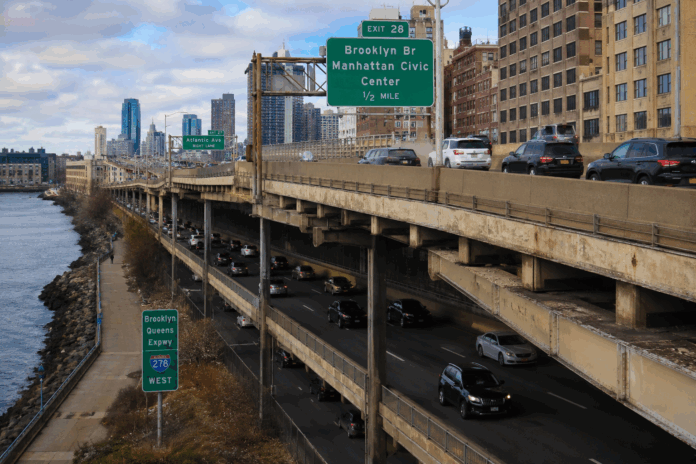
Mayor Zohran Mamdani’s $4 billion plan to repair a major section of the Brooklyn-Queens Expressway is facing growing opposition from Brooklyn residents, who say the project would cause years of disruption without providing a lasting solution to the highway’s problems.
The criticism came during a public hearing last week, where residents raised concerns about the proposed construction, its impact on nearby neighborhoods, and the city’s decision to spend billions of dollars extending the life of the aging highway.
As previously reported by BoroPark24, the project announced earlier this year focuses on a 1.5-mile section of the BQE between Atlantic Avenue and Sands Street, including the deteriorating triple-level roadway beneath the Brooklyn Heights Promenade. The highway carries approximately 130,000 vehicles daily, including 13,000 trucks, and has been in need of major repairs for years.
Under the mayor’s proposal, the city would spend approximately $4 billion over 10 years repairing the existing highway, extending its lifespan by another 40 years.
To keep traffic moving during construction, two temporary bypass highways would be built, including a two-level roadway above Furman Street and another elevated roadway near the Brooklyn Bridge.
However, residents argue that the temporary highways would bring years of additional traffic, noise, and pollution to surrounding neighborhoods. Concerns were also raised about the impact on nearby parks, playgrounds, and residential buildings.
Some residents criticized the city for moving forward with repairs to the existing highway rather than considering broader alternatives that could reduce traffic and improve the surrounding neighborhoods.
The Mamdani administration maintains that major repairs can no longer be delayed, warning that continued deterioration could eventually force highway closures and send thousands of vehicles onto local streets.
Construction is expected to begin around 2030, with the overall project taking approximately a decade to complete.
The proposal remains under environmental review, with residents able to submit comments through January 11, 2027, before the city moves forward with the next stages of planning.
Related stories
Williamsburg 3652 days agoWilliamsburg 36521 days agoMatzav2 months agoJBizNews3 months ago


 Boropark242 days ago
Weekly Dee Voch on Newsstands: Parshas Vayeitzei
Yisroel R.
This week’s Dee Voch is packed with beautiful photos and extensive coverage of major simchas, gatherings, and events from across the heimishe world, alongside fascinating features and interviews in Shrift and Business Shrift, plus the popular Fink and Kinder Shrift sections.
Dee Voch brings readers highlights from the wedding celebrations in the courts of Bobov and Spinka, as well as the wedding joining the courts of Sanz, Strupkov, Dzikov Vizhnitz, and Makova.
Also featured are the wedding celebrations for grandchildren of the Rebbes of Rachmastrivka, Barniv, and Av”d Beis Aharon, along with the wedding of a granddaughter of the Lelov Rebbe to a grandson of the Bobov-45 Rav.
Additional coverage includes the Machnovka Belz Rebbe’s visit to New York, where he spent Shabbos in the presence of the Skver Rebbe, and the special “Gevuras Shemonim” gathering benefiting Yeshivas Slabodka, with the Rosh Yeshiva Harav Moshe Hillel Hirsch as the special guest from Eretz Yisrael.
Shrift features an in-depth look at Reb Nachman Caller, exploring his determination to continue running for political office despite repeated election losses and difficult odds. The article examines his personality, motivations, extensive knowledge of law, who is also a Talmud Chuchim and Mechaber Sefarim. It also explores his ambitious plans to bring private financial assistance to mosdos, some of which are already being put into action.
Business Shrift, "Daas Ball Habayes" takes readers behind the scenes of Kerekes, the major commercial kitchen equipment company built by Reb Tuvia Gedalia Fleischman. The feature traces how he transformed a small business on 13th Avenue into a massive operation occupying an entire square block, supplying bakeries, restaurants, and commercial kitchens across America with a wide range of equipment.
Fink brings another enjoyable collection of entertaining and thought-provoking content, offering readers its familiar mix of humor, interesting observations, and engaging features.
The Kinder Shrift is packed with exciting stories, fun activities, interesting features, and enjoyable reading material for children of all ages, making it a favorite part of the weekly Dee Voch package.
Get your copy at grocery stores and local retailers, or subscribe via WhatsApp or the website!


 Boropark243 days ago
BDE: Reb Avraham Schwartz, z”l, Longtime Owner of Royal Clothing
YS GOLD
We regret to inform you of the sudden passing of Reb Avraham Schwartz, founder and longtime proprietor of Royal Clothing, a pioneer in the world of Chassidishe clothing who helped shape an industry that would serve generations of Jewish families. A great ba’al chessed who was devoted to helping others and to learning Torah, he was 70 years of age.
Raised in the Williamsburg of an earlier era, Reb Avraham was the son of Reb Chanoch Dovid Schwartz, who devoted himself to raising funds for the Yitav Lev institutions of Satmar in Eretz Yisrael. His father maintained a close relationship with the Satmar Rebbe, who expressed deep appreciation for his dedication to the mosdos.
Reb Avraham entered the clothing business shortly after his marriage, working for an established clothing business in Boro Park where he developed an appreciation for the importance of proper fitting and quality craftsmanship. He opened Royal Clothing in Boro Park in 1985. The store quickly earned a reputation for its exceptional quality and meticulous personal service. Over the next four decades, it became a well-known destination for Chassidic clothing, specializing in everything from traditional bekishes and suits to custom-made garments.
Royal Clothing also became a trusted provider of beautiful garments for many admorim and rabbanim. Reb Avraham personally ensured that distinguished clients received attentive service, often visiting their homes to take measurements and prepare their garments.
Beyond his business accomplishments, Reb Avraham was known for his generosity toward those in need. Over the years, he distributed substantial sums in clothing to struggling families and individuals. He would often offer a free bekishe to chassan in need whom he encountered collecting money in a beis medrash, and the store regularly supplemented contributions made by charitable organizations to help needy families purchase clothing.
His son, R’ Yosef, who oversees the store's daily operations, described his father as a trusted source of both Torah perspective and practical business wisdom, and in his later years, Reb Avraham devoted half of his day to learning in the beis medrash, and he could often be seen learning in the store as well.
Reb Avraham ascends to the World of Truth following a lifetime of generosity and devotion to Torah and mitzvos. He leaves behind a beautiful Torah family which continues to his sterling legacy.
Sadly, he suffered a heart attack at home this morning and did not wake up.
The levaya will take place at 1 p.m. at the Satmar Bhm"d on 53rd Street, followed by kevurah in Kiryas Yoel.
Yehi zichro baruch.
 Boropark24
Photo Gallery: Wedding for Son of the Satmar 18 Dayen and Grandson of the Satmar 15 Rov
Related stories
RocklandDaily3 days ago Williamsburg 3657 days ago
 Boropark2412 days ago
 Williamsburg 36525 days ago
Related stories
RocklandDaily3 days agoWilliamsburg 3657 days agoBoropark2412 days agoWilliamsburg 36525 days ago
 Boropark243 days ago
Prospect Park Still Recovering Two Years After Devastating Brush Fire
By Y.M. Lowy
Two years after a massive brush fire burned through two acres of Prospect Park’s Ravine, restoration efforts are still underway as workers and volunteers continue rebuilding the damaged woodland.
The fire swept through the Ravine, known as Brooklyn’s only forest, in November 2024, damaging trees and vegetation across the area and leaving behind a lengthy recovery process.
Since then, the Prospect Park Alliance has been carrying out a restoration project aimed at bringing back the forest’s natural vegetation and restoring the damaged landscape.
Last year, volunteers helped seed the affected hillside and planted nearly 3,000 native plants and shrubs as part of the recovery efforts.
The work continued this October, when 61 volunteers spent three hours planting another 382 native woody plants to help restore the woodland.
Despite the progress, the recovery remains an ongoing effort, with the Alliance continuing to work toward restoring the forest’s natural canopy and rebuilding the vegetation lost in the fire.
 Boropark24
Mamdani Announces 90-Day Extension of Food Stamp Rules by President Trump
Related stories
 Williamsburg 3653 days ago

 CrownHeights.info7 days ago
 5 Towns Central7 days ago
 Matzav7 days agoBoropark243 days ago
Mamdani Announces 90-Day Extension of Food Stamp Rules by President Trump
Yisroel R.
Thousands of small grocery stores across New York City are getting more time to prepare for new federal food stamp requirements after Mayor Zohran Mamdani reached an agreement with President Trump’s administration.
The federal government has agreed to delay enforcement of the new rules for at least 90 days, giving businesses additional time to make changes without risking their ability to accept SNAP benefits, commonly known as food stamps.
Under the new requirements, stores accepting food stamps must carry a larger selection of basic groceries, including fruits, vegetables, dairy products, grains, and proteins. The number of required food varieties in each category is increasing from three to seven.
The changes could be especially difficult for small neighborhood grocery stores, which often have limited shelf space and cannot easily expand their inventory. Businesses that fail to meet the requirements could lose their authorization to accept food stamps, potentially affecting both store owners and customers who rely on SNAP benefits.
Mamdani had initially requested a six-month delay, but the U.S. Department of Agriculture rejected that request. He then spoke directly with President Trump and Agriculture Secretary Brooke Rollins, raising concerns about the impact on small businesses.
Following those discussions, the administration agreed to a delay of at least 90 days. The extension will apply nationwide, not just to stores in New York City.
The agreement also marks another example of the growing working relationship between Mamdani and Trump. Despite their major political differences and previous public disagreements, the two have shown an increasing willingness to cooperate on certain issues, developing what some have described as an unlikely political bromance.
Mamdani publicly thanked Trump for agreeing to the delay, saying he was willing to give the president credit when his decisions benefit New Yorkers, even while continuing to disagree with him on other issues.
The additional time will allow store owners to prepare for the new requirements, while city officials work to help businesses understand what changes they need to make.
Related stories
Williamsburg 3653 days agoCrownHeights.info7 days ago5 Towns Central7 days agoMatzav7 days ago

 Boropark243 days ago
Boro Park Residents Launch Petition Demanding Answers Over Friday Water Problem
By Y.M. Lowy
For years, Boro Park residents have been dealing with the same disturbing problem: just as Friday afternoon preparations for Shabbos are underway, tap water in homes across the neighborhood turns yellow or light brown. And despite repeated complaints and the issue being brought to the attention of the city, residents are still waiting for a real answer and, more importantly, a solution.
BoroPark24 has reported on the issue in the past, after hearing from residents in different parts of the neighborhood who described the same pattern. The water discoloration often comes alongside reduced pressure, making an already hectic time of the week even more difficult for families.
This is not some minor inconvenience that can simply be brushed aside. Families depend on clean, safe water for drinking, cooking, bathing, washing children and preparing their homes for Shabbos. Having discolored water coming out of the tap at the very time families need it most is deeply unsettling. Parents should not have to wonder whether the water coming into their homes is suitable for their children, or scramble to change their plans because the water suddenly looks brown.
Now, residents are taking another step. A newly launched petition addressed to the NYC Department of Environmental Protection (DEP) and the office of Council Member Simcha Felder is demanding that the city investigate the recurring problem and finally address its cause.
The petition points to a major obstacle: the problem typically occurs late Friday afternoon, when families are preparing for Shabbos. By the time the water changes color, many residents are no longer able to make phone calls or submit complaints. That means the city’s 311 records may be showing only a fraction of the households actually affected. Residents say the DEP cannot simply point to a lack of recorded complaints when the timing itself makes reporting so difficult.
In its previous response to BoroPark24, the DEP said it had reviewed its systems and found nothing out of the ordinary in the affected areas. The department suggested that internal plumbing, unusually high water demand and sediment buildup in hot-water systems could contribute to brown water and reduced pressure. It encouraged residents to report the issue through 311.
But residents are now asking for more than another explanation and another request to call 311. They want the DEP to investigate the recurring Friday pattern without relying solely on complaint numbers, identify and correct whatever is causing it, and provide the community and Council Member Felder’s office with an update on its findings and steps being taken.
Clean water is a basic necessity, not a luxury, and Boro Park families should not have to face the same unsettling situation every Friday afternoon.
Residents whose households have experienced yellow or brown tap water on Friday afternoons are encouraged to sign the petition and help document how widespread the problem has become.
 Williamsburg 365
Brooklyn's Hakeem Jeffries Nominated for Speaker of the House, on Track to Make History
Related stories
 Matzav3 days ago

 Cleveland Jewish News3 days agoCleveland Jewish News4 days ago
 JBizNews4 days agoWilliamsburg 3654 days ago
Brooklyn's Hakeem Jeffries Nominated for Speaker of the House, on Track to Make History
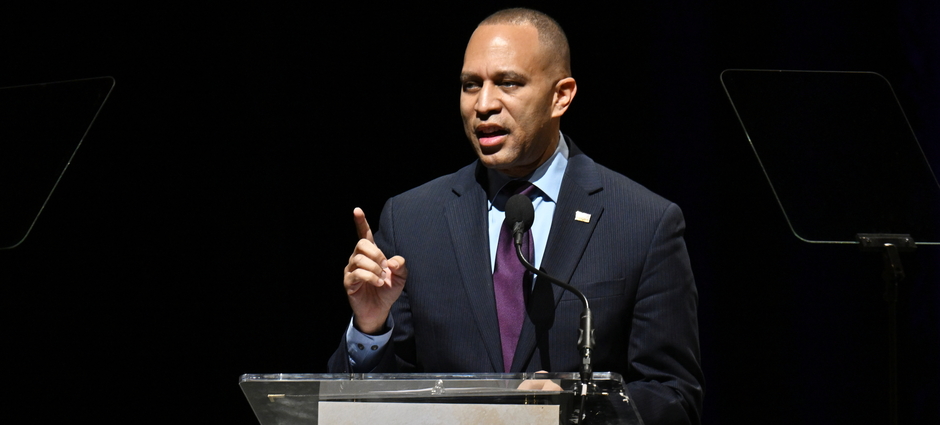
House Democrats on Wednesday overwhelmingly nominated Congressman Hakeem Jeffries of Brooklyn to be the next Speaker of the House, putting him on track to become the first Black Speaker in American history. Jeffries won the closed-door caucus vote 251 to 11, with no challenger running against him. The full House will elect the Speaker on January 3, when the new Congress opens, and with Democrats holding their biggest majority in 35 years, Jeffries is expected to win easily.
Jeffries represents a large Hasidic community in Bedford-Stuyvesant, and Williamsburg. The Eighth Congressional District, with its northern boundary along Flushing, Park, Myrtle and DeKalb Avenues, takes in the Jewish blocks along Marcy Avenue, Tompkins Avenue and Nostrand Avenue, before running south through Brownsville and East New York to the oceanfront Jewish neighborhoods of Coney Island, Brighton Beach, Manhattan Beach and Sea Gate.
Jeffries counts some of the community's most prominent leaders among his close allies. Rabbi David Niederman, president of the United Jewish Organizations of Williamsburg and North Brooklyn, said this month that his relationship with Jeffries goes back more than 30 years, and that Jeffries and his staff have always responded when the community reached out, whether on communal concerns or for a single constituent in need. Jeffries has also worked closely over the years with Rabbi Moishe Indig, a leader of Williamsburg's Satmar community. Those ties predate his time in Washington: in 2011, as a state assemblyman weighing his first run for Congress, Jeffries came to Williamsburg to meet Hasidic leaders.
Jeffries, 56, grew up in Crown Heights, attended Midwood High School and worked as a lawyer before winning a seat in the New York State Assembly in 2006. He was elected to Congress in 2012, replacing Ed Towns, the 15-term congressman whose Brooklyn district had long included Williamsburg, after Towns retired. House Democrats chose him as their leader in 2022, and he has led them since 2023. Two weeks ago, he won another term with about 79 percent of the vote.
If the January 3 vote goes as expected, Jeffries will be the first Speaker of the House from New York City, and the first Black American to hold the job. The only two New Yorkers ever to serve as Speaker did so more than 150 years ago
Related stories
Matzav3 days agoCleveland Jewish News3 days agoCleveland Jewish News4 days agoJBizNews4 days ago Boropark24
Photo Gallery: Motzei Shabbos Sheva Bruches for Granddaughter of the Lelov Rebbe
Related stories
 Boropark244 days ago
Photo Gallery: Motzei Shabbos Sheva Bruches for Granddaughter of the Lelov Rebbe
Related stories
 Boropark244 days ago
Major $71 Million Overhaul Planned for New Utrecht Avenue Between 65th and 77th Streets
Yisroel R.
A major transformation is coming to New Utrecht Avenue, as New York City is preparing a $71.1 million reconstruction project that will completely rebuild a busy stretch of the roadway, improve intersections, and bring major upgrades to the streets beneath the elevated subway tracks.
The project will cover New Utrecht Avenue from 65th Street to 77th Street, a busy corridor used daily by Boro Park and Bensonhurst residents, drivers, and pedestrians. Construction is expected to begin in late 2027 and continue until spring 2030.
This will be much more than a regular road resurfacing project. The city plans to remove the existing roadway and rebuild it with a new concrete base and asphalt surface. Underground sewer infrastructure and drainage systems will also be repaired or replaced where needed.
Major changes are also planned at 14 intersections along the corridor, including expanded sidewalk corners to make crossing the street safer and easier. Three raised crosswalks will be installed at selected locations, along with new traffic signals, improved street lighting beneath the elevated subway tracks, and additional pedestrian safety improvements.
The project will also include new benches, bicycle racks, street trees, and improvements to the traffic island near New Utrecht Avenue, 72nd Street, and 15th Avenue.
According to the city’s Department of Design and Construction, New Utrecht Avenue is among the 10% most dangerous road corridors in Brooklyn, based on the number of people killed or seriously injured in traffic accidents.
For local drivers and businesses, the construction is expected to bring temporary disruptions over the coming years. However, the city plans to carry out the work in stages, maintaining at least one traffic lane in each direction and keeping access to homes, businesses, and subway stations available throughout construction.
Parking restrictions and temporary bus stop changes are expected in areas where crews are actively working.
The project, which is fully funded by New York City, was outlined during a November 9 presentation. With construction expected to last more than two years, the planned overhaul will bring significant changes to one of the area’s major roadway stretches.
 Boropark244 days ago
Photo Gallery: Kabulas Punim for the Sadigura Rebbe in the Sadigura Shul in Boro Park
photos: Avrumi Berger
 Williamsburg 365
Mayor Mamdani Signs Executive Order to Expand Kosher Meals in NYC Public Programs
Related stories
 Matzav3 days ago
 5 Towns Central3 days agoCleveland Jewish News3 days ago
 CrownHeights.info3 days agoWilliamsburg 3654 days ago
Mayor Mamdani Signs Executive Order to Expand Kosher Meals in NYC Public Programs
Yisroel R.
New York City Mayor Zohran Mamdani signed a new executive order on Tuesday aimed at expanding access to kosher meals across city-funded food programs, making it easier for Jewish residents who keep kosher to receive meals that meet their religious requirements.
The order will affect programs that provide meals to public schools, hospital patients, senior citizens, homeless shelter residents, and others who depend on city services for food.
Currently, some city programs already offer kosher meals upon request, but availability and requirements vary between agencies. The new order aims to establish consistent guidelines so residents who keep kosher can more easily receive suitable meals.
The initiative comes as part of Executive Order 25, which directs the Mayor’s Office of Food Policy to develop new guidelines for religiously inclusive meals, including kosher and halal options.
Under the plan, the city will establish guidelines for kosher certification, proper labeling of meals and ingredients, and procedures to ensure that food served through city programs meets the requirements.
The changes will apply to city-funded meal programs, not to food stamps or SNAP benefits. The order does not increase food stamp payments or provide additional money for grocery purchases. Instead, it focuses on meals prepared and distributed through city agencies and their service providers.
New York City agencies currently serve more than 220 million meals and snacks each year through schools, hospitals, senior programs, shelters, and other public services.
The Mayor’s Office of Food Policy has been given one year to develop the new guidelines, with city agencies directed to take all practical steps to implement them by November 17, 2027.
Several Jewish organizations welcomed the announcement, including Agudath Israel of America.
Rabbi Yeruchim Silber, Director of New York Government Relations for Agudath Israel, said, “We appreciate the administration’s plan to provide kosher food at city administered meals.”
Related stories
Matzav3 days ago5 Towns Central3 days agoCleveland Jewish News3 days agoCrownHeights.info3 days ago Williamsburg 365
Suspect Arrested in Antisemitic Graffiti and Swastika Vandalism of Four Williamsburg School Buses
Related stories
 Matzav14 days ago
 5 Towns Central19 days ago
 Matzav19 days ago

 Jewish Breaking News19 days agoWilliamsburg 3654 days ago
Suspect Arrested in Antisemitic Graffiti and Swastika Vandalism of Four Williamsburg School Buses
A suspect has been arrested in connection with the antisemitic vandalism of four Williamsburg school buses that were spray-painted with swastikas and hateful messages earlier this month.
The NYPD's Hate Crime Task Force and the 90th Precinct worked closely with Williamsburg Shomrim, reviewing camera footage and following up on leads that led to the arrest.
The vandalism took place at about 5 AM on Monday, Nov. 2, at Bedford Avenue and Williamsburg Street West, the day before Election Day. The buses belong to Satmar, Sanz Klausenburg, and Tiferes Yisrael and are used to transport children to local yeshivas. The graffiti included swastikas and vulgar, hateful anti-Jewish phrases.
Shomrim coordinator Yanky Itzkowitz told Williamsburg 365 that the NYPD took the incident very seriously and committed all necessary resources to the investigation. He thanked the NYPD for the swift arrest and for helping keep the Williamsburg Jewish community safe.
Related stories
Matzav14 days ago5 Towns Central19 days agoMatzav19 days agoJewish Breaking News19 days ago Boropark244 days ago
KRM Supermarket Builds New Keilim Mikvah Amid Major Expansion
By Y.M. Lowy
As part of its ongoing expansion and renovations, KRM Supermarket has built a beautiful new keilim mikvah across the street from the store, near its new parking lot.
KRM has always provided a keilim mikvah for shoppers and this will be a major upgrade to that convenience. The newly built mikvah features a beautiful design and is expected to open in the near future.
While the mikvah is not yet open, it is expected to open any day now, although a store employee could not provide an exact opening date.
The new keilim mikvah is part of improvements taking place at KRM as the supermarket continues its major expansion and upgrades, bringing added convenience and a refreshed shopping experience to its customers.
 Williamsburg 3654 days ago
Steel Rising at Myrtle Avenue as MTA Builds New Elevators for J/M/Z Station
Construction is moving ahead on accessibility upgrades at the Myrtle Avenue J/M/Z subway station at Broadway and Myrtle Avenue in Brooklyn, where new elevators will give riders a step-free route to the elevated platforms.
The work includes two street-to-platform elevators, a new overpass, approximately 140 feet of express track replacement, utility relocations, and accessible curb and sidewalk improvements.
Myrtle Avenue is one of five stations included in the MTA's ADA Package 6, alongside Norwood Avenue, Avenue I, Burnside Avenue and Middletown Road. The MTA announced that work on the package was scheduled to begin in February 2025, with completion of the full package expected by early 2029.
A $254 million federal grant through the All Stations Accessibility Program supports accessibility work at four of those stations, including Myrtle Avenue. The improvements will make the station easier to use for riders with disabilities, as well as parents traveling with strollers and others who have difficulty using stairs.
photos: MTA/Megan Armas
 Boropark244 days ago
MAZEL TOV: Viznitz Boro Park Signs $11 Million Property Deal, Advancing Plans for Massive $50 Million Shul
By BoroPark24 Staff
The Viznitz kehilla in Boro Park has signed a contract for a large property at New Utrecht Avenue and 52nd Street for $11 million, marking another major step toward its plans for a massive new shul, with the overall project estimated to cost $50 million.
The contract was signed on the very day of the wedding of a grandson of the Viznitz Rebbe, doubling the simcha and excitement throughout the entire kehilla as chassidim celebrated both the family simcha and the major milestone toward their long-awaited new beis medrash.
Together with properties previously purchased by the kehilla, the latest acquisition will bring nearly an entire avenue stretch under its ownership, with just one building remaining outside the assembled properties.
The large, multistory brick corner building is expected to become part of the kehilla's future beis medrash, as plans continue to move forward for a spacious new home for Torah and tefillah.
The Viznitz kehilla, founded by the current Rebbe's father, the Ohr Shulem zt”l, has continued to grow significantly over the years, leaving its existing shul far too small to accommodate the expanding community.
In recent years, the kehilla has been forced to relocate its Tishrei tefillos and tishen to the rented Ateres Golda hall to accommodate the large crowds, highlighting the urgent need for additional space.
With the latest $11 million property deal, the kehilla is now another major step closer to realizing its long-awaited plans for a magnificent and spacious new beis medrash in the heart of Boro Park.
 Boropark24
WHAT'S GOING ON? Major Outages Hit Banks, Airlines, Microsoft and More Across the Country
Related stories
 Matzav3 days ago
 Daily Monroe4 days ago
 Matzav5 days ago
 Williamsburg 3655 days agoBoropark245 days ago
WHAT'S GOING ON? Major Outages Hit Banks, Airlines, Microsoft and More Across the Country
Yisroel R.
A strange series of major technology outages has disrupted everyday services across the United States over the past several days, affecting everything from banking apps and money transfers to airline flights, Microsoft services and the nation’s air traffic control system.
The repeated disruptions have left millions of Americans dealing with unexpected problems and raised questions about why so many major systems are suddenly experiencing technical failures.
On Monday, customers of several major banks, including Chase, Wells Fargo, Bank of America and U.S. Bank, reported problems accessing their accounts, using banking apps and completing transactions. The issues also affected some Zelle money transfers.
Chase later explained that a software bug in its internal systems was responsible for the disruption, which also caused delays involving customers of other banks. Banking services were largely back to normal by Tuesday morning.
The banking problems came just days after a major Microsoft outage disrupted Outlook, Teams and other services used by businesses, government offices and millions of people worldwide. The outage began Thursday and continued into the weekend before services were restored.
Air travel has also experienced major disruptions. On Friday, a nationwide FAA system failure forced flights across the country to remain on the ground for several hours, leading to widespread delays and cancellations. Officials traced the problem to a malfunction involving equipment used by air traffic controllers.
Then, on Monday, United Airlines experienced a separate technical failure that prevented departing flights from taking off for more than 90 minutes. The airline eventually restored service, although passengers continued facing delays.
On Tuesday, the problems continued, with users reporting outages involving Gmail, Apple Pay, iCloud and other popular services. The latest reports added to growing concerns over the number of technology failures occurring within such a short period.
Despite the unusual timing, officials say there is no evidence that the outages are connected or part of a coordinated cyberattack.
Homeland Security Secretary Markwayne Mullin said Tuesday that the recent failures appear to be caused by technical problems, including aging computer systems struggling to handle newer technology.
While officials have sought to reassure the public that the outages are unrelated and that there is no evidence of a coordinated cyberattack, the unusual wave of disruptions has left many Americans wondering: Is this all just a coincidence, or is something bigger going on that the public doesn't know about?
Related stories
Matzav3 days agoDaily Monroe4 days agoMatzav5 days agoWilliamsburg 3655 days ago Boropark24
Captured Moment: Wallach’s
Related stories


 Boropark245 days ago
Captured Moment: Wallach’s
YS GOLD
This week’s Captured Moment takes us to Wallach’s clothing store which has only recently shuttered after decades at the same location.
Can our readers remember the location?
__
Answer to last week’s captured moment:
The Shul in question is—as a number of our readers have correctly identified—the Sfardishe Shul, still located on 14th Avenue and 45th Street

 Boropark245 days ago
Crazy Subway Rider Bites Off Part of MTA Employee’s Ear Aboard F Train
Yisroel R.
An off-duty MTA worker suffered a serious injury on Sunday afternoon after a crazy subway passenger bit off part of his ear during an argument aboard an uptown F train.
The 53-year-old transit employee reportedly confronted the passenger over his erratic behavior around 1:30 p.m. on November 15.
The situation escalated as the worker attempted to calm the passenger down, the man bit off a portion of the employee’s ear.
Emergency responders transported the injured worker to Bellevue Hospital, where he was listed in stable condition.
The suspect, described as wearing a gray shirt and gray sweatpants, fled aboard a southbound F train following the attack.
As of Tuesday, no arrests had been made, and the NYPD is continuing its investigation.
 Williamsburg 365
Viznitzer Rebbe, shlit"a, Appoints Son as Leader of Viznitz in America
Related stories
 Matzav4 days ago
 Yeshiva World News4 days ago
 MonseyScoop5 days ago
 RocklandDaily5 days agoWilliamsburg 3655 days ago
Viznitzer Rebbe, shlit"a, Appoints Son as Leader of Viznitz in America
YS GOLD
The Viznitzer Rebbe, shlit"a, who is in need of a great yeshuah, has recently appointed his younger son, Rav Yaakov Mordechai Hager, rov of Viznitz in Elad, as the leader of the Viznitzer chassidim in the United States and Canada, a community that numbers hundreds of families.
The rov, who is the son-in-law of the Kossoner Rebbe of Lakewood, has always had an affinity for the American chassidim, and has visited here often. The various communities under this umbrella encompass a number of beautiful mosdos for boys and girls, as well as prominent shuls in the local communities.
Rav Yaakov Mordechai will be making the move to Monsey, New York, which will become the nerve center of the Viznitz-Bnei Brak chassidus in North America, and make periodic trips to various communities to inspire and uplift the chassidim.
The chassidim in North America--all of whom are constantly davening for the refuah sheleimah of the Rebbe shlit"a, were surprised and uplifted at this development, looking forward to the doting leadership of the rov shlit"a in all matters affecting their kehillos.
Related stories
Matzav4 days agoYeshiva World News4 days agoMonseyScoop5 days agoRocklandDaily5 days ago Williamsburg 3655 days ago
Streetlight Reports Rise 34% in Williamsburg Area as Months-Old Cases Remain Open
Reports of dark streetlights have jumped by more than a third in the Williamsburg-area, while dozens of complaints filed before the end of summer still have not been marked closed, city records show.
A review of 311 records found 320 reports of streetlights being out from Jan. 1 through Nov. 16, up from 238 during the same period last year. The 34 percent increase outpaced the citywide rise of about 27 percent for the same types of complaints.
Of those 320 local reports, 78 remained listed as open or assigned when the records were checked on Nov. 17. Thirty-six were more than 90 days old. Eleven dated back more than six months.
The oldest cases are not confined to one corner. A complaint at Williamsburg Street East and Hooper Street was filed Feb. 10. Another, at Williamsburg Street West and Lee Avenue, dates to March 6. At Gerry Street and Harrison Avenue, a Feb. 2 report remained assigned, as did a Feb. 11 report at Walton Street and Harrison Avenue.
Those records do not establish that each light has stayed dark continuously. They do show that the city has not recorded a closure on complaints that are now eight or nine months old.
Long-running cases make up a larger share of this year's local reports than they do citywide. About 11 percent of all outage reports in the two ZIP codes remained unclosed after more than 90 days, compared with 7 percent across the city.
The increase in reports was especially sharp in 11206, which includes parts of Williamsburg and neighboring communities. Reports there rose from 103 to 165, a 60 percent increase. In 11211, they rose from 135 to 155, about 15 percent.
Some familiar intersections appear repeatedly. Bedford Avenue and South Ninth Street generated nine outage reports this year. Lee Avenue and Wallabout Street generated seven. Harrison Avenue and Lynch Street generated six, including one from February that remained assigned even as later complaints at the intersection were marked closed.
Those are separate reports, not necessarily separate broken lights. A single intersection can have several lights, and the records alone cannot tell whether repeated complaints concern the same fixture or a recurring problem.
The local findings come as the city's own performance report documents a slowdown in DOT's streetlight repairs. Its average repair time rose from 5.3 days in fiscal 2025 to 8.5 days in fiscal 2026, an increase of about 60 percent and the longest average in 15 years, according to the Mayor's Management Report.
DOT took first action within 10 days in 75.5 percent of cases, down from 94 percent a year earlier. The report cited weather-related outages, equipment failures, utility coordination and more complicated repairs. Con Edison's separate repair average improved, falling from 22 days to 18.5 days.
The local complaint records measure something different: the time until a report is marked closed. Among this year's 242 closed reports in the two ZIP codes, that averaged 18.4 days, compared with 17.2 days citywide. Most of those local cases closed within 10 days, but 29 took more than a month and 12 took more than three months. The 78 still-open cases are not included in that average.
The figures do not show an uninterrupted rise in waiting times. Using the same filing and closure cutoffs, the local average was lower in 2023, higher last year and almost identical in 2022. This year's clearer warning is the surge in reports and the number of months-old cases still on the books.
DOT requires contractors to respond to ordinary streetlight problems within 10 days, though major repairs can take longer. For an outage lasting more than 90 days, NYC311 directs residents to the DOT borough commissioner's office. Thirty-six of this year's local complaints have already passed that mark without a recorded closure.
 Boropark245 days ago
Mapleton Library Reopening Now Expected in Spring 2027
By BoroPark24 Staff
The wait for Mapleton Library to reopen is expected to stretch into next year, with Brooklyn Public Library now listing spring 2027 as the anticipated reopening date for the branch at 17th Avenue and 60th Street.
As BoroPark24 reported in December 2023, the branch closed for extensive renovations with a reopening anticipated in 2026. The current estimate moves that timetable into 2027. BPL's branch page does not give a specific opening day or explain the change.
The work includes replacing or updating the roof and building facade, heating and cooling equipment, and fire prevention and safety systems. Plans also call for a new outdoor garden where patrons can attend programs and read.
BoroPark24 first covered the proposed outdoor courtyard in November 2022, when design firm SCAPE presented plans to Community Board 12. The proposal included covered seating, space for children's programs, stroller parking and greenery.
In its most recent previous update on the library, in April 2024, BoroPark24 reported on a mobile library unit at 18th Avenue and 57th Street that offered services during the closure.
The next scheduled bookmobile visit will take place outside the Mapleton branch itself, at 1702 60th Street, on Wednesday, November 25, from 11AM to 4PM. Visitors can borrow and return books, sign up for library cards and access free WiFi, along with other library services.
Additional visits outside the branch are listed for December 9 and December 23, also from 11AM to 4PM. BPL says materials can also be returned through the branch's exterior book drop during the closure.
Mapleton Library has occupied its current location at the corner of 17th Avenue and 60th Street since 1955.
 Boropark24
Prominent Rabbonim, Leading Doctors, Surgeons, and Medical Experts Attend Grand Chanukas Habayis of "Living Legends" Headquarters, Celebrating Nearly 50 Successful Complex Liver Transplants
Related stories
 Daily Monroe5 days ago
 RocklandDaily5 days ago
 Williamsburg 3655 days ago
Related stories
Daily Monroe5 days agoRocklandDaily5 days agoWilliamsburg 3655 days ago Boropark24
The Talmidim of Talmud Torah Ahavas HaTorah in Lakewood are privilged to daven Shachris together with the Rachmastrivka Rebbe of Oak and Vine every morning
Related stories
 Daily Monroe5 days ago
 RocklandDaily5 days ago
 Williamsburg 3655 days ago
Related stories
Daily Monroe5 days agoRocklandDaily5 days agoWilliamsburg 3655 days ago Boropark245 days ago
BDE: Harav Leibish Yitzchok Herschlag z"l
By BoroPark24 Staff
Harav Leibush Yitzchok Herschlag z"l, a member of the Tartikov Bais Din and a noted talmid chochom who learned for many years in the Tartikov Kollel, was niftar at the age of 71.
Reb Leibush, a son of R' Sholom Pinchos z"l, was among the distinguished chassidim of the Ropshitz-Stitchin kehilla. A lifelong learner and a true chassidishe Yid, he raised a family that reflects his dedication to Torah and chassidus.
The levaya will be tonight at 7:00 PM at the Tartikover Bes Din at 1452 55th Street, followed by the Ropshitz-Stitchin shul at 1621 61st Street at 8:00 PM.
Shiva will be at 1367 42nd Street.
Yehi Zichro Burich.
 Boropark24
Photo Gallery: Sheva Brachos in Courts of Bobov and Spinka - Part 2
Related stories

 Boropark245 days ago
Photo Gallery: Sheva Brachos in Courts of Bobov and Spinka - Part 2
photos: Avrumi Berger, Achim Lanchevsky
 Boropark245 days ago
Disaster Drill Scheduled in Downtown Brooklyn Tonight; FDNY and NYPD to Be on Site
A planned disaster exercise will take place tonight at Cadman Plaza East and Red Cross Place in Downtown Brooklyn, with FDNY and NYPD personnel on site.
According to Notify NYC, the CERT disaster exercise is scheduled for November 16 from 6:30 p.m. to 9:30 p.m. The emergency response activity is part of a scheduled drill, not an actual disaster.
CERT, which stands for Community Emergency Response Team, trains volunteers to support first responders during emergencies. Their work includes assisting with traffic and crowd control, searches and disaster response.

 Boropark245 days ago
MTA Plans to Expand Collision Avoidance Technology on NYC Buses
By Y.M. Lowy
The MTA is moving toward installing collision avoidance systems on more New York City buses after a pilot program on six buses showed a significant reduction in crashes.
Navigating New York City streets can be challenging for bus operators, with cars, pedestriansq, cyclists, delivery drivers and electric scooters constantly moving around them. The new technology is designed to help drivers spot potential dangers and react before a collision occurs.
The system uses side sensors, forward-facing cameras and driver alerts to detect nearby objects and calculate their movement. During the pilot program, the MTA reported 25% fewer collisions overall and 43% fewer preventable collisions. In addition, 80% of participating bus operators said they felt more confident behind the wheel with the system in place.
The technology could also help the MTA reduce costs associated with crashes. The agency noted that it has faced significant settlements even in cases where bus operators were not at fault.
Following the pilot’s results, the MTA has opened a contract to furnish and install collision avoidance systems on additional buses, bringing the technology closer to wider use across the city’s bus fleet.
 Williamsburg 3655 days ago
Photo Gallery: Satmar Rebbe visits Talmud Torah Neimos Hatorah in North Miami


 Williamsburg 3656 days ago
Williamsburg365 2025 “Early Mincha List”
During the winter months, many men are away from their neighborhoods and shuls during the day, when it’s time for mincha. Whether they’re from other neighborhoods, or find themselves in other areas of Williamsburg, they need a minyan for mincha during the short winter days.
To this end, Williamsburg365 will be posting weekly a list of early mincha minyanim around Williamsburg.
📩 We need your help!
To ensure the listings are complete and helpful, please submit your local Mincha minyan details so it can be added to the weekly listing.
To include your minyan, email: [email protected]

 Boropark24
It’s All in the Name: Belt Parkway
Related stories
 Boropark246 days ago
It’s All in the Name: Belt Parkway
By Y.M. Lowy
We pass these names every day, see them on street signs, buildings and businesses, and often never stop to think about where they came from. But behind many of the names we know is an interesting story. In this weekly series, we take a closer look at familiar names around Boro Park and beyond and uncover the people, places and stories that gave them their names.
For anyone driving out of Boro Park, the Belt Parkway is a familiar route, whether heading toward Queens, the airport, or somewhere along Brooklyn’s waterfront.
The Belt was designed to form part of a sweeping route around New York City. The idea took shape in the early 1930s, when city planner Robert Moses pushed for a network of parkways that would connect neighborhoods, bridges, parks and other major routes. The plan called for a roadway following the southern shores of Brooklyn and Queens, creating a continuous route along much of the city’s waterfront.
The project was initially known as the Circumferential Parkway. The word circumferential means running around the outside of something, which was exactly what the road was intended to do. But it wasn’t exactly a name that rolled off the tongue.
In 1938, Mayor LaGuardia helped settle the question of what to call the new roadway. Several names had been suggested, including “Lynque Parkway,” a proposed combination of letters from Brooklyn and Queens. That idea did not catch on. Instead, the simpler name Belt Parkway was adopted, reflecting the road’s role as a belt-like route around the city.
Construction was already underway, having begun in 1934, and the first sections opened in 1940. The system was completed in stages, with the Belt Parkway connecting routes along Brooklyn’s southern waterfront to those continuing through Queens. It became a major link between neighborhoods and bridges, and provided access to places that had previously been more difficult to reach by car.
Building the roadway required extensive land preparation, bridges over waterways, and major construction along the shoreline. In some areas, the work even changed the landscape itself. Sections near Coney Island Creek involved filling in portions of the creek, helping complete the transformation of Coney Island from an island into a peninsula.
Today, the Belt Parkway is one of Brooklyn’s most recognizable roadways. Its original vision has changed as traffic has grown and sections have been rebuilt, but the name still reflects the basic idea behind it: a belt connecting the outer edges of the city.
We return next week to a name found right in the heart of Boro Park. Raoul Wallenberg Way is the co-name of the stretch of 13th Avenue between 36th and 60th Streets. The name honors a Swedish diplomat whose actions during the Holocaust saved tens of thousands of Jews.
Related stories
 Boropark24
Why Are We Still Carrying Water?
Related stories


 Boropark246 days ago
Why Are We Still Carrying Water?
We’ve upgraded so much in our homes, yet we’re still carrying heavy cases of water, making room for bottles in the fridge, and waiting for the kettle to boil. Getting a glass of water should be easier.
With NOAM, it is.
NOAM brings filtered hot, cold, and room temperature water right to your kitchen counter. From your morning coffee to a refreshing drink when the children come home, the water you need is conveniently within reach. Fewer bottles to buy, less clutter to manage, and one less chore on your list.
Made for Your Home. Ready for Shabbos.
NOAM is designed with the needs of a Jewish home in mind. Its automatic Shabbos mode follows your local zmanim, giving you one less thing to remember before candle lighting. With CRC and OU approval for Shabbos and Yom Tov use, NOAM brings that everyday convenience into the days that matter most.
A sleek design, an easy touchscreen, and a dedicated hot water safety lock make NOAM a practical addition to your kitchen. Whether you’re preparing dinner, serving guests, or sitting down with a cup of tea, it’s a small change you’ll appreciate throughout the day.
Make room for convenience. Bring home NOAM.
Call 516-518-4484 or learn more and place your order.
 Boropark24
Photo Gallery: Wedding in Courts of Rachmestrivkah, Beis Ahron and Barniv
Related stories
 Boropark247 days ago
 Boropark2424 days ago
 Daily Monroe2 months ago
 Boropark242 months ago
Related stories
Boropark247 days agoBoropark2424 days agoDaily Monroe2 months agoBoropark242 months ago Boropark246 days ago
Community Workshop Planned to Discuss Future of Brooklyn Marine Terminal
By Y.M. Lowy
What should the future of the Brooklyn Marine Terminal look like?
Local residents are invited to share their questions and take part in the conversation at upcoming community workshop hosted by the NYC Economic Development Corporation (NYCEDC).
The workshop is an opportunity to learn more about the plans for the terminal, ask questions and hear about what is being considered for the waterfront site.
The workshop will take place Thursday, November 19, from 6 to 8 p.m. In person at the Joseph Miccio Community Center, 110 West 9th Street in Red Hook.
Those interested in participating can register at edc.nyc/BMT.
 Williamsburg 365
NYPD Undergoes Major Shakeup in Handling Protests and Crowd Control
Related stories

 Israel National News1 day ago
 Jewish Breaking News4 days ago

 Vos Iz Neias4 days ago
 Yeshiva World News5 days agoWilliamsburg 3656 days ago
NYPD Undergoes Major Shakeup in Handling Protests and Crowd Control
Yisroel R.
Major changes are coming to how the NYPD handles protests across New York City, with Mayor Zohran Mamdani announcing Monday that a major police unit will be shut down and replaced with a new system.
The NYPD’s Strategic Response Group (SRG), which has been responsible for handling large protests and responding to terrorism threats, will be disbanded. Its responsibilities will now be divided among different police units.
Under the new plan, officers responding to protests will face stricter rules on how they can handle crowds. Police will no longer be allowed to use tear gas, long guns, or a tactic known as kettling, where officers surround protesters and prevent them from leaving. Pepper spray will also be prohibited as a general crowd-control tool.
Instead, the city will create a new team of 30 NYPD officers specially trained to communicate with protesters and help calm situations before they turn into confrontations.
A separate civilian team will also be established to work with police during demonstrations and help improve communication between officers and protesters.
The changes reflect Mamdani’s belief that police should focus more on calming tensions rather than using aggressive tactics against demonstrators. His approach is aimed at preventing situations in which protests that begin peacefully turn into violent confrontations, sometimes made worse by excessive police force.
Mamdani campaigned on changing how the NYPD responds to demonstrations, arguing that communication and de-escalation should come before aggressive crowd-control measures. His administration hopes the new approach will help prevent confrontations between officers and protesters before they get out of hand.
Meanwhile, a new police unit called the Patrol Support Division will take over crowd-control responsibilities when needed. These officers will spend most of their time assisting with regular police duties, including searches for missing people, major events, and traffic emergencies.
The NYPD’s counterterrorism operations, including armed security at important locations throughout the city, will now be handled separately by the department’s Intelligence and Counterterrorism Bureau.
Mayor Mamdani said the move fulfills one of his campaign promises, arguing that people attending protests should not face the same type of police response as a terrorism threat.
Police Commissioner Jessica Tisch said the changes will allow the NYPD to continue protecting the public while improving how officers handle demonstrations.
According to City Hall, the changes will not cost the city additional money, and the total number of NYPD officers will remain the same.
Related stories
Israel National News1 day agoJewish Breaking News4 days agoVos Iz Neias4 days agoYeshiva World News5 days ago Boropark24
NYPD Undergoes Major Shakeup in Handling Protests and Crowd Control
Related stories
Israel National News1 day agoJewish Breaking News4 days agoVos Iz Neias4 days agoYeshiva World News5 days agoBoropark246 days agoNYPD Undergoes Major Shakeup in Handling Protests and Crowd Control
Yisroel R.
Major changes are coming to how the NYPD handles protests across New York City, with Mayor Zohran Mamdani announcing Monday that a major police unit will be shut down and replaced with a new system.
The NYPD’s Strategic Response Group (SRG), which has been responsible for handling large protests and responding to terrorism threats, will be disbanded. Its responsibilities will now be divided among different police units.
Under the new plan, officers responding to protests will face stricter rules on how they can handle crowds. Police will no longer be allowed to use tear gas, long guns, or a tactic known as kettling, where officers surround protesters and prevent them from leaving. Pepper spray will also be prohibited as a general crowd-control tool.
Instead, the city will create a new team of 30 NYPD officers specially trained to communicate with protesters and help calm situations before they turn into confrontations.
A separate civilian team will also be established to work with police during demonstrations and help improve communication between officers and protesters.
The changes reflect Mamdani’s belief that police should focus more on calming tensions rather than using aggressive tactics against demonstrators. His approach is aimed at preventing situations in which protests that begin peacefully turn into violent confrontations, sometimes made worse by excessive police force.
Mamdani campaigned on changing how the NYPD responds to demonstrations, arguing that communication and de-escalation should come before aggressive crowd-control measures. His administration hopes the new approach will help prevent confrontations between officers and protesters before they get out of hand.
Meanwhile, a new police unit called the Patrol Support Division will take over crowd-control responsibilities when needed. These officers will spend most of their time assisting with regular police duties, including searches for missing people, major events, and traffic emergencies.
The NYPD’s counterterrorism operations, including armed security at important locations throughout the city, will now be handled separately by the department’s Intelligence and Counterterrorism Bureau.
Mayor Mamdani said the move fulfills one of his campaign promises, arguing that people attending protests should not face the same type of police response as a terrorism threat.
Police Commissioner Jessica Tisch said the changes will allow the NYPD to continue protecting the public while improving how officers handle demonstrations.
According to City Hall, the changes will not cost the city additional money, and the total number of NYPD officers will remain the same.
Related stories
Israel National News1 day agoJewish Breaking News4 days agoVos Iz Neias4 days agoYeshiva World News5 days ago Boropark24
Sheva Brachos celebration was held at Yeshivas Beis Meir in honor of the Rosh Yeshiva’s grandson
Related stories
 RocklandDaily6 days ago
 Daily Monroe6 days ago
 Williamsburg 3656 days ago
Related stories
RocklandDaily6 days agoDaily Monroe6 days agoWilliamsburg 3656 days ago Boropark246 days ago
Photo Gallery: Hachnusas Seifer Torah to the Sharei Chaim Shul in Boro Park
photos: Ushi Weingarten
 Boropark246 days ago
Verrazzano Ramp Rebuild Moves Ahead; Separate Plan Would End Lower-Level Right Turn onto 92nd Street
Drivers using the Verrazzano-Narrows Bridge's Brooklyn exits face major changes under an ongoing MTA ramp reconstruction project and a separate city proposal that would eliminate the lower-level right turn onto 92nd Street.
At an October 28 meeting of Brooklyn Community Board 10's Traffic and Transportation Committee, MTA Bridges and Tunnels officials said the ramp project remains on schedule, with completion expected in late 2029.
"We're 1 year in, and we have 3 years left on the project," the agency's deputy chief engineer told the committee.
The design-build contract was awarded in August 2025, with reconstruction of the Belt Parkway ramps getting underway in spring 2026. Officials said substantial pier restoration work has been completed, while staged roadway deck work will continue over the coming year.
One of the biggest changes will affect Brooklyn-bound drivers heading onto the Belt Parkway. The existing left-side exits from both the bridge's upper and lower levels will be replaced with right-side exits.
The rebuilt ramps will also have wider shoulders, new roadway surfacing with fewer joints, and permanent transparent noise barriers intended to reduce traffic noise in the surrounding neighborhood while preserving views.
The project includes improvements to John J. Carty Park, which has been closed since this past summer. The park is expected to reopen around summer 2029.
The MTA says the existing number of lanes will be maintained in the peak travel direction during construction. Temporary lane closures will take place during off-peak periods and overnight, with restrictions on the loudest construction activities between 6 p.m. and 7 a.m.
Separately, the city's Department of Transportation presented a safety plan in June for the lower-level bridge exit at Dahlgren Place and 92nd Street.
Under that proposal, drivers leaving the lower level would no longer be permitted to turn right onto 92nd Street. Both exit lanes would instead continue straight, with permanent signs on the bridge alerting motorists to the restriction.
The DOT plan also calls for weekday no-standing rules from 6 to 11 a.m. along Dahlgren Place and a permanent no-parking stretch. The proposed loss of parking drew objections from residents.
An implementation date for the 92nd Street changes has not been confirmed. The DOT proposal is separate from the MTA's ongoing ramp reconstruction and should not be confused with a restriction already in effect.
 Boropark24
A Link to a Vanished World: The Passing of the Nadvorna-Debretziner Rebbe, Zt”l
Related stories
 Boropark247 days ago
A Link to a Vanished World: The Passing of the Nadvorna-Debretziner Rebbe, Zt”l
YS GOLD
With the departure of Shabbos, our world lost one of its precious remaining links to a bygone era with the passing of the Nadvorna-Debretziner Rebbe, Rav Aryeh Leibish Laufer, zt”l, who returned his pure neshamah to its Creator as he neared his ninety-seventh year.
A remnant of a generation that witnessed the splendor of prewar Hungarian Jewry, endured the unspeakable horrors of the Holocaust, and went on to rebuild Torah and chassidus upon the ashes of European Jewry, the Rebbe carried within him the memories of an entire world. With his passing, we have lost a rare remaining link in the chain connecting us to a fast-vanishing world.
The Rebbe was descended on his father's side from the illustrious Nadvorna dynasty, tracing his lineage to Rebbe Mordechai of Nadvorna, zy”a, and on his mother's side to the Rebbe Elimelech of Lizensk, zy”a. His parents made their home in Debrecen, Hungary, where his father served as the Nadvorna Rebbe, surrounded by a thriving community of devoted Yidden and distinguished talmidei chachamim.
In later years, Rav Leibish would recall with remarkable clarity the Jewish life of Debrecen before the war. He remembered a community rich in Torah and chassidus, where some of Hungary's greatest talmidei chachamim devoted their days and nights to learning, and maintained a close relationship with his father.
Then came the churban.
When the Nazis, ym”sh, occupied Hungary, the persecution of the Jewish community began in earnest. The Jews of Debrecen were herded into a ghetto, and from there transported to a brick factory outside the city, where they were forced to live under dreadful conditions. From that place, transports began carrying the Jews toward Auschwitz.
Rav Leibish would later recount the terrifying journey in cattle cars, the unbearable conditions, and the young Nazi guards who whipped the prisoners while shouting for them to move faster. Upon arrival at Auschwitz, he was separated from his father, Hy”d, in the infamous selection by Mengele, ym”sh. It was the last time he ever saw him.
His prisoner number was 109053.
In the camp, he would catch glimpses of his mother and sisters in the women's section. His mother was later nifteres in the “hospital” in Auschwitz. The suffering continued unabated. Once, the shoes the Nazis had given him fell off in the snow. He was not permitted to retrieve them and was forced to continue working barefoot in the freezing cold. He soon collapsed with a high fever and was taken to the hospital, where he contracted typhus. For five and a half months he lay gravely ill, surrounded by sickness and starvation, with little hope of survival.
But Hashem had other plans.
When the Americans liberated the camp, Rav Leibish was too weak to rejoice. He was transferred to a hospital, where he slowly recovered. The road ahead was filled with uncertainty and loss. Two of his sisters appeared on the list of survivors; one had passed away in Bergen-Belsen, while the whereabouts of the other remained unknown. Eventually, he reunited with three of his brothers in Switzerland.
From the ruins of European Jewry, the Rebbe began the arduous process of rebuilding his life. He proceeded to Montreal, where he enrolled in yeshiva, and eventually made his way to Brooklyn. There, he reestablished his life and continued the glorious legacy of his holy ancestors.
For many years, Rav Leibish served as the Nadvorna-Debretziner Rebbe in Boro Park, where he became a familiar and beloved presence. His was a personality marked by sweetness and genuine ehrlichkeit. Those who knew him remember a warm and gracious Yid, whose sincerity was evident in his every interaction.
He was also a living repository of memories. He possessed a remarkable ability to recall the people, places, and experiences of a world that had largely disappeared. He could bring back the sights and sounds of prewar Europe, recounting its personalities and its way of life with the clarity of someone who had never truly left it behind. Through his memories, those who came into contact with him were afforded a precious glimpse into a world that can no longer be visited, except through the recollections of its remaining survivors.
His brother was the distinguished Rav Naftoli Klein-Laufer who served as the Rav of Kehal Chassidim. Together, their lives represented a continuation of a remarkable generation and its enduring commitment to Torah, chassidus, and the traditions of their forebears.
The levayah took place in Shomrei Hadas on Sunday morning, and the aron is being flown to Eretz Yisrael for kevurah.
With the petirah of the Rebbe, zt”l, another precious remnant of the prewar world has departed. His memories, his sweetness, and his ehrlichkeit will be sorely missed. For those who had the privilege of knowing him, and for generations who will only know him through the stories he left behind, his passing marks the loss of something irreplaceable.
Yehi zichro baruch.
 Williamsburg 365
NYPD 90th Precinct Leaders Visit Chaverim of Williamsburg Headquarters
Related stories


 Williamsburg 3657 days ago
NYPD 90th Precinct Leaders Visit Chaverim of Williamsburg Headquarters
Captain Vincent Seminerio, commanding officer of the NYPD’s 90th Precinct, visited the new Chaverim of Williamsburg headquarters at 98 Lorimer Street this week. He was accompanied by NYPD Clergy Liaison Rabbi Menny Weiser, Community Affairs Detective Kenny Dubois, and a few of his top officers.
Chaverim was founded back in 2001, and it’s grown a lot since then. Last year alone, volunteers in Williamsburg responded to nearly 17,000 calls. Williamsburg Chaverim is part of the bigger Brooklyn Chaverim network, which handled over 77,000 calls in one year.
Back in August, Chaverim opened its new headquarters on Lorimer Street. It has a call center, storage and maintenance space for equipment, a conference room, and training rooms.
During the visit, Captain Seminerio and his team toured the call center and watched volunteers take live calls. They also got a look at the computer tracking and radio systems, plus the special equipment and gear the volunteers use.
Captain Seminerio and the Chaverim coordinators also spoke about ways to strengthen cooperation between the NYPD and Chaverim, and how to better serve the Williamsburg Jewish Community.
Related stories
 Boropark247 days ago
Memory Lane: Tifereth Israel Anshei Sfard
We chanced upon this shul quite by accident as we perused the government archives that hold photos of old New York City properties. It is a small Shul in a storefront on what was in those days—and even today—the outskirts of Boro Park. Not much is known to us about the shul and its people, and any information that we have is gleaned from obscure sources.
The only source that we have for the founding of the Shul comes from the New York City property records where we find that in 1925, one L. Schuchman sold the property at 5621 Fort Hamilton Parkway to Cong. T.I.A.S. (Tifereth Israel Anshei Sfard). Thus, we can conclude that the shul was founded around 1925.
As its name suggests, this was a nusach Sfard Shul—something that was certainly rare in Brooklyn of that time when the majority of shuls davened nusach Ashkenaz.
We will catch some more glimpses into the history of the shul as we learn about its rabbonim, for now we move forward to the year 1945, a year that saw the conclusion of a devastating Holocaust—a time when the Yidden of Boro Park would have known what had come over their brethren in Europe. Across the pond, Yidden in Europe were in camps in and in desperate need of religious articles, including sifrei Torah.
In what likely suggests to us the impending demise of the shul, we read the following in the Brooklyn Daily Eagle in May of 1945:
“Jewish Group to Get 4 Scrolls of Torah. Congregation Tiferes Israel will present the religious Relief and Rehabilitation Office of the Union of Orthodox Rabbis with four sacred scrolls of Torah to be sent to liberated countries in Europe, at special ceremonies tomorrow night at the synagogue, 5621 Fort Hamilton Parkway. Brooklyn is the first community to participate in laying the cornerstone for Jewish rehabilitation in Europe.” That a shul this size would be giving away four sifrei Torah could not have been a good sign for the future of the shul…
Indeed, a short time later, we read about the shul being foreclosed: “Supreme Court Kings County. Roosevelt Savings Bank of the City of New York, plaintiff against Tiferes Israel Anshei Sfard of Boro Park, et al., defendants. Pursuant to judgment dated August 21, 1945, I will sell at public auction… the premises in Brooklyn, N.Y., beginning on the southeasterly side of… known as 5621 Fort Hamilton Parkway.”
The entire existence of this congregation lasted twenty years.
Rav Yehoshua Heschel Babad
In 1942, many American men had to submit a draft card, and this is where we read that Rabbi Yehoshua Heschel Babad had as his place of employment Tifereth Israel Anshei Sfard on Fort Hamilton Parkway.
Rabbi Babad was born on June 17, 1899 in Lemberg, Galicia/Austria-Hungary. He was the son of Rav Yosef Babad, the A.B.D. of Lvov, Kalush and Vienna.
Rabbi Babad then had to flee Vienna, and was initially able to emigrate to the Netherlands, where he managed to obtain his visa for the USA on December 28, 1939. He was therefore able to leave Rotterdam on January 24, 1940, on the SS Veendam to the USA, where he arrived in New York City, NY, on February 5, 1940. He listed his job title as “Rabbi” and wanted to travel from New York to Chicago, IL. But he stayed in New York and was mustered into the US Army in February 1942. At the time he was working at the Tifereth Israel Anshei Sfard Congregation in Brooklyn, New York City, NY.
He married Rose Ringelheim on April 23, 1944 in Brooklyn, and he lived in Brownsville in later years.
Rabbi Babad was a brilliant man, and was deeply involved in research of Hebrew artifacts. He had a photographic mind, and was fascinated by many things in life. “He was very kind,” recalls a great-niece. “He was as humble as he was brilliant. He never made anything of himself,” she recalled.
Rabbi Babad was niftar in the winter of 1984.
 Williamsburg 3657 days ago
Williamsburg Memories: Rav Chaim Tzvi Hirsch Konikov
In 1934, Chevra Sfard Anshei Lubavitz, located at 125-127 Moore Street in old Williamsburg appointed Rav Chaim Tzvi Konikov—a brilliant student of the Chofetz Chaim who became mekurov to the Rashab of Lubavitch—as its leader.
He served in this capacity for close to twenty-five years, until his passing in 1956.
Rabbinic Career
Chaim Tzvi experienced many miracles with regard to evading the Russian draft, and from Cossacks who sought to do him harm.
In the year 1919, he married Bryna, the daughter of Reb Moshe Yitzchok Slepak of Poltava. Soon he became the Rov of a shul in Smolensk, supporting his family by repairing sewing machines. He also served as a rov in Kobilak, in the Poltava region. He also earned enough money from his side job to support downtrodden Yidden.
However, a person who was jealous of his success threatened him that he would slander him to the Communist government if he didn’t take him in as a partner. He made good on his threat, and this launched a slew of suffering for the family. Ultimately, Rebbetzin Bryna’s brother, Yerachmiel Slepak, a United States citizen, sent papers for the family, and in 1929, they came over aboard the “Ile de France.” Rav Chaim Tzvi became a rov in Newark for four years, until he was called to Williamsburg following the passing of Rav Menachem Mendel Leib Lokshin, rov of the Tzemach Tzedek Shul. The Rayatz of Lubavitch wrote to the congregants upon their acceptance of Rav Konikov as their rov, “with the setting of the tenure of Rav Lokshin rises that of Haga’on Rav Konikov… a guide and shepherd in Klal Yisroel.” The Rayatz also appointed him as one of the heads of Agudas Chasidei Chabad in America, in the place of Rav Lokshin.
Activism in Williamsburg
Rabbi Yisroel Gordon of Brownsville recalled the incredible personality of Rav Konikov, which made him so effective. “When he stood before you, he appeared in his full essence, with not a shred of vanity or ego…an ish emes, whose Torah was emes… When he would share a dvar Torah, he would speak with joy and sweetness, peppering his words with parables, causing his words to enter the hearts of his listeners with utter clarity.”
He would daven at great length, and with deep sweetness, at the Torah Vodaas Shul, bringing into his minyan all those who needed the extra uplift. He would answer ‘omein’ with great force, in keeping with the Chazal that there is nothing greater before Hashem than ‘omein’ that Yidden recite.
He would go around to shuls on Shabbos afternoons, and conduct parties for the children of the neighborhood, instilling in them a fire for Hashem. He was exceptionally musically talented, and would utilize this gift to sing with the children, bringing them closer to Hashem through this timeless medium.
He founded a program called “Kol Torah,” in which he recorded countless records—words of inspiration interspersed with nigunim. He would also speak words of Torah on Yiddish radio, bringing a brand of fire for Yiddishkeit that could not be heard anywhere else.
Ever the doer, he founded and established Beis Rivka in Williamsburg as an after-school program. One day in 1943, his daughter—a teacher in the school— came to the public school to pick up her charges when she noticed that the religious girls (of another faith) were not present. She learned that a law had been passed which called for “release time” when public school students are allowed to leave for an hour of religious instruction.
He wrote to the Rayatz of Lubavitch with the suggestion that Jewish students take advantage of this, and the Rebbe immediately put him in charge of this endeavor which was named “The Wednesday Hour,” and nicknamed Sheloh, an abbreviation for Shi'urei Limud Hados. He began with 200 students, from five public schools. The rest is history, and tens of thousands of Jewish students have been imbued with Yiddishkeit in the ensuing eighty years, across hundreds of schools, to this very day. The program was later taken over and expanded by Rabbi Yaakov Yehuda (J.J.) Hecht until his passing.
Thus, countless Yidden were all due to the vision of one man whose heart pulsated to the rhythm of Hashem and His Torah in old Williamsburg.

 Boropark249 days ago
Viener Rebbe to Spend Uplifting Shabbos in Boro Park
The Viener chassidim in Boro Park are eagerly looking forward to welcoming the Viener Rebbe, who resides in Williamsburg, for Shabbos Parshas Toldos in their midst.
The tefilos and Shalosh Seudos will take place at the Bobover Mesivta, located at 1577 48th Street.
The Rebbe visits his kehillah in Boro Park for Shabbosim each year, in addition to the regular shiurim and visits he conducts throughout the year.

 Williamsburg 365
The Stuchiner Legacy Continues: Beis Din Clarifies the Rightful Succession and Establishes Clear Boundaries
Related stories
 Vos Iz Neias9 days ago

 The Lakewood Scoop9 days ago
 RocklandDaily9 days ago
 Matzav9 days agoWilliamsburg 3659 days ago
The Stuchiner Legacy Continues: Beis Din Clarifies the Rightful Succession and Establishes Clear Boundaries
Landmark Psak Din Affirms the Stuchiner Rebbe as the Rightful Successor to His Grandfather's Kehillah, While Permitting a Separate Ropshitz-Stuchin Kehillah
For generations, the illustrious name of Stuchin has represented a distinguished legacy of Torah, chassidus, and mesorah, faithfully transmitted through the generations by the revered Admorim of the Stuchiner dynasty.
Following the passing of the previous Stuchiner Rebbe, zt”l, his grandson, Harav Eliezer Yehoshua Yudkowsky, shlit”a, emerged as his rightful successor and heir, continuing the established Stuchiner kehillah founded and led by his grandfather. As the yoresh of his grandfather's legacy, the Stuchiner Rebbe maintained the existing kehillah, its institutions, and its longstanding identity, carrying forward the sacred mesorah entrusted to him.
Separately, Harav Mordechai Menashe Zilber, known as Reb Motel, began establishing a new kehillah under the name Toldos Yehudah d’Chasidei Stuchin. Unlike the established Stuchiner kehillah, which continued under the leadership of the previous Rebbe's grandson, this was a newly formed kehillah seeking to establish its own identity.
The matter was brought before a distinguished beis din headed by Rav Shimon Yitzchok Schlesinger, together with Rav Yekusiel Zalman Gross and Rav Chaim Aharon Monderer, to clarify the respective rights of the parties regarding the Stuchiner name, the titles of the Rebbes, and the use of names associated with the dynasty.
Yesterday, the beis din issued its definitive psak din, signed by all three dayanim, establishing clear guidelines for both kehillos.
Under the ruling, Harav Eliezer Yehoshua Yudkowsky, shlit”a, is recognized as the exclusive holder of the title “Stuchiner Rebbe,” reflecting his position as the successor to his grandfather and the leader of the original, established Stuchiner kehillah.
Regarding Reb Motel, the beis din ruled that he must discontinue the use of the name “Toldos Yehudah”, including similar variations, for his newly established kehillah.
At the same time, the beis din affirmed that Reb Motel may establish and lead his own independent kehillah under the name “Ropshitz-Stuchin,” with the corresponding title of Ropshitz-Stuchiner Rebbe.
The ruling further confirms the rights of the original Stuchiner kehillah regarding the Stuchiner name and the publication of the previous Rebbe's seforim, preserving the continuity of the established institutions and their connection to the previous Rebbe.
The distinction established by the beis din is significant: The Stuchiner Rebbe is not establishing a new kehillah, but continuing the very kehillah inherited from his grandfather. Reb Motel, on the other hand, is permitted to establish a separate, independent kehillah under a distinct name, without assuming the identity or titles reserved for the original Stuchiner kehillah.
With the unanimous signing of the psak din, the matter has now been formally clarified, providing a defined framework for both kehillos going forward.
The historic Stuchiner kehillah continues under the leadership of its rightful successor, preserving the heritage, institutions, and sacred traditions of the previous Rebbe, while the newly established Ropshitz-Stuchin kehillah may pursue its own independent path within the boundaries set forth by the beis din.
The Stuchiner legacy thus continues in its original home, under the leadership of the grandson and successor of the previous Rebbe, with its name, identity, and mesorah preserved for generations to come.
Related stories
Vos Iz Neias9 days agoThe Lakewood Scoop9 days agoRocklandDaily9 days agoMatzav9 days ago Williamsburg 3659 days ago
Brooklyn Officials to Discuss Possible Parking Meters on Wallabout Street as 2026 Crash Records Show Safety Concerns Nearby
Brooklyn Community Board 1 will discuss whether the city should study adding parking meters on Wallabout Street between Bedford Avenue and Lee Avenue. The discussion is scheduled for November 17.
The item on the Transportation Committee’s agenda asks the New York City Department of Transportation (DOT) to look at whether metered parking could help reduce traffic congestion along the street.
No parking meters have been approved. The city is being asked to study the idea.
Traffic accidents have also raised concerns in the area. Wallabout Street had 24 reported crashes between January 1 and October 27, 2026. Fifteen people were injured, including one child. No fatalities were recorded on Wallabout Street during that period.
One of the crashes occurred on August 10 near the intersection of Throop Avenue and Wallabout Street. Four people were injured in a collision involving a utility vehicle and a delivery truck.
A separate fatal crash happened nearby on May 1. Nine-year-old Joel Jacobowitz was struck and killed by a school bus at Lee Avenue and Lorimer Street. The bus was making a left turn from Lee Avenue onto Lorimer Street when the boy was hit. Police records listed failure to yield as a contributing factor.
There were four crashes at the Lee Avenue and Lorimer Street intersection during the 2026 reporting period, including the fatal crash.
After the boy’s death, the city repainted crosswalk markings and assigned NYPD traffic officers to the area.
The numbers show that traffic safety is a real issue in this part of Brooklyn, not just a question of finding a parking space.
The population is also worth looking at when discussing traffic and parking. Brooklyn had an estimated 2,653,963 residents as of July 2025, according to Census Bureau figures published in the city’s March 2026 report. A separate 2026 population figure for South Williamsburg or the blocks around Wallabout Street is not available.
Traffic records do, however, offer a snapshot of how busy the corridor can get. State roadway inventory data for the nearby stretch of Wallabout Street between Marcy and Bedford avenues estimates an Annual Average Daily Traffic volume of 1,810 vehicles per day. Commercial trucks account for about 5.64 percent of that traffic—roughly 100 trucks each day—reflecting steady local deliveries and commercial activity.
A separate city environmental review also measured traffic on Wallabout Street just east of Marcy Avenue, recording 175 vehicles during the weekday evening rush hour and 55 vehicles during the Saturday midday peak.
According to a DOT corridor study, Wallabout Street is 36 feet wide between Bedford and Lee avenues, with one travel lane in each direction and parking along both curbs. On a street of that width, double-parked delivery trucks can quickly bottleneck traffic.
For residents and business owners, any parking changes could have an effect on daily life. Residents rely on street parking, while local stores depend on customers and delivery vehicles. Parking meters could make spaces available more often, but they would also mean drivers have to pay.
The Transportation Committee meeting will take place Tuesday, November 17, at 6:30 p.m. at 176 Java Street in Brooklyn.
The committee will also review a revised DOT plan for Commercial Street. Michael Pedron from the Department of Transportation is listed as the presenter.
The meeting is open to the public. For now, the city has not approved any parking meters for Wallabout Street. The November 17 discussion is about whether DOT should take a closer look at the proposal.
 Boropark24
Rescue Operations Conclude at Flatbush Collapse Site; Two Children Among the Eight Confirmed Dead
Related stories
Yeshiva World News4 days ago5 Towns Central6 days agoYeshiva World News6 days ago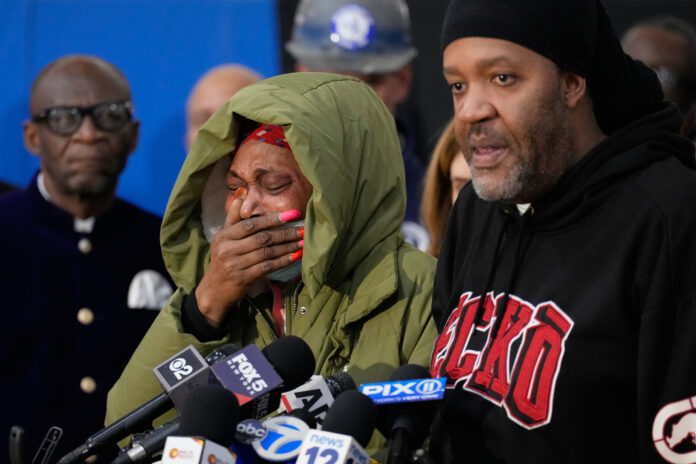 Vos Iz Neias8 days agoBoropark249 days ago
Rescue Operations Conclude at Flatbush Collapse Site; Two Children Among the Eight Confirmed Dead
By BoroPark24 Staff
FDNY rescue operations at the scene of the Flatbush building collapse concluded at 3:37 PM Thursday, nearly 24 hours after the three-story building at 1321 Flatbush Avenue came down onto an adjacent construction site, with officials determining there are no more victims.
The FDNY said crews searched the entire site before the scene was turned over to the Department of Buildings and the NYPD. The operation ran 23 hours and 36 minutes from the 4:01 PM response Wednesday; the FDNY said units arrived within one minute.
At a midday briefing held at the scene in pouring rain, Mayor Zohran Mamdani confirmed that the eight people killed include six adults and two children. Six died at the scene and two at nearby hospitals. Two of those killed were construction workers at the adjoining 2625 Bedford Avenue site. Eighteen people were injured - 14 civilians and four firefighters - with most of those still hospitalized in stable condition and one in critical condition.
The mayor, who had just returned from visiting hospitalized victims, said the dead included immigrants from Mexico, Colombia, Ecuador, Trinidad and beyond, and that the city mourned "parents and children, young families building their lives in our city."
Some 250 fire and EMS personnel rotated through the site, working through the night and continuing through Thursday's heavy rain, using grapplers to remove large debris and search beneath it. The FDNY's Incident Management Team, created after 9/11 to run prolonged operations, was activated for the duration. The New Rochelle Fire Department also volunteered overnight. Fire officials stressed throughout that the effort remained a rescue, not a recovery, until they were certain no one remained trapped.
The Department of Buildings, together with law enforcement, is leading the investigation into the cause. Officials said five entities associated with the construction site are connected to approximately 100 other sites across the city, and DOB began inspecting those sites Thursday. Addressing a report about a lapsed license, the DOB commissioner said the special inspection agency responsible for the work is in fact licensed through 2029, and that no violations or 311 complaints related to the special inspection agency's work had been filed in advance.
The Department of Environmental Protection, which had shut down water mains serving roughly 100 buildings so rescue crews could operate, restored water service late Thursday morning.
As of the midday briefing, vacate orders remained in effect at 1323, 1325 and 1327 Flatbush Avenue, while residents of buildings farther south who were temporarily displaced had been allowed to return home. Flatbush Avenue remained closed between Clarendon Road and Bedford Avenue, with the B41, B49, B103, B8 and BM2 bus routes diverted, and the Red Cross reception center at the Flatbush YMCA at 1401 Flatbush Avenue was providing temporary housing, social-services assistance and mental-health support for displaced residents. Anyone unable to reach someone they believe may have been affected is asked to call 311, or 212-639-9675 from outside the city.
Related stories
Yeshiva World News4 days ago5 Towns Central6 days agoYeshiva World News6 days agoVos Iz Neias8 days ago Williamsburg 365
Photo Gallery: Tenoim in Courts of Kashau, Nanash and Seredna
Related stories

 Williamsburg 3659 days ago
Photo Gallery: Tenoim in Courts of Kashau, Nanash and Seredna
photos: Shlome B.
 Boropark24
Historic “Gevuras Shemonim” Gathering to Celebrate 80 Years of Slabodka Yeshiva This Motzei Shabbos
Related stories
 Matzav8 days ago
 Williamsburg 3659 days ago
 RocklandDaily10 days ago
 Daily Monroe28 days agoBoropark249 days ago
Historic “Gevuras Shemonim” Gathering to Celebrate 80 Years of Slabodka Yeshiva This Motzei Shabbos
Yisroel R.
Hundreds of talmidim and alumni of the renowned Slabodka Yeshiva are preparing to gather this Motzei Shabbos, Parshas Toldos, for a historic and uplifting event marking 80 years since the establishment of the yeshiva in Eretz Yisroel, in the presence of the esteemed Rosh Yeshiva, Hagaon Harav Moshe Hillel Hirsch shlita.
The grand gathering, titled “Gevuras Shemonim,” will take place at the Berkeley Resort Hotel in Asbury Park, New Jersey, bringing together generations of Slabodka talmidim and devoted supporters of the yeshiva for an extraordinary evening of Kavod HaTorah, inspiration, and support for the continued growth of the renowned Torah institution.
The historic celebration comes during the Rosh Yeshiva's highly anticipated 12-day visit to America, which began this past Wednesday, Rosh Chodesh Kislev, as he personally undertakes an extensive fundraising mission on behalf of the yeshiva.
Founded in 5707 (1947), Slabodka Yeshiva in Bnei Brak has become one of the most distinguished centers of Torah learning in Eretz Yisroel, continuing the glorious legacy of the original Slabodka Yeshiva in Europe.
Over the past eight decades, the yeshiva has raised generations of outstanding talmidei chachamim and thousands of talmidim who have carried its Torah teachings throughout the world, preserving the extraordinary legacy of Slabodka and ensuring that its kol haTorah continues to flourish.
The upcoming gathering will celebrate this remarkable milestone while bringing together former talmidim from across the United States, offering them a special opportunity to reunite and strengthen their connection with the yeshiva and the Rosh Yeshiva.
The highlight of the evening will be a special address from Hagaon Harav Moshe Hillel Hirsch shlita, who continues to carry the tremendous responsibility of leading and sustaining the yeshiva, ensuring that its talmidim can continue their learning without interruption.
The program will also feature an address by the distinguished guest speaker, Hagaon Harav Aharon Reich shlita, Rosh Yeshivas Woodlake.
A special historical presentation has been prepared for the occasion, highlighting the establishment of Slabodka Yeshiva in Eretz Yisroel 80 years ago and the towering Torah personalities connected to its remarkable legacy, including the Alter of Slabodka zt”l, whose 100th yahrtzeit is being marked this year, and Hagaon Harav Aharon Kotler zt”l, whose yahrtzeit falls within three days around the time of the gathering.
The evening will also feature a special musical program, adding to the atmosphere of the historic celebration, together with a festive Melave Malka seudah in support of the yeshiva.
As previously reported, the Rosh Yeshiva's visit comes at a particularly challenging time for the Torah community in Eretz Yisroel, with the ongoing gezeiras hagiyus placing additional pressure on yeshivos and their talmidim.
With the increasing financial responsibilities involved in maintaining the yeshiva, Harav Hirsch shlita has personally undertaken this significant journey to secure the necessary funds to sustain its continued growth and preserve its uninterrupted kol haTorah.
Following his arrival in America on Wednesday, the Rosh Yeshiva began his visit in the New York and New Jersey areas, with additional fundraising gatherings and private receptions planned during his trip, including a visit to Los Angeles, where prominent philanthropists and supporters of Torah are expected to participate in special events on behalf of the yeshiva.
The historic “Gevuras Shemonim” gathering this Motzei Shabbos will serve as a major highlight of the Rosh Yeshiva's visit, uniting generations of Slabodka talmidim in celebration of eight decades of Torah greatness while strengthening the foundation for the yeshiva's continued success for generations to come.
The event is scheduled to begin at 8:30 p.m. at the Berkeley Resort Hotel, located at 1401 Ocean Avenue in Asbury Park, New Jersey.
Related stories
Matzav8 days agoWilliamsburg 3659 days agoRocklandDaily10 days agoDaily Monroe28 days ago